《尚書·召誥》開頭幾行像一張施工日誌:「惟二月既望,越六日乙未,王朝步自周,則至于豐。惟太保先周公相宅。」然後是一串干支日。先把兩層分開:這是誥命文本,日程在前、誥辭在後;頁上題作者為姬旦(周公),這屬於題署層。下文只按原文分層寫營建工序,不把它讀成「周代城市規劃」。
一、先看地,再看卜
第一個動作是「相宅」——看地。「惟太保先周公相宅」,太保先於周到洛看地方;太保一般認為即召公,本頁只稱太保,這裡標作通說。接著是日期:「越若來三月,惟丙午朏,越三日戊申,太保朝至于洛。」朏,一般認為指月初見;干支與月相照錄,不折公曆,也不排日期表。
到了洛,才是「卜宅」:「卜宅。厥既得卜,則經營。」——先占卜,得了吉卜才動工。這句把當時的決策順序寫得很清楚:不是先規劃再占卜,是占卜得吉才經營。至於卜了幾次、卜辭怎麼說、用什麼卜,本頁都沒有,本文也不補。
二、讓庶殷攻位
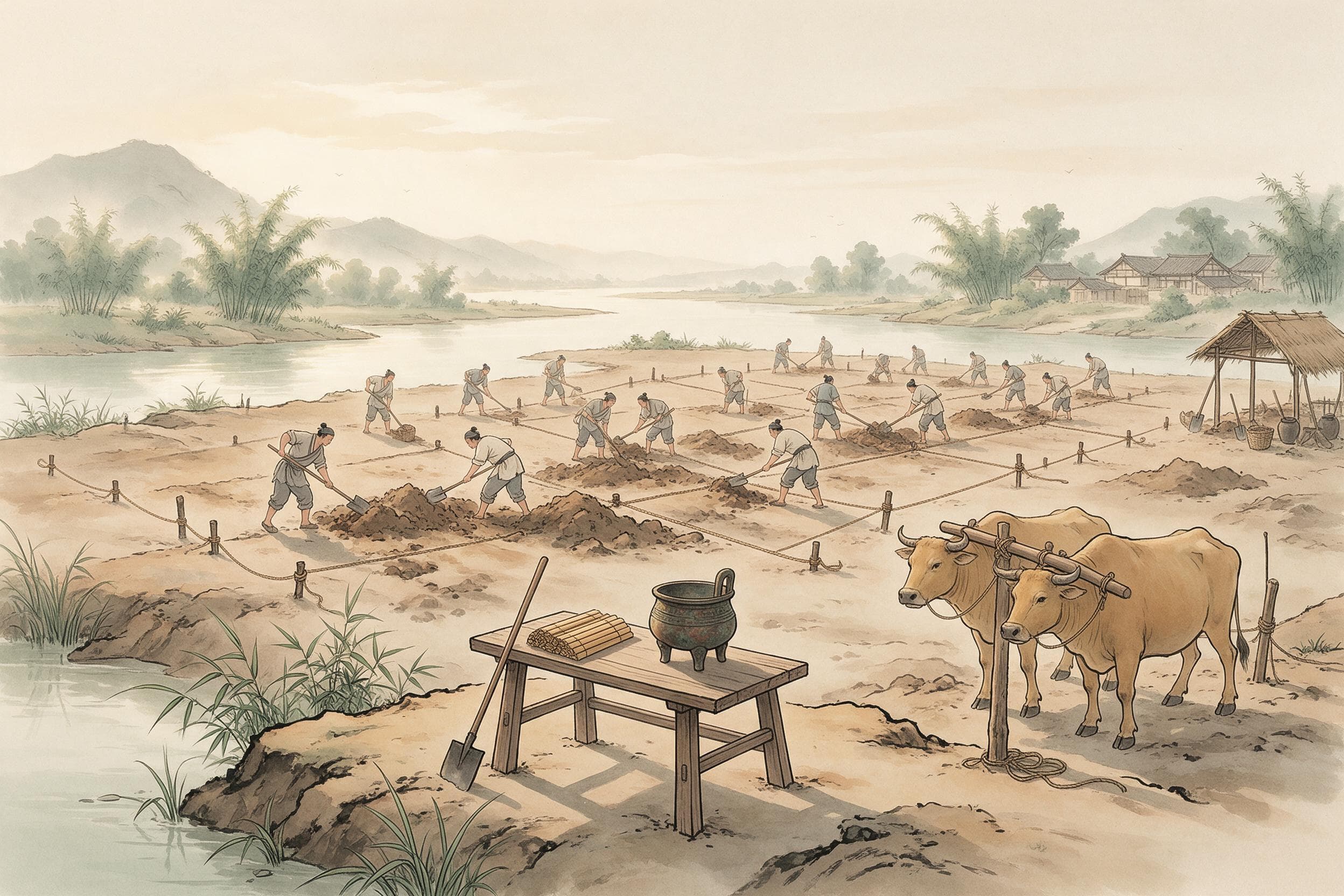
動工的第一步不是壘牆,是定位置:「越三日庚戌,太保乃以庶殷攻位于洛汭,越五日甲寅,位成。」——太保帶著「庶殷」在洛汭治其位,五天後「位成」。「庶殷」即殷遺民;「攻位」一般認為指治理、劃定建築基址;「洛汭」一般認為指洛水入河一帶,這裡不指實今地名。這些話背後是一整套用人辦法,但本文只照原文寫這一道工序。
位成之後,周公到了:「若翌日乙卯,周公朝至于洛,則達觀于新邑營。」——遍看一遍新邑的營建。「達觀」一般認為即遍觀。從庚戌到甲寅是五天,甲寅次日乙卯周公到;「位」究竟是什麼樣子——幾道線、多寬、用什麼標誌——原文不說,本文不補。
三、兩頭牛,與三牲各一
接著是兩次祭祀,各有牲數。「越三日丁巳,用牲于郊,牛二。」——郊祭用兩頭牛。「越翌日戊午,乃社于新邑,牛一、羊一、豕一。」——在新邑社祭,牛、羊、豕各一。兩處牲數照錄:郊二牛,社三牲各一。祭的是哪位神、誰主祭、儀節如何,本頁都沒有;牲的規格品級也不推。
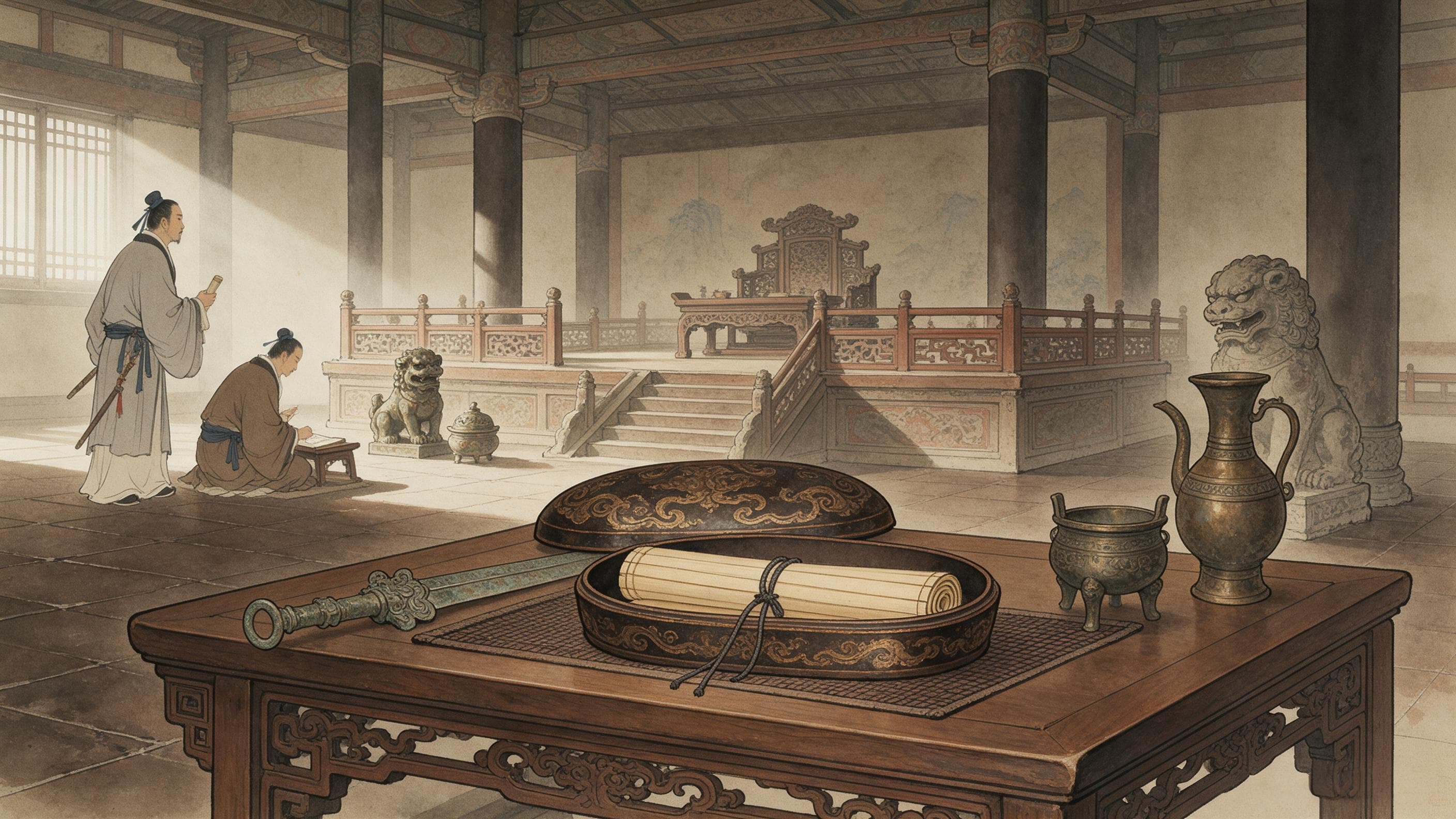
然後才是命人:「越七日甲子,周公乃朝用書命庶殷:侯、甸、男邦伯。厥既命殷庶,庶殷丕作。」——用書面的命令冊命庶殷的三等諸侯:侯、甸、男邦伯;命完,殷庶「丕作」,一般認為即大舉動工。把日子連起來看:乙未、丙午、戊申、庚戌、甲寅、乙卯、丁巳、戊午、甲子,九個干支日,從王走到命諸侯,一條線下來。
四、誥辭不是工序
日程之後,全篇轉成誥辭。它講的是理由,不是做法:「皇天上帝,改厥元子茲大國殷之命」;「惟王受命,無疆惟休,亦無疆惟恤」;「曷其奈何弗敬」;殷民「夫知保抱攜持厥婦子,以哀籲天」;又拿夏、殷兩代對照,各一句「今時既墜厥命」;落到「王其疾敬德」。這些話解釋的是為什麼建、憑什麼建,不是怎麼建。本文不把誥辭讀成施工記錄,也不反過來把工序讀成制度設計。
五、史書的補句與兩頁的詳略
《史記·周本紀》另有幾句:「成王在豐,使召公復營洛邑,如武王之意。周公復卜申視,卒營築,居九鼎焉。曰:『此天下之中,四方入貢道里均。』作《召誥》《洛誥》。」——主持者、再卜、九鼎、選址理由,都在這幾句裡。與《召誥》對讀,詳略不同:《召誥》只記一次「卜宅」,《史記》多「復卜申視」;九鼎與「天下之中」都不見於《召誥》,只能標作史書語,不能當誥命原文。
《史記》還載武王的話:「自洛汭延于伊汭,居易毋固,其有夏之居。我南望三塗,北望岳鄙,顧詹有河,粤詹雒、伊……」——這是史書所載武王語,說明選址早有人看過形勝。篇末太史公又下判斷:「學者皆稱周伐紂,居洛邑,綜其實不然。武王營之,成王使召公卜居,居九鼎焉,而周復都豐、鎬。」這是史家的判斷,本文照標作者,不當誥命原文;也正因為這句,本文不寫「周朝東都制度」這類通論。
兩頁都不給城的形制:沒有牆高、門數、里坊,沒有工程量與用工數(除了「庶殷」這一句),沒有「成周」「王城」兩城的分敘,也沒有洛邑與豐鎬的行政關係。這些本文一律不補,也不引《考工記》去填。能寫的只有這些:一次相宅、一次卜宅、一次攻位、位成、兩次祭牲(牛二;牛一羊一豕一)、一次書面冊命;再加《史記》一句選址的算術——「四方入貢道里均」。城是什麼樣,兩頁都不說。
延伸閱讀:一堵夯土牆怎麼築起來:漢長安的城牆、城門與城下壕 · 十里一水門:永平年間修汴渠 · 望火樓下的鋪兵:宋代的城怎麼防火
參考來源與延伸閱讀
- 《尚书·召诰》(维基文库本,页面白文无注,题作者为姬旦;圆括号内为录文所加异文校字,未与中华书局点校本复核) — The chapter opens as a dated work log: in the second month, six days after the full moon, on yiwei, the king walks from Zhou to Feng; the Grand-Guardian goes ahead of the Duke of Zhou to inspect the site; on bingwu, the first of the third month, and three days later wushen, he reaches Luo and 'divines the dwelling'; obtaining a good omen, the work is laid out; on gengxu the Yin people are set to 'order the positions' by the Luo, and by jiayin the positions are complete; on yimao the Duke of Zhou arrives and surveys the new camp; on dingsi a suburban sacrifice with two oxen; on wuwu a sacrifice to the soil of the new city with one ox, one sheep, one pig; on jiazi the Yin nobles are charged by written order, and the Yin people set to work. The rest of the chapter is a speech on the change of the mandate and the command to 'hasten to reverent virtue'. The page's parenthetical variant characters are kept as printed.
- 《史记》卷四·周本纪(西汉司马迁撰;维基文库本,页面白文无注,未与中华书局点校本复核) — The Shiji's summary of the same work: King Cheng at Feng sends the Duke of Shao to build Luoyi again, as King Wu had intended; 'the Duke of Zhou divined and inspected once more, and the building was finished, and the nine cauldrons were placed there'; and the reason given: 'this is the centre of the world, and the distances for the four quarters' tribute are equal.' It also records King Wu's earlier survey of the terrain with his words about the Luo and Yi, and closes the chapter with Sima Qian's judgement that although scholars say the Zhou ruled from Luoyi, in fact King Wu began it and King Cheng had the Duke of Shao divine a dwelling and placed the cauldrons there, while the Zhou still had their capital at Feng and Hao until the fall of King You.