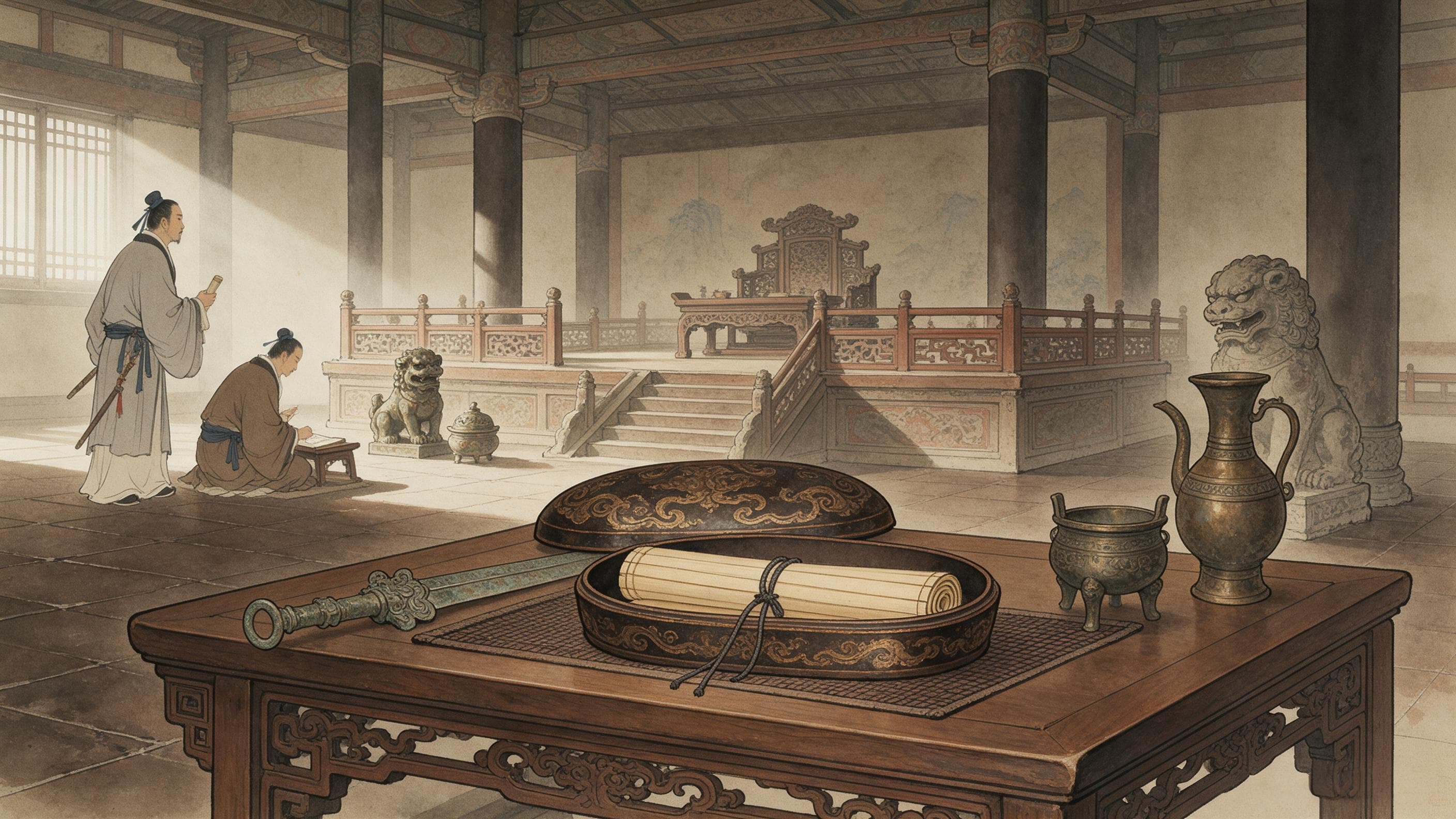
《戰國策·燕策三》裡,一張地圖是通行證。荊軻對太子丹說:「誠能得樊將軍首,與燕督亢之地圖獻秦王,秦王必說見臣,臣乃得有以報太子。」要見秦王,得帶兩樣東西:一顆人頭,一張地圖。圖在這裡不是用來查的,是用來換一次接見的——一卷要送出去的圖,不是掛在牆上的圖。
一張圖當通行證
圖是提前備好的。荊軻私見樊於期,樊於期自刎,「乃遂收盛樊於期之首,函封之」;匕首也是提前備好的:「太子預求天下之利匕首,得趙人徐夫人之匕首,取之百金,使工以藥淬之……血濡縷,人無不立死者。」然後「乃令秦武陽為副」——地圖與人頭、匕首一樣,都是這次行動的道具,人手也配齊了。
到秦之後,圖的用法寫得極細。蒙嘉先對秦王說,燕王「謹斬樊於期頭,及獻燕之督亢之地圖,函封,燕王拜送于庭,使使以聞大王」;秦王「乃朝服,設九賓,見燕使者咸陽宮」;進殿時「荊軻奉樊於期頭函,而秦武陽奉地圖匣,以次進至陛下」——圖裝在匣裡,由副使捧著,按次序進到階下。圖是入場的一部分,被擺在儀式裡。
發圖:圖窮而匕首見
最要緊的幾句照錄。武陽色變,「荊軻顧笑武陽,前為謝」;秦王說「起,取武陽所持圖」;「軻既取圖奉之,發圖,圖窮而匕首見。因左手把秦王之袖,而右手持匕首揕之。未至身,秦王驚,自引而起,絕袖。」「發圖」是展開圖,「圖窮」是展到盡頭;匕首就在卷末。看這一串動詞:取、奉、發、窮、見——一句接一句,沒有一個形容詞。圖在這裡是容器——它包住凶器,也包住這次接見的全部理由。
成語與原文要分清。原文是一句五字:「圖窮而匕首見。」後人把它壓成四個字「圖窮匕見」,當作比喻用,說事情到最後露出真相。那是後人的概括,不是原文;原文只寫一個動作接一個動作——取圖、發圖、圖窮、匕首見。本文引的是原句,不是成語。
另一頁:圖是官府的物件
《周禮·地官司徒》裡的圖完全是另一種東西。大司徒「掌建邦之土地之圖,與其人民之數,以佐王安擾邦國」;又說「以天下土地之圖,周知九州之地域廣輪之數,辨其山林、川澤、丘陵、墳衍、原隰之名物」——圖記的是地域的廣輪與各類土地的名物,另加人民的數目。圖與戶口冊並在一句裡,圖在這裡是官府的底冊。
用處一條條寫著:「凡民訟,以地比正之;地訟,以圖正之」——打土地官司,拿圖來正;土訓「掌道地圖,以詔地事」;遂人「以土地之圖經田野,造縣鄙形體之法」;礦人「若以時取之,則物其地,圖而授之」。訴訟、巡守、規劃田野、開採礦藏,圖都在裡面。但這些是職文,不是實例:誰拿圖判過案、圖怎麼畫,這一頁不給。
兩頁之間
兩頁都是後世文本,層要分開。《戰國策》是漢人編定的縱橫家史料(一般認為),荊軻的故事在這裡是敘事;《周禮》是戰國至漢之間的官制構想(一般認為),不是實際施行的檔案。所以一張圖當信物,是故事裡的事;一張圖當官物,是職文裡的規定。兩者都說到「圖」,都不給圖的實物、尺寸、材料與畫法。
督亢與缺口
「督亢」呢?白文只給五個字:「燕督亢之地圖」——一個地名,沒有地望。本頁的註裡倒有幾家說法(鮑彪注引後志、正義、劉向別錄之類),說它在涿郡、在幽州范陽縣東南、是膏腴之地;但那是註,不是白文。本篇不拿註當正文用,也不替它猜地望:白文給到哪,就寫到哪。
兩頁都不給的是:地圖的實物、繪製方法、尺寸、材料、存檔制度,以及督亢在圖上的位置——也沒有一張圖的名字、沒有一個畫圖的人。缺口列在這裡,不補。一張圖在故事裡是入場券與凶器的容器,在職文裡是訴訟與規劃的憑據;兩種用法之間,隔著一整套沒有被寫下來的製圖與存檔制度。
延伸閱讀:營洛:先卜宅,再攻位,最後兩頭牛 · 一堵夯土牆怎麼築起來:漢長安的城牆、城門與城下壕 · 十里一水門:永平年間修汴渠
參考來源與延伸閱讀
- 《战国策·燕策三》荆轲刺秦王章(士礼居丛书本,维基文库录文,未与点校本复核) — The map as the price of admission. Jing Ke tells the crown prince: 'if I could truly get General Fan's head, together with the map of Yan's Dukang territory, and present them to the King of Qin, he will certainly be pleased and grant me an audience' (誠能得樊將軍首,與燕督亢之地圖獻秦王,秦王必說見臣). At Qin, Meng Jia announces that Yan has 'cut off Fan Yuqi's head and presents the map of Yan's Dukang territory, boxed and sealed' (謹斬樊於期頭,及獻燕之督亢之地圖,函封); the king puts on court dress, sets out the nine guests, and receives the envoys. 'Jing Ke carried the box with Fan Yuqi's head, and Qin Wuyang carried the map box, and they advanced in order to the steps' (秦武陽奉地圖匣,以次進至陛下). The king says 'rise, take the map Qin Wuyang is holding'; Jing Ke takes it and presents it, 'unrolls the map, and at the end of the map the dagger appeared' (發圖,圖窮而匕首見). The page carries Bao Biao's and Wu Shidao's notes in smaller type; only the main text is quoted here.
- 《周礼·地官司徒》(维基文库本,未与点校本复核) — Maps as government property. The Grand Minister of Education 'has charge of establishing the map of the land of the state and the number of its people, to aid the king in tranquillising the state' (掌建邦之土地之圖,與其人民之數), and 'by the map of the land under heaven he knows comprehensively the numbers of the regions and the breadth and length of the nine provinces, and distinguishes the names and things of mountains and forests, rivers and marshes, hills and mounds, dikes and lowlands, plains and wet grounds' (以天下土地之圖,周知九州之地域廣輪之數). Elsewhere in the chapter: 'in disputes over land, the map decides them' (凡民訟,以地比正之;地訟,以圖正之); the officer Tu Xun 'has charge of expounding the map of the land, to instruct on the affairs of the land' (掌道地圖,以詔地事); the Superintendent of Fields 'by the map of the land lays out the fields and makes the rules for counties and villages' (以土地之圖經田野,造縣鄙形體之法); the mining officer, when ore is taken, 'marks the place and gives a map of it' (則物其地,圖而授之).