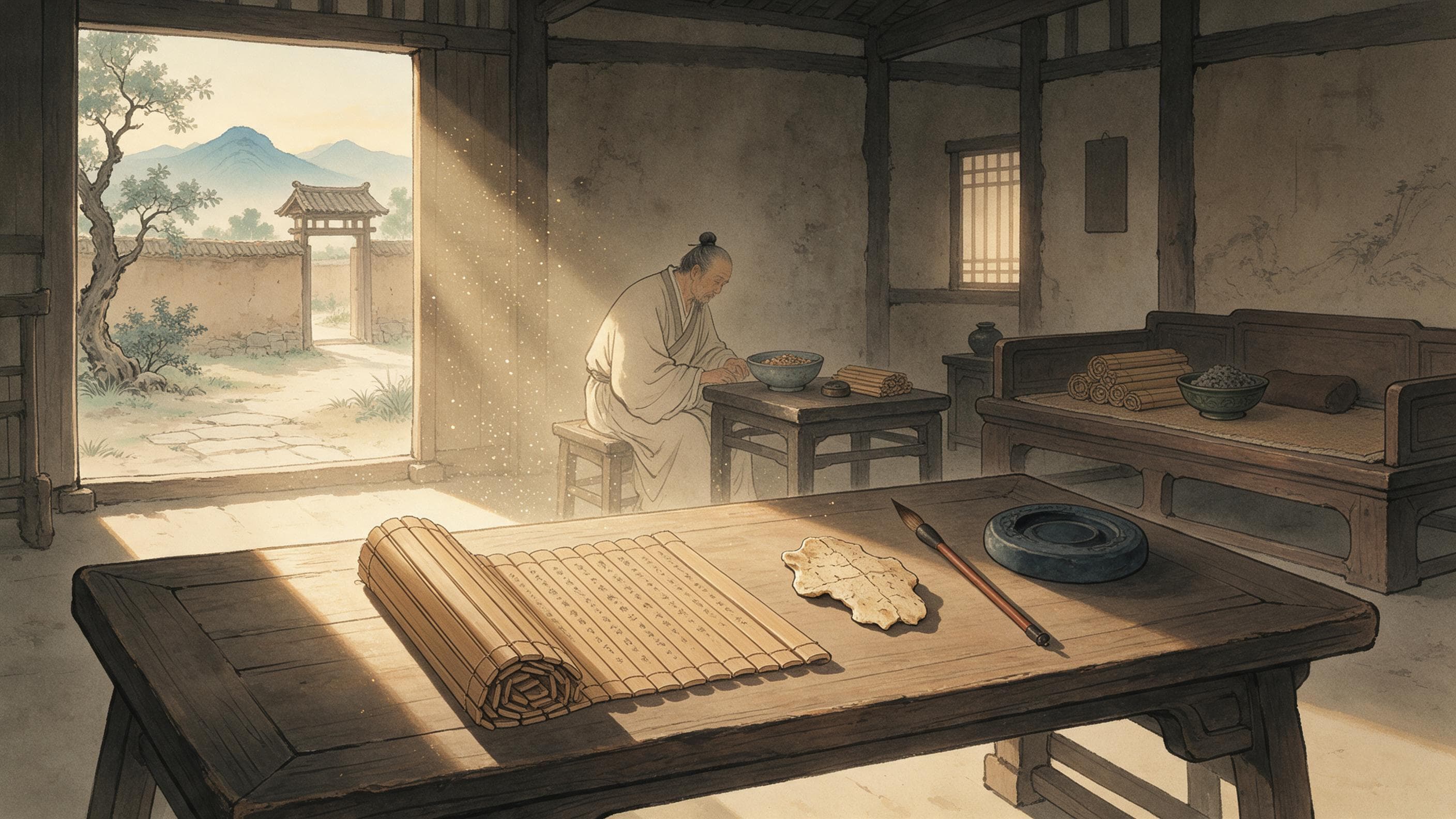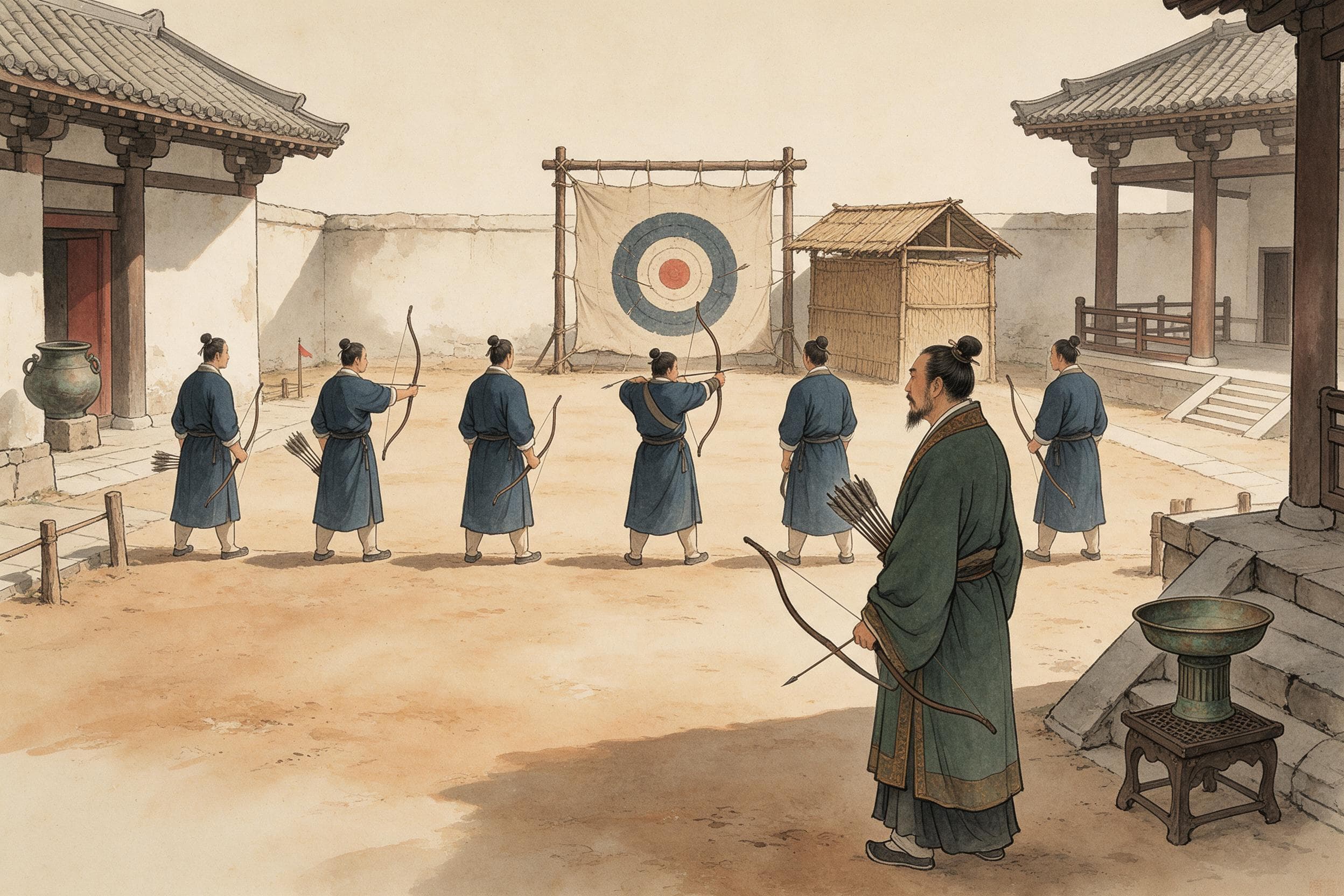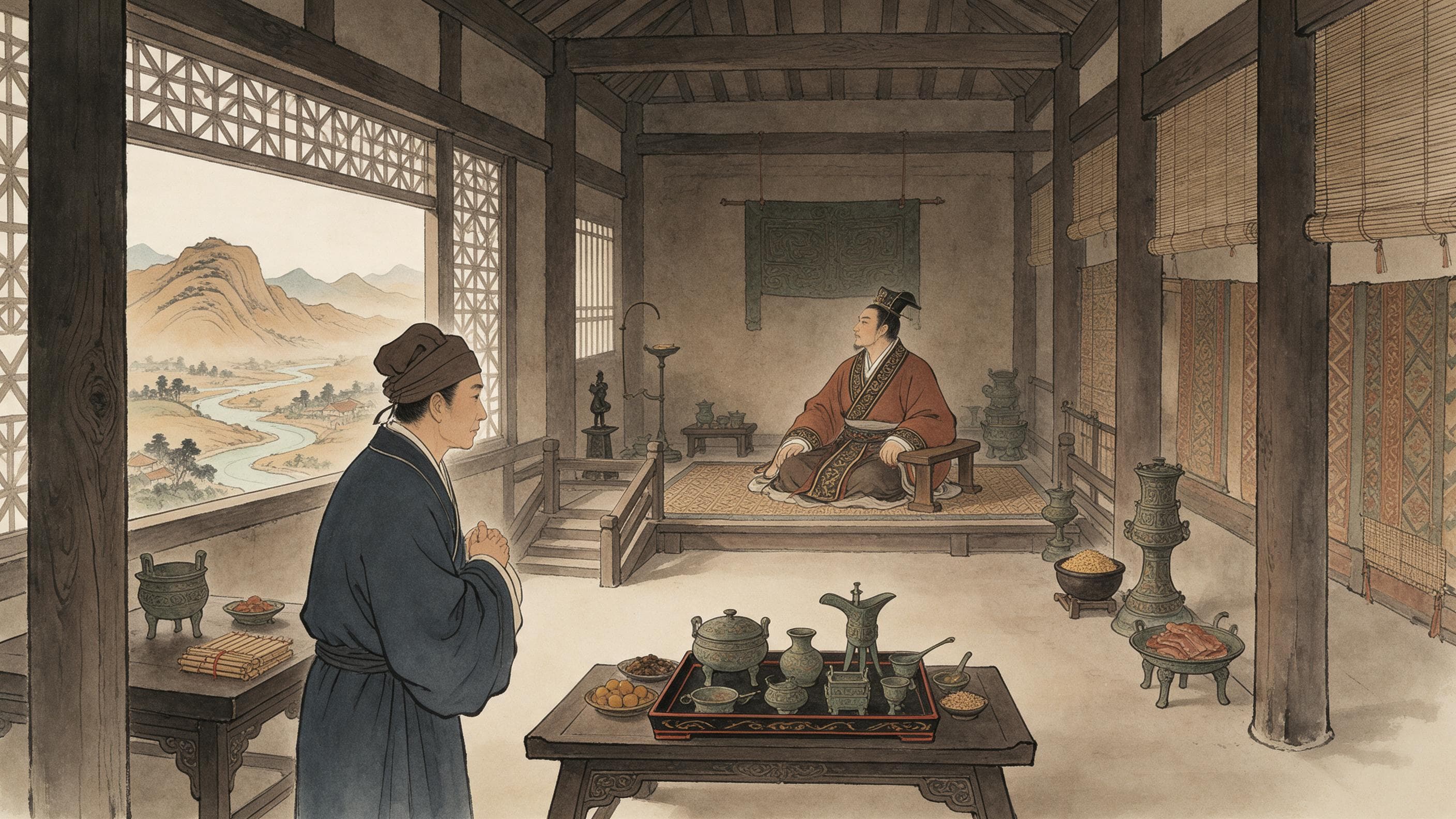
春蒐、夏苗、秋獮、冬狩——四個名字,出自一段諫語,不出自一條制度。魯隱公五年,「公將如棠觀魚者」,臧僖伯諫;四時之名就在這段諫語裡:「故春蒐、夏苗、秋獮、冬狩,皆於農隙以講事也。」本文分讀兩頁:這一篇諫語,與《周禮·夏官》大司馬的職文;不合成一套「周代田獵制度」。
一、棠地的那一天
《左傳》把這一天當一件事記。公將如棠觀魚,臧僖伯先立一條原則:「凡物不足以講大事,其材不足以備器用,則君不舉焉。」末了劃職分:「若夫山林川澤之實,器用之資,皂隸之事,官司之守,非君所及也。」公曰:「吾將略地焉。」遂往,「陳魚而觀之」;僖伯稱疾不從。經一句:「公矢魚于棠」——非禮也,且言遠地也。「矢」一般認為即「陳」,這裡標作通說。
四時之名在這段話的中段,是「國君該做什麼」的一部分:「故春蒐、夏苗、秋獮、冬狩,皆於農隙以講事也。三年而治兵,入而振旅,歸而飲至,以數軍實。昭文章,明貴賤,辨等列,順少長,習威儀也。」——四個名字,一句綱領,後面列五件事:治兵、振旅、飲至、數軍實,「昭文章」以下。這是諫語:說的是國君該往哪去、不該往哪去;不是操作條文,本頁也不給操作。
二、四個名字
《左傳》給的就這四個名字:春蒐、夏苗、秋獮、冬狩,各繫於「農隙」。獵什麼、去多少人、獵獲怎麼處理、場地怎麼選,都沒有。名字照頁面用字錄,不加訓釋——原文不解釋每個字是什麼意思,本文也不替它解釋。
同一段諫語還給了國君不射的理由:「鳥獸之肉不登於俎,皮革齒牙、骨角毛羽不登於器,則公不射,古之制也。」——肉不上俎、材料不入器,國君就不射。這句仍出在諫語裡,說的是這一次出行,不是繫年、有職官的成文法。
三、《周禮》的四時教閱
《周禮·夏官》大司馬這一職,是另一部機器。先給軍制:「凡制軍,萬有二千五百人為軍。王六軍,大國三軍,次國二軍,小國一軍。」——師、旅、卒、兩、伍一路下來,各有帥長。再給四時教閱。中春「教振旅」:辨鼓鐸鐲鐃之用,王執路鼓,諸侯執賁鼓,軍將執晉鼓……「以教坐作、進退、疾徐、疏數之節」;然後「遂以搜田」——有司表貉、誓民,鼓,圍禁,火弊,「獻禽以祭社」。
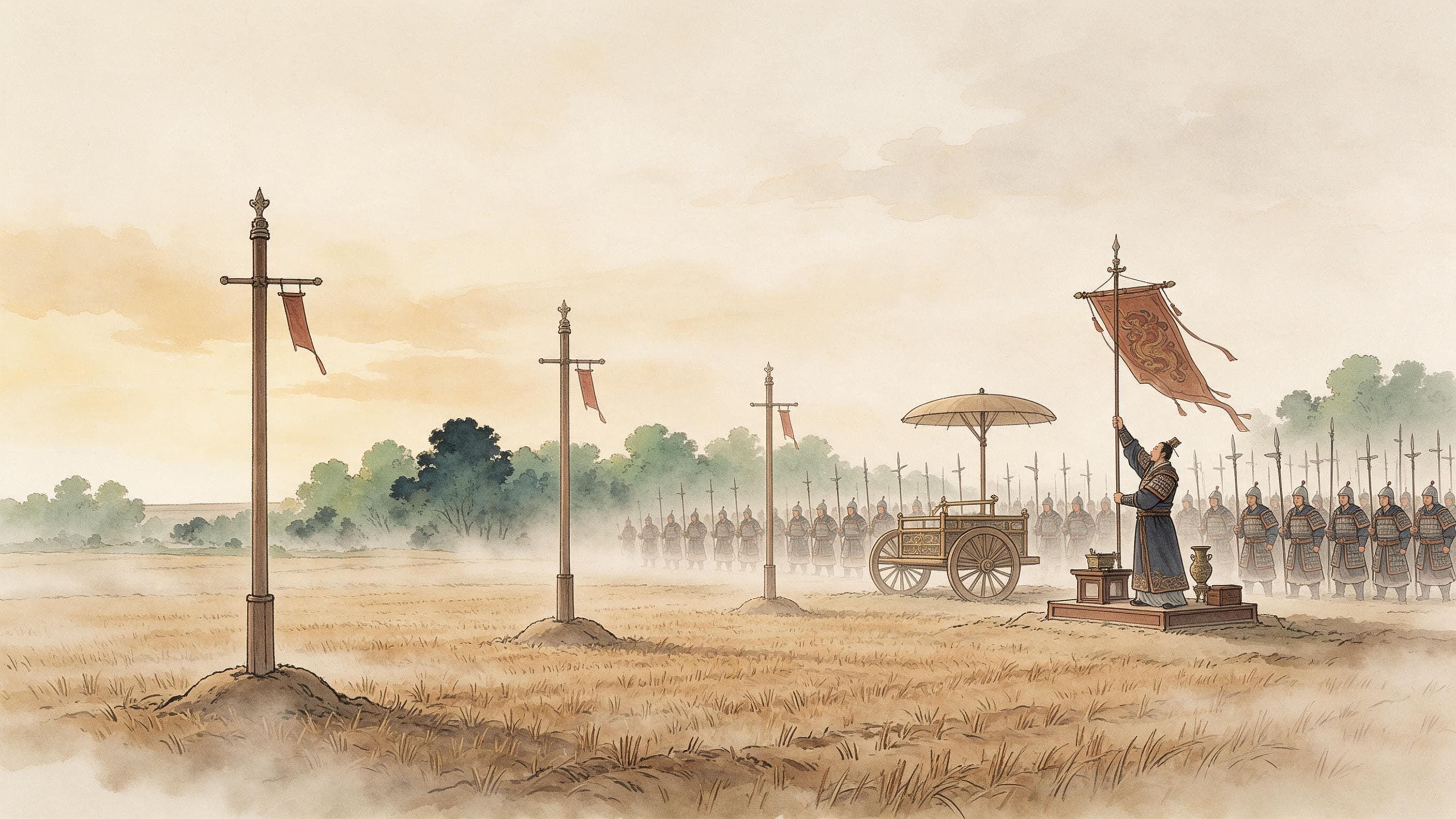
中夏「教茇舍」,辨號名之用,「以辨軍之夜事」;「遂以苗田如搜之法」,獻禽以享礿。中秋「教治兵」,辨旗物之用(王大常、諸侯旗、軍吏旗……);「遂以獮田如搜之法」,致禽以祀祊。中冬「教大閱」:虞人萊野為表,「百步則一,為三表,又五十步為一表」;質明弊旗,誅後至者;陳車徒如戰之陳,聽誓、斬牲、徇陳,「不用命者斬之」;然後鼓、鐸、旗號令,車三發、徒三刺。最後「遂以狩田」:以旌為左右和之門;「大獸公之,小禽私之,獲者取左耳」;入,「獻禽以享烝」。
四、兩頁各自在說什麼
分開看,兩頁是兩種聲音。《左傳》把四個名字放在一段勸阻裡,繫在農隙上,後面是一串「講事」要顯出來的東西;它不給職官、不給各季科目、不給做法。《周禮》是職文:四季、四個科目(振旅、茇舍、治兵、大閱)、四個田名掛在科目之後、每季一次獻禽。前者是對國君說的道理,後者是一份職務。誰也不能證成對方真在某國跑過;本文不把兩頁合成一套「周代田獵制度」。
兩頁用字也不齊。《左傳》作蒐、苗、獮、狩;《周禮》此頁作搜田、苗田、獼田、狩田——搜即蒐、獼即獮——而且把每個田名放在一次教閱之後,不是並列四個名字。兩處照頁面錄,不統一寫法,也不裁定哪個更早。
五、兩頁都不給的
兩頁都不給獵獲物清單、不給數量、不給分配賬。《周禮》只有一句分配原則:「大獸公之,小禽私之,獲者取左耳」——是原則,不是賬。也沒有任何一次田獵的人數:一萬二千五百人為軍,是軍的編制,不是出獵的人數。四時在實際裡怎麼排、農隙是哪幾個月、肉與皮後來怎麼處理,兩頁都不說。棠地那一網的魚是什麼魚,也不說。
合起來看,一頁是諫語裡的一句四時之名,一頁是職文裡的四套操練加四個田名。一次觀魚引出了一句讓名字留下來的話,一份職官書寫出了操練。兩頁都沒說這套東西在哪一國真的跑過;兩頁也都不解釋田獵是「練兵」還是「護生」——本文也不加這層。頁面給的是名字、位次、表、獻禽和一隻左耳,其餘的沒有。
參考來源與延伸閱讀
- 《春秋左氏传·隐公五年》(维基文库本,页面白文无注,未与中华书局点校本复核) — The remonstrance in which the four hunts are named: the duke of Lu about to go to Tang to watch the fishing, Zang Xibo arguing that a ruler should not take up what cannot serve the great affairs or furnish equipment, and in the middle of the argument the sentence 'thus spring sou, summer miao, autumn xian, winter shou, all in the slack of farm work, for the practising of affairs', followed by the three-year exercise of troops, the setting of ranks on return, the arrival cup, the counting of military tallies, and the display of patterns, noble and base, ranks, young and old, awe and dignity. The remonstrance also says that if flesh, hide, horn, bone, tooth, hair and feather do not reach stand or vessel the ruler does not shoot, and closes with the division of labour between ruler and officials; the duke goes anyway, has the fish set out, and the record notes 'the duke displayed fish at Tang' as contrary to ritual and far from home.
- 《周礼·夏官司馬》大司马职(维基文库本,页面白文无注,未与中华书局点校本复核) — The grand marshal's duty text: the army frame of 12,500 men to a army, six armies for the king and three, two or one for states of different sizes, with the shi, lü, zu, liang and wu down to five men; then the four seasonal reviews — mid-spring marshalling with drums, bells, gongs and hand-bells assigned by rank and drill in sitting, rising, advancing, retiring, quick and slow, loose and close, followed by the sou hunt; mid-summer camping and night names, followed by the miao hunt on the same method; mid-autumn troop-handling and banners, followed by the xian hunt; mid-winter the great review with markers at a hundred paces and again at fifty, latecomers executed, the oath and the beheading of the disobedient, and the shou hunt enclosing the field between gate-flags, where great beasts go to the public, small birds to the private, and the taker keeps the left ear, ending with sacrifice. The page writes 搜 and 獼 for 蒐 and 獮.