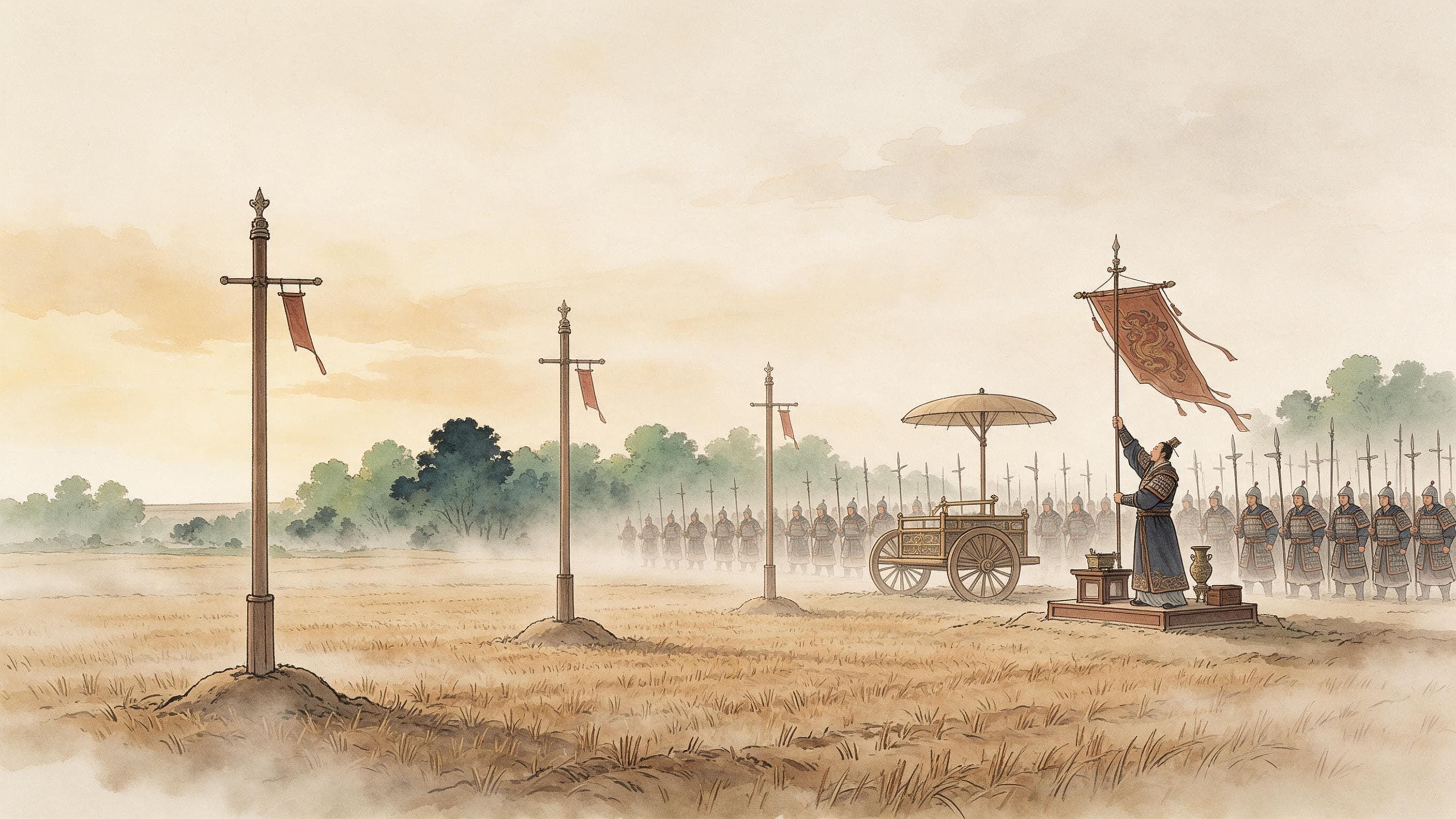
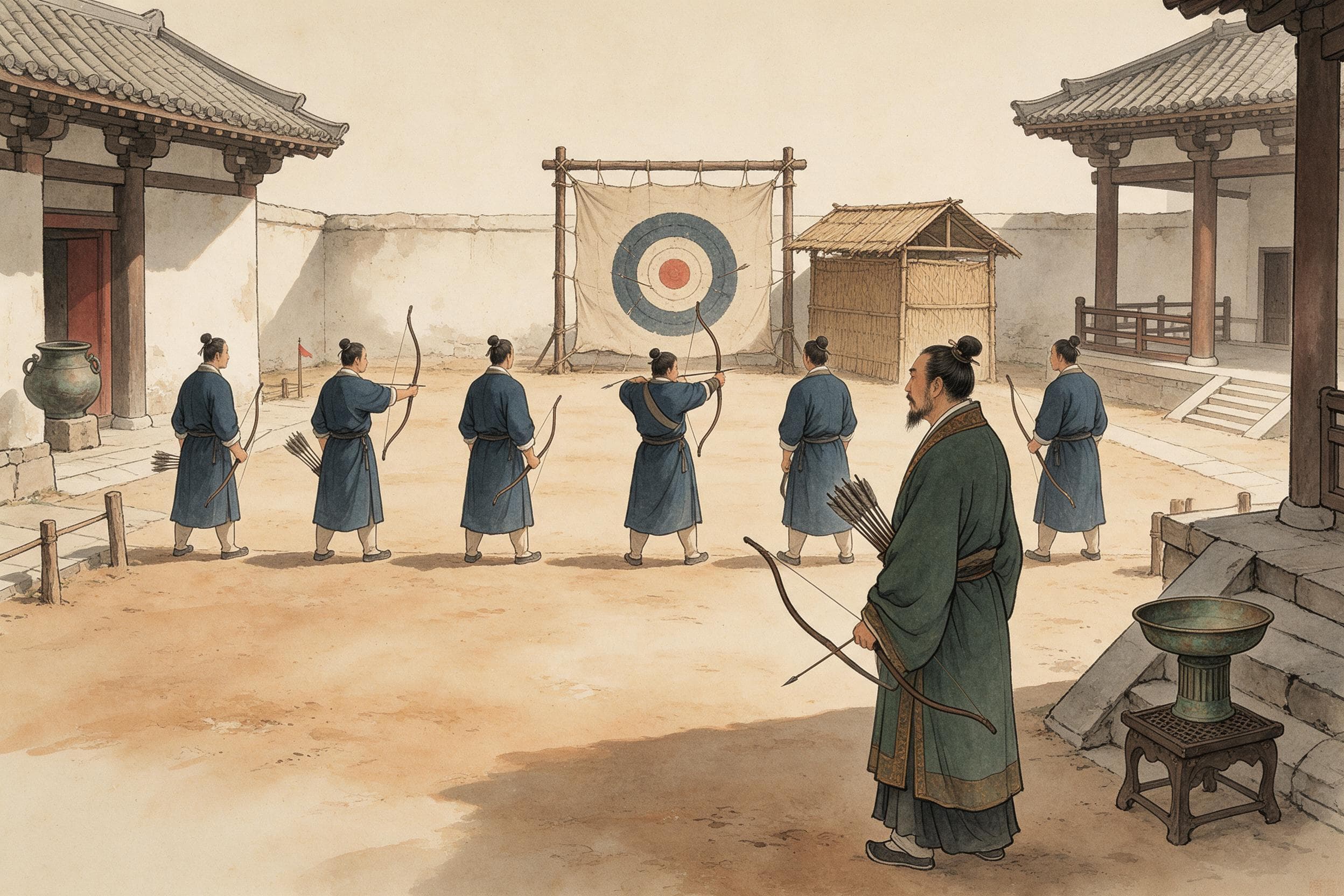
先從一張靶說起。《儀禮·鄉射禮》開場不久就把靶立起來:「乃張侯,下綱不及地武。不繫左下綱,中掩束之。」下繩離地不到一武,左下角的繩先不繫,中間折起來捆著。靶旁還有一座掩體,「乏參侯道,居侯黨之一,西五步」。這一頁從靶寫動作,《禮記·射義》寫這些動作為什麼這樣排;兩頁不是一回事,本篇分兩層寫。
開場:一張靶與三個耦
靶歸司馬管。行禮到中途,「司正為司馬,司馬命張侯,弟子說束,遂繫左下綱」——司正改作司馬,命人張靶,弟子解開捆繩、繫上左下綱。司馬又命獲者:「倚旌于侯中。」獲者從西邊走過去,把旌旗倚在靶心。一串都是動作,沒有一句講道理。尺寸也只給形容:下綱「不及地武」,掩體在靶西「五步」——都是相對說法,沒有實測數。
人是三對。開寫之前,「三耦俟于堂西,南面東上」。耦是一對:一為上射,一為下射。司射在堂西配好三對,站在三耦之南面北下口令:「命上射曰:某御於子;命下射曰:子與某子射。」對上射說「某人為你駕車」,對下射說「你和某人一起射」——一句話把兩人綁成一對。附記補了來歷:「三耦者,使弟子。」
司射的令
司射的行頭寫得細:「司射適堂西,袒決遂,取弓于階西,兼挾乘矢,升自西階。」袒、決、遂是裝束,兼挾乘矢是把四支箭夾在臂下。上堂後:「階上北面告于賓,曰:『弓矢既具,有司請射。』」賓謙讓一句,司射再向主人請示。接著命三耦:「各與其耦讓取弓矢,拾!」——互相讓著取,拾是輪流。司射先射一輪示範,叫「誘射」,「將乘矢」,四支箭都射完。
一場射的口令有次序,每句都短。「司馬命獲者執旌以負侯」;射手入場後,司馬「南揚弓,命去侯」,獲者應聲走開,聲音不斷,走到掩體「坐,東面偃旌」。司射再上前,與司馬交於階前,「北面視上射,命曰:『無射獲,無獵獲!』」——不許射舉旌的人,也不許追著他射。計籌時命「不貫不釋!」——不穿透靶不計數;用樂時改命「不鼓不釋!」——不按鼓節也不計數。
數籌與勝敗
勝負靠籌,不靠眼估。司射請「釋獲」後,釋獲者執鹿中,一人執筭跟著,「坐實八筭于中」;射時「若中,則釋獲者坐而釋獲,每一個釋一筭。上射於右,下射於左」。數籌有規矩:「二筭為純,一純以取……一筭為奇」,十純一委。報結果只有三句:「若右勝,則曰:右賢於左。若左勝,則曰:左賢於右。若左右鈞,則左右皆執一筭以告,曰:左右鈞。」
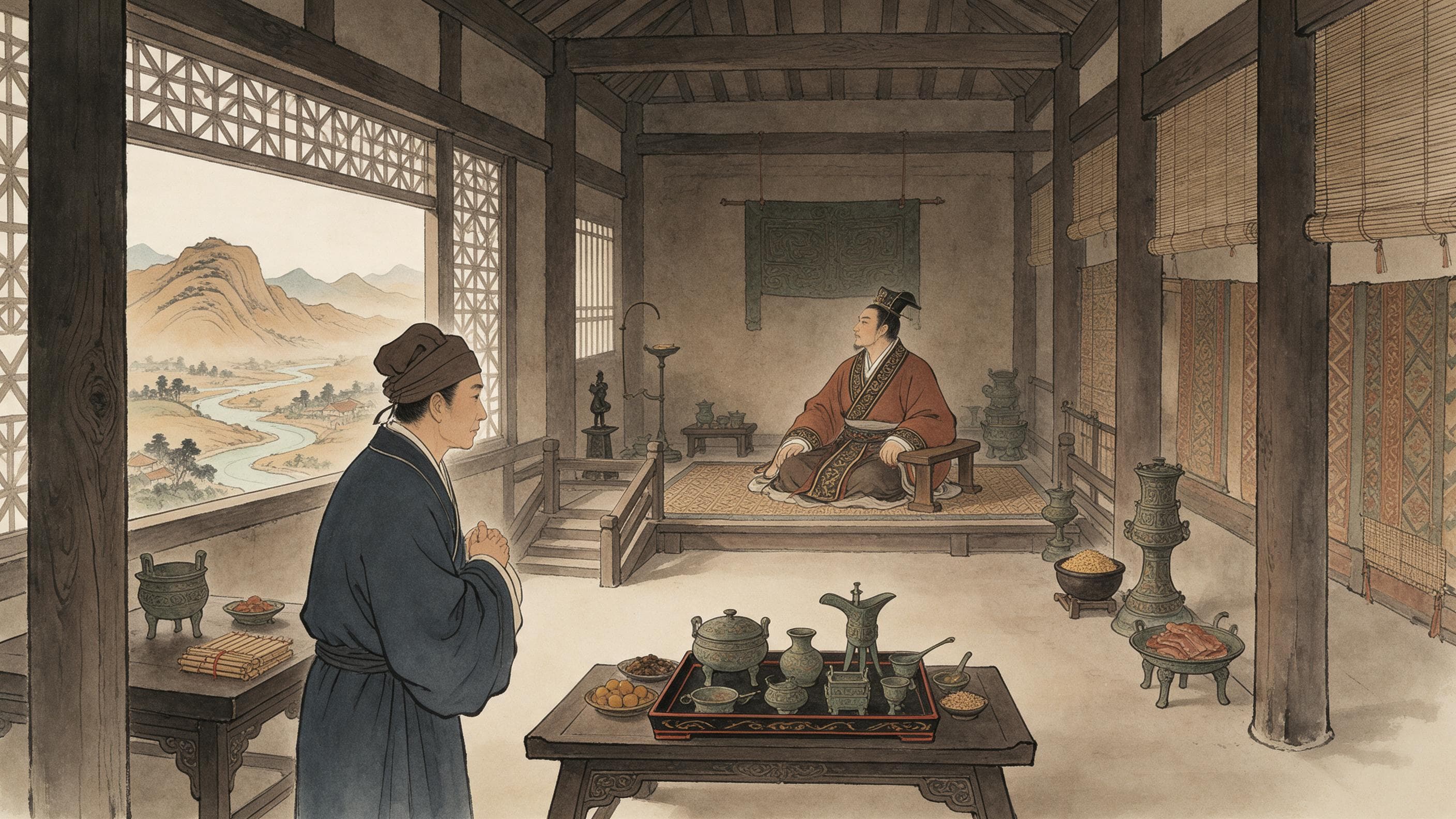
輸的人喝酒。弟子先設「豐」——西楹西邊的承爵架;勝方弟子洗觶、升堂酌酒,放在豐上。司射下令:「勝者皆袒決遂,執張弓。不勝者皆襲,說決拾,卻左手,右加弛弓于其上,遂以執弣。」勝者執上弦的弓,不勝者執鬆弦的弓。升堂「勝者先升」;不勝者「北面坐取豐上之觶;興,少退,立卒觶」,喝完把空觶放在豐下。一耦一觶,「三耦卒飲」。賓、主人、大夫不勝則不必執弓,由執爵者取觶洗、酌、送到席前,站著喝完。酒數只到「觶」為止,不給容量。
射義:另一頁的解釋
《禮記·射義》先把這場射放回原處:「古者諸侯之射也,必先行燕禮;卿、大夫、士之射也,必先行鄉飲酒之禮。」鄉射之前先有鄉飲酒——這就是兩篇的分界:同一套鄉禮的兩段,鄉飲酒寫飲酒,本篇寫射,射義自己把這層關係說出來了。義理也起在這裡:「故射者,進退周還必中禮。內志正,外體直,然後持弓矢審固;持弓矢審固,然後可以言中。此可以觀德行矣。」——先中禮,再中靶。
射義還給每等人配樂節:「其節:天子以騶虞為節,諸侯以貍首為節,卿大夫以采蘋為節,士以采蘩為節。」並逐條解釋:「騶虞者,樂官備也;貍首者,樂會時也;采蘋者,樂循法也;采蘩者,樂不失職也。」儀禮那句「不鼓不釋」,到這一頁成了有內容的規矩。罰酒也有解釋,而且與動作相反:「詩云:『發彼有的,以祈爾爵。』祈,求也,求中以辭爵也。酒者,所以養老也,所以養病也。求中以辭爵者,辭養也。」——酒是養老養病的,求中是為了辭掉這杯「養」。同一只觶,儀禮寫怎麼喝,射義寫人為什麼不願喝。
兩層與兩頁的缺口
兩層要分開,不是因為誰高誰低,而是材料不同:《儀禮》這一頁是動作、位置、口令與器物名,講一件事怎麼辦;《射義》是判準與理由,講這件事為什麼值得辦。混在一起寫就成了「射禮文化」;分開寫,才看得見一層是令、一層是義。兩頁都不給:靶的實際距離(只有「西五步」這類相對說法)、射場丈尺、箭數之外的尺寸實測、觶的容量、三耦之外眾賓的人數——明寫沒有,本篇不補。
參考來源與延伸閱讀
- 《仪礼·乡射礼》(维基文库本,未与点校本复核) — The ritual itself, act by act. The target goes up first: 'they spread the target, its lower cord not reaching the ground; the lower left cord is left untied, and the middle is folded and bound' (乃張侯,下綱不及地武。不繫左下綱,中掩束之), with the shelter 'five paces west' of it. The master of archery (司射) takes his bow and four arrows, reports the equipment ready and asks the guest's leave; the master of ceremonies (司正) becomes the master of the horse (司馬), who orders the target spread and the banner leaned in its middle. The three pairs (三耦) are matched west of the hall and named one by one: 'so-and-so drives your carriage' to the upper archer, 'you shoot with so-and-so' to the lower. Orders are quoted verbatim — 'do not shoot the flag-bearer, do not hunt the flag-bearer' (無射獲,無獵獲), 'not piercing, not counted' (不貫不釋), 'not drummed, not counted' (不鼓不釋). Counting uses counters set in a deer-shaped vessel, eight at a time; the result is announced as 'the right is better than the left', 'the left is better than the right', or 'left and right are equal' (左右鈞). The losers drink: a cup is set on the stand (豐), winners take up strung bows and losers unstrung ones, the winners ascend first, and the loser takes the cup and drains it standing (立卒觶).
- 《礼记·射义》(维基文库本,未与点校本复核) — The other layer: why the shoot is arranged so. It opens by placing the shoot after another rite — 'the archery of the ministers, grandees and officers was always preceded by the village drinking rite' (卿、大夫、士之射也,必先行鄉飲酒之禮). It states the standard in the body: 'in advancing and retiring, turning and circling, one must hit the rites; the inner aim correct, the outer body straight, and only then may one hold bow and arrow steadily; only then may one speak of hitting — by this one may observe character' (內志正,外體直,然後持弓矢審固). It gives each rank its musical measure — Zouyu for the Son of Heaven, Lishou for the nobles, Caiping for ministers and grandees, Caifan for officers — with its reasons, and explains the cup: 'the poem says, I shoot at that mark, to beg off your cup; begging is seeking; to seek to hit is to decline the cup; wine is for supporting the aged and the sick, so to decline the cup is to decline being supported' (求中以辭爵也……辭養也).