孟春是從一句天象開始的:「孟春之月,日在營室,昏參中,旦尾中。」太陽在營室,黃昏參星在正南,黎明尾星在正南。這一句不是講天文,是講曆法:鄭玄注說得很直接,「凡記昏明中星者,為人君南面而聽天下,視時候以授民事」——記昏旦中星,是為了讓面南聽政的君主看節氣、給百姓派活。
天子這個月坐哪,穿什麼
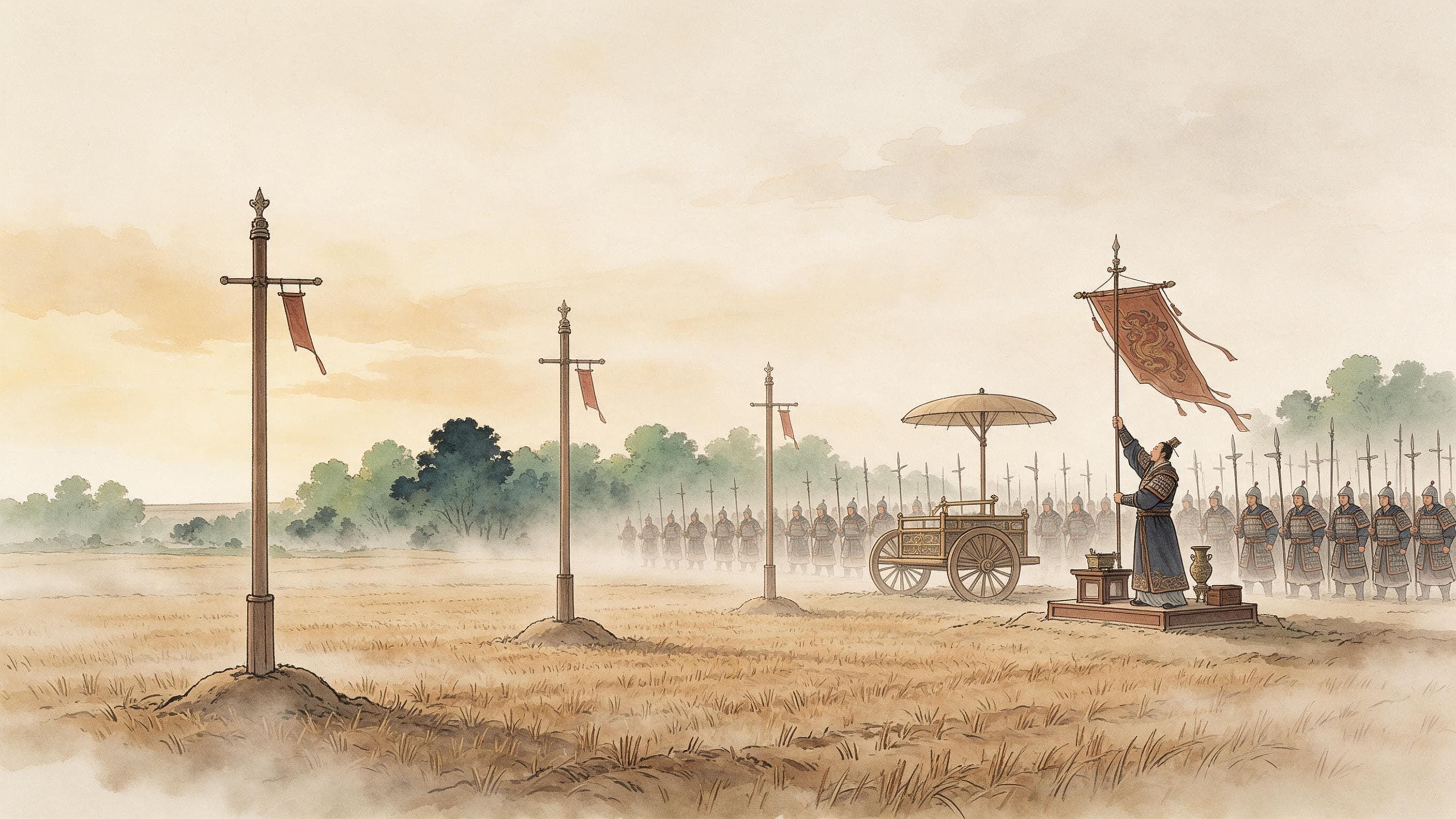
接著是這一月的待遇與動作:天子「居青陽左個,乘鸞路,駕倉龍,載青旂,衣青衣,服倉玉,食麥與羊,其器疏以達」。住東堂北偏的一間,坐有鸞鈴的車,駕青色高馬,插青旗,穿青衣,佩倉玉,吃麥與羊,器物刻鏤得疏朗通透。立春前三天,大史來報告「某日立春,盛德在木」,天子於是齋戒;立春那天,親帥三公、九卿、諸侯、大夫到東郊迎春,回來在朝上賞賜公卿諸侯大夫。
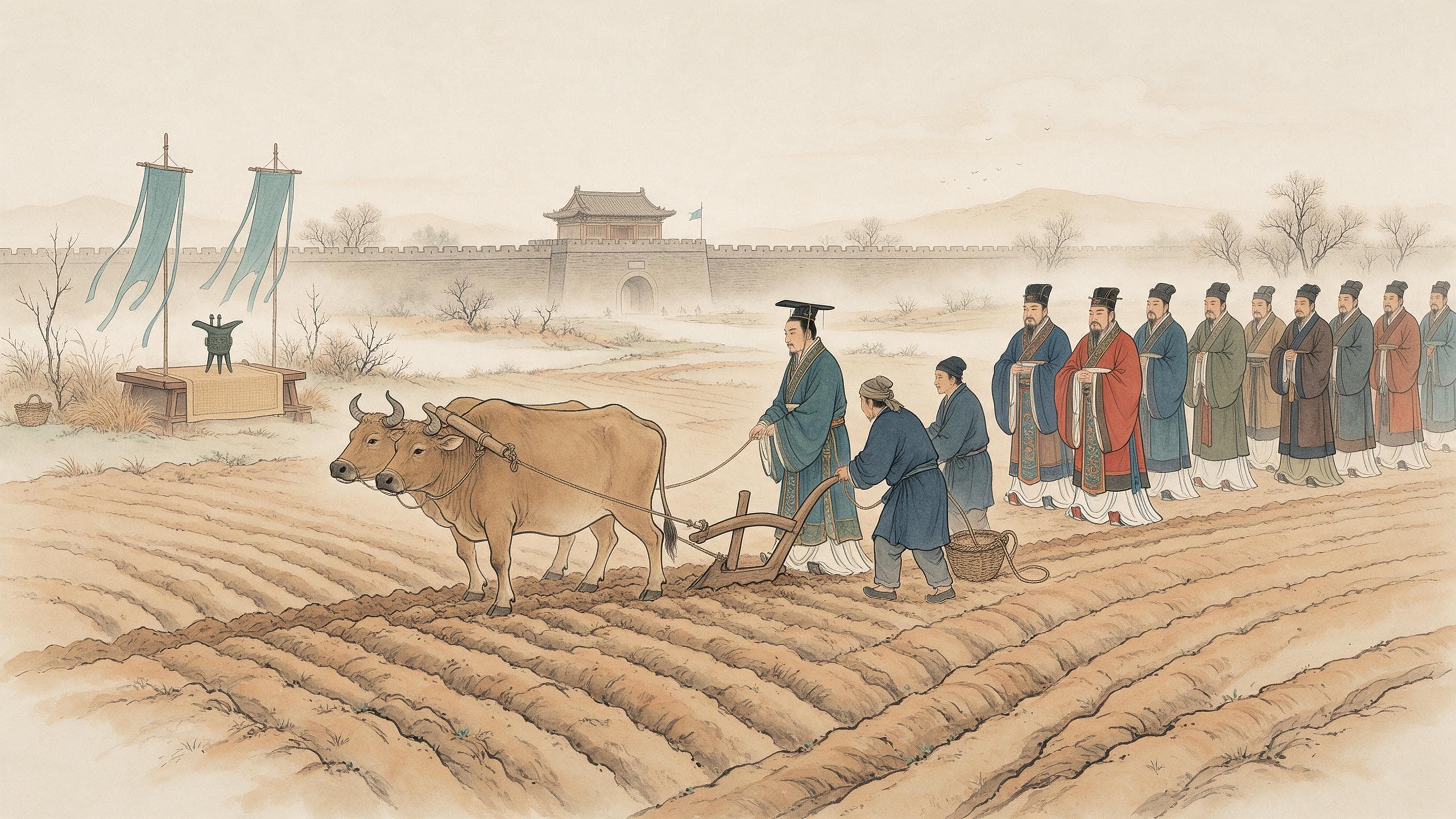
然後是把活派下去。命三公「布德和令,行慶施惠,下及兆民」,慶賞要「毋有不當」;命大史「守典奉法,司天日月星辰之行,宿離不貸,毋失經紀,以初為常」。再往下是農事:元日祈穀於上帝,擇元辰,天子親載耒耜,措在車右與御者之間,率三公九卿諸侯大夫躬耕帝籍,天子三推,三公五推,卿諸侯九推;回來在大寢執爵,命曰「勞酒」。鄭注解釋:帝籍是「為天神借民力所治之田」,把耒耜放在車右與御者之間,是「明己勸農,非農者也」——天子只是勸農,不是農夫。
最後一段是農事與禁令。「天氣下降,地氣上騰,天地和同,草木萌動」,注說這是「陽氣蒸達可耕之候」;於是王命布農事,田畯住到東郊,修封疆,審端徑術,察看丘陵阪險原隰,教民該種什麼。隨後是一串「毋」:「禁止伐木」;「毋覆巢,毋殺孩蟲胎夭飛鳥,毋麛,毋卵」;「毋聚大眾,毋置城郭」;「掩骼埋胔」;「是月也不可以稱兵,稱兵必天殃」。注把這些都解成一句話:伐木是「盛德所在」,覆巢是「為傷萌幼之類」,聚眾是「為妨農之始」,掩骼是「死氣逆生」,稱兵是「逆生氣」。
注:把每個詞釘住
鄭注在這一頁上做的是「釘詞」的活。「孟」是長;「青陽左個」是「大寢東堂北偏」;「元辰」是「郊後吉辰」;「田」是田畯,「主農之官」;「術」讀作「遂」,是田間小溝;「其器疏以達」是「刻鏤之,象物當貫土而出也」。他引書也密:《夏小正》「正月啟蟄,魚陟負冰」,農書「土長冒橛,陳根可拔,耕者急發」,《春秋傳》「夫郊祀后稷以祈農事」。
他還記異文,也記自己的判斷。「今月令鴻皆為候」——這一句裡的「鴻鴈來」,另一個本子寫作「候鴈來」;孔疏指出那是《呂氏春秋》本。至於這套隨月換色的車馬衣服,鄭玄自己說得很清楚:「凡此車馬衣服皆所取於殷時而有變焉,非周制也」,並舉《周禮》相對照——朝、祀、戎、獵的車服各隨其事,不隨四時。禮書規定的這一套,注家自己承認不是周制。
音義:字怎麼念
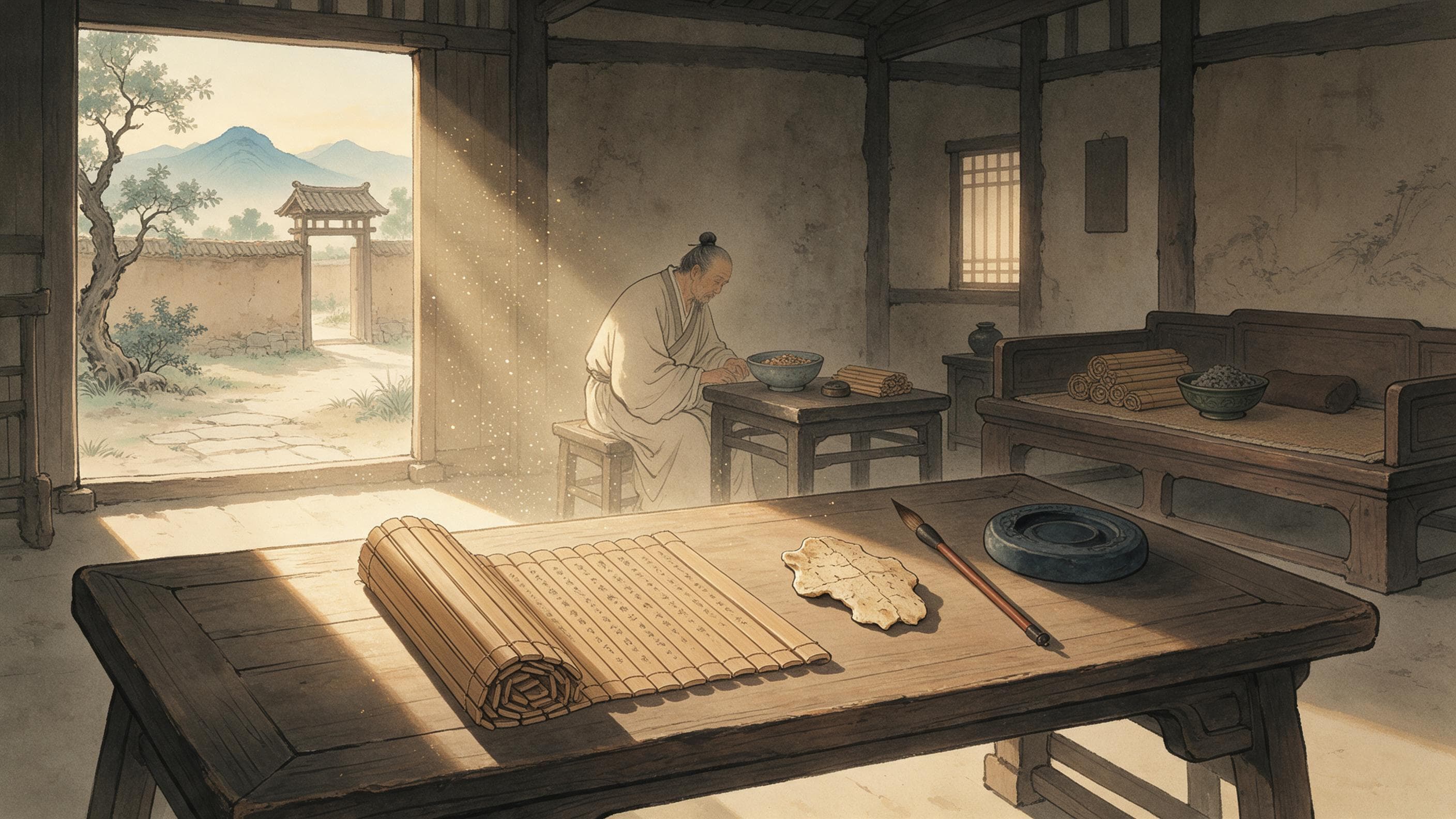
第三層是陸德明的《音義》,小字夾在注後,管的是讀音與字形:「參所林反,中如字,徐竹仲反」「大皥上音太,後文及注大簇、大史、大寢、大室、大微、大廟、大祝、大尉、大宰皆同」「個古賀反」「鸞力官反,路本又作輅」「齊側皆反,本亦作齋」。這一層不問禮制,也不問意義,只保證這段文字能被正確地念出來、抄下去。
疏:替注打官司
疏是孔穎達等人的活,專替鄭注解釋、也替鄭注辯護。先說月份:「此言孟春者,夏正建寅之月也。呂不韋在於秦世,秦以十月為歲首,不用秦正而用夏時者,以夏數得天正故用之也。」再說星:疏引三統曆、元嘉曆,一一算過,發現對不上,於是承認「月令昏明中星皆大略而言,不與曆正同」。它還把經文裡看似一天的「元日」「元辰」拆成兩天:「甲乙丙丁等謂之日」,郊祭用辛日;「子丑寅卯之等謂之為辰」,「耕用亥日,故云元辰」。祭天一天,耕地另一天。
迎春一段,疏把分歧擺出來:鄭玄說迎的是「蒼帝靈威仰」,疏說「賈、馬、蔡邕皆為迎春祭大皥及句芒」,並點明鄭的依據是緯書。齋戒日數也有出入:「周法四時迎氣皆前期十日而齊……今秦法簡省,故三日也。」耕田的三推,疏引《國語》「王耕一墢,班三之」來對,兩套數字並存,不合併。禁令它也補例外:「禁止伐木」禁的只是「禁障之處」,國家需用材時、非禁地,仍可取;妖鳥的巢仍可覆;麛卵四時皆禁,但薦獻需用時可取。
另一本書的同一個孟春
《淮南子·時則訓》寫同一個孟春:「孟春之月,招搖指寅,昏參中,旦尾中。」接著是同樣的東方、甲乙、盛德在木、其蟲鱗、其音角、律中太蔟、其數八、酸與羶、祀戶、祭先脾;同樣的物候:東風解凍,蟄蟲始振蘇,魚上負冰,獺祭魚,候雁北;同樣的禁令:禁伐木,毋覆巢、殺胎夭,毋麛,毋卵,毋聚眾、置城郭,掩骼薶骴。不同處也很清楚:月令作「鴻鴈來」,時則訓作「候鴈北」;月令「青陽左個」,時則訓作「青陽左丟」,這個字疑是「左個」之訛,照錄不改;月令說「迎春」,時則訓說「迎歲」,還把「諸侯」省掉了,另加「幣禱鬼神,犧牲用牡」。一般認為兩書同源,頁面本身並不寫誰抄誰,所以不能拿它們互證。四時的架子兩書都搭著:《時則訓》立夏迎歲於南郊,立秋迎秋於西郊,立冬迎歲於北郊,與孟春的東郊正好一季一郊。這一頁給的是一張派活的表:天子住哪、穿什麼、吃什麼,官做什麼,什麼不許做,再加上注、音義、疏三層解釋與另一本書的平行一段。它不是一篇講道理的概論,只是一份寫得很細的日程。
延伸閱讀:三千門客吃什麼:孟嘗君的飯桌與等級 · 書同文字:一句詔令,和三百多年後的解釋 · 醬與豉:一百二十甕與三斗豆
參考來源與延伸閱讀
- 《礼记·月令》(孟春之月;维基文库篇名页) — The ritual text itself: in the first month the sun is in Yingshi, at dusk Shen culminates and at dawn Wei; the east wind thaws the ice, insects stir, fish rise to the ice, otters make their offering, wild geese come; the son of heaven dwells in the Qingyang left chamber, rides the phoenix carriage, raises the blue-green banner, wears blue-green and the granary jade, eats wheat and mutton; three days before spring the grand scribe announces the day; on the day the king leads the dukes, ministers, lords and officers to welcome spring at the eastern suburb and rewards them at court; the chancellor spreads virtue, the grand scribe keeps the calendar, the king prays for grain and ploughs the divine acres three times while the dukes push five and the lords nine; the month forbids cutting timber, overturning nests, killing the young or taking eggs, gathering crowds or raising walls, and orders bones and carcasses buried. A programme for the month, not a diary of one.
- 《淮南子·时则训》(孟春之月;维基文库篇名页) — The parallel month: 'In Meng Chun the Dipper points to yin; at dusk Shen, at dawn Wei' (孟春之月,招搖指寅,昏參中,旦尾中), then the same east, jia-yi days, wood, scaly creatures, the jue note, the great-tsou pipe, the number eight, sour and rank, the door sacrifice and the spleen; the same signs, with small variants — 'fish rise bearing the ice' (魚上負冰), 'the hou geese go north' (候鴈北); 'holds court in the Qingyang left diu' (朝于青陽左丢, probably a scribal error for 左个); 'welcomes the year at the eastern suburb' (迎歲于東郊), with coins and prayers and male victims; and the same prohibitions — no timber, no nests, no unborn or young, no fawns, no eggs, no levies, no walls, bones covered. Used only as a parallel version; the page itself does not claim a common source.
- 《礼记注疏》卷十四·月令(汉郑玄注、唐陆德明音义、唐孔颖达疏;四库全书本,维基文库本,未与中华书局点校本复核) — Juan 14 is Meng Chun to 'Meng Chun in winter orders'; juan 15 begins at mid-spring, so the mid-spring bans (no draining marshes, no burning hills) are not in this juan. The page runs four layers continuously without section marks: the classic, Zheng Xuan's comment (注), Lu Deming's sound-and-meaning (音義) and Kong Yingda's sub-commentary (疏); the 考證 at the end is a Qing collation note (Siku editors), not Han-Tang commentary, and is not used here. Zheng: the Qingyang left chamber is 'the northern side of the eastern hall of the great chamber'; the seasonal carriages and colours are 'taken from the Yin and altered — not the Zhou system' (非周制也); the field is 'land worked by the people's strength, lent to the god of heaven'; the plough is placed between guard and driver 'to show that he encourages farming, not that he is a farmer'; the bans are explained as sparing pregnant animals and budding life. Kong: the month is the Xia calendar's first month though Qin began the year in the tenth month; the culminating stars are approximate; the day of the sacrifice and the day of ploughing are two days (郊用辛日,耕用亥日,故云元辰); on welcoming spring he records that Jia Kui, Ma Rong and Cai Yong all took it as sacrificing to Taihao and Goumang while Zheng used the Blue Emperor Lingweiyang; the timber ban covers only reserved ground and allows state needs; nests of ominous birds may be overturned; fawns and eggs may be taken for offerings.