
一個日子、一個時辰、一個地點,十一個字:「時甲子昧爽,王朝至于商郊牧野,乃誓。」這是《尚書·牧誓》全部的開頭。本篇就停在這一個早上:誓詞要人做什麼、隊伍怎麼走、一首詩又把這一天唱成什麼樣。日期照原文寫「甲子」,不折成公曆的某月某日。
一、牧誓:一份軍令
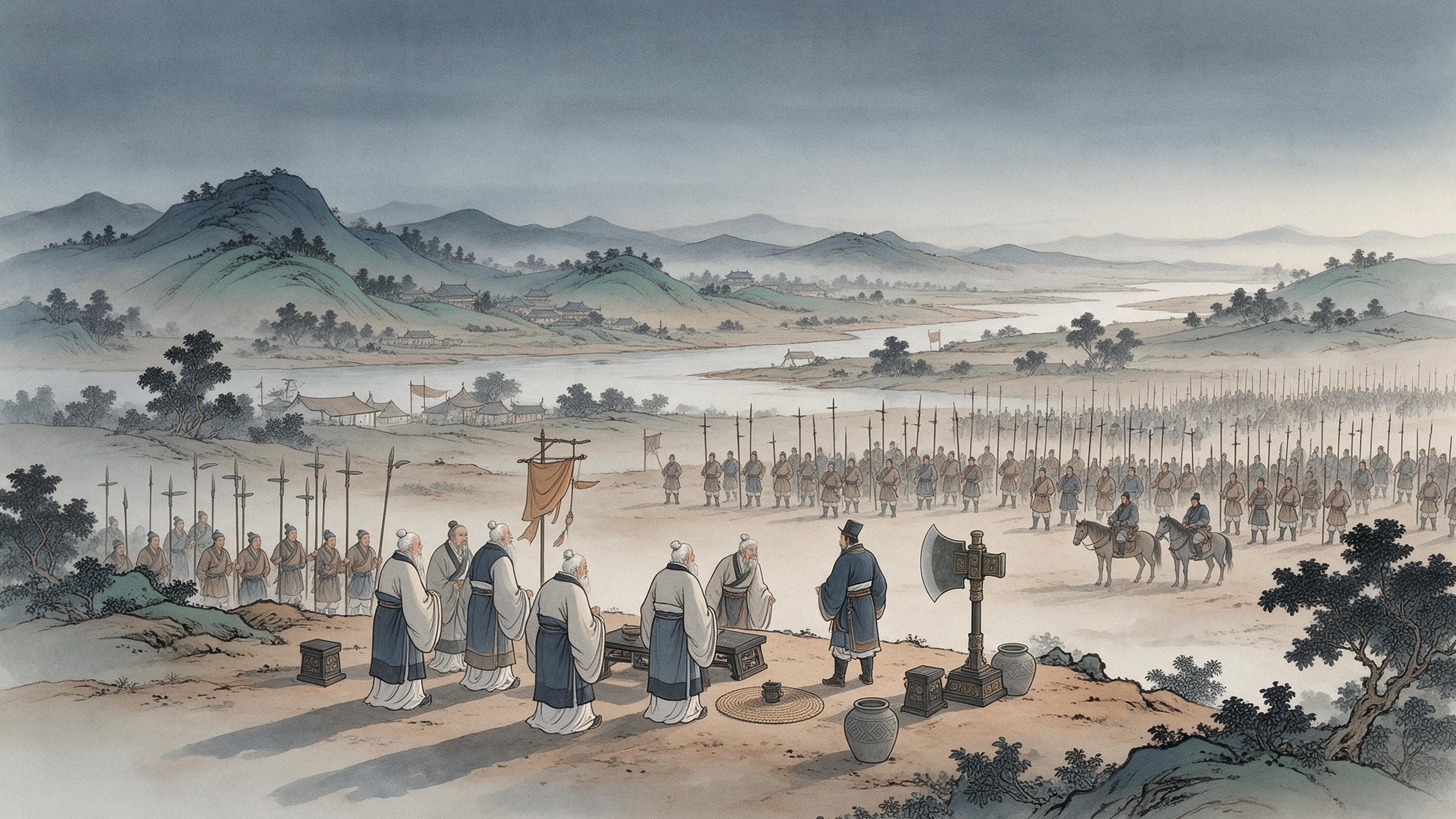
誓詞開口之前先有身段:「王左杖黃鉞,右秉白旄以麾,曰:『逖矣西土之人。』」左手黃鉞、右手白旄,一句話先招呼西土來的人。接著點名,這張名單是全篇最實在的東西:「嗟!我友邦冢君,御事、司徒、司馬、司空、亞、旅、師氏、千夫長、百夫長及庸、蜀、羌、髳、微、盧、彭、濮人。」——友邦的君長、三有司與亞旅師氏、千夫長百夫長,再加庸、蜀、羌、髳、微、盧、彭、濮八個從征的族。本頁在此處標了異讀(盧一作纑),引用照錄。
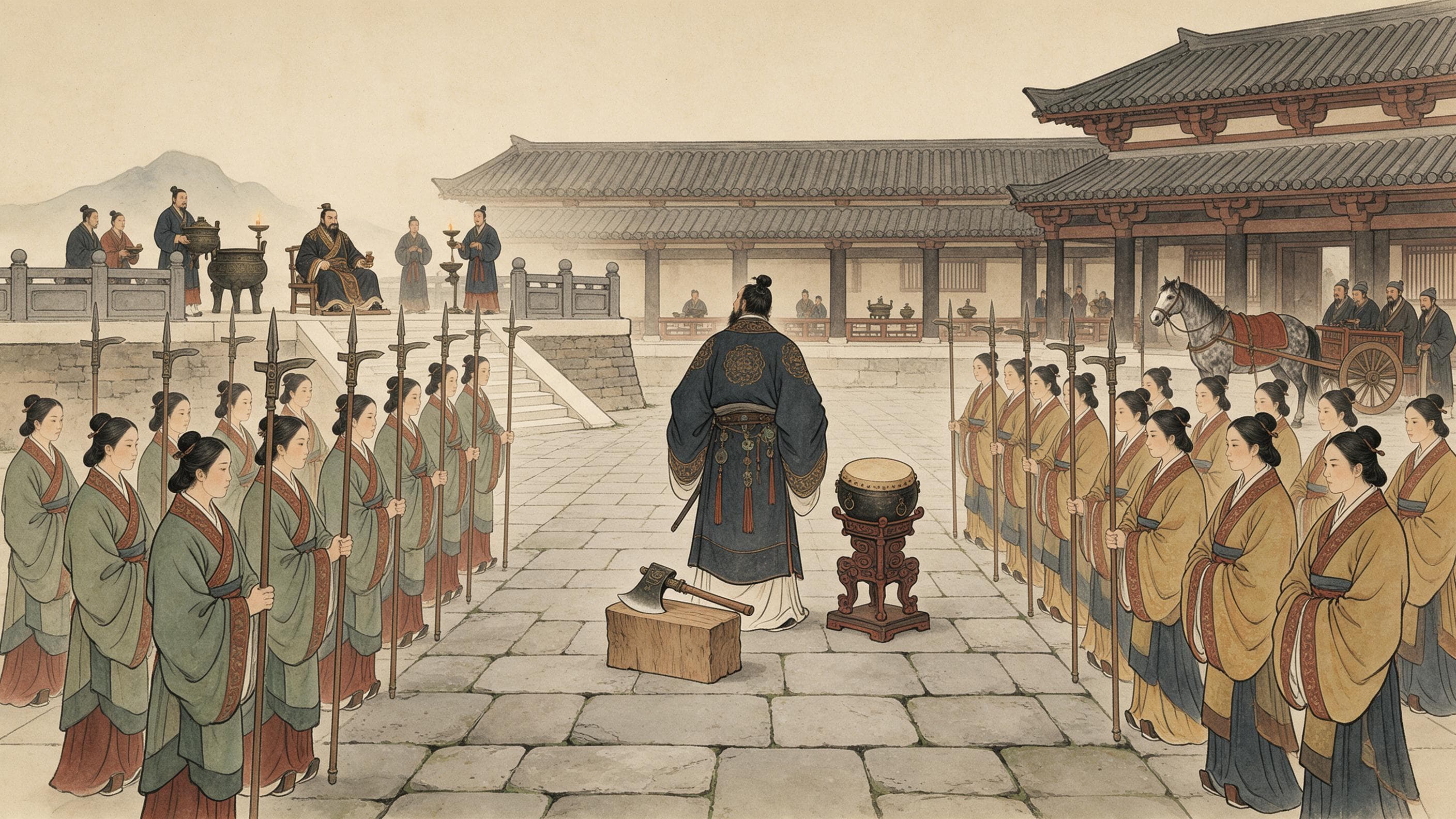
然後是兵器的口令,三件東西三個動詞:「稱爾戈,比爾干,立爾矛,予其誓。」舉戈、並盾、立矛。動詞和名詞一樣要緊:舉起來、並排、豎在地上。這是口令,不是陣圖——本頁不給隊形、不給行距、不給每行多少人,所以本篇也不畫陣。
罪名接在後面,而且先引一句老話:「古人有言曰:『牝雞無晨。牝雞之晨,惟家之索。』」落到商王身上:「今商王受,惟婦言是用。昏棄厥肆祀,弗答;昏棄厥遺王父母弟,不迪。乃惟四方之多罪逋逃,是崇是長,是信是使,是以為大夫卿士。」結論是「今予發,惟恭行天之罰」。這一層要標清楚:以上是誓詞裡周人這一方的指控,是他們出兵的告示,不是判決書。
二、六步七步與四伐七伐
最接近操典的是這幾句:「今日之事,不愆于六步、七步,乃止齊焉。夫子勖哉!不愆于四伐、五伐、六伐、七伐,乃止齊焉。」——前進不超過六步七步就停下對齊;擊刺不超過四伐、五伐、六伐、七伐也停下對齊。步與伐,各有一個上限,各配一次停。本頁給「伐」下了一條注:「一擊一刺為一伐」,引的是《禮記·樂記》鄭注;那是注,不是經文,本篇標明。至於一行幾人、人與人隔多遠、行列怎麼對齊,本頁不說。
誓詞還有兩句給這份軍令裝上牙齒:「尚桓桓,如虎、如貔、如熊、如羆,于商郊;弗迓克奔,以役西土。」要像虎豹熊羆,來降的不迎擊,留下他們服役;最後一句是罰:「爾所弗勖,其于爾躬有戮。」不賣力,就治你本人的罪。
三、同一場戰,兩種嗓子:誓與詩
《詩經·大雅·大明》寫的是同一天,用的是另一副嗓子。第八章:「殷商之旅,其會如林。矢于牧野,維予侯興。上帝臨女,無貳爾心。」——商旅多得像林子,在牧野列陣;上帝在你這邊,心不要二。第九章:「牧野洋洋,檀車煌煌,駟騵彭彭。維師尚父,時維鷹揚。涼彼武王,肆伐大商。會朝清明。」曠野、檀木戰車、赤毛白腹的四馬,還有「鷹揚」的師尚父。
這兩種文本不能合成一篇。誓詞是戰前對將士下的令,講步、講伐、講罰;詩是事後唱這一天的歌,講如林、講煌煌、講鷹揚。詩不給步數,誓不給車馬的顏色。本頁還帶著《毛詩序》一句:「《大明》,文王有明德,故天復命武王也。」序是後人對這首詩用意的說明,不是詩本身;本篇把令、歌、序三層分開寫。
四、史書裡的數字與「倒兵」
數字都在《史記·周本紀》裡,而且是漢代史書的數字:「武王……遂率戎車三百乘,虎賁三千人,甲士四萬五千人,以東伐紂。」日期照錄:「二月甲子昧爽,武王朝至于商郊牧野,乃誓。」誓完還有一句:「諸侯兵會者車四千乘,陳師牧野。」——誓師時是三百乘,會師時是四千乘。本頁不解釋這兩數的關係,本篇也不替它調和,照錄而已。
開戰只兩句:「帝紂聞武王來,亦發兵七十萬人距武王。武王使師尚父與百夫致師,以大卒馳帝紂師。」接下來是這一整段最要緊的一句:「紂師雖眾,皆無戰之心,心欲武王亟入。紂師皆倒兵以戰,以開武王。」——紂的兵雖多,沒有戰心,倒轉兵器替武王開路。然後紂走上鹿臺,「蒙衣其殊玉,自燔于火而死」。這些是史書敘述的數目與場面,本篇標明「史書記載」,不當實數用,也不拿七十萬與四萬五千去推算勝負。
五、後來的人怎麼說
還可以添一句,但要標明它是後來的人說的。《左傳》昭公十一年,韓宣子問楚能不能克蔡,叔向答:「桀克有緡,以喪其國;紂克東夷,而隕其身。」說話人是叔向,場合是論楚,句子是對紂的評斷——既不是商末的記錄,也不告訴你那天隊伍怎麼站。所以本篇引它只作「後來的人怎麼說」,一句話,歸在叔向名下。兩頁不給的也列清楚:具體陣形(幾行、間隔多少)、兵器配備的比例、傷亡、打了多久、在曠野的哪一處,都沒有;不畫圖、不折公曆、不算總兵力。這一篇只說那個早上的三樣東西:一份口令、一首歌,和史書寫下的幾個數。
延伸閱讀:納錫大龜:占卜用的龜從哪來 · 郊祀:皇帝在哪裡祭天,隔幾年去一次 · 金丹:葛洪在羅浮山煉什麼
參考來源與延伸閱讀
- 《尚书·牧誓》(维基文库本,未与点校本复核) — The oath itself, short enough to read in a few minutes: 'At the hour of jiazi, before dawn, the king in the morning arrived at the waste of Muye outside the Shang capital, and then swore' (時甲子昧爽,王朝至于商郊牧野,乃誓); the axe and banner; the list of ranks and of the eight allied peoples; 'lift your ge, join your shields, set up your spears'; the charge about the hen that crows at dawn and the king who uses a woman's words; the orders of six or seven paces and of four to seven strokes; and the closing threat. The page marks variant readings in its own brackets — 盧/纑 and others — and carries one note, quoting Zheng's commentary to the Record of Music for 'one blow and one thrust make one fa' (一擊一刺爲一伐); that is a note, not the oath, and is marked as such here.
- 《诗经·大雅·大明》(维基文库本,未与点校本复核) — The song, eight stanzas, with the two that concern Muye: 'the hosts of Yin Shang came, their companies like a forest; they shot arrows at Muye… God is with you, do not doubt your hearts' (殷商之旅,其會如林……無貳爾心) and 'Muye was broad, the sandalwood chariots shone, the teams of red horses were strong; our Master Shangfu was like an eagle on the wing' (牧野洋洋,檀車煌煌,駟騵彭彭……時維鷹揚). The page also prints the Mao preface ('King Wen had bright virtue, and so Heaven again gave its command to King Wu' 文王有明德,故天復命武王也) and a note on the stanza count. The preface is a later statement of the poem's purpose, not part of the song, and is kept separate here.
- 司马迁《史记》卷四〈周本纪〉(维基文库本,未与点校本复核) — The Han history's account: 'Wu Wang led three hundred war chariots, three thousand tiger braves and forty-five thousand armoured men to attack Zhou in the east' (率戎車三百乘,虎賁三千人,甲士四萬五千人,以東伐紂); 'in the second month, on jiazi, before dawn, Wu Wang arrived at Muye' (二月甲子昧爽); after the oath 'the troops of the feudal lords who joined were four thousand chariots, and they drew up the army at Muye' (諸侯兵會者車四千乘,陳師牧野); Zhou 'sent out seven hundred thousand men'; 'Wu Wang sent Master Shangfu with a hundred men to challenge'; and 'Zhou's soldiers all turned their weapons and fought, opening the way for Wu Wang' (紂師皆倒兵以戰,以開武王). The chapter also records the crossing of the Meng ford in the eleventh month and the year count 'nine years' and 'eleventh year' — dating the Han history uses and the oath page does not.
- 《春秋左氏传》昭公十一年(维基文库本,未与点校本复核) — Used for one later sentence only, and marked as later. Answering Han Xuanzi's question whether Chu would take Cai, Shu Xiang says: 'Jie overcame Youmin and lost his state; Zhou overcame the Eastern Yi and destroyed himself' (桀克有緡,以喪其國;紂克東夷,而隕其身). The speaker is named in the text (叔向), the occasion is a question about Chu in the eleventh year of Duke Zhao, and the sentence is a Spring and Autumn judgement on Zhou, not a Shang or early Zhou record.