
EVERYDAY LIFE · SHANG TO QING
Stories
Small questions open a window onto a different world.
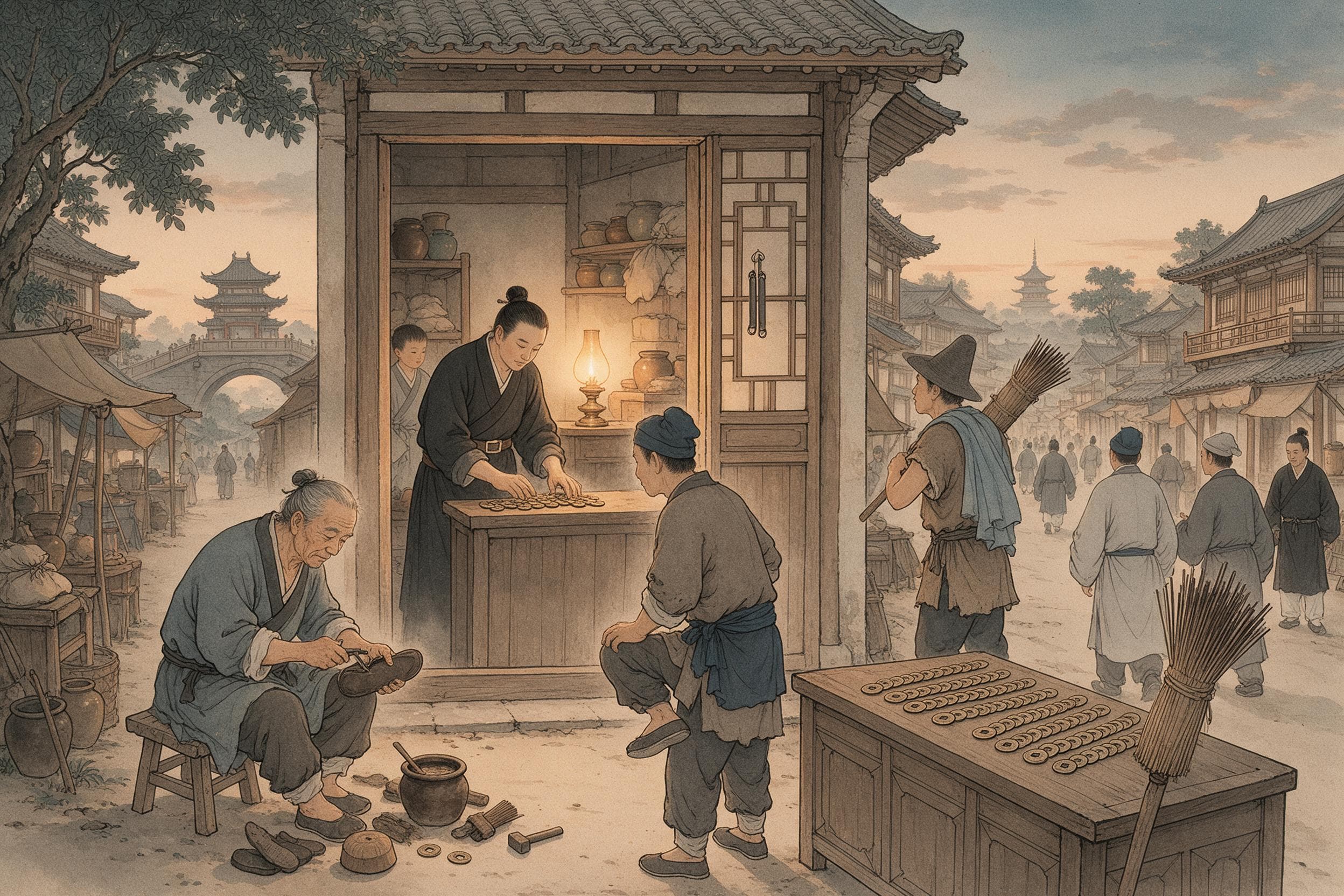
Dressed for the Job: Reading Occupation from Clothes in Song Cities
In Song Kaifeng, Meng Yuanlao wrote, you could tell a man's trade from his clothes. The statutes read differently: commoners in white, traders only in black or white, no purple.
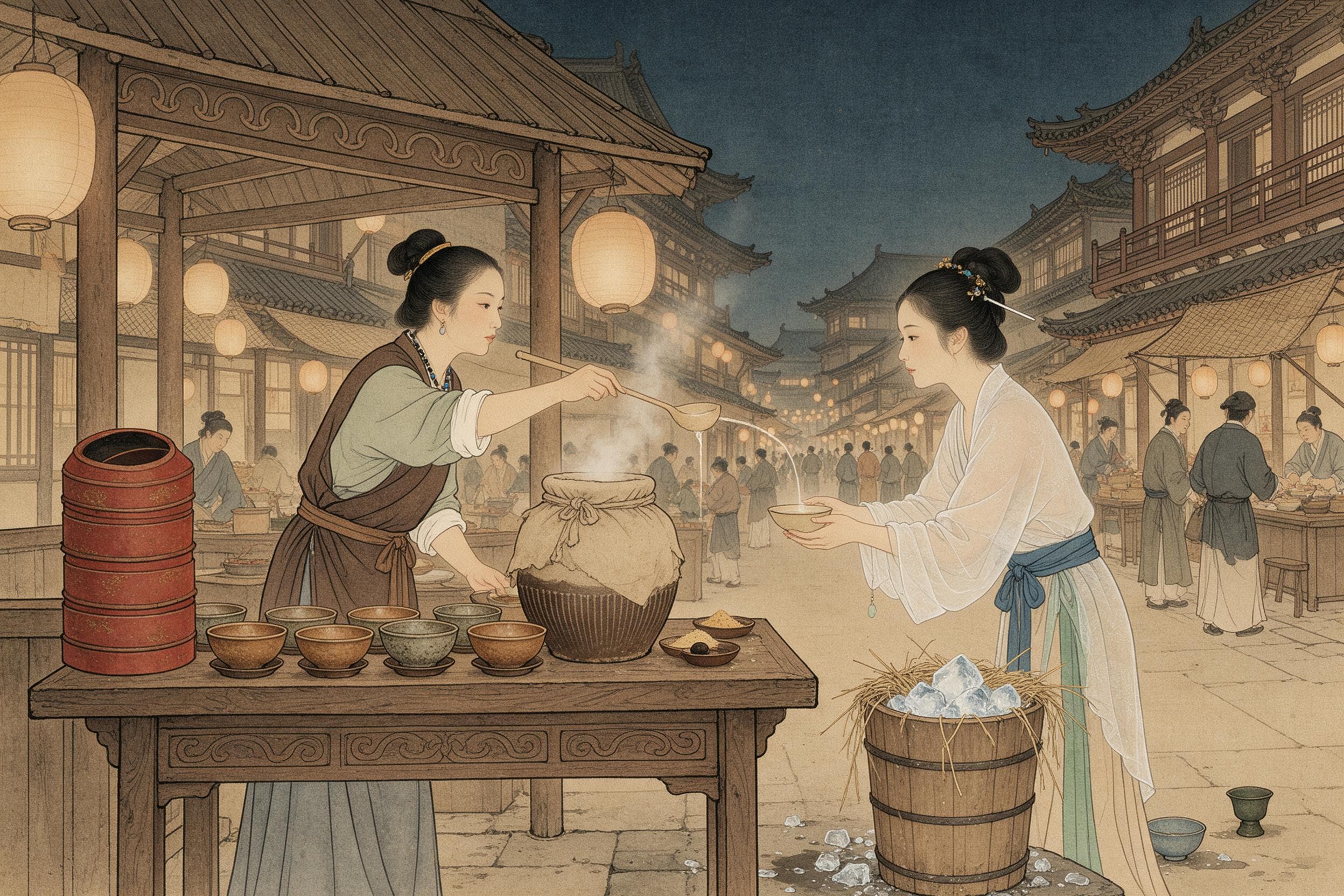
The Song Summer: Ice-Cold Rice Balls and a List of Cold Drinks
Kaifeng's summer night market sold iced rice balls, liquorice ice water and lychee paste in red lacquered boxes; only two shops outside the old gate sold ice itself, in silver vessels.
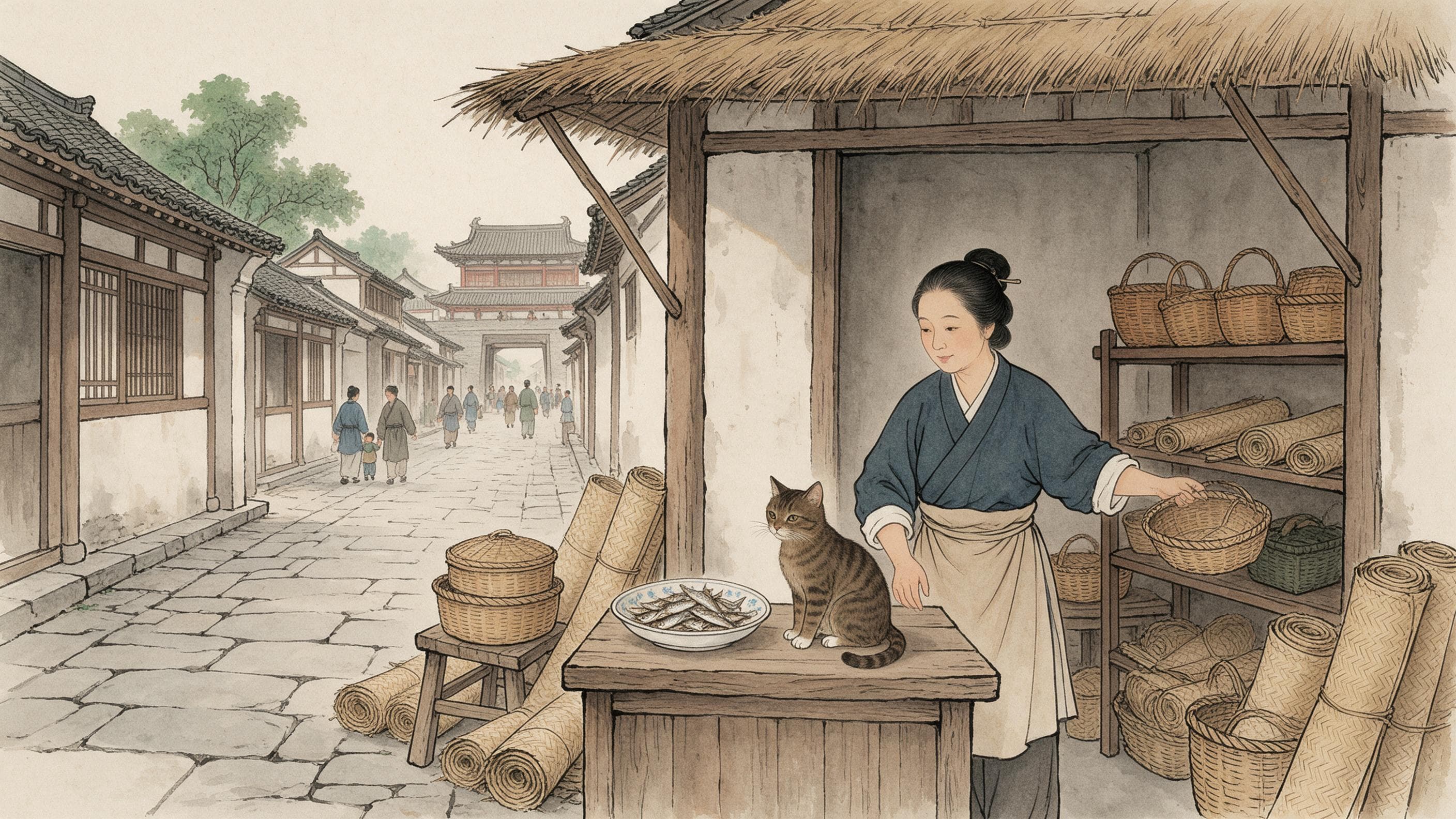
Baskets, Small Fish and 'Cat Correction': The Cat Trade of Song Cities
Lin'an's register of small trades lists cat baskets, cat fish, cat selling and a mysterious 'cat-and-dog correction'; Kaifeng delivered cat food and small fish daily.
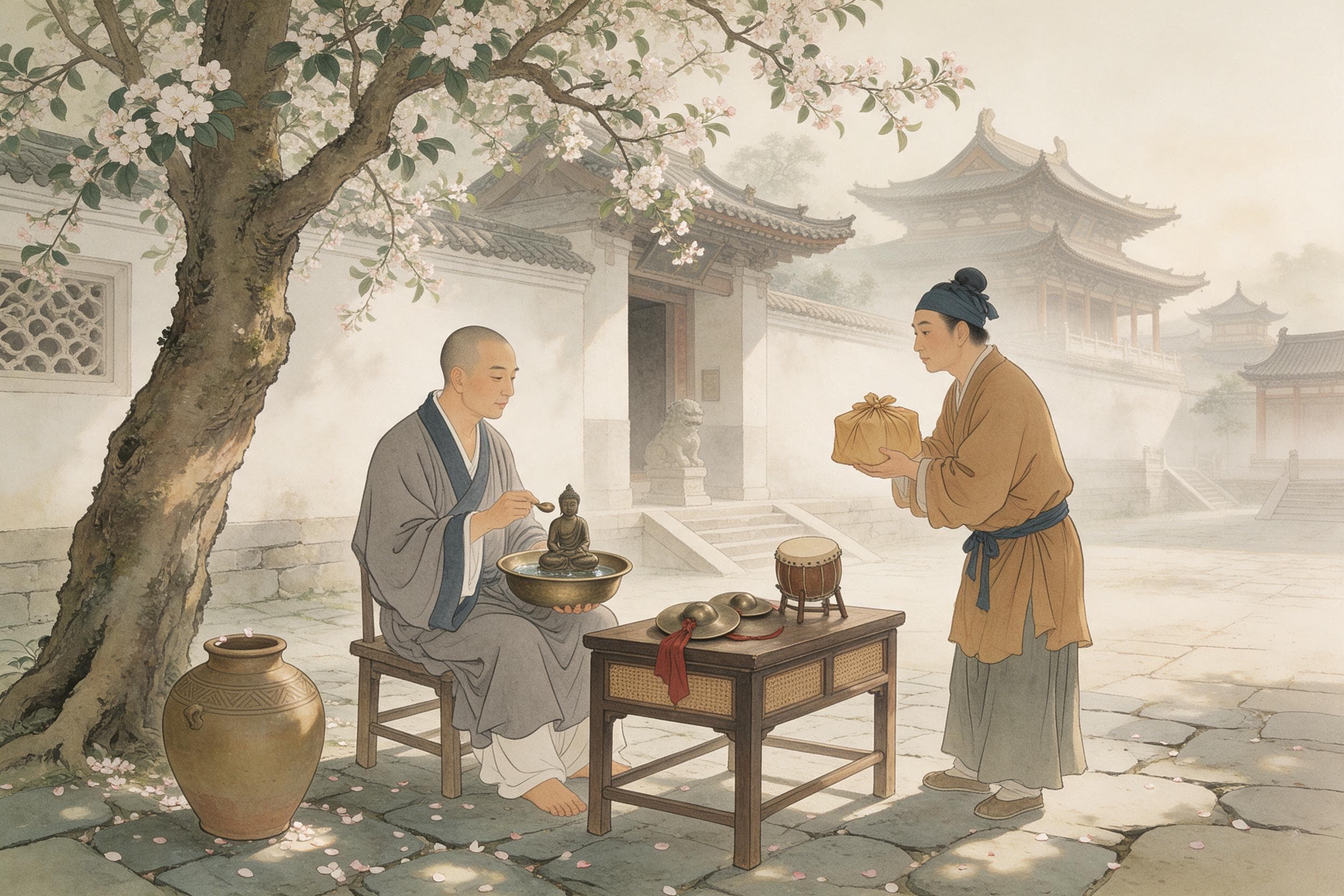
Sweet Water on the Buddha: The Business of the Buddha's Birthday
On the Buddha's birthday, Kaifeng's monasteries shared fragrant sweet water; in Lin'an monks walked the great houses ladling it over bronze images 'to seek alms', while West Lake held a release-of-life market.
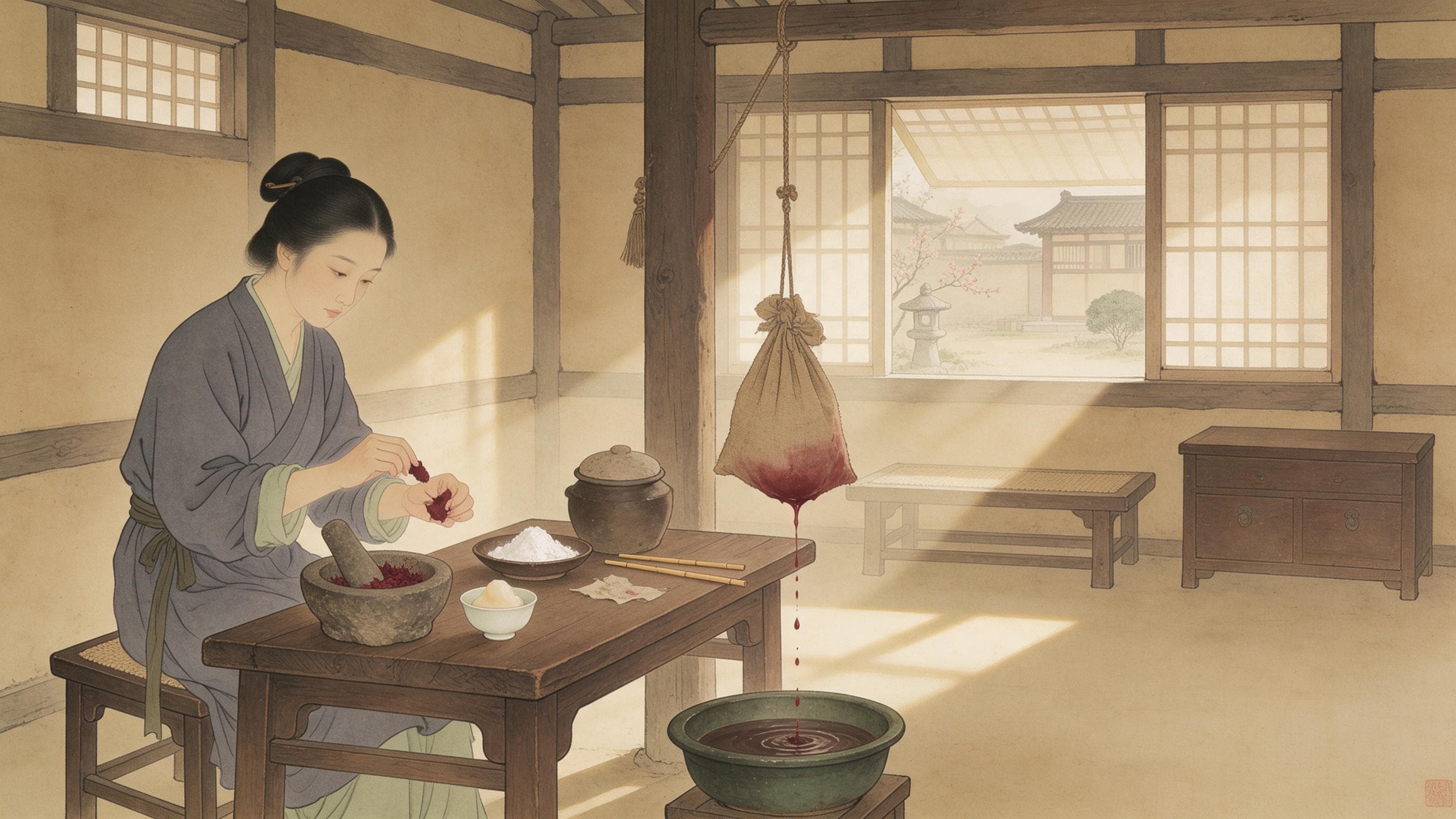
Ox Marrow, Clove and Safflower: Face Cream in Sixth-Century China
A sixth-century farming manual ends its chapter on safflower with a cosmetic workshop: marrow and clove for face cream, safflower and sour pomegranate for rouge. One ingredient, lead white, was toxic.
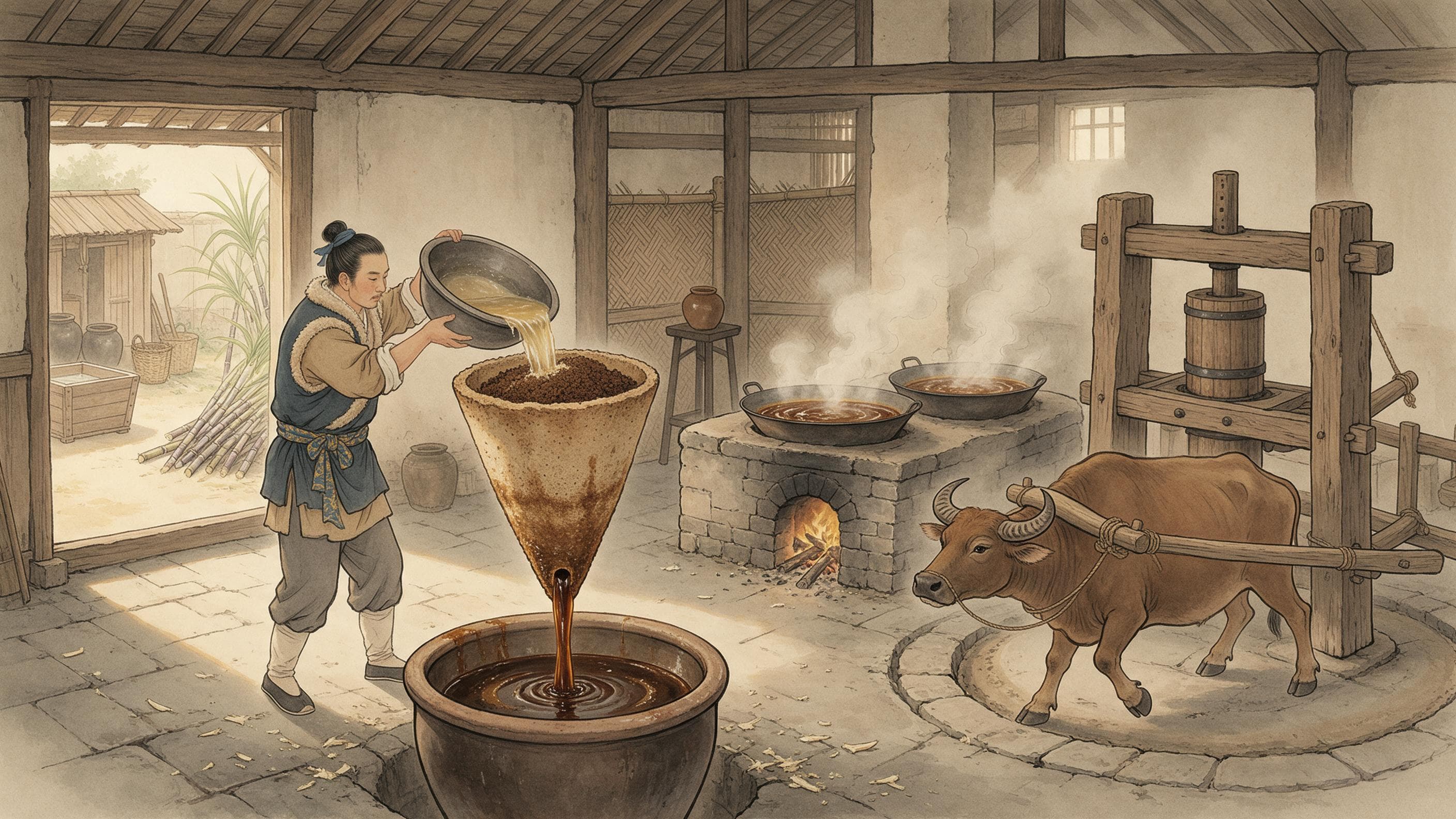
Washed with Yellow Mud: Making White Sugar in Ming China
Packed into a clay cone and washed with yellow mud water, Ming dark sugar came out as white frost, in five grades. Rock sugar was a separate process, not a finer grade of the same thing.
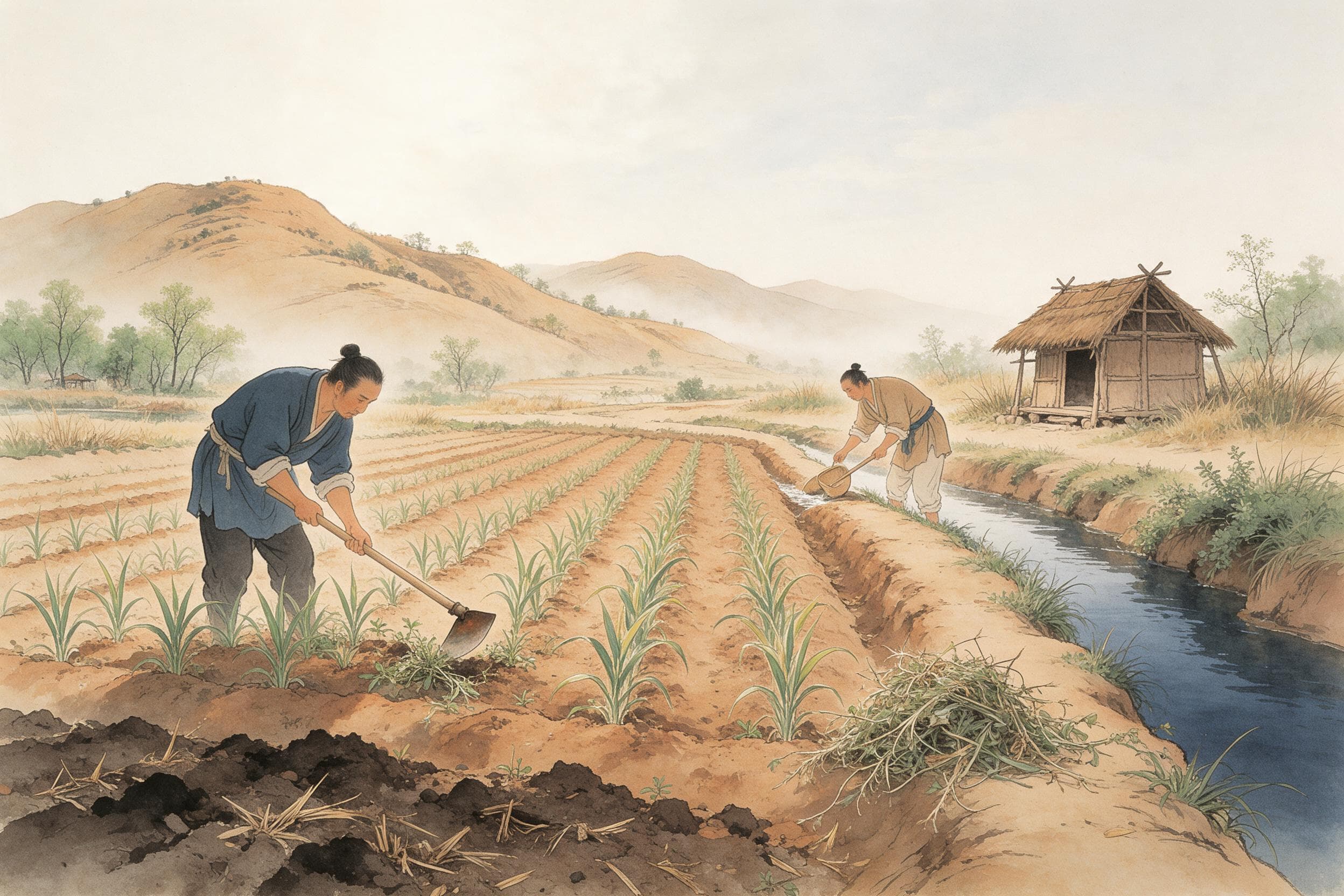
Feeding the Soil in Early China: Weeds, Deep Ploughing and Burnt Ground
Early Chinese farmers worked fertility by observation and timing: cut weeds left to rot, soil adjusted against its condition, five ploughings and deep tillage — not yet a manure regime.
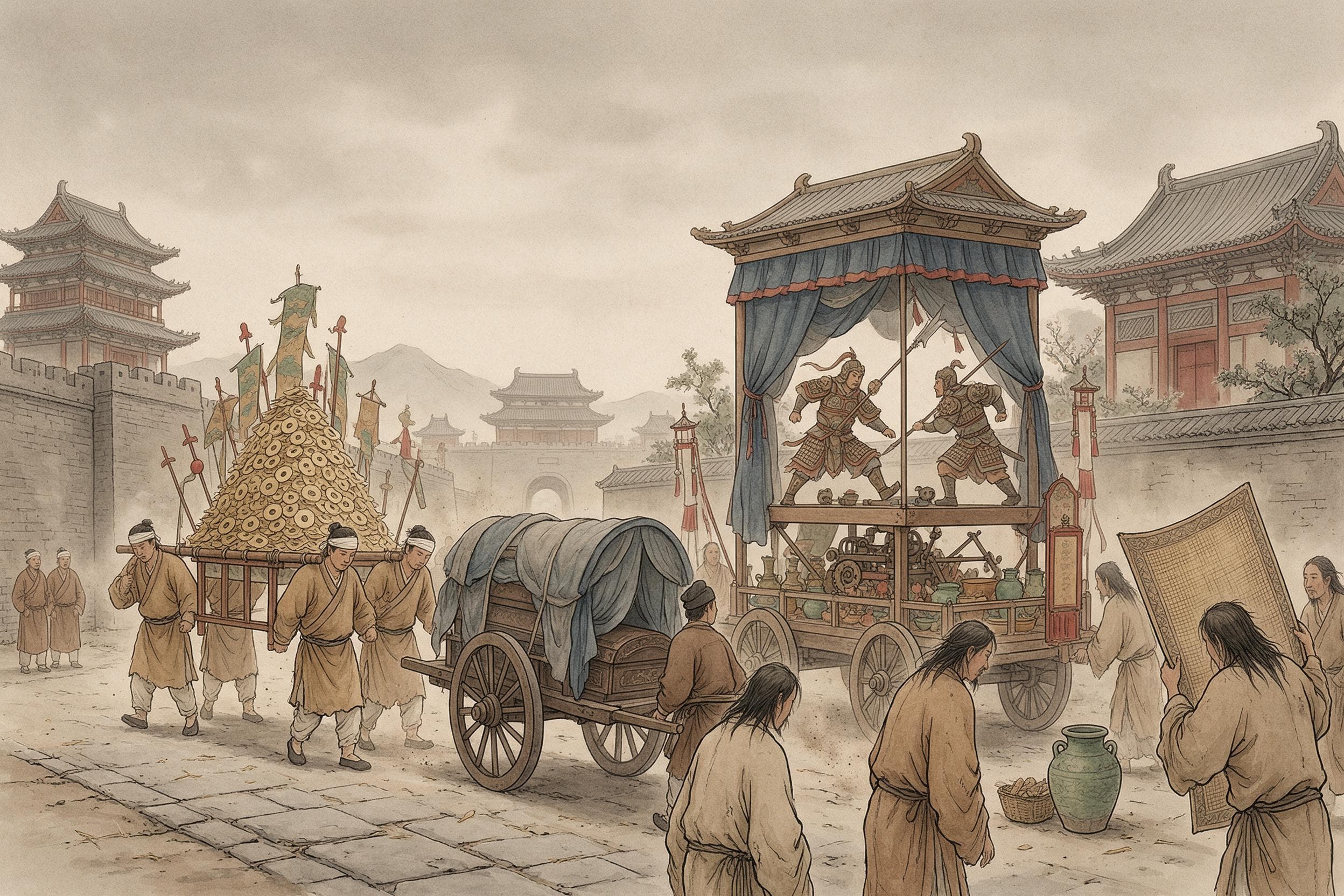
From Buried Coins to Burned Paper: The Making of Money for the Dead
A Tang writer described paper money carried before coffins and burned for spirits. A Tang history blamed it on a chancellor. By the Song it was seasonal stock, on sale days before the festival.
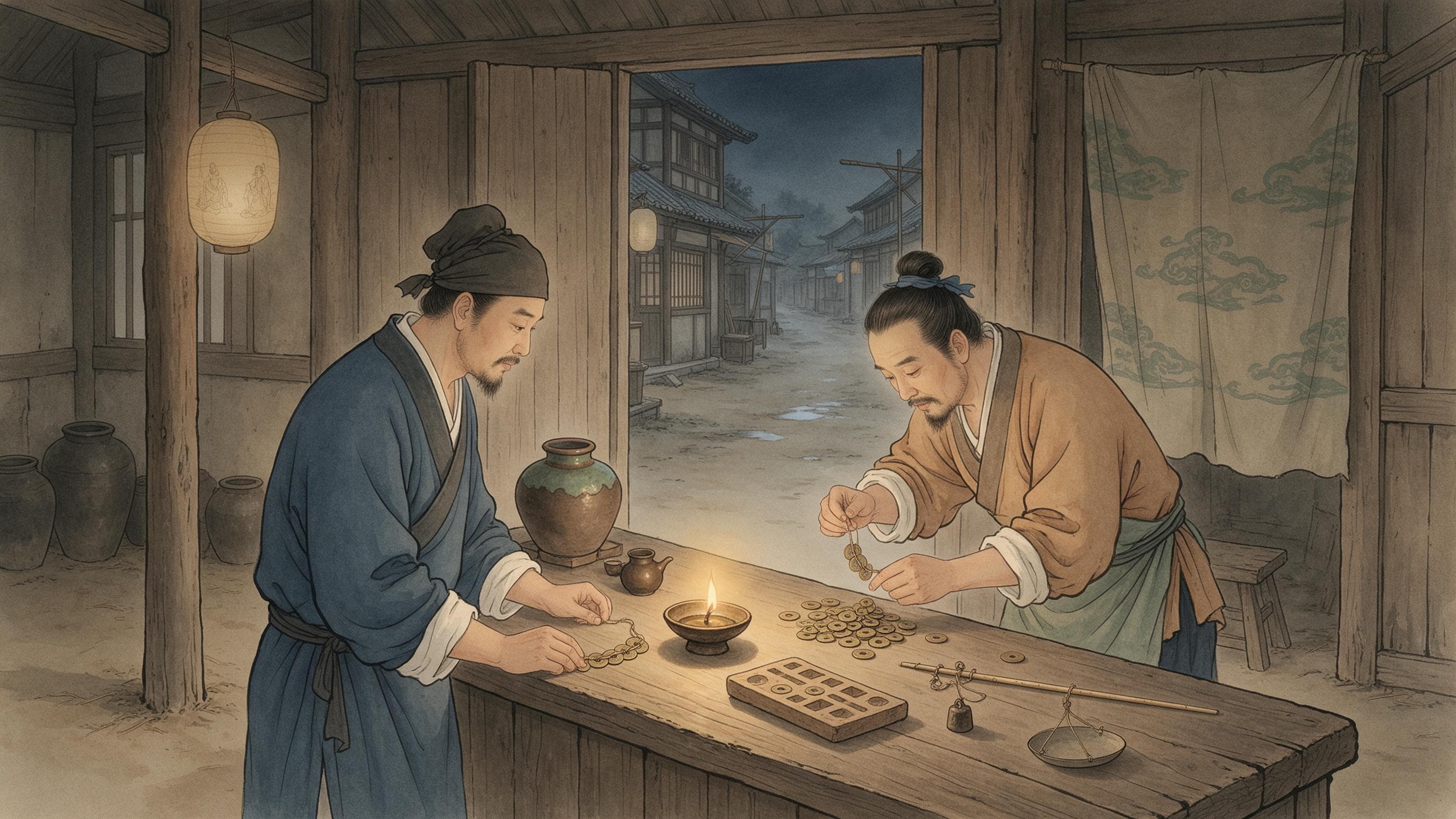
Why a String of a Thousand Coins Was Counted as 770
In Northern Song Kaifeng a string of a thousand coins was reckoned at 770. Six trades used six different rates, and by the Southern Song the street rate had fallen to fifty.