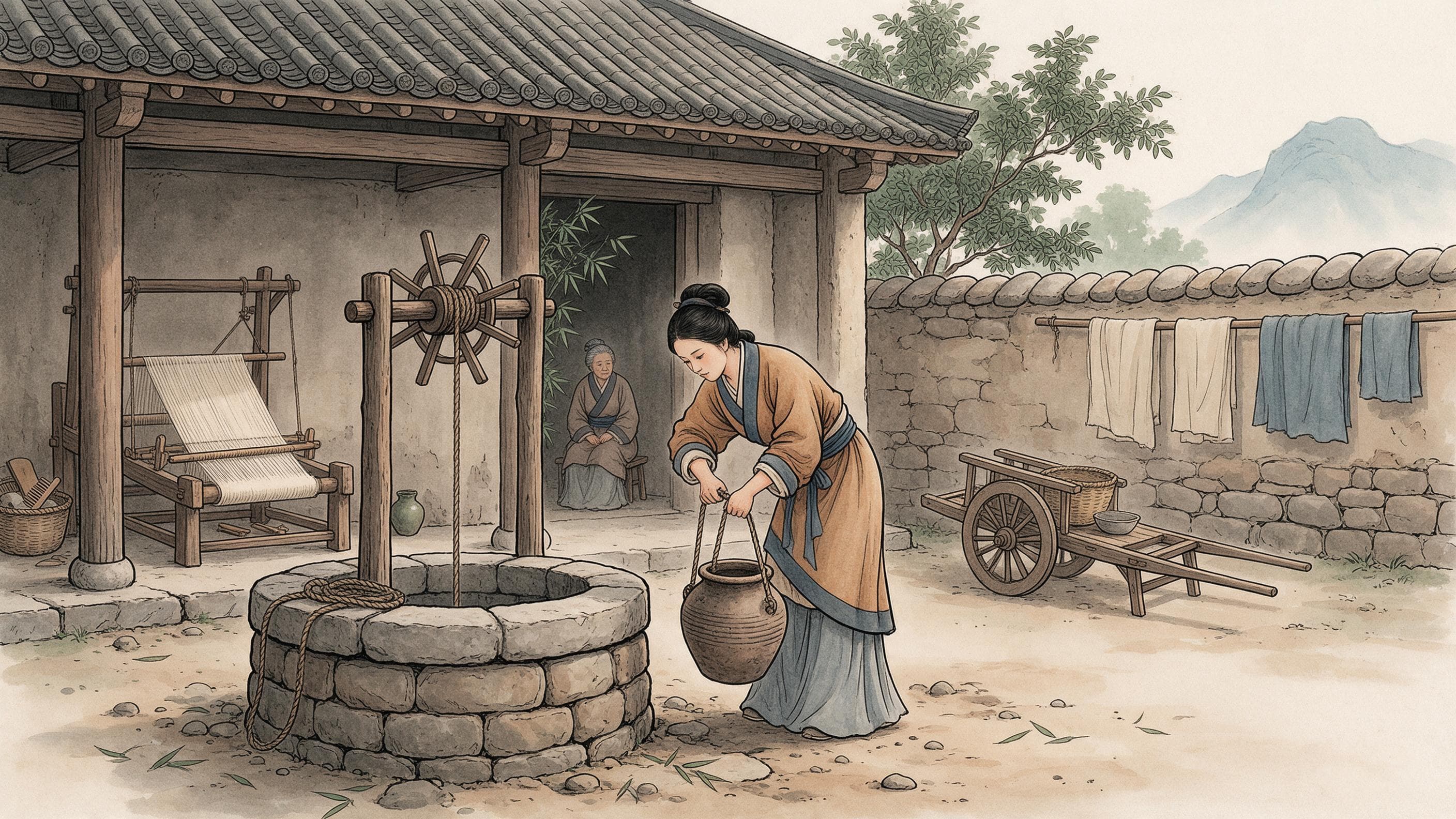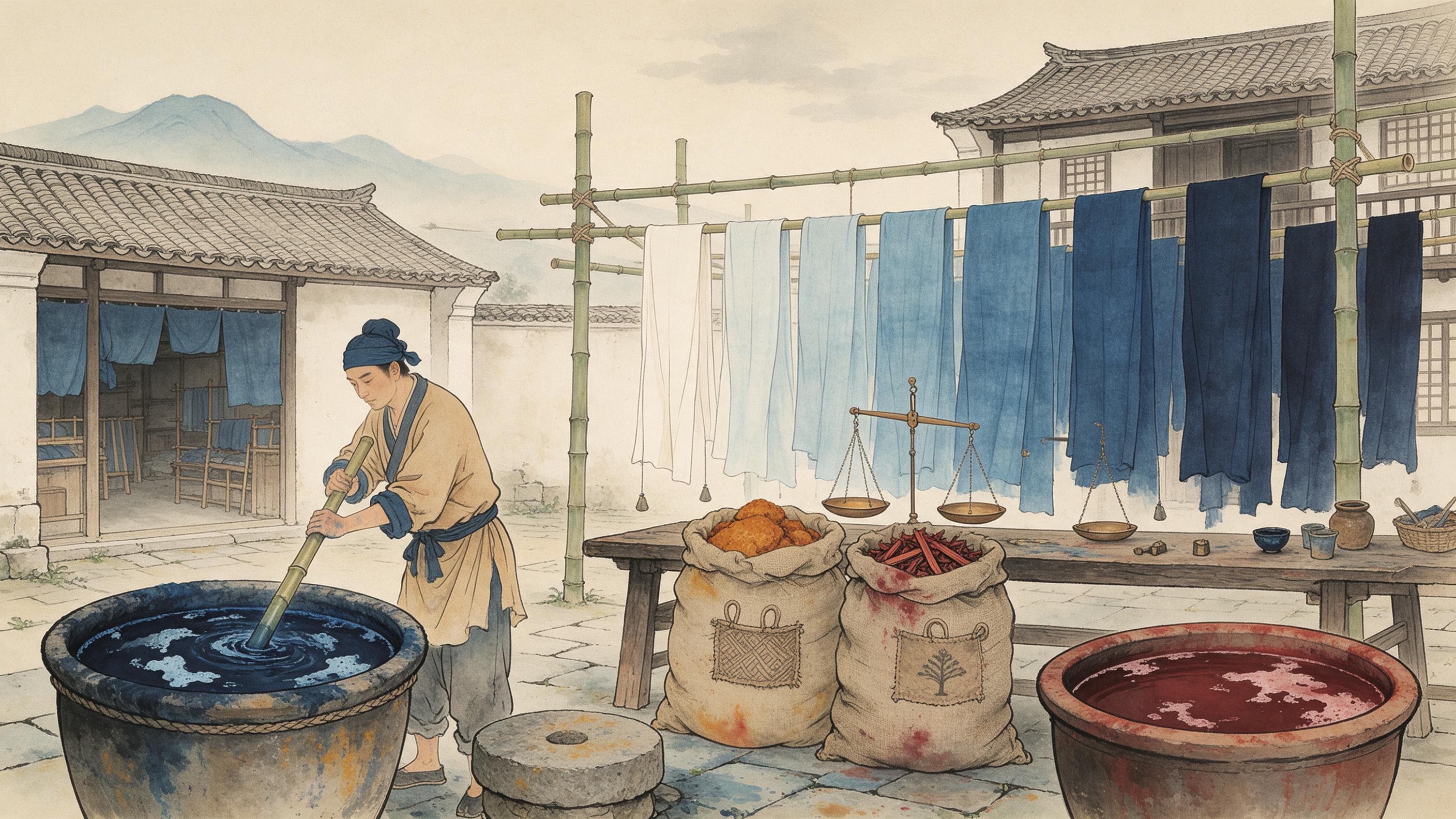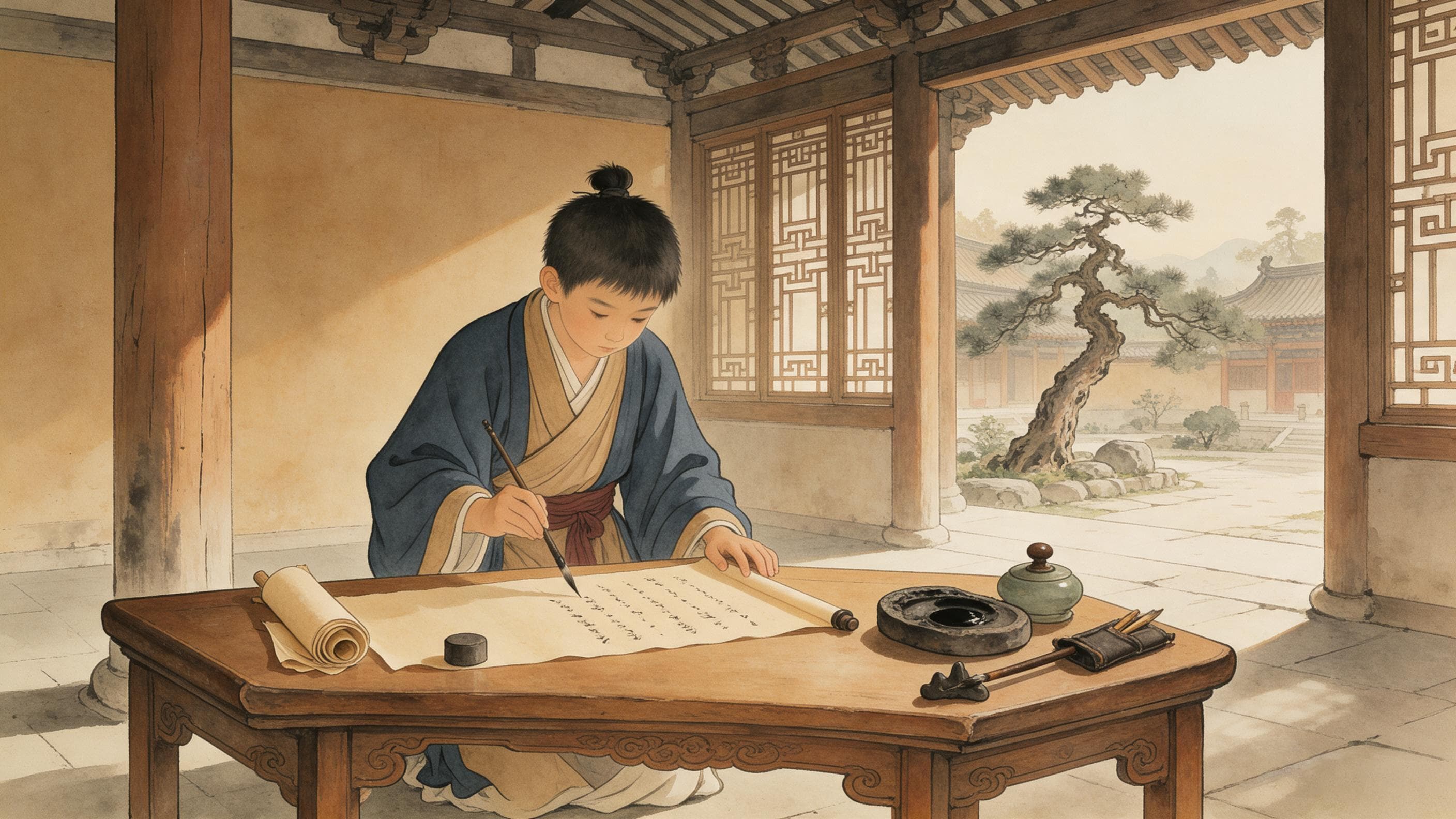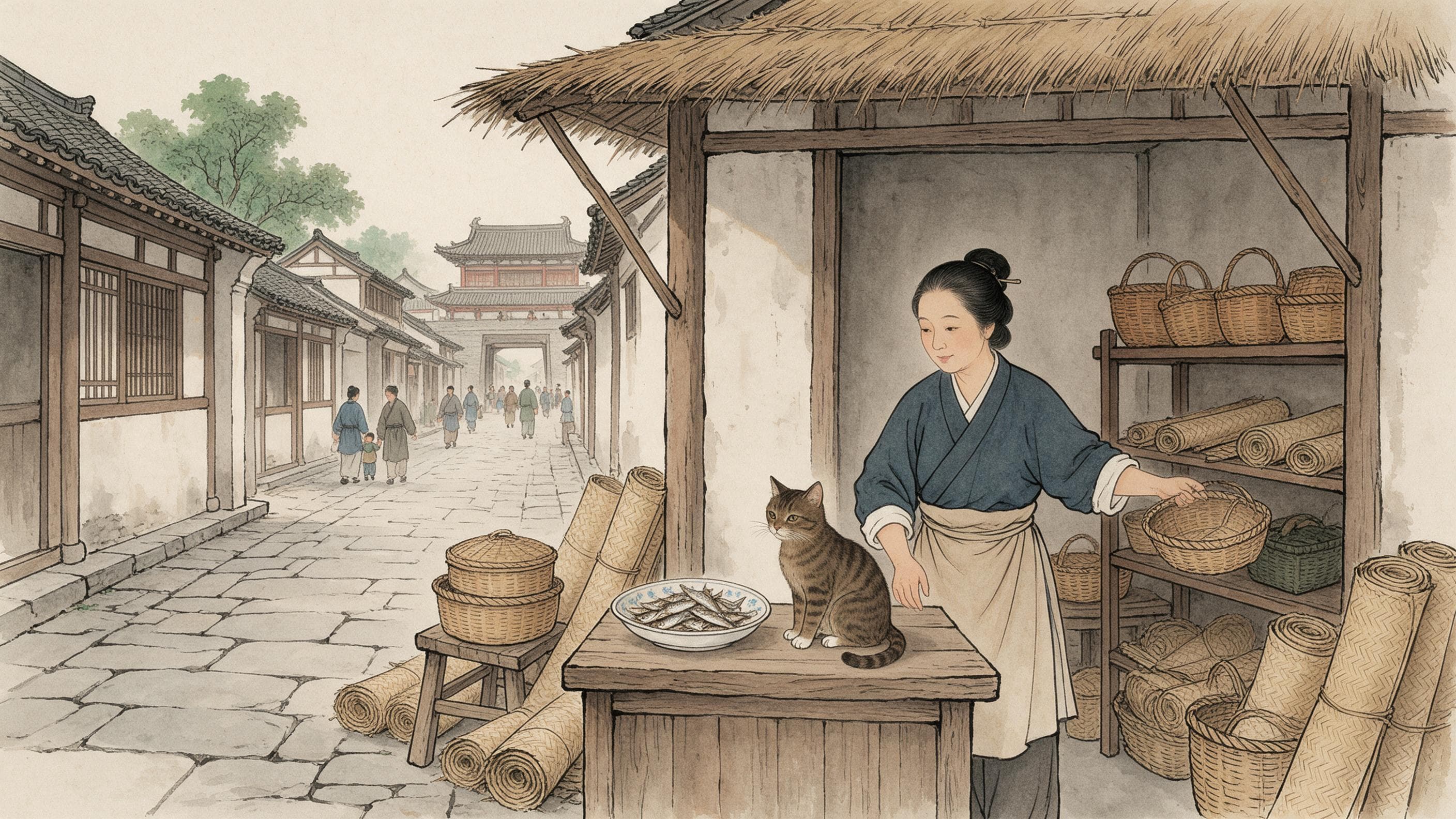
Lin'an kept a register of "small trades" — the kind "found nowhere else": men who copied court bulletins, wrote shop signs, pasted paper pictures, mended shoes, polished mirrors. Somewhere in that long list sit four cat businesses: cat baskets (猫窝), cat fish (猫鱼), cat selling (卖猫儿), and gai mao quan (改猫犬). A city that ran four separate trades for cats is a more solid fact than any claim that Song people loved cats.
Cat food, delivered daily
Kaifeng's cats had a daily supply. In the "sundry street trades" section of the Dongjing Meng Hua Lu, juan 3, the entry is about services that came to the door: "For horses, two men cut grass each day; for dogs, fermented grain is supplied; for cats, cat food and small fish." Two men a day for a horse's grass, fermented grain for a dog, cat food and small fish for a cat — three animals, three daily rations delivered.
The same juan also records where a cat could be bought: at the Xiangguo Monastery market, "on the great triple gate were birds, cats and dogs of every kind, rare birds and strange beasts, nothing was missing". Cats and dogs stood at the monastery gate beside exotic creatures. One line of supply was the market; the other was the daily food delivery. Both buying and keeping had people doing them for a living.
The important word is "daily". This was not a household feeding its cat scraps; there was a trade that brought the food every day. Cat food and small fish are named as two things, which suggests at least a notion of a mixed diet.
That entry sits in a long list of day-to-day services: caulking paths, riveting, barrel-hooping, repairing household gear, mending shoes, brushing belts, blocking caps; printing incense seals, carrying water, lacquering, making hairpins, chopping firewood, replacing fan handles. Feeding horses, dogs and cats daily is filed among the craftsmen who came to the door. The city's everyday life was held up by people who arrived every day.
Four lines of trade
The four Lin'an lines each do something different. Cat baskets are objects — woven or padded, for sleeping. Cat fish is feed — small dried fish, more specialised than "cat food". Cat selling is live animals: the cat itself is merchandise. And gai mao quan is the hardest: what is being "corrected"? The text does not explain.
Their place on the list also matters. The four cat lines sit after "well-cleaning" and before chicken feed, fish food and insect food, in the stretch of everyday odd jobs. Cat food, chicken feed and fish food stand side by side: one block of services for the animals a city kept.
Gai mao quan is the entry in this material that most needs a question mark. It could be some treatment given to cats and dogs; it could be training or correcting habits; it could be something else. All three are guesses, and no passage settles it. The verb gai (改) can mean to alter or to change, and it can also be used of gelding an animal; to pin either sense onto this entry would be to supply a sentence the text does not have. The honest statement is: there was such a trade, and we do not know what it did.
How many people it fed
The Wulin Jiu Shi register ends with an accounting: these little things have countless names, "and each one supports several dozen people who live by it, all of it found nowhere else". Several dozen people per line. Add the four cat lines together and it is a livelihood for a hundred or more.
Beside them in the same register stand chicken feed, fish food, insect food, assorted insects and live fish — an entire block of animal-keeping services. Cats were one branch of it. The more animals a city kept, the finer the services became.
What is not written
How a cat entered a household is not described in these two passages. Later readers often quote Lu You's line about welcoming a "little tiger" with a parcel of salt when they describe the custom of "betrothing" a cat. That poem is real evidence, but it is not in the sources used here, and this article will not vouch for it; whether the custom was universal is even less supported.
Between the two books the shape shifts. In Kaifeng the cat appears at a monastery market and in a daily food round; in Lin'an the basket, the fish, the live animal and the unknown correction are separate small trades. The register's own label, "trades found nowhere else", points to a finer division of labour — but the two books are built differently, and this is not a straight line of progress.
Nor are there prices: what a cat cost, how cat fish were sold, what a basket went for — all absent. There are no numbers and no breeds. "Little tiger" is a poet's word; how people in the street called a cat, these passages do not say.
One thing is firm: in a Song city the cat had a complete supply chain — a basket to sleep in, fish to eat, cats for sale, and a trade of "cat-and-dog correction" that remains unexplained. Keeping a cat was not only a scholar's pleasure; it kept a row of craftsmen in business. Basket, fish, cat, correction: somewhere to eat, somewhere to sleep, somewhere to come from, and one service nobody can name.
Sources & further reading
- 孟元老《东京梦华录》卷三·诸色杂卖 (Meng Yuanlao, Dongjing Meng Hua Lu, juan 3, "Sundry Street Trades") — The daily animal services of Kaifeng: two men a day cutting grass for horses, fermented grain for dogs, and cat food with small fish for cats.
- 周密《武林旧事》卷六·小经纪 (Zhou Mi, Wulin Jiu Shi, juan 6, "Small Trades") — The Lin'an register of small trades 'found nowhere else', including cat baskets, cat fish, cat selling and 改貓犬, with the note that each line supported dozens of people.