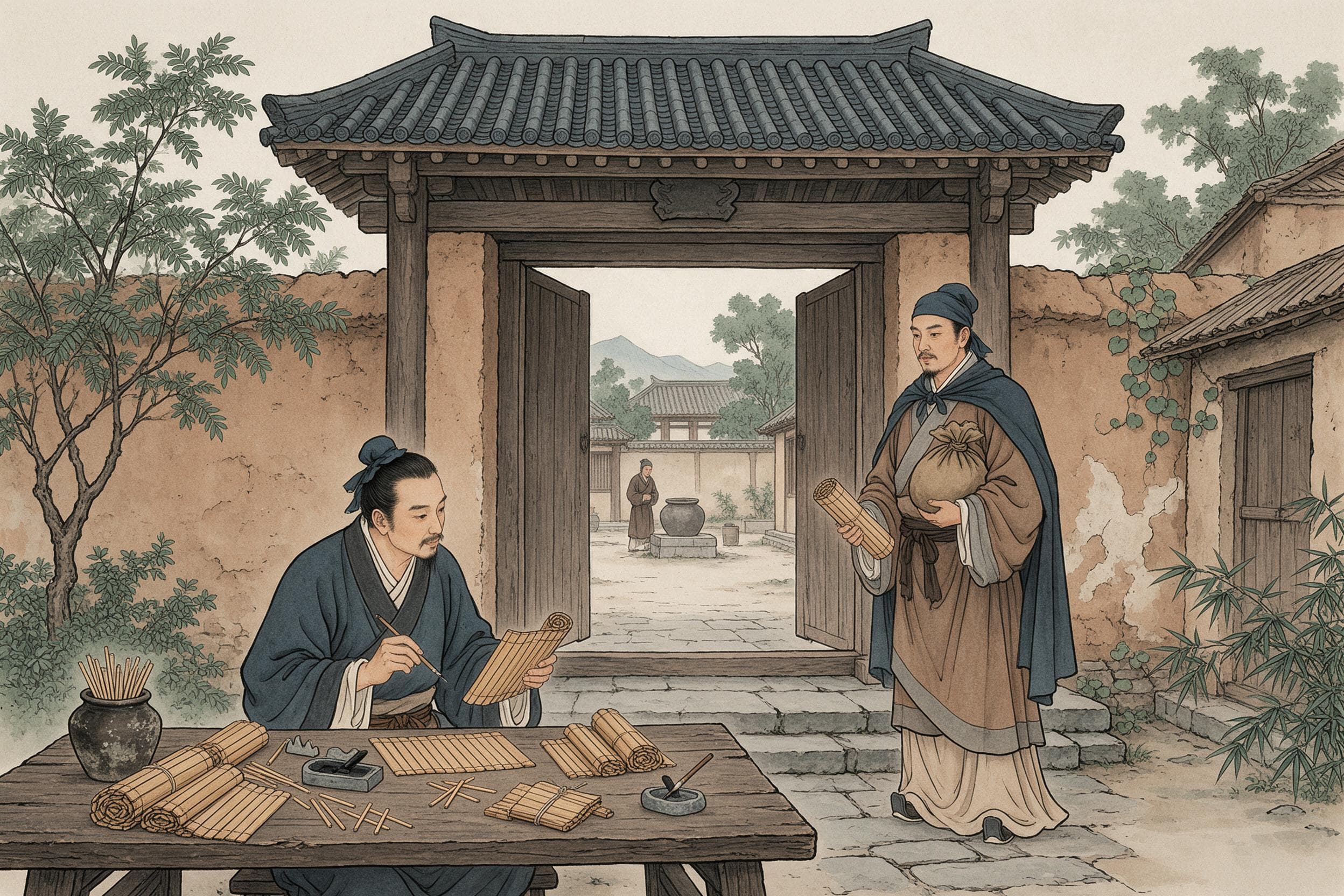
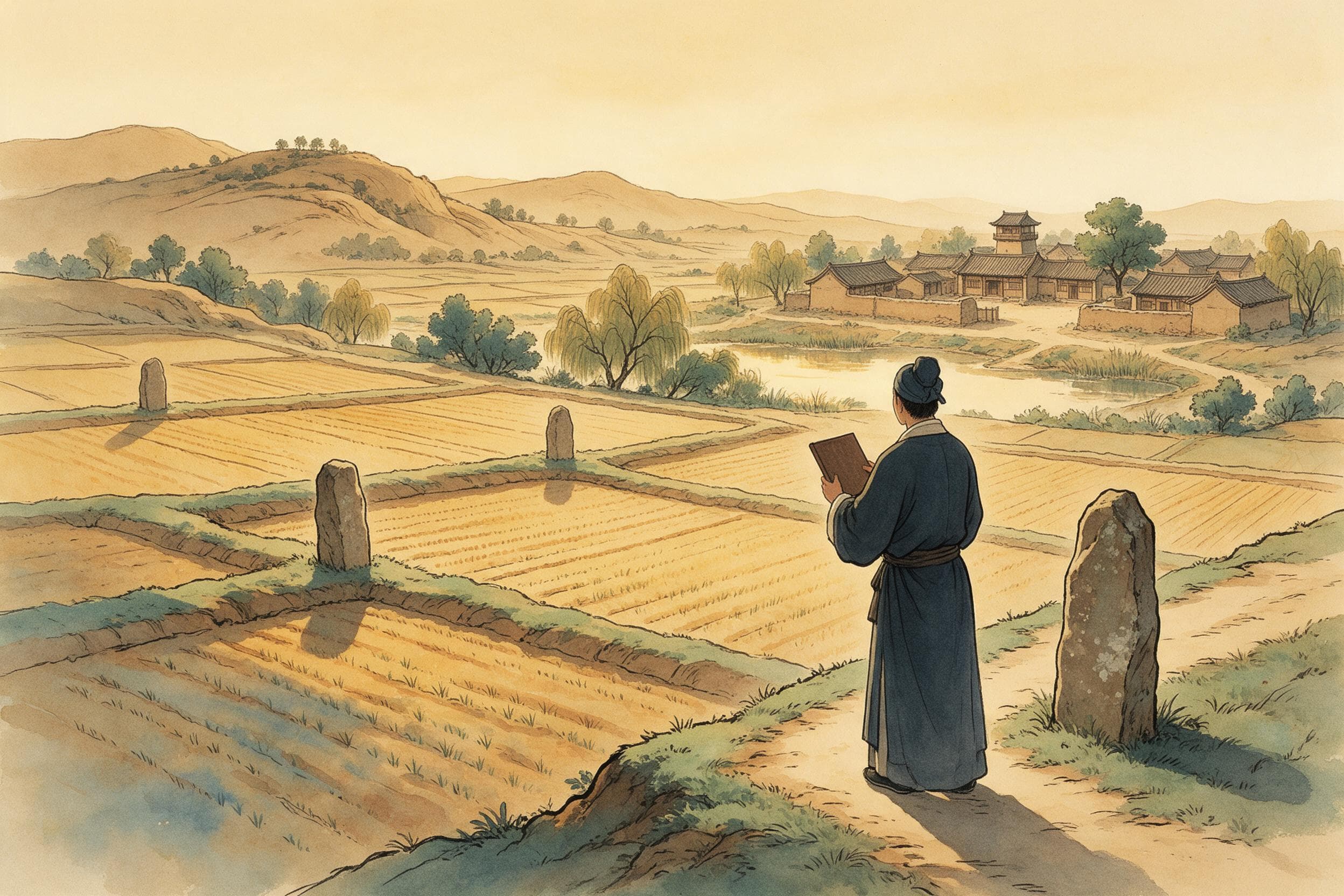
西晉這套數字,兩頁都從同一句開頭:「平吳之後」。《晉書》接下來是「又制戶調之式」——丁男之戶歲輸絹三匹、綿三斤;然後才是「男子一人占田七十畝,女子三十畝」。再往下另起一組:「其外丁男課田五十畝,丁女二十畝,次丁男半之,女則不課」。占田七十、課田五十,中間那二十畝是全篇最要緊的一處空白:如果占田就是國家分給每人七十畝,那麼另一組「課田」又是什麼?兩頁把兩組數字分開寫,本身就在提示這是兩件事。
男子一人占田七十畝
先把兩組數並排放。占田:男七十畝、女三十畝。課田:丁男五十畝、丁女二十畝,次丁男減半,女子不課。丁與次丁的界限也給了:「男女年十六已上至六十為正丁,十五已下至十三、六十一已上至六十五為次丁,十二已下六十六已上為老小,不事。」——《晉書》這一句前有「其外」兩字,把課田放在占田之外;《通典》抄這一段時沒有「外」字。兩書文字基本一致,差別就在這種小字上。
這兩組數字怎麼讀?兩組分開寫,加上後文唐人的注,一般認為:占田是允許占有的上限,課田是課稅的基數。若把它們合成「種七十畝、其中五十畝納稅」,那是一種解釋,不是文本原話。兩頁也都沒說這套數執行得怎樣、各地是否一樣;文本只給條文。
官品第一至於第九
官的數目更大:「其官品第一至於第九,各以貴賤占田。」第一品五十頃,第二品四十五頃,一路減到第九品十頃;《通典》把這張表壓成一句:「其官第一品五十頃,每品減五頃以為差,第九品十頃。」一頃是百畝,這是通行換算,兩頁都沒有注。表後面還掛人:「各以品之高卑廕其親屬,多者及九族,少者三世」;宗室、國賓、先賢之後、士人子孫也照此辦。
再往下是蔭客的細數:第六品以上「得衣食客三人」,第七、第八品二人,第九品一人;佃客則「官品第一第二者佃客無過五十戶,第三品十戶,第四品七戶,第五品五戶,第六品三戶,第七品二戶,第八品第九品一戶」——「無過」兩個字又是上限語式。《通典》把這一串省成「量其官品以為差降」,杜佑在注裡說:「自西晉則有蔭客之制,至東晉其數更加,具《賦稅上篇》。」這是唐人對沿革的判斷,照錄其說。
「占」這個字
判斷「占田」是限額,最硬的一條證據是唐人的注。董仲舒「限民名田」一句下,杜佑注:「名田,占田也。各為立限,不使富者過制,則貧弱之家可足也。」——唐人拿「占田」解釋「名田」,解釋詞是「立限」,不是「授與」。
同一個詞在別處也這樣用。荀悅論漢事,說「豪強富人占田逾多,其賦太半」;又說「至哀帝時,乃限人占田不得過三十頃,雖有其制,卒難施行」——「逾多」是超過,「不得過」是上限,語式與「授田」正相反。西晉這一段,兩頁用的都是「占田」,沒有出現「授田」:授是自上而下給,占是允許占到這裡為止,制度文本自己選了後者。同一篇裡另一條限額也這麼寫:平吳之後有司奏,「今可限之,國王公侯,京城得有一宅之處。近郊田,大國田十五頃,次國十頃,小國七頃」。
丁男之戶,歲輸絹三匹
戶調是同一段裡帶出來的:「又制戶調之式:丁男之戶,歲輸絹三匹,綿三斤,女及次丁男為戶者半輸。」邊郡減免:「其諸邊郡或三分之二,遠者三分之一。夷人輸賨布,戶一匹,遠者或一丈」;不課田的遠夷則「輸義米,戶三斛,遠者五斗,極遠者輸算錢,人二十八文」。這一串是賦稅,本篇只作背景,不展開。
兩頁之間還有一層差別:《晉書》這段是白文,沒有注,把戶調、占田、課田、丁中、官品、蔭親屬、衣食客、佃客一路連寫;《通典》是唐人編述,把官品表壓成一句、蔭客省成一句,卻多出兩條注——「名田,占田也」與「自西晉則有蔭客之制」。所以引《通典》這一層,要標「唐人編述、轉引」。
兩頁之間
兩頁都沒有年份:最具體的時間資訊就是「平吳之後」,沒有「太康元年」四個字,這裡也不替它補。兩頁也沒有執行情況、地區差異、畝產、占田與戶籍的對應。與先秦井田不同制,與北魏均田(另一朝)也不同制,這兩條線本篇不並;「均田制從西晉開始」這類線性說法,學界有爭論,這兩頁也支持不了,不寫。數字照錄畝與頃,不折今畝、不估產量;本文只寫條文。
參考來源與延伸閱讀
- 《晋书》卷二十六·食货志(唐房玄龄等;维基文库本,未与点校本复核) — The Western Jin passage in full, plain text with no commentary. It opens 'after the conquest of Wu' (及平吳之後) and joins several rules in one run: the household levy ('a household with a full adult male pays each year three bolts of silk and three jin of floss-silk', 丁男之戶,歲輸絹三匹,綿三斤); occupation ('a man occupies seventy mu, a woman thirty', 男子一人占田七十畝,女子三十畝); assessment ('besides that, an adult male is assessed on fifty mu, an adult female on twenty, a younger adult male at half, and women are not assessed', 其外丁男課田五十畝……); the age tiers (正丁、次丁、老小); the official table ('from the first rank to the ninth each occupy according to noble and base', 各以貴賤占田, first rank fifty qing down to the ninth at ten); sheltered kin (多者及九族,少者三世); food-and-clothing guests (第六品已上得衣食客三人……); and tenant households ('first and second rank no more than fifty households', 佃客無過五十戶, descending to one). The same passage also has an earlier limit: princes and nobles in the capital may keep one residence, with suburban land of fifteen, ten and seven qing by the size of the state, 'all permitted to keep it' (皆聽留之). The word for the Jin land rule is 'occupy' (占); 'grant' (授) does not occur in this passage.
- 《通典》卷一·食货一·田制上(唐杜佑;维基文库本,未与点校本复核) — The Tang compendium's version, shorter in places and with the notes that decide the reading. The Western Jin figures: 'after the conquest of Wu … a man occupies seventy mu, a woman thirty; an adult male is assessed on fifty mu, an adult female on twenty' (平吳之後……男子一人占田七十畝,女子三十畝); the official table compressed to 'the first rank fifty qing, each rank reduced by five qing as the difference, the ninth ten qing' (每品減五頃以為差); the retainers compressed to 'measured by rank as a descending scale', with Du You's note 'from the Western Jin there was the system of sheltered retainers; by the Eastern Jin the numbers increased' (自西晉則有蔭客之制……). The decisive note stands under Dong Zhongshu's 'limit the people's name-land': 'name-land is occupied land: each is given a limit, so that the rich may not exceed the rule, and the households of the poor and weak may have enough' (名田,占田也。各為立限,不使富者過制,則貧弱之家可足也). In the same chapter Xun Yue says 'the powerful and rich occupy land beyond the limit' (占田逾多) and 'when it came to Emperor Ai, occupation was limited so that it might not exceed thirty qing' (限人占田不得過三十頃). The chapter gives no year for the Western Jin rules; 'after the conquest of Wu' is as far as it goes.