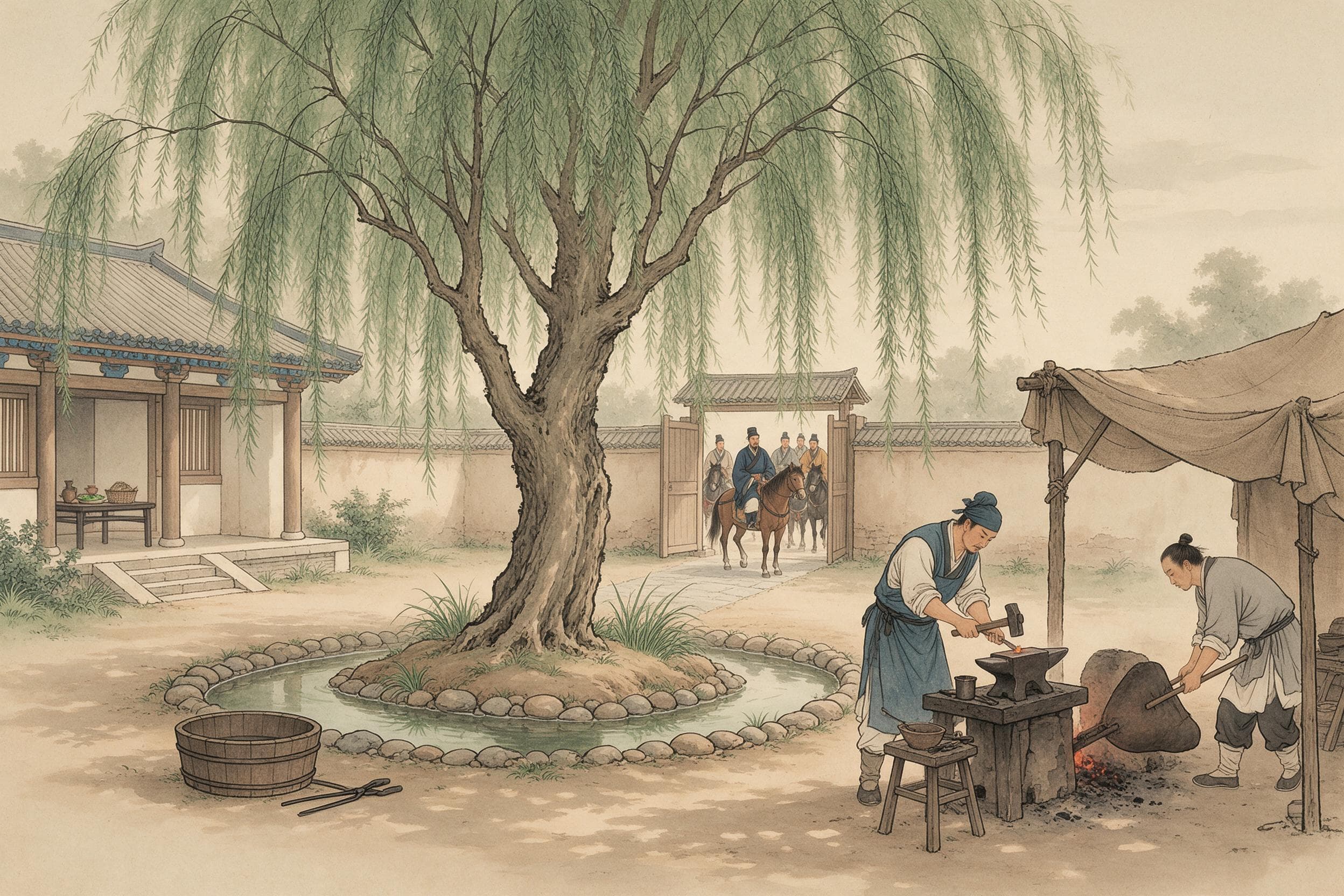
先看一棵樹。《晉書·嵇康傳》說:「性絕巧而好鍛。宅中有一柳樹甚茂,乃激水圜之,每夏月,居其下以鍛。」——他手極巧,喜歡打鐵;院裡有一棵長得很盛的柳樹,他引來水繞著樹一圈,每到夏天,就在樹下打鐵。這一篇先寫這個夏天的院子,再寫有一天院門外來了一隊人,最後寫洛陽東市。
一、柳樹與水:一個夏天的作坊
「激水圜之」是為了什麼,注裡說得更實在。《世說新語·簡傲》劉孝標注引《文士傳》:「康性絕巧,能鍛鐵。家有盛柳樹,乃激水以圜之,夏天甚清涼,恆居其下傲戲,乃身自鍛。」——引水繞樹,夏天很清涼,他常待在樹下,自己動手打鐵。「激水圜之」的作用是取涼(注裡說「甚清涼」),這一點註明;「傲戲」兩個字也照錄,不引申。
打鐵是不是營生,兩頁說法不同,要並列。《晉書》:「初,康居貧,嘗與向秀共鍛於大樹之下,以自贍給。」——家裡窮,和向秀一起在大樹下打鐵,用來補貼生計。《世說》注引《文士傳》:「家雖貧,有人說鍛者,康不受直。唯親舊以雞酒往與共飲噉,清言而已。」——有人請他打鐵,他不收工錢;只有親戚舊友提著雞和酒來,就一起吃喝、清談。一說靠這個補貼生計,一說給人打鐵不收錢——兩說並列,本篇不裁斷。至於打的是什麼、賣給誰、一天打幾件,兩頁都沒有。
二、那一次來訪
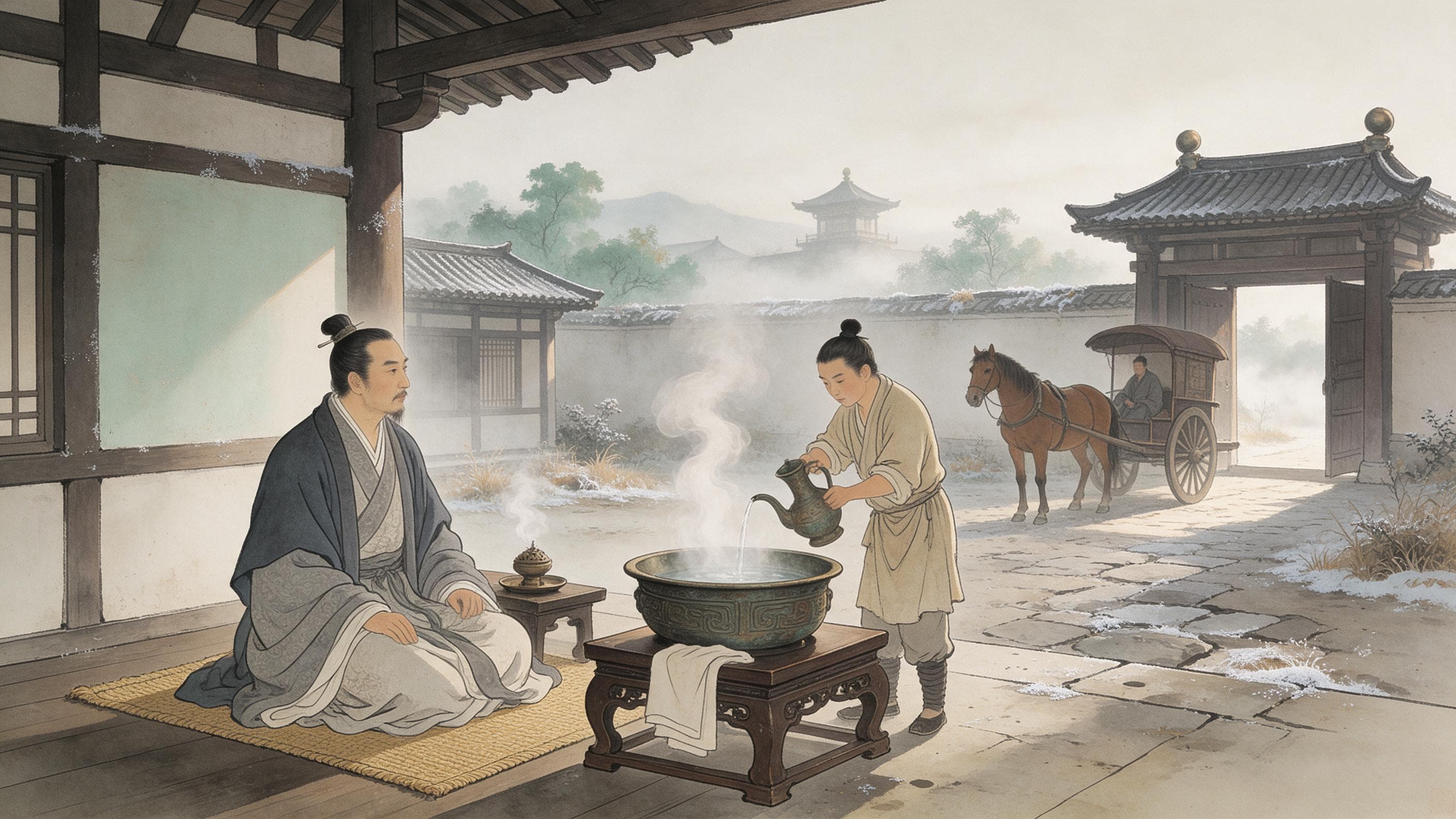
來的人排場不小。《世說》注引《魏氏春秋》:「鍾會為大將軍兄弟所暱,聞康名而造焉。會名公子,以才能貴幸,乘肥衣輕,賓從如雲。」——《世說》正文寫院裡的情形:「鍾要於時賢雋之士,俱往尋康。康方大樹下鍛,向子期為佐鼓排。康揚槌不輟,傍若無人,移時不交一言。」——向秀在替他拉風箱(「鼓排」一般認為就是鼓風),嵇康舉錘不停,像旁邊沒人,好一陣子一句話也沒說。《晉書》的寫法是「康不為之禮,而鍛不輟」;注引《魏氏春秋》又多一句「康方箕踞而鍛」——「箕踞」這種失禮坐姿只見於注,正文沒有。
兩句話是這一段的核心。鍾會起身要走,嵇康才開口:「何所聞而來?何所見而去?」鍾會答:「聞所聞而來,見所見而去。」——《晉書》與《世說》正文文字幾乎全同,只作同文對照,不作互證;《世說》多出來的「移時不交一言」,也照錄。一問一答,句式幾乎一樣:問的用「何所」,答的換成「所」;問的是「來」「去」,答的還是「來」「去」。這一次逐客,是靠句式說完的。
怨恨也就從這兒起。《晉書》:「會以此憾之。」《世說》注:「會深銜之。後因呂安事,而遂譖康焉。」後來那份讒言,《晉書》給了整段:「及是,言於文帝曰:『嵇康,臥龍也,不可起。公無憂天下,顧以康為慮耳。』因譖『康欲助毌丘儉,賴山濤不聽。昔齊戮華士,魯誅少正卯,誠以害時亂教,故聖賢去之。康、安等言論放蕩,非毀典謨,帝王者所不宜容。宜因釁除之,以淳風俗』。帝既昵聽信會,遂并害之。」——讒言是鍾會說的,殺人的決定是「帝」下的,兩個動作都在,本篇不壓成一件私人恩怨(「文帝」一般認為指司馬昭,兩頁未出注)。
三、呂安與那個「鳳」字
呂安與嵇康的交情,兩頁都有一句。《世說·簡傲》:「嵇康與呂安善,每一相思,千里命駕。」《晉書》:「東平呂安服康高致,每一相思,輒千里命駕,康友而善之。」——想他了,就駕車千里去見。後來呂安「為兄所枉訴,以事繫獄,辭相證引,遂復收康」——呂安被兄長誣告,供辭牽連到嵇康,嵇康因此被抓。案情細節,兩頁都沒有。
另有一條輕慢的記錄,也在《簡傲》:「安後來,值康不在,喜出戶延之,不入。題門上作『鳳』字而去。喜不覺,猶以為欣,故作『鳳』字,凡鳥也。」——呂安再來,嵇康不在,嵇喜出門迎他,他不進門,在門上寫了個「鳳」字就走;嵇喜沒看出來,還挺高興。注引《說文》說:「鳳,神鳥也。從鳥,凡聲。」——「凡」本是聲符,拆成「凡鳥」是拆字遊戲。所以這不是當面罵人:被嘲的人高高興興了一場。
四、東市
最後一段只見於《晉書》,次序很緊:「康將刑東市,太學生三千人請以為師,弗許。康顧視日影,索琴彈之,曰:『昔袁孝尼嘗從吾學《廣陵散》,吾每靳固之,《廣陵散》於今絕矣!』時年四十。」——先求情(三千太學生請他做老師),再被拒,再看日影,再要琴,彈完說這句話,年四十。四步都在一句話裡,本篇不打亂;「三千人」是原文的數目,不當實數統計,也不當太學的在冊人數。
這一段要標年代:《世說新語·簡傲》這一門裡沒有臨刑索琴,它只見於唐修《晉書》(648)。所以它是晚出的敘述,不能寫成「當時的記載說」。至於《廣陵散》的來歷,原文緊接著就有一段夜宿華陽亭、「稱是古人」傳授的故事——那是志怪筆法,本篇不取;也不寫「此曲因此失傳」,只照錄嵇康那句話。
五、兩頁之外
三層材料要分開:《世說·簡傲》正文約五世紀;劉孝標注約六世紀,注裡引的《文士傳》《魏氏春秋》《晉百官名》《干寶晉紀》《說文》反而更早;唐修《晉書》成書在 648 年,採的是晉代舊史,但成書晚不等於所記的事最晚成形——這一層要寫清,不能籠統說「史書記載」。竹林七賢,本頁只給名單與「竹林之遊」,本篇不寫團體、不稱「七賢之首」、不寫清談玄學。兩頁不給的列清:打鐵的器物、買主與價錢,太學生的規模與請願程序,鍾會進讒之後的審問與獄辭,嵇康的出生年,都沒有;七尺八寸不折公分,「三千人」不當統計,紀年不折公曆。也不寫「魏晉風度」「名士風骨」這類通論。這一篇留下的,是一棵柳樹、一圈水、一句問答、門上一個「鳳」字,和東市上的一次看日影。
延伸閱讀:司馬相如:四壁、一張琴、一間酒舍 · 投壺:一場酒席上的禮與賭 · 亳社:亡國的社怎麼處置
參考來源與延伸閱讀
- 《晋书》卷四十九〈嵇康传〉(唐房玄龄等撰;维基文库本,页面白文无注,未与中华书局点校本复核) — The biography, compiled in 648, carrying the whole arc: Ji Kang, style Shuye, of Zhizhi in Qiao; the family, originally of Shangyu in Kuaiji, moved to avoid a feud, and took its surname from Mount Ji beside which they settled; his elder brother Xi; left fatherless early; 'seven chi eight cun tall, fine in voice and manner, with the bearing of a gentleman, but a body of earth and wood that he never adorned' (身長七尺八寸……土木形骸,不自藻飾); 'he studied without a formal teacher' (學不師受); 'married into the Wei imperial clan and was appointed Palace Grandee' (與魏宗室婚,拜中散大夫); 'of a most ingenious nature and fond of forging' (性絶巧而好鍛); the willow in his courtyard with water led round it, under which he forged every summer; Lü An, who 'would drive a thousand li at a single thought of him' (每一相思,輒千里命駕); the arrest after Lü An's brother's false accusation; the scene with Zhong Hui — 'Kang offered him no courtesy and did not stop hammering' (康不爲之禮,而鍛不輟) — the exchange 'what did you hear that brought you here? what did you see that takes you away?' (何所聞而來?何所見而去?), and Zhong's grudge; Zhong's long denunciation before Emperor Wen ('a crouching dragon', 'wanted to aid Guanqiu Jian', 'words loose and unbridled, defaming the statutes'), and 'the emperor, having listened to and trusted Hui, had them both killed' (帝既昵聽信會,遂并害之); the execution in the eastern market, 'three thousand students asked to have him as their teacher, and it was refused' (太學生三千人請以爲師,弗許), the look at the sun's shadow, the lute, 'the Guangling San is from today ended' (《廣陵散》於今絶矣), and 'aged forty' (時年四十). The page marks variant graphs with editorial -{…}- brackets, which are not quoted. The story of the night at Huayang Pavilion follows immediately and is not used here.
- 《世说新语·简傲》(南朝宋刘义庆撰,梁刘孝标注;维基文库本,正文与注同页,注以「注」标出,未与中华书局点校本复核) — The Anecdotes, chapter on arrogance, third and fourth entries, with Liu Xiaobiao's sixth-century notes. Main text: 'Zhong Shiji, refined and eloquent, had not known Ji Kang before. He invited the worthies of the time and went with them to seek Kang. Kang was forging under a great tree, with Xiang Ziqi working the bellows for him. Kang raised his hammer without pausing, as though no one were there, and for a long while did not exchange a word. Zhong rose to go; Kang said: What did you hear that brought you here? What did you see that takes you away? Zhong said: Hearing what I heard, I came; seeing what I saw, I go' (康揚槌不輟,傍若無人,移時不交一言……聞所聞而來,見所見而去). Note quoting the Wen Shi Zhuan: Kang could work iron; the willow with water led round it; in summer it was cool, and he stayed under it at his ease and forged himself; 'though his family was poor, when someone asked him to forge he took no payment; only old friends and relatives brought chickens and wine, and they drank and ate together and talked pure talk' (有人說鍛者,康不受直。唯親舊以雞酒往與共飲噉,清言而已). Note quoting the Wei Shi Chunqiu: Zhong Hui, favoured by the great general's brothers, 'came with fat horses and light furs and a following like clouds'; 'Kang was sitting with legs sprawled, forging, and when Hui arrived offered no courtesy; Hui bore it deeply, and later used the Lü An affair to slander him' (康方箕踞而鍛,會至不爲之禮,會深銜之). The fourth entry: Lü An's visit when Kang was out, his refusal to enter, and the character for phoenix written on the gate, which Xi took as a compliment; note quoting the Shuowen that 鳳 'follows 鳥, with 凡 as its sound'.