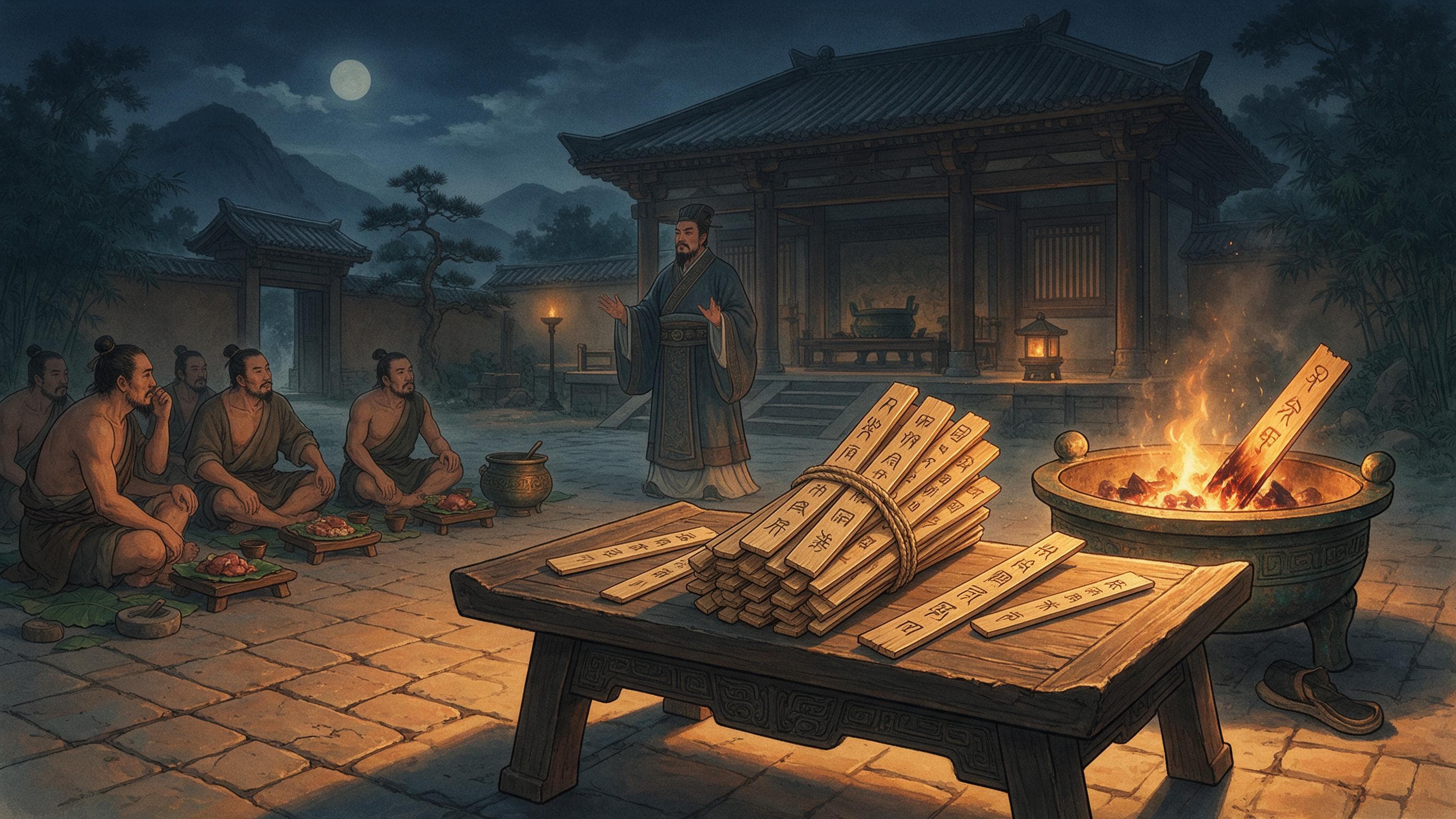
《史記·平準書》寫漢初,只用一句:「漢興,接秦之弊,丈夫從軍旅,老弱轉糧饟,作業劇而財匱,自天子不能具鈞駟,而將相或乘牛車,齊民無藏蓋。」——天子配不齊四匹同色的馬,將相有的坐牛車,連平民也沒有餘物可藏。隔兩句是價錢:「米至石萬錢,馬一匹則百金。」百金照錄,不折今值;一般認為這是漢初馬價的極高值,不是常價。
一、缺馬的年頭
錢先壞,馬才貴。同篇說秦錢太重難用,於是令民鑄錢,「一黃金一斤」,約法省禁;「不軌逐利之民,蓄積餘業以稽市物,物踴騰糶,米至石萬錢,馬一匹則百金」。這是一篇講財政的書寫到物價,馬只是價目單上的一行。
景帝時有一段小記事:「孝景時,上郡以西旱,亦復修賣爵令,而賤其價以招民;及徒復作,得輸粟縣官以除罪。益造苑馬以廣用,而宮室列觀輿馬益增修矣。」——上郡以西旱,賣爵降價招人,刑徒輸粟除罪;「益造苑馬以廣用」。這句在頁上繫於孝景時,不在武帝初年;「苑馬」一般認為即苑囿中的官馬,本頁未解。
二、街巷有馬
盛況在下一段,而且是回看,不是帳本:「至今上即位數歲,漢興七十餘年之間,國家無事……眾庶街巷有馬,阡陌之間成群,而乘字牝者儐而不得聚會。」——普通人家街巷裡有馬,田間小路成群;騎母馬的人被擋在聚會之外。「字牝」一般認為指母馬,「儐」一般認為即擯斥,兩處本頁都無注。這是漢武帝時人對前幾十年的追述,是描寫,不是統計。
兩頭並排,一篇裡的調子就變了:從「天子不能具鈞駟」到「街巷有馬」,中間還多出一條「騎什麼馬」的社交規矩。這一頁始終不給馬的數目,無論是天下還是苑裡的;只有一個價錢、一段景象。本文不拿它們畫曲線。
三、出關、苑馬與馬料
《漢書·景帝紀》是另一種頁,馬都散在單條記事裡。中元四年:「御史大夫綰奏禁馬高五尺九寸以上,齒未平,不得出關。」——高度與齒齡兩個條件,一句話;照錄。中元六年:「匈奴入雁門,至武泉,入上郡,取苑馬。吏卒戰死者二千人。」——被掠的苑馬在雁門、上郡一帶。後元二年:「春,以歲不登,禁內郡食馬粟,沒入之。」——荒年不許內郡拿粟餵馬,犯者沒收。
還有一條在遺詔裡:「遺詔賜諸侯王列侯馬二駟。」——賜馬以「駟」計。禁、掠、沒收、賜,紀裡一條一條地記,馬從來不是這一頁的主角;這些條目裡沒有一份馬政的總圖,本文也不替它拼一張。
四、一具銅馬式
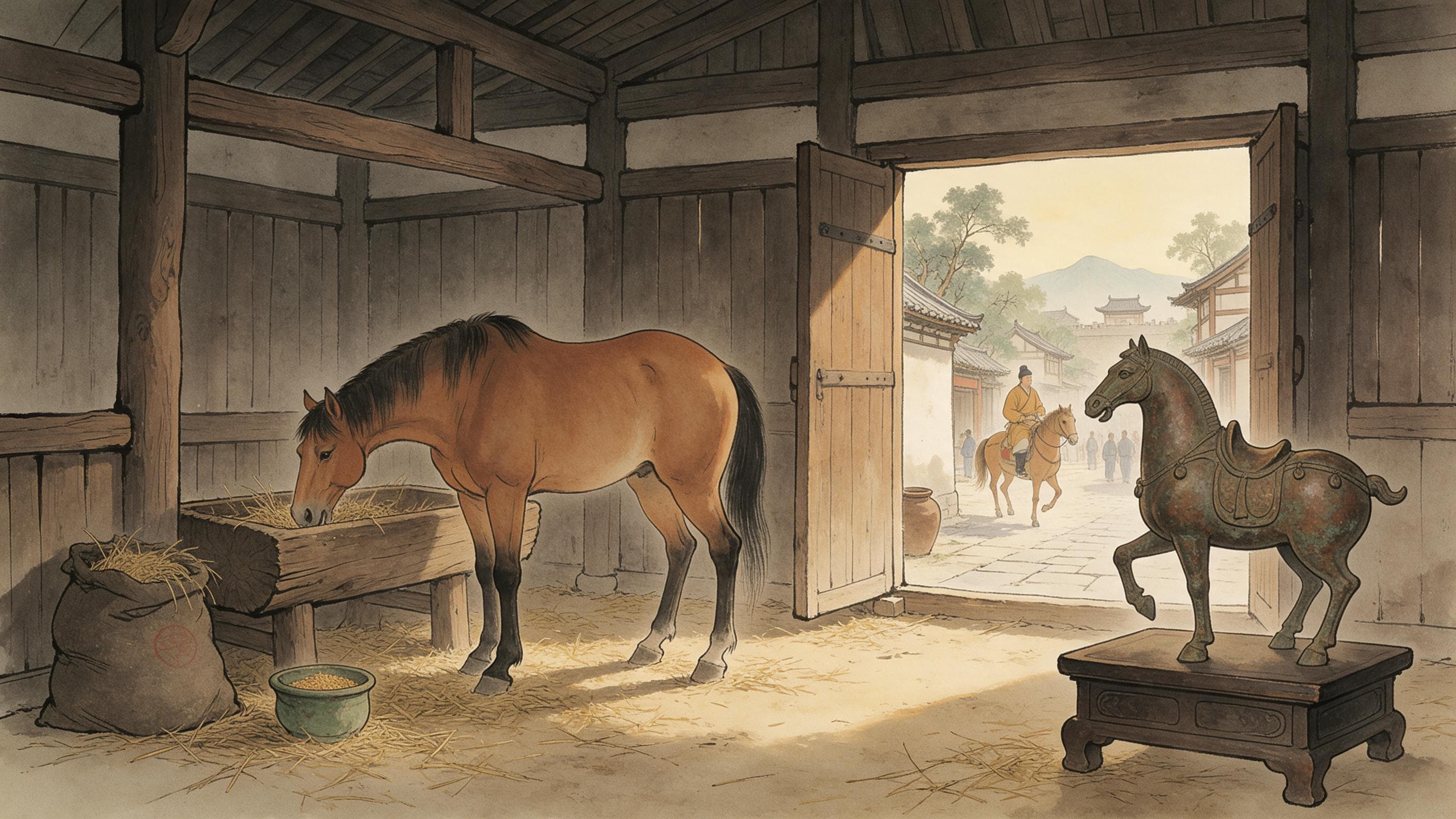
《後漢書·馬援傳》從另一個方向寫馬:「援好騎,善別名馬,於交阯得駱越銅鼓,乃鑄為馬式,還上之。」南方得來的銅鼓,熔成北方的馬樣。隨之上表,開頭一句最常被引:「夫行天莫如龍,行地莫如馬。馬者甲兵之本。國之大用。安寧則以別尊卑之序,有變則以濟遠近之難。」——這是馬援一表之語,不是三頁替漢代下的通說。
表裡還給了三樣東西。一,傳承:「近世有西河子輿,亦明相法。子輿傳西河儀長孺,長孺傳茂陵丁君都,君群傳成紀楊子阿,臣援嘗師事子阿,受相馬骨法」——頁上前作「丁君都」,後作「君群」,照錄不改。二,前代銅馬:「孝武皇帝時,善相馬者東門京鑄作銅馬法獻之,有詔立馬於魯班門外,則更名魯班門曰金馬門。」三,自己的馬式:「馬高三尺五寸,圍四尺五寸,有詔置於宣德殿下,以為名馬式焉。」——兩個尺寸照錄,不折。所依諸家只列名目:「儀氏䩭、中帛氏口齒、謝氏唇鬐、丁氏身中」,沒有一句骨法條文,這裡也不補。
五、三頁都不給的
三頁都不給馬的匹數、苑囿的數目與面積、馬價的變化曲線——只有一個「百金」和一段描寫;馬式的尺寸照錄,不折算;相馬的骨法只有諸家名目,沒有條文;「馬者甲兵之本」只屬於一道表;也不寫「馬政決定漢匈勝負」這類因果。北魏的牧場是另一篇,這裡不併。
三頁三種寫法:一篇財政書給一個貴價、一段回憶中的景象;一篇本紀給一條關卡尺寸、一次苑馬被掠、一道馬料禁令、一份遺詔的賜馬;一篇列傳給一具帶尺寸的銅馬和一張師承名單。從牛車到街巷,頁面上記下的是境況變了;它們從不數它,也從不寫一個管馬的衙門。
延伸閱讀:四十里紫絲,五十里錦障:石崇與王愷的鬥富 · 算緡與告緡:自報緡錢,半數給告發者 · 一法度衡石丈尺:六個字與三張進位表
參考來源與延伸閱讀
- 《史记》卷三十·平准书(西汉司马迁撰;维基文库本,页面白文无注,未与中华书局点校本复核) — The two ends of Han horse wealth in one revenue treatise: at the founding, after the ruin of Qin, 'the son of heaven could not match his four horses in colour and some generals and chancellors rode ox-carts', with grain at ten thousand cash a shi and 'a horse at a hundred jin'; under Emperor Jing, drought west of Shang commandery, the sale of ranks at a lower price, convicts paying grain to cancel sentence, and 'park horses bred in greater numbers to broaden use'; then, looking back from the reign of Emperor Wu over seventy years, 'the common people had horses in the lanes, in herds between the field paths, and a man who rode a mare was shut out of gatherings'. No totals, no park numbers, no series of prices.
- 《后汉书》卷二十四·马援列传(南朝宋范晔撰;维基文库本,页面白文无注,未与中华书局点校本复核) — Ma Yuan, fond of riding and good at naming horses, melts bronze drums taken in Jiaozhi into a horse model and presents it with a memorial: 'in the sky nothing moves like the dragon, on earth nothing like the horse; the horse is the root of armour and weapons'; the transmission of the bone method from Ziyu of Xihe through Yi Changru, Ding Jundu and Yang Zi'e to himself; the earlier bronze of Dongmen Jing set outside the Luban gate, which was renamed the Golden Horse Gate; his own model three chi five cun high and four chi five cun around, set below the Xuande hall; and the families whose methods he followed, named only — Yi's bridle, Bozhong's mouth and teeth, Xie's lips and mane, Ding's body — with no bone rule written out.
- 《汉书》卷五·景帝纪(东汉班固撰;维基文库本,页面白文无注,未与中华书局点校本复核) — Single entries in the annals: in the fourth year of the middle era the imperial secretary Wan proposes forbidding horses five chi nine cun and more high, with teeth not yet worn level, to leave the passes; in the sixth year the Xiongnu enter Yanmen, reach Wuquan, enter Shang commandery and take the park horses, with two thousand officers and men killed; in the second year of the final era, the harvest failing, the inner commanderies are forbidden to feed grain to horses and the grain is confiscated; and the deathbed edict gives the kings and marquises two teams of four horses each.