最短的一條,六個字:「三年,春,王二月,己巳,日有食之。」——《春秋》隱公三年,春天,周曆二月,己巳那天,太陽被吃了。「日有食之」四個字,是記這件事的套語。這一篇分兩層:日食那天做了什麼(經與傳分開),閏月怎麼置(元年閏三月、六年閏月不告朔)。
一、經與傳:一條記事,一句評判
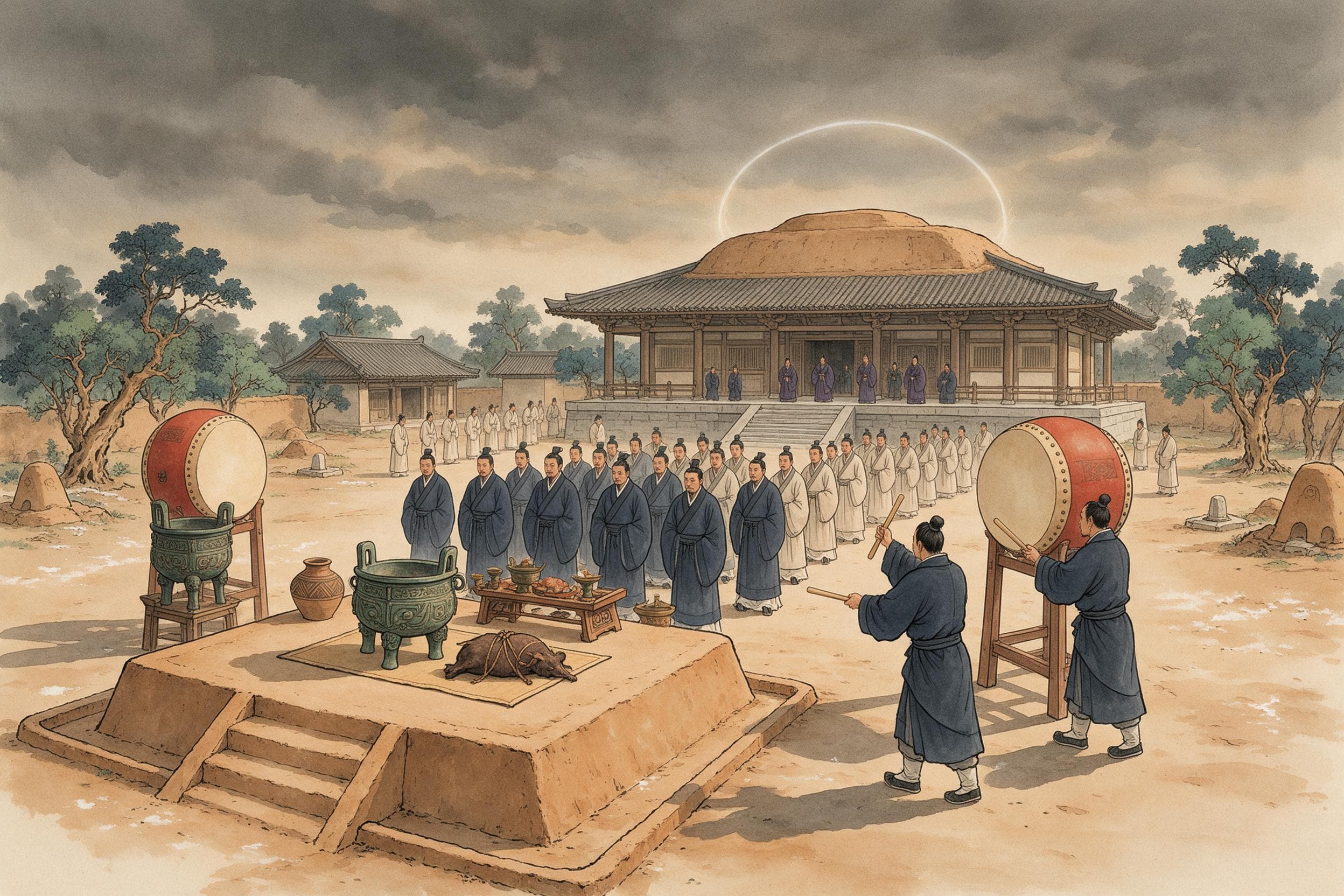
先把經的兩條擺出來。隱公三年:「三年,春,王二月,己巳,日有食之。」——只有日子與現象。文公十五年:「六月,辛丑,朔,日有食之,鼓用牲于社」——這一條多了一個「朔」字,還多了一個動作:擊鼓,在社用牲。經是記事,記到哪兒算哪兒;它不解釋,也不評判。
傳就評判了,而且給了分工:「六月,辛丑朔,日有食之,鼓用牲于社,非禮也。日有食之,天子不舉,伐鼓于社,諸侯用幣于社,伐鼓于朝,以昭事神,訓民事君,示有等威,古之道也。」——傳先說魯國這麼做「非禮也」;再說該怎麼做:天子不舉樂,在社擊鼓;諸侯在社用幣,在朝擊鼓;目的是「昭事神、訓民事君、示有等威」,並說這是「古之道」。所以要分清楚:魯國實際做的是「鼓用牲于社」,傳說的「古之道」是另一套分工。傳沒有說魯國為什麼不合禮,本頁也沒有。
二、閏三月:一條「非禮」的記錄
閏月這一層,文公元年先給了一句判斷:「於是閏三月,非禮也。」——在這一年閏三月,不合禮。為什麼不合理,傳給的是三句口訣:「先王之正時也,履端於始,舉正於中,歸餘於終。履端於始,序則不愆。舉正於中,民則不惑。歸餘於終,事則不悖。」——先王正時:開端放在起點,中氣放在中間,餘數放在末尾;開端端正,次序就不亂;中氣擺對,百姓就不惑;餘數歸末,事情就不悖。三句照錄,傳沒有給具體推算,本篇也不替它排。
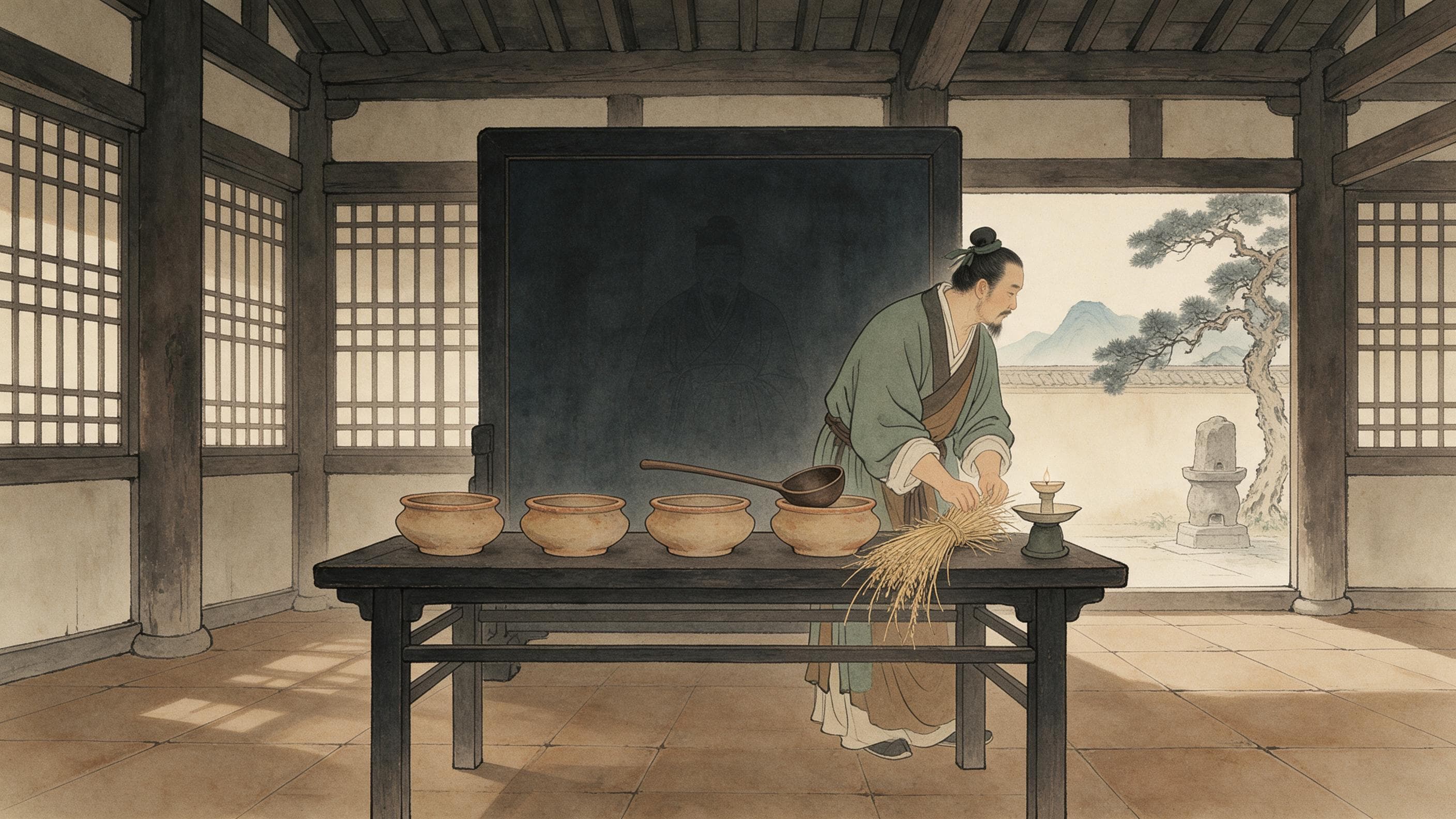
文公六年又有一條:「閏月不告朔,非禮也。閏以正時,時以作事,事以厚生,生民之道,於是乎在矣。不告閏朔,棄時政也,何以為民?」——閏月不告朔,不合禮;閏是為了正時,時是為了作事,事是為了厚生,「生民之道」就在這裡;不告閏朔,是「棄時政」,還怎麼為民?「告朔」具體怎麼告,本頁不細說。
三、漢志:百餘年曆不正
《漢書·律曆志》把這件事往後接了一句:「自文公閏月不告朔,至此百有餘年,莫能正曆數。」——從文公閏月不告朔,到這時候一百多年,沒有人能把曆數改正。同頁還引了一句:「天子有日官,諸侯有日御,日官居卿以厎日,禮也」;又說「不書日,官失之也」——不記日子,是官失其職。這些都是漢書的話,本篇標明是漢人的追述,不當作春秋人的自述。它還用一對經傳說明這件事:「經曰:『冬十月朔,日有食之。』傳曰:『不書日,官失之也。』」——不記日子,本身也是一條記錄,還帶著解釋。
兩頁不給的也要列清:日食發生在什麼時辰、食分多少、在哪兒看得見,本頁都不給;閏月幾年一閏、閏在何月、怎麼推算,本頁只給「閏三月」和「閏月」兩處,不給算法。所以本篇不推算具體年月,也不折成公曆日期。
四、「日有食之」四個字
經裡反覆用「日有食之」,不寫「日食」,寫「日有食之」——太陽被吃了、有東西吃了它。這四個字是本頁給的說法,本頁不解釋它;本篇也不拿天文學去復原(不算食分、不推路徑)。只把這幾條照錄:隱公三年「二月,己巳」,文公十五年「六月,辛丑,朔」——後者多一個「朔」字,正好說明這條記的是朔日。
五、兩頁之外
分線寫兩句:漢代太初改曆那一條講的是誰提議、誰計算、一句話定下來,本篇講的是春秋人遇到日食怎麼做、閏月怎麼往十二個月裡塞;卜筮那一條講的是占問的程序,本篇不涉。也不寫「古代天文學成就」或「天人感應」這類通論——三頁給的是幾條記事、幾句傳文、一句漢志的後果。
留下的是幾樣很具體的東西:兩條經的寫法(「日有食之」、「日有食之,鼓用牲于社」)、一句傳的評判與分工(天子不舉、伐鼓于社;諸侯用幣于社、伐鼓于朝)、三句置閏口訣(履端於始、舉正於中、歸餘於終)、兩條「非禮」(閏三月、閏月不告朔)、一句漢志的後果(百餘年莫能正曆數)。此外不再往下推:不折公曆,不排閏法,也不評判「禮」的好壞。
延伸閱讀:黃腸題湊:一套木頭的名字,和誰能用 · 雉登鼎耳:祭祖那天飛來的一隻鳥 · 大儺:一年最後一夜,宮裡把疫送出城門
參考來源與延伸閱讀
- 《春秋左氏传·文公》(维基文库本,未与点校本复核) — The entries used here, with the classic and the commentary distinguished. Classic, fifteenth year: 'in the sixth month, on the xinchou day, the first of the month, the sun was eaten; drums were beaten and victims offered at the altar of soil' (六月,辛丑,朔,日有食之,鼓用牲于社). Commentary on the same: 'drums and victims at the altar of soil — this was not according to ritual. When the sun is eaten, the Son of Heaven does not provide music; drums are beaten at the altar of soil; the feudal lords offer silks at the altar and beat drums at the court, to display service to the spirits and to instruct the people in serving their ruler and to show the gradations of rank — this was the way of antiquity' (日有食之,天子不舉,伐鼓于社,諸侯用幣于社,伐鼓于朝……古之道也). First year: 'thereupon they intercalated a third month, which was not according to ritual. In the ancient kings' ordering of the seasons, the beginning was set at the start, the middle was set at the middle, and the surplus was put at the end; with the beginning at the start the order is not erred; with the middle at the middle the people are not confused; with the surplus at the end affairs are not disordered' (履端於始,舉正於中,歸餘於終). Sixth year: 'not announcing the first of the month in an intercalary month was not according to ritual. The intercalation is to correct the seasons, the seasons to make work, work to enrich life; the way of the people lies in this. Not to announce the intercalary first is to cast away the government of the seasons — how then to be the people's ruler?' (閏月不告朔,非禮也……)
- 《春秋左氏传·隐公》(维基文库本,未与点校本复核) — The classic's shortest note of an eclipse, third year: 'in the third year, spring, royal second month, on the jisi day, the sun was eaten' (三年,春,王二月,己巳,日有食之). The page marks classic entries with a template; the line is quoted as the classic. No commentary is given for this entry on the page — nothing is said about what was done.
- 《汉书》卷二十一〈律历志〉(维基文库本,未与点校本复核) — Used only for the later consequence and the officers of the calendar: 'from Duke Wen's failure to announce the first of the month in the intercalary month, down to this time more than a hundred years, no one could put the calendar right' (自文公閏月不告朔,至此百有餘年,莫能正曆數); and the saying that 'the Son of Heaven has his day-officer, the feudal lords their day-attendants; the day-officer ranks with the ministers to settle the days — that is ritual' (天子有日官,諸侯有日御,日官居卿以厎日,禮也), with the note that when the day is not recorded 'the officers lost it' (不書日,官失之也). This is a Han treatise quoting the classic and commentary, and it is marked as a Han statement here.