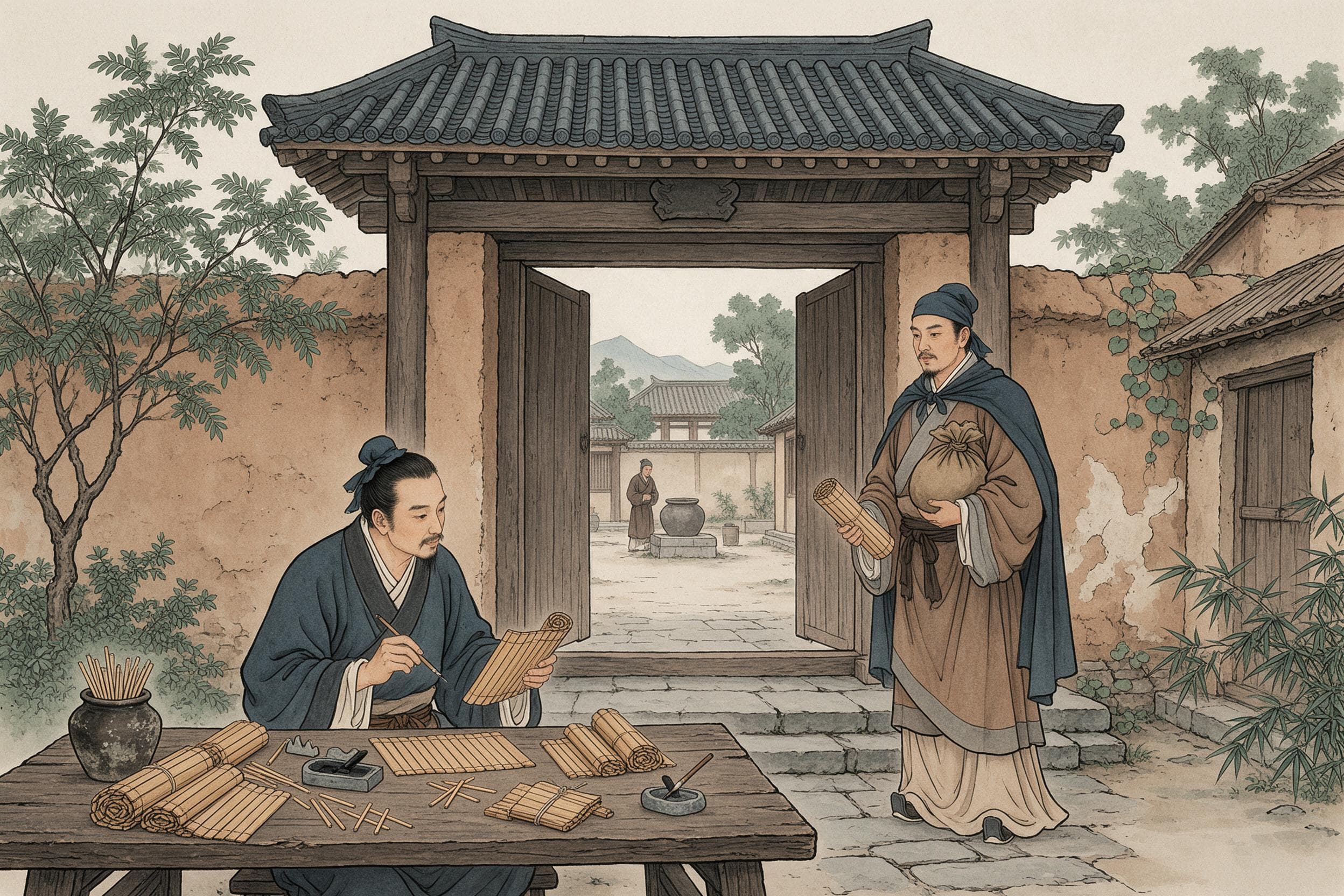

『尚書』の「呂刑」篇は、その場面を名指すことから始まる——王が国を百年保ち、老いて、広く刑を定めて四方を整えた、と(惟呂命:王享國百年,耄,荒度作刑,以詰四方)。どの王かは、この頁は言わない。『史記』の「周本紀」はこの場面を穆王の下に置き、語る人を甫侯とする。同じ本文が二つの篇名で伝わる——一方の頁は「呂刑」と呼び、他方は「命曰甫刑」(甫刑と名づく)と言う。
墨・劓・剕・宮・大辟
五刑の名は、贖いの段が列挙する——墨(入れ墨)、劓(鼻削ぎ)、剕(足切り)、宮(去勢)、大辟(死刑)。篇はまずこの刑の来歴を語る。「苗民弗用靈,制以刑,惟作五虐之刑曰法,殺戮無辜」——善を用いず、刑をもって制とし、五つの虐刑を作って法と呼び、無実の者を殺した。だから天は苗民を断った。次に伯夷が礼を、禹が水を、后稷が穀を。そしてようやく「士制百姓于刑之中」——官が民を刑の中ほどに置き、敬う徳を教えた。刑は、徳と治水の物語のあとに置かれ、しかる後に条文になる。『史記』は同じ五つを黥(入れ墨)、劓、臏(足切り)、宮、大辟と書く。黥は墨に、臏は剕に対する——二つの書き方であって、二組の刑ではない。
次に属数——「墨罰之屬千……五刑之屬三千」。墨と劓は各千条、剕は五百、宮は三百、大辟は二百、合わせて三千。三千は条文の項目の数であって、事件の数ではない。テキストはここで止まり、この三千のうちどれが何度使われたかは言わない。
其の罰は百鍰
贖いの段は整然と並ぶ——「墨辟疑赦,其罰百鍰……大辟疑赦,其罰千鍰」。墨は百鍰、劓は倍、剕は「倍差」、宮は六百鍰、大辟は千鍰。そしてどの句も「閱實其罪」(罪を実に閲す)で終わる。「倍」「倍差」は前の項に対する相対的な言い方で、どちらの頁も算式を与えないから、ここでも与えない。鍰の数は書かれたままに引き、金の重さにも現代の貨幣にも換算しない。
『史記』には並行する一節があり、字句が近い。異同がそのまま見える——黥辟疑赦、其罰百率……劓……其罰倍灑……臏……其罰倍差……宮辟疑赦、其罰五百率……大辟疑赦、其罰千率、そして「命曰甫刑」。二つを記す。一つ、宮刑の値——『呂刑』の頁は六百鍰とし、同じ頁の別本は五百とし、『史記』は五百率とする。二つ、単位——『史記』は「率」と書き、頁の校記が徐広を引いて「率即鍰也」(率はすなわち鍰なり)と言う。また『史記』は「五辭簡信」とし、『呂刑』は「五辭簡孚」とする——一字の違いである。
五刑の疑は赦あり
贖刑全体の鍵は、最初の二文字にある——「疑赦」。「五刑之疑有赦,五罰之疑有赦,其審克之」——疑わしい事件だけが、刑から罰へ行く道を取る。「其審克之」は、その判断を審く者に委ねる。どの贖いの値の後にも「閱實其罪」が付く——まず罪状を確かめ、それから罰の額を決める。だからこれは「金を払って刑を免れる」ことではない。贖えるのは疑わしい事件であって、すべての犯罪ではない。テキストは誰が払ったか、いくら払われたかを、ついぞ言わない。
同じ篇には、この仕組みに歯止めをかけるような手続きが並ぶ——「兩造具備……五過之疵,惟官、惟反、惟內、惟貨、惟來」。双方が揃い、五辞を聴く。五辞が確かなら五刑に、五刑が合わなければ五罰に、五罰が受け入れられなければ五過に。五過の瑕は、官・反・内・貨・来の五つ。さらに「明清于單辭」(片側の言葉を明らかに聴け)、「獄貨非寶」(事件の貨は宝にあらず)、「非佞折獄,惟良折獄」(口の巧い者が裁くのではなく、良き者が裁く)、「刑罰世輕世重」(刑罰は世に軽く世に重い)。これらの条項は、テキストが濫用を防いでいることを示す。だがそれは条項であって、判例ではない。
制度のテキストであって、判決記録ではない
どちらの頁も、一つの事件を与えない。被告の名もなく、実際の贖いもなく、ある条項が用いられた年もなく、この価目が諸国でどう働いたかもない。『呂刑』は全体が王の声の告命であり、司法をつかさどる者に「念之哉」「敬之哉」と繰り返し戒める。『史記』の一節は前漢人の回顧であり、場面を説明する——「甫侯言於王,作《修刑辟》」——そして「命曰甫刑」で閉じる。二頁を合わせて言えるのは「テキストはこう書く」であって、「西周の司法はこう働いた」ではない。
篇名と時代も分けて書く。『尚書』は篇を「呂刑」と題し、冒頭はただ「王」とだけ言う。『史記』は甫侯・甫刑と言い、その王を穆王の下に置く。通説は、呂侯(甫侯)が穆王の司寇となり、この刑書を作った、というもの。どちらの頁も明言しないので、「一般には」としか記せない。本稿も「西周の法典」と断じない。漢代の二篇との線は明瞭である——九章律と除肉刑は漢の制度、ここは『尚書』のなかの周のテキストの刑書である。
二頁のあいだ
二頁を並べて読むと、具体的に得られるものがある——五刑の名、五組の値、五刑の属三千、両造・五辞・五刑・五罰・五過の手続き、そして呂刑と甫刑、宮刑の六百と五百、墨と黥、剕と臏という異同。得られないものも同じくらい具体的である——判決も、執行の数も、換算もない。鍰の数は書かれたままに引き、金の重さにも現代の貨幣にも換算しない。五刑の名と篇名は原文から引く。「古代の刑罰は残酷だった」という総評は書かない。この文章がすることは一つ——条文を並べ、「疑赦」の二文字を明らかにすることである。
関連記事:占田七十畝——上限であって、分与ではない · 黄金千溢——史書はこの金属をどう数えたか · 外には軽刑の名——肉刑を除いた詔書
参考資料・関連文献
- 《尚书·吕刑》(维基文库本,未与点校本复核) — The code in full. Opening: 'the king had held the realm a hundred years, was old, and broadly made the penal code to bring order to the four quarters' (惟呂命:王享國百年,耄,荒度作刑,以詰四方). The origin story: the Miao 'made the five cruel punishments, calling them law' (惟作五虐之刑曰法,殺戮無辜); then Bo Yi, Yu and Hou Ji, and 'the officers made the people live within the middle of punishment' (士制百姓于刑之中). The five punishments are listed by their redemption prices: 'for branding, where doubtful, remission, and the fine is a hundred huan, and the crime is verified; for the nose, double; for the feet, double-and-differenced; for castration, six hundred huan; for death, a thousand huan' (墨辟疑赦,其罰百鍰……大辟疑赦,其罰千鍰), each with 'the crime is verified' (閱實其罪). The item counts: 'branding a thousand, the nose a thousand, the feet five hundred, castration three hundred, death two hundred; the five punishments three thousand items' (五刑之屬三千). The procedure: 'when both parties are present, the officers hear the five speeches … settled by the five punishments … the five fines … the five faults; the defects of the five faults are the office, the reversal, the inner, the goods, the solicitation' (兩造具備……五過之疵,惟官、惟反、惟內、惟貨、惟來), with 'where the five punishments are doubtful there is remission … let the case be carefully examined' (五刑之疑有赦……其審克之), 'be clear about one-sided speeches' (明清于單辭), 'goods from a case are no treasure' (獄貨非寶), 'not the eloquent but the good decide cases' (非佞折獄,惟良折獄), and 'punishments are light in one age and heavy in another' (刑罰世輕世重). The page carries textual variants in its own notes: the castration price is given as six hundred huan, with a variant reading five hundred.
- 《史记》卷四·周本纪(西汉司马迁;维基文库本,未与点校本复核) — The Western Han retrospective that gives the parallel text and the variants. 'When the nobles were not at peace, the Marquis of Fu spoke to the king and made the revised penal code' (諸侯有不睦者,甫侯言於王,作《修刑辟》). The prices: 'for branding, where doubtful, a hundred shuai; for the nose, double; for the feet, double-and-differenced; for castration, five hundred shuai; for death, a thousand shuai — the crime verified in each case' (黥辟疑赦,其罰百率……宮辟疑赦,其罰五百率……大辟疑赦,其罰千率), and the counts 'branding a thousand, the nose a thousand, the feet five hundred, castration three hundred, death two hundred: three thousand items'. It closes 'it was named the Fu Xing' (命曰甫刑). Differences to keep: qing for mo, bin for fei, five hundred shuai for castration against the Lü Xing's six hundred huan (with a five-hundred variant on that page), and 'the five speeches are simply trusted' (五辭簡信) for the Lü Xing's 'credible' (簡孚). The page's note quotes Xu Guang that 'shuai is huan' (率即鍰也). The passage is placed under King Mu; it gives no year for the code and no case.