
EVERYDAY LIFE · SHANG TO QING
Cities & Technology
Markets, travel & inventions
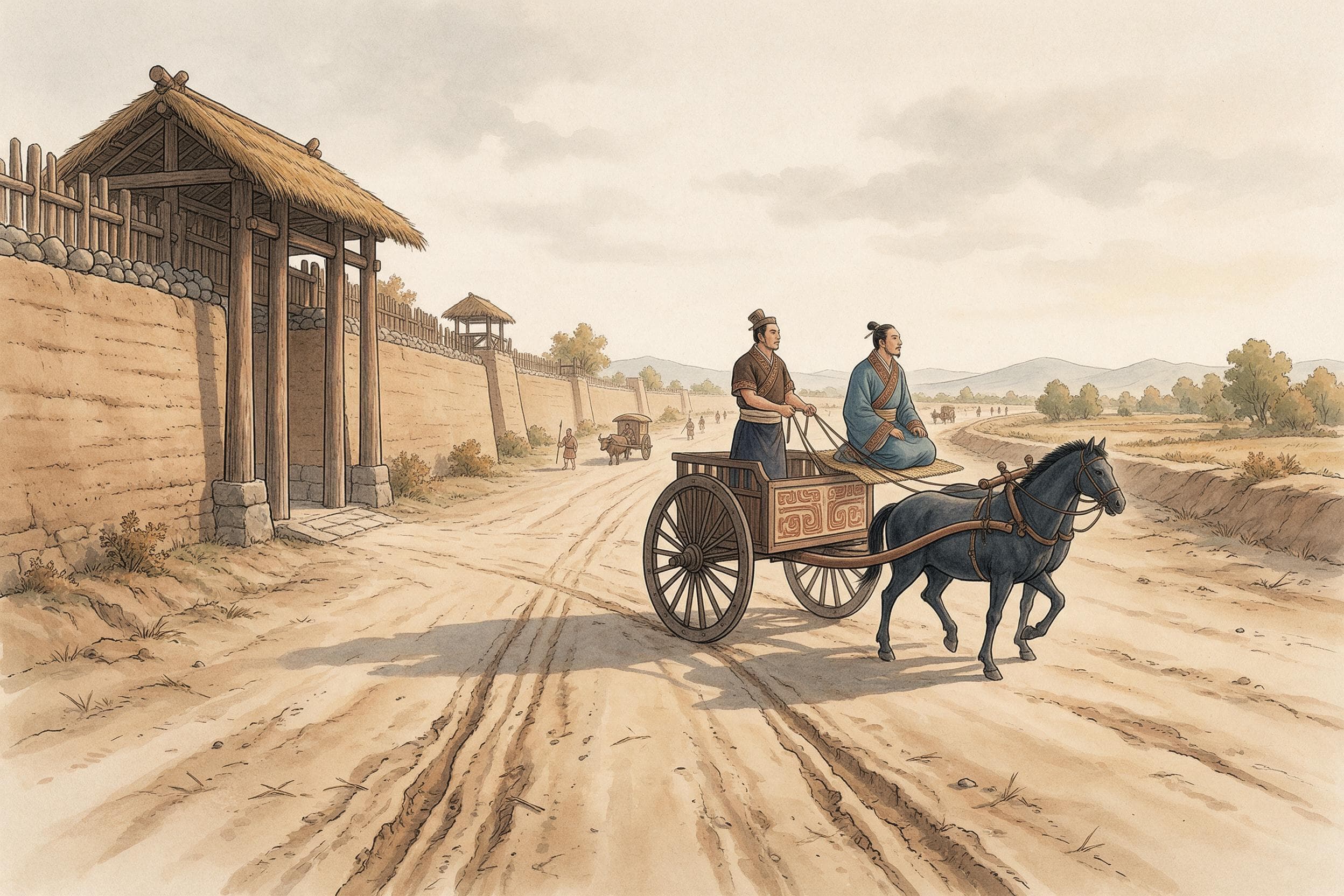
Ruts and Carriage Boxes: Roads and Chariots at Shang Yinxu
Excavators at Yinxu have traced a grid of three east-west and three north-south roads, one with wheel ruts; Shang chariots ran on one yoke, one shaft, one box, one axle and two wheels.
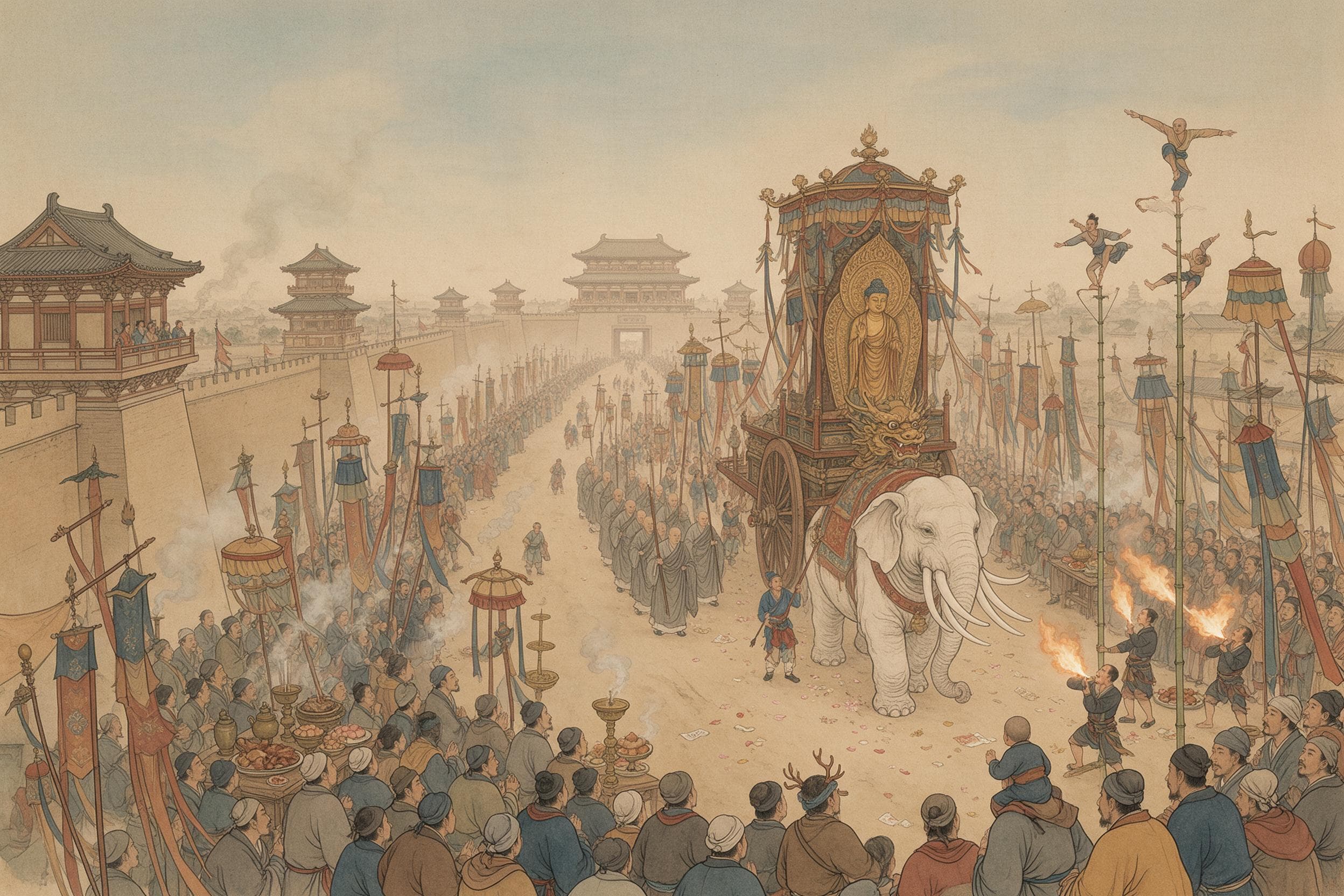
A Thousand Buddhas on the Avenue: Luoyang's Image Procession
On the fourth month's seventh day the capital's images assembled at Jingming Monastery; an office counted over a thousand; on the eighth they entered the palace gate for the emperor's flowers.
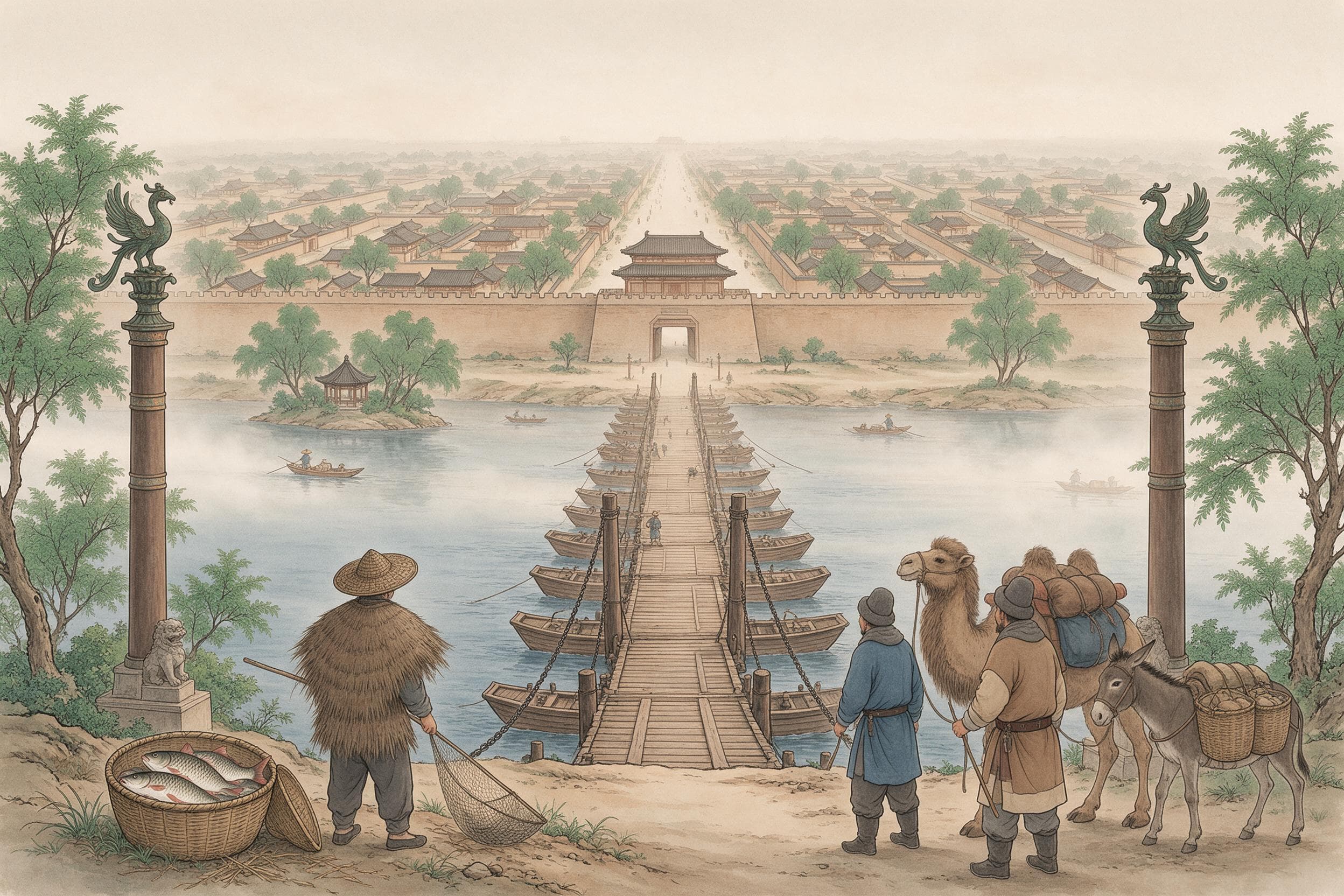
Four Hostels and a Fish Market: Foreigners in Southern Luoyang
Northern Wei Luoyang sorted arrivals by origin into four hostels and four wards south of the Luo, granted a house after three years, and sold river fish dearer than beef.
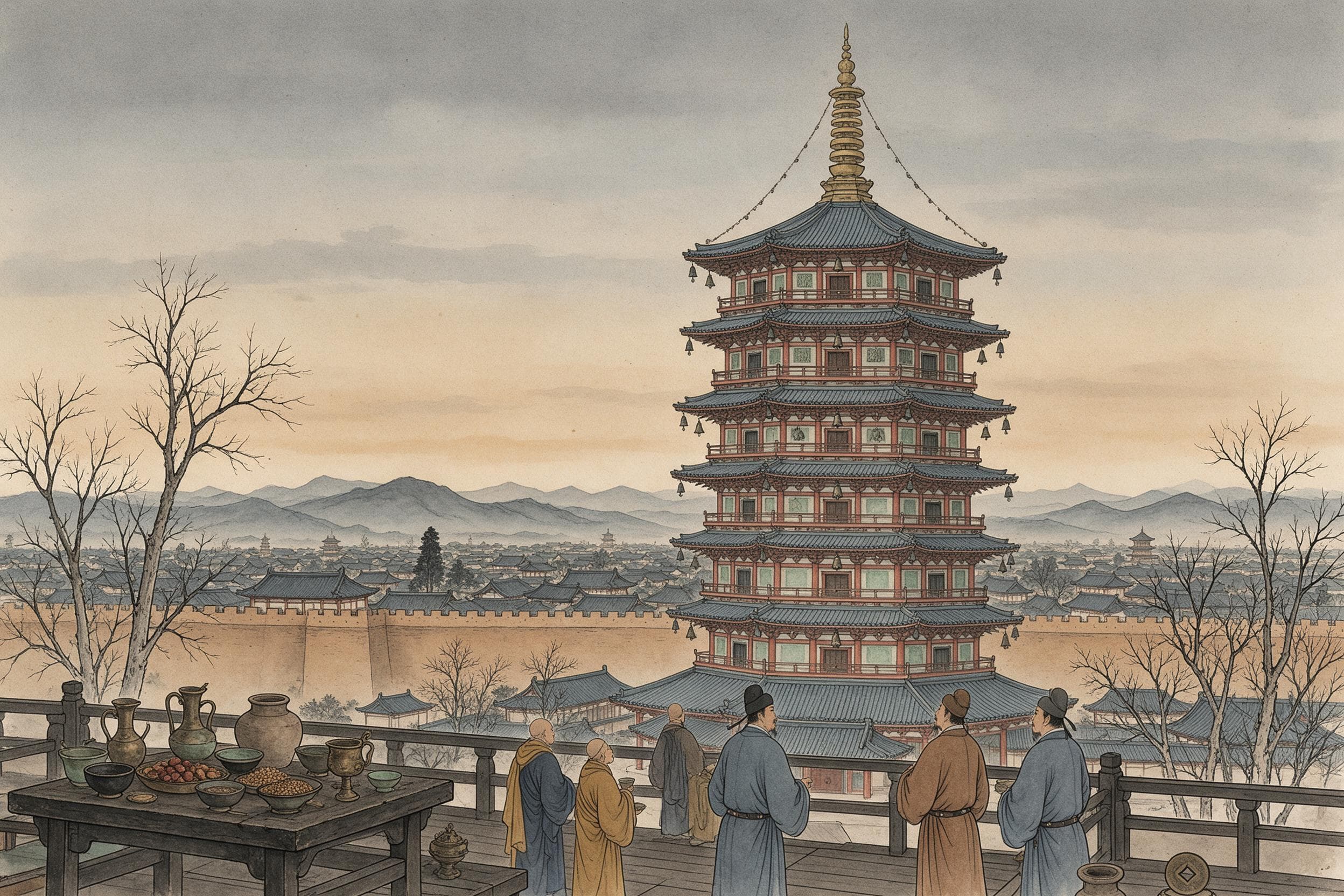
The Tower That Rang: Yongning Monastery's Pagoda
A nine-storey timber tower ninety zhang high, a ten-zhang golden spire, 130 bells and 5,400 more on its doors: built in 516, burned in 534, alight for three months.
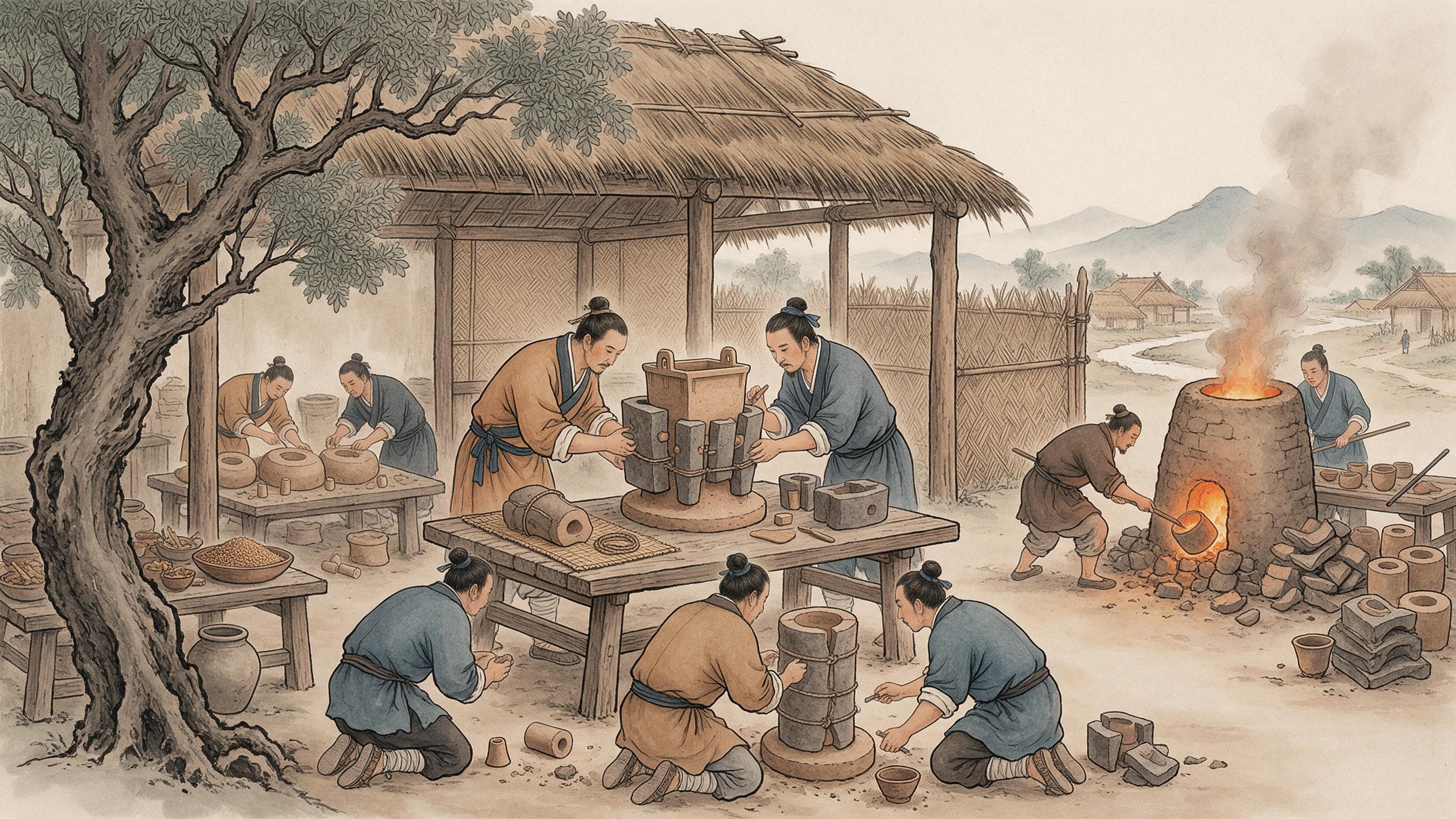
Eight Hundred Kilos of Bronze: How Shang Status Was Cast
The 832.84 kg ding took eight body moulds, three per leg, over a tonne of metal and seventy crucibles; Lady Hao's tomb held 1,928 objects, 755 of them jade, more than 200 older than she was.
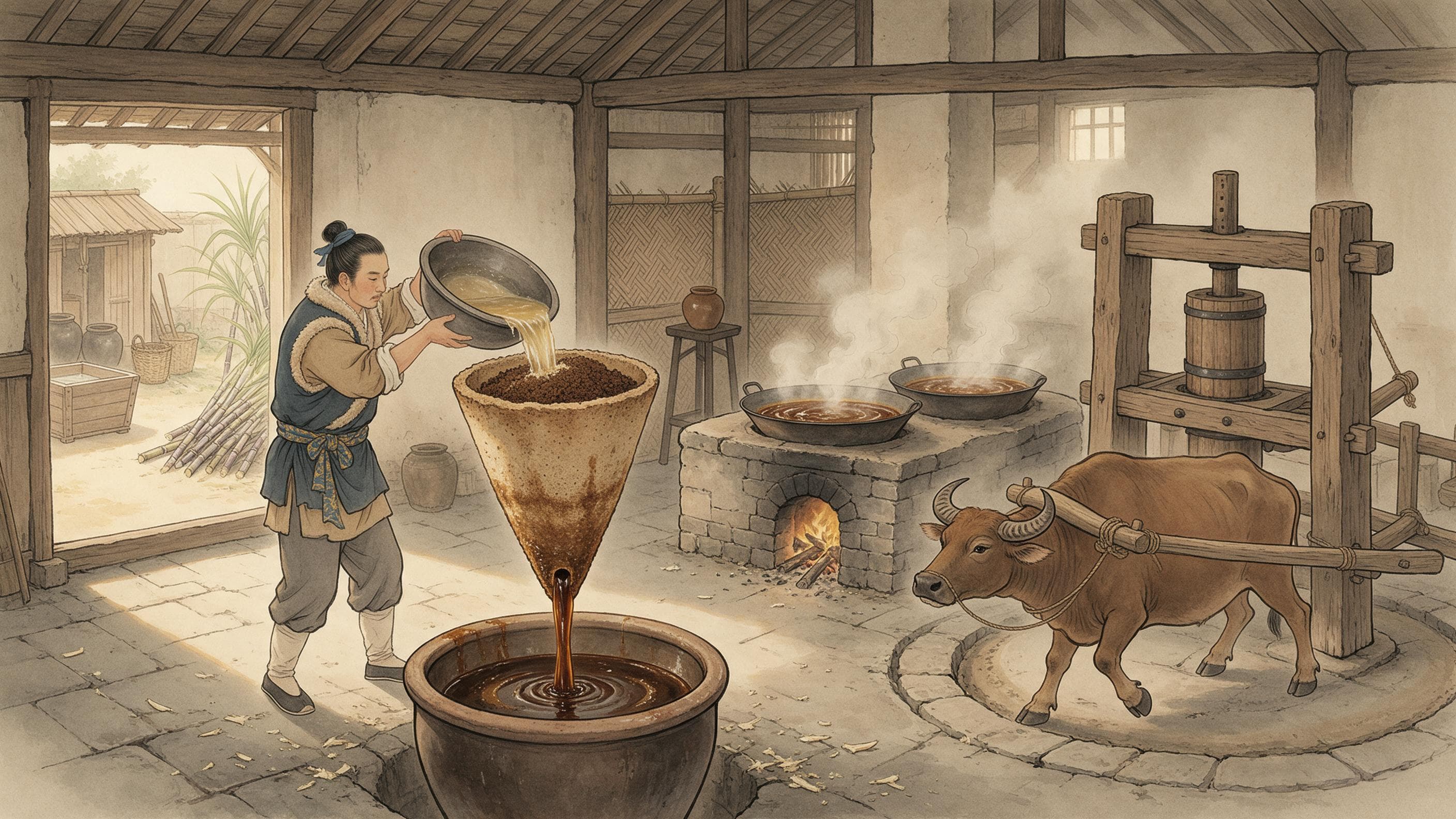
Washed with Yellow Mud: Making White Sugar in Ming China
Packed into a clay cone and washed with yellow mud water, Ming dark sugar came out as white frost, in five grades. Rock sugar was a separate process, not a finer grade of the same thing.
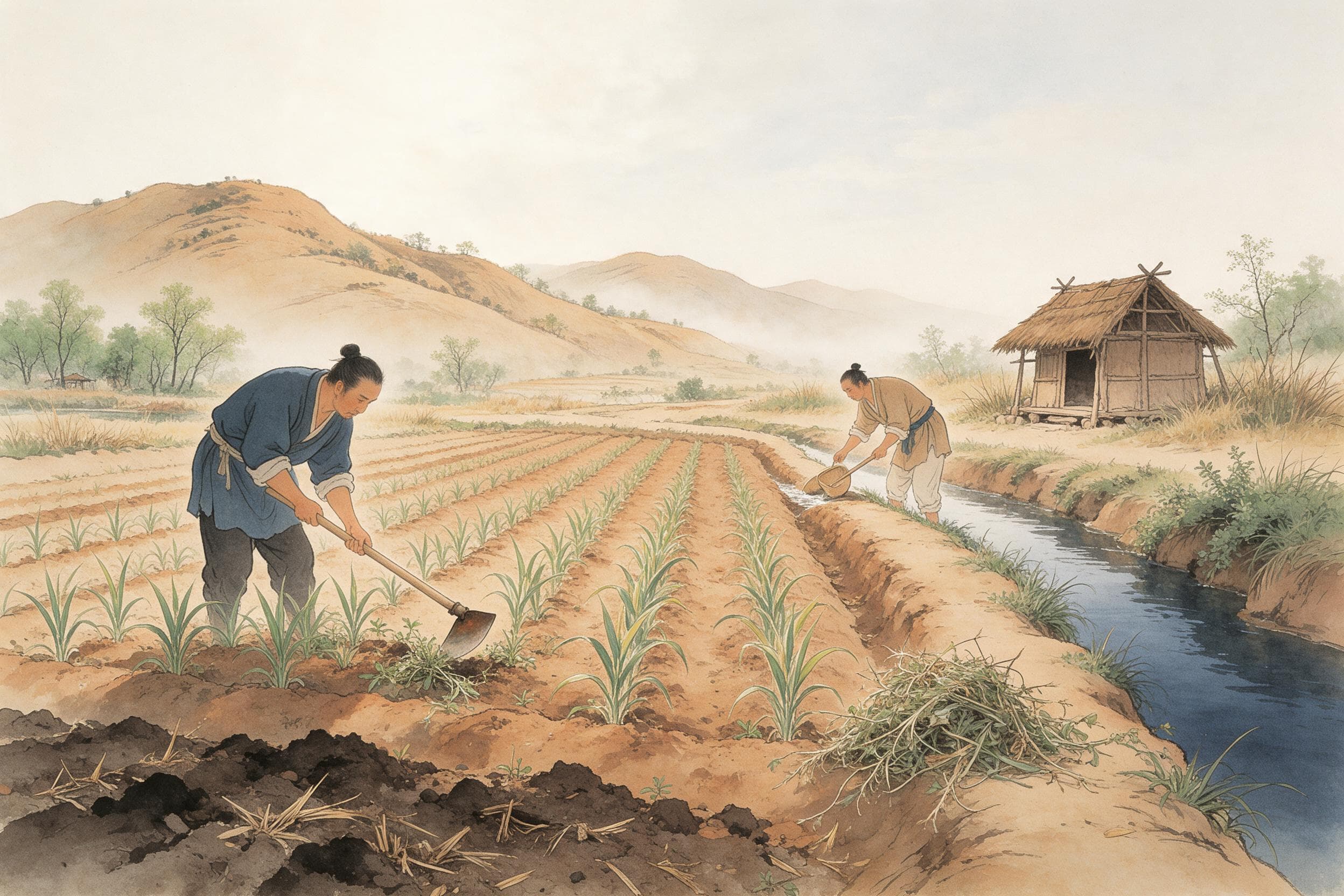
Feeding the Soil in Early China: Weeds, Deep Ploughing and Burnt Ground
Early Chinese farmers worked fertility by observation and timing: cut weeds left to rot, soil adjusted against its condition, five ploughings and deep tillage — not yet a manure regime.
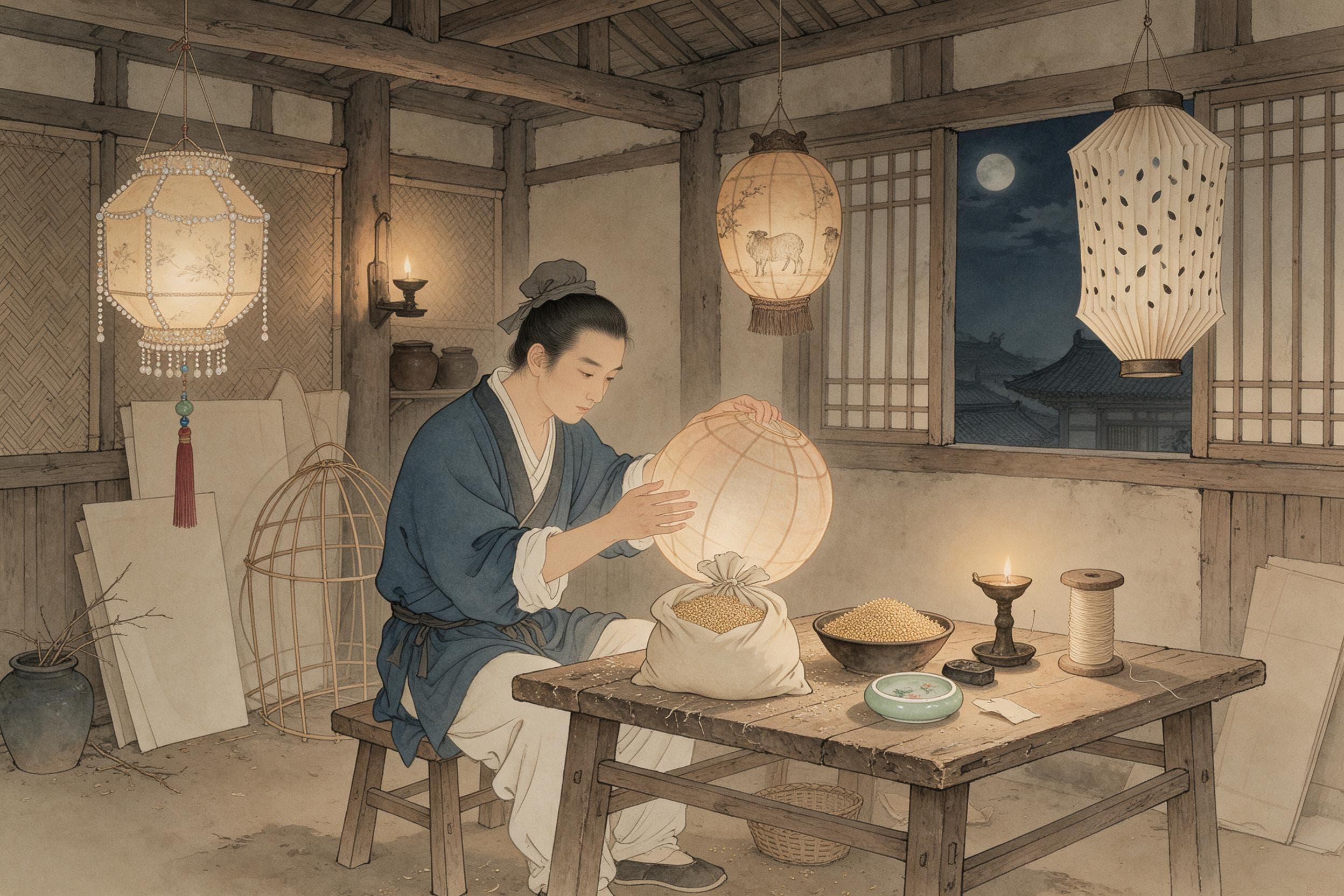
Where the Lanterns Came From: Craft and Trade in Song China
A Song lantern began as a craft: the 'boneless' lantern used a silk bag packed with millet as its mould. Suzhou, Fuzhou and Xin'an ranked the trade, and every city had a lantern market.
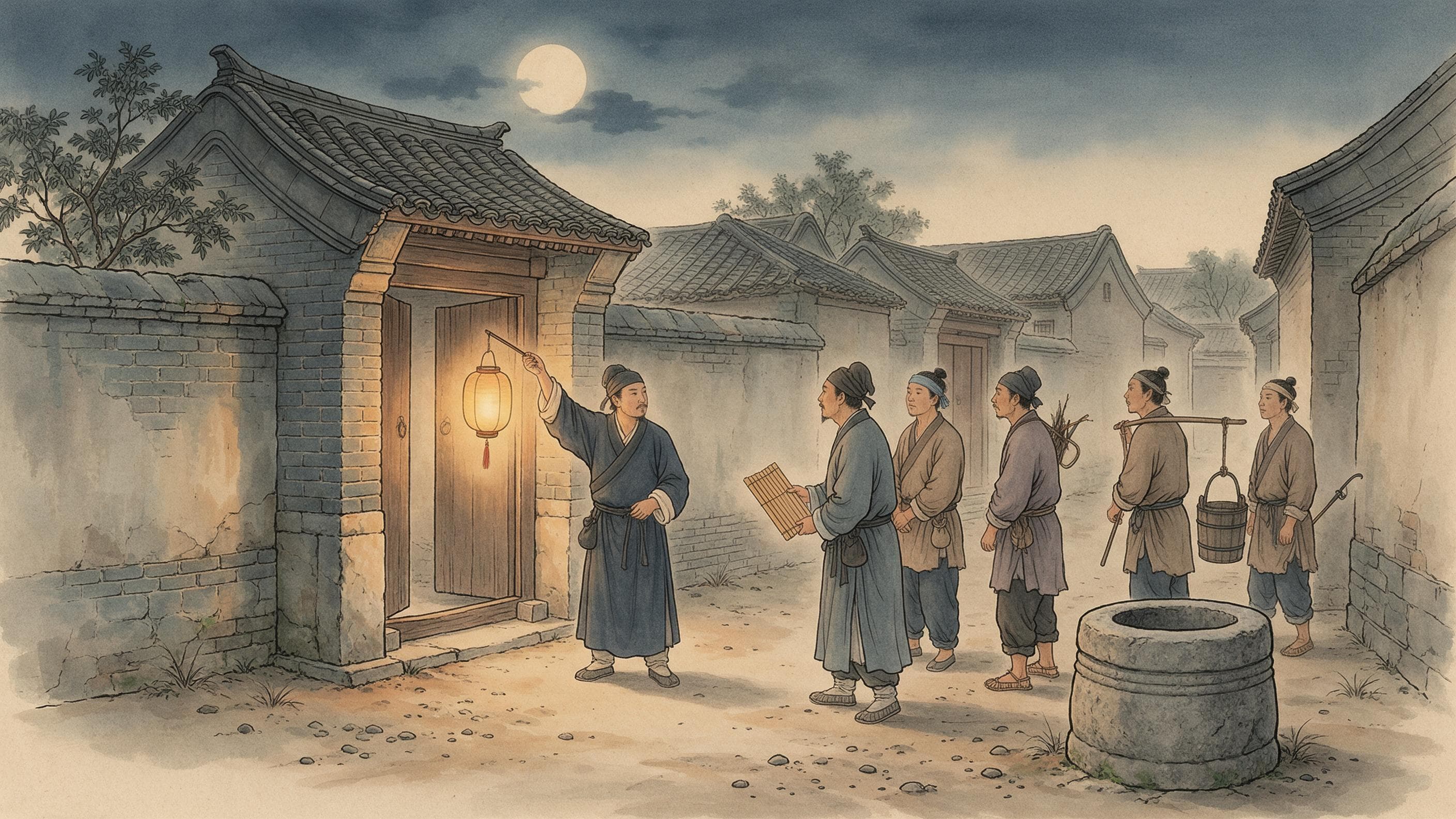
How a Ming City Ran: The Ward Headman's Night Round
A Ming city ran on curfews, ward headmen, state-built shopfronts and a scale checked every three days, not on a city government with a budget.