
EVERYDAY LIFE · SHANG TO QING
Stories
Small questions open a window onto a different world.
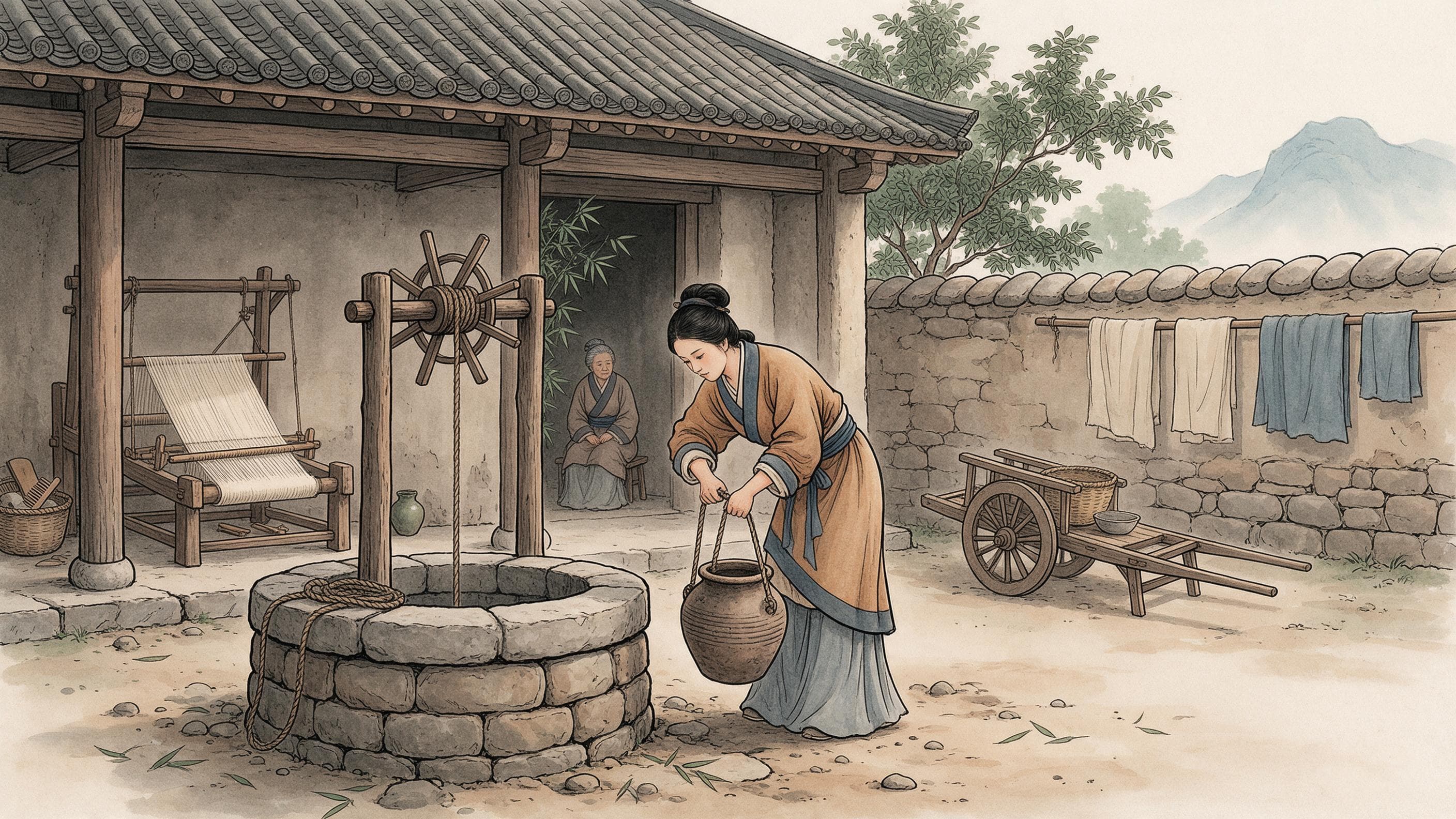
Drawing Water and Stepping to the Loom: Two Ways Han Women Were Written Down
One text is a mother's advice to her daughters; the other is an honour roll. Neither is a record of daily life, yet both keep returning to the same work: spinning, fetching water, cooking, serving the old.
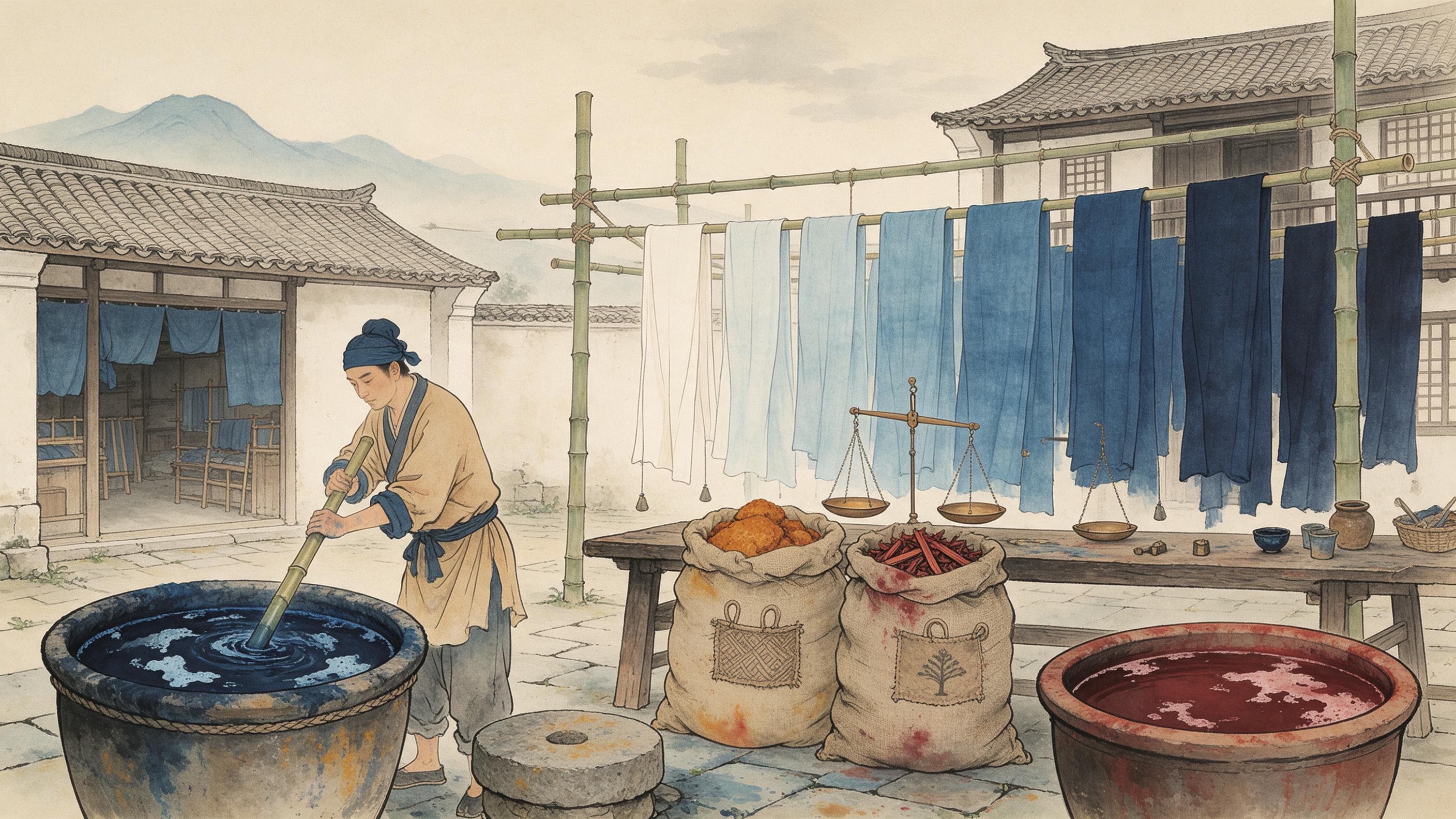
What Colour Could an Ordinary Person Wear? Cloth, Dyes and One Penalty in Ming China
A Ming craft manual gives recipes for thirty-odd colours, from safflower red to indigo black. The Ming code punished some of them. What the two records can, and cannot, say about an ordinary person's clothes.
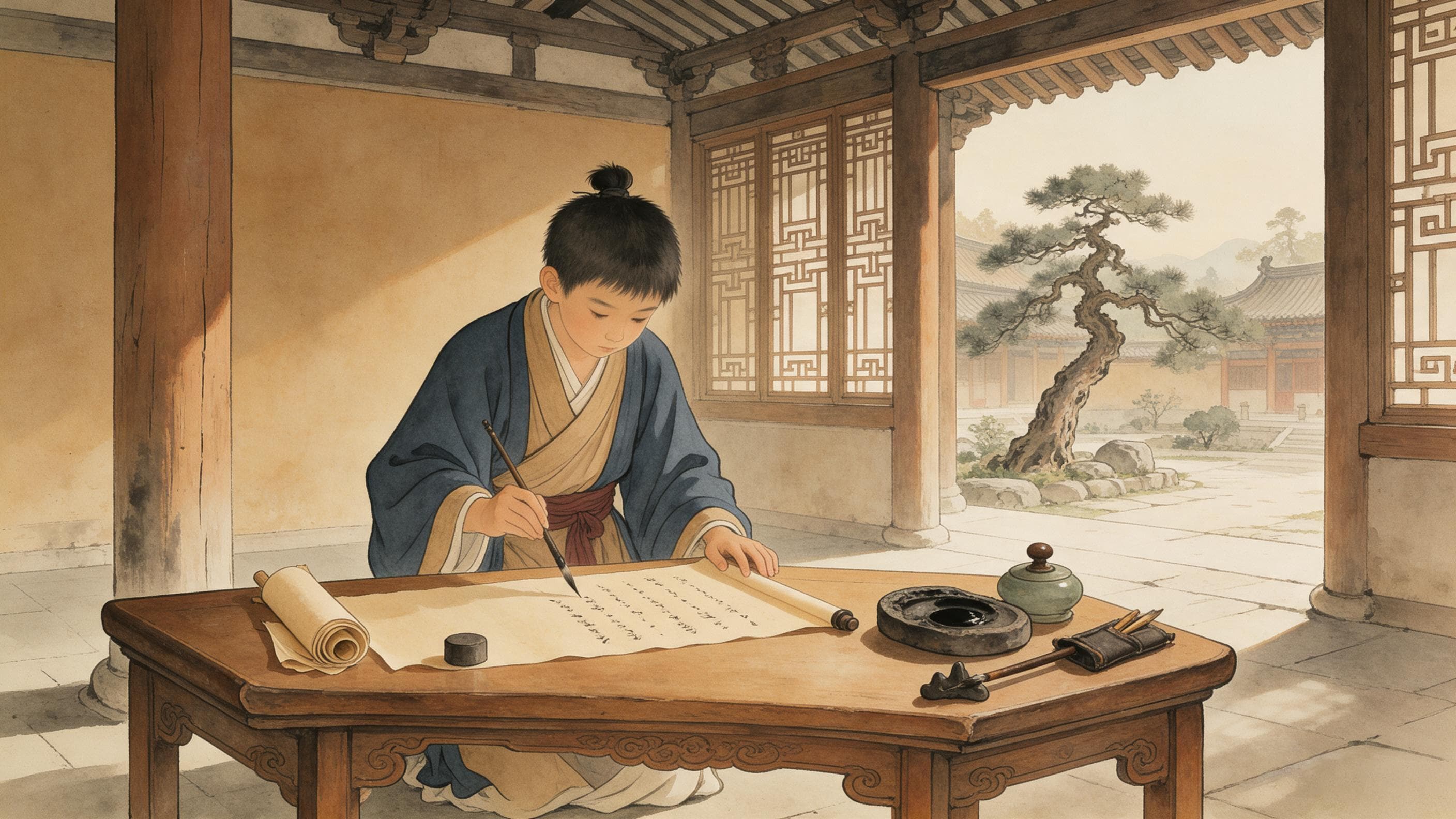
Copy It Once and You Remember It: Tang Primers and the Dunhuang Schoolboys
A Dunhuang scroll ends with a schoolboy's name and a date: Zhang Gui of the Jinguangming monastery, 905. What Tang children read — Thousand Character Classic, Mengqiu, Taigong Jiajiao — and the costs no source records.
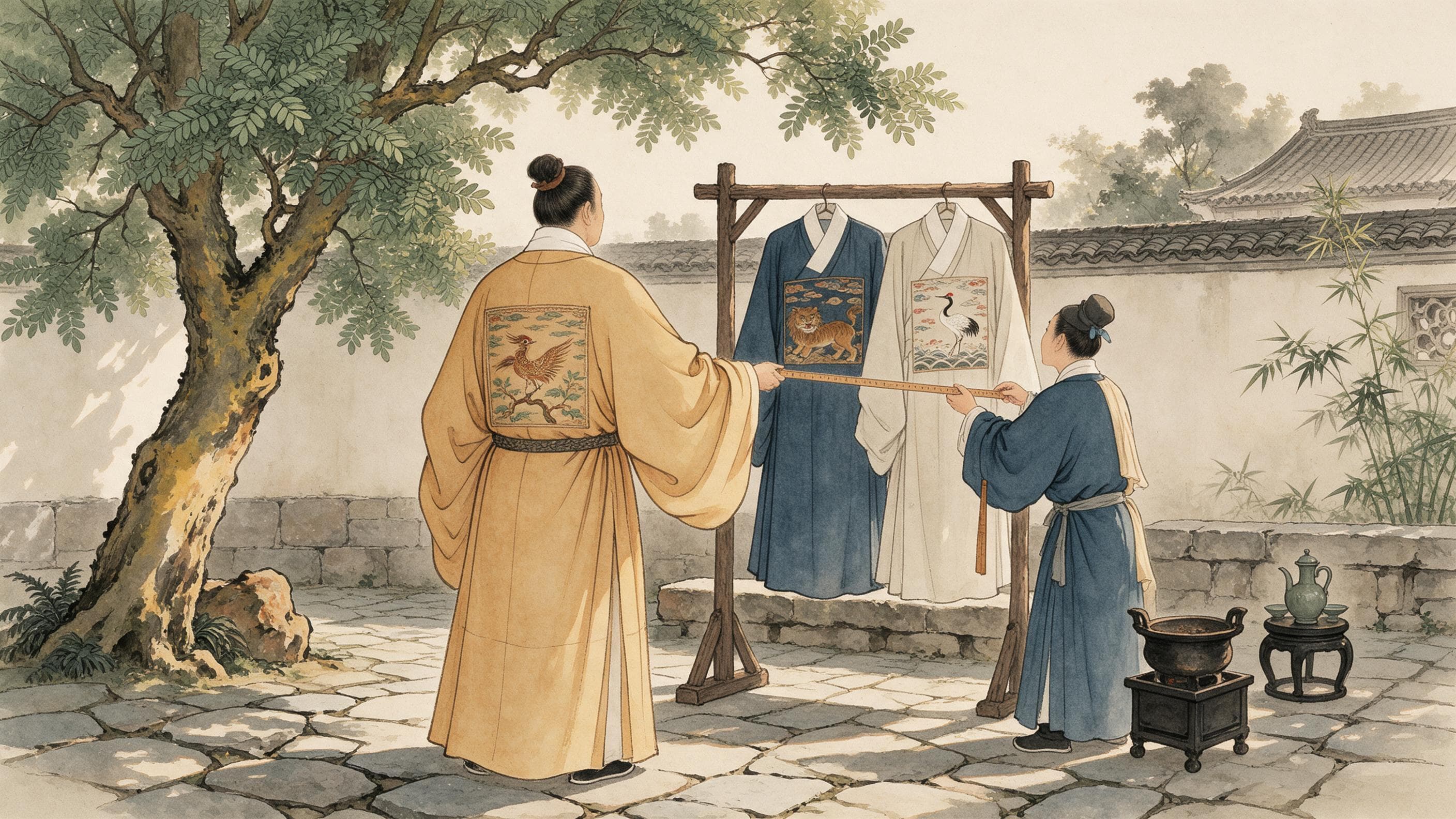
Two Horns on a Fish: Dress, Badges and Rank in Ming China
In 1537 the emperor spotted a python robe on a second-rank minister and asked why a flying fish had two horns. Ming rules fixed rank by badge, cap ridge, robe colour and belt — and fined the dyer who helped.
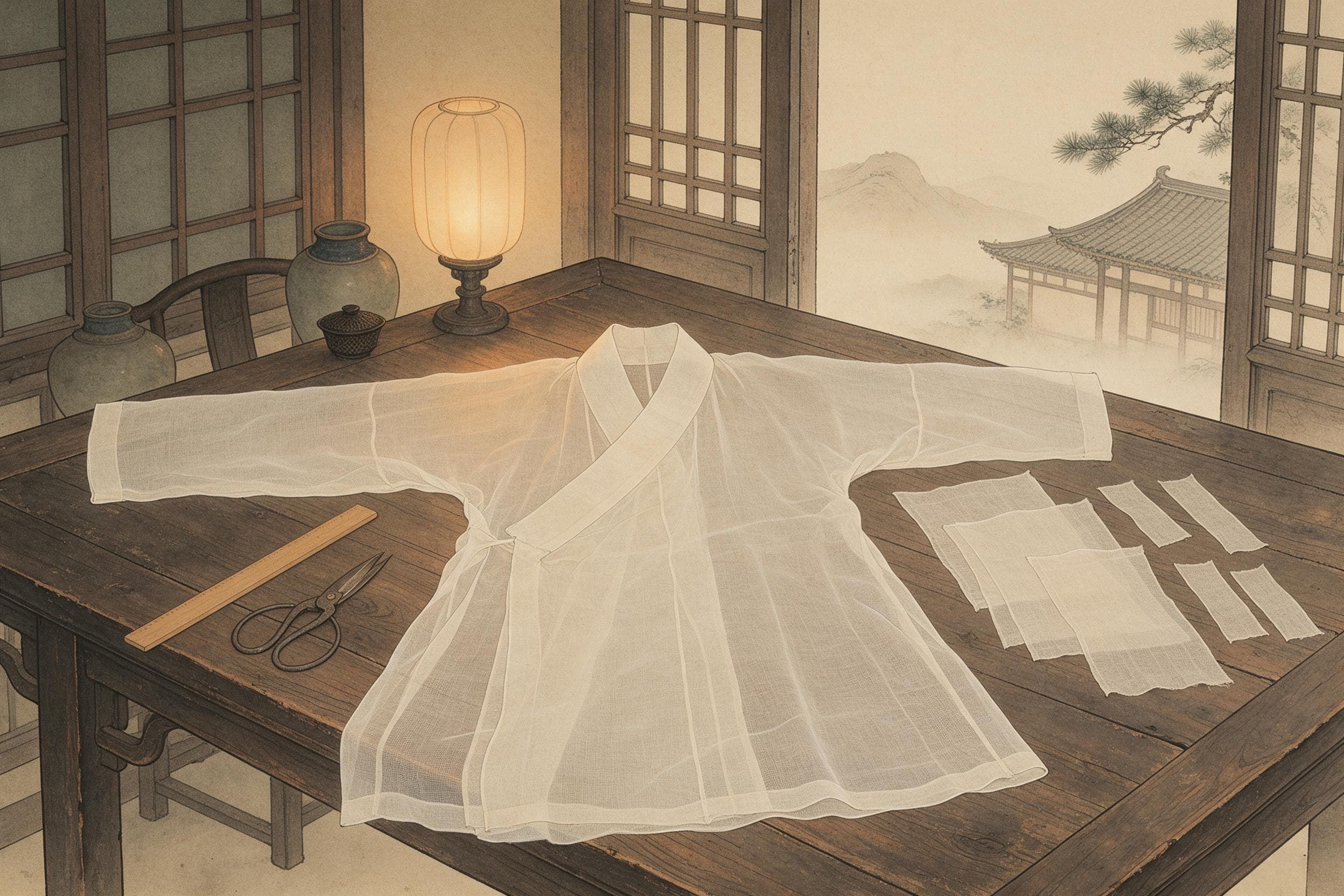
Seven Pieces of Silk, Forty-Nine Grams: Cutting a Han Robe
Two gauze robes from Mawangdui weigh 49 and 48 grams; one is cut from seven pieces of cloth. Their weave can be measured, and the Han cap-and-ribbon regulations show how cloth was counted into rank. No price, no hours.
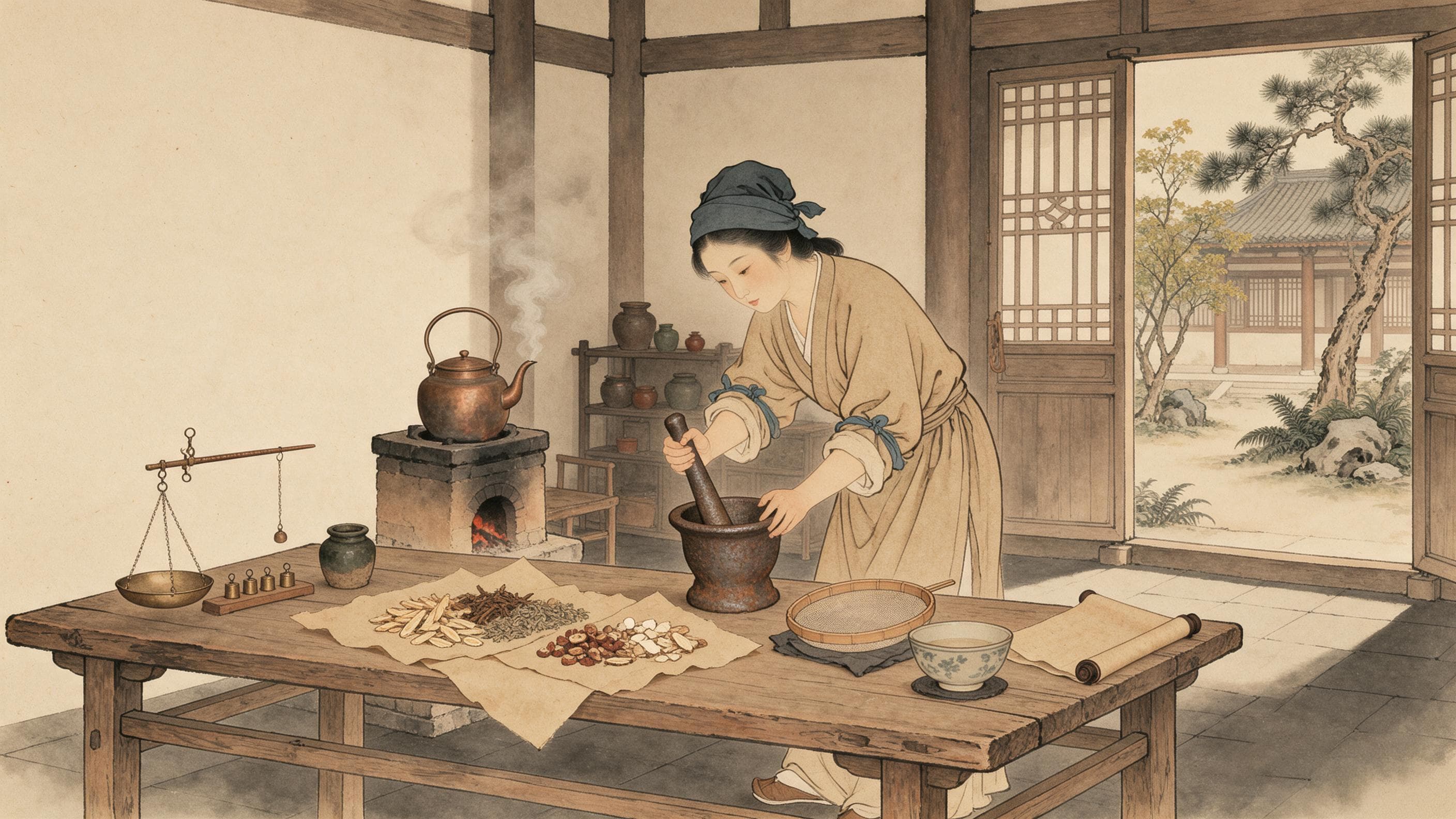
How a Tang Prescription Was Made: Diagnosis, Roasting, Boiling, Taking
A Tang formulary teaches the making of one prescription: examine first, roast and weigh the drugs, boil twenty liang in a dou of water down to four sheng, take it in three doses. And never weigh a drug raw.
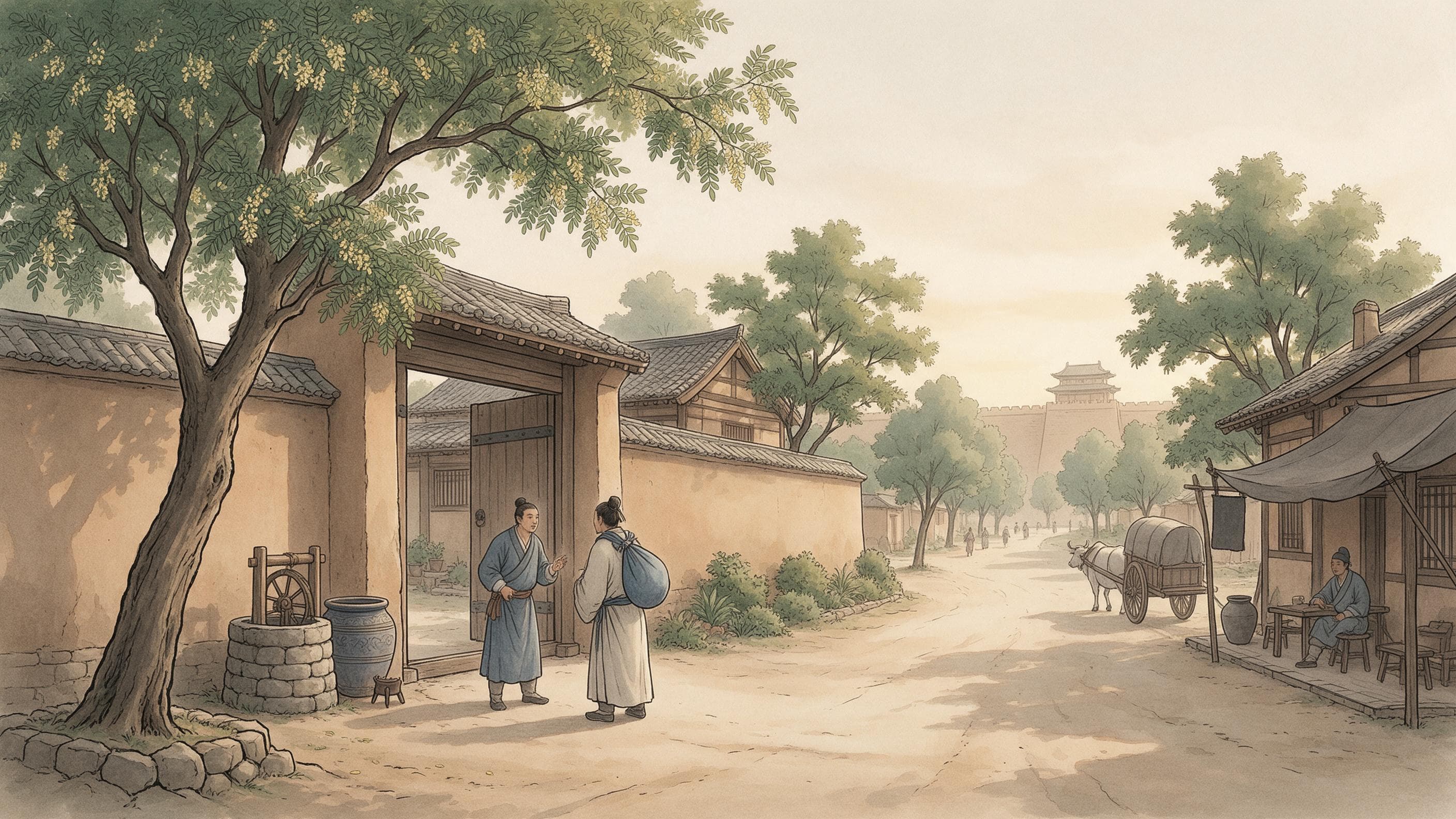
How People Lived in Tang Chang'an: Wards, Rented Rooms and Inns
“Living in Chang'an is no easy matter” is usually read as a rent complaint, but the two early versions say rice and “all things” are dear. Chang'an left no rent figures at all, only wards, houses, rented rooms and inns.
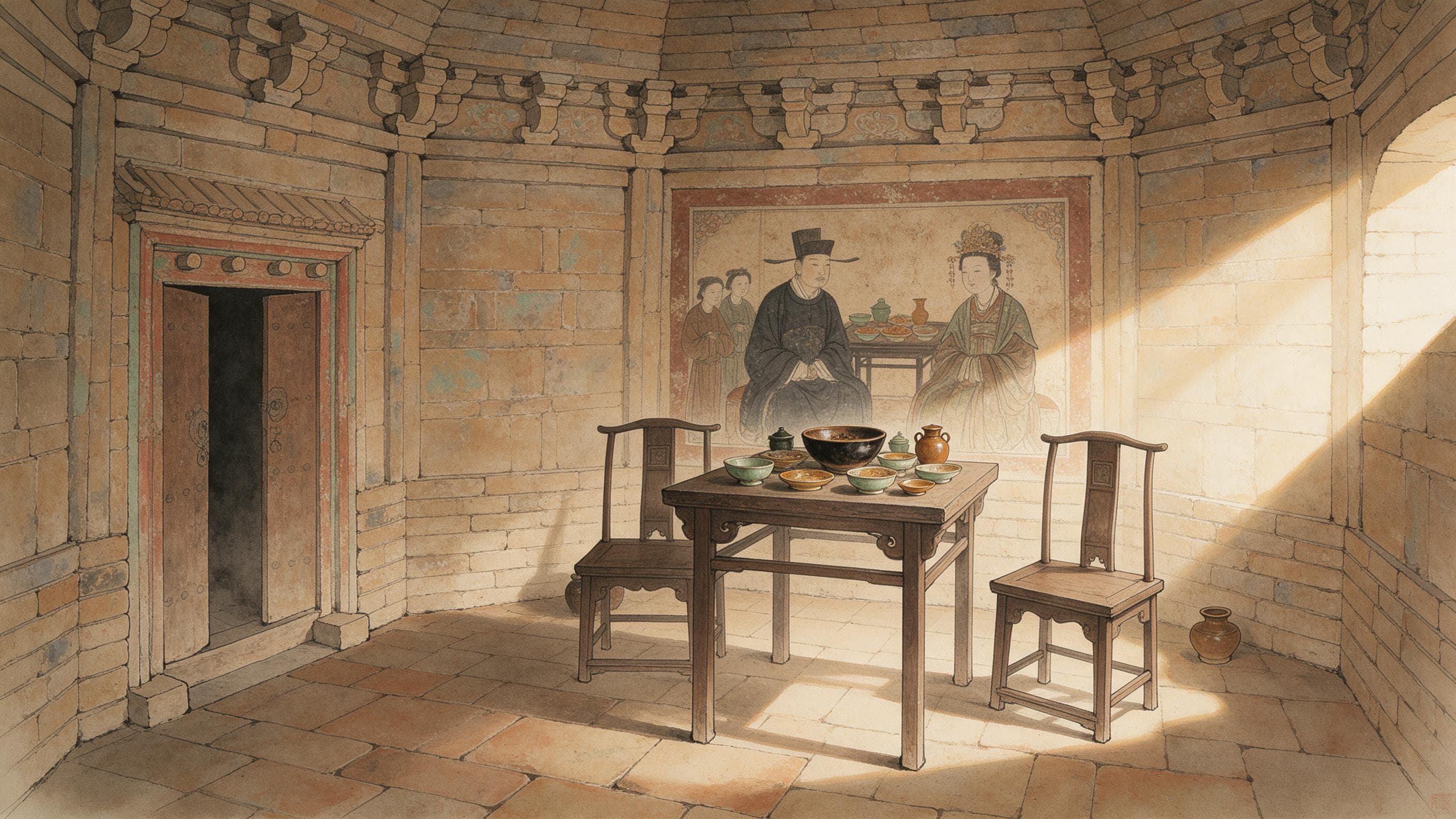
One Table, Two Chairs: The Banquet Set Out in a Jin Tomb
A Jin tomb in Shanxi paints the same banquet on two walls and sets a real table and two chairs before the coffin platform. What the murals and the bowls can say about a rich household's table, and what they cannot.
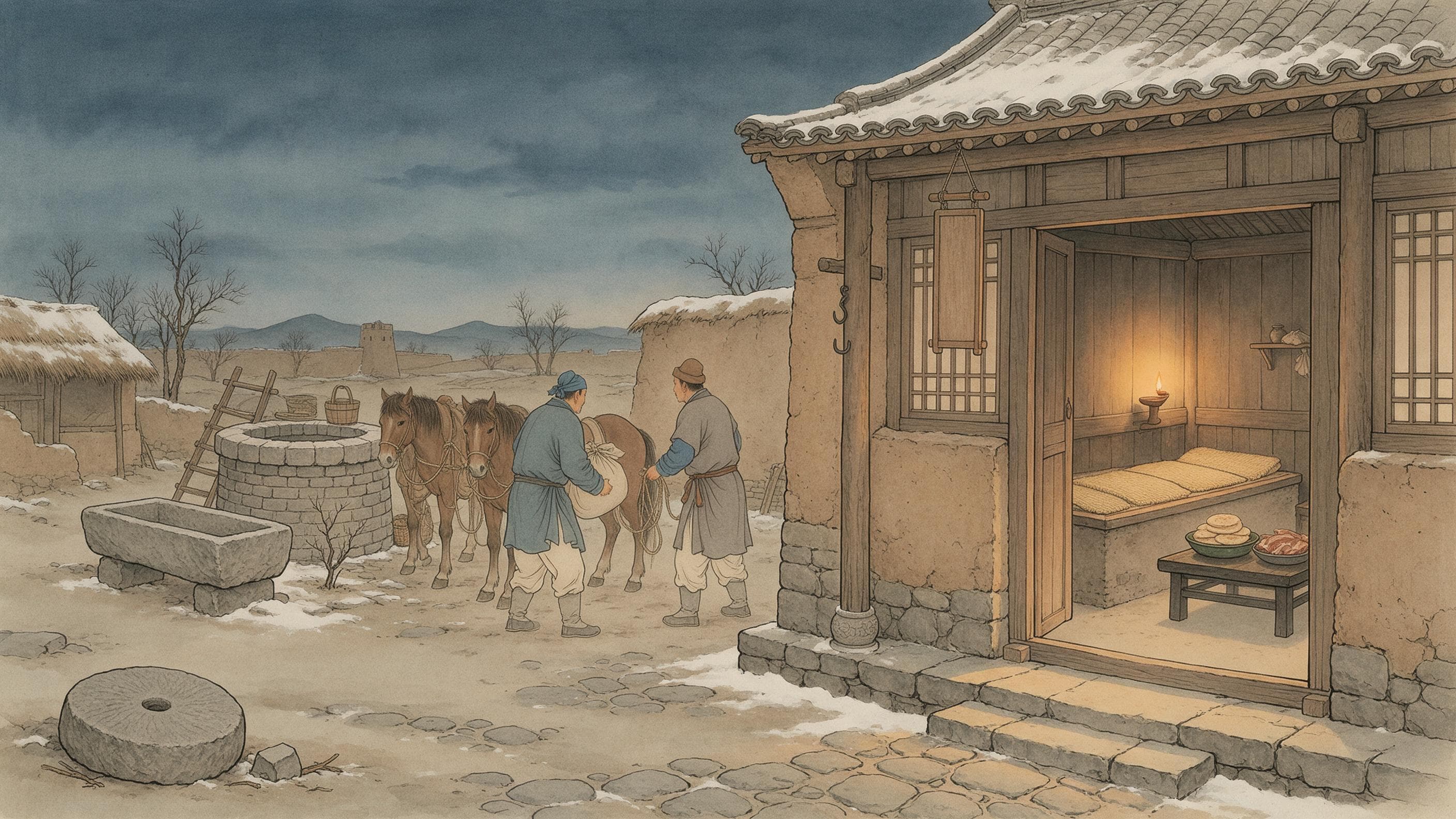
The Bill, Recited Line by Line: A Yuan Merchant on the Road to the Capital
A Korean textbook of 108 Chinese dialogues follows a merchant from Kaesong to the Yuan capital, pricing an inn bill, a horse sale and a broker's tax: teaching examples, not Yuan price statistics.