
EVERYDAY LIFE · SHANG TO QING
Stories
Small questions open a window onto a different world.
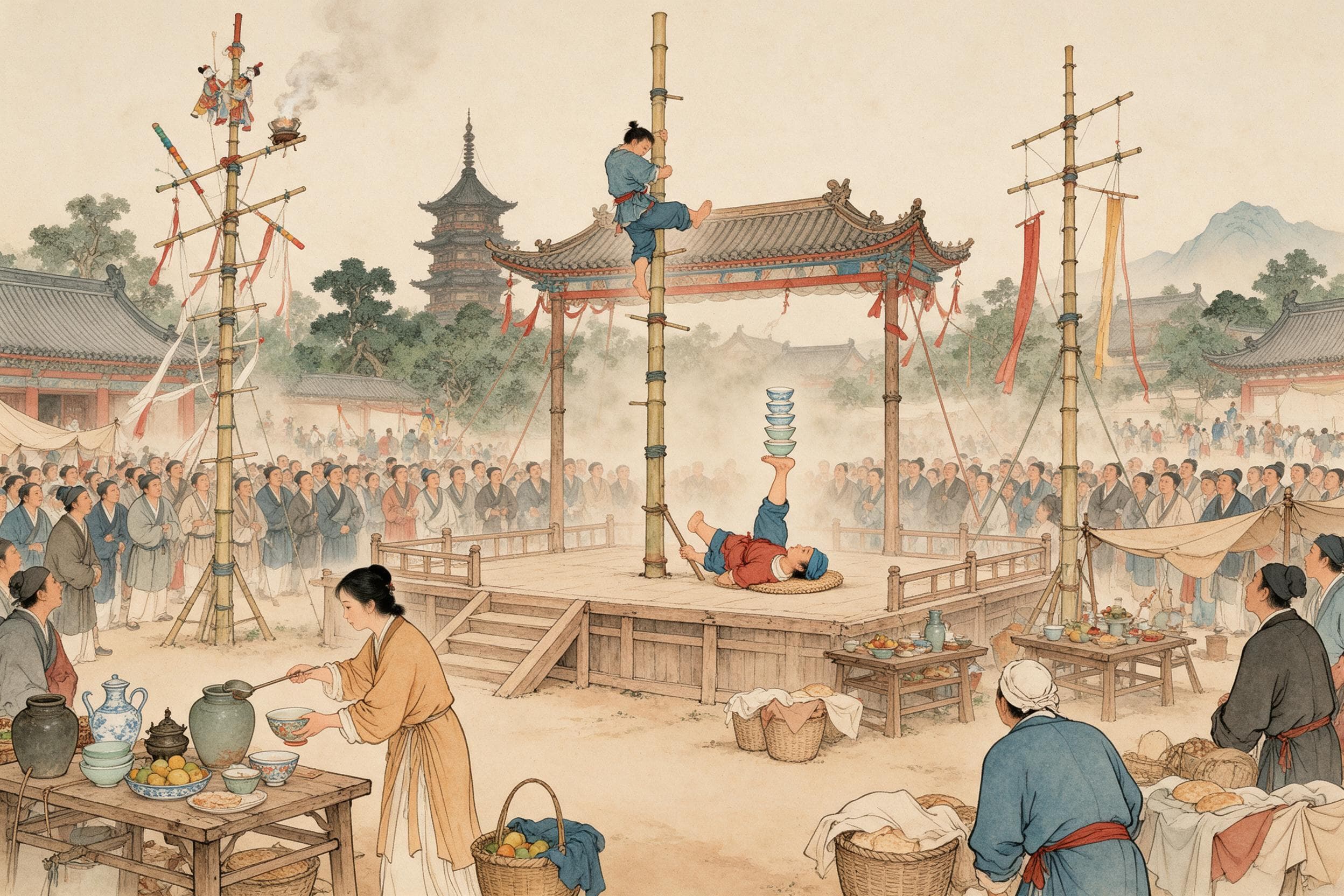
Twenty-Two Acts on a Temple Stage: Acrobats and Street Troupes in Song China
On the twenty-fourth of the sixth month the temple stage ran twenty-two acts from dawn until dark. Two banner poles belonged to two rival government workshops, and the pole-climbers were summoned to amnesties.
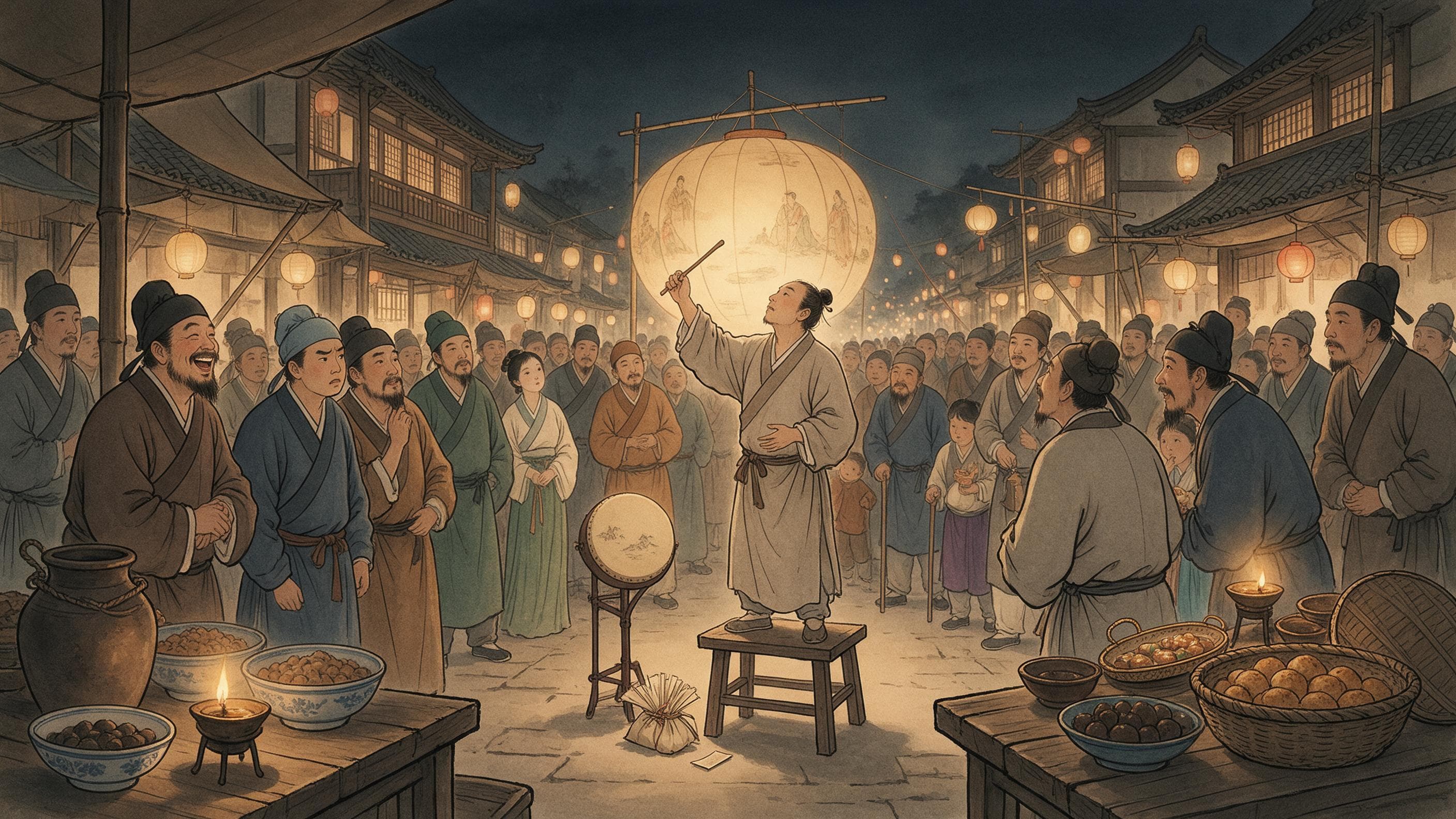
Riddle Sellers: The Guessing Trade in Song Cities
In Song cities riddle-guessing was a paid street act: a drummer drew the crowd, a seller set verbal traps, and lanterns carried hidden lines for passers-by to puzzle over.
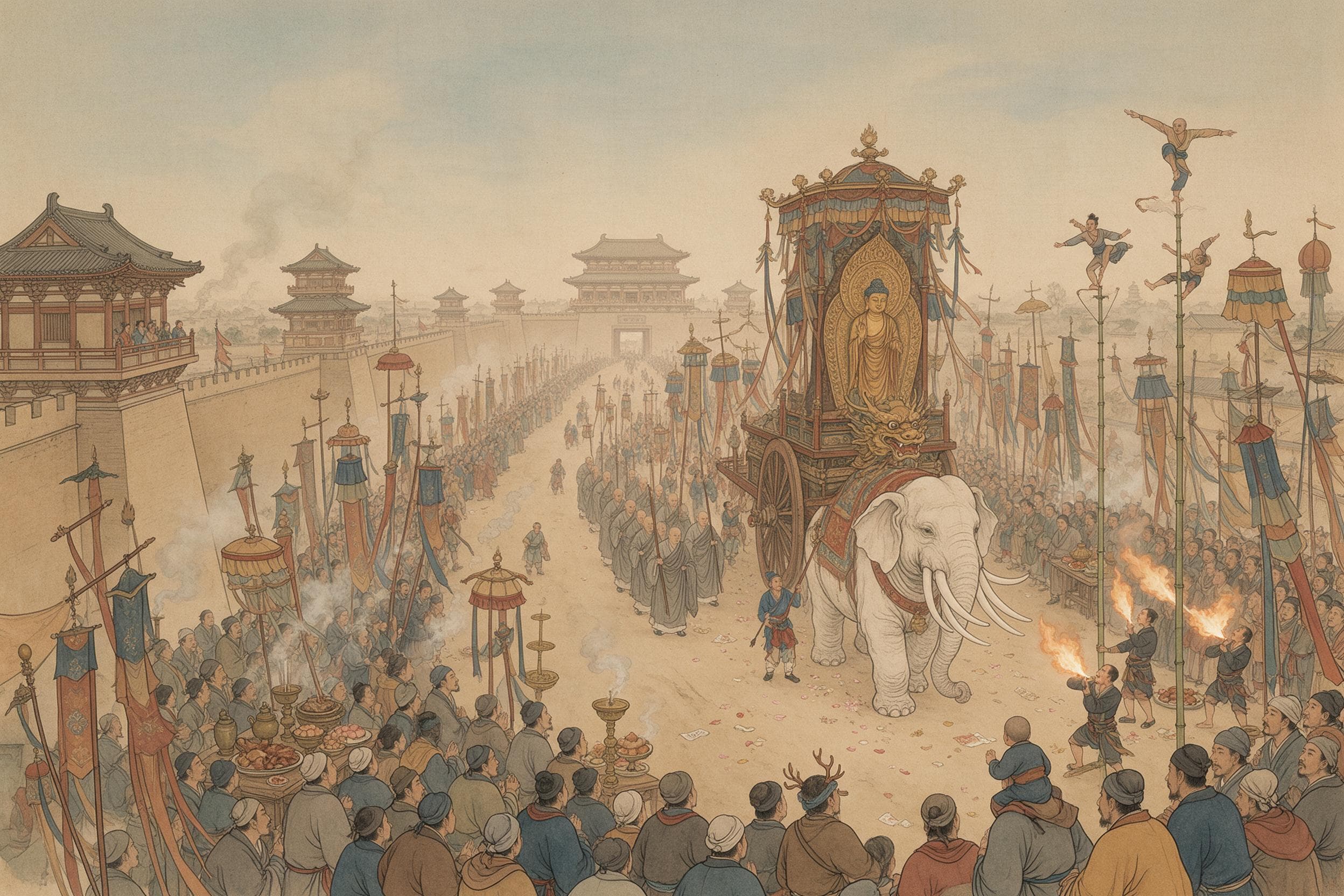
A Thousand Buddhas on the Avenue: Luoyang's Image Procession
On the fourth month's seventh day the capital's images assembled at Jingming Monastery; an office counted over a thousand; on the eighth they entered the palace gate for the emperor's flowers.
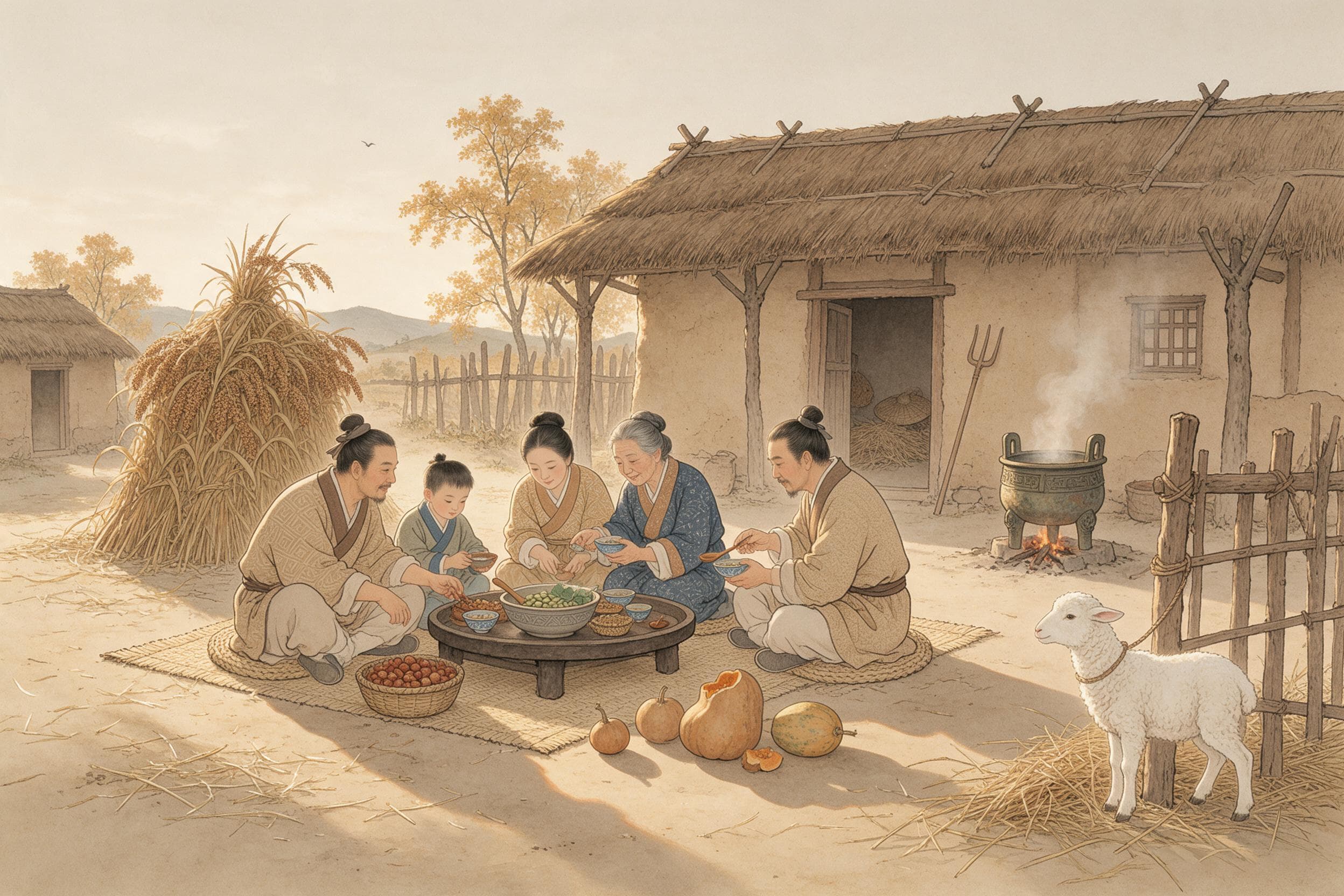
Mallows, Beans and a Lamb: What People Ate in the Spring and Autumn
The ode "Seventh Month" lists a year of food — mallows, beans, dates, rice for wine, gourds, bitter herbs — with millets as staples and lamb for the year-end feast. Two meals a day; no menu survives.
A Table a Zhang Wide, and a Dish of Chives: Money and Power in Luoyang's Monasteries
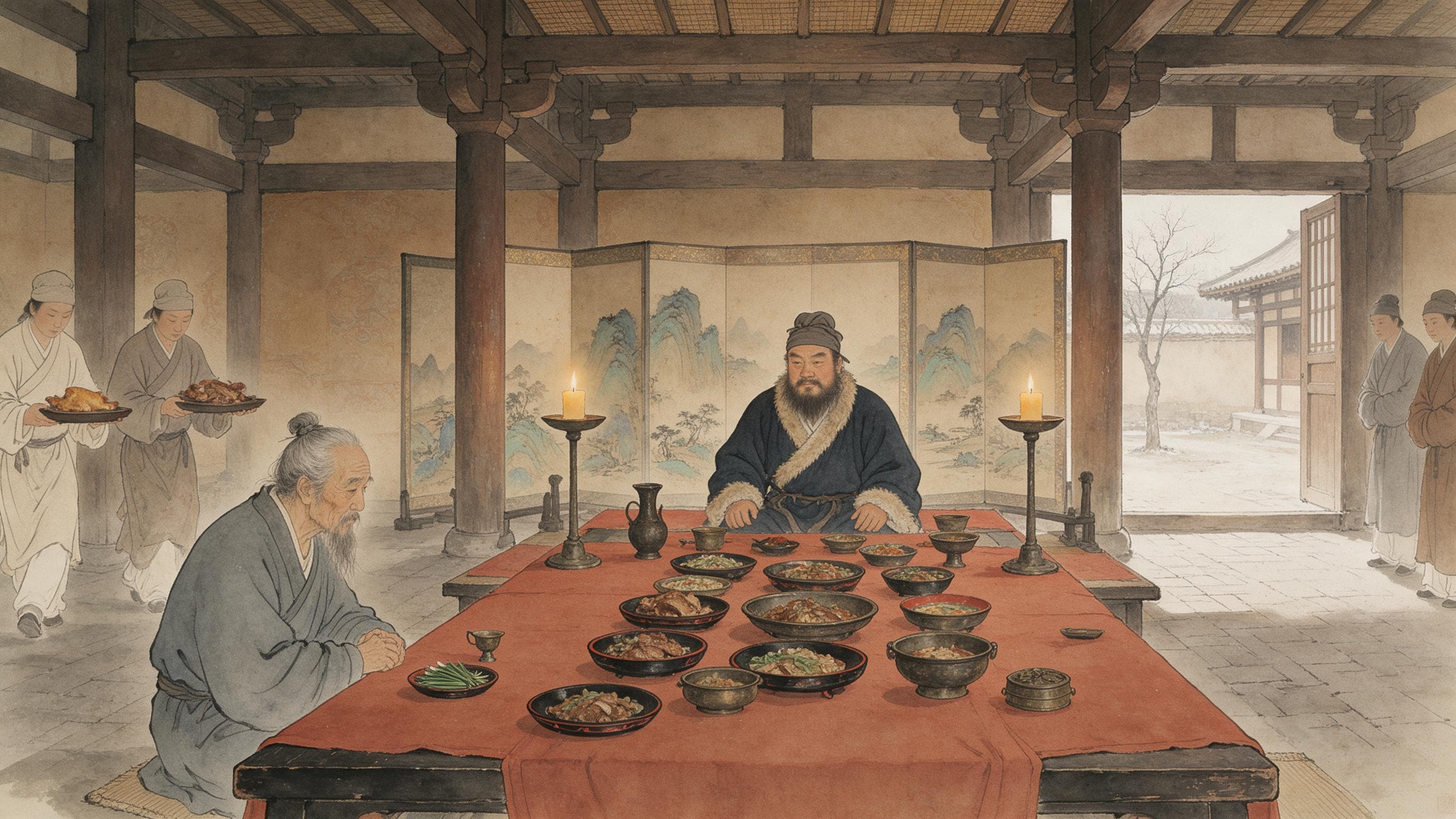
Prince Yuan Yong kept six thousand servants and five hundred singers and capped a meal at tens of thousands of coins; Li Chong, rich beyond measure, ate chives, and the joke about his 'eighteen dishes' was a pun.
Preserving Meat Without a Fridge: Rice, Wine Lees and Mud
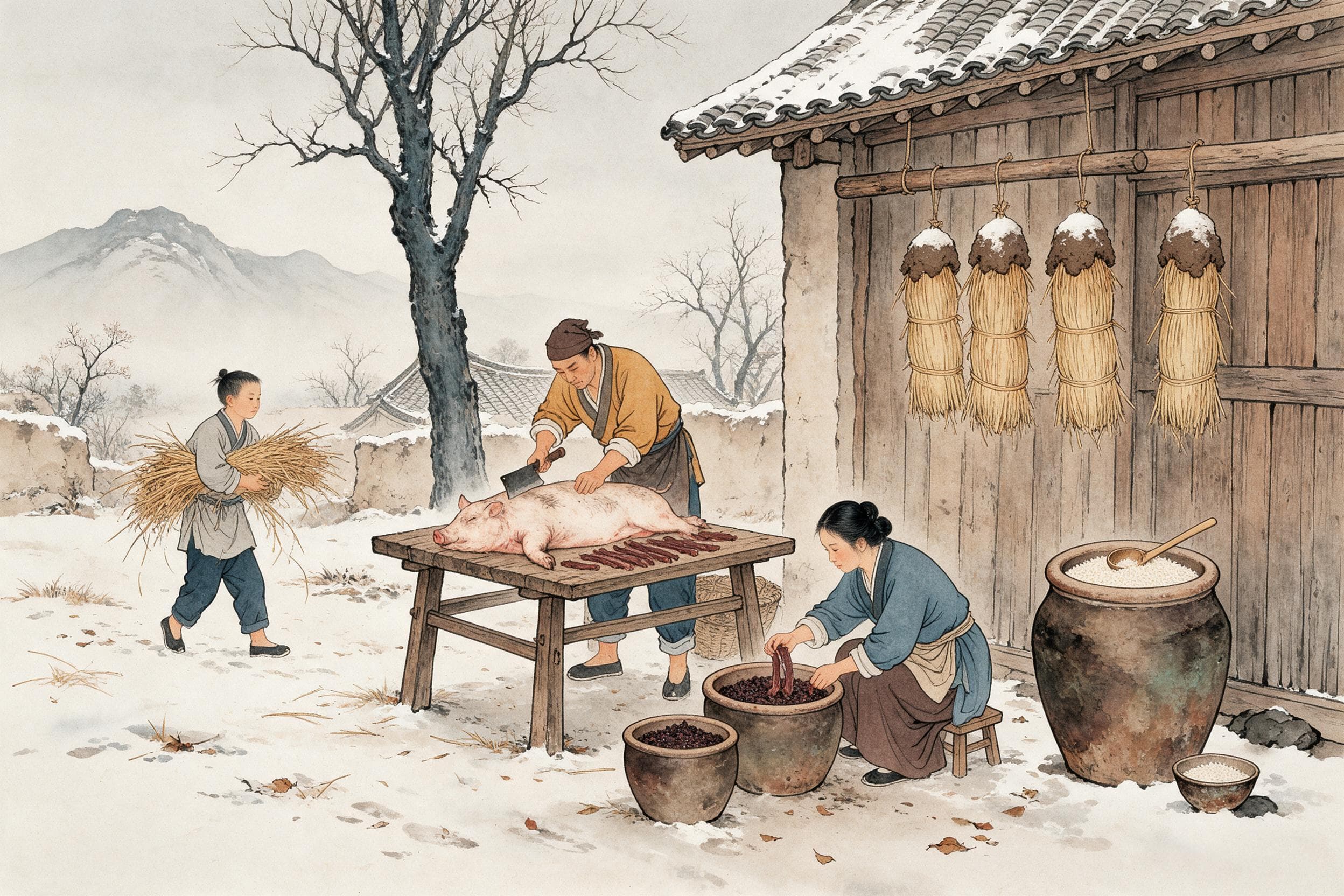
One pig killed in the twelfth month and three ways to keep it: pork packed in cooked rice until it sours, meat buried in salted wine lees, and cuts sealed in mud on the north wall.
Four Hostels and a Fish Market: Foreigners in Southern Luoyang
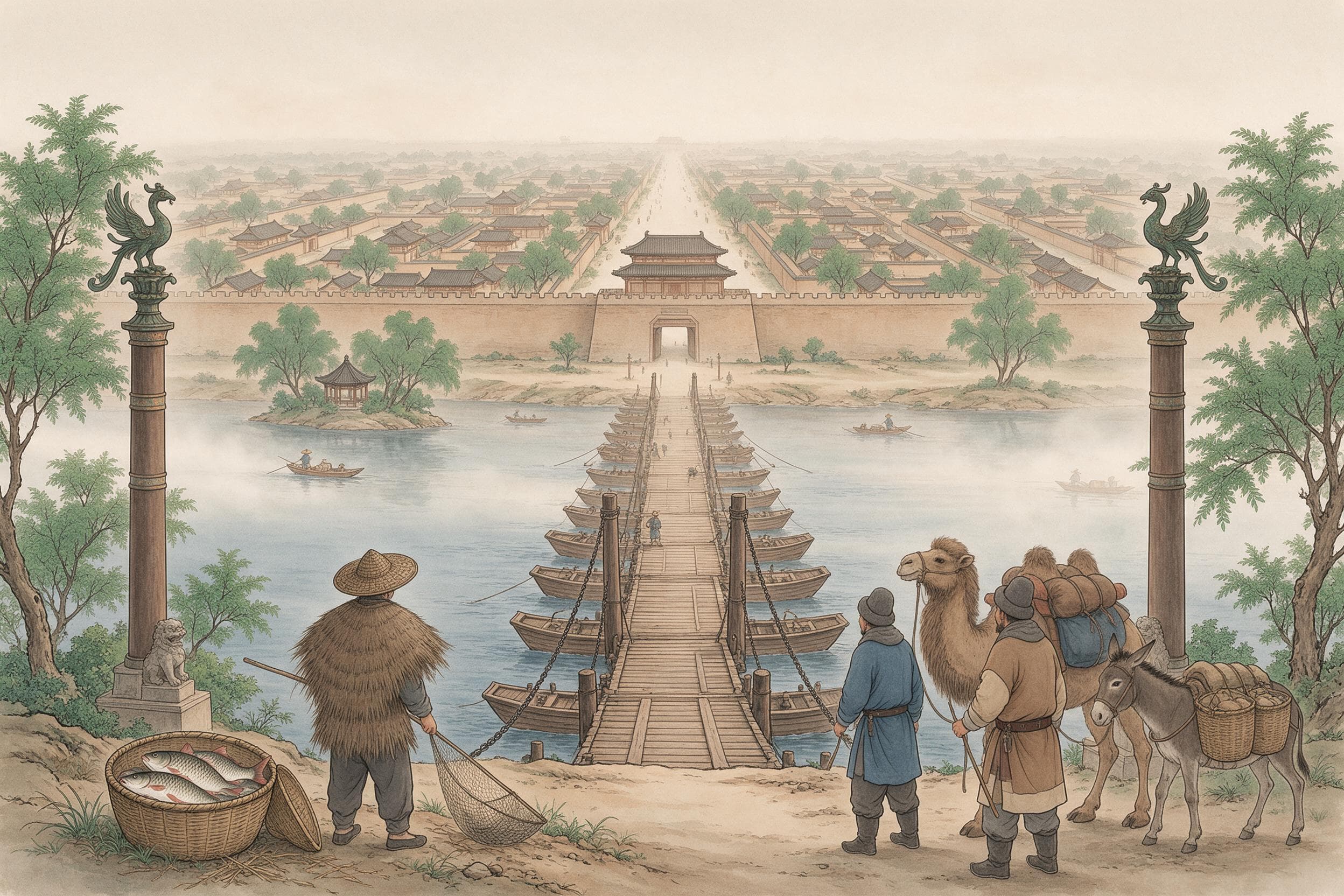
Northern Wei Luoyang sorted arrivals by origin into four hostels and four wards south of the Luo, granted a house after three years, and sold river fish dearer than beef.
Slave to the Milk: Wang Su, Tea and a Northern Court's Taste
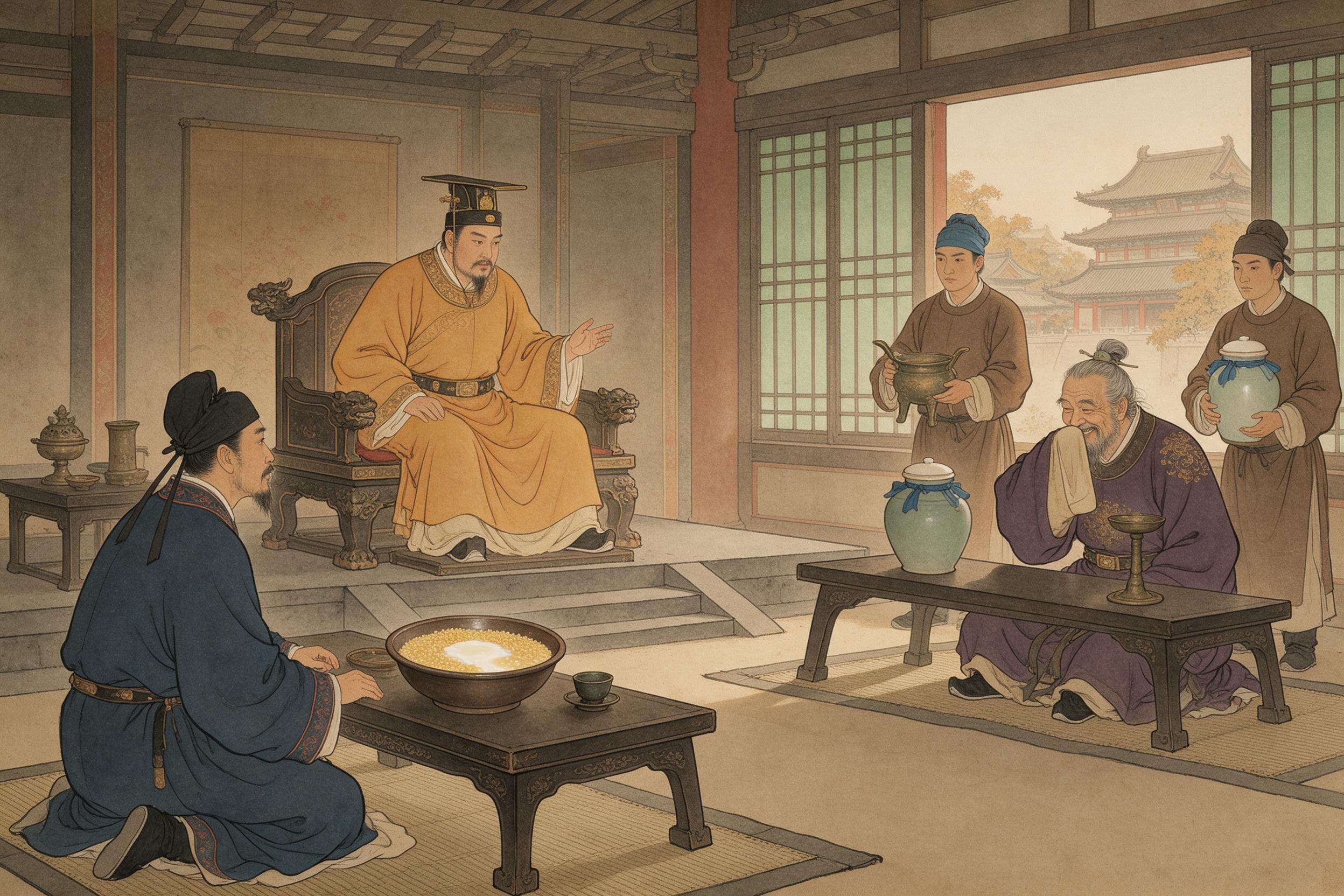
A southern defector reached Luoyang in 494 refusing mutton and milk and drinking tea by the measure. Years later he ate milk gruel at the emperor's table and called tea the slave of milk.
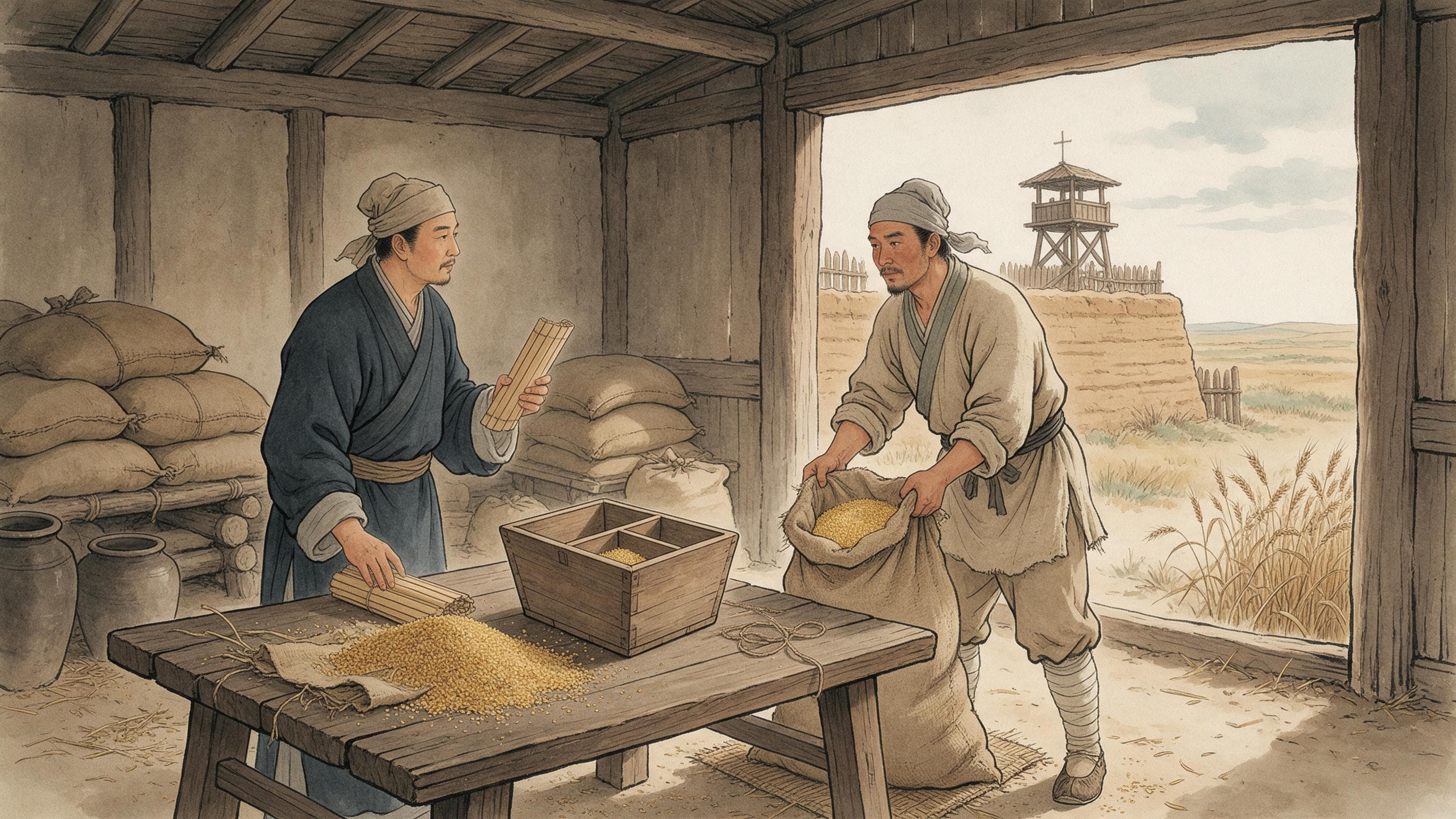
Three Shi, Three Dou, Three Sheng: A Ration Register from the Han Frontier
One 4.66-gram wooden slip from a Han frontier post records fifteen men, their grain ration of three shi three dou three sheng, and the month each collected it himself.