
EVERYDAY LIFE · SHANG TO QING
Stories
Small questions open a window onto a different world.
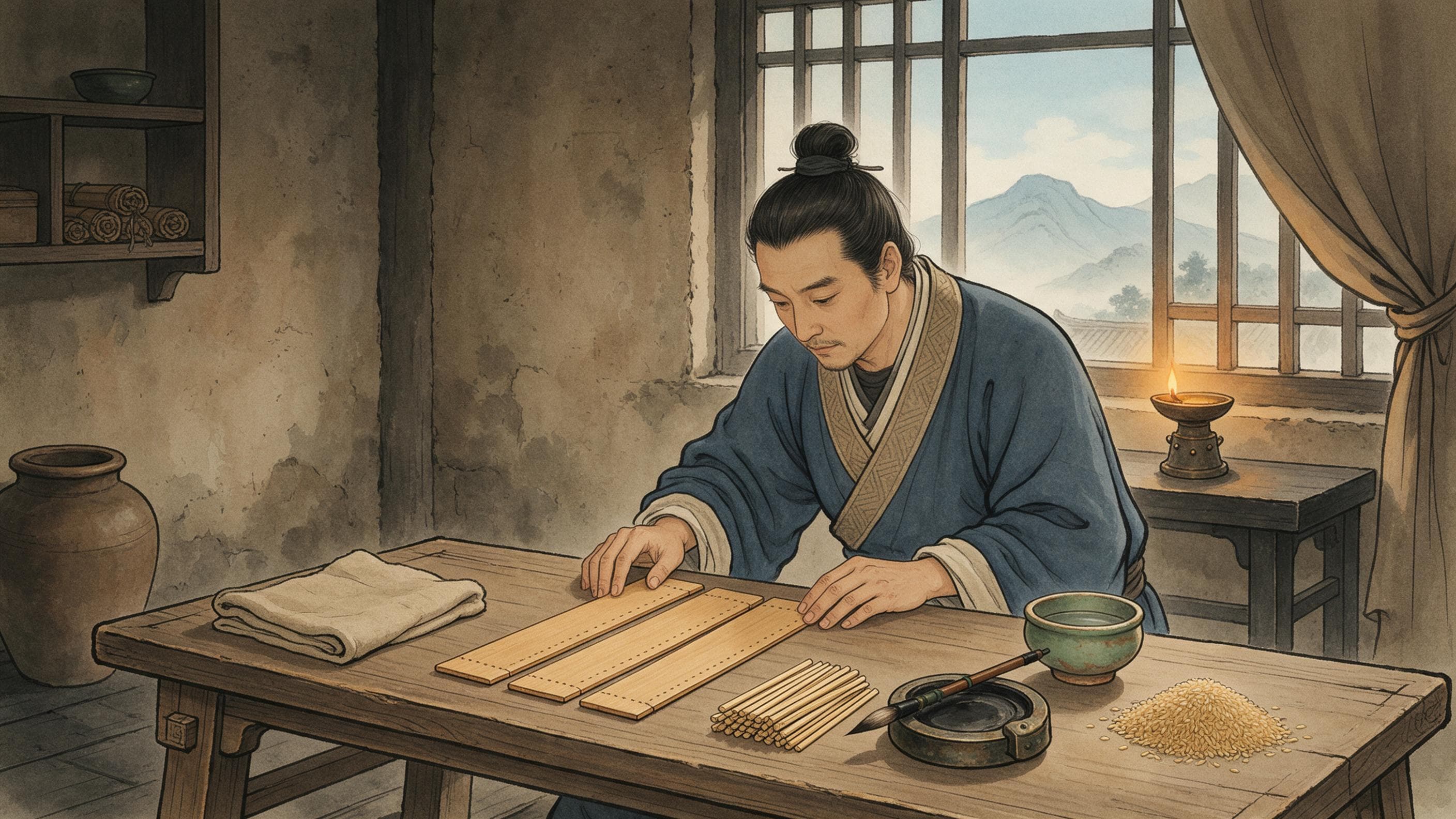
A Contract Split in Three: Land and Tax in the Wu Slips
In 1996 a well in Changsha yielded over 100,000 Three Kingdoms Wu slips; about 2,200 of them are land-tax contracts, each cut into three matching pieces for the office, the supervisor and the farmer.
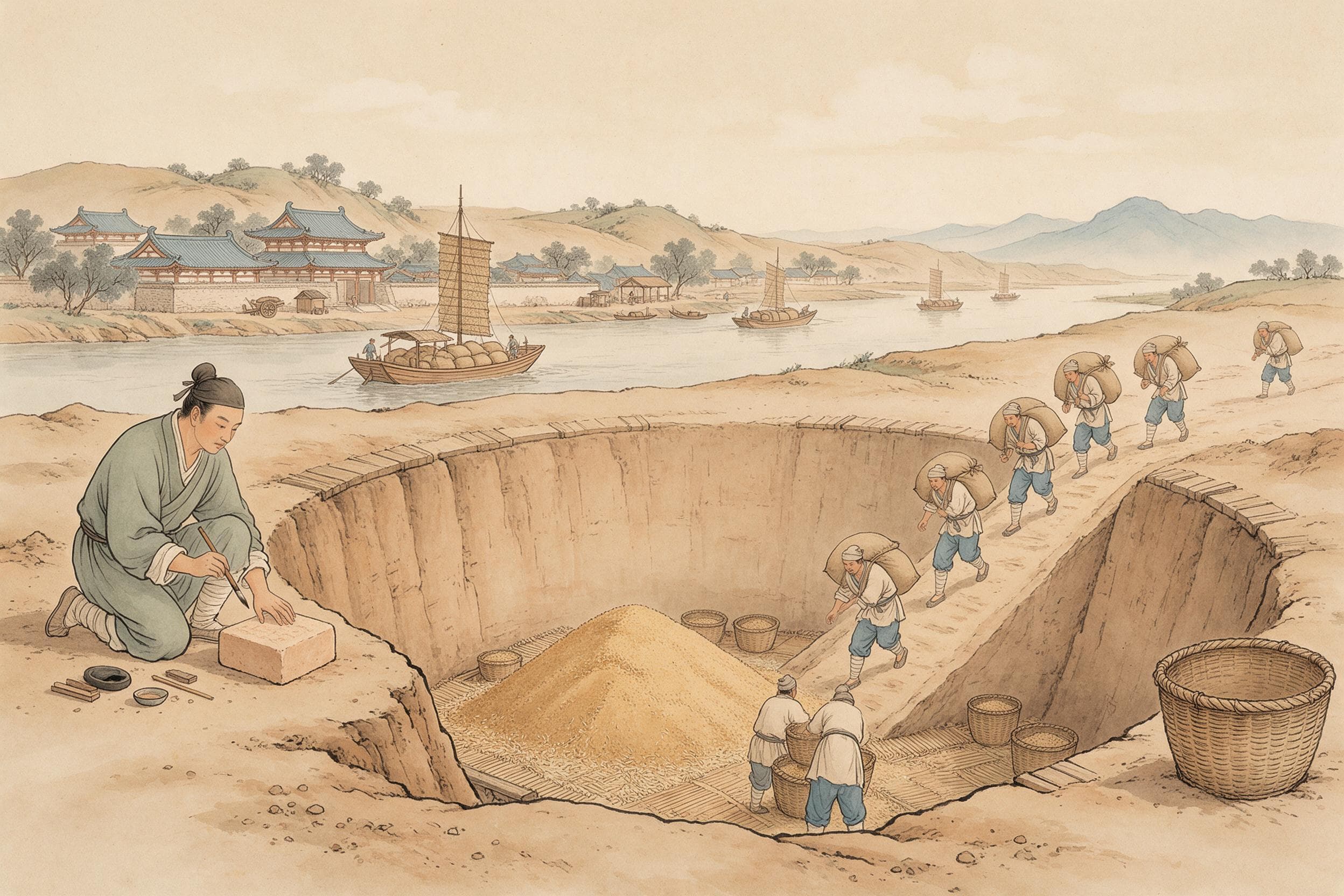
A Brick at the Granary Door: How Sui and Tang China Stored Grain
A 33-centimetre brick records rice from Suzhou, 13,000 shi, the year of collection under Empress Wu, the day it entered a Luoyang granary pit — and the signatures of eight officials.
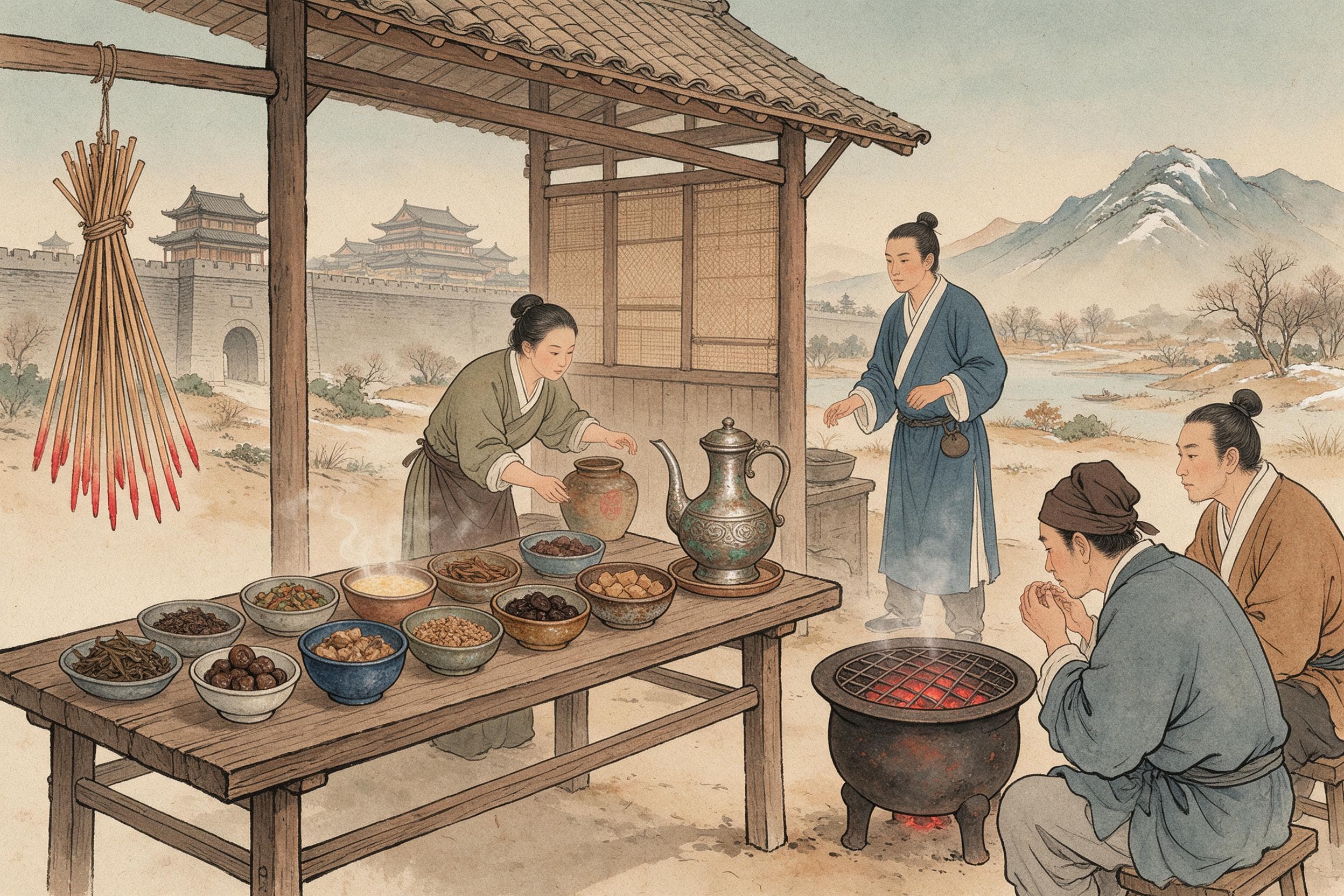
Seventeen Festivals, One Dish Each: A Five Dynasties Menu for the Year
A Five Dynasties eating house outside the capital's Changhe Gate sold one speciality per festival, from New Year's meat to the winter solstice dish and the Laba bowl, seventeen dates across the year.
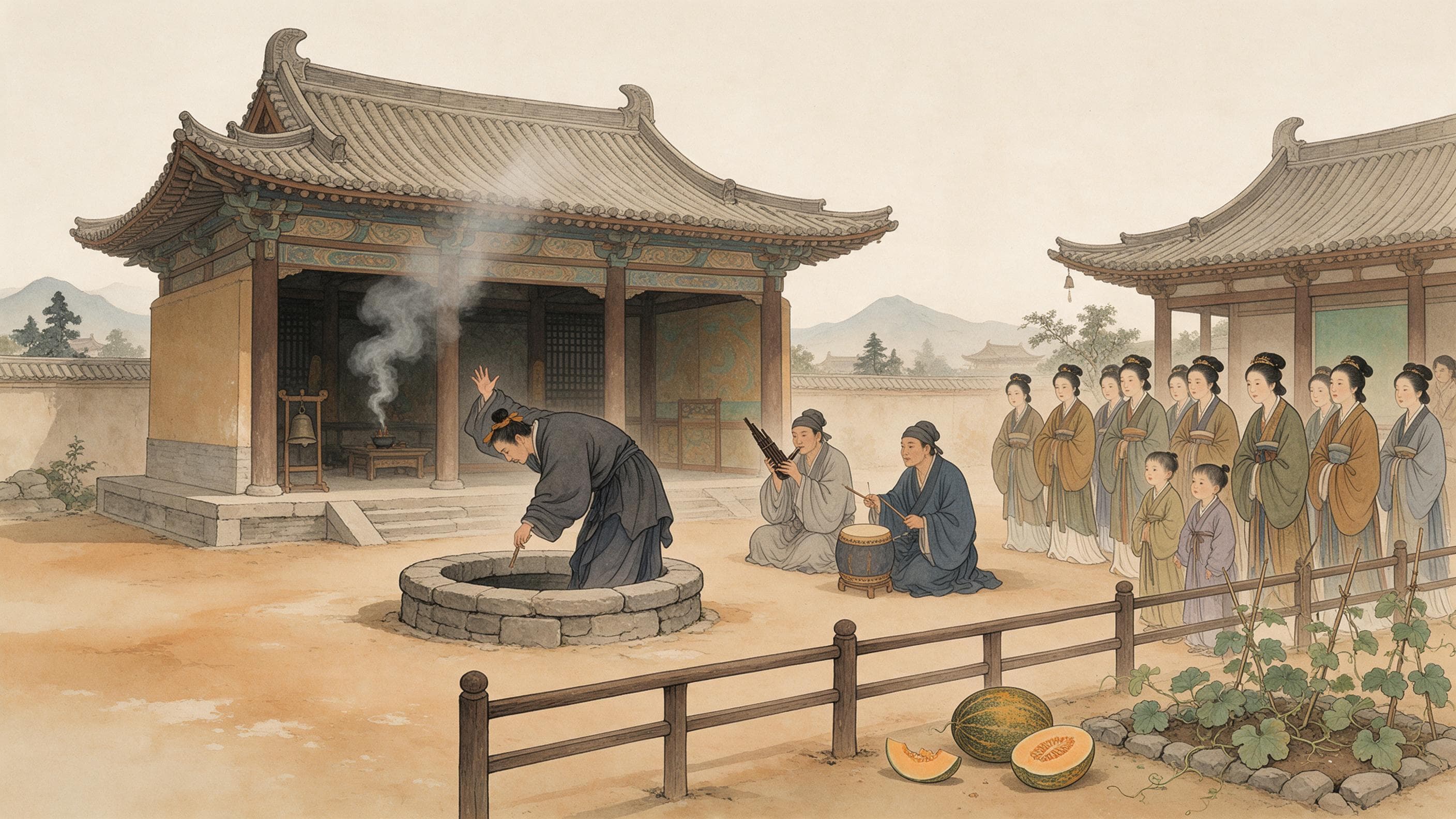
The Donkey in the Well: Temple Illusions in Northern Wei Luoyang
At a Luoyang nunnery an entertainer skinned a donkey into a well and made dates and melons edible in a moment; the audience was spellbound — and after the wars, the record says, the show simply vanished.
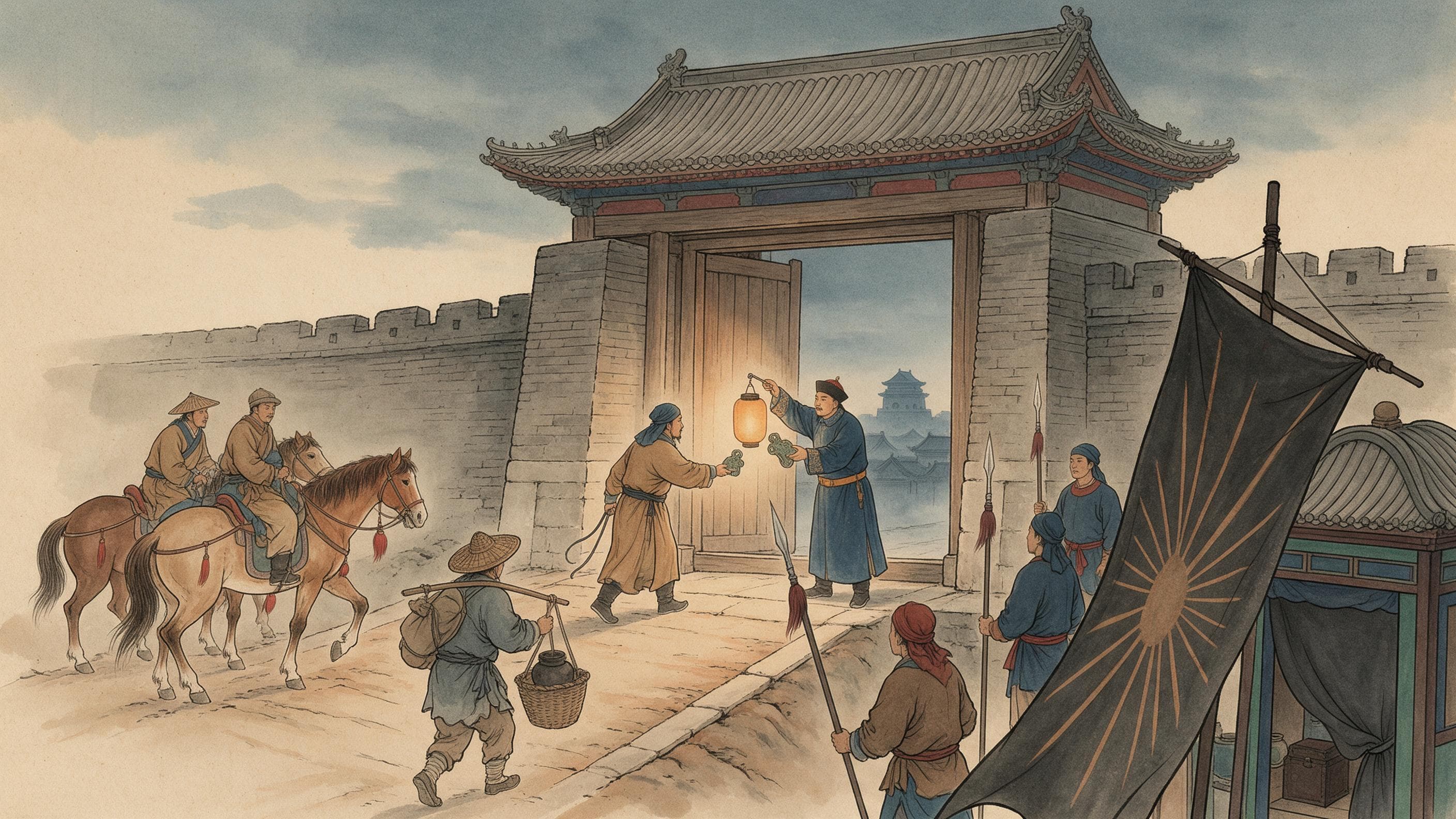
When the Gates Opened: A Day in Qing Beijing
Beijing's gates opened by the court calendar, not the clock: at dawn on audience days, after the morning bell, before the fifth watch; at night a tally from the palace had to match the gate's half before it opened.
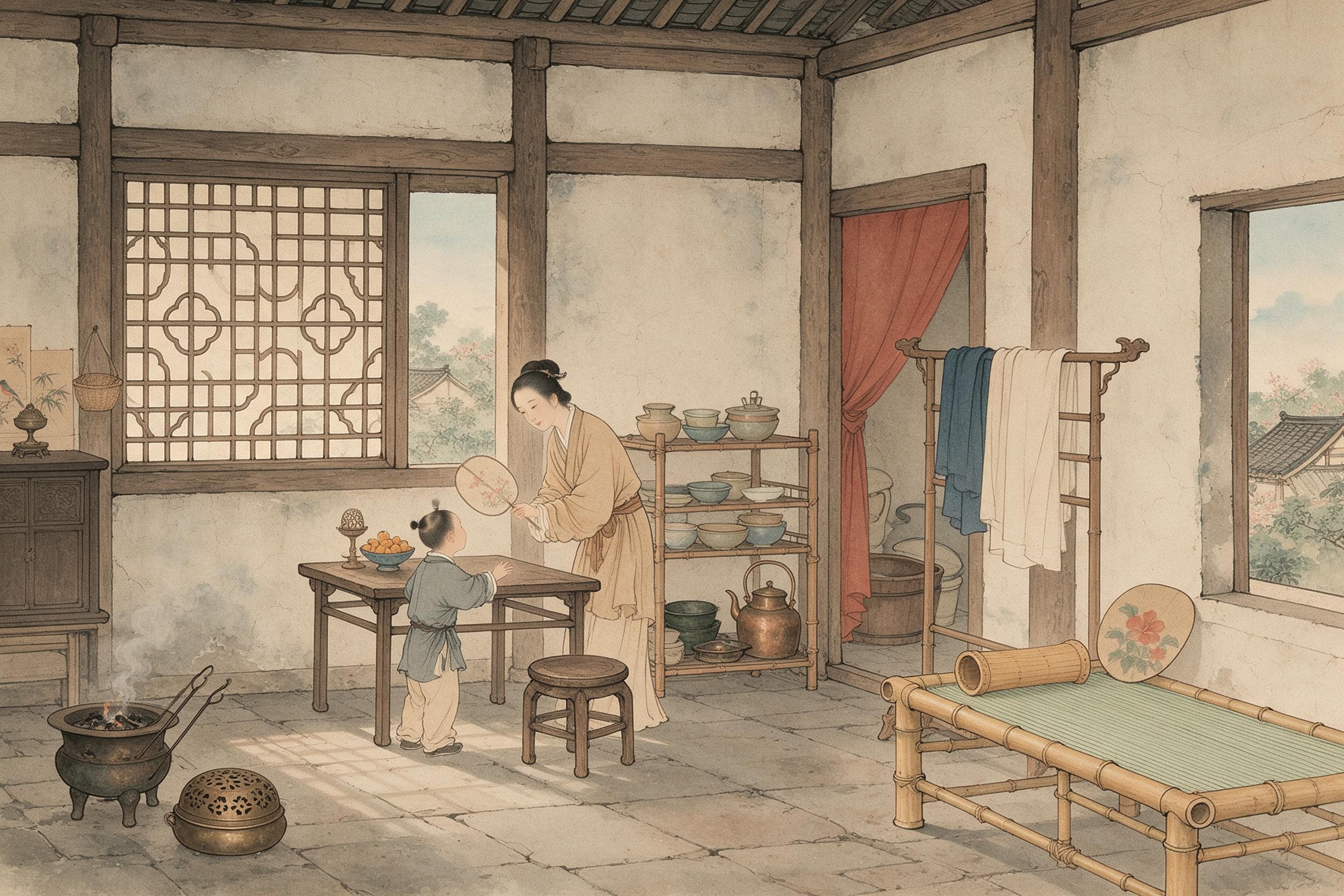
A List of Things: What Was Inside a Song House
A Southern Song market list records tables, stools, bamboo beds, summer mats, a bamboo bolster called the 'bamboo wife', washbasins, a chamber pot, a bronze hand-warmer and charcoal cakes.
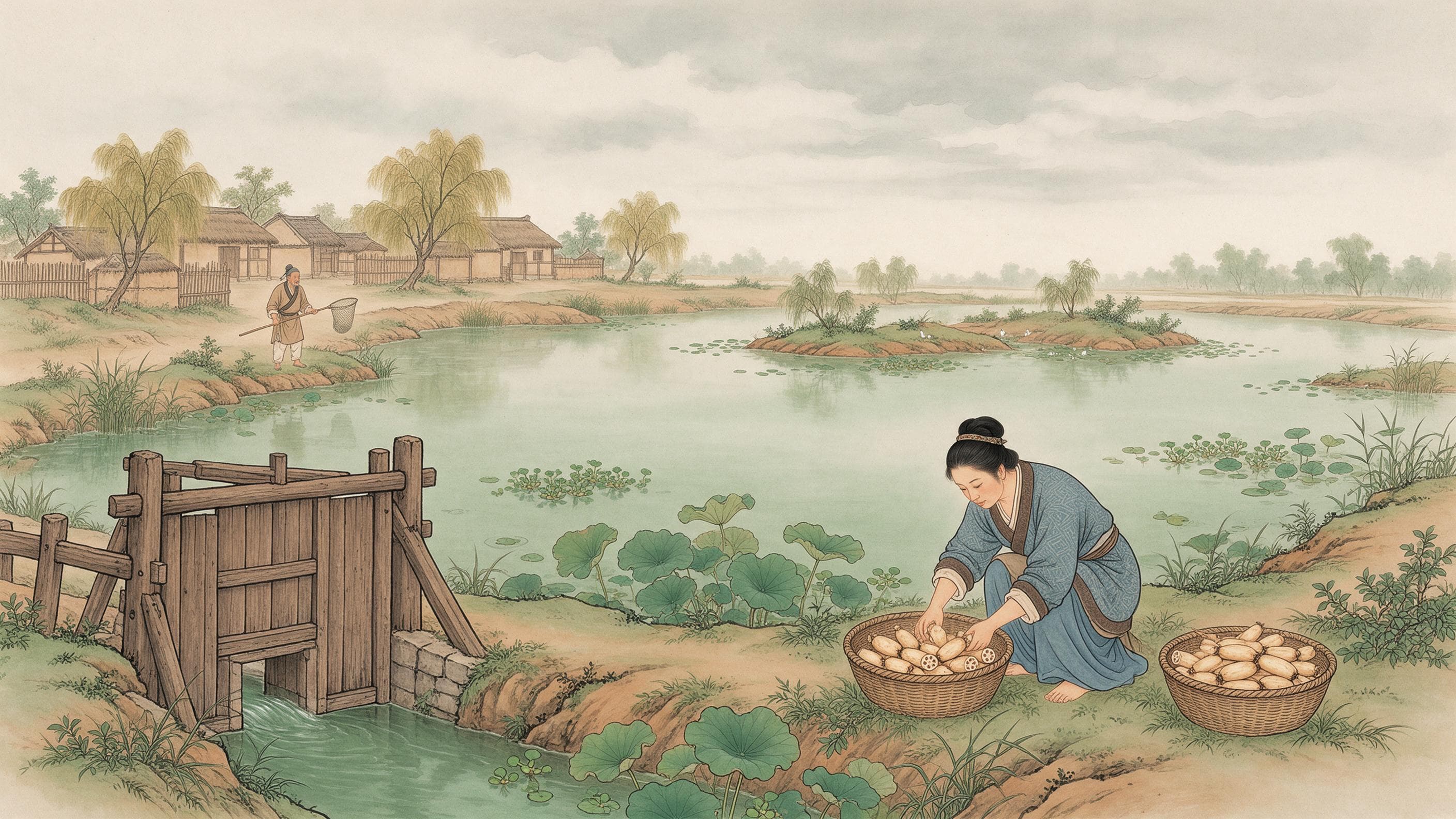
Six Mu and Nine Islands: Raising Carp in Northern Wei
A Northern Wei farming manual copies an old fish-pond recipe: six mu of water with nine islands, twenty carp in February, turtles to keep the fish, and a promise of a million and a quarter cash.
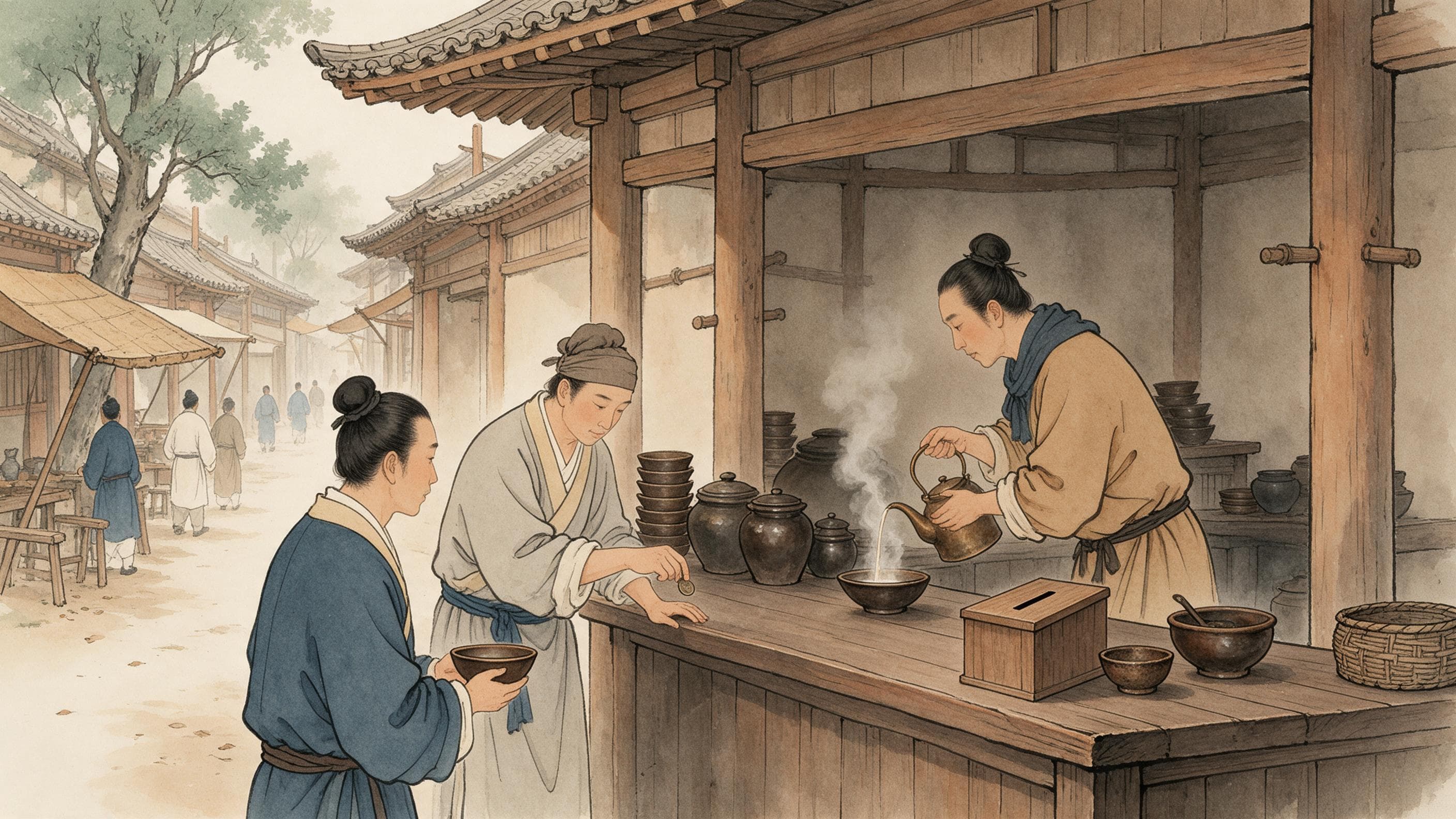
Kumiss's Slave and the Coin-in-the-Box Teahouse: Tea in Tang Cities
In Northern Wei Luoyang tea was mockingly called 'kumiss's slave'; two centuries later a Tang writer records city shops boiling tea and selling it to anyone who dropped in a coin.
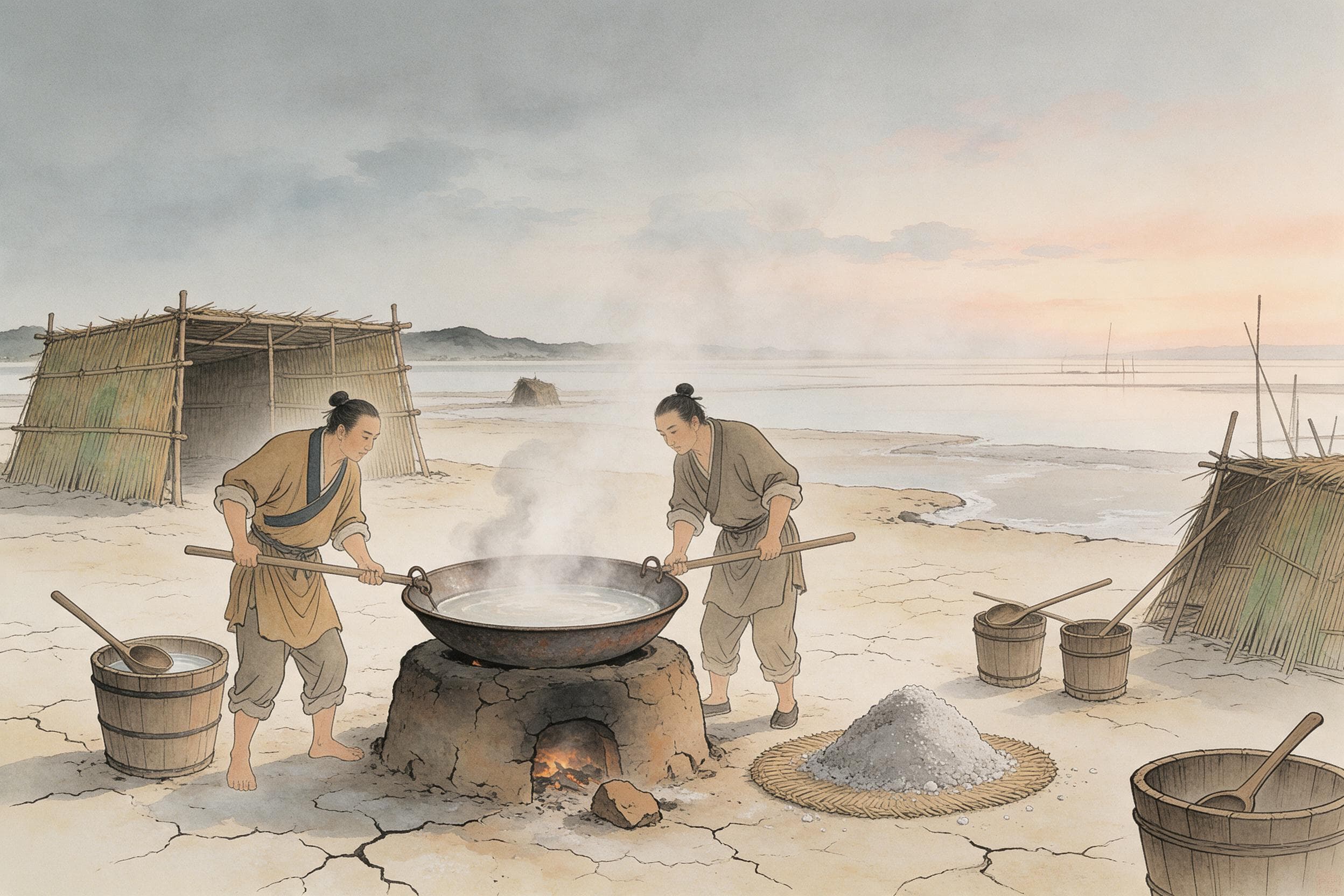
A Clamp on the Left Foot: Why the Han State Took Salt and Iron
Han salt and iron made merchants as rich as kings; under Emperor Wu the state appointed the magnates as officials, issued the boiling pans, and clamped the left foot of anyone who boiled salt privately.