On the first geng day of the second month, put the fish in. Twenty three-foot female carp heavy with roe, four three-foot males, and 令水无声 — make no noise in the water. The pond is dug on six mu of land, with nine small islands in it; the carp swim round the islands and, in the old text's phrase, 'think themselves in rivers and lakes'. This is the fish-pond chapter of the Qimin Yaoshu, a Northern Wei farming manual, copying an older book called the Fish-Raising Classic of Lord Tao Zhu — Tao Zhu being the name of Fan Li, the minister turned merchant. Its promised return: a million and a quarter cash by February of the following year.
Six mu, nine islands
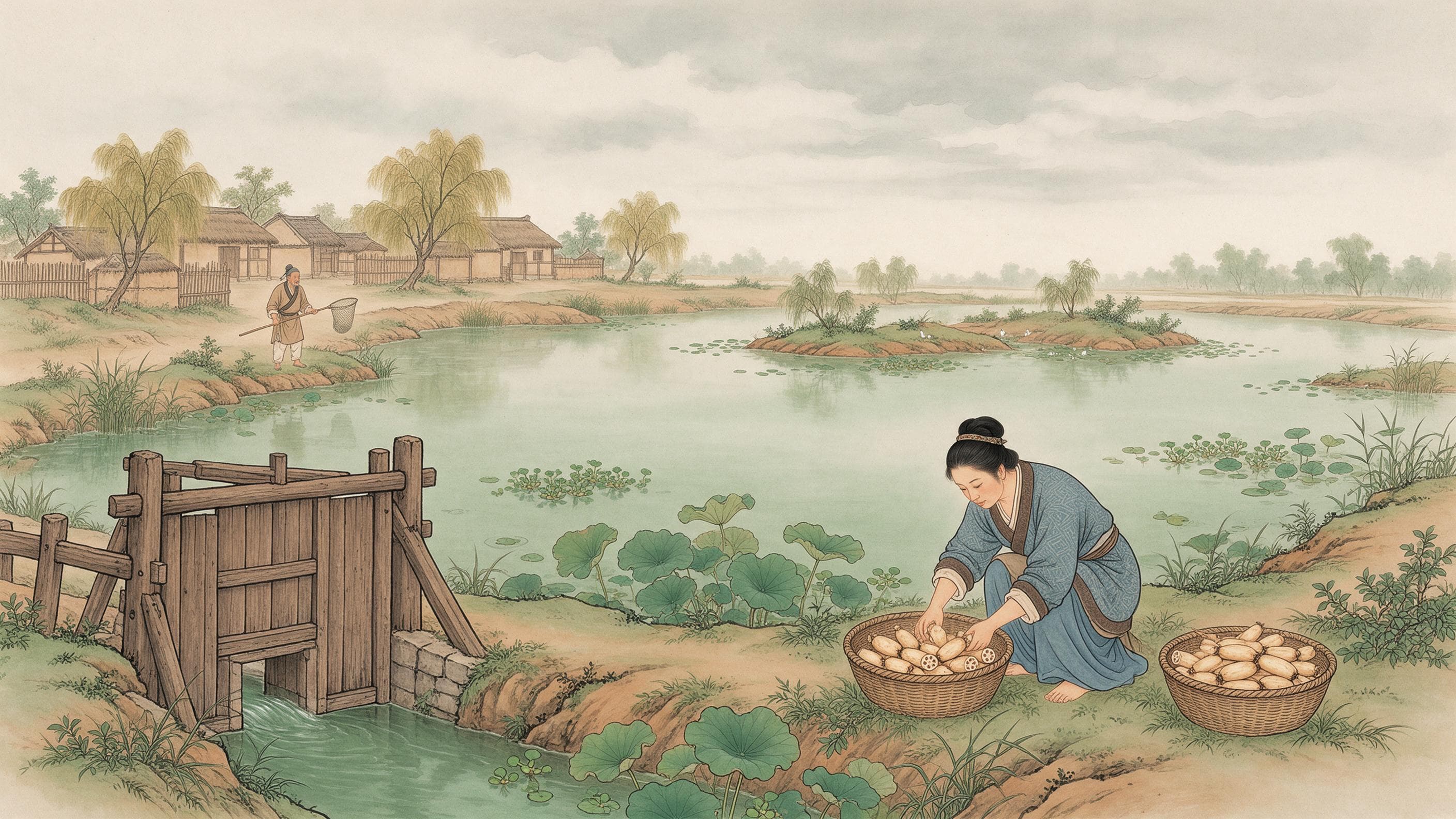
The method is specific. Of the five ways of making a living, 'water stock comes first'; water stock means a fish pond, 以六亩地为池,池中有九洲 — six mu of land for the pond, nine islands within it; the breeding stock is 怀子鲤鱼长三尺者二十头,牡鲤鱼长三尺者四头, twenty three-foot females with roe and four three-foot males; the day is the first geng of the second month, and the entry into the water must be quiet. The bottom is shaped too: 池中九洲、八谷,谷上立水二尺,又谷中立水六尺 — nine islands and eight hollows, with two feet of water over the hollow's ridges and six in its depths. Why carp? The text's own answer: 鲤不相食,易长又贵也 — carp do not eat one another, they grow fast, and they sell dear. Those three reasons are more solid than any blessing.
Turtles to keep the fish
Then comes the strangest and best passage in the chapter. In the fourth month put in one 'spirit guardian' (神守); in the sixth, two; in the eighth, three. What is a spirit guardian? The book answers itself: 神守者,鳖也 — a soft-shell turtle. Why turtles? 鱼满三百六十,则蛟龙为之长,而将鱼飞去;内鳖,则鱼不复去 — when the fish number three hundred and sixty, a dragon takes command of them and leads them away in flight; put in turtles, and the fish will not leave. That is the old explanation, not modern fish biology. A present-day reader thinks of turtles eating dead fish, or of keeping the stock from escaping; the text's own answer is dragons and guardians. This article reports the old answer and does not quietly rewrite it into aquaculture science.
A million and a quarter, and one cooling note
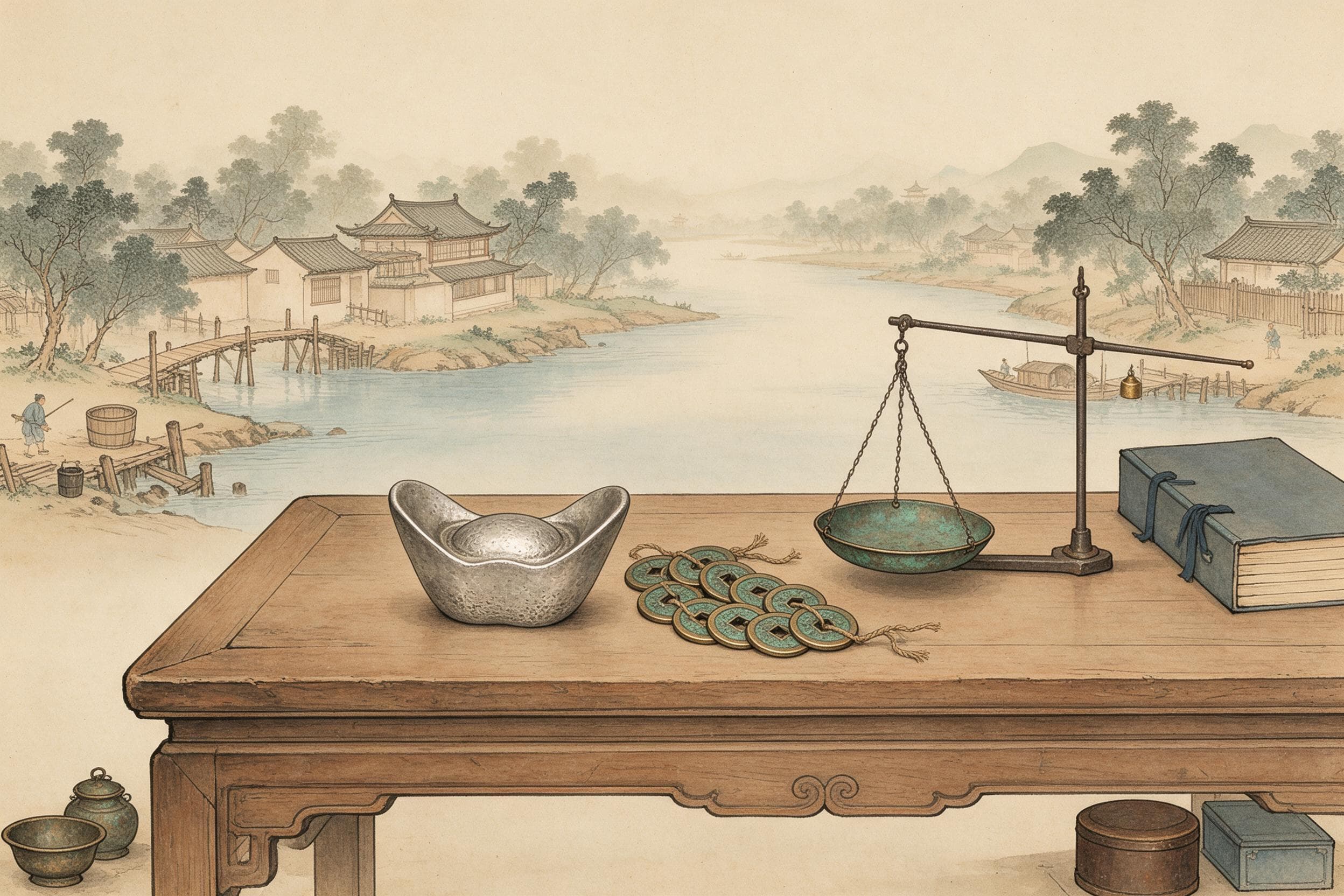
The returns are written like a ledger. By February of the next year: 得鲤鱼长一尺者一万五千枚,三尺者四万五千枚,二尺者万枚。枚直五十,得钱一百二十五万 — fifteen thousand one-foot carp, forty-five thousand three-foot, ten thousand two-foot, at fifty cash apiece, one and a quarter million cash. The year after: a hundred thousand at one foot, fifty thousand at two, fifty thousand at three, forty thousand at four, two thousand kept back as breeding stock, the rest sold for 得钱五百一十五万钱 — five million one hundred and fifty thousand cash, and after that 'beyond counting'. But the same passage contains another story: when the king of Wei heard it, he made a pond in his rear garden and 一年,得钱三十余万 — in one year he took a little over three hundred thousand. And the commentator who copied it all down, Jia Sixie, adds a cooling note of his own: 如朱公收利,未可顿求。然依法为池,养鱼必大丰足 — returns like Lord Tao Zhu's cannot be had all at once, but dig a pond by the method and the fish will certainly be plentiful. So the million and a quarter and the five million are a fable of good management, not a Northern Wei harvest; they are reported here with that warning attached.
The pond was also a pantry
The manual then turns the pond into a kitchen garden. For water shield (莼): those near lakes can plant in the lake, those near running water can cut a channel and make a pond; deep water gives fat stems and few leaves, shallow water the reverse; 蓴性易生,一种永得, it grows easily and once planted lasts — but 粪秽入池即死,dung in the pond kills it. For lotus root: 春初掘藕根节头,著鱼池泥中种之,当年即有莲花 — in early spring dig root joints and plant them in the pond mud, and lotus flowers come that same year. For lotus seed: in the eighth or ninth month take hard black seeds, grind one end thin on a tile, seal it in mud the size of three fingers and two inches long, let it dry, throw it in; the heavy end sinks and the seed settles upright. For gorgon nut (芡): gather the seeds in the eighth month, break them open, scatter them in the pond, and they grow themselves; for water caltrop (菱), the same with ripe black seeds in autumn. The grains of lotus, caltrop and gorgon nut are called 'upper-grade medicine' in the materia medica, good for the digestion and the spirit — and Jia Sixie draws the practical conclusion: 多种,俭岁资此,足度荒年 — plant plenty, and in a lean year this will see you through.
From pond to grill
Fish are raised to be eaten, and juan 9 of the manual gives three ways. For fish cakes: take good white fish, bone it and mince three sheng; mince one sheng of cooked fat pork; add five ge of vinegar, two ge each of scallion and pickled melon, half a ge each of ginger and orange peel, three ge of fish-sauce, and salt to taste; shape into cakes the size of a cup, five fen thick, and 熟油微火煎之,色赤便熟 — fry in hot oil over a low fire until the colour reddens. For stuffed grilled white fish: a two-foot white fish, not gutted through the belly but split along the back and salted; a fat young duck is boned and minced with vinegar, pickled melon, fish sauce, ginger, orange peel, scallion and bean sauce, grilled, then stuffed into the fish, which is spitted and grilled as usual, brushed halfway with bitter wine, fish sauce and bean sauce. For pork preserved in rice (猪肉鲊): good fat pork cut in pieces, salted to taste, packed with cooked rice as a fermenting bed, and eaten 看有酸气 — when it turns sour. That last is a way of keeping meat, not of cooking it.
The limits should be respected. Documented: that a Northern Wei farming manual preserved this six-mu, nine-island method; that it advised turtles to keep the fish from flying off; that it copied a ledger running from 1.25 to 5.15 million cash and then cooled it down; that the pond also grew water shield, lotus, gorgon nut and water caltrop as famine food; and that fish were fried as cakes, stuffed and grilled, or preserved in rice. Not documented: how many fish a six-mu pond actually yielded in a year, what fish cost in Northern Wei, or how many farmers followed the recipe — a farming manual is written for households making a living, not as a statistical report, and the 'fifty cash apiece' is a price inside the old Classic, not a Northern Wei market price. One question remains: if Jia Sixie himself said such returns 未可顿求, could not be had at once, then what did the first year actually pull out of the water for the people who dug the pond?
Sources & further reading
- 贾思勰《齐民要术》卷六·养鱼第六十一 — 引《陶朱公养鱼经》:六亩为池、池中九洲、怀子鲤二十头与牡鲤四头、二月上庚日下池、神守(鳖)防鱼飞去、来年得钱一百二十五万、明年五百一十五万;贾思勰自注「如朱公收利,未可顿求」;又作鱼池法(取近水际土布池底);种莼、种藕、种莲子、种芡、种菱诸法;「多种,俭岁资此,足度荒年」
- 贾思勰《齐民要术》卷九·炙法 — 作饼炙法(白鱼肉与熟猪肉作饼、熟油微火煎)、酿炙白鱼法(二尺白鱼破背、塞入鸭肉馅、炙、刷苦酒鱼酱豉汁)、猪肉鲊法(盐、饭糁、待酸气)