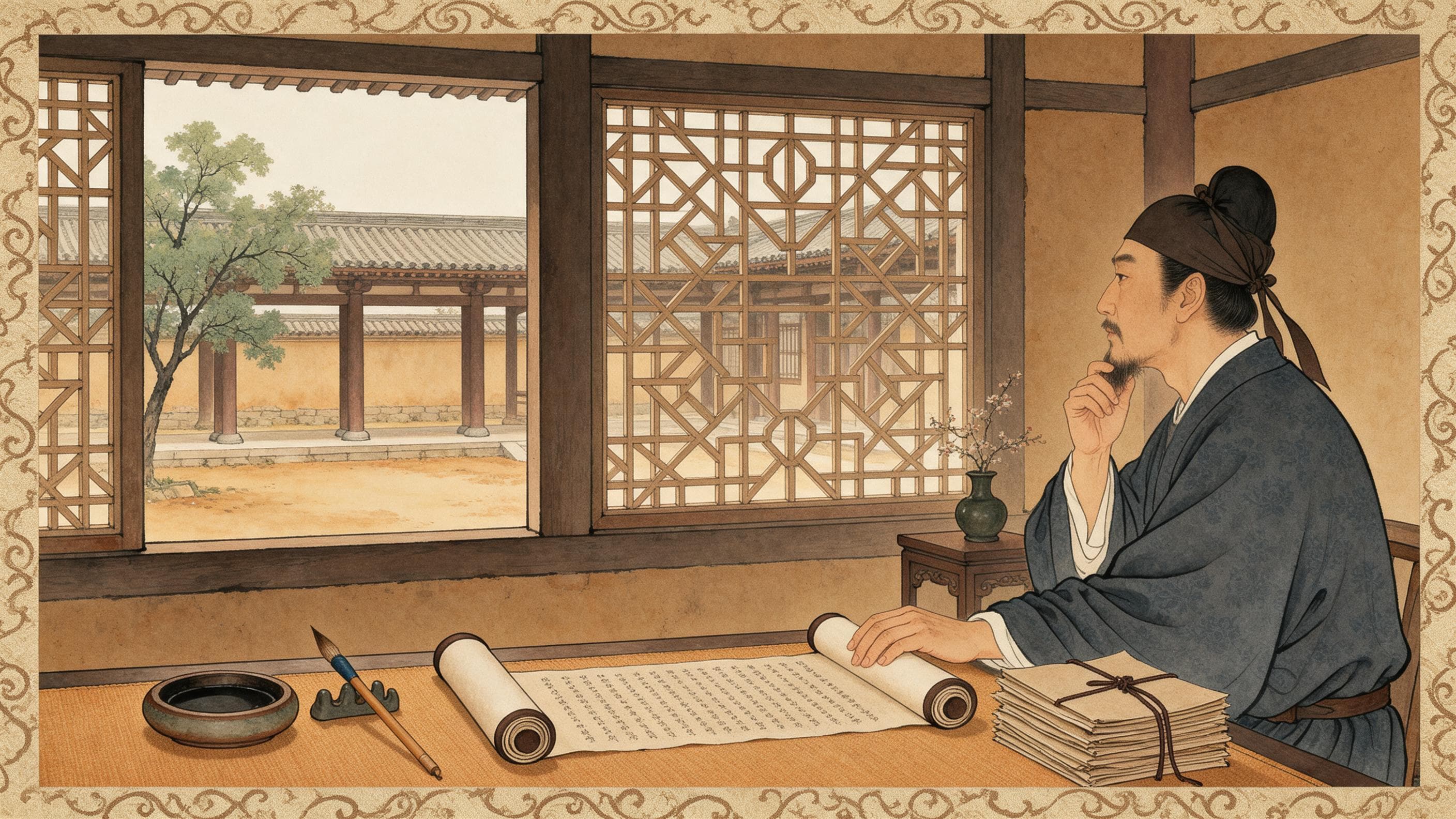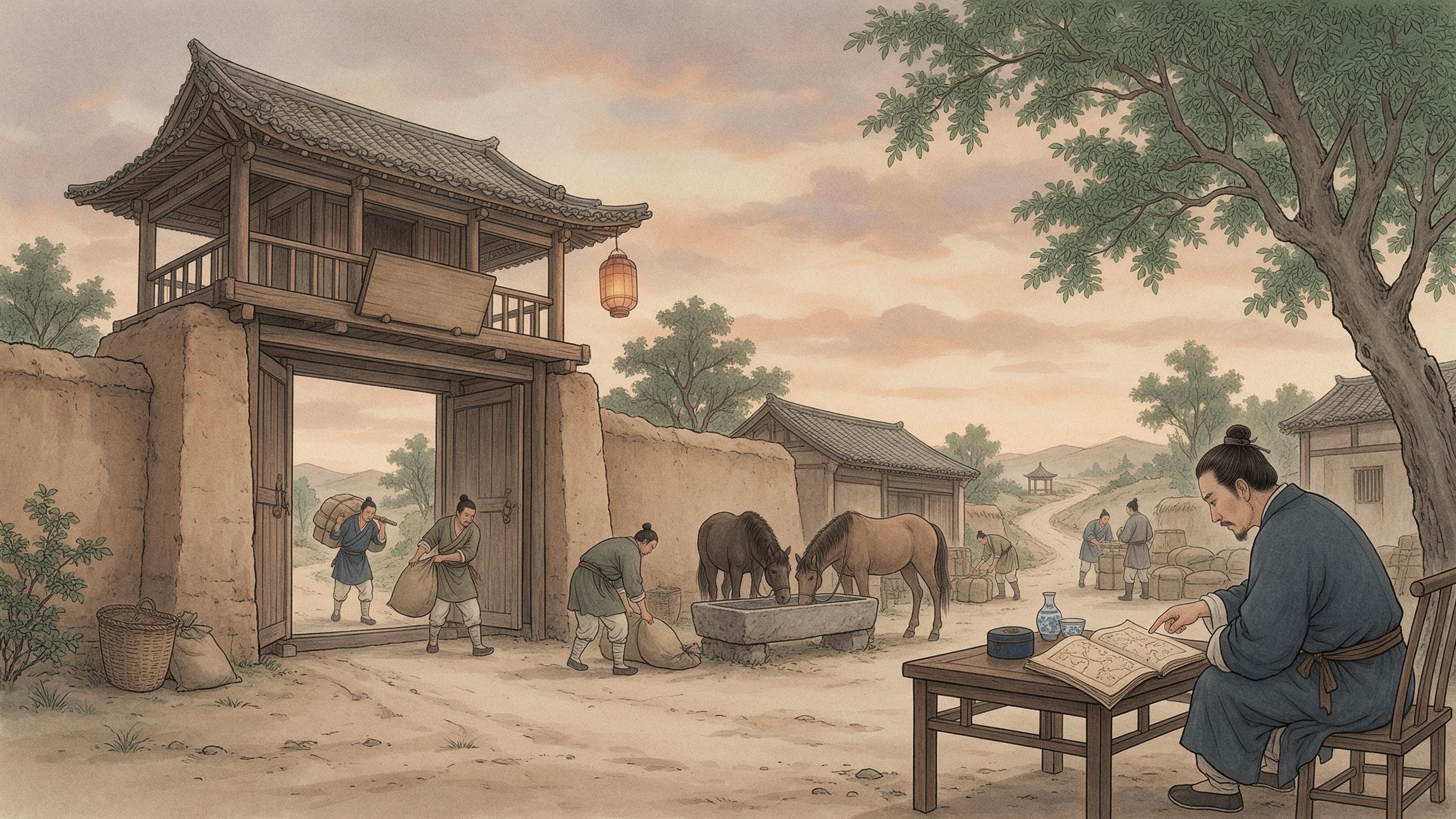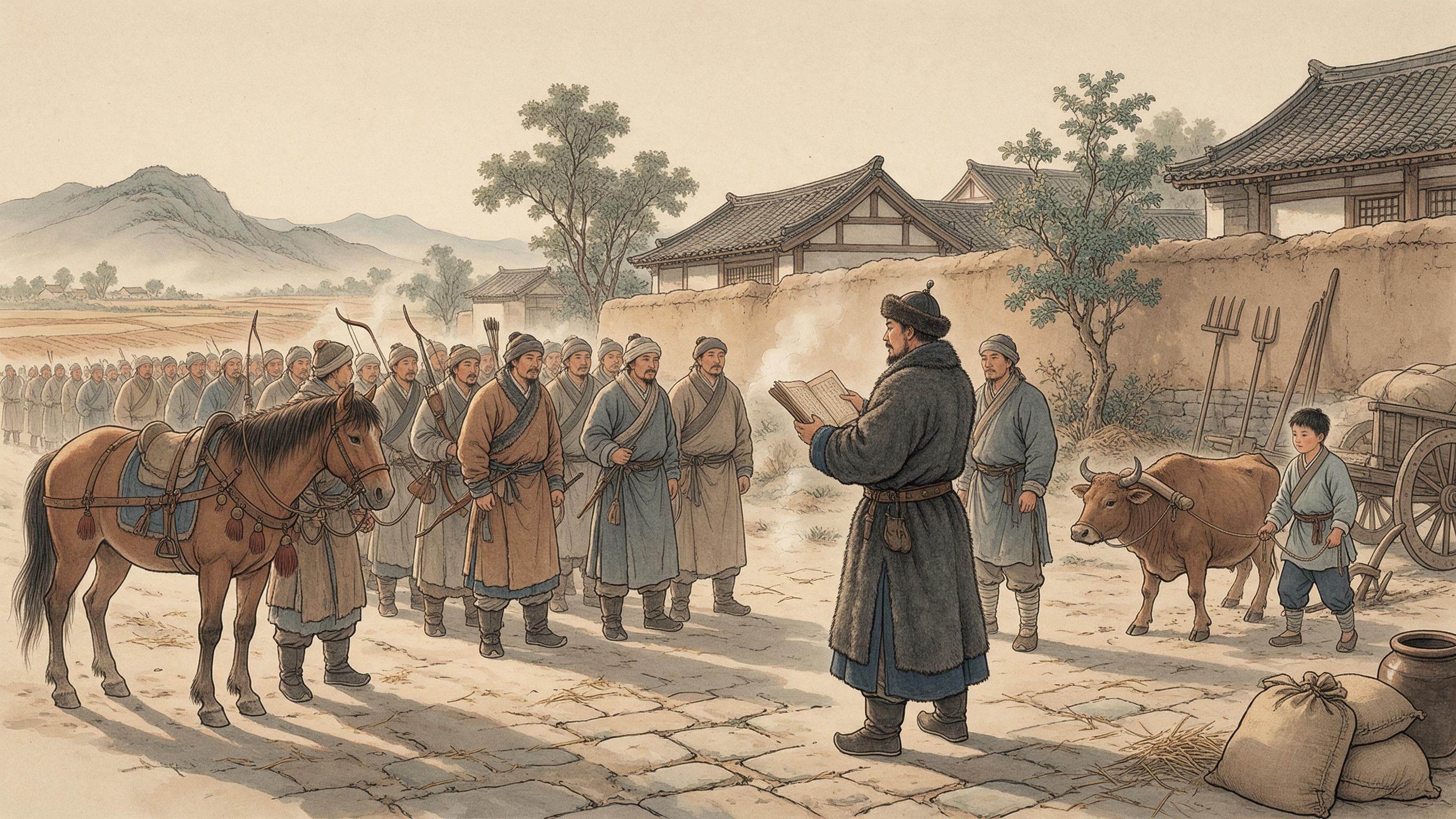
In October 1996, a well in Zoumalou Street off Wuyi Square in Changsha, Hunan, produced more than a hundred thousand inscribed wooden slips of the Three Kingdoms state of Wu, dated by reign year — more than the total of all slips then excavated in China, and one of the hundred great archaeological discoveries of the twentieth century as well as one of China's ten great discoveries of 1996. Among them was a bundle of large fir slips recording land tax: for each household of 'officials and commoners' they note how much land was leased, which plots were hit by drought, how many mu yielded normally, how much rice, cloth and cash were due, to which granary or storehouse it went, and which clerk received it. The bundle has a name of its own: the Jiahe Land-Household Contracts, 嘉禾吏民田家莂 — Jiahe being an era name of Sun Quan (232–238). A 莂 is a split contract-tally, and the same word recurs in the later finds at Ducheng.
A contract in triplicate, written on wood
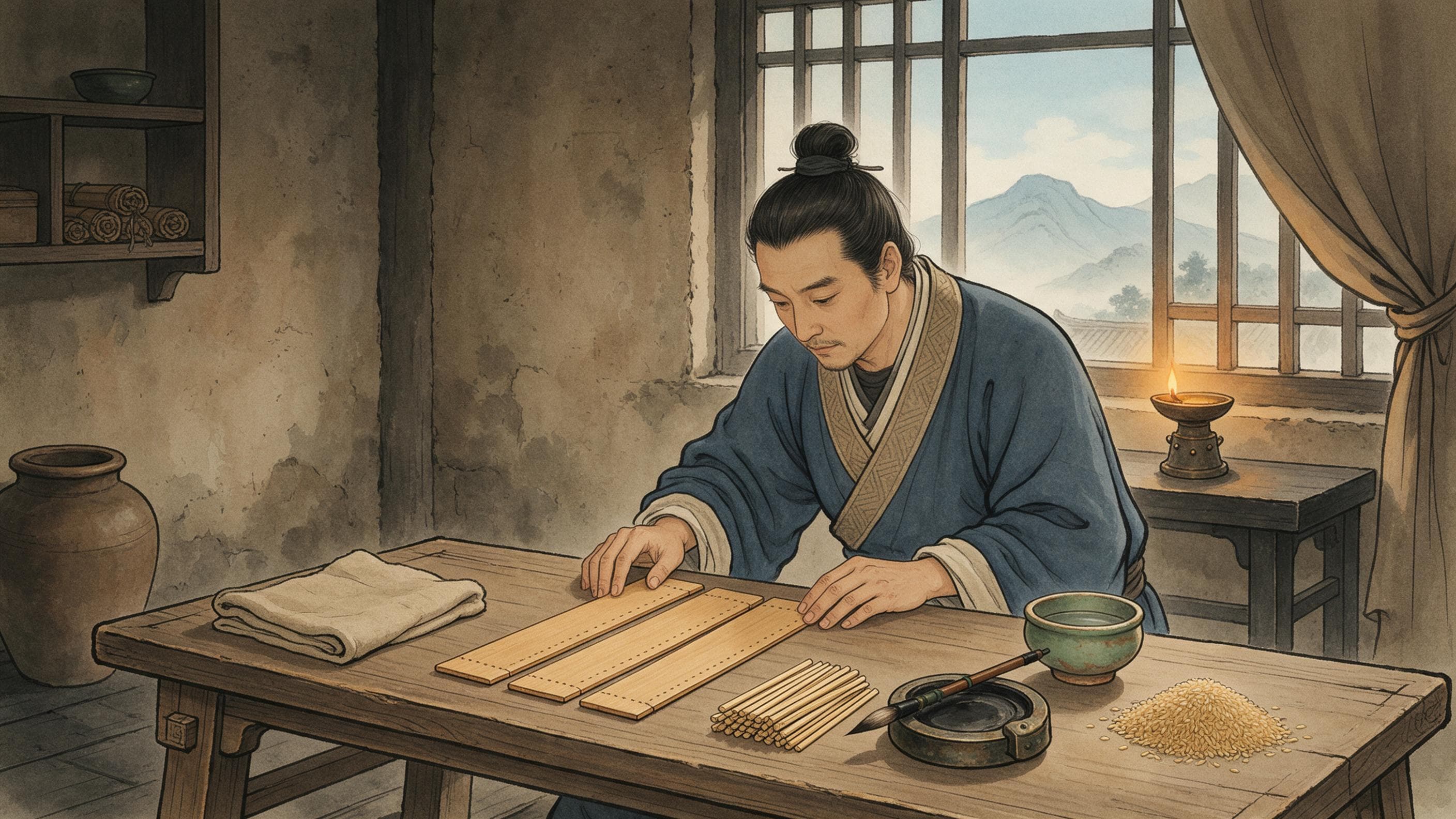
The number of contracts has two counts: the People's Daily Overseas Edition gives 2,400-odd, Guangming Online gives 2,194; this article uses 'about 2,200, with 2,400-odd in another count'. They are described as the earliest and largest physical land-tax contract documents yet found in China. The form is what matters. The same content was written out three times on wooden slips, a large 同 ('same') was written at the top, and the slip was split lengthwise into three, one part kept by the government office, one by the supervisory office, one by the farming household. Fitted back together, the three 同 characters had to match: that was the anti-forgery check and the proof. Each piece was, in effect, one household's year: how much land, how much harvest, how much tax, and who received it. Before paper was cheap, a contract was made of wood, and it was verified by being cut apart and rejoined.
Cash, cloth, rice, beans, hide
The roughly thirty thousand tax slips show what was collected. Wu taxation took mainly cash, cloth, rice, beans and hide, under a great many headings; rice alone had ten names — tax silk-rice, tax white rice, miscellaneous limited rice, old rice, cooked rice, approach rice, steeped rice, salt rice, seed-merchant rice, grain-standard rice. The names differ because their origin and use differed: some were the main tax, some a quota rice, some carried a place name or a commutation. One warning: these names cannot be turned into a tax rate. Each household's acreage, drought-stricken acreage and amount due differ, the texts contain no totals, and any ratio a reader is given must come from one or two individual cases, clearly labelled.
The archive of one county
The material covers the administrative documents of a county (a marquisate, usually identified as Linxiang) under Changsha commandery in Wu, around the third century, and ranges over justice, finance, taxation and household registration. It is therefore the archive of one county, not a history of the Three Kingdoms: it cannot be stretched to Wei or Shu, nor to all of Wu, and 'the people of the Three Kingdoms' must be qualified as the officials and commoners of this one county. The phrase 吏民 is worth noticing too: those who leased land and paid tax included both clerks (吏) and commoners (民), and the local granary clerks, storehouse clerks and land-office historians were the men who took in the grain, cloth and cash and signed the slips. There are no heroes in this world, only granaries, storehouses, receipts and accounts.
Why cut it in three
The logic of a triplicate is plain: each party holds one piece and no party can alter the whole; to check, the pieces are fitted together, and only if the 同 character and the cut edges match does the document stand. It is proof and also constraint — with a piece in the farmer's hands, the office could not add tax by word of mouth; with pieces held by the office and the supervisor, the farmer could not deny the debt. The same find includes another kind of material: twelve letters written by officials and commoners, in running, regular and cursive script, the first batch of such letters ever excavated — evidence that these slips carried ordinary correspondence as well as tax receipts. The find's vocabulary is the vocabulary of a wooden bureaucracy: 木牍 tablets, 签牌 tags, 封检 covers and 封泥匣 seal-boxes for closing documents.
The material is still growing
The story did not stop in 1996. In 2022 the Ducheng site at Chenzhou produced the first complete 莂-type slip document of the Three Kingdoms period — 'complete' matters, because earlier examples were broken; in 2024 the Hunan institute excavated another ten thousand-odd Wu slips at Ducheng in Linwu. Hunan has now yielded nearly 200,000 slips, two-thirds of the national total. That also sets the limits: the hundred thousand are a total of excavated pieces, most broken, with reading still under way, and not a hundred thousand complete records. The evidence pack used here did not verify any slip number or transcription, so no specific slip is cited or numbered in this article; quoting one would require the published transcription volume of the Changsha Zoumalou Wu slips. The word 'earliest' is also qualified exactly as the sources qualify it — the earliest and largest physical land-tax contract documents yet found — and later systems such as Ming lijia or the single-whip reform must not be read back into Wu taxation, nor may the Romance of the Three Kingdoms be used as a source.
What is documented is a clear chain: in third-century Wu, one county collected land tax with triplicate wooden contracts; each contract recorded acreage, drought and harvest, the rice, cloth and cash due, the granary or storehouse that received it, and the clerk's name and the date; the contract was cut in three and verified by matching the 同 character and the split. What is not documented is equally clear: the tax rate, the county's annual total, whether the same practice held elsewhere in Wu, and whether the farmer's third still exists — the material gives procedure and individual cases, not totals. The slips also remind us how much of Wu's paperwork is simply lost: this is what one well preserved. And the three-part contract made a small state possible: it could tax a countryside it could not watch, because the paper — or rather the wood — did the watching. One question may as well be left open: the third of the three that belonged to the farming household — where is it buried now?
Sources & further reading
- 邹雅婷《千年风华留汗青(你所不知道的一级馆)》,《人民日报海外版》2019年5月14日 — 1996年长沙五一广场走马楼街J22古井出土10万余枚孙吴纪年简牍,数量超过当时全国已出土简牍总和;内容涉司法、财政、赋税、户籍;赋税征钱布米豆皮,米有税帛米等十种名目;嘉禾吏民田家莂2400余枚杉木大木简,记录租佃田亩、受旱与正常收获亩数、应缴米布钱数及仓库官吏姓名时间
- 光明网《〈简牍探中华〉再现三国时期孙吴政权管理下的社会百态》2025年6月22日 — 约3万枚赋税简;嘉禾吏民田家莂由2194枚木简组成,为中国迄今发现最早、形制最大的田租类实物合同券书;一式三份、顶端大书「同」字、中剖为三,官府/监管/农户各执其一;首见12枚吏民书信简(行、楷、草书)
- 任波《「牍」懂三国市井生活》,《新湖南/掌上长沙》2025年6月23日 — 2022年郴州渡头古城出土三国时期首例完整「莂」类简牍;2024年临武渡头古城又出1万余枚吴简;湖南累计出土简牍近20万枚,占全国总量三分之二