
EVERYDAY LIFE · SHANG TO QING
Stories
Small questions open a window onto a different world.
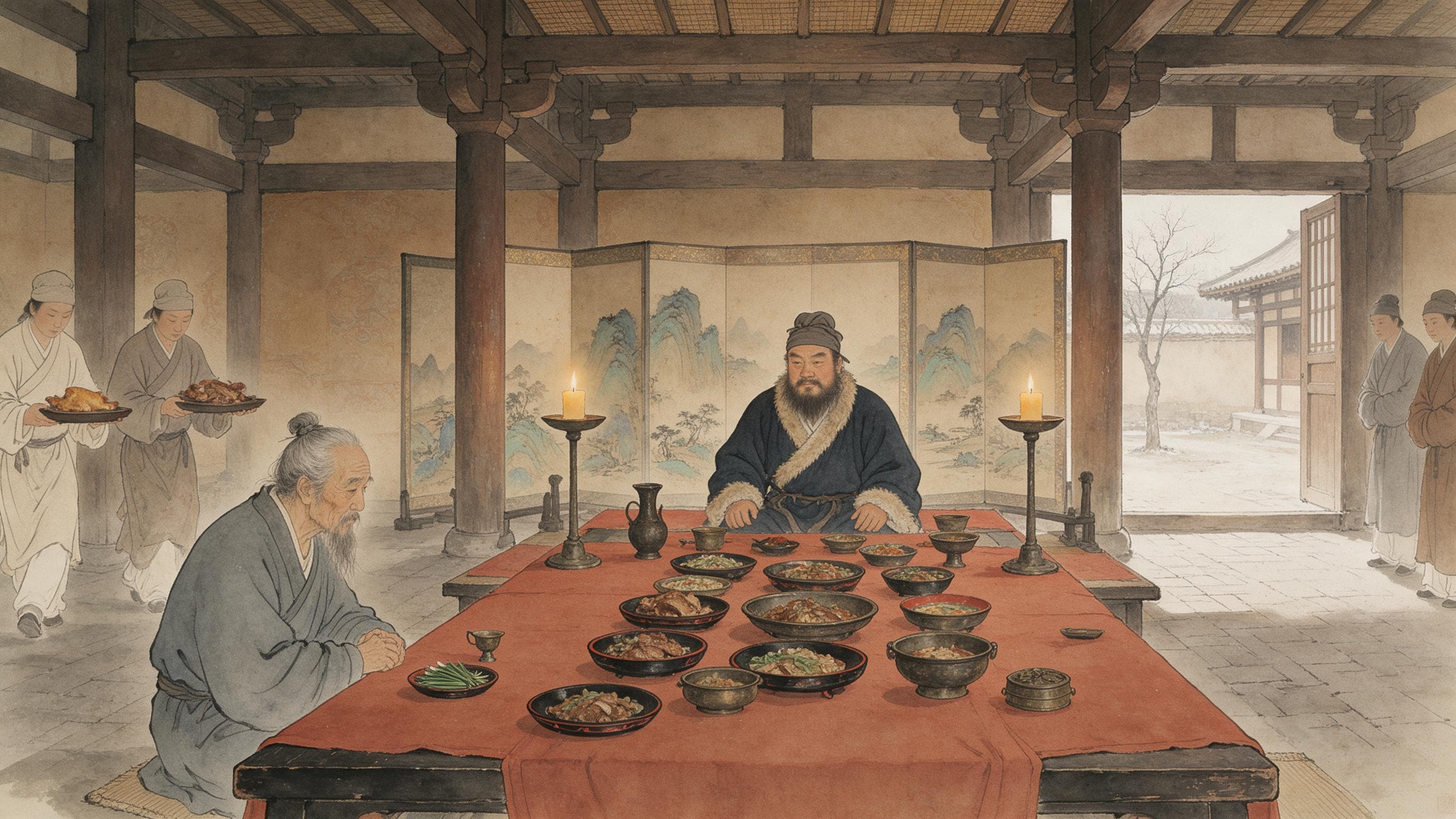
A Table a Zhang Wide, and a Dish of Chives: Money and Power in Luoyang's Monasteries
Prince Yuan Yong kept six thousand servants and five hundred singers and capped a meal at tens of thousands of coins; Li Chong, rich beyond measure, ate chives, and the joke about his 'eighteen dishes' was a pun.
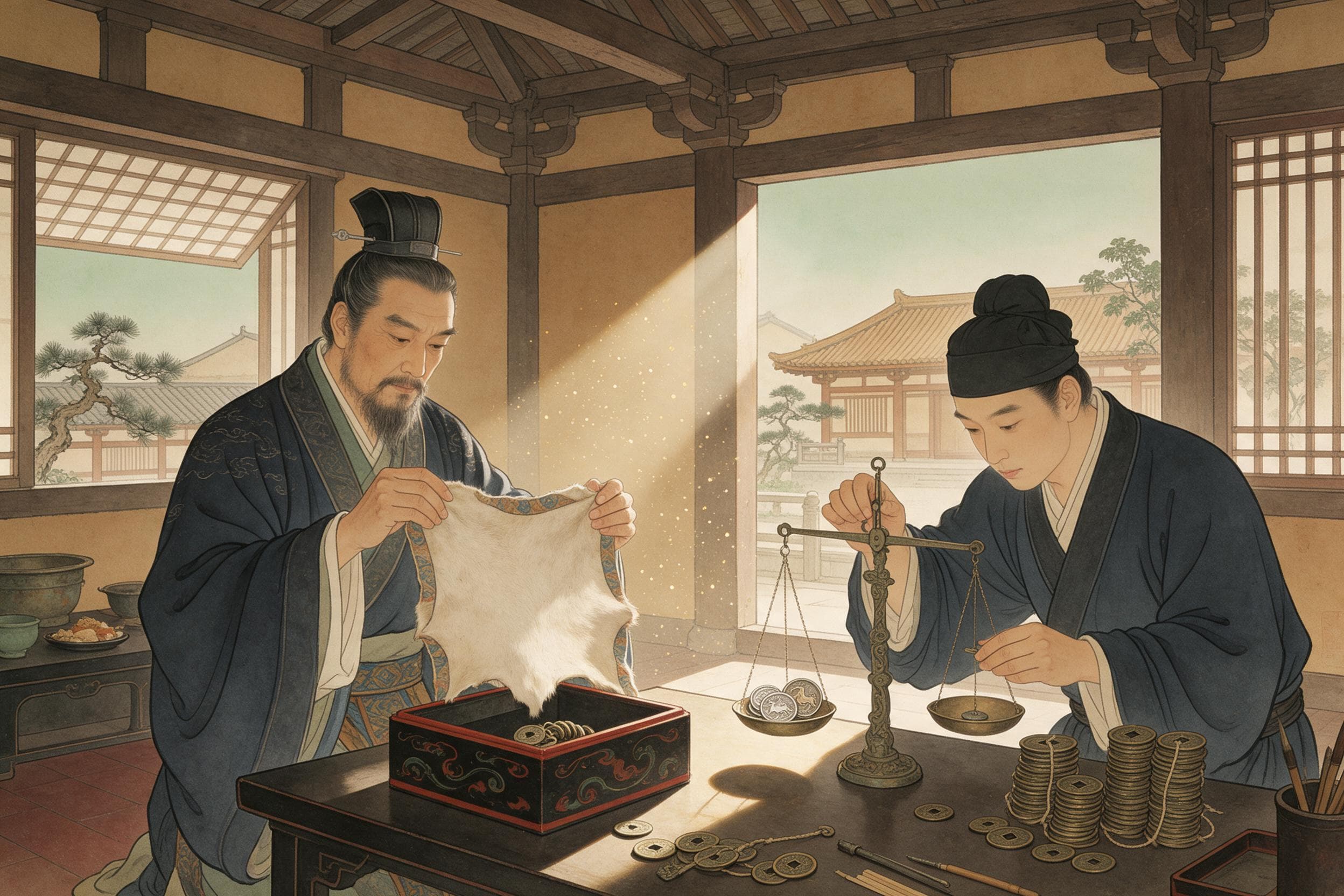
A Deer Hide Worth 400,000 Coins: Han China's Money Experiments
A foot-square of white deer hide priced at 400,000 coins and required at court; silver pieces valued at 3,000, 500 and 300 by their designs; a red-edged coin passing for five. All of it failed.
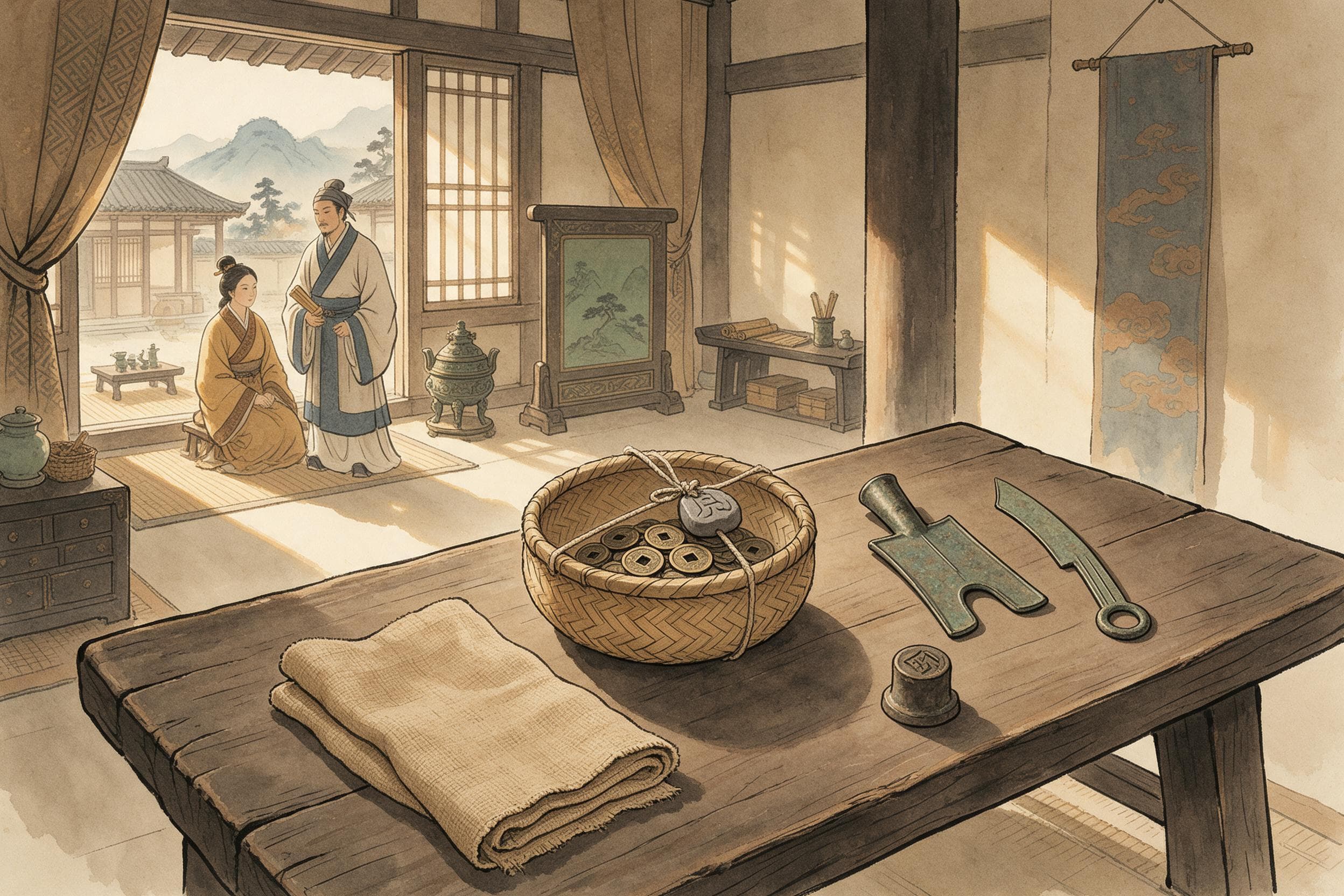
Spade, Knife, Ring: What Money Looked Like in the Warring States
Warring States coins were cast in the shapes of tools; a Qin statute adds the rules — cloth of legal size, eleven coins to the bolt, no refusing bad coin, a thousand coins sealed in a basket.
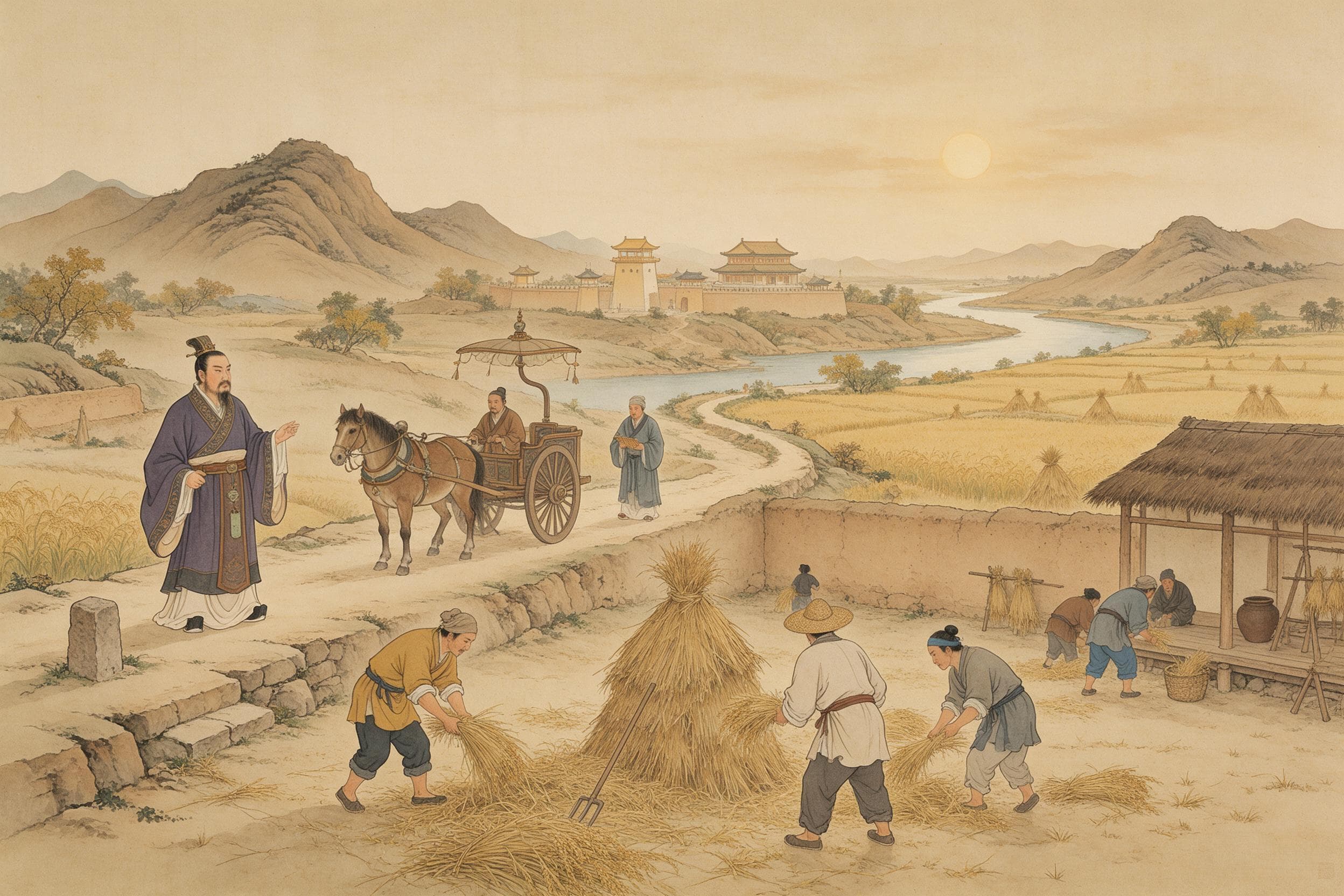
How a Spring and Autumn State Counted Its People
In 590 BCE Lu levied armour by the 'qiu'; in 589 Chu counted households before marching; at An, Jin asked for eight hundred chariots. How the counting was done is not recorded.
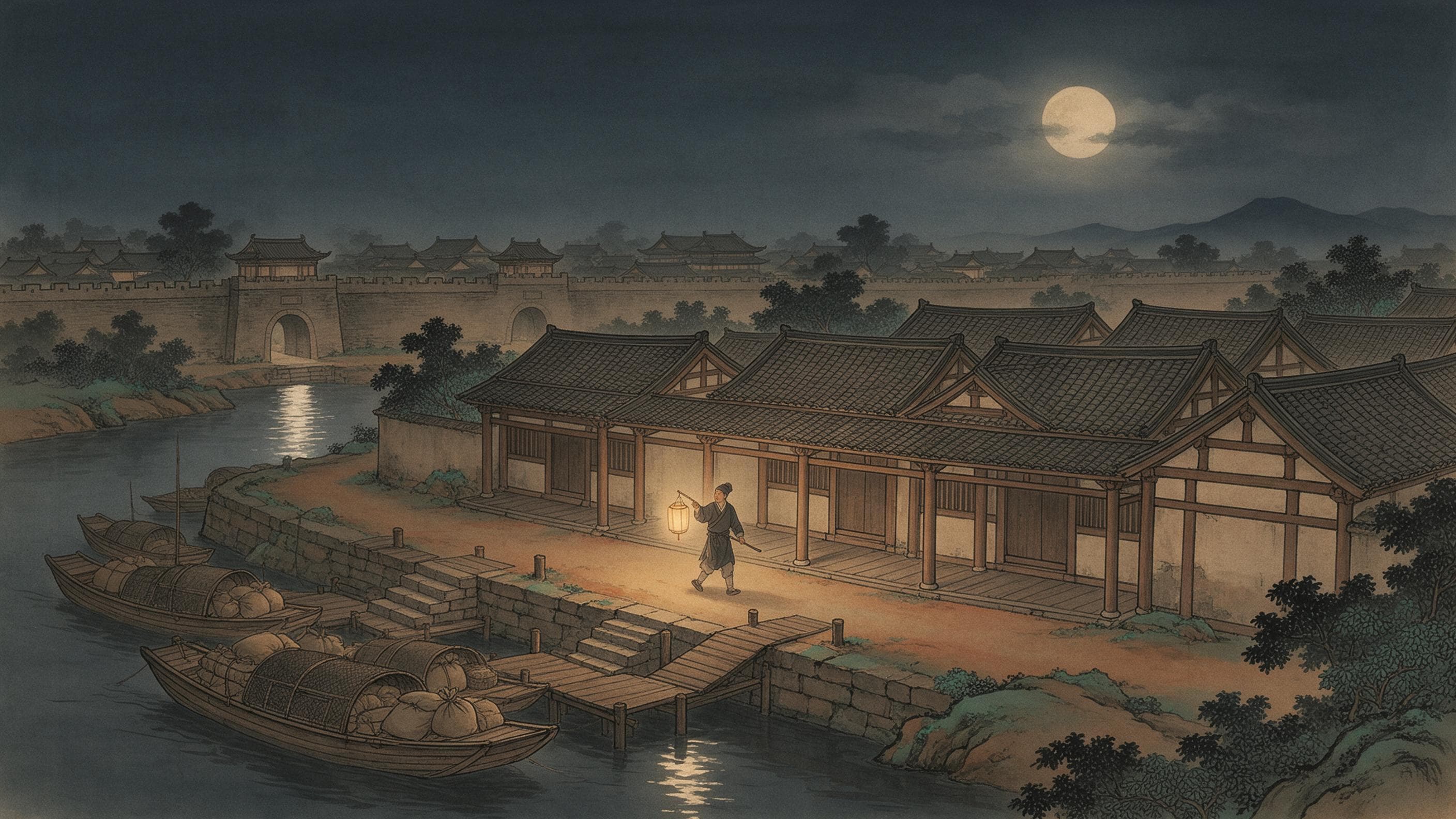
Water on Four Sides: The Warehouse Business of Song Lin'an
Inside Lin'an's north water gate, palace and wealthy households built dozens of warehouses with thousands of rooms, let by the month to shops and travelling merchants — water on all sides for fire and thieves.
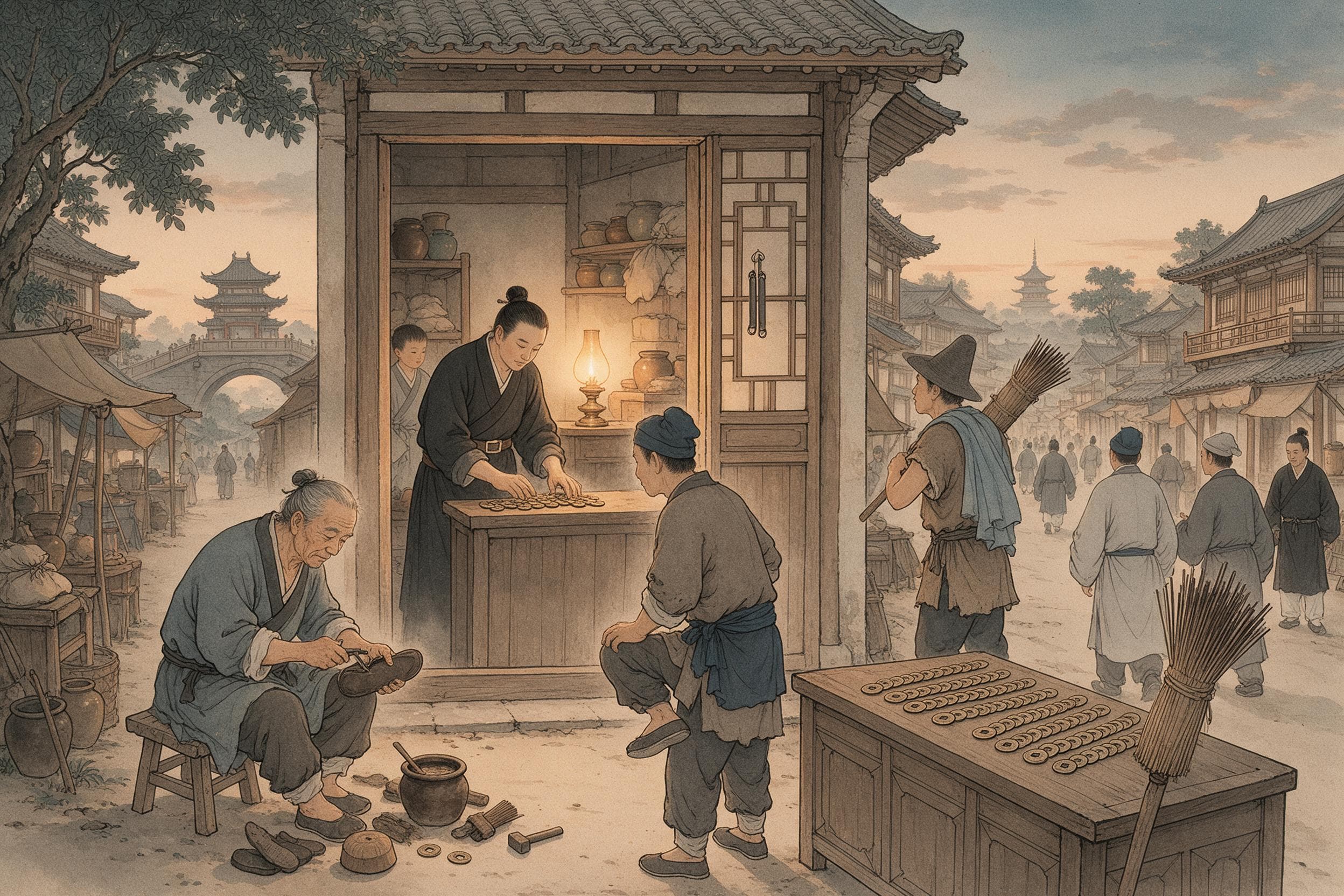
Dressed for the Job: Reading Occupation from Clothes in Song Cities
In Song Kaifeng, Meng Yuanlao wrote, you could tell a man's trade from his clothes. The statutes read differently: commoners in white, traders only in black or white, no purple.
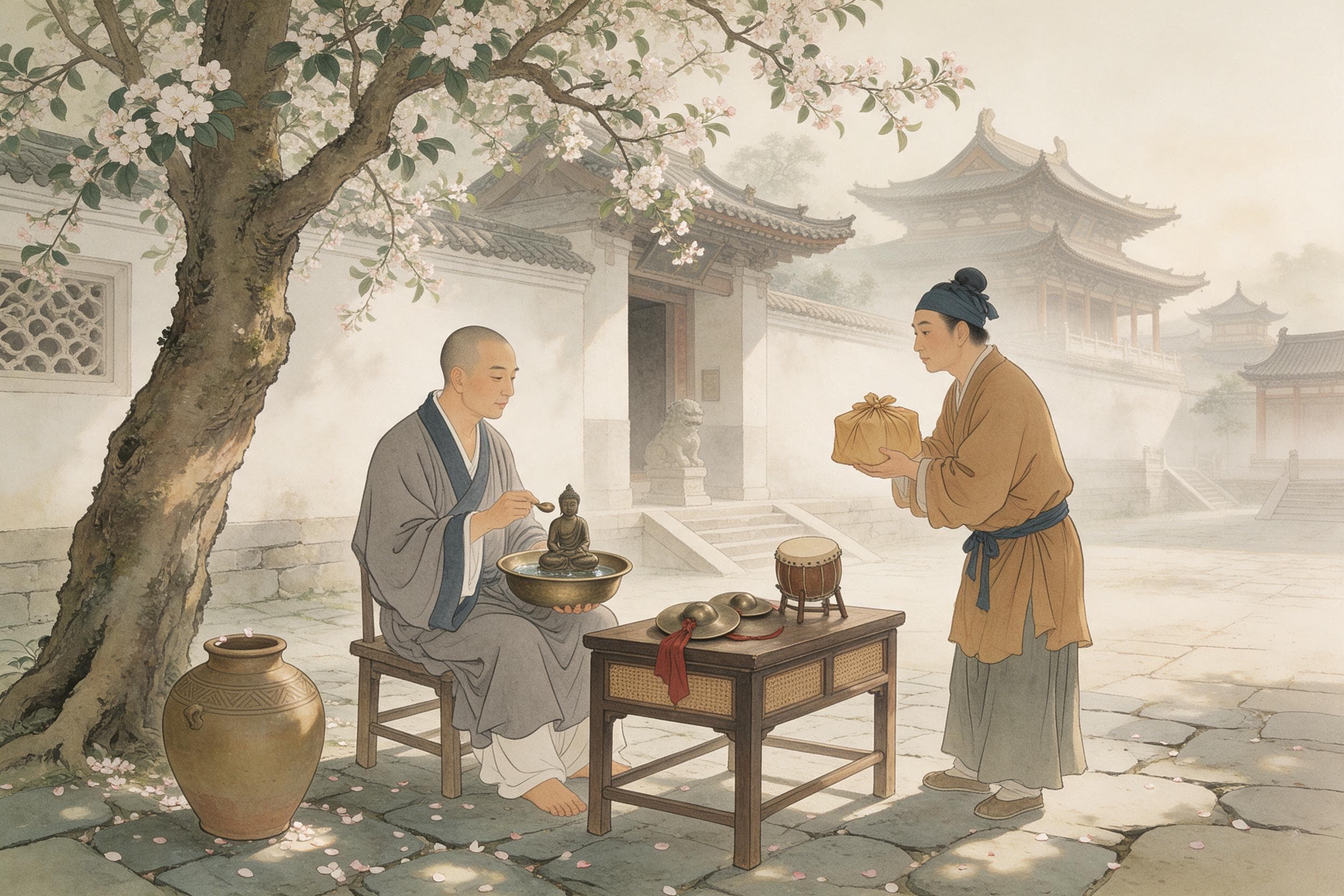
Sweet Water on the Buddha: The Business of the Buddha's Birthday
On the Buddha's birthday, Kaifeng's monasteries shared fragrant sweet water; in Lin'an monks walked the great houses ladling it over bronze images 'to seek alms', while West Lake held a release-of-life market.
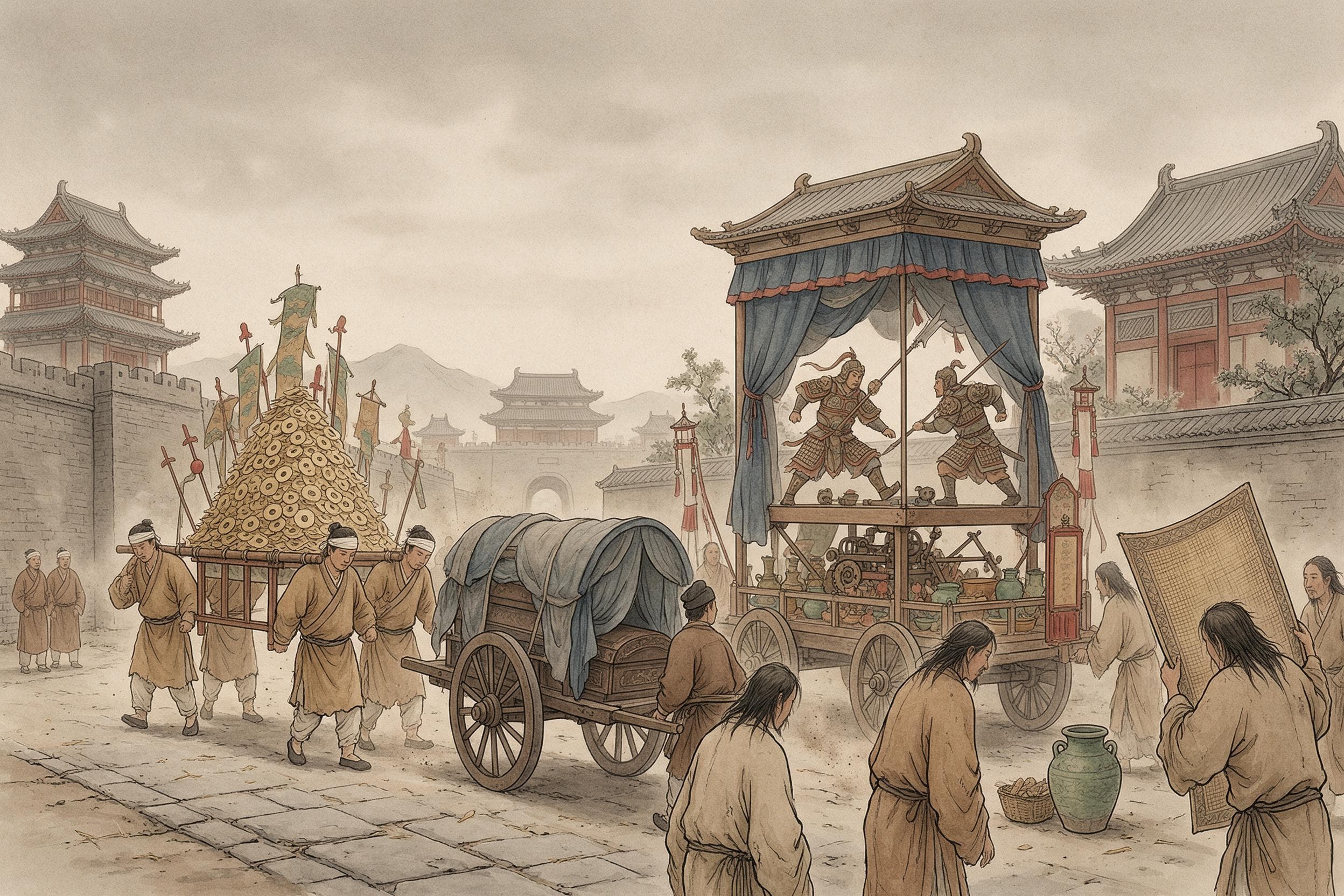
From Buried Coins to Burned Paper: The Making of Money for the Dead
A Tang writer described paper money carried before coffins and burned for spirits. A Tang history blamed it on a chancellor. By the Song it was seasonal stock, on sale days before the festival.
Why a String of a Thousand Coins Was Counted as 770
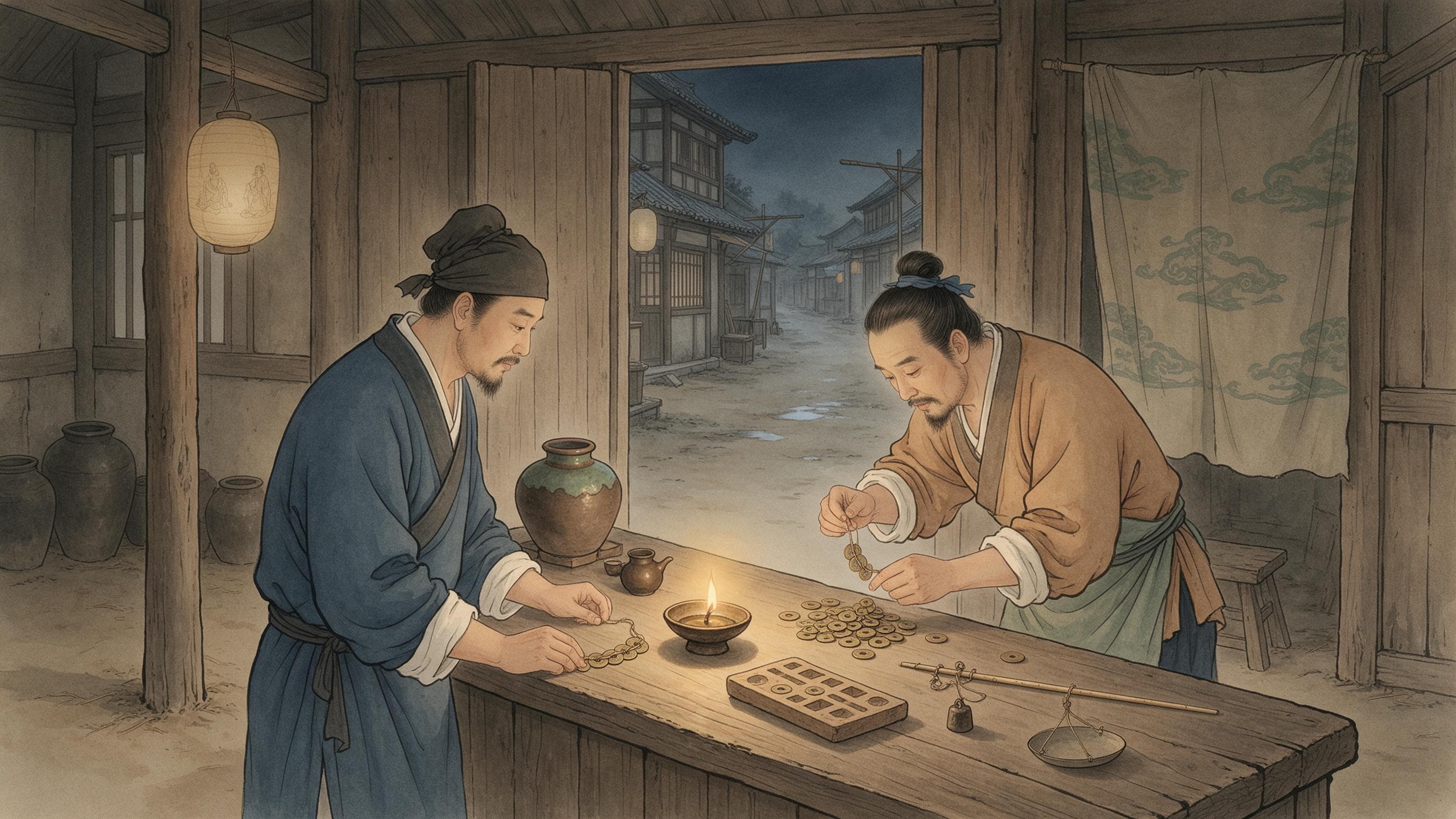
In Northern Song Kaifeng a string of a thousand coins was reckoned at 770. Six trades used six different rates, and by the Southern Song the street rate had fallen to fifty.