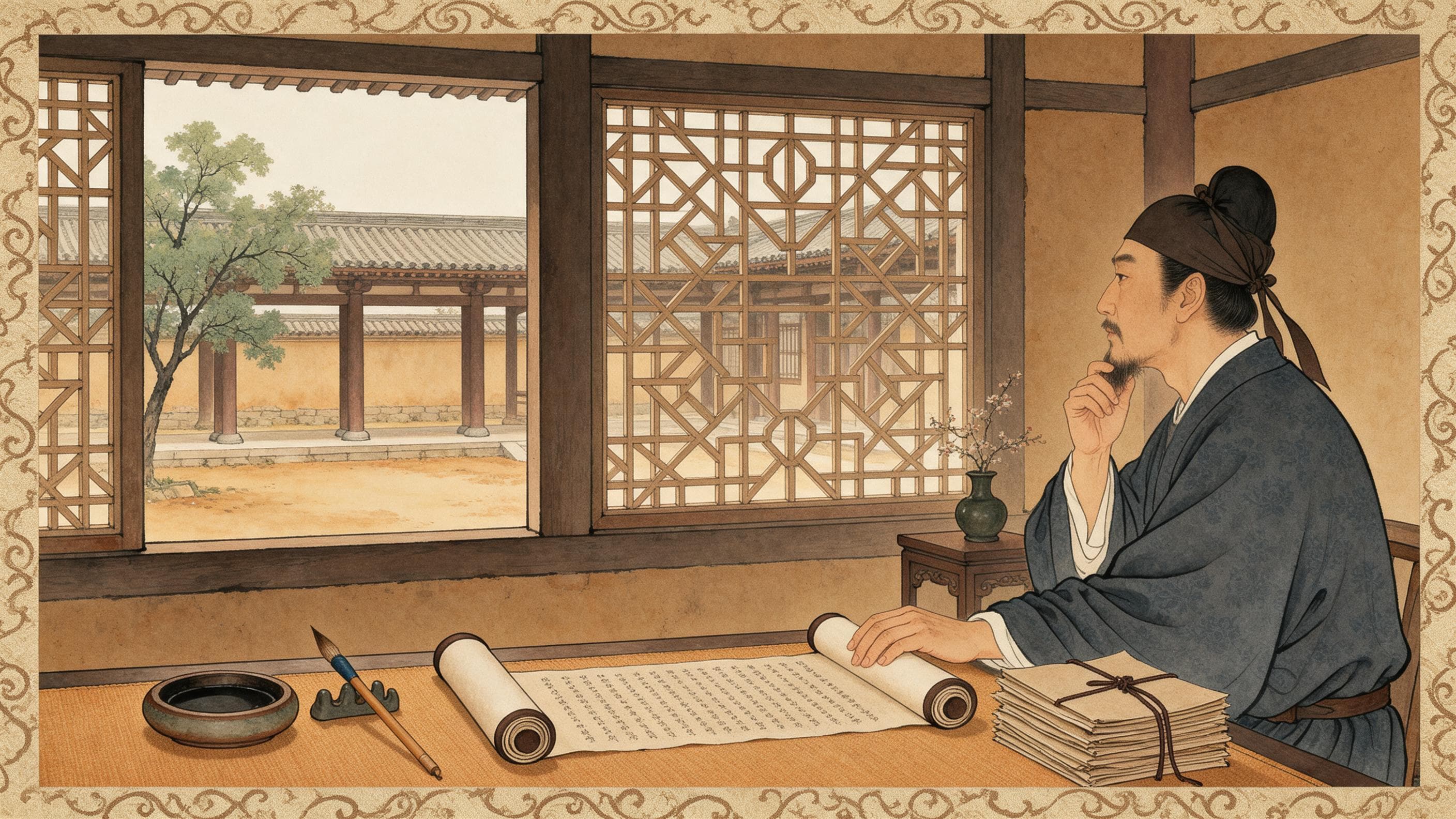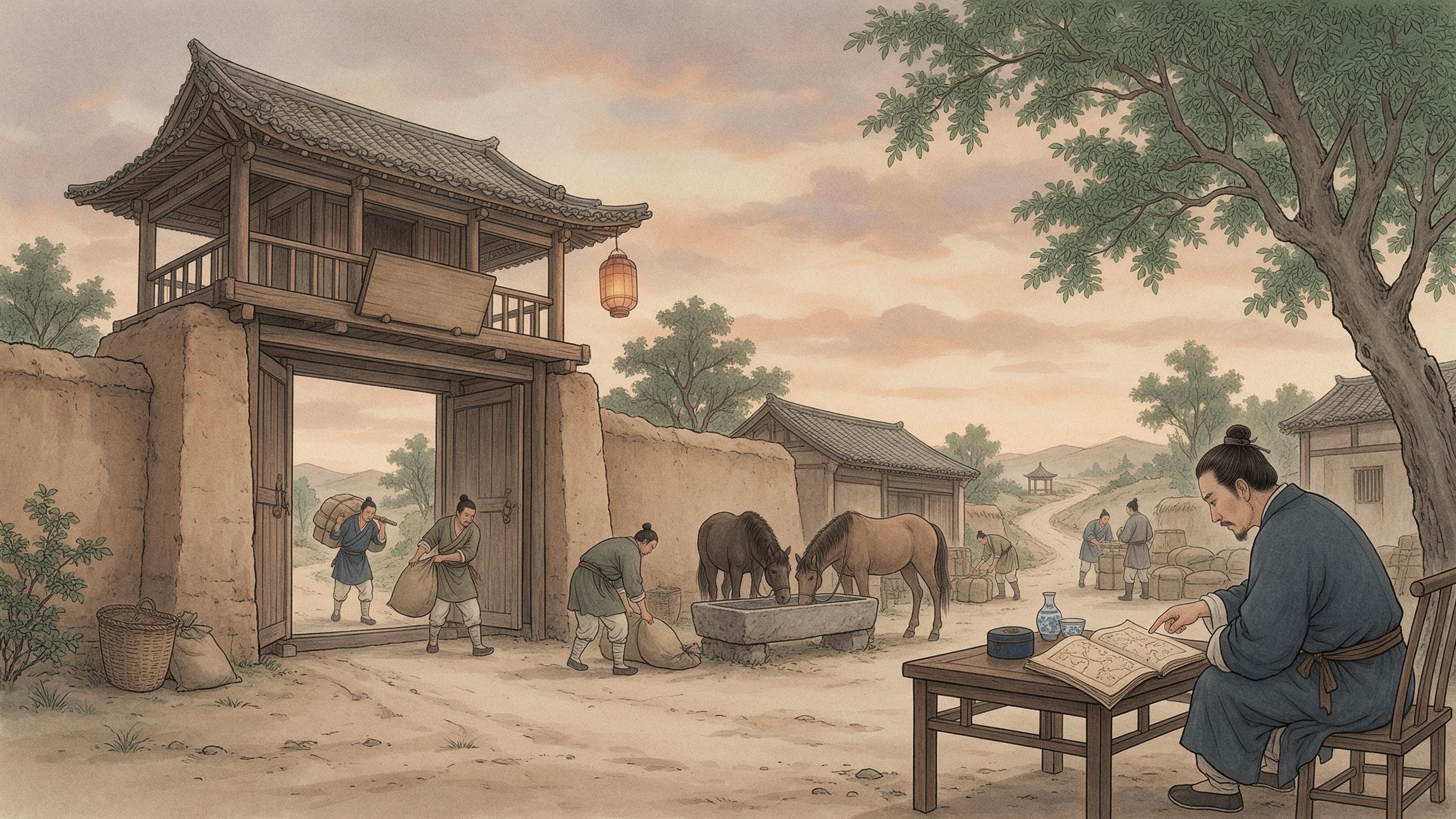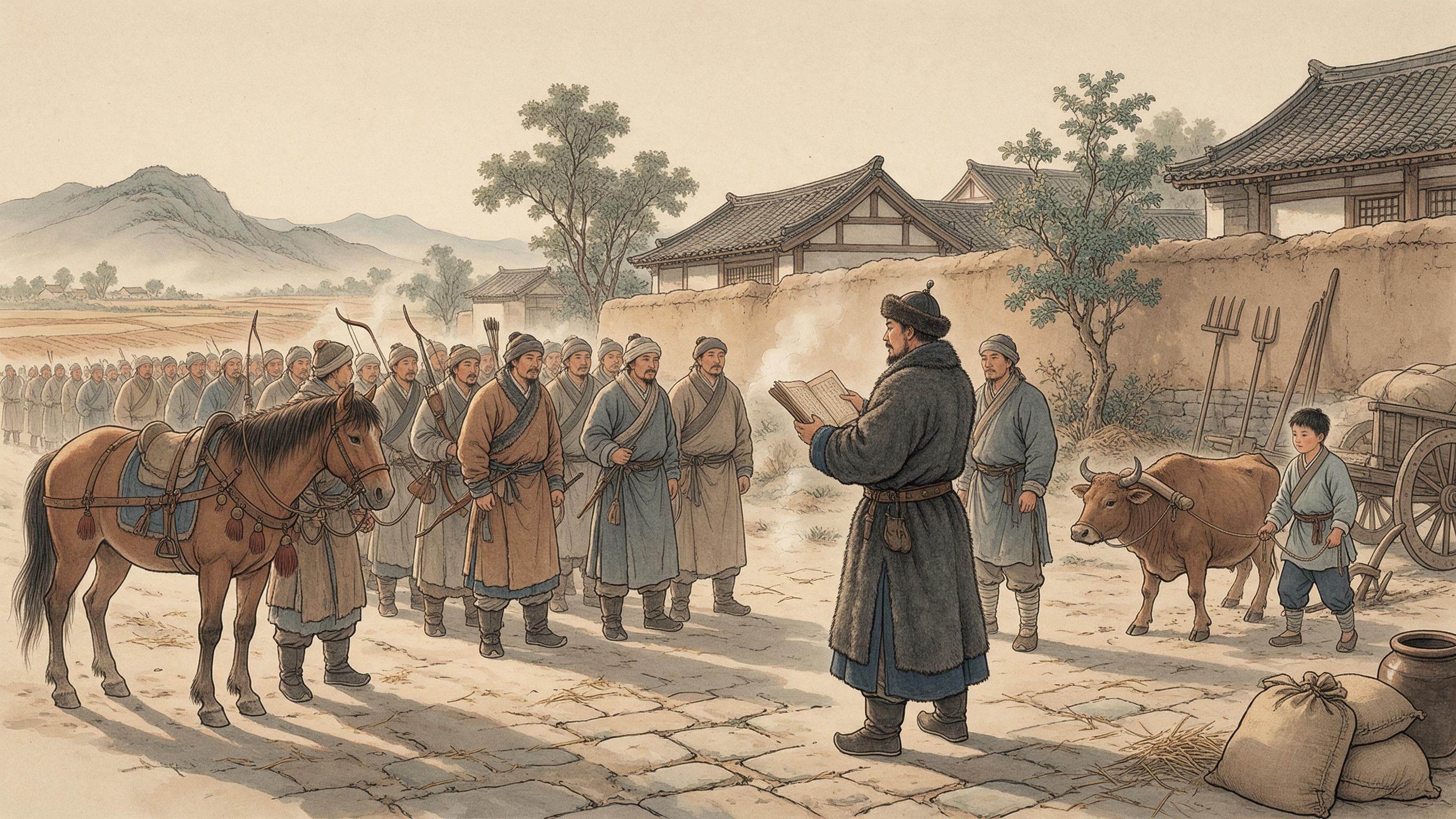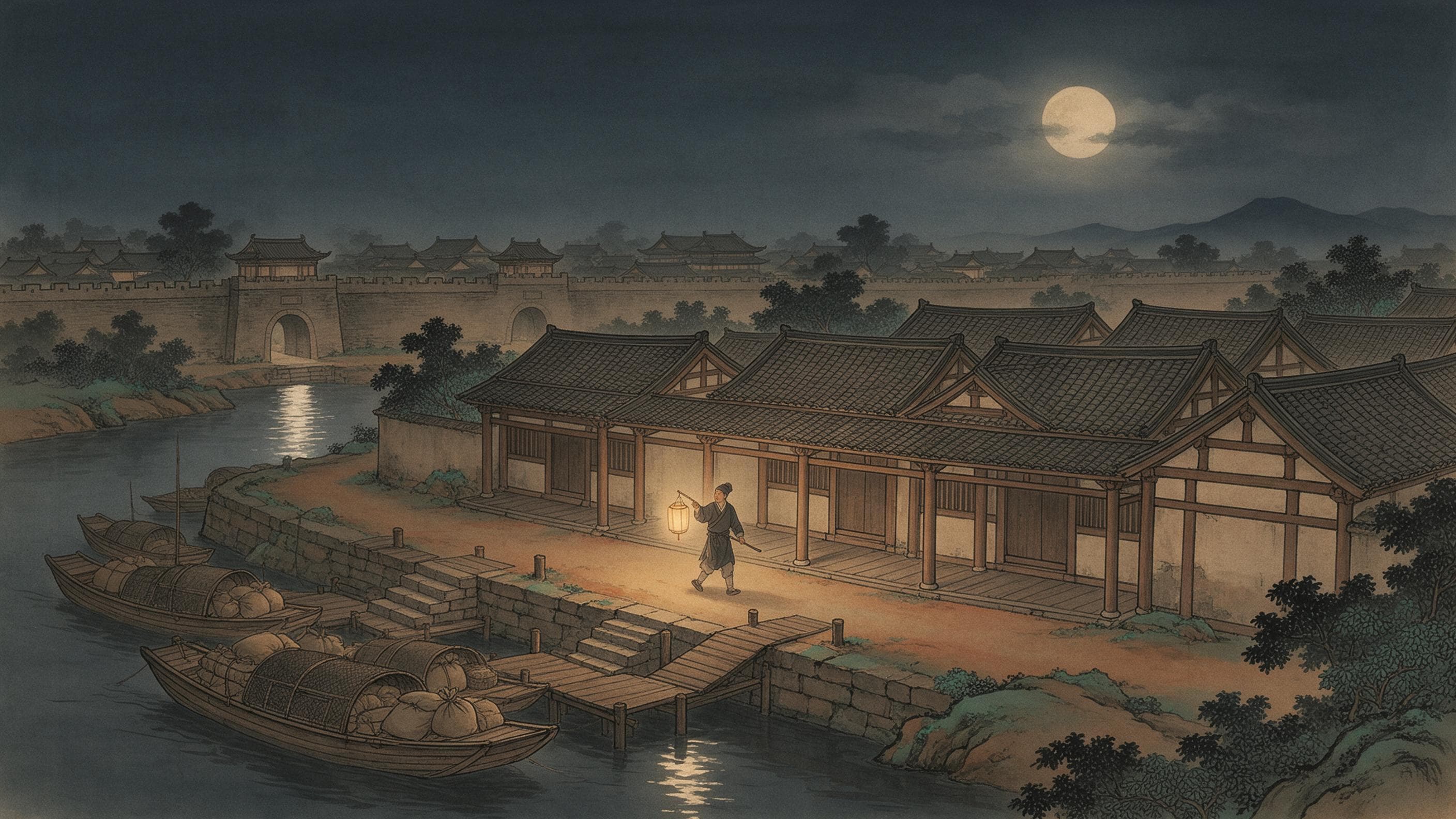
In the north of Lin'an, inside the north water gate, a waterway ran for several li: from Meijia Bridge past Baiyang Lake and Fangjia Bridge, all the way to the storehouse of ritual objects and the maritime trade office. Along it, the Ciyuan Hall, wealthy households, palace eunuchs and government offices built "several dozen warehouses, with thousands of rooms" — a warehouse district on the water. The tenants were not only travelling merchants: city shops and households rented space too, to store goods and "movable fittings and the like".
Who built, who rented
The builders were not small men. The Meng Liang Lu lists four kinds: the Ciyuan Hall, wealthy families, palace eunuchs and the government offices. The first two are rich private and temple households, the last two are people of the palace; in other words, this was a business run by the best-connected and best-capitalised people in Lin'an.
The tenants came in two kinds. First, "shops and houses within the city": a small shopfront with too much stock stored goods by the water outside the walls. Second, "travelling merchants", who lodged their cargo and even their movable equipment there. The business was not buying and selling goods. It was keeping other people's goods for them.
Water on four sides
The selling point is given in one sentence: "Water on all four sides — not only can it keep off wind and candle, it also prevents theft, and is extremely convenient." Water was the first wall: in a timber city, fire was the great fear, and a moat of water was a built-in firebreak. Water was the second wall too: a thief at night would have to swim first.
The third advantage was transport. The warehouses sat on the waterway, so goods went onto boats and in or out of the city without being unloaded onto carts. Those four characters, "extremely convenient", cover both safety and cost.
Why the water gate
The site was not accidental. The waterway lay inside the north water gate and ran to "the storehouse of ritual objects and the maritime trade office" — one a government depot, the other the office that handled overseas trade. A warehouse beside those two doors was close to inspection, transshipment and official storage. The passage never explains the choice; this is read off the location.
How the money was taken
The method is stated plainly, but without a single figure: "The warehouse keeper takes rent from the tenants month by month, manages the corridor-patrol money, hires labour, and has them patrol at night so that nothing is neglected." Unpacked, that is four things: monthly rent from tenants; a separate "corridor money"; that money used to hire men; and the men patrolling at night so that nothing goes wrong.
How much the rent was, how much the corridor money, how many men were hired, what each was paid — the passage says nothing. What can be fixed is the structure: rent plus security fee plus wages, three payments for three services — and the risk split with them: rent for space, corridor money for custody, wages for eyes in the dark. Three payments, three parties: landlord, watchman, tenant. Who bore the loss if goods were stolen, whether there was a receipt or a contract — the sources do not say. So this was not a Song insurance company: there was custody and patrol, but no underwriting.
As a business it was slow money: the capital went into bricks and timber by the water, and the return came in month by month. For that return to last, the goods had to be safe, which made the night patrol the foundation of the trade rather than an extra. The landlords were palace people and rich families; the tenants were shops and travelling merchants. Neither side was small, and that is why the promise of security could be sold.
Scale, and a little inflation
"Several dozen" buildings and "thousands of rooms" are the source's figures and may be inflated; the direction is credible all the same — a warehouse district, not a few empty rooms. Averaged out, that is dozens to a hundred rooms per compound: an estimate, not a figure from the text. A district, not a shed. The author also gives Lin'an's size: the outer city ran "tens of li to the south, west, east and north", its streets and markets so crowded that "several days of walking would not exhaust them, each comparable to a prefecture elsewhere"; the population was "close to a million households". That last figure is the Meng Liang Lu's own and looks too high; it can only be quoted as "according to the record".
The last sentence shows what the author was really arguing: at Jingnan, Shashi, Taiping and Huangchi — all great merchant towns — "though they are called flourishing, I suspect they have no such secure buildings". Lin'an, in his view, was not merely rich in goods; it was better than elsewhere at the business of putting goods down safely.
The name tafang itself is not explained in the passage and remains uncertain. What survives is a service list: water, walls, men, night patrol, monthly collection. No lease, no receipt, no rate card, and not one recorded case of stolen cargo — the business shows itself only in the gaps of other people's accounts. How much it earned, how long it ran, what became of it: the record says nothing.
Sources & further reading
- 吴自牧《梦粱录》卷十九·塌房 (Wu Zimu, Meng Liang Lu, juan 19, "Tafang") — The waterway inside the north gate, the warehouses built by palace and wealthy households, their tenants, the four-sided water, the monthly rent, corridor money, hired watchmen and night patrols, and the claim that other cities lacked such secure buildings.
- 吴自牧《梦粱录》卷十九·塌房(识典古籍本,异文对照)(Wu Zimu, Meng Liang Lu, juan 19, Shidian edition, for collation) — A second electronic edition of the same passage, used to check characters; the two differ slightly in the description of the outer city's extent.