
EVERYDAY LIFE · SHANG TO QING
Stories
Small questions open a window onto a different world.
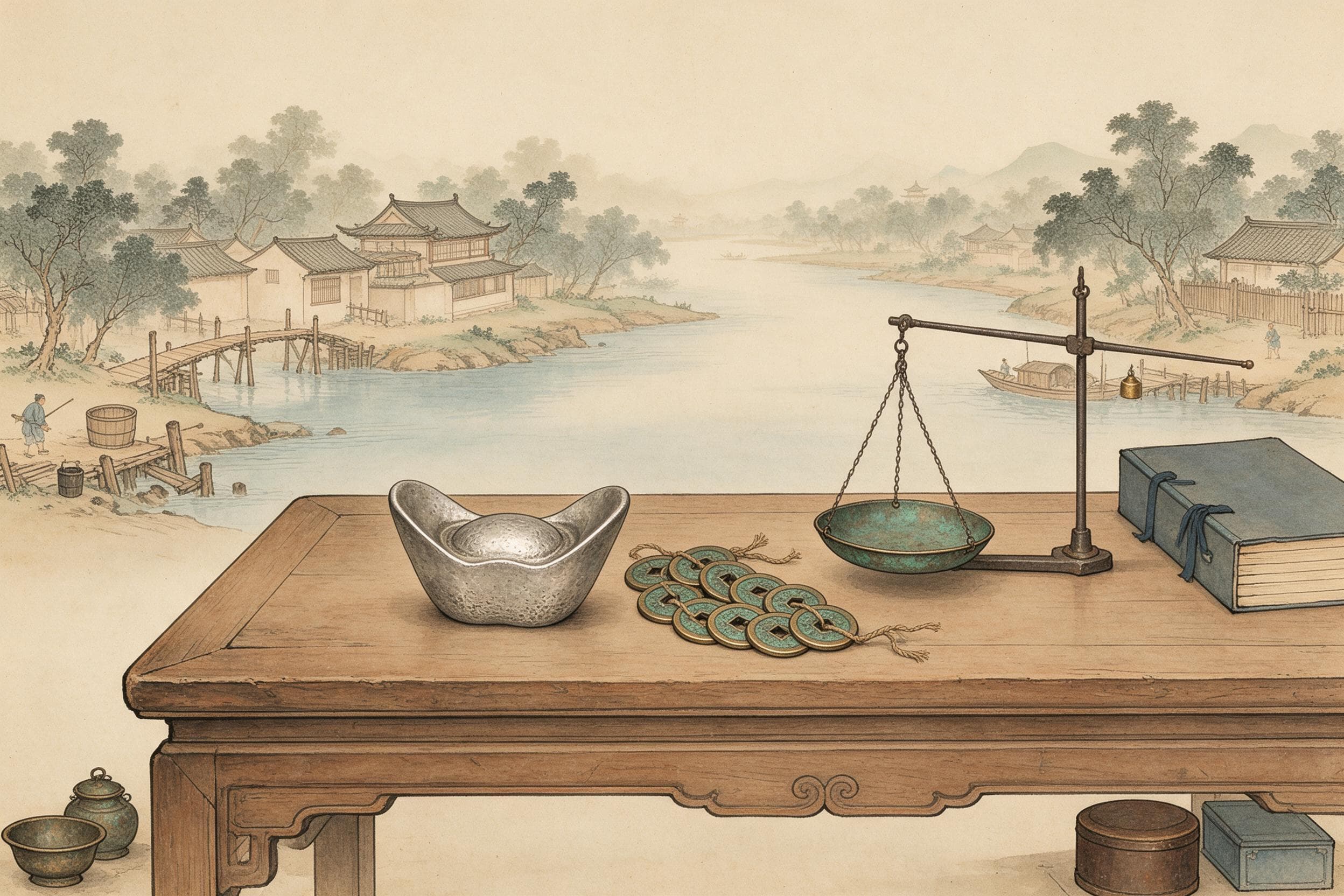
How Many Cash to a Liang of Silver
A 1653 coin marked 'one thousandth' promised a thousand cash to a liang of silver. The state kept that rate for two centuries; the market did not.
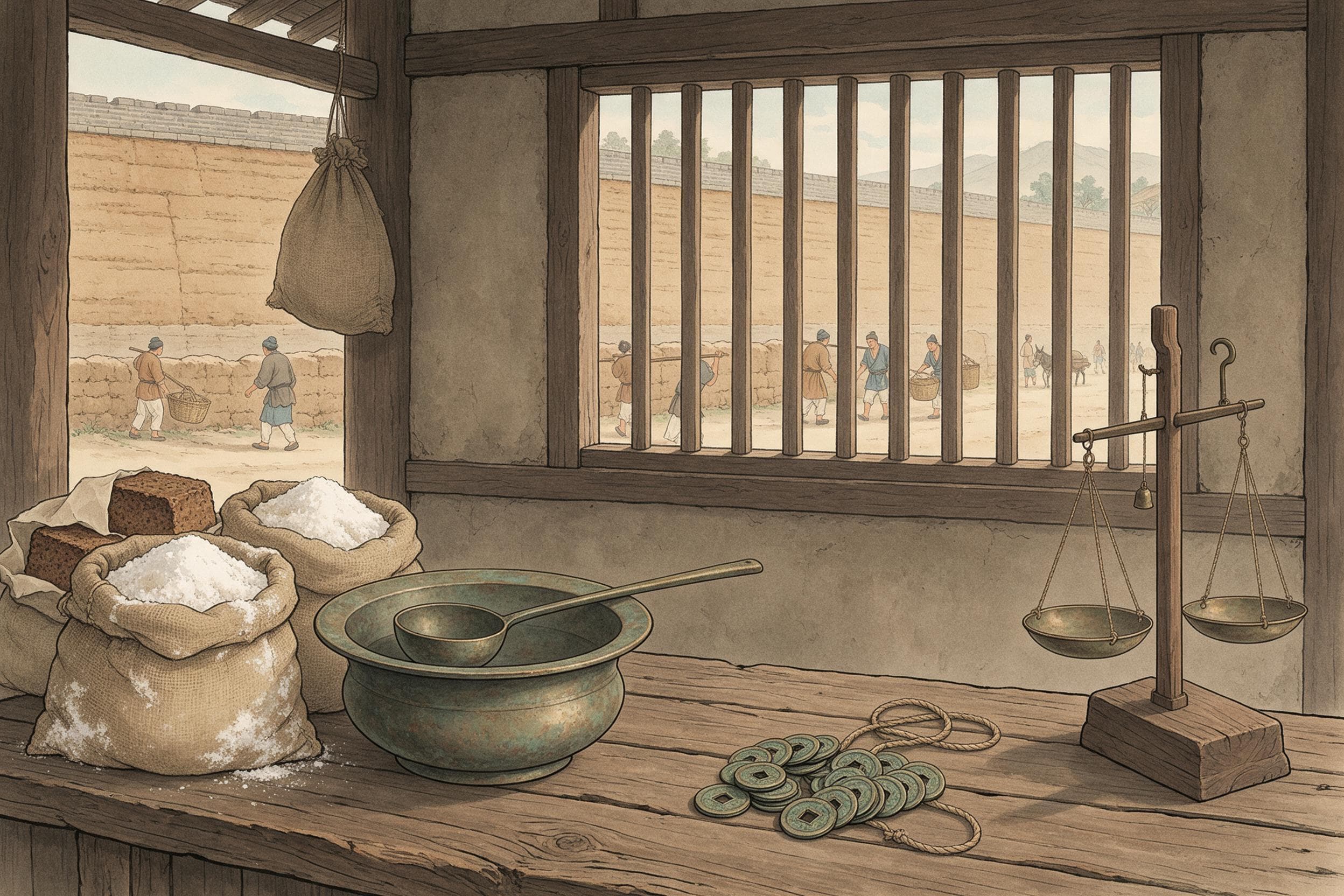
Eighty to a Hundred: Why Five Dynasties Money Ran Short
An order of 924 fixed eighty cash to the hundred; the market kept short-changing the hundred. Bronze, salt, wine-curd and farm tools: how Five Dynasties money was counted, taxed and melted.

How a Sheet of Paper Became Money
A dark grey mulberry-bark note with a death sentence printed on it: how Yuan paper money was printed, priced, exchanged and burned, and why it stopped being worth what it said.

How a Tang Judgment Was Written: Structure, Allusion, and the Space Between Law and Feeling
Zhang Zhuo's model judgments invent a case, answer it in parallel prose, and invoke “the law has its standing rule” without citing any article. What survives is how judgments were written, not how courts decided.
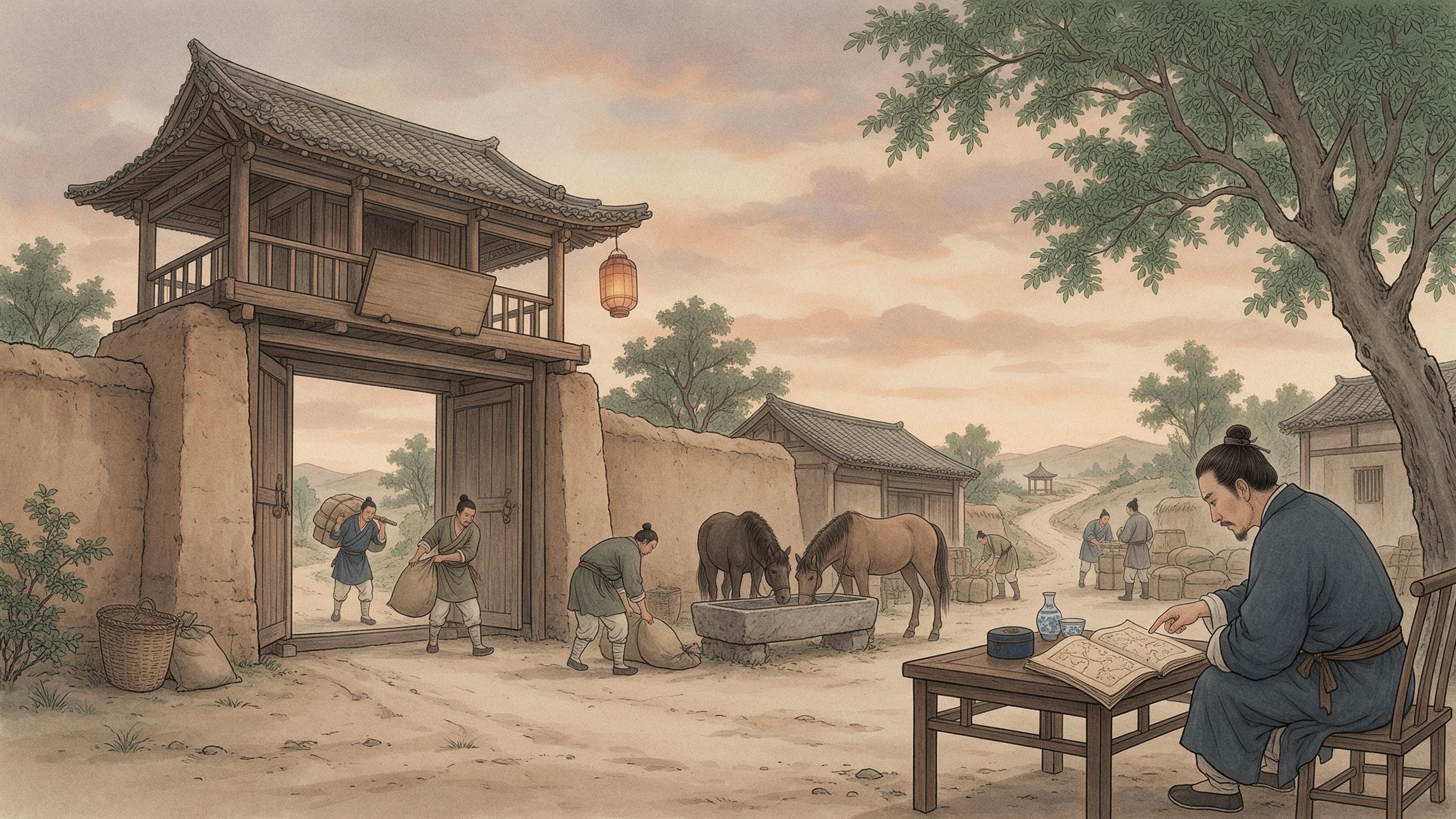
From Beijing to Nanjing: A Huizhou Merchant's Road Book
A Huizhou merchant spent twenty-seven years compiling a route book of Ming China: stations from Beijing to Nanjing, 4,320 li to Chengdu, sixty li a stage on one frontier road. It records distance and danger, never price.
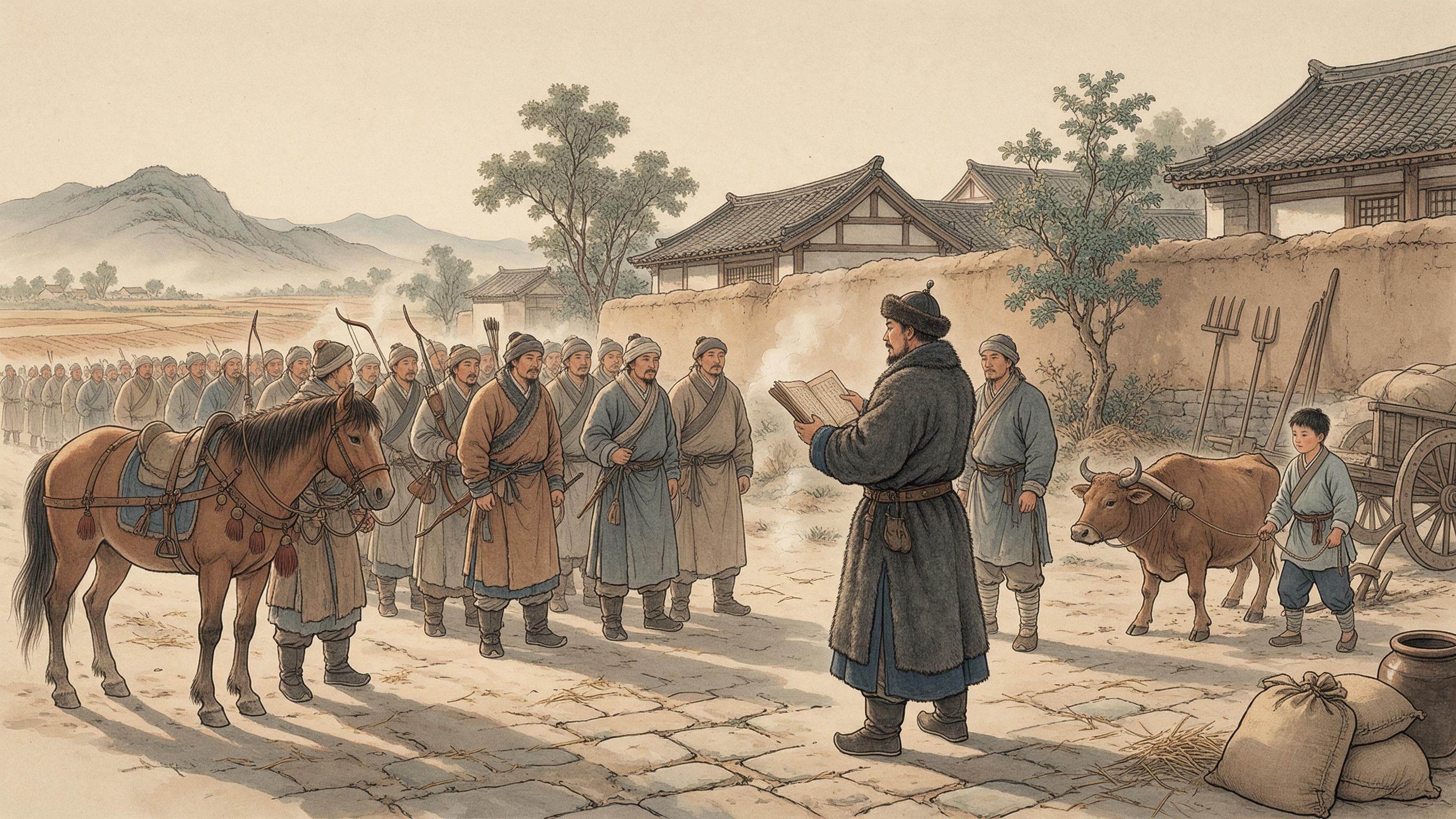
Inside a Jurchen Military Household: Soldiers, Fields and Property Tax
The Jin Shi gives three different sizes for the same military unit, each dated, and quotas plus realm-wide totals that never add up to one household's fields, tax or conscripts.

Seven Fen Five Li for Fifteen Brooms: A County Ledger from Wanli Beijing
A Wanping magistrate recorded what one county bought for its altars, tombs and processions, down to the fen and li — and the levies that paid for it. Procurement prices, not retail; a register, not a population.

Five Dou of Rent, Fourteen Years: A Land Case from Southern Song
Two deeds for one field, a rent of five dou a year, and fourteen years in court. A Southern Song judgment lays out the deeds and then turns its anger on a county school that accepted land already sold.

One Coin, One Bolt of Cloth, One Money Jar: How Qin Law Policed a Market
A single Qin statute on market payments survives: the clerk must drop the coins into a money jar while the payer watches, or be fined a suit of armour. Around it, the cloth standard, the exchange rate and the price tags.