A Tang judgment can be recognised by its shape. First the case, stated flatly in prose: “The tongshi sheren Cui Xian made a verbal error while reporting business; a censor impeached him and handed him to the law; the Grand Court of Judicature sentenced him to thirty strokes of the light stick and four jin of copper in commutation; Xian states that although his report contained an error it did not lose the sense of the matter, and refuses to accept the sentence.” Then a long block of parallel prose. Then a verdict. Those three parts are what this article is about.
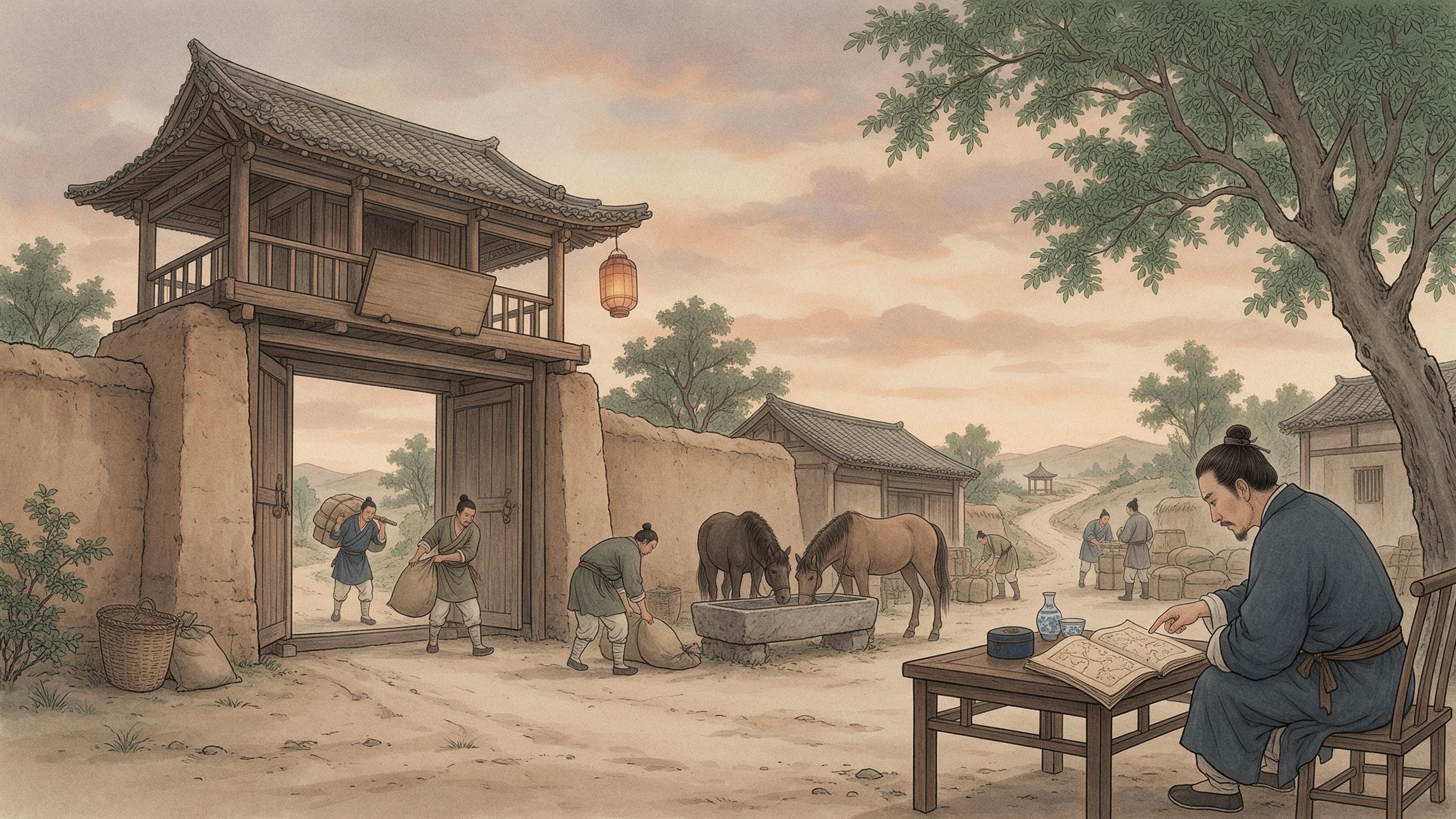
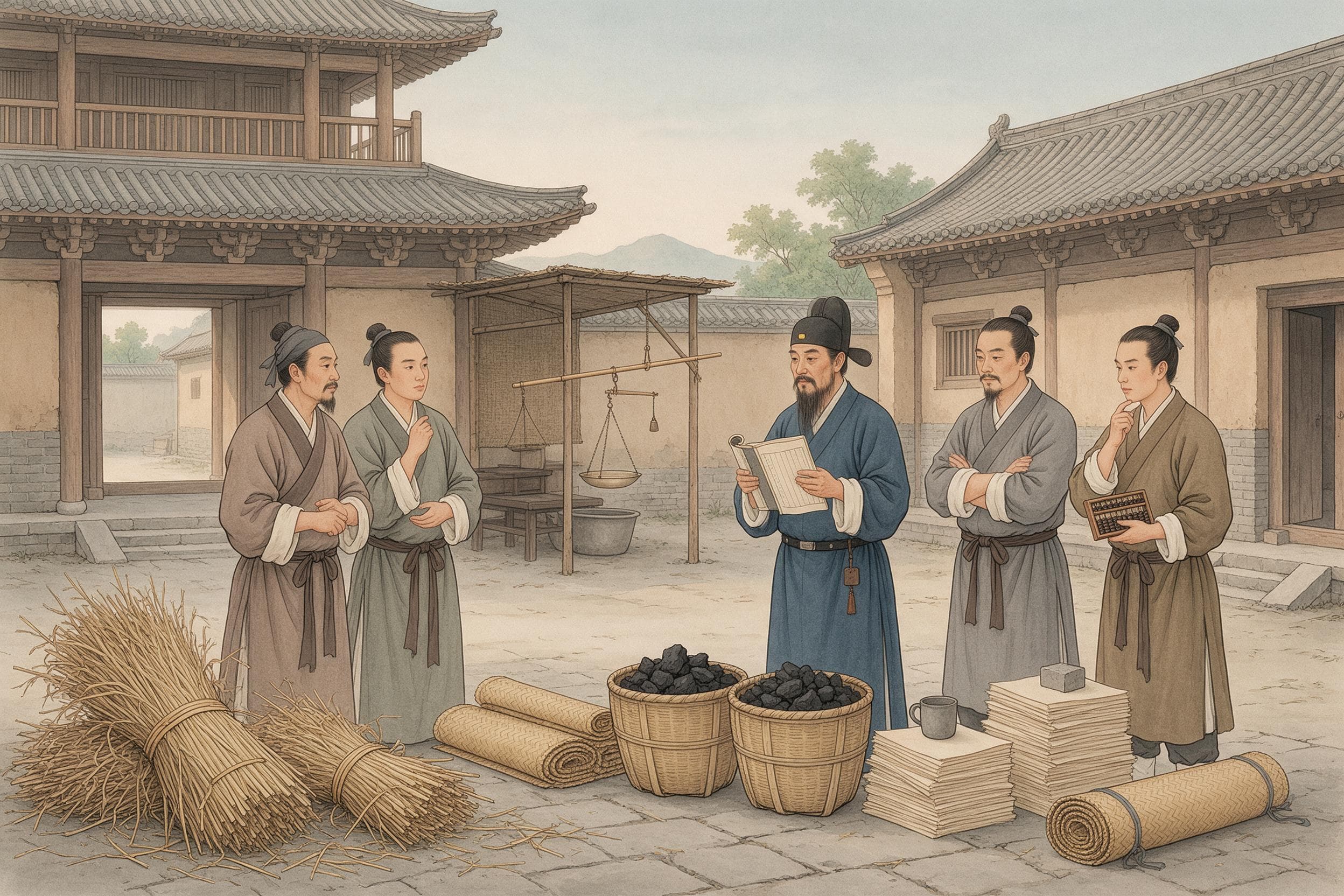
The first thing to fix is what kind of text this is: not a trial record but a model judgment. It comes from Zhang Zhuo's Longjin Fengsui Pan, which invents a case, then writes the judgment that ought to answer it, arranged by office — the Secretariat, the Chancellery, the Censorate, the Department of State Affairs, the ministries of Personnel, Revenue, Works, Rites, the Directorate of Education, the Palace Workshops. Read through, it feels like a book of exercises in judgment-writing, sorted by department. The Dunhuang Wenming Panji, now in Paris, is the same kind of text: nineteen judgments, most opening with the formula “received the case” (fengpan), model pieces rather than records. So the question here is how a Tang judgment was written, not how a Tang court decided. These cases have no files, no testimony from both sides, no record of execution; even the names are invented.
The three parts of a judgment
Take the Cui Xian entry through. The case is one sentence; the original sentence is thirty strokes and four jin of copper, and Cui refuses it. The judgment does not begin with law. It begins with praise: “Cui Xian, of spirited bearing and bright expression, his phrases rising and falling, his tone clear and full.” Then ornament: “the vermilion paste gives out its colour, and the phoenix edict rises in pattern; the orchid-sealed cover floats its scent, and the dragon-silk moves with light.” Only after “how could it be tolerated that…” does the reasoning come: “An error caught by impeachment deserves no more than the light stick; since the sense of the matter was not lost, he should be innocent.” The close: “Though he has touched the frost, reason says he should be cleared.” The judgment reverses the sentence, and does it with two ideas — error, and meaning preserved.
The judgment is an essay
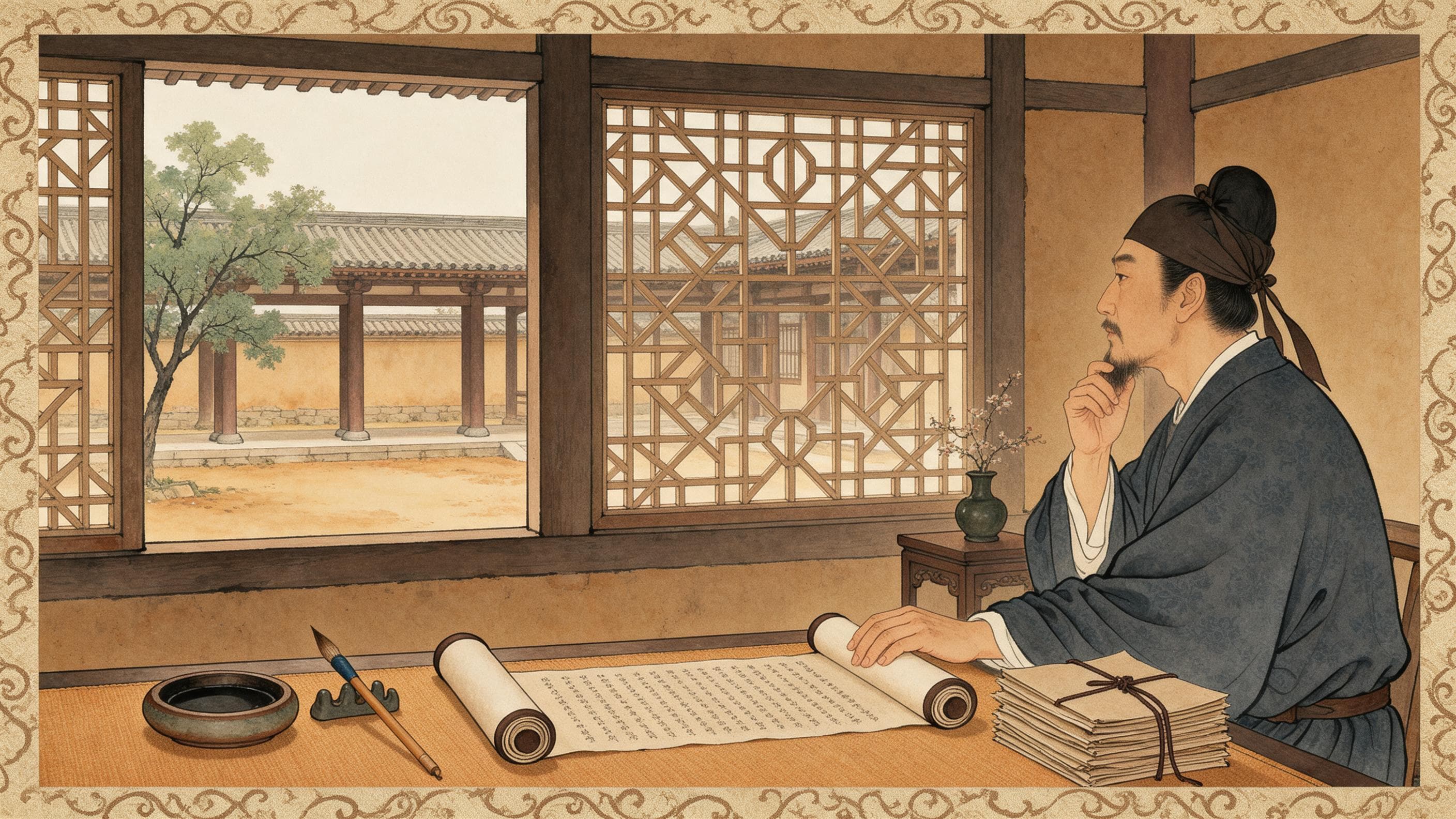
This is prose written as prose, not as minutes. Four-and-six rhythm, antithesis, dense allusion: of the Secretariat it says “the phoenix pool is cool and clear, the chicken tree is deep and severe” — both being names for that office; of the Chancellery, “deep and dark the green gate, severe the yellow pivot”; of a good official, “Shao as interior minister spread fine repute in the Zhou year; Xun as director of the secretariat left a fragrant trace at the Wei court.” The couplets must balance, the allusions must fit, the breath must carry. That is why the book reads like practice: a case is set, and a presentable judgment must be produced.
“The law” is a gesture
When these judgments invoke law, they do it in general terms. In Wang Xiu's leak of secrets, where the original sentence was strangulation, the judgment says: “Since it was not secret and not a great matter, the law permits it to be treated as no offence; wait for instructions before deciding.” Of the censor who impeached a magistrate for taking two hundred strings: “Two hundred strings is the penalty; the law has its standing rule; three thousand clauses of prison law will not let it go.” Other entries close with “the law has its proper article; reason requires a clear statute” or “follow the clear statute, do not trust floating words.” No article numbers, no code citation. The “law” in a judgment is a gesture towards the statutes; the statutes are elsewhere. This article will not fill the gap with article numbers from the Tang Lü Shuyi.
One place where a statute does appear shows the difference. When the legal-affairs article analyses the Guo Tai case, it cites the Tang Lü Shuyi, juan 23, the section on false accusation and counter-liability, and says A-Song ought to have been counter-charged. That is the commentator's explanation, not a line of the judgment. The judgment itself says only that she is not counter-charged. Code and judgment are two lines; they should not be merged.
Between law and feeling: Guo Tai and Li Ying
This judgment shows the craft best. “Received the case: Guo Tai and Li Ying crossed together in one boat; wind and waves came and the boat capsized. They got one oar between them and struggled, floating. Ying was weak, Tai strong; Tai pushed Ying and took the oar, and so reached the shore. Ying lost the oar and died of it. His wife A-Song cried out in court that her husband's death was Guo Tai's doing. That Tai pushed Ying to take the oar is admitted.” The case first fixes the undisputed fact — the push is real. The judgment then separates causes: Ying died by drowning; the capsizing was a natural disaster; drowning is not the pusher's fault; “if Tai pushed him for the oar, he did not die of the push.” So: “A-Song is not counter-charged; Tai is also innocent. Let both be informed; let there be no more noise.”
What makes it a judgment rather than a syllogism is the middle: “A-Song, a wife whose duty was heavy and whose love was deep,” and “to charge guilt rashly would be to wound the great waves.” The text wants the reader to see a judge weighing feeling alongside cause. Whether Tang magistrates generally did so, these model judgments cannot prove; what they prove is that such weighing was something a judgment was supposed to display.
What this material cannot show
The limits should be stated plainly. These are model judgments, not trials: Wang Xiu, Cui Xian and Yang Zhen are invented names, and the sentences attached to their cases — strangulation, thirty strokes, four jin of copper — belong to the problem set, not to any record of punishment. A judgment is one man's written version: no depositions, no list of evidence, no argument in court, and it must not be read as a transcript. The Dunhuang manuscript and Zhang Zhuo's composed pieces come from different worlds and cannot serve as evidence for each other. The penal names are left as they stand, with no conversion into modern terms. And a collection of real cases certainly existed — the article says so — but this round found no readable page of one, so it is marked missing, not used.
What survives is not the courtroom but a technique: state the case in a line, open with ornament, reason in antithesis, close with “follow the clear statute.” The courtroom is lost. The prose is not.
Sources & further reading
- 张鷟《龙筋凤髓判》卷上(唐张鷟撰,明张海鹏订;识典古籍) — Model judgments arranged by office: the Secretariat, the Chancellery, the Censorate, the Department of State Affairs, the ministries. Each entry invents a case and then answers it — Wang Xiu's leak of secrets, Cui Xian's verbal error in reporting, Yang Zhen's mistaken name, the censor Yan Xuan's impeachment of Tian Shun for taking two hundred strings. The container metadata is confused with a Ming casebook, but the chapter itself is headed Tang Zhang Zhuo, revised by Zhang Haipeng.
- 〈敦煌出土的《文明判集残卷》——唐代的司法案例库〉(甘肃高院政务号,澎湃新闻 2024-12-01) — Judgment collections fall into two kinds, model texts and records of real cases; the Wenming Panji is the model kind, nineteen judgments opening with 'received the case', now in Paris. Gives the Guo Tai–Li Ying judgment in full and the verdict 'A-Song is not counter-charged, Tai is also innocent'; the article's own analysis cites the Tang code, juan 23, on false accusation, which is commentary, not the judgment.