
EVERYDAY LIFE · SHANG TO QING
Stories
Small questions open a window onto a different world.
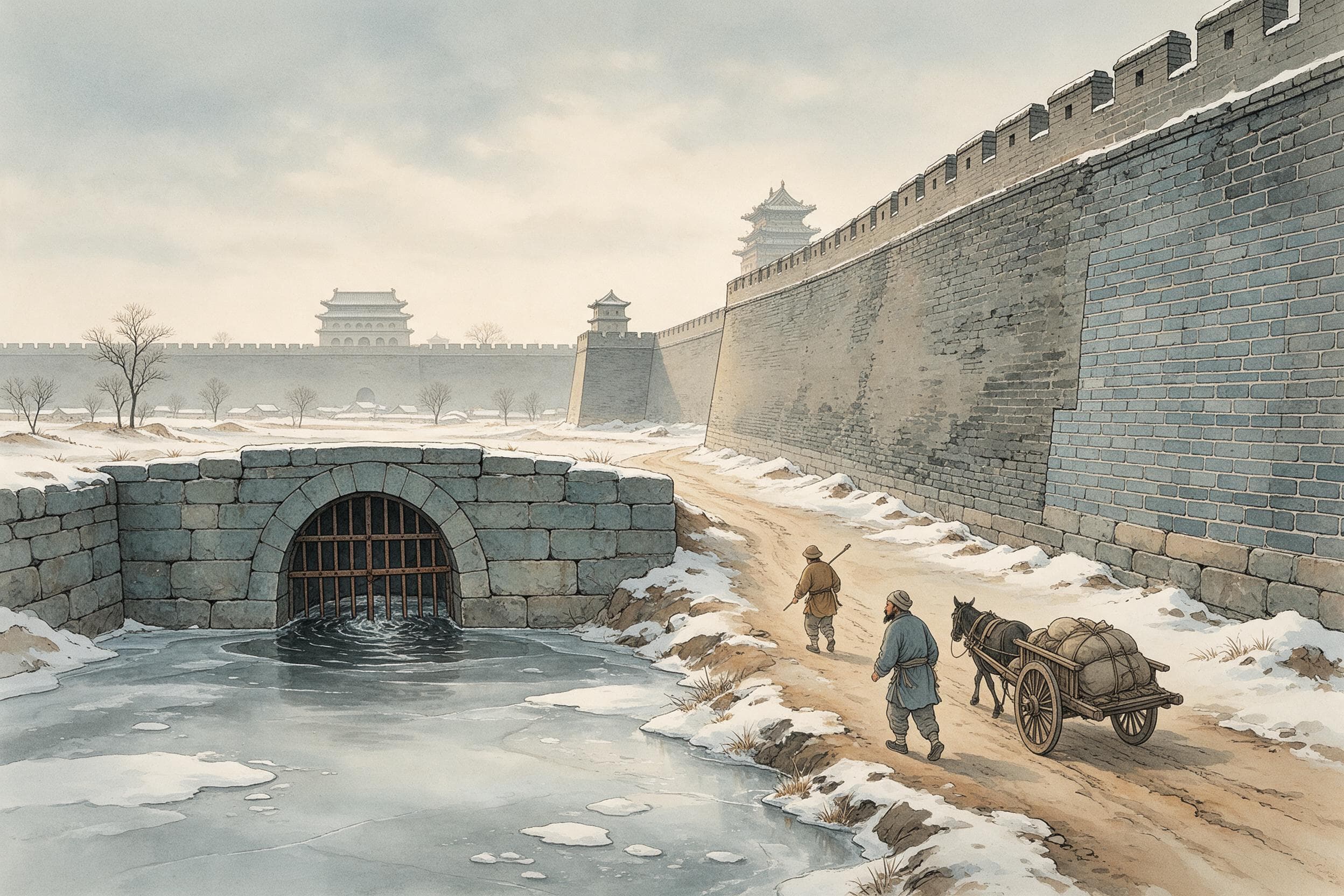
Forty Li, Nine Gates, Seven Water Gates: How Qing Beijing Was Walled
The Qing code: an inner city forty li round, nine gates and seven water gates; an outer city twenty-eight li, seven gates and three. The walls are set out in zhang.
Sixty Li and Nine Li Thirty Paces: Measuring Khanbaliq
The texts say the city was 'sixty li square with eleven gates'; the survey measures about 28,600 metres round. Two sets of figures, set side by side, are what can be known of the Yuan capital.
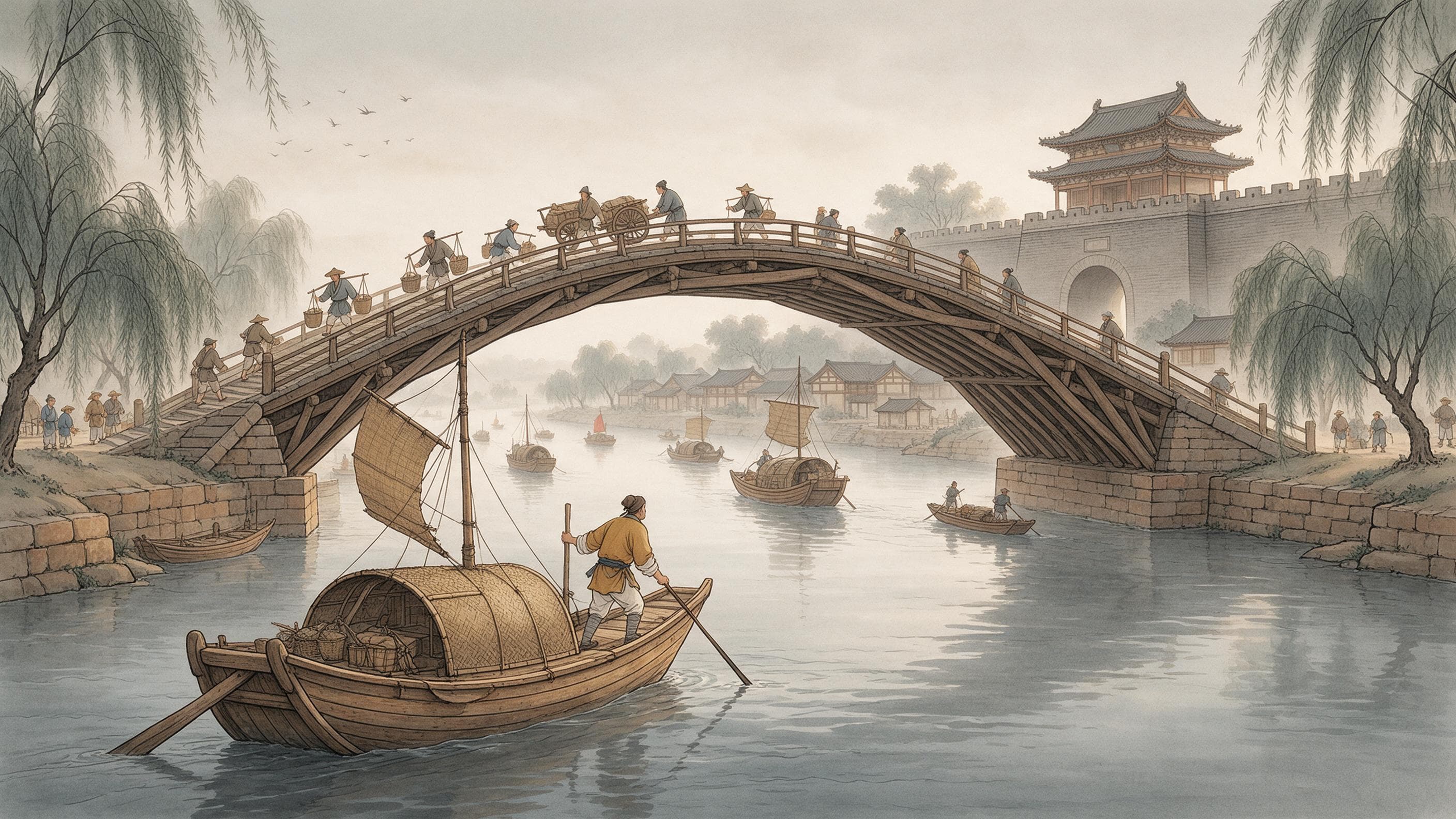
Four Rivers, Twenty-Four Bridges: Getting into a Song City by Boat
Four rivers ran through the Northern Song capital, with eleven bridges on one and thirteen on the other; one bridge was too low for boats. Six chi of water, six million shi a year, and the names of Lin'an's boats.
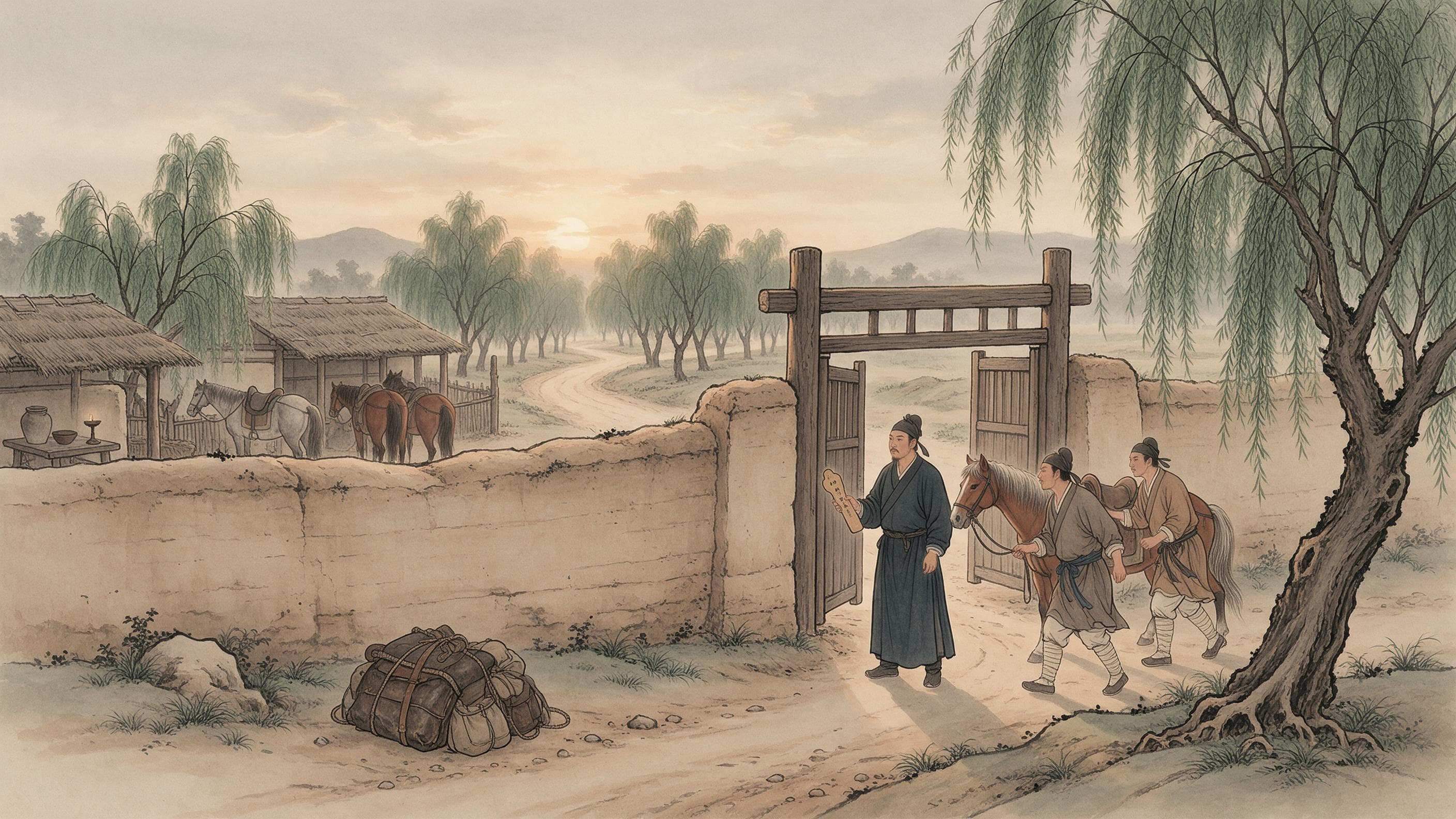
From Chang'an to Luoyang: A Day on the Tang Post Road
One station every thirty li, 1,600-odd in the realm, each with a master, horses and boats, and every traveller needing a pass. The rules are neat; the totals are not.
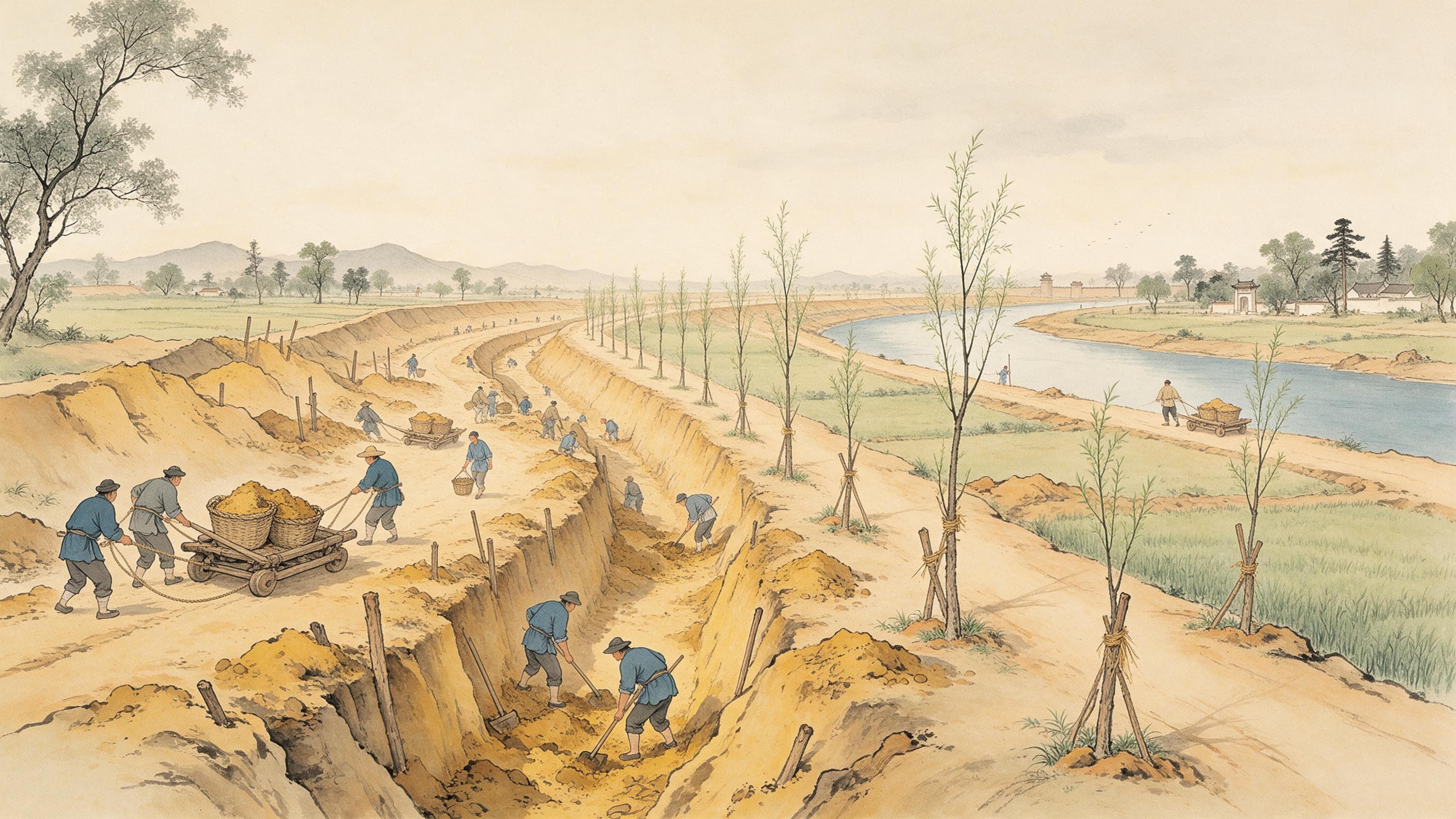
The Ledger of a Canal: How the Sui Dug the Tongji and Yongji
In 605 a million men and women from Henan were levied for the Tongji canal; four years later Hebei was levied for the Yongji. Two sources disagree fivefold on the numbers.
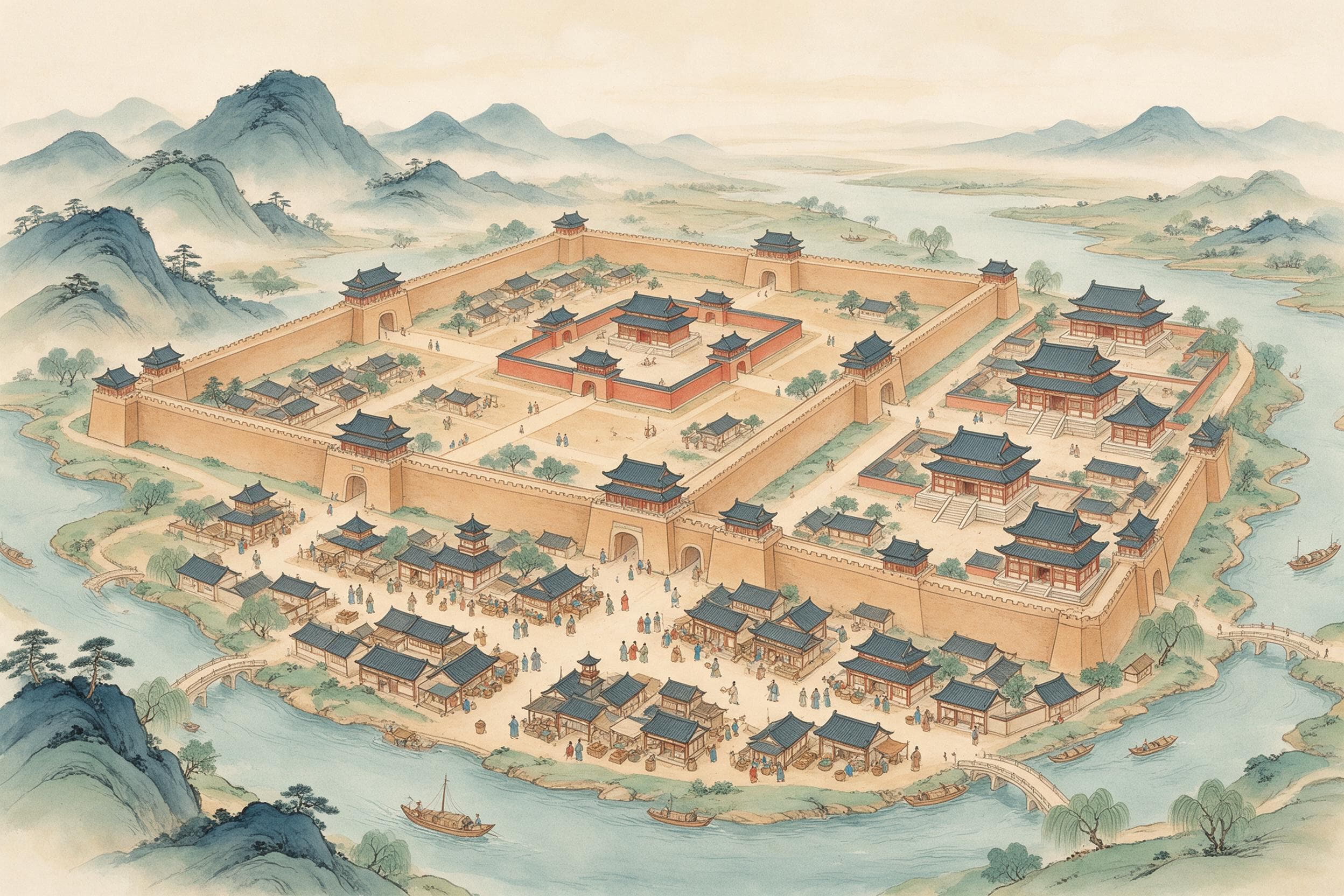
The Liao Supreme Capital: A Sun-Shaped City That Faced East
Liao's Supreme Capital is a 'sun'-shaped pair of towns, and its main axis runs east-west: the east gates are the grand ones, and the halls inside face east.
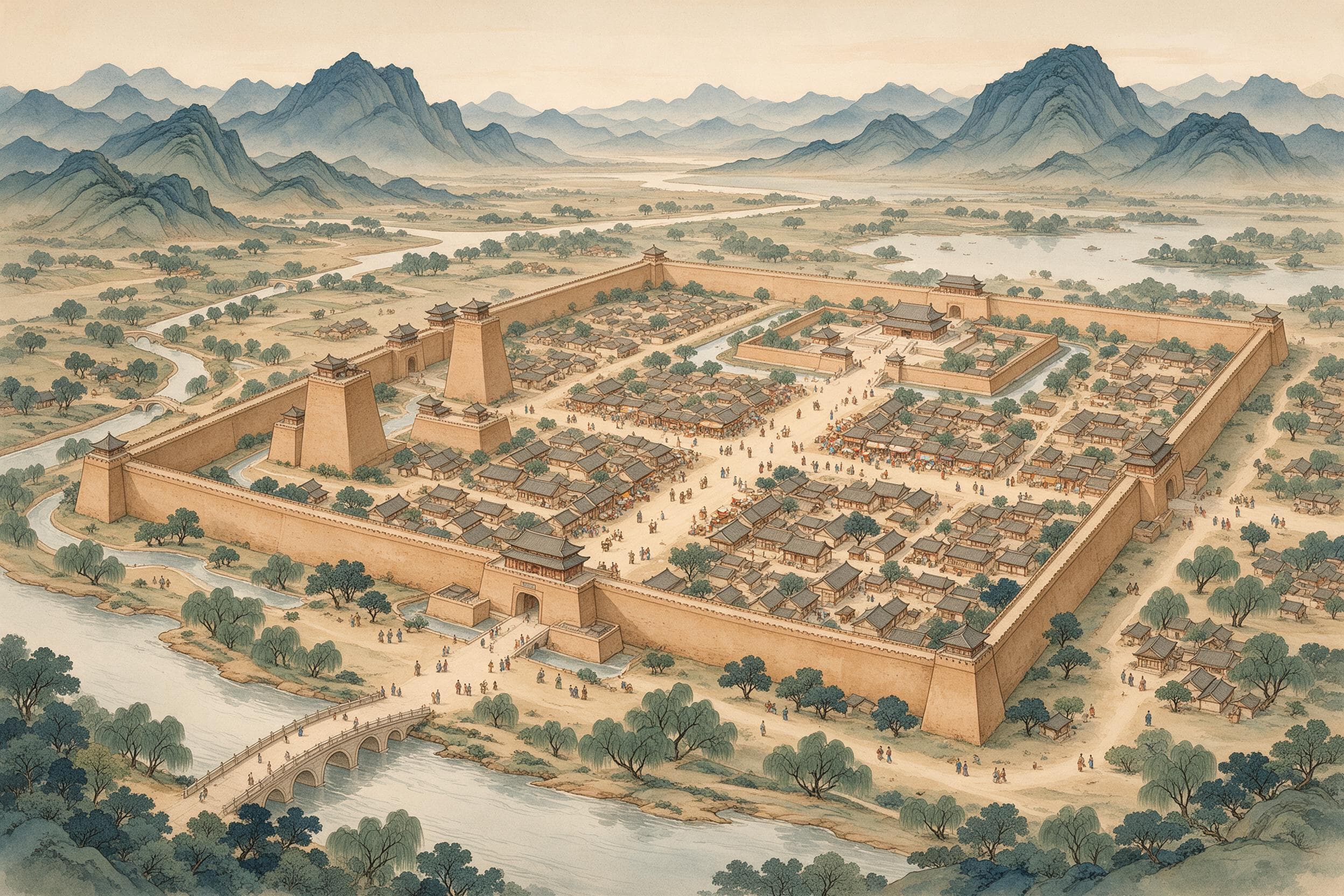
Cao Cao's Ye: One Avenue, Seven Gates, Three Towers
Ye fell in 204 and was re-laid out over the next decade: a 17-metre avenue running to the palace gate, a 13-metre cross street splitting the city, three towers on the north-west wall.
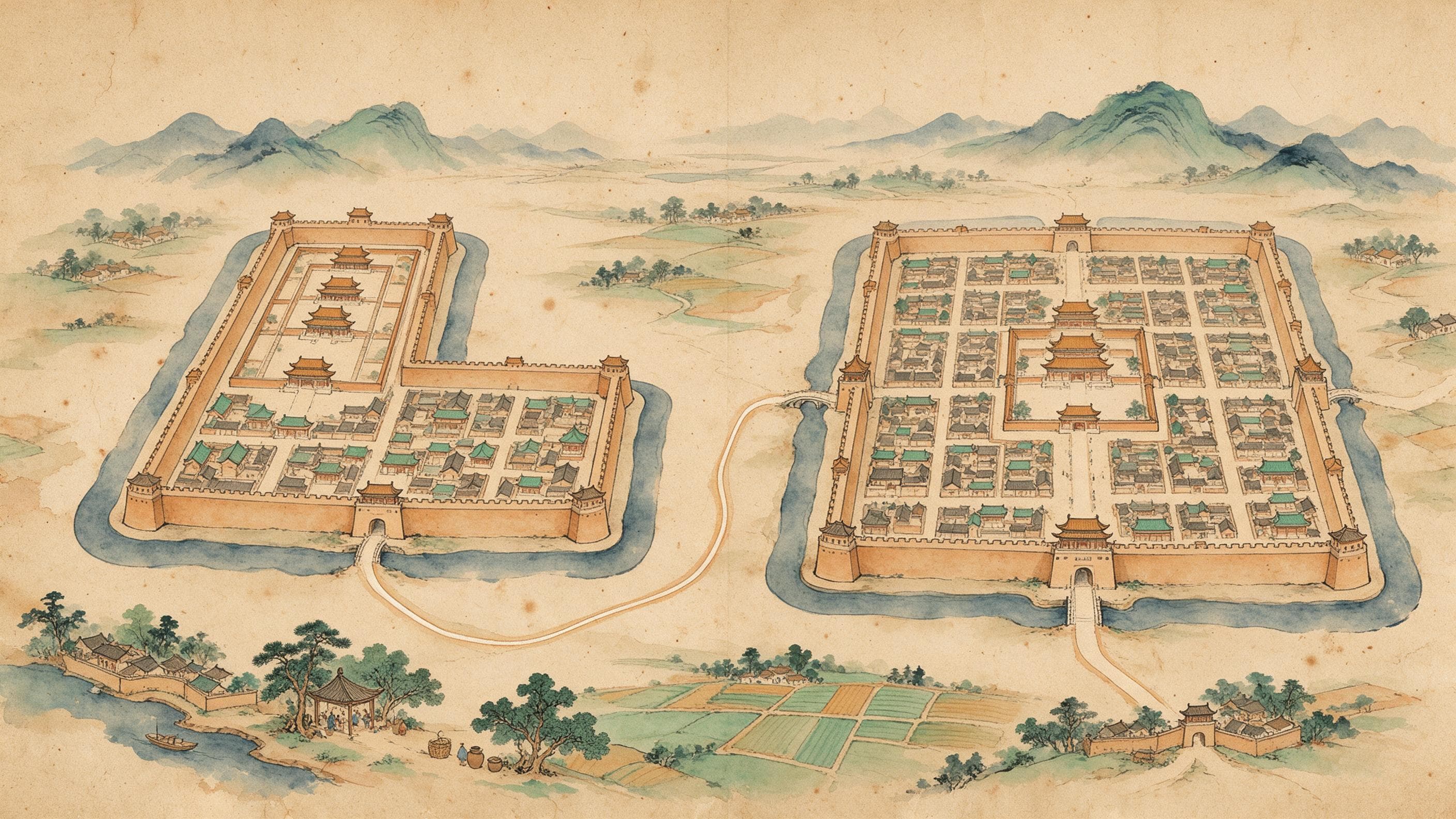
Two Capitals, Two Sets of Measurements
A stretch of wall at Acheng has a rammed-earth core and a brick skin; a thousand kilometres south stood a much larger city. The Jin built two capitals, and left two sets of numbers to compare.
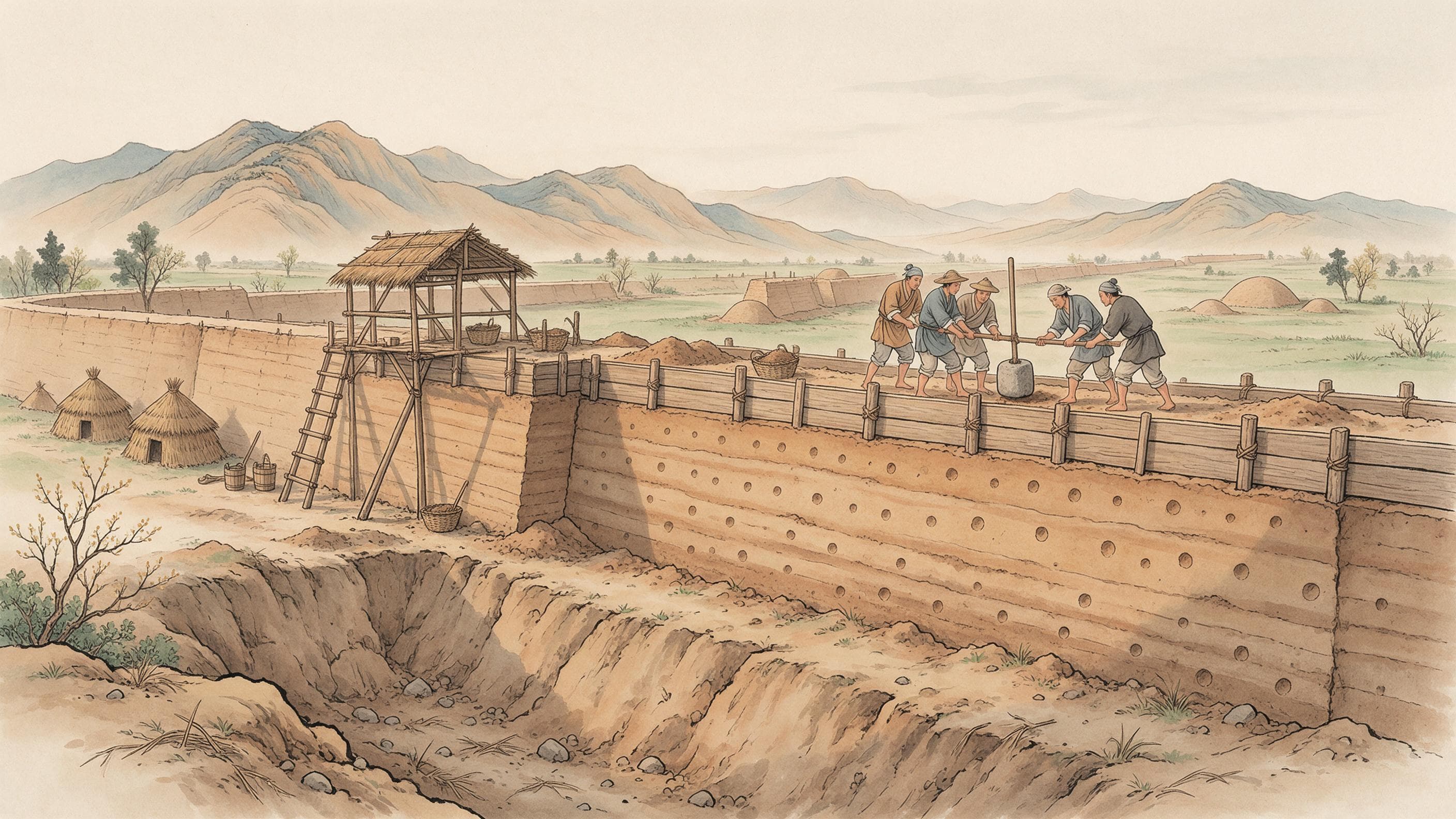
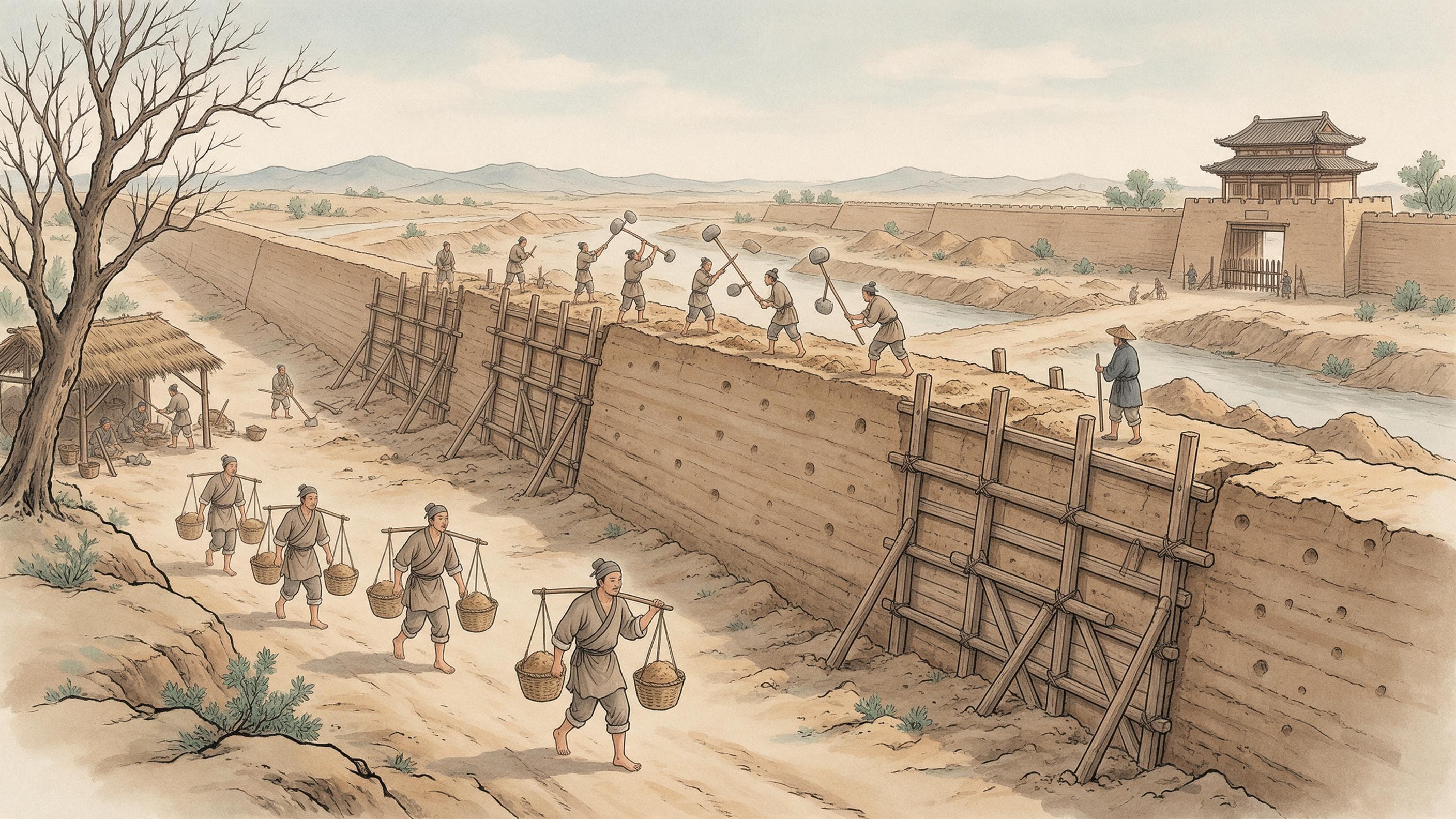
How a Rammed-Earth Wall Was Built: The Walls, Gates and Moat of Han Chang'an
146,000 people, 20,000 retainers, 145,000 more, thirty days at a time: in 190 BCE the wall of Chang'an was finished. Rammed earth, twelve gates with three passages each, one moat — text and trowel disagree.