
EVERYDAY LIFE · SHANG TO QING
Stories
Small questions open a window onto a different world.
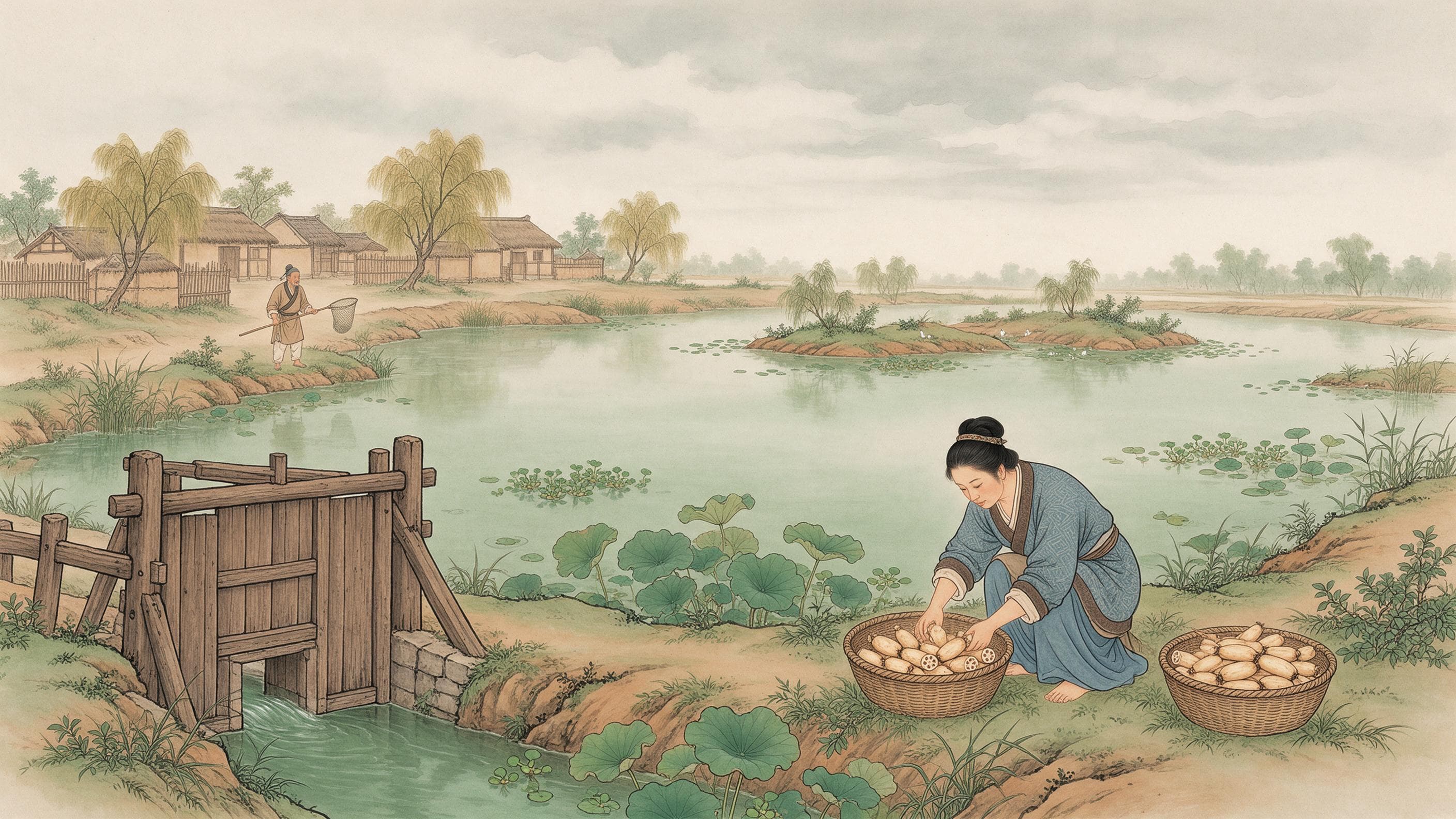
Six Mu and Nine Islands: Raising Carp in Northern Wei
A Northern Wei farming manual copies an old fish-pond recipe: six mu of water with nine islands, twenty carp in February, turtles to keep the fish, and a promise of a million and a quarter cash.
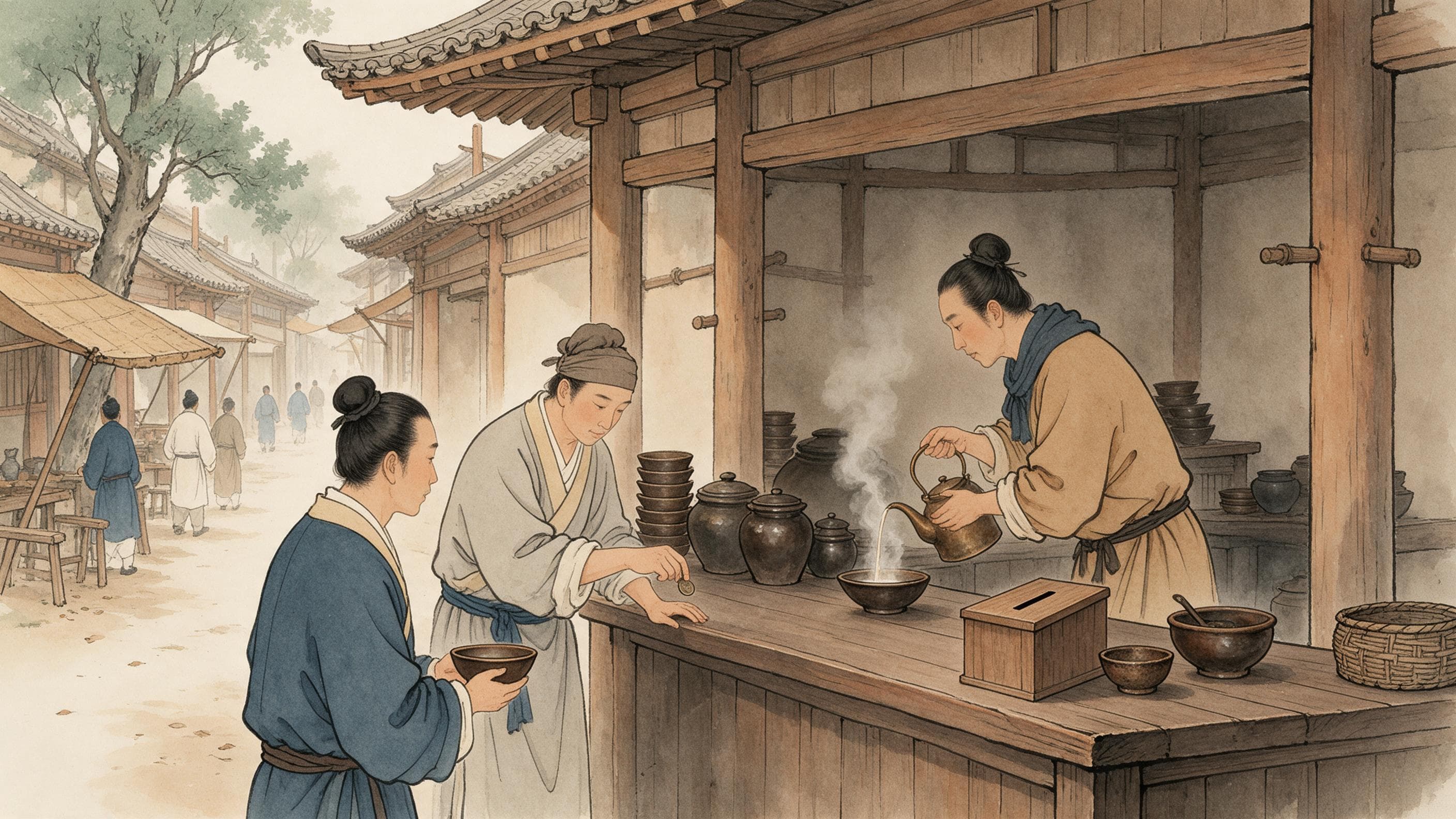
Kumiss's Slave and the Coin-in-the-Box Teahouse: Tea in Tang Cities
In Northern Wei Luoyang tea was mockingly called 'kumiss's slave'; two centuries later a Tang writer records city shops boiling tea and selling it to anyone who dropped in a coin.
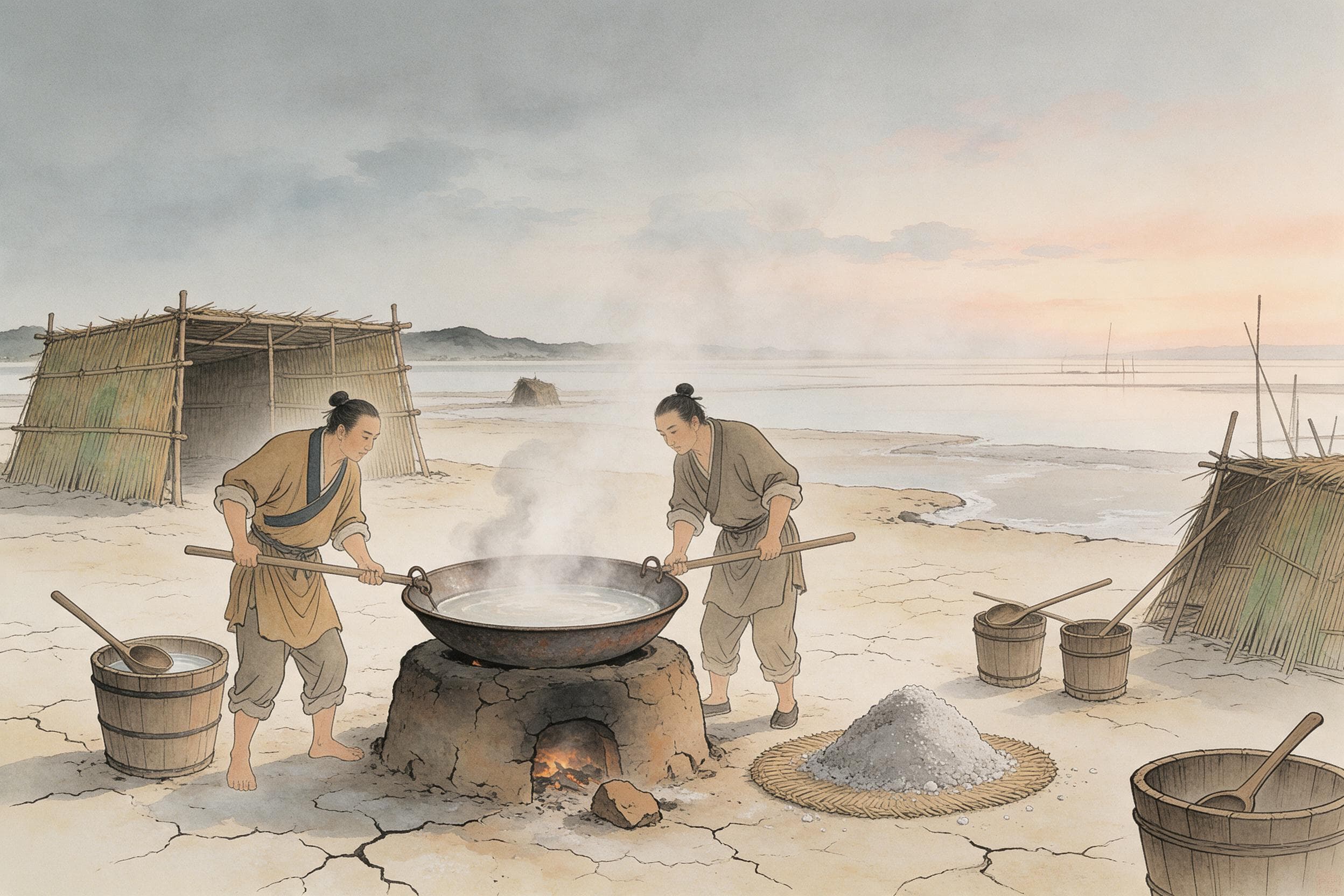
A Clamp on the Left Foot: Why the Han State Took Salt and Iron
Han salt and iron made merchants as rich as kings; under Emperor Wu the state appointed the magnates as officials, issued the boiling pans, and clamped the left foot of anyone who boiled salt privately.
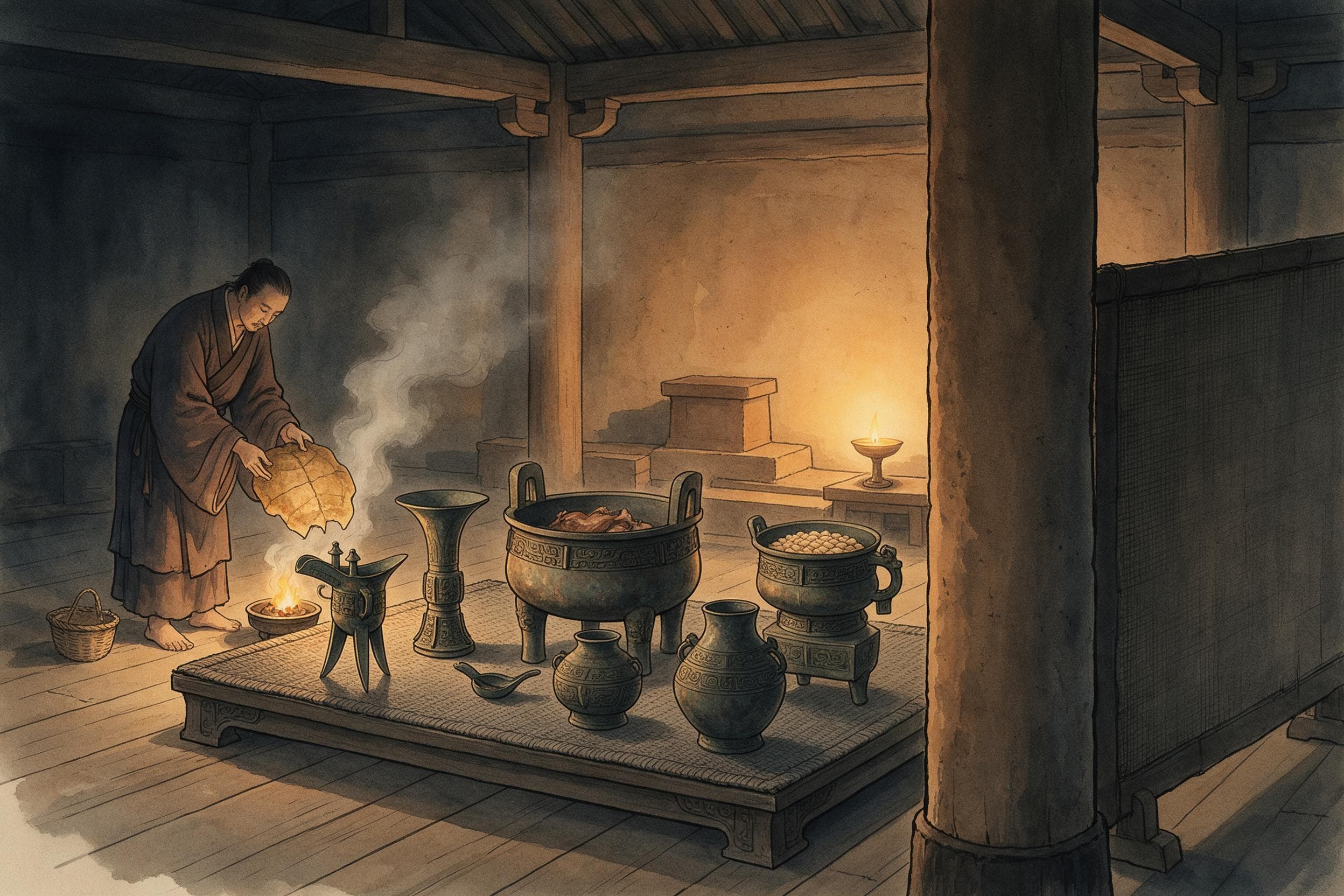
Questions on Bone: How the Shang Fed Their Ancestors
The Shang believed the dead became ancestors who could help the living, so they offered food and wine, divined the harvest on oracle bones, and buried retainers and sacrificial victims with the bronze.
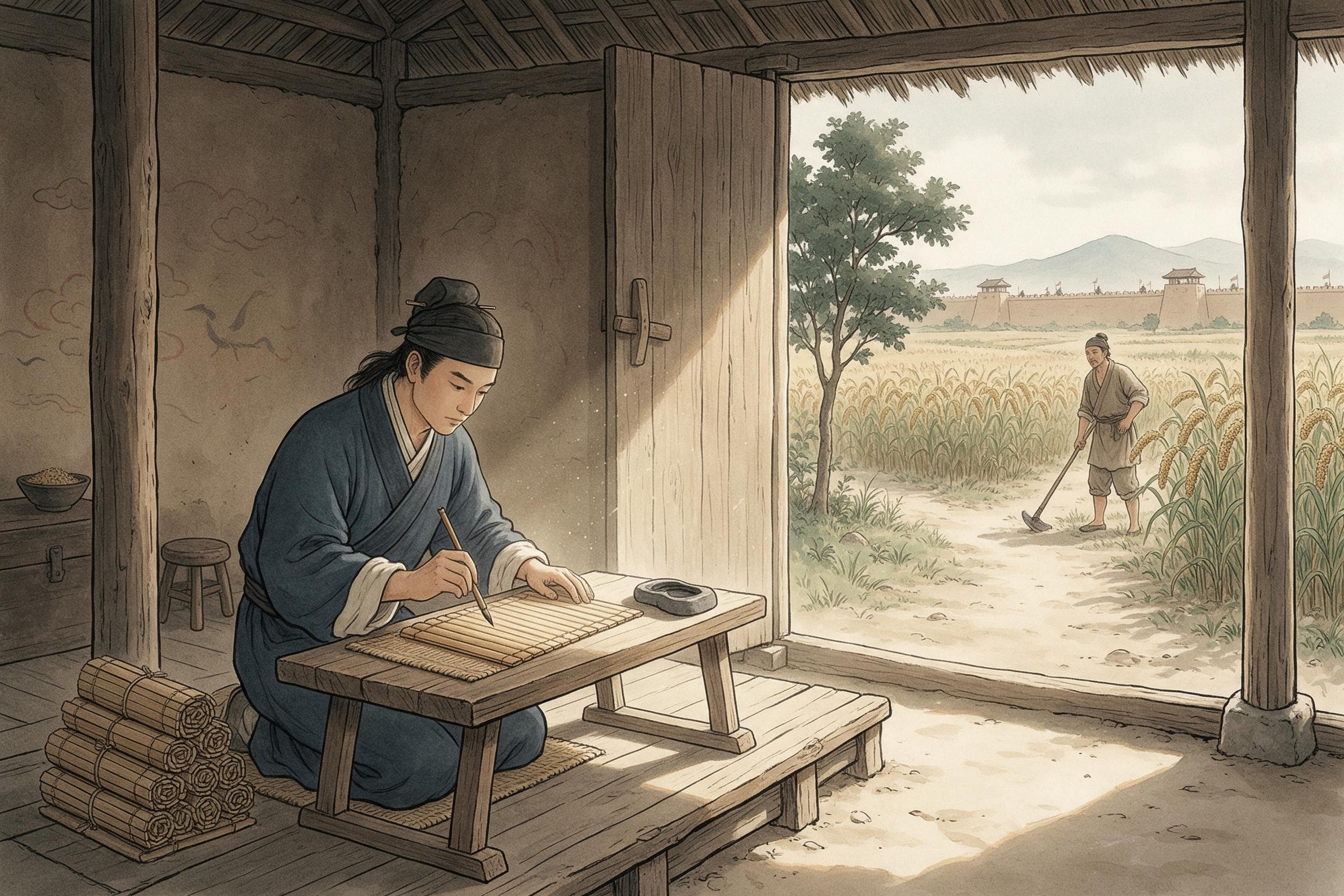
Rain Had to Be Reported: The Registered Farmer of Warring States Qin
In late Warring States Qin, statutes required rain, ripening millet, newly broken land and crop damage to be reported in writing by the qing; fodder was levied on allocated land and missed corvée fined in armour.
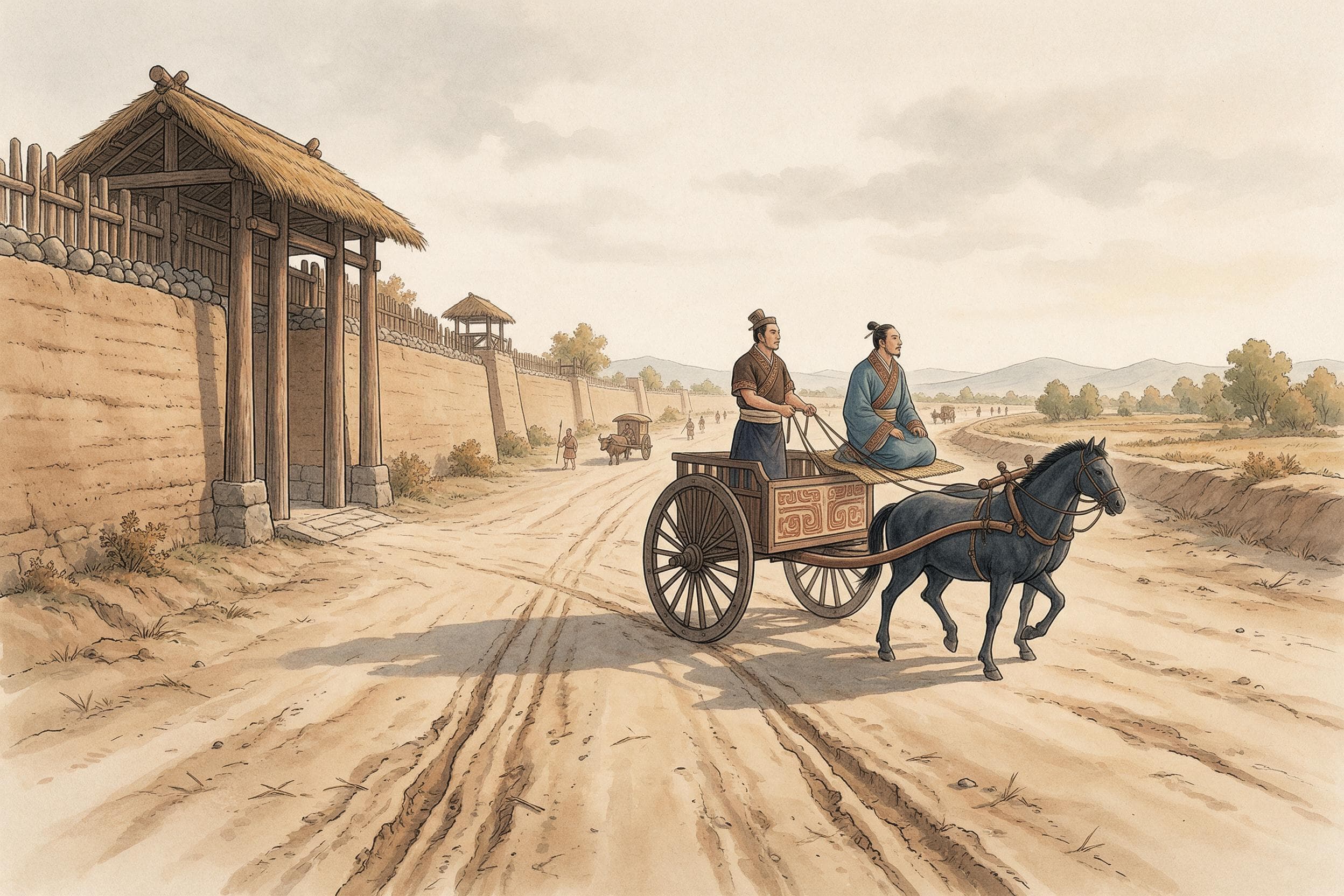
Ruts and Carriage Boxes: Roads and Chariots at Shang Yinxu
Excavators at Yinxu have traced a grid of three east-west and three north-south roads, one with wheel ruts; Shang chariots ran on one yoke, one shaft, one box, one axle and two wheels.
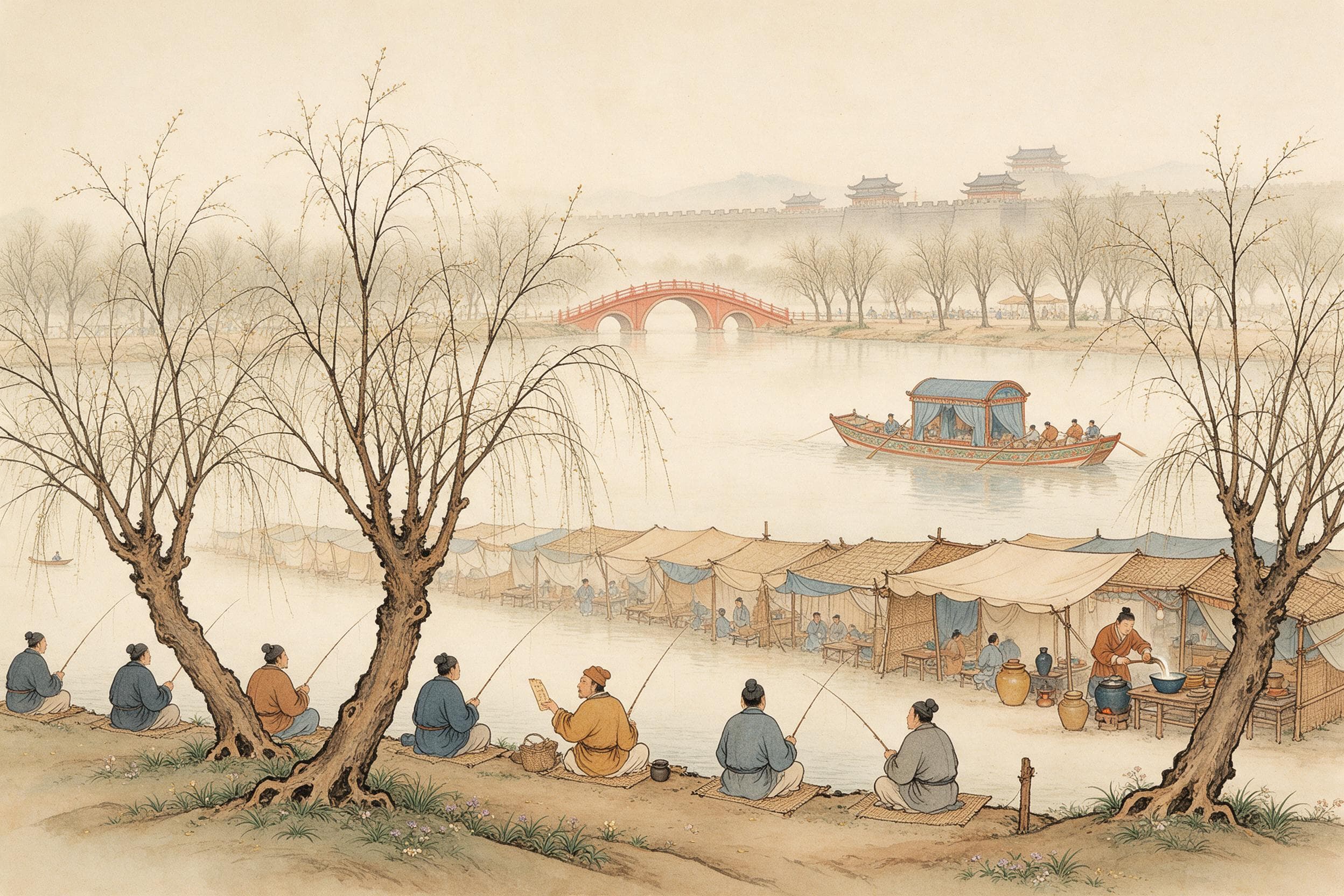
Thirty-Nine Days of Spring: The Business of a Song Outing
Kaifeng's Jinming Pool opened on the first of the third month and shut on the eighth of the fourth. Waterside booths were rented, fish sold back at double price, boats priced by size.
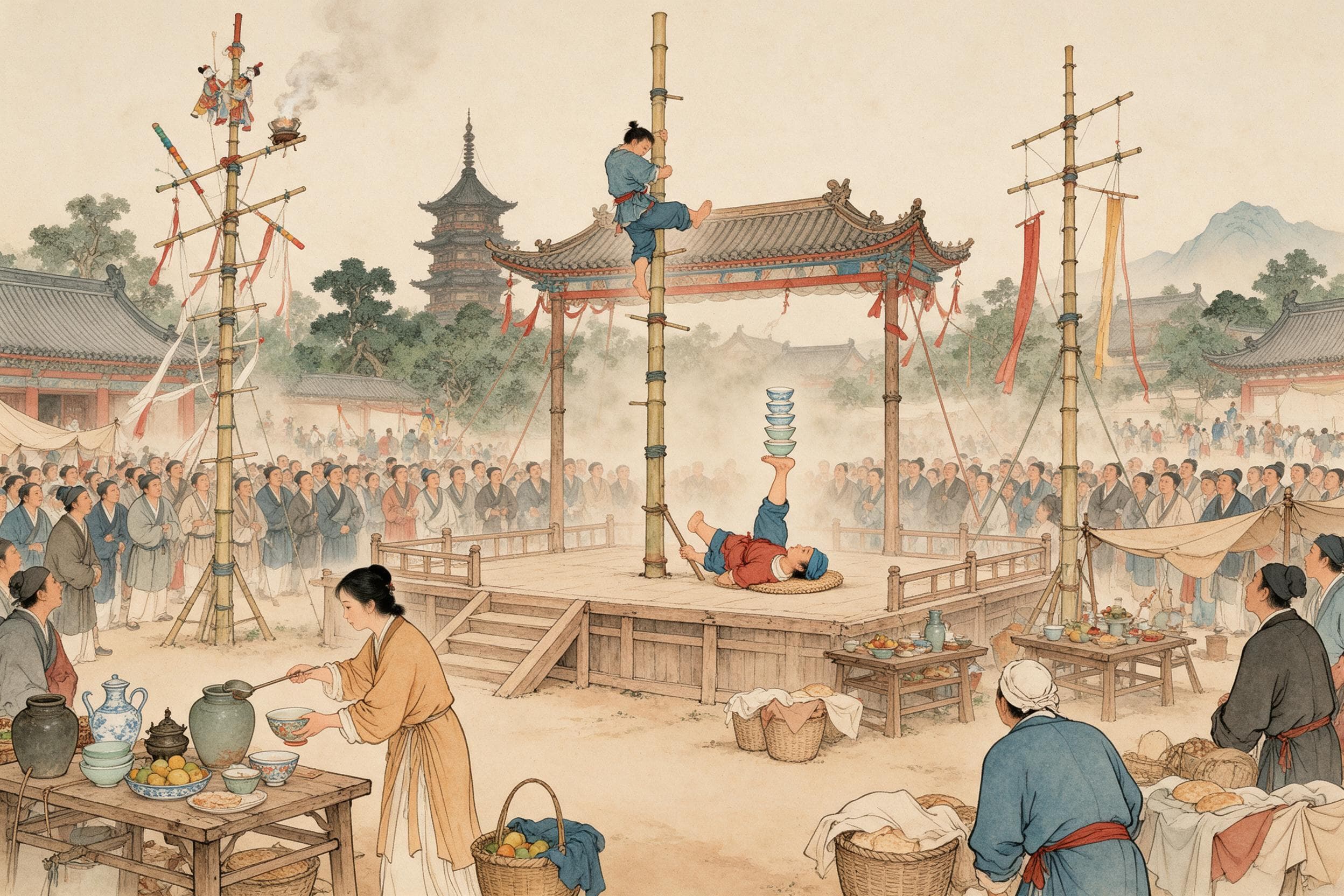
Twenty-Two Acts on a Temple Stage: Acrobats and Street Troupes in Song China
On the twenty-fourth of the sixth month the temple stage ran twenty-two acts from dawn until dark. Two banner poles belonged to two rival government workshops, and the pole-climbers were summoned to amnesties.
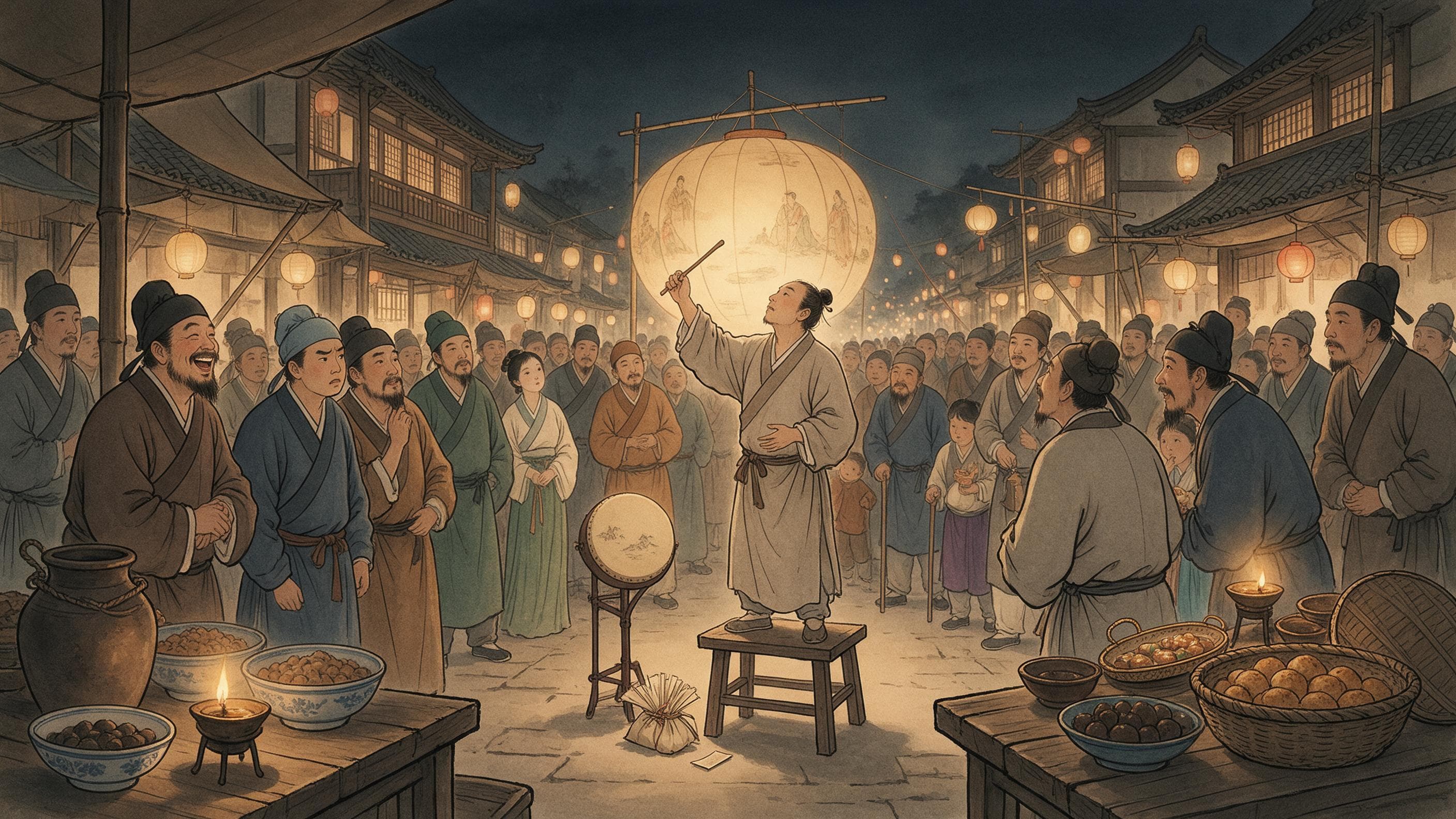
Riddle Sellers: The Guessing Trade in Song Cities
In Song cities riddle-guessing was a paid street act: a drummer drew the crowd, a seller set verbal traps, and lanterns carried hidden lines for passers-by to puzzle over.