What a lord receives can be put in one sentence with a number in it: 'In the first year of King Kao Lie, Huang Xie was made chancellor, enfeoffed as Lord Chunshen, and granted the land of Huaibei, twelve counties' (賜淮北地十二縣). Office, title, land, county count — all in one line. It is the Shiji's sentence, and the only place where the number twelve appears.
Twelve Counties
The Shiji does not say which twelve counties, how many households they held, what revenue they paid, or what officers were appointed. It says only 'granted': the giver is the king of Chu, the receiver Huang Xie, the place Huaibei. The lord's style is described elsewhere: he kept 'more than three thousand retainers', and his senior retainers 'all wore shoes with pearls when they received the envoy of Zhao', so that the envoy was deeply ashamed. Those are household guests, not the staff of a fief.
The Zhan Guo Ce, in the fourth chapter of the Chu sections, also has a passage on his fief, spoken by Yu Qing: 'Now the king of Chu is advanced in years, and your fief cannot be settled too early' (君之封地不可不早定也). There is not a single number in it: no county count, no acreage, no revenue. So the twelve counties must be marked 'according to the Shiji', and cannot be presented as agreed by both books. Other Chunshen passages in the same chapter — a guest on Sunzi, Wei Jia on generals, Han Ming at the gate — argue about men and posts, not about land.
Handed Back, and Asked For Again
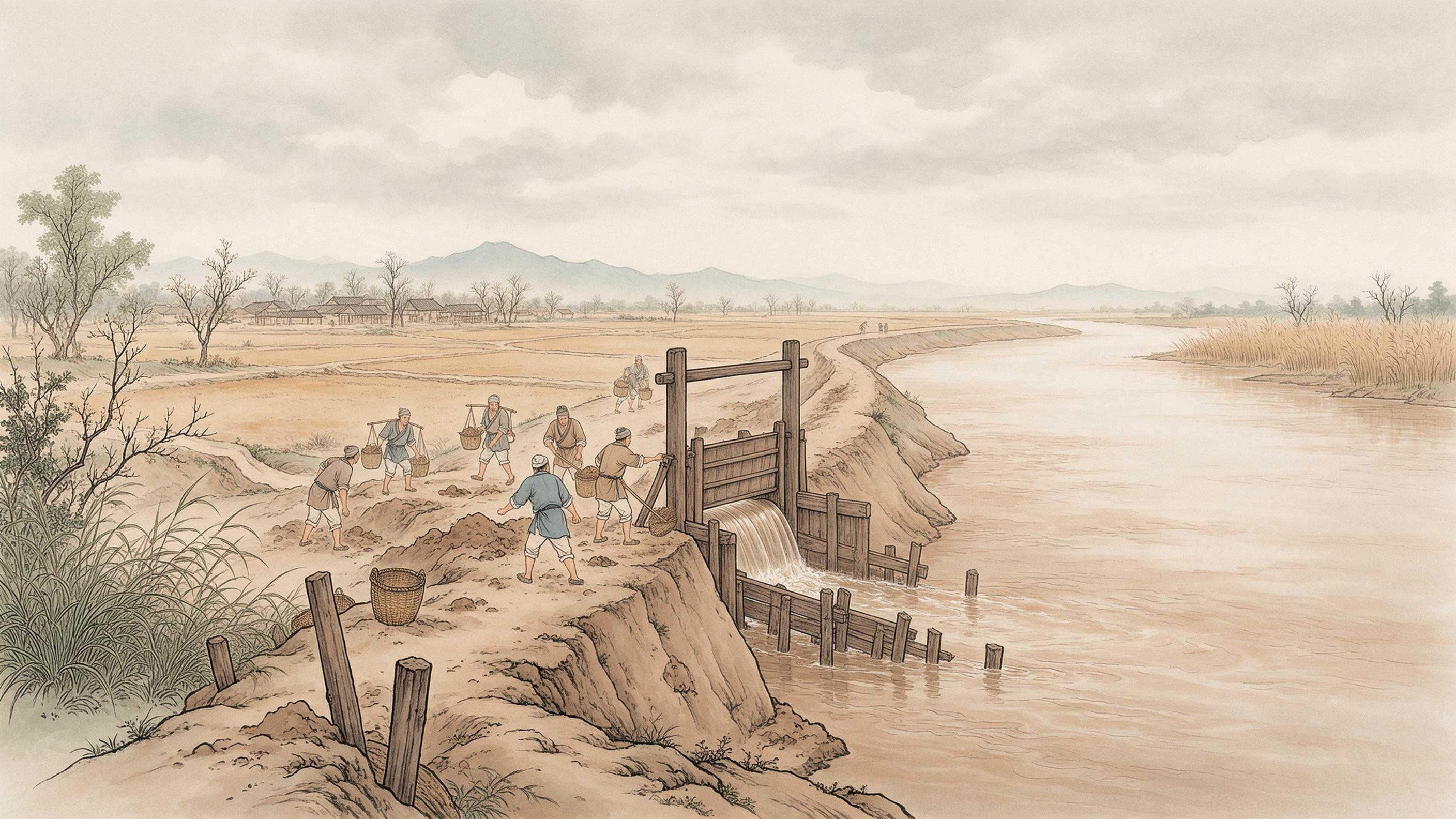
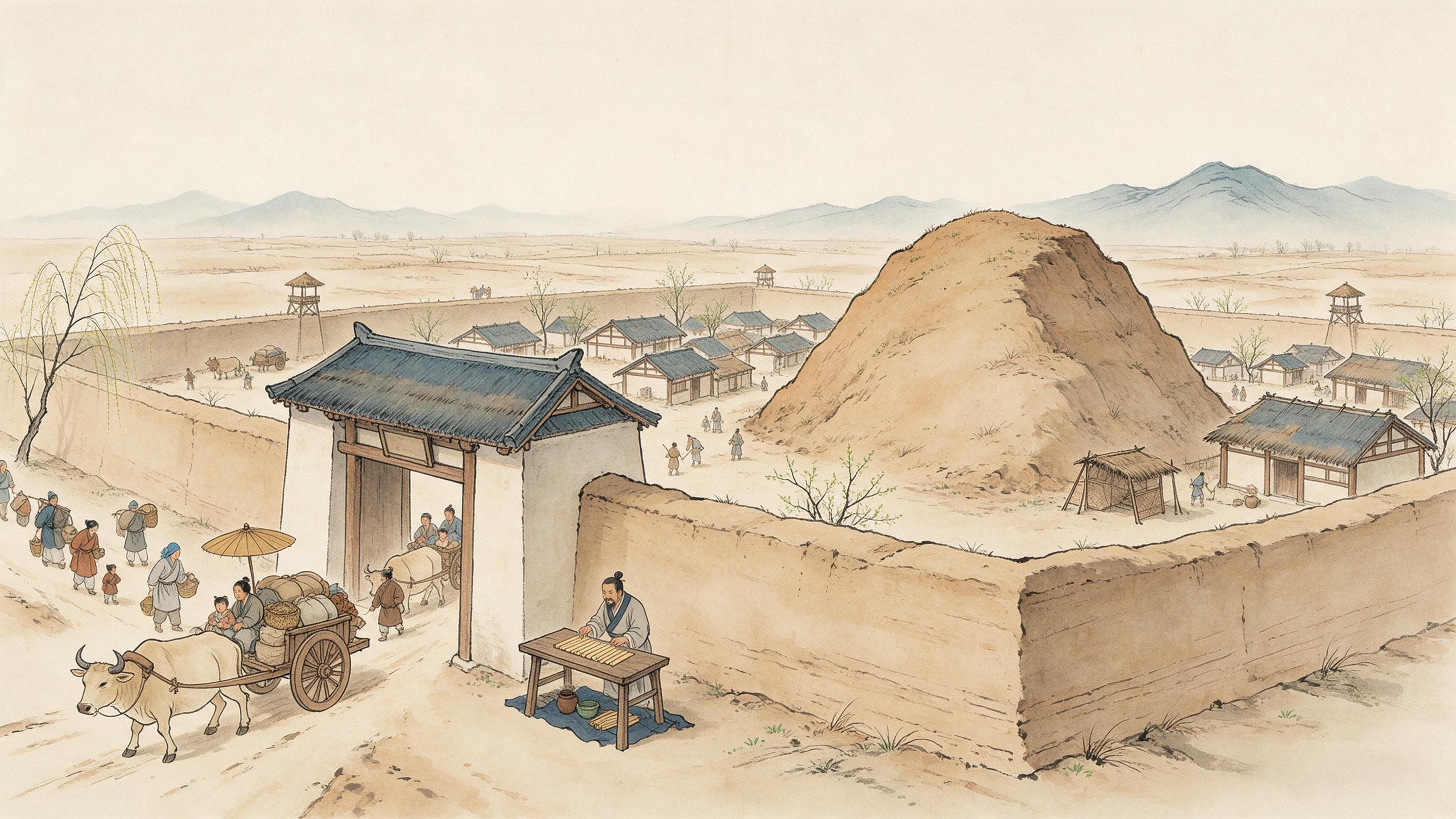
Fifteen years later the twelve counties went back. The Shiji: 'After fifteen years Huang Xie said to the king of Chu: "The Huaibei land borders Qi and its business is urgent; it would be convenient to make it a commandery." He thereupon handed back all twelve Huaibei counties and asked for a fief in Jiangdong; King Kao Lie consented' (因并獻淮北十二縣。請封於江東). The Shiji gives no reason for the request beyond the border, and does not say whether the new fief was larger or smaller than the old.
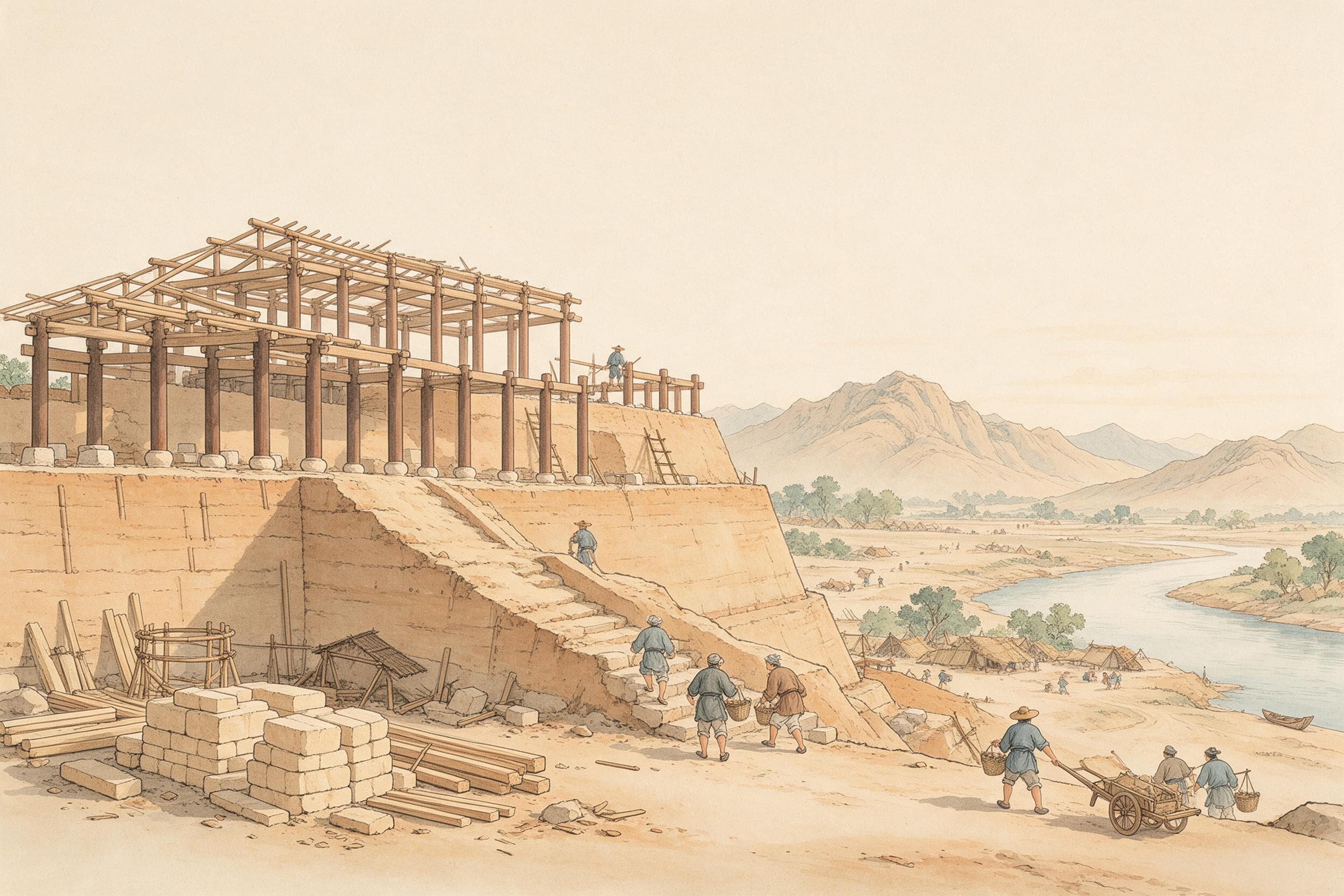
Only then the wall: 'Lord Chunshen then walled the old ruins of Wu and made it his own capital' (因城故吳墟,以自為都邑). The order is worth noticing: first the old fief is handed back on the grounds that the border is urgent, then a new fief is asked for in Jiangdong, then a capital is built on old ruins. The first land is 'handed back', the second 'asked for'; neither verb is 'taken'.
Whose Land It Was
What can be read from those two sentences? That he could hand the counties back, and ask to make them a commandery, means the twelve counties remained Chu's counties: what the lord received was the income and the capital city, not sovereignty over the land; the king could give it, take it back, and turn it into a commandery again. This is inference from the words 'hand back' and 'make it a commandery'; neither page gives a definition of the institution, and later fief systems must not be read backwards into it. The same chapter also has a guest warning him against lending Sunzi 'the weight of a hundred li' (百里勢), one more sign that land was something a lord could lend out and have taken back.
Yu Qing in the Zhan Guo Ce puts it bluntly: 'To plan a fief for you, nothing is better than distance from Chu. Duke Xiao of Qin enfeoffed Lord Shang; when Duke Xiao died, he could not escape being killed. King Hui of Qin enfeoffed Ranzi; when King Hui died, the king took it back. Gongsun Yang was a man of merit, Ranzi a kinsman by marriage, and yet they could not escape dispossession and death — because the fief was close. Tai Gong Wang was enfeoffed in Qi and the Duke of Shao in Yan, because those were far from the royal house' (封近故也). He advises Chunshen to march north, win Zhao by deed, tread down Yan and so 'settle your own fief' while the world is in disorder. A fief's safety hung on the man who had granted it.
The Lord's Days and His End
The Shiji makes the lord's days concrete: more than three thousand retainers, the senior ones in pearl-decorated shoes; in his twenty-second year as chancellor the lords joined forces to attack Qin westward, with the king of Chu as leader of the alliance and Chunshen in charge; they 'reached the Hangu pass, Qin came out and attacked, and the armies of the lords all broke and fled'. The king blamed him, and he grew 'ever more distant'. When Chu moved its capital from Chen to Shouchun, Chunshen 'went from there to his fief at Wu and carried on the business of chancellor' — the man in his fief, still running the chancellery.
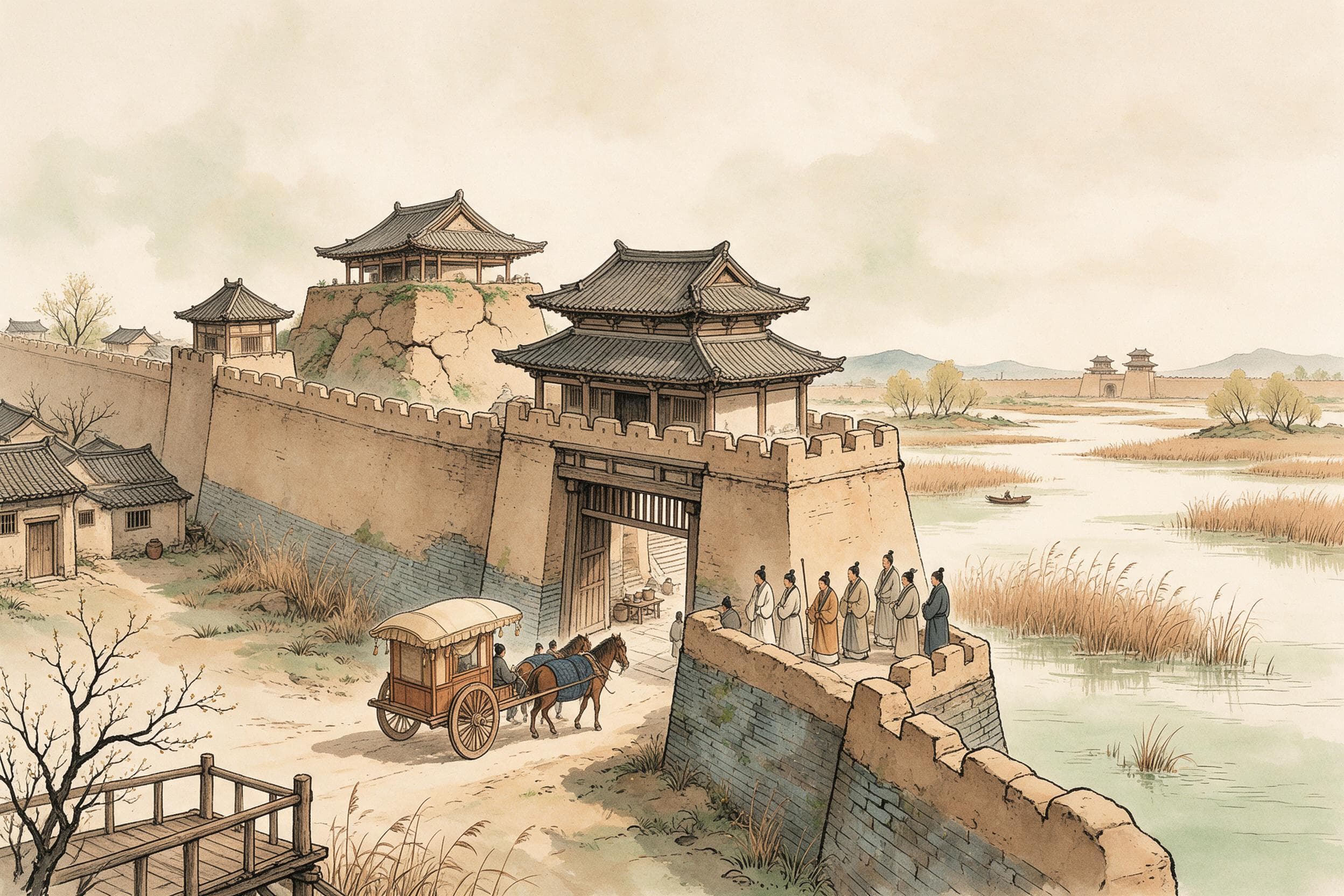
The end came at a gate. When King Kao Lie died, Li Yuan 'placed assassins inside the Ji gate'; Lord Chunshen entered, was stabbed, 'his head cut off and thrown outside the gate', and then 'the whole house of Lord Chunshen was wiped out'. The fief ended with the man. Sima Qian later saw the city: 'I went to Chu and saw the old city of Lord Chunshen; its palaces and chambers were magnificent indeed!' The walls and halls remained; the house was gone. The magnificence of the city is given as Sima Qian's own eyesight, not as a measure of the fief. The biography ends with the destroyed house, not with what became of the fief.
What the Two Pages Do Not Have
Neither page gives the fief's acreage, its distances, its households or its revenue, nor the staff of a lord's establishment, nor any definition of 'the fief system'; the twelve counties appear only in the Shiji and cannot be used as two-book confirmation. One sentence of comparison with the site's piece on the thirty-six commanderies is possible: the same kind of land could be made a commandery by Chu, while Qin governed through commanderies and counties — but this article is about one man's piece of ground, not a verdict on enfeoffment versus commanderies. Nor does it use the literary label 'the four lords of the Warring States': the page merely lists the lords of Mengchang, Pingyuan and Xinling beside Chunshen, without that name. No figure, no map, no roster. What remains is a dozen sentences in two books, enough to follow one fief through one life.
Related reading:Eight Hundred Kilos of Bronze: How Shang Status Was Cast · Two Kinds of Granary: The Imperial Store and the Ever-Normal Barn · The Hangu Pass: One Gate in Three Kinds of Text
Sources & further reading
- 《史记》卷七十八·春申君列传(西汉;维基文库本,未与点校本复核) — The fief in one paragraph: 'In the first year of King Kao Lie, Huang Xie was made chancellor, enfeoffed as Lord Chunshen, and granted the land of Huaibei, twelve counties' (賜淮北地十二縣). Fifteen years later: 'Huang Xie said to the king of Chu: "The Huaibei land borders Qi and its business is urgent; it would be convenient to make it a commandery." He thereupon handed back all twelve Huaibei counties and asked for a fief in Jiangdong; King Kao Lie consented. Lord Chunshen then walled the old ruins of Wu and made it his own capital' (因并獻淮北十二縣。請封於江東……因城故吳墟,以自為都邑). Later, after the move of the Chu capital, 'Lord Chunshen went from there to his fief at Wu and carried on the business of chancellor' (就封於吳,行相事). Sima Qian's own comment: 'I went to Chu and saw the old city of Lord Chunshen; its palaces and chambers were magnificent indeed!' (吾適楚,觀春申君故城,宮室盛矣哉). The end: Li Yuan's assassins in the gate, the head thrown outside it, and 'the whole house of Lord Chunshen was wiped out' (盡滅春申君之家). The number twelve appears only here.
- 《战国策》卷十七·楚策四(汉高诱注、宋姚宏续注;四库全书本,维基文库本,未与点校本复核) — The chapter's counsel on fiefs, with no number anywhere: 'Yu Qing said to Lord Chunshen: "…the king of Chu is advanced in years, and your fief cannot be settled too early. To plan a fief for you, nothing is better than distance from Chu. Duke Xiao of Qin enfeoffed Lord Shang; when Duke Xiao died, he could not escape being killed. King Hui of Qin enfeoffed Ranzi; when King Hui died, the king took it back. Gongsun Yang was a man of merit, Ranzi a kinsman by marriage, and yet they could not escape dispossession and death — because the fief was close. Tai Gong Wang was enfeoffed in Qi and Duke of Shao Shi in Yan, because those were far from the royal house. Now Yan's crime is great and Zhao's anger deep, so you had best march north to win Zhao by deed and tread down rebellious Yan to settle your own fief; this is the one moment in a hundred generations"' (為主君慮封者,莫如遠楚……封近故也). The chapter also carries other Chunshen anecdotes (a guest on Sunzi, Wei Jia on generals, Han Ming at the gate), but no county count, no acreage, no revenue.