
Dynasties
Explore life in Zhou

Daily Life
Food, homes & daily routines
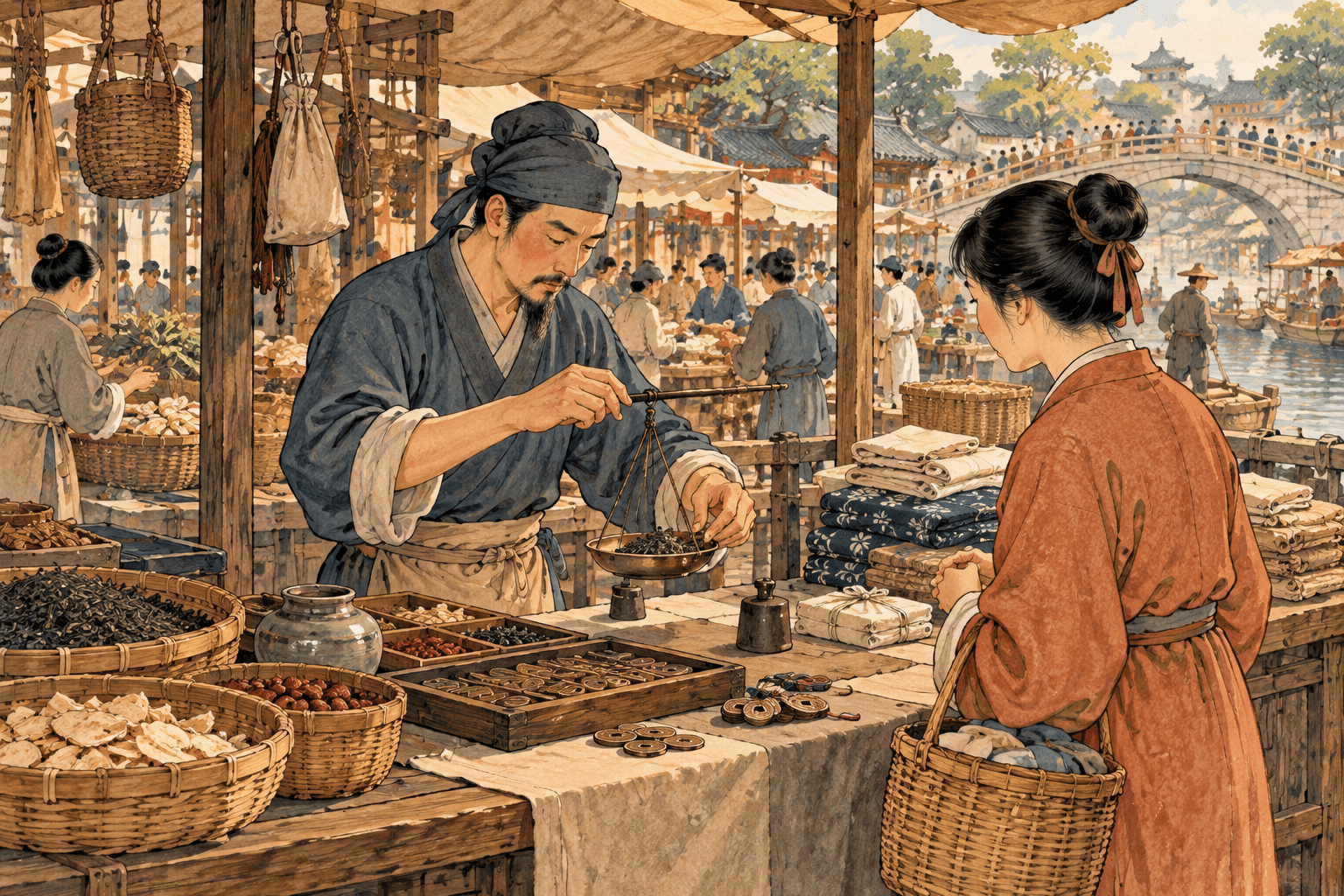
Money & Society
Work, trade & social life

Cities & Technology
Markets, travel & inventions
AI illustration · interpretive reconstruction
Stories
Browse all stories →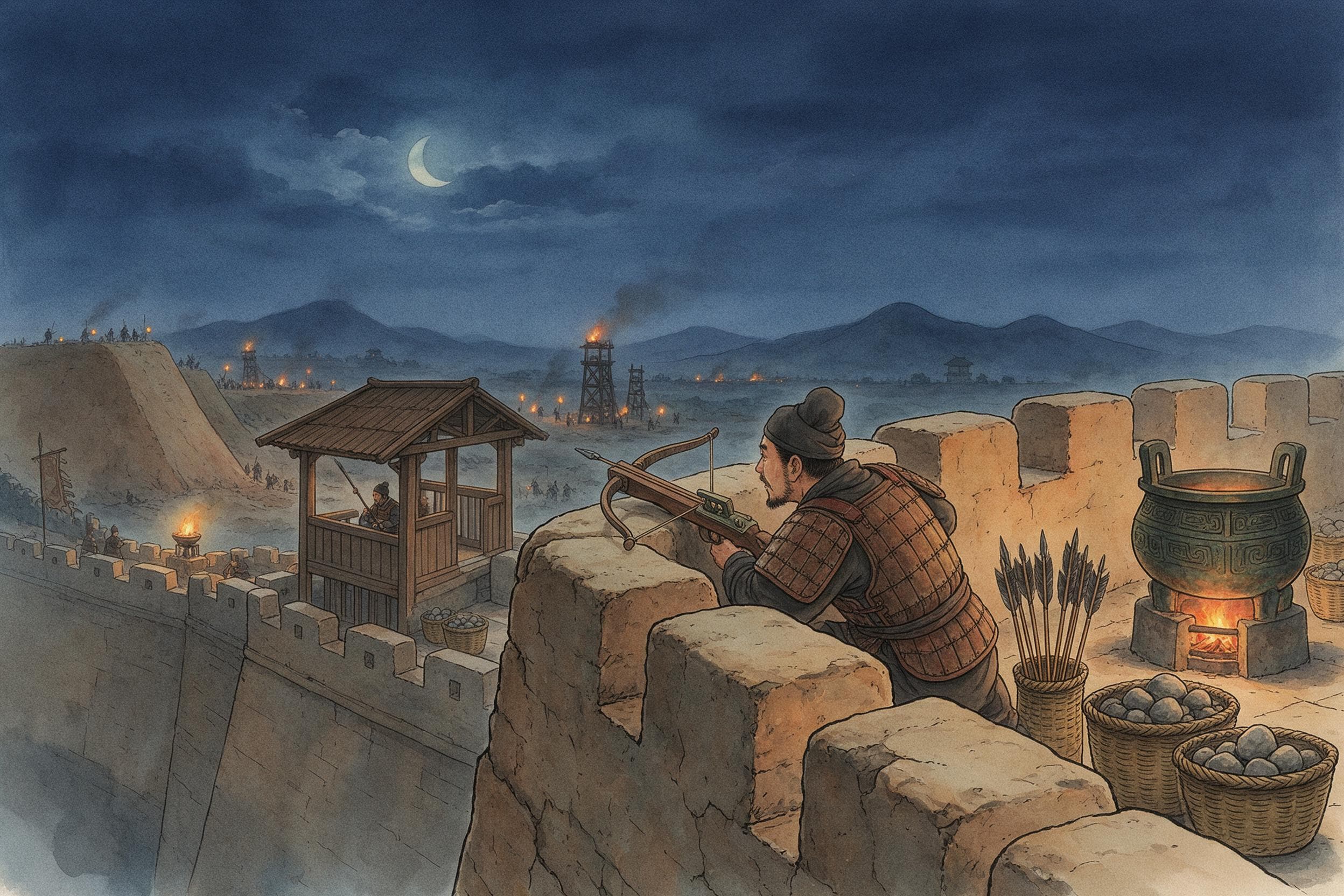
One Crossbow, Fifty Paces of Wall: The Working Life of a Warring States Siege
A Qin crossbow trigger like those from the terracotta pits; a Mozi manual that assigns men, stones, water and torches to every fifty paces of wall — instructions for holding a city, not battle reports.
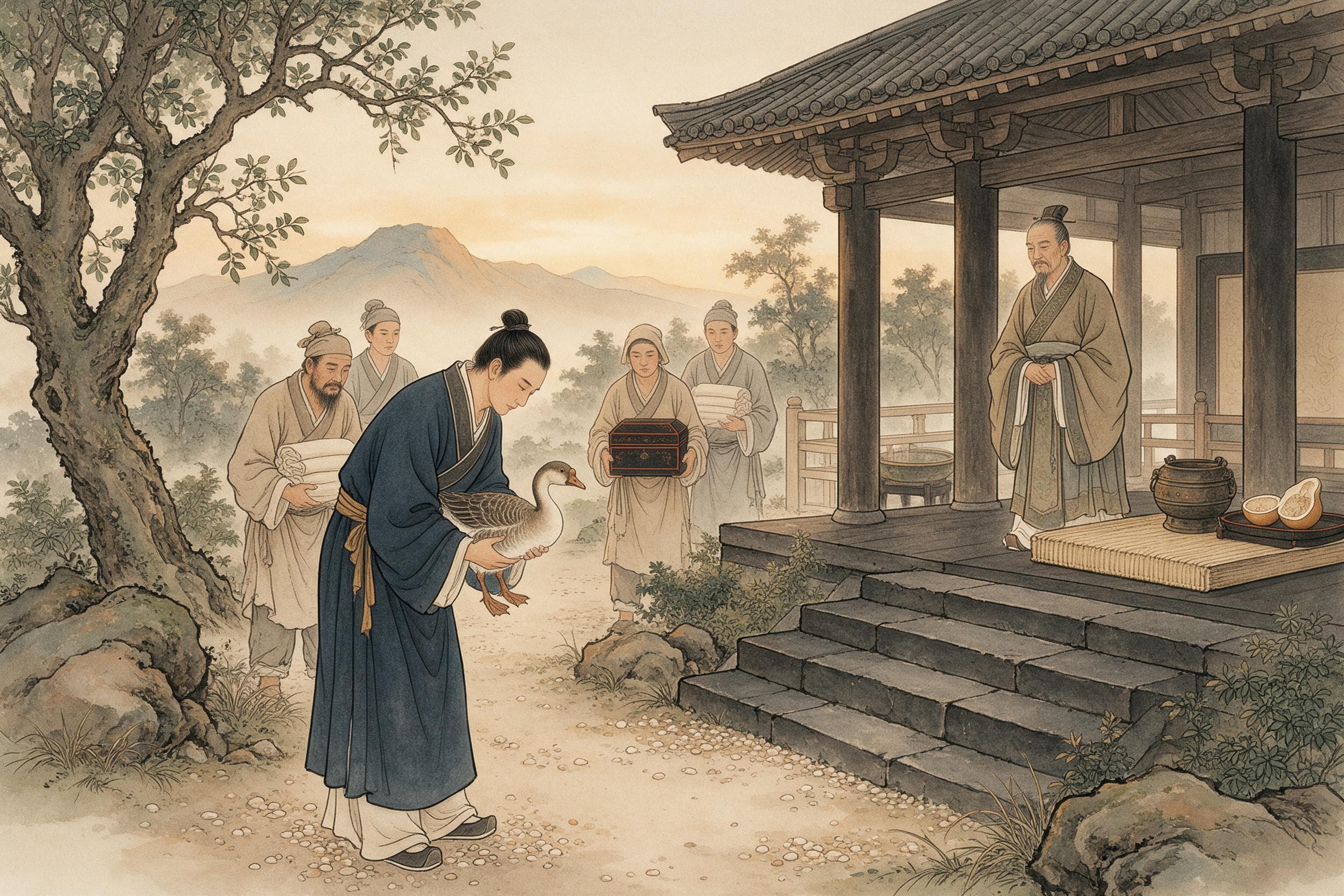
The Goose and the Gourd: Marriage Rules and Real Marriages in the Spring and Autumn
The ritual books set out six stages, a go-between, a gift and a ban on same-surname marriage; the Zuo Zhuan records political unions, accompanying women and one duke who took his son's bride.
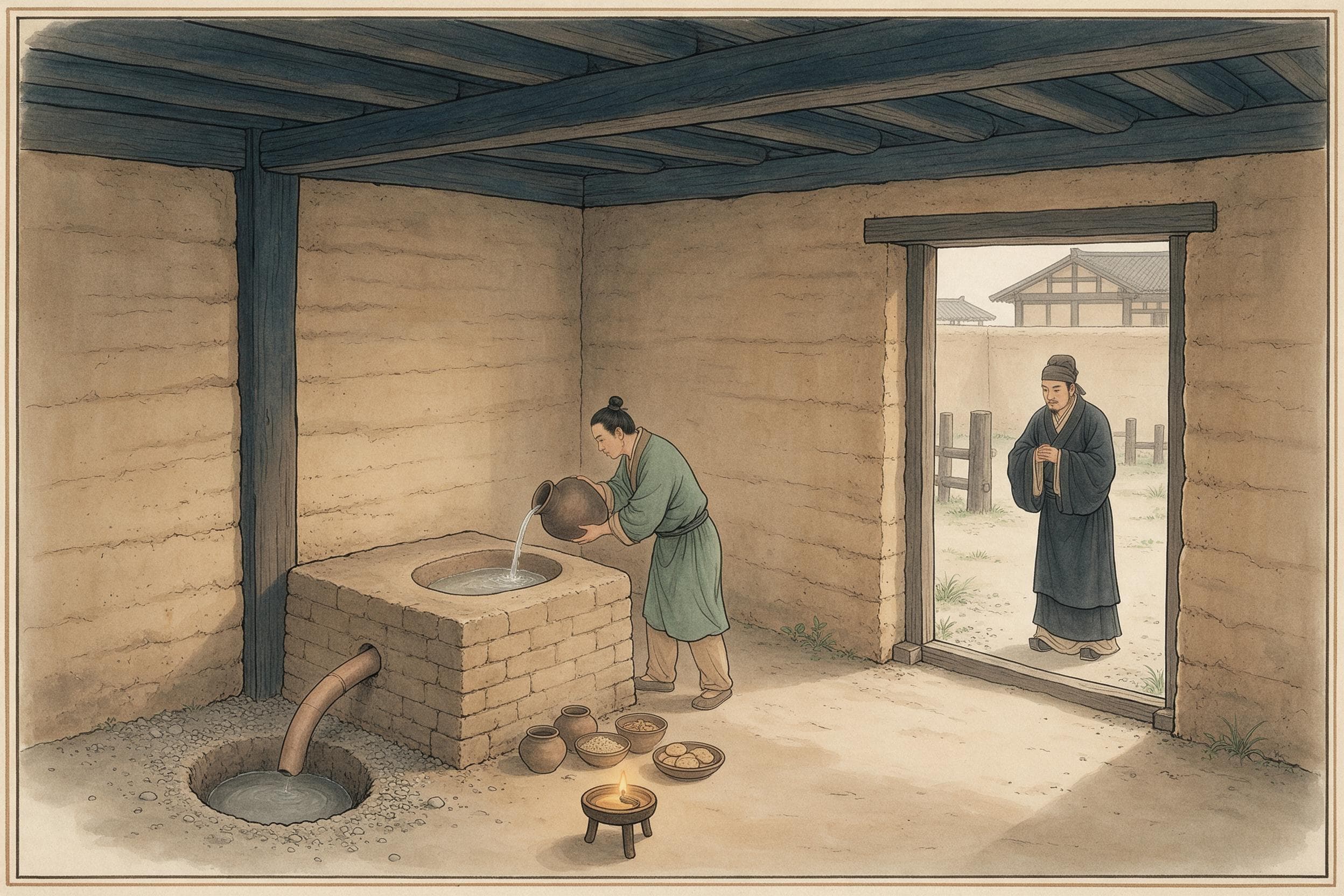
How People Went to the Toilet in Warring States China
In 581 BCE a Duke of Jin fell into a privy and died. Two centuries later a Qin palace had an indoor toilet with a bent pipe and servants pouring water — the first flush toilet found in China.
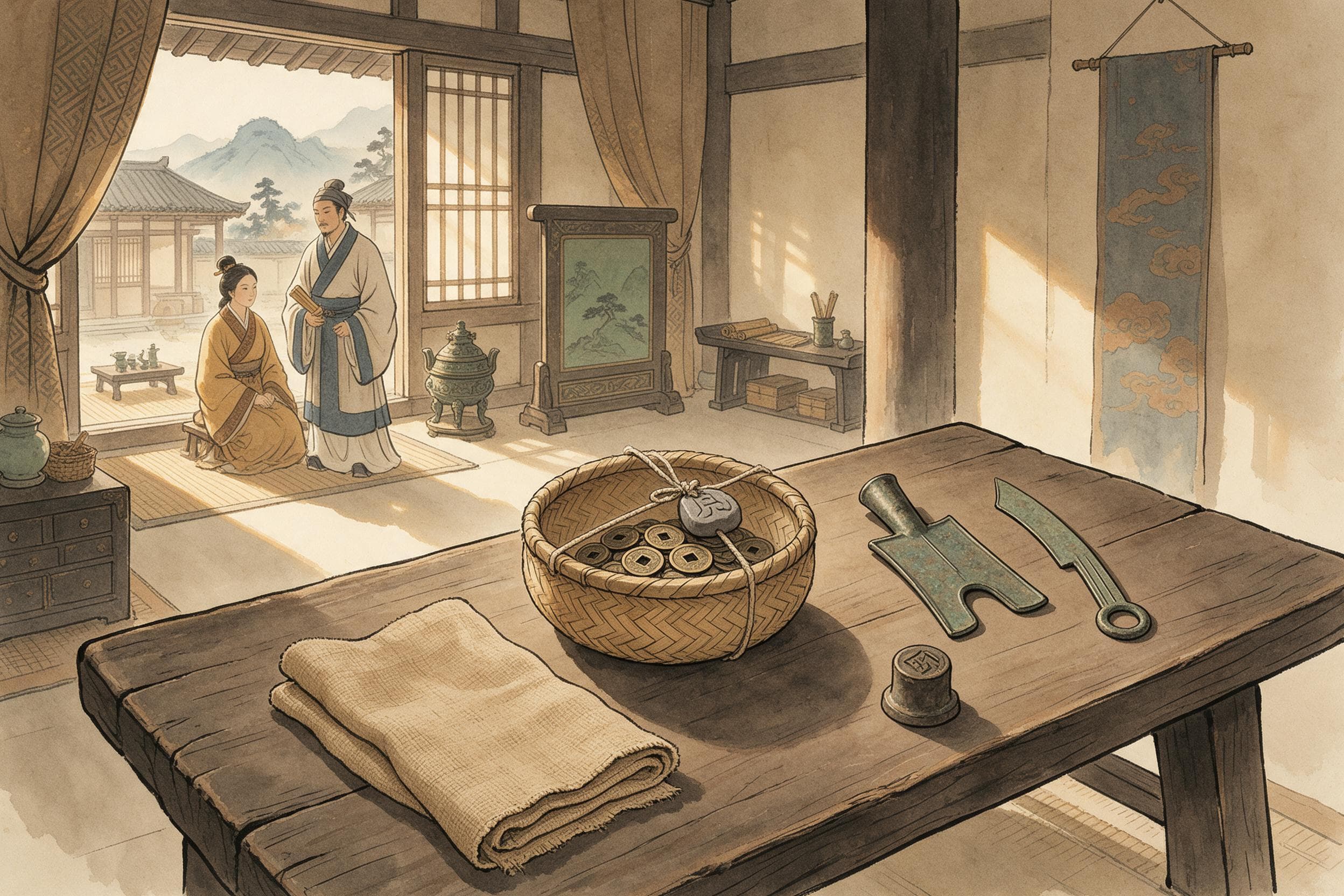
Spade, Knife, Ring: What Money Looked Like in the Warring States
Warring States coins were cast in the shapes of tools; a Qin statute adds the rules — cloth of legal size, eleven coins to the bolt, no refusing bad coin, a thousand coins sealed in a basket.
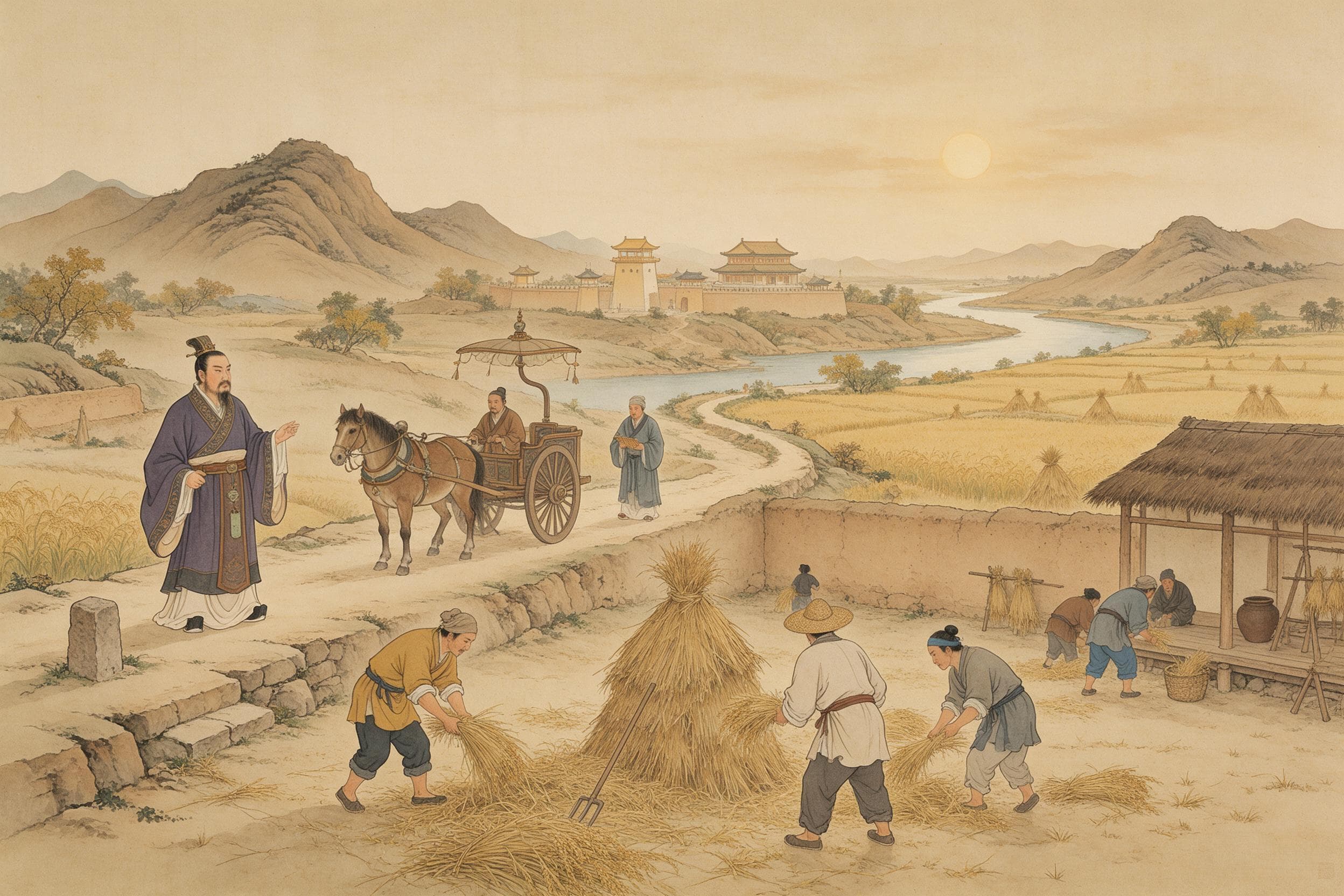
How a Spring and Autumn State Counted Its People
In 590 BCE Lu levied armour by the 'qiu'; in 589 Chu counted households before marching; at An, Jin asked for eight hundred chariots. How the counting was done is not recorded.
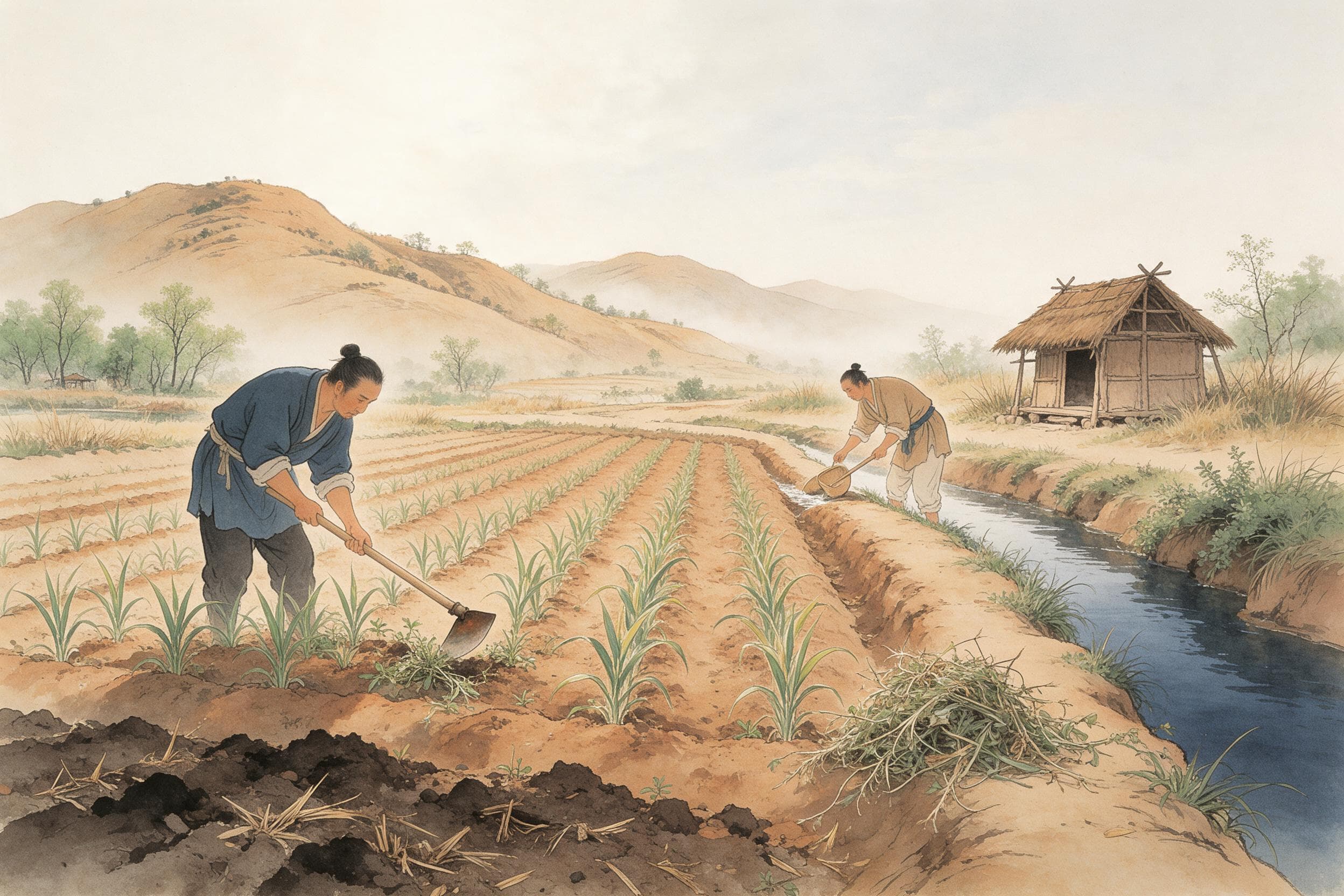
Feeding the Soil in Early China: Weeds, Deep Ploughing and Burnt Ground
Early Chinese farmers worked fertility by observation and timing: cut weeds left to rot, soil adjusted against its condition, five ploughings and deep tillage — not yet a manure regime.