最奇怪的一句先摆出来:「有人曰王亥,兩手操鳥,方食其頭。」——一个人,两只手拿着鸟,正在吃鸟的头。这是王亥在《山海经·大荒东经》里的出场——不在叙述的开头,而夹在一个族(困民国)的条目里,与东方大荒的诸国诸怪排在一起。这一篇只做一件事:把三处写到王亥(或可能写到他)的文本并排摆出,各标各的性质,不缝成一篇传记。
一、《山海经》:操鸟、仆牛与被杀
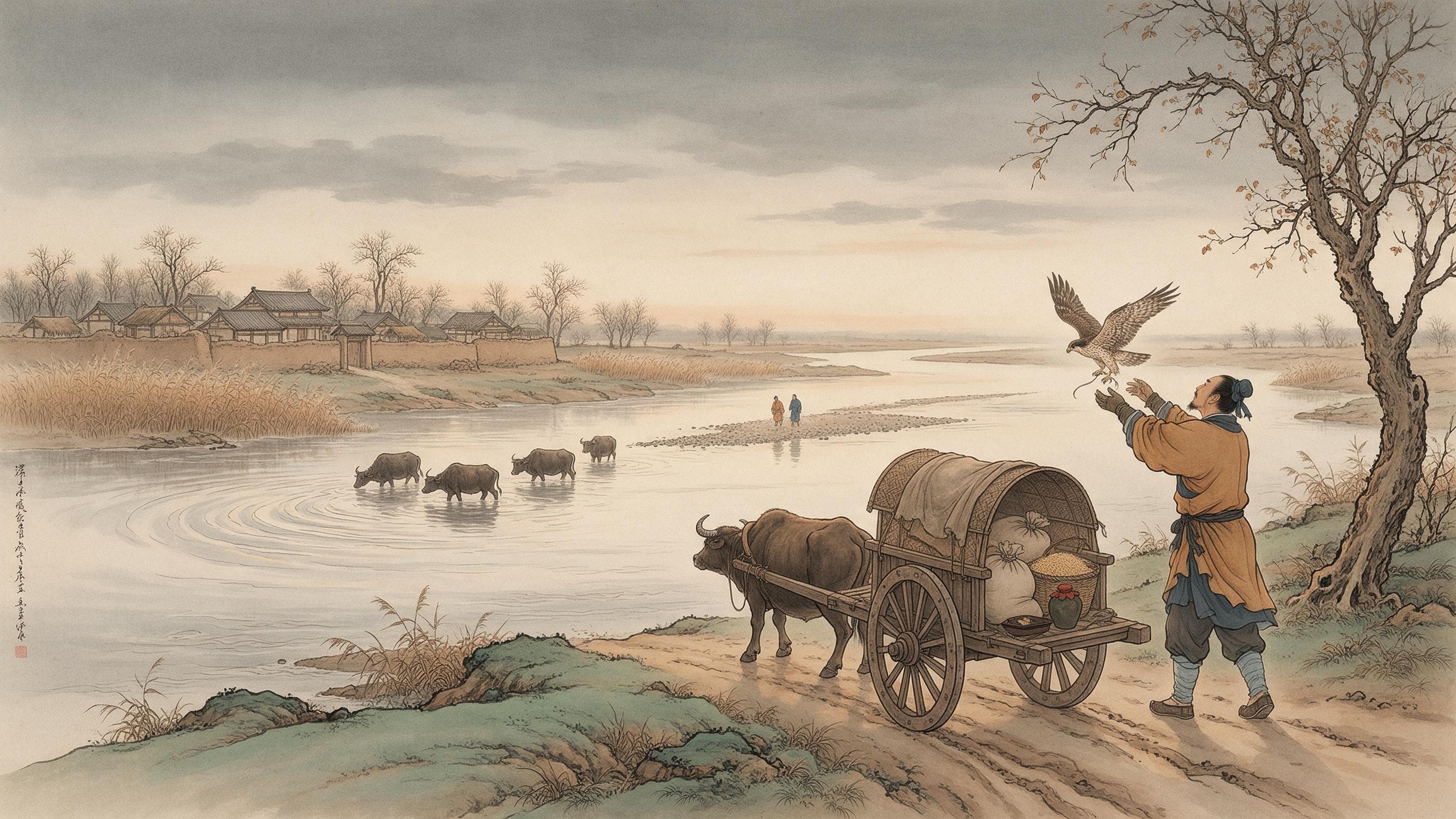
原句连在一起:「有困民國,勾姓,黍食。有人曰王亥,兩手操鳥,方食其頭。王亥托于有易、河伯僕牛。有易殺王亥,取僕牛。」后面还有一段:「河伯念有易,有易潛出,為國于獸,方食之,名曰搖民。帝舜生戲,戲生搖民。」本页的笔法是一句一事、不解释,连帝舜的后代为什么与有易同处一段也不交代;本篇照录,也不替它讲因果。
名物就照原文放着:「有易」「河伯」「僕牛」。本页正文只有这几处,没有说僕牛是牛还是人,没有说有易在哪里,也没有说王亥为什么「托于」他们。页内还夹着编者所加的异读(如「河伯」一作「河」),那是录文标记,不是原文,本篇引用只取正文。
二、《竹书纪年》辑本:一句编年材料
第二处来自《古本竹书纪年辑校》。这一页不是原书,是把别的书里引到的《纪年》文字一条条抄回来、各注出处;这一条收在「无年世可系者」之下:「殷王子亥賓于有易而淫焉,有易之君綿臣殺而放之,故殷主甲微假帥于河伯以伐有易,滅之,遂殺其君綿臣。」注里说明它出自《山海经·大荒东经》的注——也就是注家引《纪年》的那一句。所以这一层虽然是「编年」,却也是转手来的。
与《山海经》对读,多出来的东西有三样:有易之君的名字「绵臣」;王亥被杀的由头「宾于有易而淫焉」;以及后面的复仇——甲微向河伯借兵,灭有易,杀绵臣。《山海经》那边只有「有易杀王亥,取仆牛」六个字。两处并列,本篇不合并、不裁断哪一个更近实,也不拿一边去补另一边的空白。
三、《史记》:世系里只有一个「振」
第三处是《史记·殷本纪》的世系,原文是:「曹圉卒,子冥立。冥卒,子振立。振卒,子微立。」——冥、振、微三代,接着是报丁、报乙、报丙、主壬、主癸,到天乙,就是成汤。这一段里没有「王亥」两个字,每条只有一句:谁卒、谁立,不记事迹,叙事要到成汤才开始。后世注家与近代学者(王国维以来)认为这个「振」就是王亥,那是一说,不是《史记》原文;本篇标明它是后人的说法。
还有一个名字可以对:「微」。史记作「微」,辑本那条作「殷主甲微」——一般认为是一个人。可以对上,也不能据此把几条材料缝成一篇传记:一处是异闻,一处是辑佚的引文,一处是世系,三种东西说的是不是同一件事,各页都没有交代。
四、甲骨:材料里没有
甲骨里据说有与王亥相关的卜辞,但它不在当前这三页材料内:三页没有一条卜辞、没有一片甲骨。所以本篇明写:没有。不引甲骨,也不拿它补故事的空白;同样不写「商族起源」「先商史」这类通论——三页给的是一个名字、一则被杀的故事、一行世系,别的没有。
五、三种文本,三种性质
分层写死:《山海经·大荒东经》是异闻笔法,一句一事,本页还标着 textquality 75%,异读不少;《古本竹书纪年辑校》是辑本,条目本身是从他书注里引回来的,所以「编年」这层也隔了一层;《史记·殷本纪》是西汉的世系叙述,用「振」不用「王亥」。三者不是同一层,不许缝成一篇传记——这一篇只把它们摆在一起看。
各页不给的也列清:王亥的时代、有易的地望、「僕牛」究竟是什么、事件的经过(怎么「托」、怎么被杀)、甲微复仇的细节,各页给的不一样或干脆不给;本篇都不补。辑本页里还有一句注:「河伯、僕牛皆人姓名,见《纪年》」——这是注家的话,标明是注,不当正文。
收束一句:「王亥」在这些文本里只出现几次——一次两手操鸟吃鸟头,一次托于有易、河伯仆牛而被杀,一次作为「振」出现在世系里,一次在辑本的注里被称为「殷王子亥」。分四处读,比合成一个人可靠。
延伸阅读:赋诗:七个人,七首诗,一句判词 · 游侠:朱家、剧孟与郭解 · 商人的上帝:谁在降福降祸
参考来源与延伸阅读
- 《山海经·大荒东经》(维基文库本,未与点校本复核) — The strangest of the three passages, and the only one that names Wang Hai as a figure: 'there is the State of the Kunmin, of the Gou surname, who eat millet. There is a man called Wang Hai, who holds a bird in his two hands and is eating its head. Wang Hai entrusted himself to the Youyi and to the Hebo for oxen. The Youyi killed Wang Hai and took the oxen. The Hebo remembered the Youyi; the Youyi slipped away and made a state among the beasts, and while it was eating, it was named the Yaomin' (有人曰王亥,兩手操鳥,方食其頭。王亥托于有易、河伯僕牛。有易殺王亥,取僕牛). The page is marked textquality 75% and carries the transcribers' variant readings in double brackets ({{另}}), which are not quoted here; it gives no date, no place, and no explanation of 'the oxen'.
- 《古本竹书纪年辑校》(维基文库本,未与点校本复核) — The Bamboo Annals survive only in fragments quoted by other books, and this page is a reconstruction that prints each fragment with the work it was quoted from. Under 'those with no year to attach them to' it gives: 'Prince Hai of Yin was a guest among the Youyi and was licentious there; the lord of the Youyi, Mianchen, killed him and cast him out; therefore the Yin ruler Jia Wei borrowed troops from the Hebo to attack the Youyi, destroyed them, and killed their lord Mianchen' (殷王子亥賓于有易而淫焉,有易之君綿臣殺而放之,故殷主甲微假帥于河伯以伐有易,滅之,遂殺其君綿臣), with the note that this was quoted from the commentary to the Shanhaijing's 'Dahuan East' chapter. The same page quotes a note that 'the Hebo and Pu-niu are both men's names, seen in the Ji nian' (河伯、僕牛皆人姓名,見《紀年》) — a commentator's gloss, marked here as a gloss and not as the received text.
- 《史记》卷三〈殷本纪〉(维基文库本,未与点校本复核) — Used only for the genealogy, which does not contain the name Wang Hai at all: 'Cao Yu died, and his son Ming took his place. Ming died, and his son Zhen took his place. Zhen died, and his son Wei took his place' (曹圉卒,子冥立。冥卒,子振立。振卒,子微立) — the line continues through Bao Ding, Bao Yi, Bao Bing, Zhu Ren, Zhu Gui to Tian Yi, who is Tang. The identification of this 'Zhen' with Wang Hai is a later commentators' and modern scholars' argument, not something the Shiji says; this piece marks it as such.