「洛阳纸贵」四个字,出于《晋书》卷九十二《文苑·左思传》:「于是豪贵之家竞相传写,洛阳为之纸贵。」说的是左思《三都赋》写成以后的事。本篇用两页:《晋书》的左思传,和《世说新语·文学》里的同一件事——后者更短,角色与次序也不同。两页都不给纸价、不给抄写工钱;本文只写这两页写到的。
一、写赋的十年
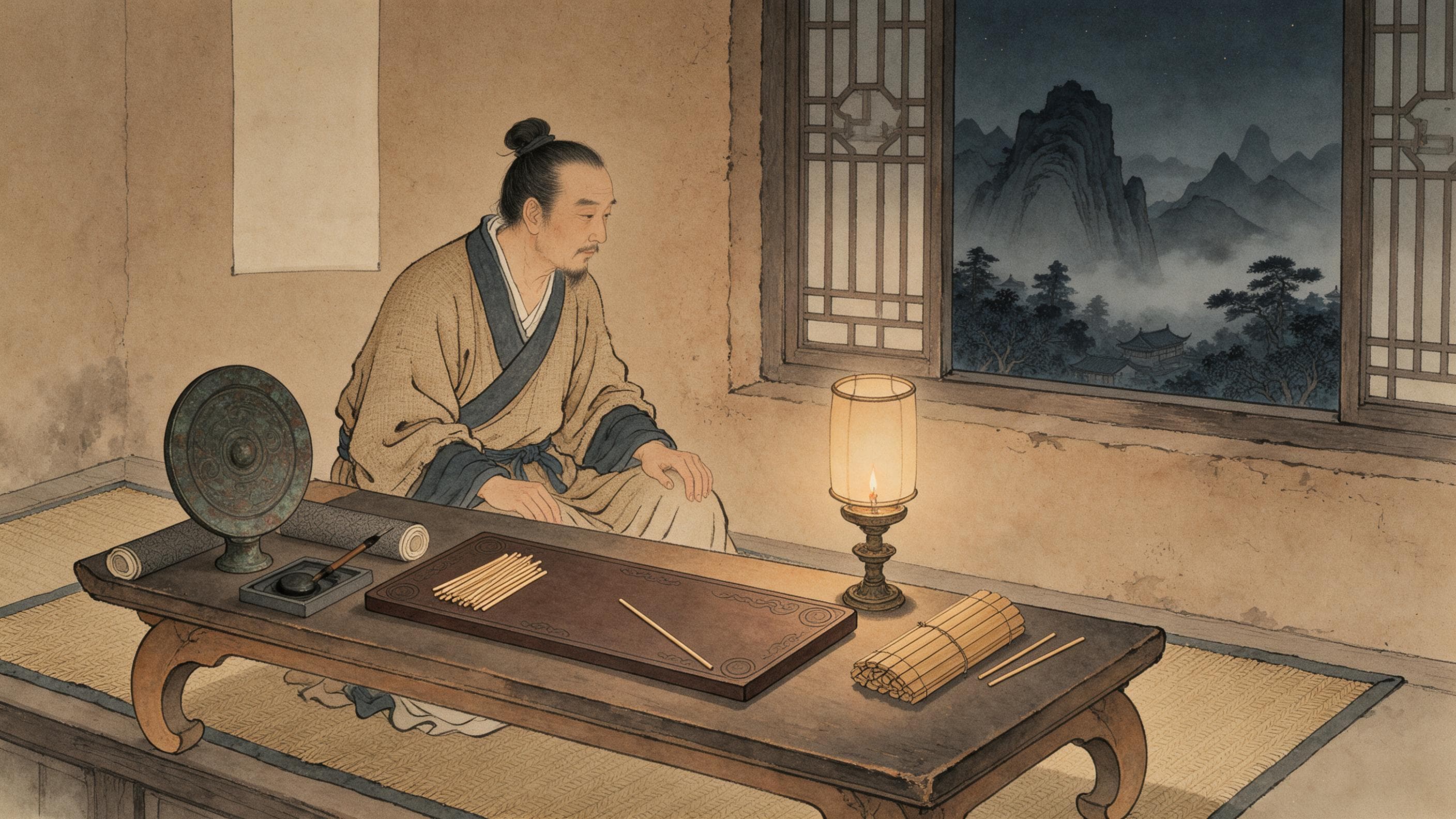
左思,字太冲,齐国临淄人,「家世儒学」。传里先写他不成器:「思小学钟、胡书及鼓琴,并不成。」父亲对朋友说「思所晓解,不及我少时」,他听了「感激勤学」,又「兼善阴阳之术」。人「貌寝,口讷,而辞藻壮丽。不好交游,惟以闲居为事」。他先作《齐都赋》,「一年乃成」。
然后是《三都赋》。「复欲赋三都,会妹芬入宫,移家京师,乃诣著作郎张载,访岷邛之事。遂构思十年,门庭籓溷,皆著笔纸,遇得一句,即便疏之。」——门、庭、篱、厕都放着笔纸,想到一句就记下来。又「自以所见不博,求为秘书郎」。这些是传里给的全部写作情形:没有讲他读了多少书、访了多少人,也没有讲他改了几稿。
二、赋成之后
赋写成,并不马上有人看重:「及赋成,时人未之重。思自以其作不谢班张,恐以人废言。」他自认不比班固、张衡差,怕的是人微言轻。于是去找「有高誉」的安定皇甫谧,「思造而示之。谧称善,为其赋序」。此后张载注《魏都》,刘逵注《吴》《蜀》并作序,陈留卫权又作《略解》。刘逵序里有一句说得直白:「世咸贵远而贱近,莫肯用心于明物。」再后来,司空张华见了叹道:「班张之流也。使读之者尽而有馀,久而更新。」
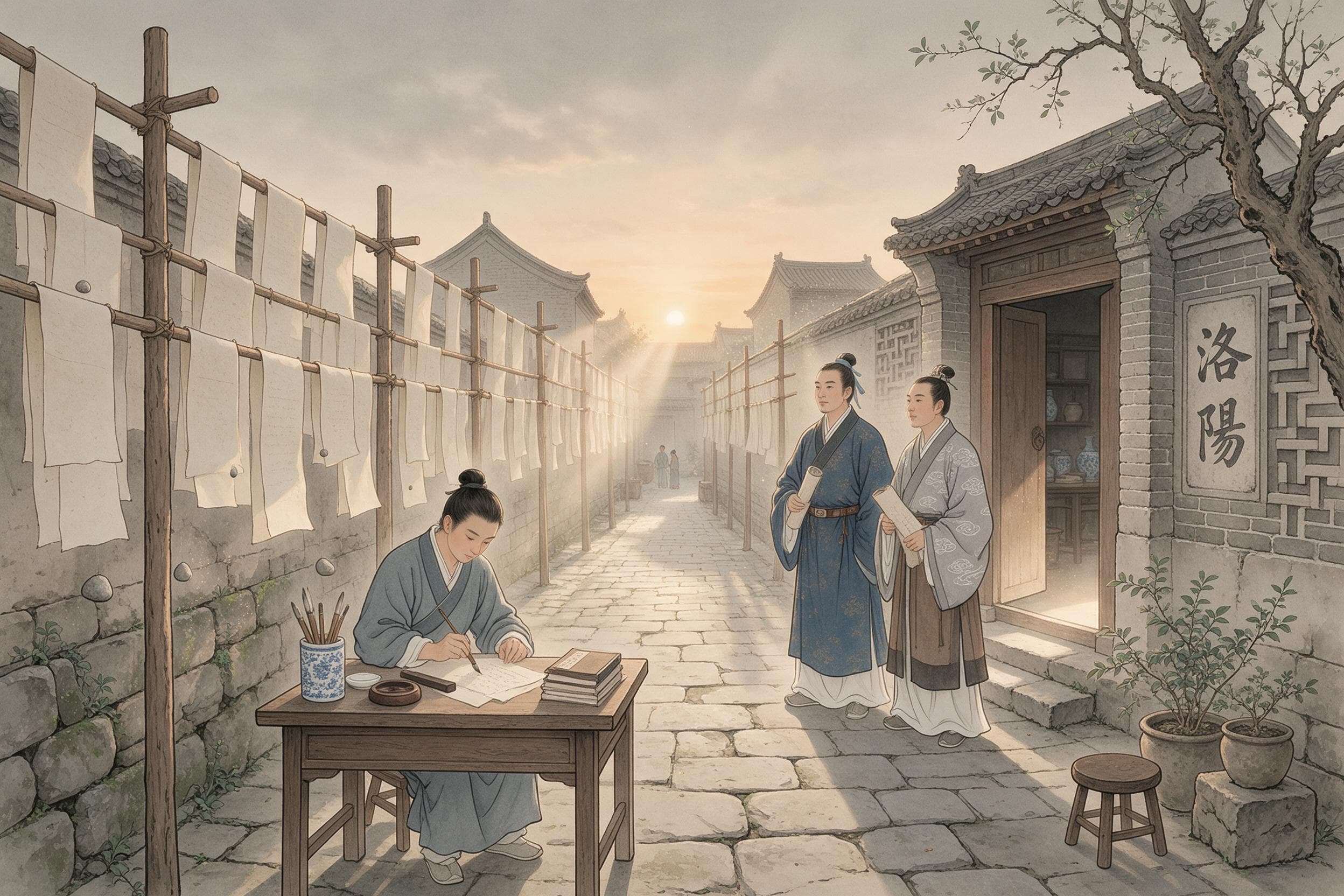
紧接着就是那一句:「于是豪贵之家竞相传写,洛阳为之纸贵。」这是史书的叙述,不是左思自己的话;「传写」的是「豪贵之家」,「贵」的是洛阳的纸。传里到这里就转了,接下来写的是陆机。
《世说新语》的版本不同:「左太冲作《三都赋》初成,时人互有讥訾,思意不惬。后示张公。张曰:『此二《京》可三,然君文未重于世,宜以经高名之士。』思乃询求于皇甫谧。谧见之嗟叹,遂为作叙。于是先相非贰者,莫不敛衽赞述焉。」——张华在这里出主意,次序是「先示张公」,再由他去找皇甫谧;《晋书》里张华是赋成、作序作注之后才「见而叹」的。两说并列,不合并。
三、纸贵:原文与没有的数字
「洛阳为之纸贵」是一句判断,不是一个数目。两页都没有给纸的价钱、涨了多少倍、抄一部要多少纸、传写的有多少家——本文也不补。能说的只有原文给的:左思的赋写成了,名家作了序与注,张华给了评语,然后「豪贵之家竞相传写」。纸为什么贵、贵到几分,书里没有写。
传里还有一段反衬。陆机初到洛阳,「欲为此赋,闻思作之,抚掌而笑」,写信给弟弟陆云说:「此间有伧父,欲作《三都赋》,须其成,当以覆酒瓮耳。」——等他真读到,「机绝叹伏,以为不能加也,遂辍笔焉」。从「覆酒瓮」到「辍笔」,这段评价的转变,也写在传里。
四、世说里的另一次「纸贵」
《世说新语·文学》还记了另一次:「庾仲初作《扬都赋》成,以呈庾亮;亮以亲族之怀,大为其名价云:『可三二京,四三都。』于此人人竞写,都下纸为之贵。」——同样是名人一句评语,带来一阵抢抄,纸也跟着贵。但这一段后面还有谢太傅一句:「不得尔。此是屋下架屋耳!事事拟学,而不免俭狭。」两次「纸贵」并排,一次有人捧,一次有人拆。
五、两页不给的
两页都不给:《三都赋》的全文与字数、抄本的形制、纸的产地与价钱、传写者的身份。也不给对这篇赋的「文学价值」判断——两页里只有几个人的话:皇甫谧称善、刘逵作序、张华叹为「班张之流」、陆机叹伏、谢安评《扬都赋》「屋下架屋」,各是各人的话,本文逐条标出说话人。
「洛阳纸贵」后来成为成语,那是后人的概括;《晋书》原文只有「洛阳为之纸贵」这一句,两页都没有把它当成语用。本文不写「文学价值」「文化传播」一类的通论,也不把这件事讲成纸张史;只写一个赋、几个人、一句纸贵,以及书里没有给的那些数字。
延伸阅读:求雨:董仲舒的仪式与王充的质疑 · 王亥:被有易氏杀掉的商先祖 · 赋诗:七个人,七首诗,一句判词
参考来源与延伸阅读
- 《晋书》卷九十二·文苑·左思传(唐房玄龄等撰;维基文库本,页面白文无注,未与中华书局点校本复核) — The full life: Zuo Si of Linzi, of a family of scholars, who failed at writing and at the qin, was mocked by his father, and turned to study; 'he made the Rhapsody on the Qi Capital, which took a year'; then, wishing to write on the three capitals, he moved to the capital when his sister entered the palace, questioned the works officer Zhang Zai about Min and Qiong, and 'pondered for ten years, with paper and brush placed at his gate, courtyard, fence and privy, writing down any line as soon as it came'; thinking his knowledge not broad enough, he asked to be made a secretary; when the rhapsody was finished 'his contemporaries did not value it', so he showed it to Huangfu Mi, who praised it and wrote a preface; Zhang Zai annotated the Wei capital, Liu Kui the Wu and Shu with a preface, and Wei Quan added a brief explanation; Zhang Hua sighed that it was 'of the company of Ban Gu and Zhang Heng'; 'thereupon the rich and noble houses competed in copying it, and Luoyang became expensive in paper'. Lu Ji, who had meant to write such a rhapsody himself, laughed at the news and wrote to his brother that the man would end by covering a wine jar with it, and after reading the work 'was utterly astonished and gave up his brush'.
- 《世说新语·文学》(南朝宋刘义庆撰,刘孝标注;维基文库本,页面白文夹注,未与中华书局点校本复核) — A shorter account of the same affair: when the Rhapsody on the Three Capitals was first finished 'contemporaries mocked and criticised it in turn, and Si was displeased'; he showed it to 'Master Zhang' — Zhang Hua — who said it could stand as a third to the two Han capitals, but that 'your writing is not yet weighty in the world; you should let it pass through a man of high name'; Zuo Si then sought out Huangfu Mi, who sighed over it and wrote the preface, after which 'those who had opposed it all straightened their robes and praised it'. The same chapter has a second paper-price story: Yu Chan's Rhapsody on the Yang Capital, presented to Yu Liang, who talked up its value as 'a third to the two capitals, a fourth to the three capitals', whereupon 'everyone competed to copy it and the paper of the capital became expensive' — and Xie An's retort that it was only 'building a house under a house'.