一句话:「自中丁以来,废适而更立诸弟子,弟子或争相代立,比九世乱,于是诸侯莫朝。」九位商王的政治变动,被压成这一句因果:嫡子被搁下,改立弟与子;弟与子又争着上位;乱了九世;诸侯不来了。麻烦在于,同一篇的世系表里,这句话之后还接着记「弟及」。
一篇世系表的写法
《史记·殷本纪》一王一句往下排:「汤崩,太子太丁未立而卒,于是乃立太丁之弟外丙」;「帝外丙即位三年,崩,立外丙之弟中壬」;「帝中壬即位四年,崩,伊尹乃立太丁之子太甲」——太甲是「成汤适长孙」。再往下:太甲崩,子沃丁;沃丁崩,弟太庚;太庚崩,子小甲;小甲崩,弟雍己;雍己崩,弟太戊;太戊崩,子中丁。弟及与子继从一开始就交替出现,不是某一天才改的。
中丁到阳甲这一段,是「九世」的所在。逐句看:中丁崩,弟外壬立;外壬崩,弟河亶甲立;河亶甲崩,子祖乙立;祖乙崩,子祖辛立;祖辛崩,弟沃甲立;沃甲崩,立沃甲兄祖辛之子祖丁;祖丁崩,立弟沃甲之子南庚;南庚崩,立祖丁之子阳甲。中间还夹着评语:「河亶甲时,殷复衰」「帝阳甲之时,殷衰」。然后才是那句总评。
「九世」与「乱」
「九世」是哪九世?原文没有点名。按世系数,从中丁到阳甲正好九王;这个数目是读者排出来的,不是原文给的名单——所以本文只说「自中丁至阳甲,凡九王」,不把它当成《史记》的正式说法。
「废适而更立诸弟子」是解释句:把嫡子(适)搁下,改立弟、子;下一句「弟子或争相代立」,说的是争位。要注意这是《史记》作者的评语,不是商代的法令、盟誓或即位记录;这一句能证明的是「史书这样解释」,不是「商人这样规定」。
更要紧的是下半段:这句话之后,阳甲崩,弟盘庚立;盘庚迁殷、行汤之政,「殷道复兴」;盘庚崩,弟小辛立;小辛崩,弟小乙立;小乙崩,子武丁立。再往后,祖庚崩,弟祖甲立;廪辛崩,弟庚丁立。也就是说,「九世之乱」之后,弟及照旧出现。所谓「乱后改为父死子继」,这篇世系表并不支持;「乱」的界限只是那句评语。
周人另外一套说法
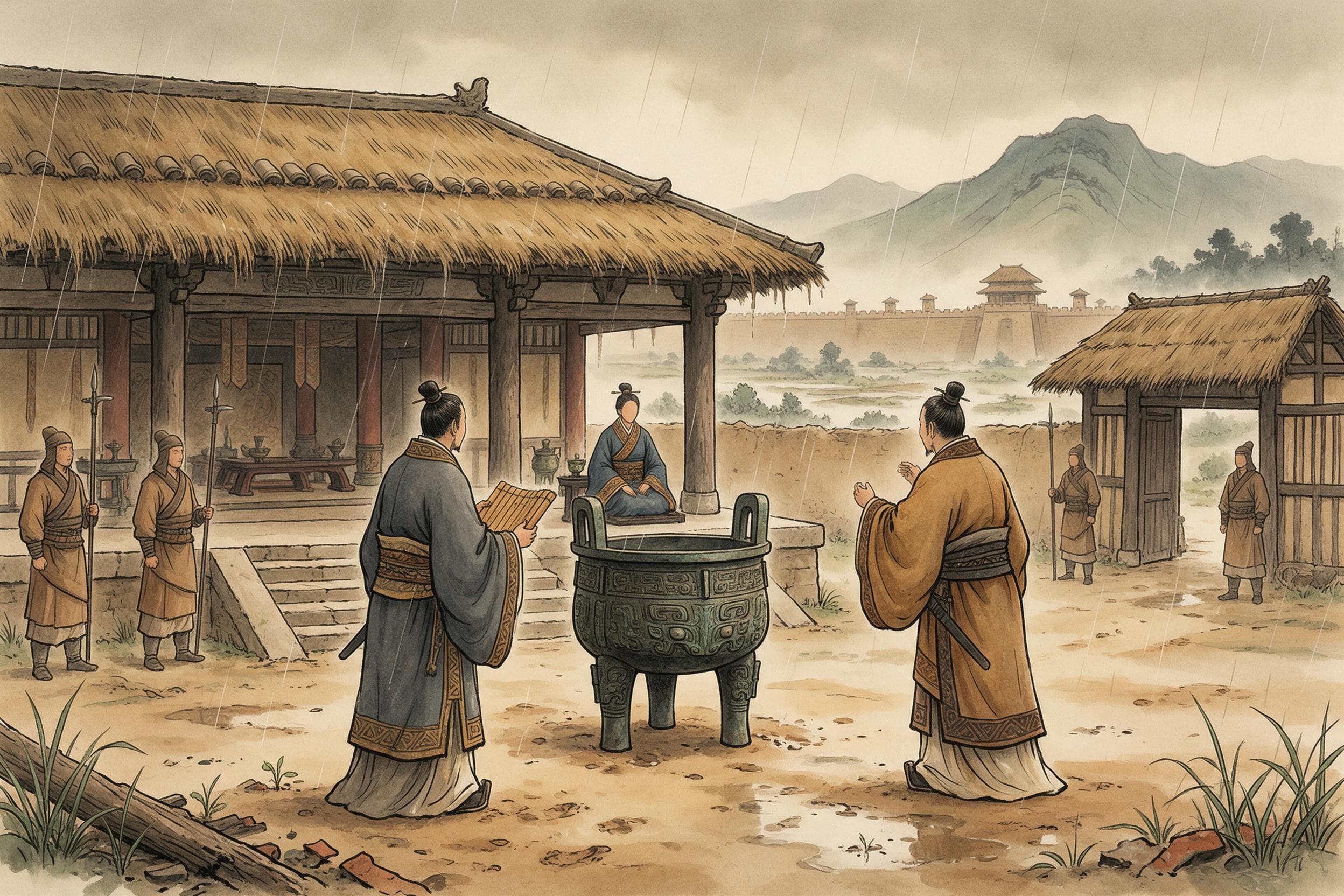
另一部书给出的是另一种数。《尚书·无逸》里,周公对成王说:「昔在殷王中宗,严恭寅畏,天命自度,治民祗惧,不敢荒宁。肆中宗之享国七十有五年。其在高宗……肆高宗之享国五十有九年。其在祖甲……肆祖甲之享国三十有三年。自时厥后,立王生则逸……亦罔或克寿,或十年,或七八年,或五六年,或四三年。」——三位好王享国长,之后诸王享国短,短到三四年。
这段话的说话人是周公,对象是成王,殷的往事是他劝诫的素材:他在讲「无逸」,不是在讲继统法。把它当商代制度依据,会读错方向。而且两页在「祖甲」上直接冲突:《无逸》把祖甲列为四位「迪哲」(由哲)之一,享国三十三年;《史记》却说「帝甲淫乱,殷复衰」。同一个王,一处是明君,一处是乱主。本文照录两边,不裁决。
能写与不能写
所以有三条不能写:不能写「商朝实行兄终弟及制」——这里只有一篇世系叙述;不能写「九世之乱后确立父死子继」——同篇乱后仍记弟及;不能把《无逸》当商代档案——它是周公告诫。能写的是:这本书这样记,并给出「废适更立诸弟子」这个解释;周人这样数享国长短。
还有一层:「九世之乱」是高度概括的说法。它把九王的政治变动压成一条因果链(废适→争立→乱→诸侯莫朝),而每一次具体怎么回事——谁争、谁立、有没有外服插手——全都没有。它像一句史论,不像一份记录。
材料没有的
没有商代自己的继统法文本;没有「九世」的正式名单;没有每次继位的原因;没有诸侯「莫朝」的实证;甲骨周祭谱系可以核对先王次序,但不在本文所据两页之内,这篇不引。所以这篇文章写的是「一本书怎么讲商代继承」,不是一部商代继承制度史。
延伸阅读:五十个博士弟子:汉太学的初置 · 「卜其昼,未卜其夜」:一场酒、一个孩子与两套问法 · 书同文字:一句诏令,和三百多年后的解释
参考来源与延伸阅读
- 司马迁《史记》卷三·殷本纪(西汉;维基文库本,未与点校本复核) — The only one of these two pages that narrates Shang royal succession. It runs king by king in a fixed formula — 'X died; his son Y was set up', 'X died; his younger brother Y was set up' — and the alternation begins at the start: Tang's heir Tai Ding died before reigning, so Tai Ding's younger brother Wai Bing was set up; Wai Bing died and his younger brother Zhong Ren followed; Zhong Ren died and Yi Yin set up Tai Ding's son Tai Jia, the eldest grandson. From Zhong Ding to Yang Jia the entries give a run of younger-brother and nephew successions, after which the chapter says: 'From Zhong Ding onward the legitimate heir was set aside and younger brothers and sons were set up instead; the younger brothers and sons sometimes fought to succeed one another, and for nine generations there was disorder, so the lords no longer came to court' (自中丁以來,廢適而更立諸弟子,弟子或爭相代立,比九世亂,於是諸侯莫朝). The same chapter then continues to record succession by younger brother after this passage — Yang Jia to Pan Geng, Pan Geng to Xiao Xin, Xiao Xin to Xiao Yi — and again later (Zu Geng to Zu Jia, Lin Xin to Geng Ding). It gives no law of succession, no reason for any individual accession, and no list of the 'nine generations'.
- 《尚书·无逸》(周初;维基文库本,未与点校本复核) — A speech by the Duke of Zhou to King Cheng of Zhou, not a Shang document. He recalls the Yin kings: 'Formerly, in the time of Zhong Zong of Yin, he was grave and reverent, revering Heaven's mandate, governing the people in awe and daring not to indulge in idleness; thus Zhong Zong held the state seventy-five years. As for Gao Zong, he had long laboured outside and come to know the lesser people; when he took the throne he kept silent for three years… thus Gao Zong held the state fifty-nine years. As for Zu Jia, he did not think himself fit to be king and had been a lesser man; when he took the throne he understood the people's reliance and could protect and benefit the common folk, not daring to insult widowers and widows; thus Zu Jia held the state thirty-three years. After that time, the kings who were set up were idle from birth… and after that time none could reach old age: some ten years, some seven or eight, some five or six, some three or four' (周公曰…肆中宗之享國七十有五年…五十有九年…三十有三年…或十年,或七八年,或五六年,或四三年). The speech gives reign lengths, not rules of succession, and it names three good kings and 'our King Wen' as the four who followed wisdom.