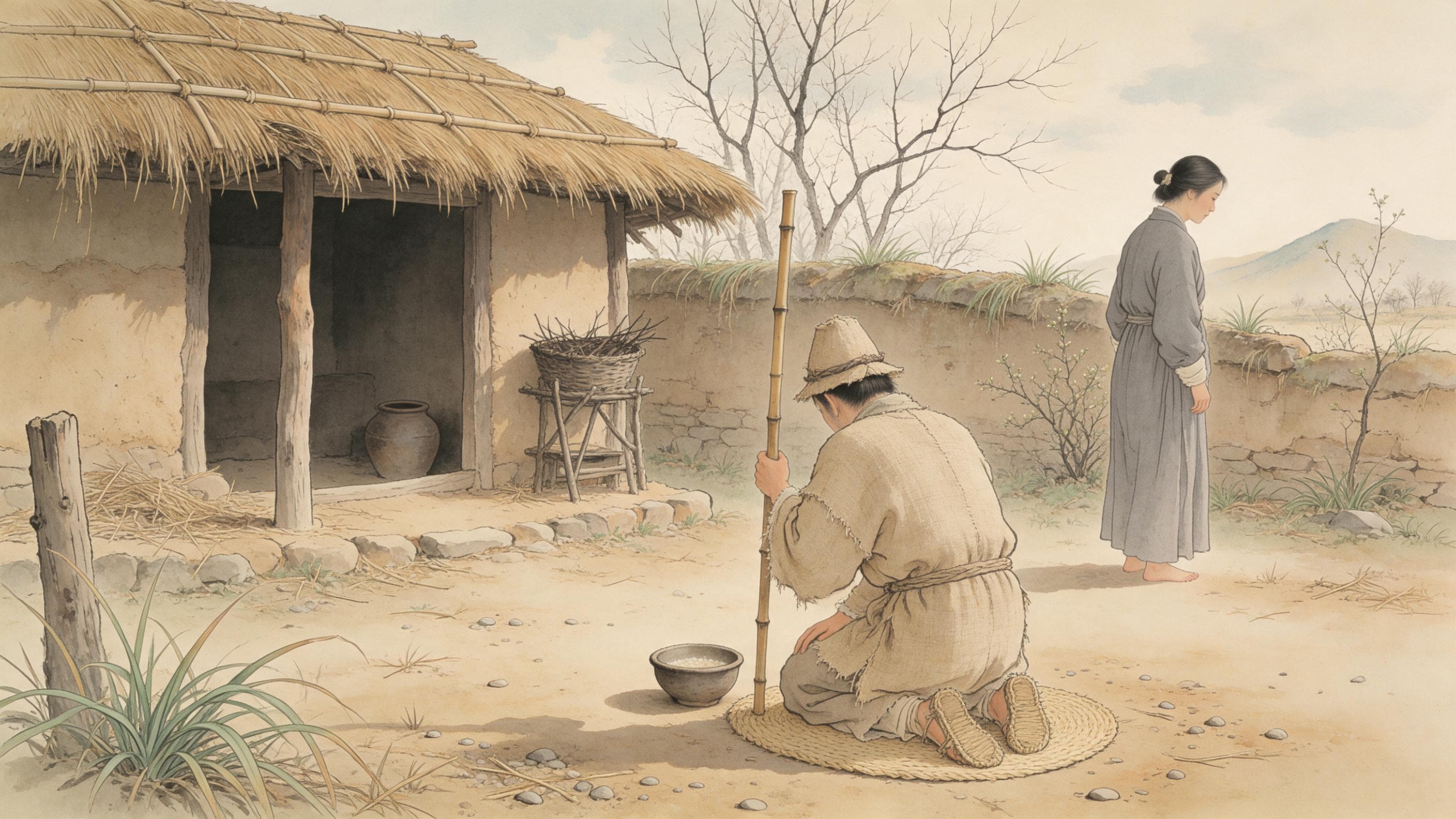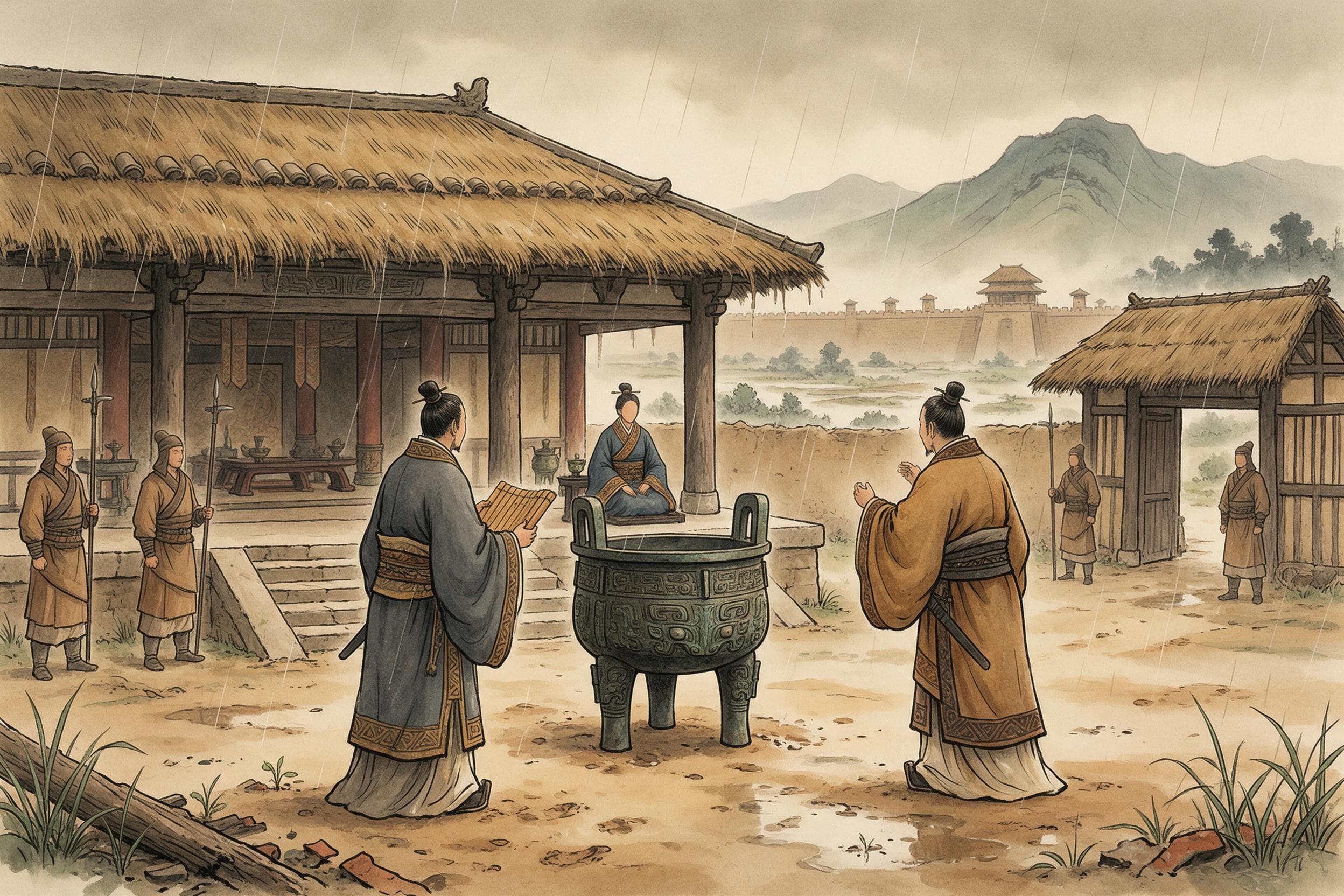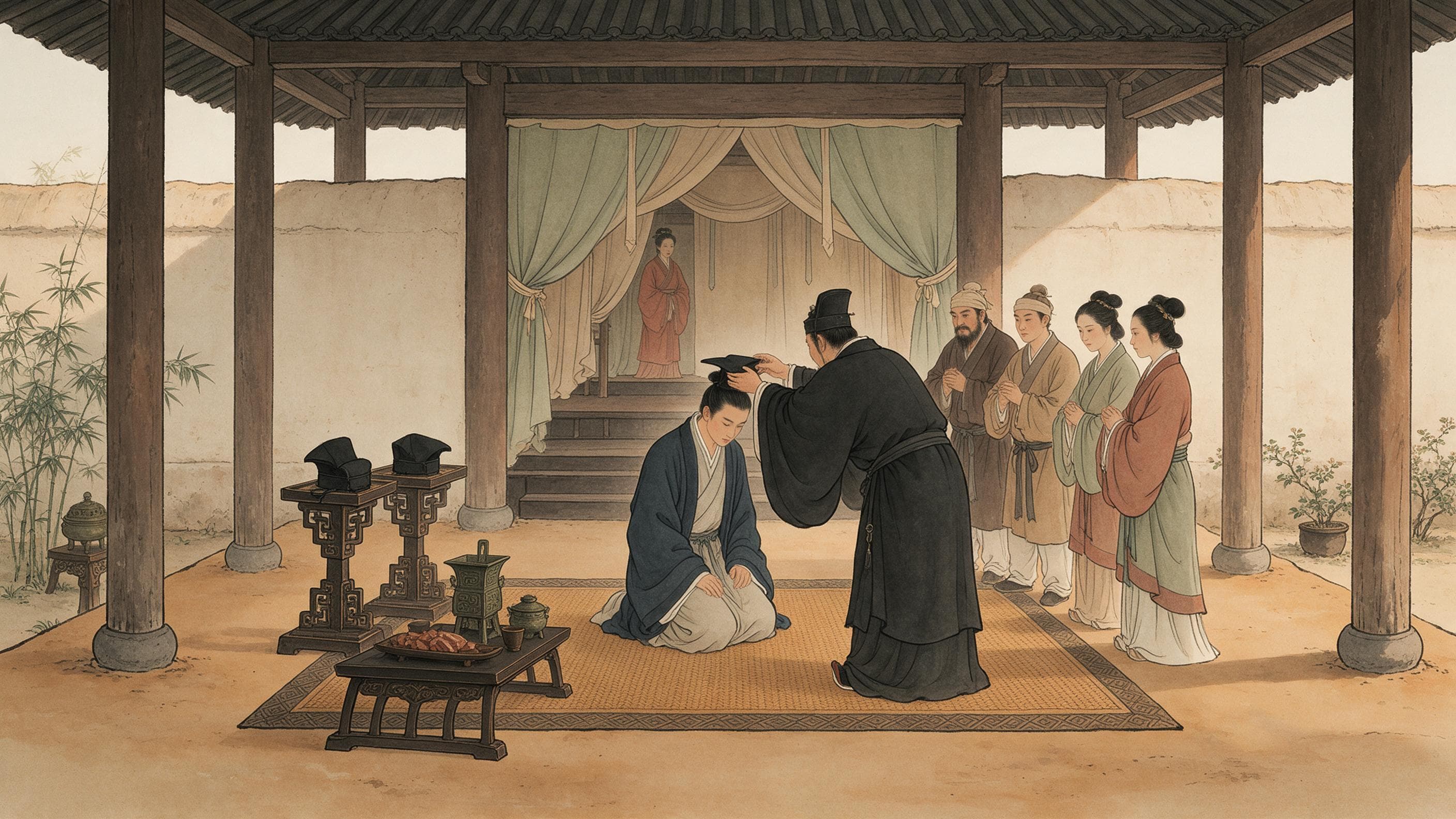
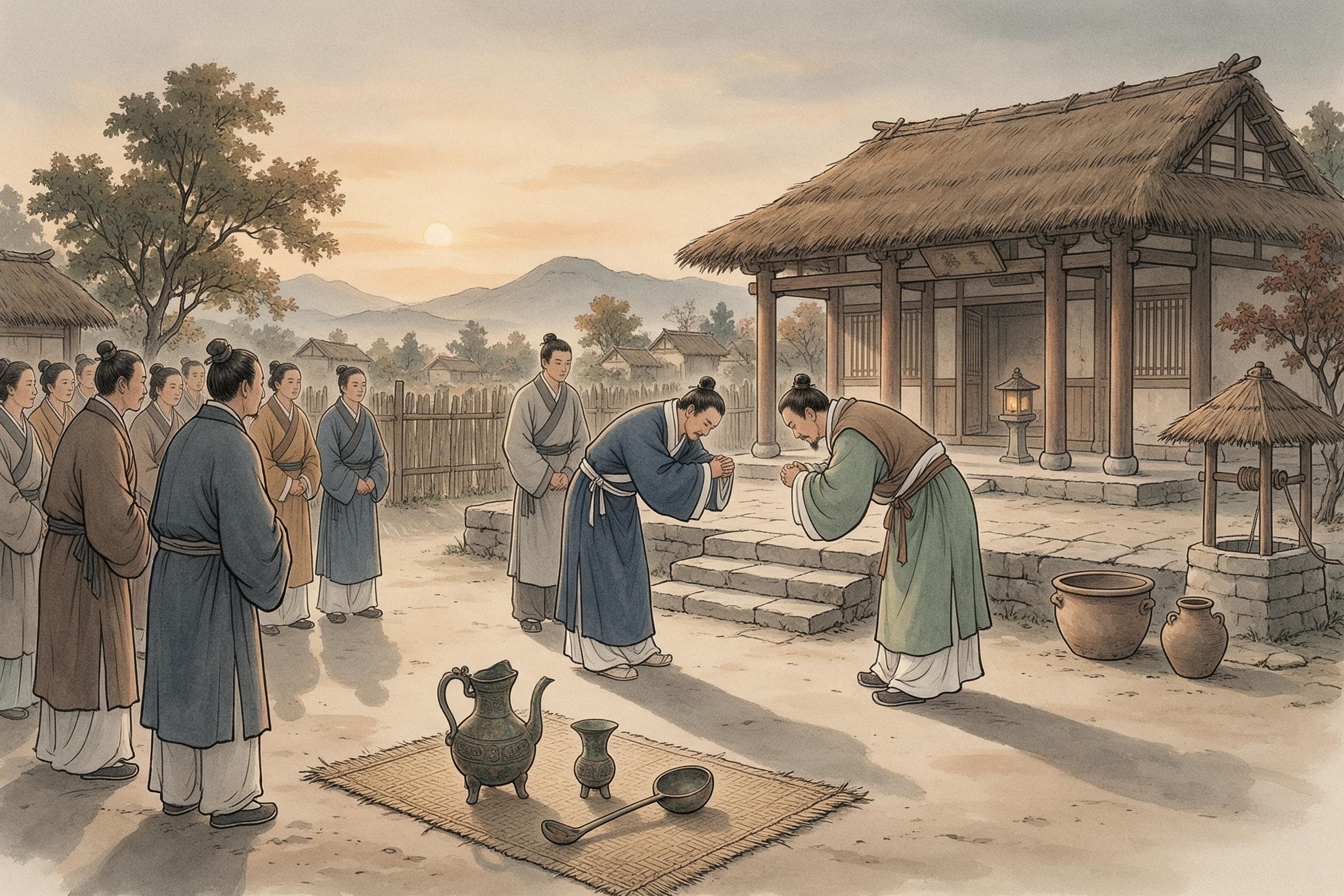
一场乡饮酒,开头是两个人都不肯先走。「主人拜迎宾于庠门之外,入,三揖而后至阶,三让而后升」——主人到乡学门外迎宾,进门之后揖三次才走到台阶,上台阶又让三次。礼书把这一段叫「致尊让」:先把这个「让」做足,后面才谈喝酒。
谁谋这场酒
《仪礼·乡饮酒礼》从择人开始:「主人就先生而谋宾、介。」——主人去找乡里的先生,商定宾和介的人选;然后戒宾、请宾。前一日陈设:两壶酒放在房户之间,玄酒在西;篚在禁南;洗放在阼阶东南,水在洗东。到「羹定」,主人去速宾,宾与介、众宾相随而来。席次也先说清:宾、主人、介、众宾的席「皆不属焉」——彼此不相连。
进门之后是一串拜:主人与宾三揖到阶,三让而升;「拜至」——在阶上再拜;然后主人取爵下堂洗爵,宾要跟着下来辞洗;洗毕升堂,「拜洗」。这一套动作,乡饮酒义归成三句:「三揖而后至阶,三让而后升,所以致尊让也」;「盥洗扬觯,所以致洁也」;「拜至,拜洗,拜受,拜送,拜既,所以致敬也。」——尊让、洁、敬,礼书说这是「君子之所以相接」。
献、酢、酬
酒上来是三个动作,不是一轮干杯。主人「实之宾之席前,西北面献宾」,宾拜受、主人拜送——这是献;宾下堂洗爵,回来「酢主人」——这是酢;主人再取觯「酬宾」——这是酬。三个动作各有拜、各有洗、各有升降。介受同一种礼,但「杀」:不拜洗、不告旨,程序减省。众宾更简:「升受,坐祭,立饮,不酢而降」——接了酒,坐着祭一下,站着喝掉,不回敬就下堂。同一场礼,宾、介、众宾三种繁简,等级就写在这些差别里。
所以这场的「敬」不是态度,是计数:拜几次、洗几次、谁先谁后、谁回敬谁不回敬,都有定式。义里说得很直白:这一套做足,「君子尊让则不争,洁、敬则不慢」,于是「无暴乱之祸」。
坐与立
除了角色,还有一条年龄线。乡饮酒义说:「六十者坐,五十者立侍,以听政役,所以明尊长也。」——六十岁的人坐着,五十岁的人站着侍候、听候差使,这是为了表明谁年长。又说按年龄加豆:「六十者三豆,七十者四豆,八十者五豆,九十者六豆,所以明养老也。」——豆数随年龄递增;这里只记这个等差,具体摆什么食物,礼书与日常饮食是两回事,本文不列。
于是有两条轴交叉:年龄定坐与立,角色定献酬的次序与繁简。宾最繁,介次之,众宾最简;而无论宾、介、众宾,到了六十岁都坐,五十岁都立。礼书把这两条轴分开写,正是要它们同时生效。
乐与旅酬
中间有乐,不是背景音乐。「工入,升歌三终,主人献之。笙入三终,主人献之。间歌三终,合乐三终。工告乐备,遂出。」——歌三首、笙三首、间歌三首、合乐三首;每进一轮,主人都要向乐工献酒。乐毕,「一人扬觯,乃立司正」——举觯立司正,礼进入第二阶段:宾酬主人,主人酬介,介酬众宾,「少长以齿,终于沃洗者焉」——按年龄排下去,一直排到那个替人浇水洗爵的人。义的评语是「知其能弟长而无遗矣」:敬长,一个也不漏。
再往后:脱鞋、升坐、进羞,「无算爵,无算乐」——酒与乐都不计数;宾出,奏《陔》;次日宾穿着乡服来拜赐,主人回拜,然后「息司正」。义把整场的效果收成五句:「贵贱明,隆杀辨,和乐而不流,弟长而无遗,安燕而不乱。」并记孔子的话:「吾观于乡,而知王道之易易也。」
别读成风俗志
要分清这是仪式文本。它规定一场礼怎么排,不记录某个乡多久办一次、谁真的到场、办得起办不起。所以不能写「当时人人如此」。参与者是乡人、士、君子,宾、介、僎各有身份;这是一场有资格名单的礼,不是全乡人的聚餐。
也不要把「六十者坐」推成当时的社会实况:这是礼书对座次的安排,不是对乡里日常的统计。礼书要说的是「明尊长」「明养老」——用一场酒的座次,把年龄秩序摆出来给人看。
乡饮酒礼的骨干其实很短:迎、献、酢、酬、乐、旅酬、宾出。它要的两个字是「让」与「长」:先在门口让对方先走,再按年龄排座,最后连洗爵的人也排进次序里。读它要读结构——谁先谁后、谁繁谁简、谁坐谁立——而不是把它读成一幅其乐融融的乡间宴饮图。
参考来源与延伸阅读
- 《仪礼·乡饮酒礼》(战国至汉初成书;维基文库本,未与点校本复核) — The rite step by step. The host goes to the elder to choose the guest and the assistant (主人就先生而謀賔、介), invites them, and lays out the mats, two wine jars between the door and the room, the washing basin south-east of the eastern steps, water east of it. When the food is ready he fetches the guest; at the gate the host bows and the guest returns it, they bow to each other three times and reach the steps, yield three times, and go up; there are bows at arrival, at the washing, at receiving and at sending the cup. The host takes the cup, washes it, offers it to the guest at his mat, and the guest returns the courtesy with a cup (酢), after which the host pledges him with another vessel (酬). The assistant is treated to a reduced version, and the other guests simply receive, sacrifice sitting, drink standing, and go down without returning a cup. The musicians then enter: three songs, three pieces on the pipes, three alternating and three together, with wine offered to them. A cup is raised to instal the overseer; then guest pledges host, host pledges assistant, assistant pledges the other guests, 'in order of age, ending with the man who poured the washing water' (少長以齒,終於沃洗者). Shoes come off, seats are taken, and the drinking and music go on without count; when the guest leaves the pipe music sounds. The record notes the victim was a dog and that the cup was used for the formal offer, other vessels for the rest.
- 《礼记·乡饮酒义》(战国至汉初成书;维基文库本,未与点校本复核) — The essay on meaning. It opens with the three yields — 'meeting the guest outside the gate of the school, entering, three bows before the steps, three yields before ascending: this is to bring about deference' (三揖而後至階,三讓而後升,所以致尊讓也) — then washing the cup for purity and the five bows for respect. It gives the two social rules: 'those of sixty sit; those of fifty stand and serve to hear the duties: this makes clear who is senior' (六十者坐,五十者立侍,以聽政役,所以明尊長也), and the graded dishes for the aged — sixty gets three, seventy four, eighty five, ninety six — 'so that the old are provided for'. It reads the seating cosmologically (guest and host as heaven and earth, assistants as yin and yang, the three guests as the three lights, the three yields as the moon's three days), links the rite to teaching filial and fraternal conduct, and records Confucius: 'when I watched the village rite I knew how easy kingly government would be' (吾觀於鄉,而知王道之易易也). It ends with five results: high and low clear, full and reduced distinguished, harmony without dissolution, deference to elders with no one left out, ease without disorder.