
一个日子、一个时辰、一个地点,十一个字:「时甲子昧爽,王朝至于商郊牧野,乃誓。」这是《尚书·牧誓》全部的开头。本篇就停在这一个早上:誓词要人做什么、队伍怎么走、一首诗又把这一天唱成什么样。日期照原文写「甲子」,不折成公历的某月某日。
一、牧誓:一份军令
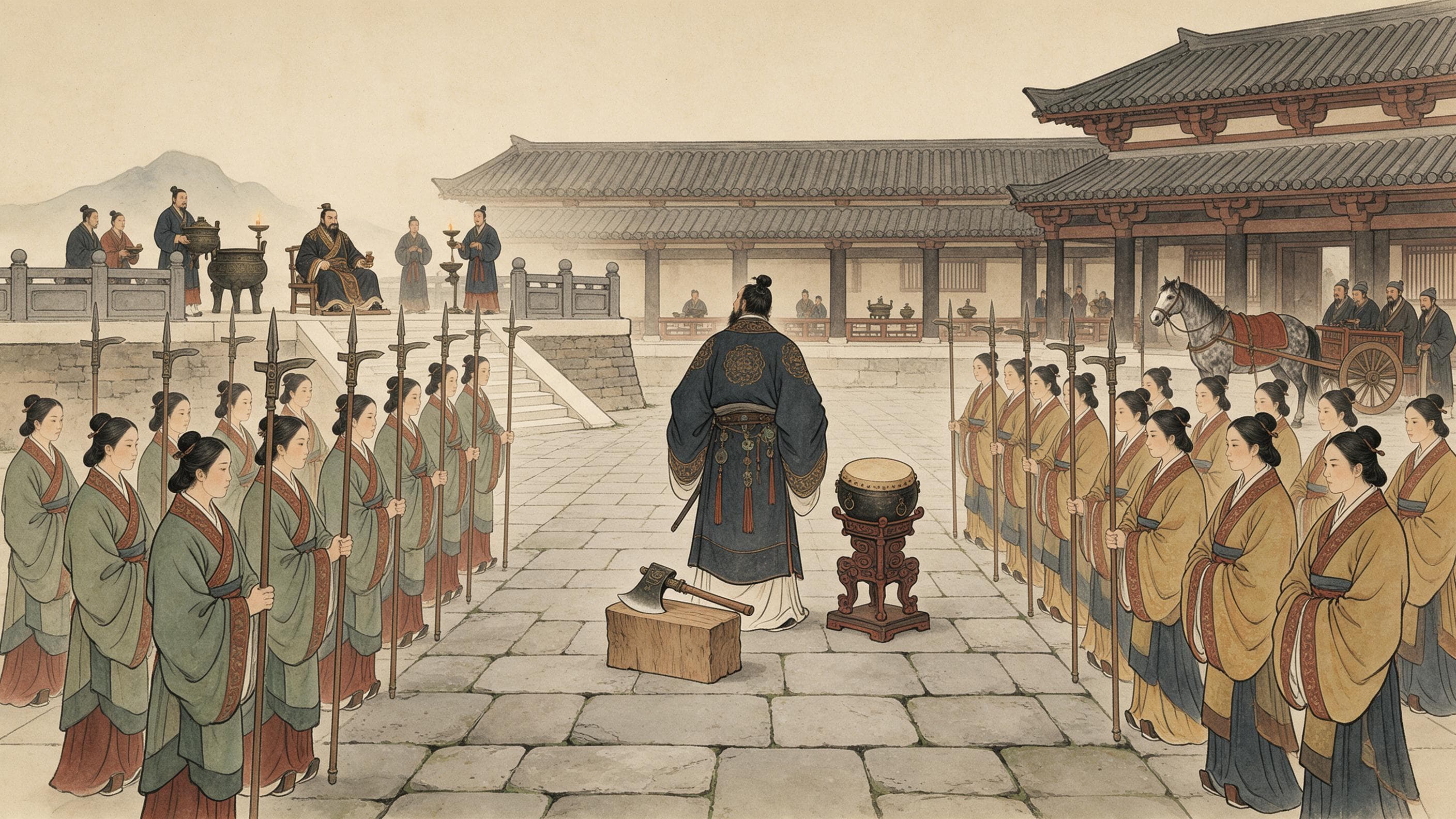
誓词开口之前先有身段:「王左杖黄钺,右秉白旄以麾,曰:『逖矣西土之人。』」左手黄钺、右手白旄,一句话先招呼西土来的人。接着点名,这张名单是全篇最实在的东西:「嗟!我友邦冢君,御事、司徒、司马、司空、亚、旅、师氏、千夫长、百夫长及庸、蜀、羌、髳、微、卢、彭、濮人。」——友邦的君长、三有司与亚旅师氏、千夫长百夫长,再加庸、蜀、羌、髳、微、卢、彭、濮八个从征的族。本页在此处标了异读(卢一作纑),引用照录。
然后是兵器的口令,三件东西三个动词:「称尔戈,比爾干,立爾矛,予其誓。」举戈、并盾、立矛。动词和名词一样要紧:举起来、并排、竖在地上。这是口令,不是阵图——本页不给队形、不给行距、不给每行多少人,所以本篇也不画阵。
罪名接在后面,而且先引一句老话:「古人有言曰:『牝鸡无晨。牝鸡之晨,惟家之索。』」落到商王身上:「今商王受,惟妇言是用。昏弃厥肆祀,弗答;昏弃厥遗王父母弟,不迪。乃惟四方之多罪逋逃,是崇是长,是信是使,是以为大夫卿士。」结论是「今予发,惟恭行天之罚」。这一层要标清楚:以上是誓词里周人这一方对纣的指控,是他们出兵的告示,不是判决书。
二、六步七步与四伐七伐
最接近操典的是这几句:「今日之事,不愆于六步、七步,乃止齐焉。夫子勖哉!不愆于四伐、五伐、六伐、七伐,乃止齐焉。」——前进不超过六步七步就停下对齐;击刺不超过四伐、五伐、六伐、七伐也停下对齐。步与伐,各有一个上限,各配一次停。本页给「伐」下了一条注:「一击一刺为一伐」,引的是《礼记·乐记》郑注;那是注,不是经文,本篇标明。至于一行几人、人与人隔多远、行列怎么对齐,本页不说。
誓词还有两句给这份军令装上牙齿:「尚桓桓,如虎、如貔、如熊、如罴,于商郊;弗迓克奔,以役西土。」要像虎豹熊罴,来降的不迎击,留下他们服役;最后一句是罚:「尔所弗勖,其于尔躬有戮。」不卖力,就治你本人的罪。
三、同一场战,两种嗓子:誓与诗
《诗经·大雅·大明》写的是同一天,用的是另一副嗓子。第八章:「殷商之旅,其会如林。矢于牧野,维予侯兴。上帝临女,无贰尔心。」——商旅多得像林子,在牧野列阵;上帝在你这边,心不要二。第九章:「牧野洋洋,檀车煌煌,驷騵彭彭。维师尚父,时维鹰扬。凉彼武王,肆伐大商。会朝清明。」旷野、檀木战车、赤毛白腹的四马,还有「鹰扬」的师尚父。
这两种文本不能合成一篇。誓词是战前对将士下的令,讲步、讲伐、讲罚;诗是事后唱这一天的歌,讲如林、讲煌煌、讲鹰扬。诗不给步数,誓不给车马的颜色。本页还带着《毛诗序》一句:「《大明》,文王有明德,故天复命武王也。」序是后人对这首诗用意的说明,不是诗本身;本篇把令、歌、序三层分开写。
四、史书里的数字与「倒兵」
数字都在《史记·周本纪》里,而且是汉代史书的数字:「武王……遂率戎车三百乘,虎贲三千人,甲士四万五千人,以东伐纣。」日期照录:「二月甲子昧爽,武王朝至于商郊牧野,乃誓。」誓完还有一句:「诸侯兵会者车四千乘,陈师牧野。」——誓师时是三百乘,会师时是四千乘。本页不解释这两数的关系,本篇也不替它调和,照录而已。
开战只两句:「帝纣闻武王来,亦发兵七十万人距武王。武王使师尚父与百夫致师,以大卒驰帝纣师。」接下来是这一整段最要紧的一句:「纣师虽众,皆无战之心,心欲武王亟入。纣师皆倒兵以战,以开武王。」——纣的兵虽多,没有战心,倒转兵器替武王开路。然后纣走上鹿台,「蒙衣其殊玉,自燔于火而死」。这些是史书叙述的数目与场面,本篇标明「史书记载」,不当实数用,也不拿七十万与四万五千去推算胜负。
五、后来的人怎么说
还可以添一句,但要标明它是后来的人说的。《左传》昭公十一年,韩宣子问楚能不能克蔡,叔向答:「桀克有缗,以丧其国;纣克东夷,而陨其身。」说话人是叔向,场合是论楚,句子是对纣的评断——既不是商末的记录,也不告诉你那天队伍怎么站。所以本篇引它只作「后来的人怎么说」,一句话,归在叔向名下。两页不给的也列清楚:具体阵形(几行、间隔多少)、兵器配备的比例、伤亡、打了多久、在旷野的哪一处,都没有;不画图、不折公历、不算总兵力。这一篇只说那个早上的三样东西:一份口令、一首歌,和史书写下的几个数。
延伸阅读:纳锡大龟:占卜用的龟从哪来 · 郊祀:皇帝在哪儿祭天,隔几年去一次 · 金丹:葛洪在罗浮山炼什么
参考来源与延伸阅读
- 《尚书·牧誓》(维基文库本,未与点校本复核) — The oath itself, short enough to read in a few minutes: 'At the hour of jiazi, before dawn, the king in the morning arrived at the waste of Muye outside the Shang capital, and then swore' (時甲子昧爽,王朝至于商郊牧野,乃誓); the axe and banner; the list of ranks and of the eight allied peoples; 'lift your ge, join your shields, set up your spears'; the charge about the hen that crows at dawn and the king who uses a woman's words; the orders of six or seven paces and of four to seven strokes; and the closing threat. The page marks variant readings in its own brackets — 盧/纑 and others — and carries one note, quoting Zheng's commentary to the Record of Music for 'one blow and one thrust make one fa' (一擊一刺爲一伐); that is a note, not the oath, and is marked as such here.
- 《诗经·大雅·大明》(维基文库本,未与点校本复核) — The song, eight stanzas, with the two that concern Muye: 'the hosts of Yin Shang came, their companies like a forest; they shot arrows at Muye… God is with you, do not doubt your hearts' (殷商之旅,其會如林……無貳爾心) and 'Muye was broad, the sandalwood chariots shone, the teams of red horses were strong; our Master Shangfu was like an eagle on the wing' (牧野洋洋,檀車煌煌,駟騵彭彭……時維鷹揚). The page also prints the Mao preface ('King Wen had bright virtue, and so Heaven again gave its command to King Wu' 文王有明德,故天復命武王也) and a note on the stanza count. The preface is a later statement of the poem's purpose, not part of the song, and is kept separate here.
- 司马迁《史记》卷四〈周本纪〉(维基文库本,未与点校本复核) — The Han history's account: 'Wu Wang led three hundred war chariots, three thousand tiger braves and forty-five thousand armoured men to attack Zhou in the east' (率戎車三百乘,虎賁三千人,甲士四萬五千人,以東伐紂); 'in the second month, on jiazi, before dawn, Wu Wang arrived at Muye' (二月甲子昧爽); after the oath 'the troops of the feudal lords who joined were four thousand chariots, and they drew up the army at Muye' (諸侯兵會者車四千乘,陳師牧野); Zhou 'sent out seven hundred thousand men'; 'Wu Wang sent Master Shangfu with a hundred men to challenge'; and 'Zhou's soldiers all turned their weapons and fought, opening the way for Wu Wang' (紂師皆倒兵以戰,以開武王). The chapter also records the crossing of the Meng ford in the eleventh month and the year count 'nine years' and 'eleventh year' — dating the Han history uses and the oath page does not.
- 《春秋左氏传》昭公十一年(维基文库本,未与点校本复核) — Used for one later sentence only, and marked as later. Answering Han Xuanzi's question whether Chu would take Cai, Shu Xiang says: 'Jie overcame Youmin and lost his state; Zhou overcame the Eastern Yi and destroyed himself' (桀克有緡,以喪其國;紂克東夷,而隕其身). The speaker is named in the text (叔向), the occasion is a question about Chu in the eleventh year of Duke Zhao, and the sentence is a Spring and Autumn judgement on Zhou, not a Shang or early Zhou record.