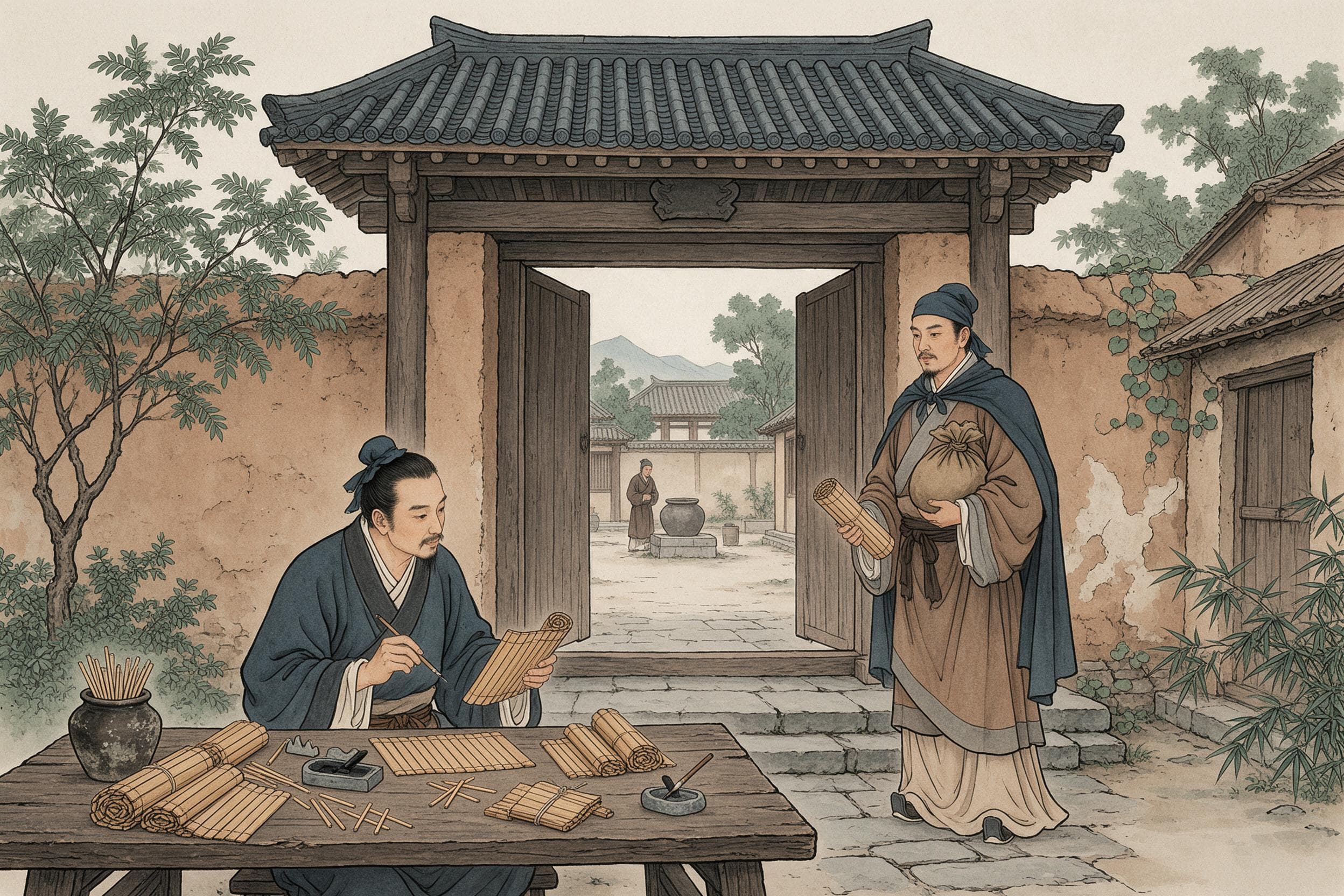

《尚书·吕刑》开头一句交代了场合:「惟呂命:王享國百年,耄,荒度作刑,以詰四方。」——王在位很久,年纪老了,才议定刑法,用来治理四方。哪一位王,这一页没有写;《史记·周本纪》把这个场合系在穆王名下,说话的人写作「甫侯」。同一套文字,两页给了两个篇名:一页叫《吕刑》,一页「命曰甫刑」。
墨、劓、剕、宮、大辟
五刑的名目,是靠赎价那一段列出来的:墨、劓、剕、宮、大辟。往前追,篇首讲这套刑的来历:苗民「弗用靈,制以刑,惟作五虐之刑曰法,殺戮無辜」,上帝因而「遏絕苗民」;随后是伯夷降典、禹平水土、稷播種,最后一句「士制百姓于刑之中,以教祗德」——刑被放在一套德教与治水的叙事之后,才落到条文。《史记》这一段把刑名写成黥、劓、臏、宮、大辟:黥对墨,臏对剕,是两种写法,不是两套刑。
接着是属数:「墨罰之屬千,劓罰之屬千,剕罰之屬五百,宮罰之屬三百,大辟之罰,其屬二百;五刑之屬三千。」——墨、劓各一千条,剕五百,宮三百,大辟二百,合起来三千。三千是条文属类的数,不是案子数;文本到此为止,没有说这三千条里哪一条用过几次。
其罚百锾
赎价一段写得整齐:「墨辟疑赦,其罰百鍰,閱實其罪。劓辟疑赦,其罰惟倍,閱實其罪。剕辟疑赦,其罰倍差,閱實其罪。宮辟疑赦,其罰六百鍰,閱實其罪。大辟疑赦,其罰千鍰,閱實其罪。」——墨一百锾,劓加倍,剕「倍差」,宮六百锾,大辟一千锾;每一句后面都跟一句「阅实其罪」。「倍」「倍差」是相对前一项的倍数说法,两页都没有给算式,这里也不替它算;锾数照录,不折金重,也不折成现代的钱。
《史记》有一段平行文字,字句很接近,异文正好看得见:它作「黥辟疑赦,其罰百率……劓……其罰倍灑……臏……其罰倍差……宮辟疑赦,其罰五百率……大辟疑赦,其罰千率」,并说「命曰甫刑」。两处要记:一是宫刑的价,《吕刑》页作六百锾,页内另本作五百锾,《史记》正作五百率;二是单位,《史记》作「率」,页内校记引徐广说「率即鍰也」。此外它还作「五辭簡信」,与《吕刑》的「五辭簡孚」一字之差。
五刑之疑有赦
赎刑的关键在前两个字:「疑赦」。「五刑之疑有赦,五罰之疑有赦,其審克之。」——只有案子有疑,才走赦而罚的一路;「其审克之」则把这层判断交给审案的人。每一句赎价后面又都跟「阅实其罪」:先把罪状核实,再谈罚多少。所以这不是「花钱免刑」:能赎的是有疑的案子,不是所有犯罪;文本也没有说谁交过钱、交了多少。
同一篇里还有一整套程序,像是替这套赎价设的闸:「兩造具備,師聽五辭,五辭簡孚,正于五刑;五刑不簡,正于五罰;五罰不服,正于五過;五過之疵,惟官、惟反、惟內、惟貨、惟來。」——双方到场,听五辞;五辞核实了,按五刑;不能核实,按五罚;五罚不服,按五过;而五过里的毛病,列了官、反、内、货、来五种。再往下:「明清于單辭」「獄貨非寶,惟府辜功」「非佞折獄,惟良折獄」「刑罰世輕世重,惟齊非齊,有倫有要」。这些条款说明文本自己在防滥用;但它们仍是条文,不是判例。
制度文本,不是判决记录
两页都不给案例。没有被告的名字,没有一次实际的赎纳,没有哪一年用过哪一条;也没有说这套价目在各邦国执行得怎样。《吕刑》通篇是「王曰」的诰命体,反复告诫司政典狱的人「念之哉」「敬之哉」;《史记》那一段是西汉人的追述,交代「諸侯有不睦者,甫侯言於王,作《修刑辟》」,最后「命曰甫刑」。两页合起来,也只能说「文本这样写」,不能说「西周司法如此」。
篇名与时代也要分开写:《尚书》题《吕刑》,开头只称「王」;《史记》称甫侯、甫刑,并把这个王系在穆王。通行的说法是吕侯(甫侯)为穆王司寇、作这篇刑书,两页都没有明说,只能标「一般认为」;本篇也不作「西周法典」的定论。与汉代两篇分线:九章律与除肉刑讲的是汉制,这里讲的是《尚书》里的一份周制文本。
两页之间
两页对读,能拿到的东西很具体:五刑的名目、五组赎价、五刑之属三千、两造五辞五刑五罚五过的程序,以及吕刑与甫刑两个篇名、宫刑六百与五百、墨与黥、剕与臏这些异文。拿不到的也同样具体:没有判决、没有执行数、没有换算。锾数照录,不折金重、不折现代钱;五刑名目与篇名照原文写;不写「古代刑罚残酷」这类总评。这篇文章只做一件事:把条文摆出来,把「疑赦」两个字讲清楚。
延伸阅读:占田七十亩:一条上限,不是一次分地 · 黄金千溢:史书里怎么数这块金属 · 外有轻刑之名:文帝十三年那道除肉刑的诏书
参考来源与延伸阅读
- 《尚书·吕刑》(维基文库本,未与点校本复核) — The code in full. Opening: 'the king had held the realm a hundred years, was old, and broadly made the penal code to bring order to the four quarters' (惟呂命:王享國百年,耄,荒度作刑,以詰四方). The origin story: the Miao 'made the five cruel punishments, calling them law' (惟作五虐之刑曰法,殺戮無辜); then Bo Yi, Yu and Hou Ji, and 'the officers made the people live within the middle of punishment' (士制百姓于刑之中). The five punishments are listed by their redemption prices: 'for branding, where doubtful, remission, and the fine is a hundred huan, and the crime is verified; for the nose, double; for the feet, double-and-differenced; for castration, six hundred huan; for death, a thousand huan' (墨辟疑赦,其罰百鍰……大辟疑赦,其罰千鍰), each with 'the crime is verified' (閱實其罪). The item counts: 'branding a thousand, the nose a thousand, the feet five hundred, castration three hundred, death two hundred; the five punishments three thousand items' (五刑之屬三千). The procedure: 'when both parties are present, the officers hear the five speeches … settled by the five punishments … the five fines … the five faults; the defects of the five faults are the office, the reversal, the inner, the goods, the solicitation' (兩造具備……五過之疵,惟官、惟反、惟內、惟貨、惟來), with 'where the five punishments are doubtful there is remission … let the case be carefully examined' (五刑之疑有赦……其審克之), 'be clear about one-sided speeches' (明清于單辭), 'goods from a case are no treasure' (獄貨非寶), 'not the eloquent but the good decide cases' (非佞折獄,惟良折獄), and 'punishments are light in one age and heavy in another' (刑罰世輕世重). The page carries textual variants in its own notes: the castration price is given as six hundred huan, with a variant reading five hundred.
- 《史记》卷四·周本纪(西汉司马迁;维基文库本,未与点校本复核) — The Western Han retrospective that gives the parallel text and the variants. 'When the nobles were not at peace, the Marquis of Fu spoke to the king and made the revised penal code' (諸侯有不睦者,甫侯言於王,作《修刑辟》). The prices: 'for branding, where doubtful, a hundred shuai; for the nose, double; for the feet, double-and-differenced; for castration, five hundred shuai; for death, a thousand shuai — the crime verified in each case' (黥辟疑赦,其罰百率……宮辟疑赦,其罰五百率……大辟疑赦,其罰千率), and the counts 'branding a thousand, the nose a thousand, the feet five hundred, castration three hundred, death two hundred: three thousand items'. It closes 'it was named the Fu Xing' (命曰甫刑). Differences to keep: qing for mo, bin for fei, five hundred shuai for castration against the Lü Xing's six hundred huan (with a five-hundred variant on that page), and 'the five speeches are simply trusted' (五辭簡信) for the Lü Xing's 'credible' (簡孚). The page's note quotes Xu Guang that 'shuai is huan' (率即鍰也). The passage is placed under King Mu; it gives no year for the code and no case.