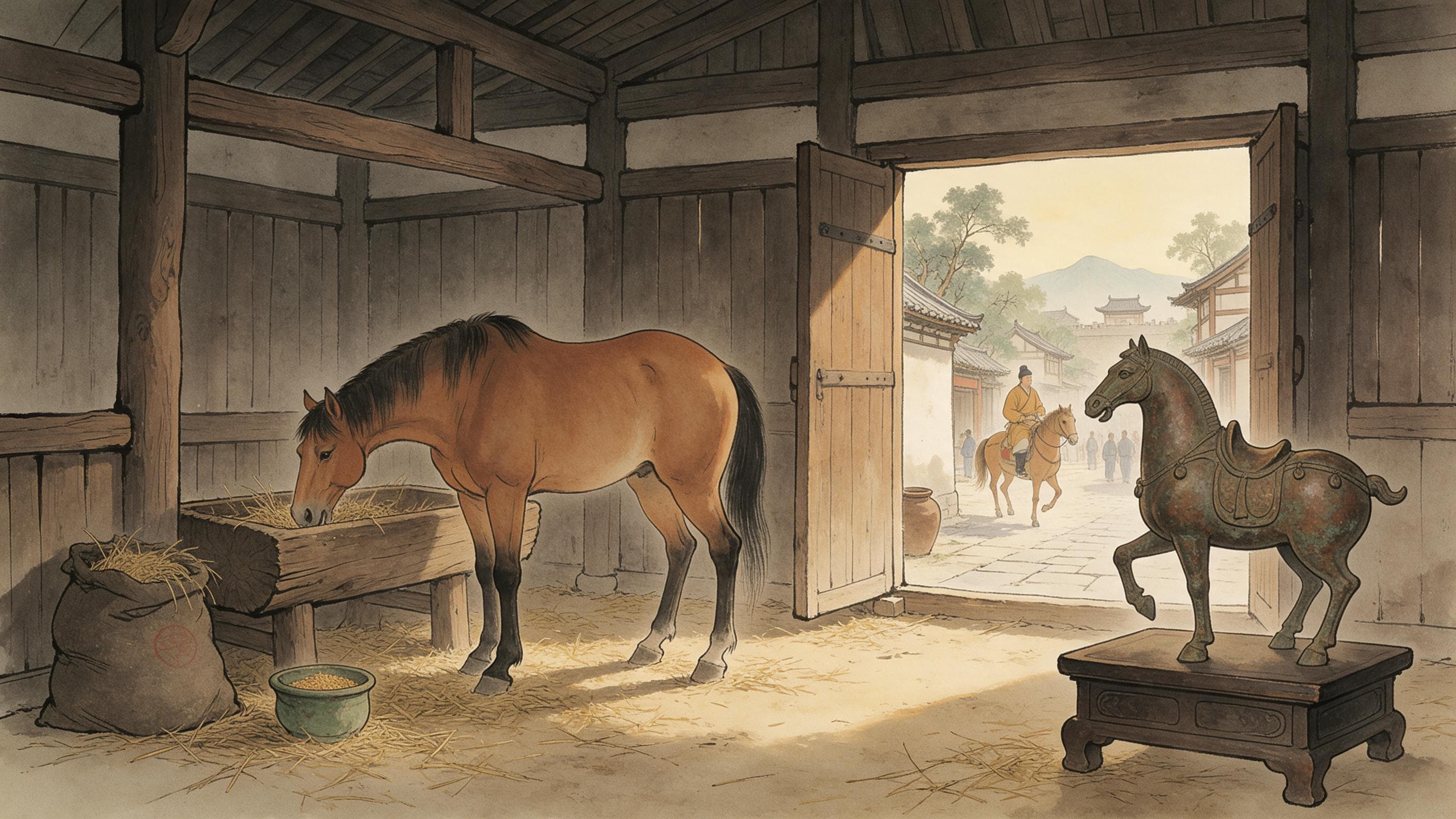
《史记·平准书》写汉初,只用一句:「汉兴,接秦之弊,丈夫从军旅,老弱转粮饟,作业剧而财匮,自天子不能具钧驷,而将相或乘牛车,齐民无藏盖。」——天子配不齐四匹同色的马,将相有的坐牛车,连平民也没有余物可藏。隔两句是价钱:「米至石万钱,马一匹则百金。」百金照录,不折今值;一般认为这是汉初马价的极高值,不是常价。
一、缺马的年头
钱先坏,马才贵。同篇说秦钱太重难用,于是令民铸钱,「一黄金一斤」,约法省禁;「不轨逐利之民,蓄积余业以稽市物,物踊腾粜,米至石万钱,马一匹则百金」。这是一篇讲财政的书写到物价,马只是价目单上的一行。
景帝时有一段小记事:「孝景时,上郡以西旱,亦复修卖爵令,而贱其价以招民;及徒复作,得输粟县官以除罪。益造苑马以广用,而宫室列观舆马益增修矣。」——上郡以西旱,卖爵降价招人,刑徒输粟除罪;「益造苑马以广用」。这句在页上系于孝景时,不在武帝初年;「苑马」一般认为即苑囿中的官马,本页未解。
二、街巷有马
盛况在下一段,而且是回看,不是账本:「至今上即位数岁,汉兴七十余年之间,国家无事……众庶街巷有马,阡陌之间成群,而乘字牝者傧而不得聚会。」——普通人家街巷里有马,田间小路成群;骑母马的人被挡在聚会之外。「字牝」一般认为指母马,「傧」一般认为即摈斥,两处本页都无注。这是汉武帝时人对前几十年的追述,是描写,不是统计。
两头并排,一篇里的调子就变了:从「天子不能具钧驷」到「街巷有马」,中间还多出一条「骑什么马」的社交规矩。这一页始终不给马的数目,无论是天下的还是苑里的;只有一个价钱、一段景象。本文不拿它们画曲线。
三、出关、苑马与马料
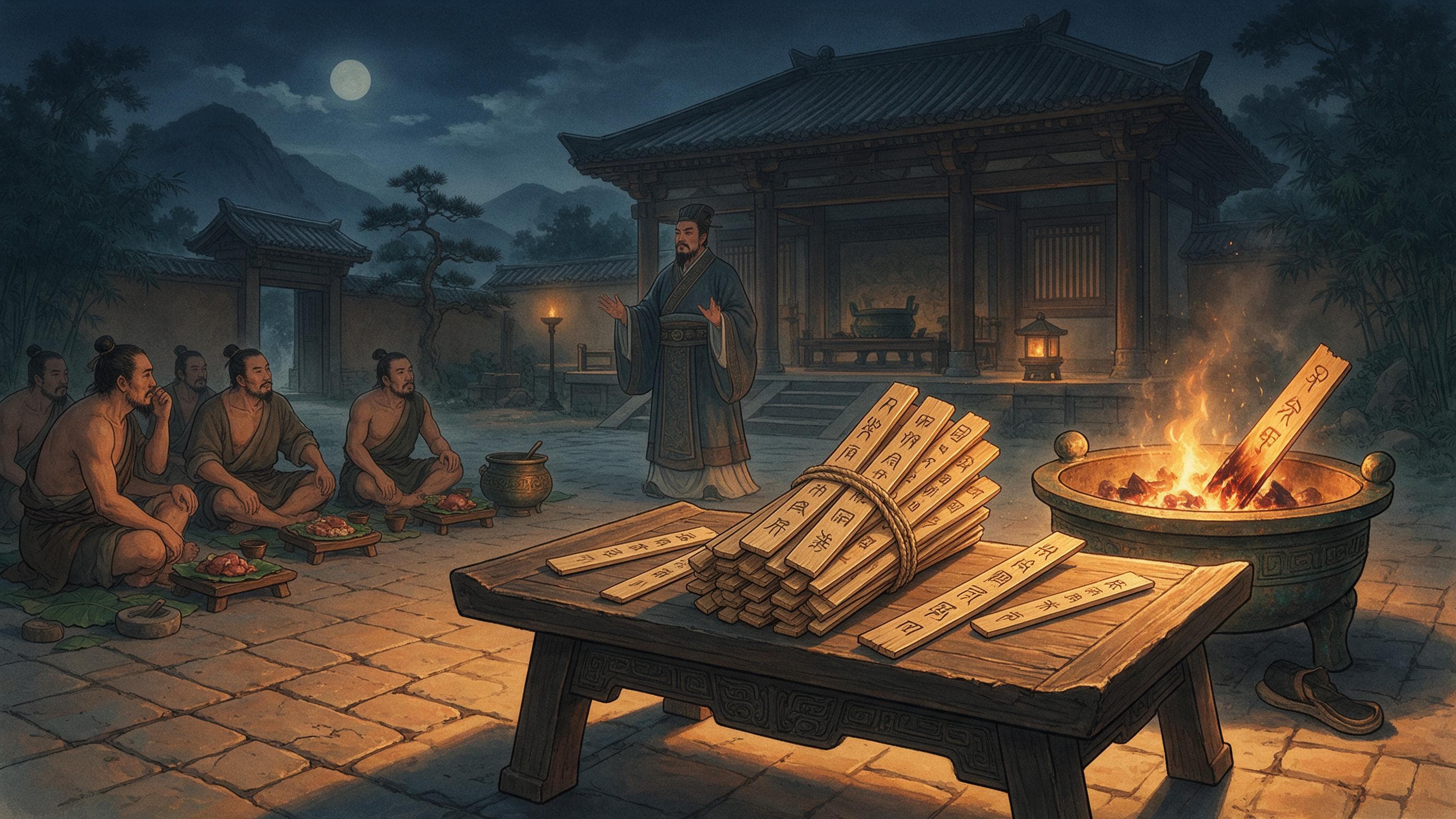
《汉书·景帝纪》是另一种页,马都散在单条记事里。中元四年:「御史大夫绾奏禁马高五尺九寸以上,齿未平,不得出关。」——高度与齿龄两个条件,一句话;照录。中元六年:「匈奴入雁门,至武泉,入上郡,取苑马。吏卒战死者二千人。」——被掠的苑马在雁门、上郡一带。后元二年:「春,以岁不登,禁内郡食马粟,没入之。」——荒年不许内郡拿粟喂马,犯者没收。
还有一条在遗诏里:「遗诏赐诸侯王列侯马二驷。」——赐马以「驷」计。禁、掠、没收、赐,纪里一条一条地记,马从来不是这一页的主角;这些条目里没有一份马政的总图,本文也不替它拼一张。
四、一具铜马式
《后汉书·马援传》从另一个方向写马:「援好骑,善别名马,于交阯得骆越铜鼓,乃铸为马式,还上之。」南方得来的铜鼓,熔成北方的马样。随之上表,开头一句最常被引:「夫行天莫如龙,行地莫如马。马者甲兵之本。国之大用。安宁则以别尊卑之序,有变则以济远近之难。」——这是马援一表之语,不是三页替汉代下的通说。
表里还给了三样东西。一,传承:「近世有西河子舆,亦明相法。子舆传西河仪长孺,长孺传茂陵丁君都,君群传成纪杨子阿,臣援尝师事子阿,受相马骨法」——页上前作「丁君都」,后作「君群」,照录不改。二,前代铜马:「孝武皇帝时,善相马者东门京铸作铜马法献之,有诏立马于鲁班门外,则更名鲁班门曰金马门。」三,自己的马式:「马高三尺五寸,围四尺五寸,有诏置于宣德殿下,以为名马式焉。」——两个尺寸照录,不折。所依诸家只列名目:「仪氏䩭、中帛氏口齿、谢氏唇鬐、丁氏身中」,没有一句骨法条文,这里也不补。
五、三页都不给的
三页都不给马的匹数、苑囿的数目与面积、马价的变化曲线——只有一个「百金」和一段描写;马式的尺寸照录,不折算;相马的骨法只有诸家名目,没有条文;「马者甲兵之本」只属于一道表;也不写「马政决定汉匈胜负」这类因果。北魏的牧场是另一篇,这里不并。
三页三种写法:一篇财政书给一个贵价、一段回忆中的景象;一篇本纪给一条关卡尺寸、一次苑马被掠、一道马料禁令、一份遗诏的赐马;一篇列传给一具带尺寸的铜马和一张师承名单。从牛车到街巷,页面上记下的是境况变了;它们从不数它,也从不写一个管马的衙门。
延伸阅读:四十里紫丝,五十里锦障:石崇与王恺的斗富 · 算缗与告缗:自报缗钱,半数给告发者 · 一法度衡石丈尺:六个字与三张进位表
参考来源与延伸阅读
- 《史记》卷三十·平准书(西汉司马迁撰;维基文库本,页面白文无注,未与中华书局点校本复核) — The two ends of Han horse wealth in one revenue treatise: at the founding, after the ruin of Qin, 'the son of heaven could not match his four horses in colour and some generals and chancellors rode ox-carts', with grain at ten thousand cash a shi and 'a horse at a hundred jin'; under Emperor Jing, drought west of Shang commandery, the sale of ranks at a lower price, convicts paying grain to cancel sentence, and 'park horses bred in greater numbers to broaden use'; then, looking back from the reign of Emperor Wu over seventy years, 'the common people had horses in the lanes, in herds between the field paths, and a man who rode a mare was shut out of gatherings'. No totals, no park numbers, no series of prices.
- 《后汉书》卷二十四·马援列传(南朝宋范晔撰;维基文库本,页面白文无注,未与中华书局点校本复核) — Ma Yuan, fond of riding and good at naming horses, melts bronze drums taken in Jiaozhi into a horse model and presents it with a memorial: 'in the sky nothing moves like the dragon, on earth nothing like the horse; the horse is the root of armour and weapons'; the transmission of the bone method from Ziyu of Xihe through Yi Changru, Ding Jundu and Yang Zi'e to himself; the earlier bronze of Dongmen Jing set outside the Luban gate, which was renamed the Golden Horse Gate; his own model three chi five cun high and four chi five cun around, set below the Xuande hall; and the families whose methods he followed, named only — Yi's bridle, Bozhong's mouth and teeth, Xie's lips and mane, Ding's body — with no bone rule written out.
- 《汉书》卷五·景帝纪(东汉班固撰;维基文库本,页面白文无注,未与中华书局点校本复核) — Single entries in the annals: in the fourth year of the middle era the imperial secretary Wan proposes forbidding horses five chi nine cun and more high, with teeth not yet worn level, to leave the passes; in the sixth year the Xiongnu enter Yanmen, reach Wuquan, enter Shang commandery and take the park horses, with two thousand officers and men killed; in the second year of the final era, the harvest failing, the inner commanderies are forbidden to feed grain to horses and the grain is confiscated; and the deathbed edict gives the kings and marquises two teams of four horses each.