《礼记·内则》里有一串名字,念起来像菜单:「牛脩、鹿脯、田豕脯、麋脯、麕脯。」——牛脩、鹿脯、野猪肉脯、麋脯、麕脯,五种干肉,一字排开。下一句是「麋、鹿、田豕麕皆有軒,雉、兔皆有芼」,再往下就转到别的菜了:它不说这些脯怎么切、怎么腌、用多少盐。《齐民要术》卷八的「脯腊第七十五」反过来:节令、天数、手感写得细,配比却全是「適口」「量多少」。两页对读,正好一个给菜单,一个给做法,中间没有一张共同的表。
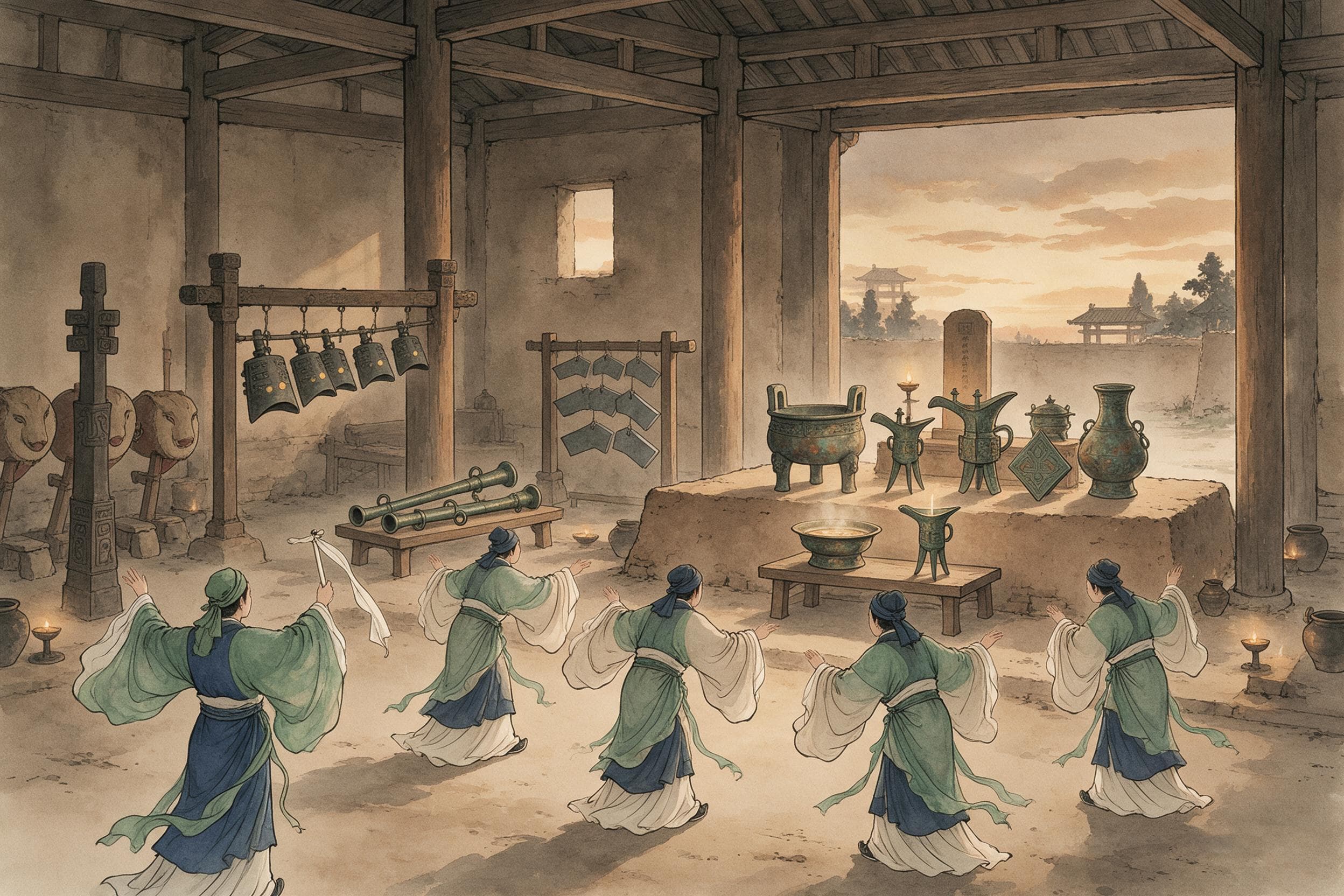
牛脩、鹿脯、田豕脯
《内则》这一节列的是饭、膳、饮、酒、羞、食的次序,脯是「食」里的东西;这是礼书的规定,不是谁家厨房的账;一般认为《礼记》编成于战国至汉初,它把大夫、士、庶人耆老分开来规定。五种名字里,只有「鹿脯」两个字和今天的「肉脯」同形,其余各按各的叫法。「麋、鹿、田豕麕皆有軒,雉、兔皆有芼」一句,本页无注,「脩」「軒」「芼」怎么讲,这里不替它补。能确定的只是名单:野猪、麋、麕、鹿、牛上了这张菜单。
麦食、脯羹、兔醢
脯在《内则》里从不单独出现。「食:蝸醢而苽食、雉羹,麥食、脯羹、雞羹,折稌、犬羹、兔羹,和糝不蓼。」——麦食配脯羹、鸡羹;稻米饭配犬羹、兔羹。再往下是一张配对表:「腶脩,蚳醢;脯羹,兔醢;麋膚,魚醢;魚膾,芥醬;麋腥,醢醬;桃諸、梅諸,卵鹽。」——腶脩配蚳醢,脯羹配兔醢,麋膚配鱼醢,每一样都有它的酱。醢,通行训释是肉酱;本页无注。
还有一条等级规矩:「大夫燕食,有膾無脯,有脯無膾。」——大夫平时吃饭,有细切的膾就不上脯,有脯就不上膾,两样不并出;底下接着「士不貳羹胾」「庶人耆老不徒食」。另有一句把干肉排进季节菜单:「夏宜腒鱐,膳膏臊。」——夏天宜腒鱐;腒鱐,通行训释是干肉与干鱼,本页无注。到这里为止,礼书管的都是「配什么、什么时候上、谁能并吃」,没有一句讲切法、盐量与天数。
片脯三宿,条脯尝看
北魏的《齐民要术》,「脯腊第七十五」先给时间表:「正月、二月、九月、十月為佳。」——五味脯挑这四个月。「用牛、羊、麞、鹿、野豬、家豬肉。或作條,或作片……」,破肉要「順理,不用斜斷」。然后是流程:牛羊骨搥碎,煮熟取汁,掠去浮沫,停之使清;用好豉以骨汁煮,色足味调,漉去滓;冷了下盐、细切葱白擣熟,椒、薑、橘皮皆末之,以浸脯,「手揉令徹」。出缸看形状:「片脯三宿則出,條脯須嘗看味徹乃出。」——片的三夜就出,条的要用嘴尝到味透。
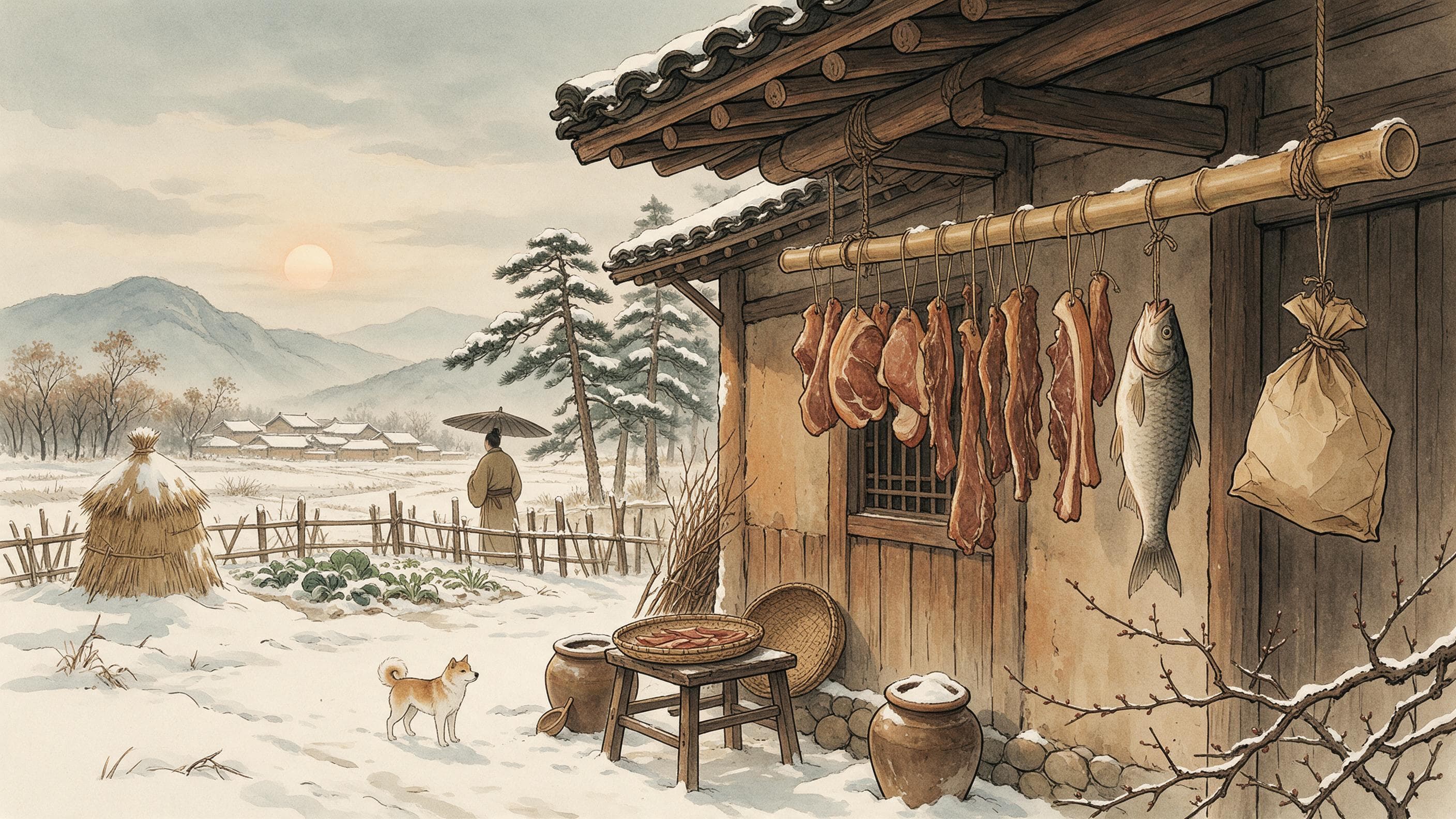
出了缸就挂起来陰乾,条脯「浥浥時,數以手搦令堅實」;成了「置虛靜庫中」,因为「著煙氣則味苦」;「紙袋籠而懸之」,因为「置於甕則鬱浥」,不笼则「青蠅、塵污」。臘月做的条脯另有名字「瘃脯」,堪度夏;取时「先取其肥者」——肥的腻,不耐久。
其他几法各有时间。度夏白脯「臘月作最佳。正月、二月、三月,亦得作之」;甜肥脯「臘月取獐、鹿肉」,不著盐;鱧魚脯「十一月初,至十二月末作之」;五味腊「臘月初作」,浸「四五日」;脆腊也是「臘月初作」;浥魚「四時皆得作之」。为什么挑这些月份,书里不说;能看到的只有安排:要过夏的,赶在臘月做。
十箇一貫
鱧魚脯最见手艺:「不鱗不破,直以杖刺口中,令到尾。」——不刮鳞、不开膛,一根杖从鱼口直穿到尾巴,杖尖做成「樗蒱之形」。「作鹹湯,令極鹹,多下薑、椒末,灌魚口,以滿為度。」——极咸的汤,多放姜椒末,从鱼口灌满。「竹杖穿眼,十箇一貫,口向上,於屋北簷下懸之,經冬令瘃。至二月、三月,魚成。」——竹杖穿孔,十条一贯,鱼口朝上,挂在北檐下过冬,到二三月才成。吃法两种:「生刳取五臟,酸醋浸食之」;或者「草裹泥封,煻灰中爊之」,去泥草,用皮布裹着搥,「白如珂雪」。
另两法讲的是手感。度夏白脯取精肉:「破作片,冷水浸,搦去血,水清乃止」;白盐澄清加椒末浸,「再宿出,陰乾」;半干时「以木棒輕打,令堅實」,但「僅使堅實而已,慎勿令碎肉出」。甜肥脯更省:「片,厚薄如手掌。直陰乾,不著鹽」,成品「脆如凌雪」。这些「浥浥」「堅實」「脆」都是手上与嘴上的词,不是秤上的数。
适口而已
配比确实没有。盐是「適口而已,勿使過鹹」;椒、薑、橘皮「皆末之」,注一句「量多少」;骨汁煮豉只要求「色足味調」。同卷的肉醬法就精确得多:「肉一斗,麴末五升,白鹽兩升半,黃蒸一升。」但那是酱,不是脯;同一卷的数不能搬过来用,书里也没说为什么脯不记数。能照做的只有顺序和手感:煮汁、下盐、揉透、出缸、穿绳、阴干、搦实、笼悬。
两页合起来,各给了一半。礼书给名单与配对:五种脯、脯羹配兔醢、大夫燕食有膾无脯;农书给时令与手法:正月到十月、片脯三宿、十箇一貫、纸袋笼悬。中间没有一张共同的表:礼书不说脯怎么做,农书不说脯配什么。还有一层分线:卷八相邻的「作魚鮓第七十四」讲鲊与糟,是湿法腌渍;这一篇「脯腊第七十五」讲干法,两篇相连。两页都不载脯的价钱、重量与产地;本篇不折现代重量,也不写「保存食物的智慧」这类话。
延伸阅读:唐长安人怎么住:坊、院与一间赁来的宅 · 圭、束帛与乘马:聘礼里的一次出使 · 下棺那一天:既夕礼的启、迁、发引与反哭
参考来源与延伸阅读
- 《齐民要术》卷第八·脯腊第七十五(北魏贾思勰;维基文库本,未与点校本复核) — The whole dry-curing chapter. Five-flavour dried meat: 'the first, second, ninth and tenth months are best' (正月、二月、九月、十月為佳); meats 'beef, mutton, zhang, deer, wild boar and domestic pig, cut into strips or slices' (或作條,或作片), always with the grain; bone broth, fermented beans, then 'salt — to taste only, do not let it be too salty' (鹽,適口而已,勿使過鹹), scallion white pounded, 'pepper, ginger and orange peel all powdered, as much as needed' (椒、薑、橘皮,皆末之,量多少); steep and 'knead through with the hand' (手揉令徹); 'slices come out after three nights, strips when you taste the flavour has gone through' (片脯三宿則出,條脯須嘗看味徹乃出); string them and dry in shade under the north eave; press strips firm while damp; keep in a quiet store, 'smoke makes the taste bitter', 'paper bag and hang — in a jar it sweats, unbagged it takes flies and dust' (紙袋籠而懸之); twelfth-month strips are 'chill-cured' (瘃脯) and keep through summer; 'take the fat first, fat is greasy and does not keep' (先取其肥者). White dried meat for summer: twelfth month best, first to third also possible; lean flesh, cold-water soak and wring until clear, clear white brine with pepper, two nights, shade-dry, 'tap lightly with a stick to firm it, firm only, do not let shreds come out' (僅使堅實而已,慎勿令碎肉出). Sweet fat dried meat: twelfth month, zhang and deer, slices as thick as a palm, shade-dried 'with no salt', 'crisp as snow'. Snakehead dried meat: eleventh month to end of twelfth, unscaled and unopened, a stick thrust mouth to tail, extremely salty brine with ginger and pepper poured into the mouth, bamboo through the eyes, 'ten to a string' (十箇一貫), hung under the north eave through winter, done by the second or third month, eaten raw with sour vinegar or roasted in mud and embers until 'white as snow'. Five-flavour cured meat: twelfth month, birds and fish, steeped 'four or five days'; crisp cured meat: twelfth month, boiled then shade-dried; damp-salted fish: any season. The same juan's meat-paste recipe is exact by contrast (one dou meat, five sheng koji powder, two and a half sheng white salt, one sheng yellow steamed wheat), which is why the absence of figures in the dried-meat methods is a fact about this chapter, not about the book.
- 《礼记·内则》(维基文库本,未与点校本复核) — The ritual menu. The list of dried meats: 'beef strips, dried deer, dried wild boar, dried mi, dried jun; mi, jun, deer and wild boar each had their xuan, pheasant and hare their mao' (牛脩、鹿脯、田豕脯、麋脯、麕脯……雉、兔皆有芼). The pairings: 'wheat food with dried-meat soup and chicken soup' (麥食、脯羹、雞羹); 'sliced dried meat with ant-egg paste; dried-meat soup with rabbit paste; elk skin with fish paste; fish slices with mustard sauce' (腶脩,蚳醢;脯羹,兔醢……). The rank rule: 'a grand officer at an ordinary meal has either minced meat or dried meat, not both' (大夫燕食,有膾無脯,有脯無膾), followed by 'a shi does not have two soups and two cuts' and 'commoners' elders do not eat bare'. The seasonal line: 'in summer, dried meat and dried fish are fitting, with rank-smelling fat' (夏宜腒鱐,膳膏臊). The page is text without commentary: it does not gloss xiu, xuan, mao, hai, ju or su, and gives no method, salt quantity or day count anywhere.