《漢書·食貨志》裡最有名的一句倉廩話,是「太倉之粟陳陳相因,充溢露積於外,腐敗不可食」——京師的太倉裡,陳糧壓著陳糧,滿出來堆在露天,爛得不能吃。這句話常被拿來說漢代糧多;它確實寫在「至武帝之初七十年間」那一段裡,是追述當時的豐足,不是某一年某座倉的庫存帳。
太倉與常平倉
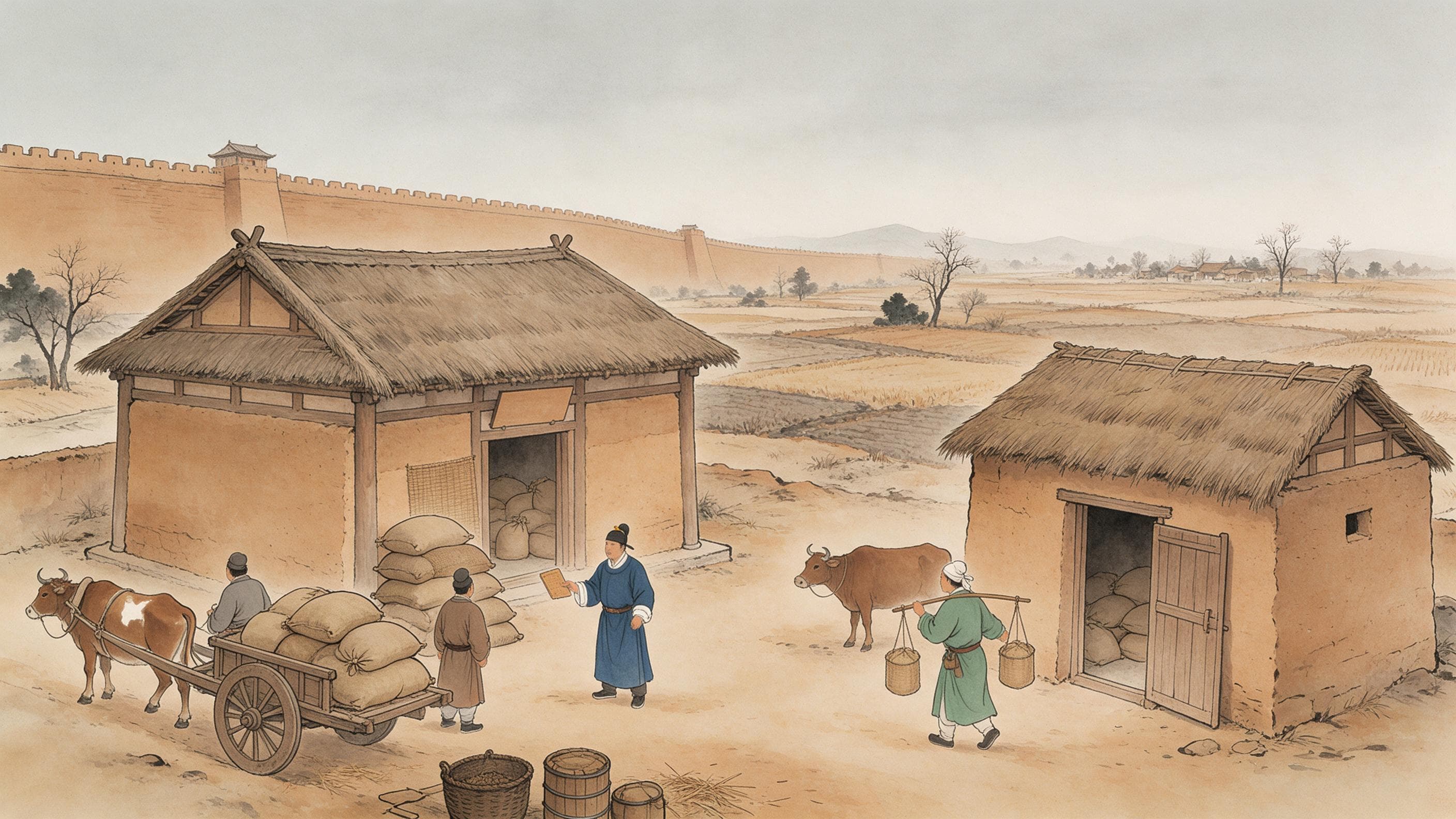
太倉在京師,收的是從關東漕運來的糧,供京師用。同篇講桑弘羊均輸時說:「山東漕益歲六百萬石。一歲之中,太倉、甘泉倉滿。」六百萬石是漕糧數,不是倉的容量;兩頁都沒有漢代倉的容量、倉數、管理人員。能說的只有用途:太倉是國家的正倉,管的是「收多少、供多少」的流量。
常平倉是另一種東西。它不在京師,在邊郡;不算流量,算價格:穀賤時加價買進來,穀貴時減價賣出去。一個倉管的是糧往哪裡走,另一個倉管的是糧價往哪裡走。這一篇要寫的是後一個,從設立到罷廢。
穀至石五錢
設倉的由頭是一句糧價。宣帝即位後,「用吏多選賢良,百姓安土,歲數豐穰,穀至石五錢,農人少利」——連年豐收,穀價落到一石五錢,種糧的人反而沒利。穀太賤,傷的是農;這是常平倉要解決的事,與「糧食不夠」正相反。
提這件事的人是耿壽昌,官居大司農中丞,「以善為算能商功利得幸於上」,五鳳年間上奏。他先算了一筆漕運帳:「故事,歲漕關東穀四百萬斛以給京師,用卒六萬人。宜糴三輔、弘農、河東、上黨、太原郡穀足供京師,可以省關東漕卒過半。」——往年從關東漕四百萬斛到京師,用六萬人;改從三輔等近郡買糧,可省一半以上的漕卒。先算帳,再提制度。
賤糴貴糶
然後是那句核心:「壽昌遂白令邊郡皆築倉,以穀賤時增其賈而糴,以利農,穀貴時減賈而糶,名曰常平倉。民便之。」——讓邊郡都築倉,穀賤時加價收買,穀貴時減價賣出。地點寫的是「邊郡」,不是全國;效果只寫了「民便之」三個字,是原文的評價,不是成效統計。上「乃下詔,賜壽昌爵關內侯」。
蕭望之反對
常平倉不是沒人反對。御史大夫蕭望之上奏,先算另一筆帳:「今壽昌欲近糴漕關內之穀,築倉治船,費直二萬萬餘,有動眾之功,恐生旱氣,民被其災。」——就近買糧、築倉造船,要花兩萬萬多,還要動眾。再評這個人:「壽昌習於商功分銖之事,其深計遠慮,誠未足任,宜且如故。」——他擅長算小利,長遠的大計靠不住,不如照舊。上「不聽」。同一年蕭望之還爭過另一件事:有人要加海租,他說往年加租,魚就不出。這兩件事在原文裡前後相接,但不是同一句話;能確定的只是:管錢的官提了倉,管監察的官拿成本與「動眾」反對,皇帝選了前者。
元帝罷倉
常平倉的壽命,到換皇帝為止。元帝即位,「天下大水,關東郡十一尤甚」;二年,「齊地饑,穀石三百餘,民多餓死,琅邪郡人相食」。就在這段之後,原文寫:「在位諸儒多言鹽鐵官及北假田官、常平倉可罷,毋與民爭利。上從其議,皆罷之。」——穀價從石五錢漲到三百餘錢的那個時候,常平倉被歸入「與民爭利」,與鹽鐵官、北假田官一起罷掉。罷後還有一句:「其後用度不足,獨復鹽鐵官。」——後來錢不夠用,只恢復了鹽鐵官,常平倉沒有跟著回來。這就是這條線的結尾:設立、運作、反對、罷廢,四步都寫在《漢書》這一頁上,沒有「沿用兩千年」這種後話。
《通典》卷十二也講這段,但它是唐人的類編,文字基本照抄《漢書》,只能當對照,不能算第二條獨立證據;它另用一句話記後漢「永平五年,作常平倉」、晉「泰始四年,立常平倉,豐則糴,儉則糶」,沿革只到這一句為止。同頁還有唐天寶八年「太倉七萬一千二百七十石」,那是唐代的帳,名字與漢太倉相同,數目不能倒推漢代,本文不用。與站內《隋唐糧倉》那篇也不同:那篇講倉內怎麼收、怎麼存,這篇講國家為什麼設倉——一個管流程,一個管動機。
缺口照實說:兩頁沒有漢代倉的容量與倉數,沒有管理人員,沒有常平倉的具體倉址,也沒有它平抑糧價的成效數字;「民便之」是原文的評價。糧價照錄(石五錢、石三百餘錢),不折算購買力,不估容量,不寫倉的建築形制。國家設倉,不只是把糧存起來;常平倉想管的是糧價——但這一頁只給了它一個開頭和一個結尾。
延伸閱讀:函谷關:一座關在三種話裡的三種角色 · 兩座墓的帳:邵家棚 M102、M110 · 安陽的另一座商代城:洹北商城
參考來源與延伸閱讀
- 《汉书》卷二十四·食货志(东汉;维基文库本,未与点校本复核) — Two kinds of store and one policy. The imperial granary in the capital: 'the grain of the Grand Granary lay layer on layer, brimming over and piled outdoors, rotting and unfit to eat' (太倉之粟陳陳相因,充溢露積於外,腐敗不可食) — a retrospective of the first seventy years, not a storehouse statistic; and under Sang Hongyang's transport reforms, 'the grain shipped from east of the mountains rose to six million shi a year, and in one year the Grand Granary and the Ganquan Granary were full' (山東漕益歲六百萬石……太倉、甘泉倉滿). The Ever-Normal Granary: under Emperor Xuan, 'years were repeatedly abundant and grain fell to five cash a shi, so farmers profited little' (歲數豐穰,穀至石五錢,農人少利); the grand director of agriculture's assistant Geng Shouchang, 'good at calculation and able to reckon profit', proposed in the Wufeng years to buy grain from the metropolitan and neighbouring commanderies to supply the capital and 'save more than half' of the 60,000 transport troops; then 'ordered every frontier commandery to build granaries, buying at a raised price when grain was cheap to help the farmer, selling at a reduced price when it was dear, and calling it the Ever-Normal Granary; the people found it convenient' (邊郡皆築倉……名曰常平倉。民便之), and the emperor granted him the rank of marquis within the passes. The imperial secretary Xiao Wangzhi objected, putting the cost at 'more than twenty million' and calling Geng 'versed in calculating profits by fractions of a cash; his deep plans are not to be relied on' (習於商功分銖之事……宜且如故); the emperor did not listen. On Emperor Yuan's accession, after great floods and a famine in Qi where 'grain reached three hundred cash a shi', the Confucians said the salt and iron offices, the Beijia field office and the Ever-Normal Granary 'contended with the people for profit' and all were abolished; later, when funds ran short, 'only the salt and iron offices were restored' (獨復鹽鐵官) — the barns were not.
- 《通典》卷十二·食货十二·轻重(唐杜佑;维基文库本,未与点校本复核) — A Tang encyclopaedia, used only as a parallel and explicitly not as an independent Han source: it retells the Han story almost word for word (漢宣帝時,歲數豐穰……名曰常平倉,人便之……元帝即位,罷之), then gives one line each for the Later Han (明帝永平五年,作常平倉) and the Jin (泰始四年,立常平倉,豐則糴,儉則糶). The same chapter also lists Tang storehouse totals for the eighth year of Tianbao — including 'the Grand Granary, 71,270 shi' — which are Tang figures under a Han-sounding name and are not used in this article.