長安的官倉吃的是關東的糧。漢初,這條線上一年運進來多少,《史記·平準書》只給了一個約數:「漕轉山東粟,以給中都官,歲不過數十萬石。」把關東的粟轉運來,供給京師的官府,一年不超過幾十萬石。幾十萬石是個什麼概念,這一頁不換算;它只提供一個起點——此後百年間,同一個數字一路往上走,最高的一處是「六百萬石」。
漢初:歲不過數十萬石
《史記》把這句寫在孝惠、高后之後;《通典》卷十的漕運篇把它繫在「高皇帝時」,並加注:「謂京師之官府。」——中都官不是所有官,是京師的官府。兩書對年份的擺法略有出入,但都認這是漢初的量級:幾十萬石。同頁交代得很清楚:那時「量吏祿,度官用,以賦於民」,官府的用度先算,再向民徵收;漕轉就是這筆帳裡的一項。
這條線兩端的名字值得看清。一端是「山東」,本頁未注,通行讀法指華山以東的關東地區;一端是「中都官」,京師的各官府。中間沒有提倉、沒有提船、沒有提人,只有「漕轉」兩個字。幾十萬石是這條線運轉起來之後的淨結果,不是某一次運輸的量。
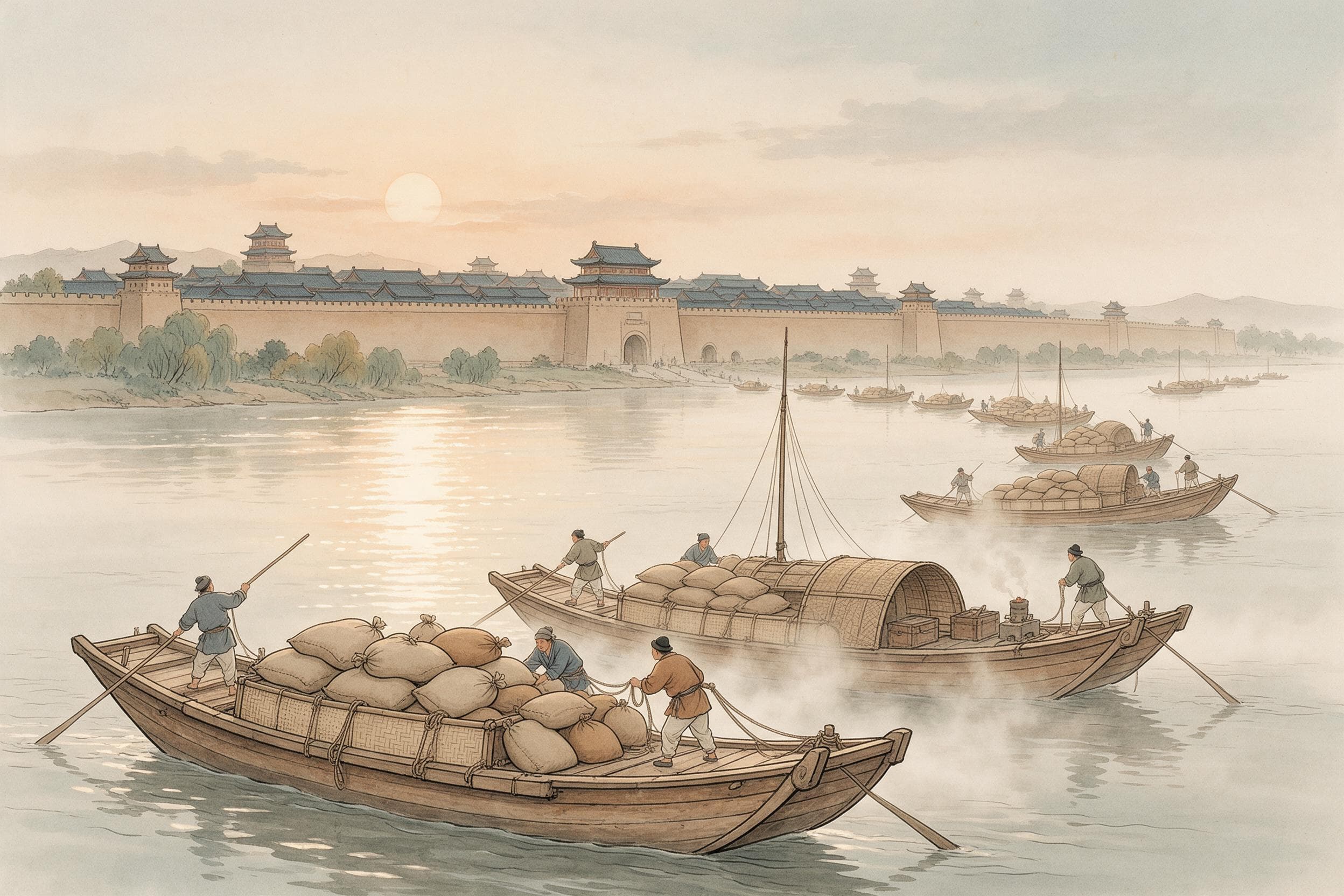
關東的粟,走水路進長安
糧食從關東進長安,主要走水。鄭當時在元光中給武帝算過一筆時間帳:過去關東運粟,「漕水從渭中上,度六月而罷」,而渭水道九百餘里,時有難處;若改走新開的直渠,「度可三月罷」,可以「損漕省卒」。一個單程估計六個月,換道之後估計三個月。兩個數都帶「度」字,是估計不是實測;《通典》接下去只寫一句「大便利」,沒有給實際年運量。
賈誼在文帝時把成本說得更直:「輸將起海上而來,一錢之賦,數十錢之費。」——從海邊起運,一文錢的賦要花幾十文錢的運費;「上之所得甚少,而人之苦甚多也」。這是政論,不是統計,文帝也沒有採納;但它把問題講明白了:糧走得越遠,路上吃掉的越多。《通典》開篇引《管子》「粟行五百里,則眾有饑色」,說的是同一件事,同樣是議論,不是漢制。
三十鍾致一石
秦的算法在《通典》裡:「秦欲攻匈奴,運糧,使天下飛芻挽粟……率三十鍾而致一石。」注接著說:「六斛四斗為鍾。計其道路所費,凡用百九十二斛乃得一石。」——三十鍾運出去,送到一石;一鍾六斛四斗,注自己算出要用一百九十二斛才換得一石。這條線不是往長安:起於黃、腄、琅玡這些靠海的郡,轉輸到北河。方向不同,不能拿它當漢漕的運費率。
同一個「幾十鍾換一石」的公式,兩頁上不止一處。《史記·平準書》寫通西南夷道:「作者數萬人,千里負擔饋糧,率十餘鍾致一石。」幾萬人修路,千里挑擔送糧,十幾鍾才送到一石。《通典》把這句繫在「建元中」,《史記》寫在衛青取河南地之後,兩個年份對不上,數字仍是「十餘鍾」。同頁還有一句更直白:「行者齎,居者送。」走的人自帶乾糧,留在家的人往外送。
武帝朝:從百餘萬到六百萬
武帝朝的數字開始變形。築朔方之後,「轉漕甚遼遠,自山東咸被其勞,費數十百巨萬,府庫益虛」——轉漕路遠,山東都被拖累,花費幾十百巨萬。番系議漕時提到當時的量:「漕從山東西,歲百餘萬石,更底柱之險,敗亡甚多而亦頗費。」一年百餘萬石,還要過底柱之險,路上損失很大。再往後,《平準書》有一句「而下河漕度四百萬石,及官自糴乃足」——漕運估計四百萬石,還要加上官府自己糴買才夠。這是武帝朝的四百萬石,與後面宣帝那個四百萬斛不是同一條。
到元封元年,桑弘羊領大農,均輸、平準一起上,「山東漕益歲六百萬石。一歲之中,太倉、甘泉倉滿」——山東漕糧增加到一年六百萬石,一年之內太倉、甘泉倉都滿了。「益」字說明這是增加後的數;《平準書》沒說它維持了幾年,也沒給船數、人數。同頁另有一處看得出漕運在官僚考核裡的位置:卜式做成皋令,「將漕最」——管漕運考核第一,因此被拜為齊王太傅。
宣帝:四百萬斛,六萬卒
宣帝五鳳中,耿壽昌上奏先擺了一個舊例:「故事,歲漕關東穀四百萬斛以給京師,用卒六萬人。」按舊例,一年漕關東穀四百萬斛供京師,用卒六萬人。他建議改在三輔、弘農、河東、上黨、太原等郡就近糴穀,「可以省關東漕卒過半」。蕭望之反對,理由之一是錢:「築倉理船,費直二萬萬餘」,還有「動眾之功」;又說耿壽昌「習於商功分銖之事」,深計遠慮不足任,「宜且如故」。帝不聽,「漕事果便」。四百萬斛和六萬卒,是這條線上唯一一對同時給出的運量與人力。
把兩頁的數字排開,是一條分期的線:漢初「歲不過數十萬石」;武帝時番系口中「歲百餘萬石」、《平準書》「度四百萬石」,到元封元年「益歲六百萬石」;宣帝時舊例「四百萬斛,用卒六萬人」,並試圖把卒減半。每一處都有出處、有朝代,不能合成一個「漢代漕運量」。兩頁沒有的也清楚:沒有船的形制與載重,沒有漕渠的工役與長度,沒有全程耗費的總帳,也沒有折算成今天的噸位。能確定的只有方向——關東的粟,往長安走。
延伸閱讀:陵邑:先有陵,還是先有縣 · 溝洫:從一尺深的畎到川 · 一方陵園,一個名字:上召窯秦陵與華陽太后
參考來源與延伸閱讀
- 《史记》卷三十·平准书(西汉;维基文库本,未与点校本复核) — The Shi Ji's figures and the line itself. Early Han: 'grain was shipped and transferred from east of the mountains to supply the officials at the capital, no more than several hundred thousand shi a year' (漕轉山東粟,以給中都官,歲不過數十萬石), in a passage that also says officials' salaries were measured and government needs reckoned before the tax was levied (量吏祿,度官用,以賦於民). After Shuofang: 'the transport was very distant, all east of the mountains bore the labour, the spending ran to tens and hundreds of millions, and the treasury grew empty' (轉漕甚遼遠,自山東咸被其勞,費數十百巨萬,府庫益虛). On the southwest road: 'the workers numbered tens of thousands, carrying grain a thousand li on their backs, and more than ten zhong delivered one shi' (作者數萬人,千里負擔饋糧,率十餘鐘致一石); and 'those who travel carry their own, those who stay send it out' (行者齎,居者送). Under Wu: 'the grain shipped down the river was reckoned at four million shi, and only with the government's own purchases was there enough' (而下河漕度四百萬石,及官自糴乃足); then 'the eastern transport increased to six million shi a year; within one year the Tai Cang and Gan Quan granaries were full' (山東漕益歲六百萬石。一歲之中,太倉、甘泉倉滿). Bu Shi as magistrate of Chenggao 'was best at transport' (將漕最). The treatise ends before Emperor Xuan, so its four-million figure belongs to Emperor Wu and is not the four million hu of the Tong Dian's Xuan Di passage; nor does it contain Qin's thirty-zhong ratio.
- 《通典》卷十·食货十·漕运(唐杜佑;维基文库本,未与点校本复核) — A Tang compilation that preserves the Qin ratio and the Xuan Di figures. Qin: 'to attack the Xiongnu, grain was moved, and the world was made to fly fodder and haul millet … thirty zhong delivered one shi' (率三十鍾而致一石), with the note 'six hu four dou make one zhong; reckoning what the road consumed, one hundred and ninety-two hu were used to obtain one shi' (六斛四斗為鍾……凡用百九十二斛乃得一石); the route ran from the coastal commanderies of Huang, Zhui and Langya north to the Bei river, not to Chang'an. Early Han: the same 'no more than several hundred thousand shi' sentence, here assigned to 'the time of the first emperor', with the note 'this means the offices at the capital' (謂京師之官府). Jia Yi's memorial under Wen: 'on a cash of one coin in tax, tens of coins go on carriage' (一錢之賦,數十錢之費). The southwest road's 'more than ten zhong for one shi' is dated here to the jianyuan era. Zheng Dangshi in the yuan-guang era: a Wei-river run reckoned at six months, three by the new channel (度六月而罷……度可三月罷). Fan Xi: 'grain came from east and west of the mountains, more than a million shi a year, past the hazard of Dizhu, and much was lost' (漕從山東西,歲百餘萬石,更底柱之險,敗亡甚多). Xuan Di, wufeng: 'by precedent, four million hu of eastern grain were shipped each year to supply the capital, using sixty thousand men' (故事,歲漕關東谷四百萬斛以給京師,用卒六萬人), Geng Shouchang's proposal to buy nearby and halve the troops, Xiao Wangzhi's objection that granaries and boats would cost 'more than twenty million' (費直二萬萬餘), and the emperor's refusal, after which 'the transport indeed went conveniently' (漕事果便). The Tong Dian is a later compilation and not an independent witness to the Han text, but the Xuan Di passage is the only one of these two pages that carries that reign's figures.