一條罪,一句數不清。《史記·平準書》寫漢武帝時的錢:「盜鑄諸金錢罪皆死,而吏民之盜鑄白金者不可勝數。」——盜鑄金錢,罪都是死;可官民裡盜鑄白金的,多得數不清。同卷後面還有一句更直接:「犯者眾,吏不能盡誅取。」——犯的人太多,官吏殺不完。這篇寫的就是這兩句之間的事:一條死罪,和它沒能擋住的人。
一、先放後禁:政策的兩頭
開頭是「放」。《史記》說,到孝文帝時,「莢錢益多,輕,乃更鑄四銖錢,其文為『半兩』,令民縱得自鑄錢」。同一年,《漢書·食貨志》的寫法是:「為錢益多而輕,乃更鑄四銖錢,其文為『半兩』。除盜鑄錢令,使民放鑄。」——一個是「令民縱得自鑄錢」,一個是「除盜鑄錢令,使民放鑄」;兩書說的是同一道政令,用詞不同,本篇並列照錄。這一放的結果,本頁也寫了:「故吳諸侯也,以即山鑄錢,富埒天子……鄧通,大夫也,以鑄錢財過王者。故吳、鄧氏錢布天下,而鑄錢之禁生焉。」——吳王的錢、鄧通的錢布天下,禁錢的令就是從這兒來的。
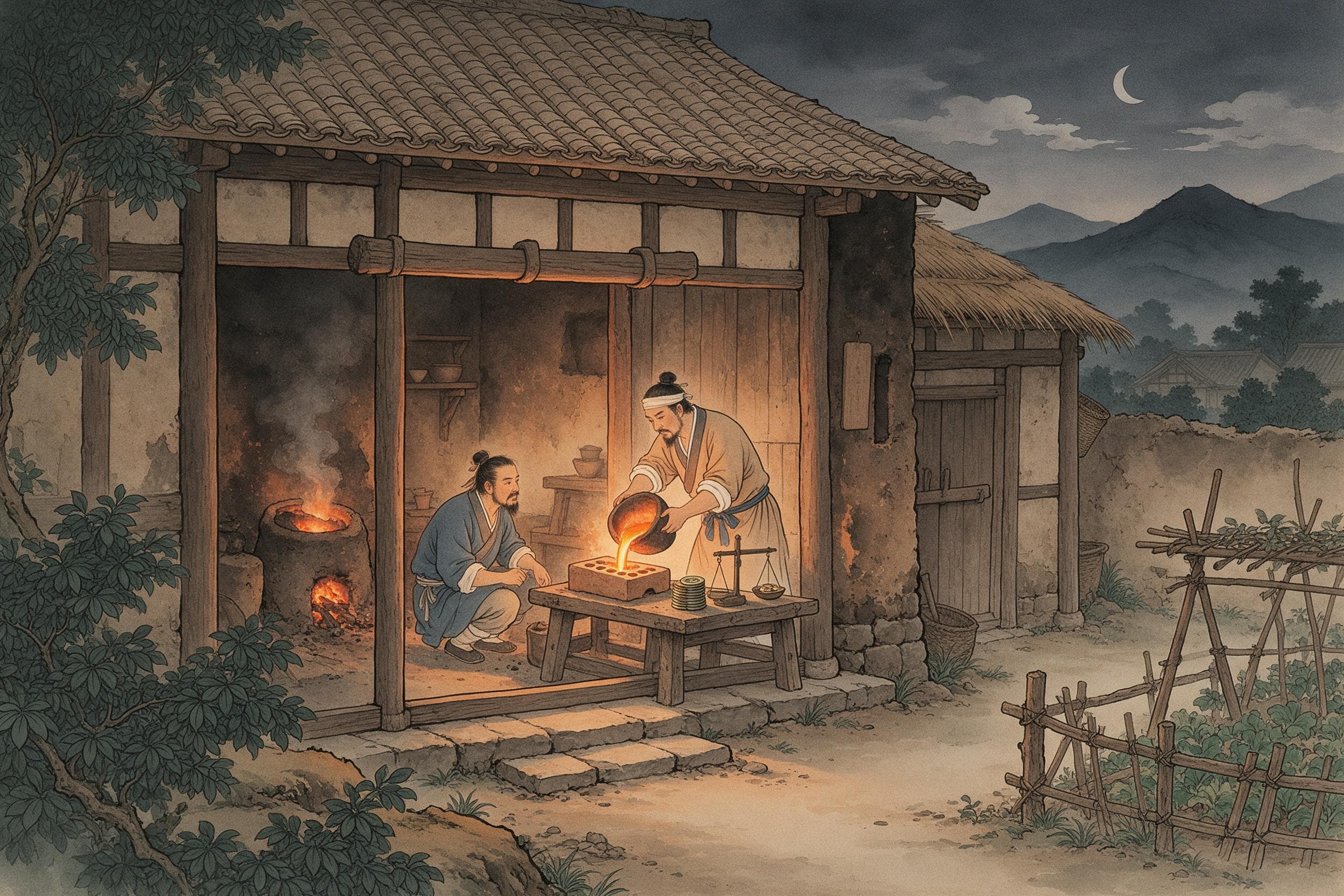
中間隔了四十餘年,到武帝:「自孝文更造四銖錢,至是歲四十餘年,從建元以來,用少,縣官往往即多銅山而鑄錢,民亦閒盜鑄錢,不可勝數。錢益多而輕,物益少而貴。」國家自己在銅山鑄錢,民間也偷著鑄,數不清;錢越多越輕,東西越少越貴。之後是那次改幣:銷半兩錢、更鑄三銖錢,又造白金三品,緊接著就是那句刑罰。
二、一紙死罪
刑罰的話,兩書幾乎一字不差。《史記》:「盜鑄諸金錢罪皆死,而吏民之盜鑄白金者不可勝數。」《漢書》:「盜鑄諸金錢罪皆死,而吏民之犯者不可勝數。」前半句一樣,後半句一個寫「盜鑄白金者」、一個寫「犯者」,本篇並列,不替它們統一。要說清的是:兩頁只給「罪皆死」這一層,不給刑名清單;「棄市」二字出現在賈誼的諫語裡,是他說的,本篇算在他名下。
賈誼的諫語還有一筆帳,算的是罰的等級:「法使天下公得顧租鑄銅錫為錢,敢雜以鉛鐵為它巧者,其罪黥。然鑄錢之情,非殽雜為巧,則不可得贏;而殽之甚微,為利甚厚。」——不摻假就賺不到錢,摻一點點就利很厚;所以「雖黥罪日報,其勢不止」。他把兩種罰都比過:「曩禁鑄錢,死罪積下;今公鑄錢,黥罪積下。」從前禁鑄,死罪在下面堆著;如今公開放鑄,黥罪在下面堆著。這是他的判斷,標為賈誼語。
三、數十萬坐罪者
規模在這幾句裡,量詞照錄:「自造白金五銖錢後五歲,赦吏民之坐盜鑄金錢死者數十萬人。其不發覺相殺者,不可勝計。赦自出者百餘萬人。然不能半自出,天下大抵無慮皆鑄金錢矣。犯者眾,吏不能盡誅取。」——坐盜鑄金錢當死、被赦的有數十萬人;沒被發覺而彼此殺害的,不可勝計;自首被赦的百餘萬人;然而自首的不到一半;天下大抵都在鑄金錢;犯者太多,官吏殺不完。這幾個數(數十萬、百餘萬、不可勝計)各是各的量詞,本篇照錄,不相加、不推算總數、也不折成今天的數目。
為什麼止不住,本頁的解釋就到「犯者眾,吏不能盡誅取」這一句:人多到殺不過來。本篇不替它加「貨幣主權」或「國家能力」這類說明;也不把「天下大抵無慮皆鑄金錢矣」當成統計數——那是一句概括,照錄就是概括。
四、錢越輕,法越重
再往後的一段,是收緊的過程,一句接一句:「郡國多姦鑄錢,錢多輕,而公卿請令京師鑄鐘官赤側,一當五,賦官用非赤側不得行。」赤側錢一當五,非它不行;接著「白金稍賤,民不寶用,縣官以令禁之,無益」;「其後二歲,赤側錢賤,民巧法用之,不便,又廢」。最後是那句總收:「於是悉禁郡國無鑄錢,專令上林三官鑄。錢既多,而令天下非三官錢不得行,諸郡國所前鑄錢皆廢銷之,輸其銅三官。而民之鑄錢益少,計其費不能相當,唯真工大姦乃盜為之。」——郡國一律不許鑄,只讓上林三官鑄;舊錢全銷毀,銅送三官;私鑄的少了,因為算下來成本抵不過,只有真工大姦還幹。
把賈誼那句話放在這段旁邊看,很有意思:他說「令禁鑄錢,則錢必重;重則其利深,盜鑄如雲而起,棄市之罪又不足以禁矣」。而後來的實況,本頁寫成「鑄錢益少,計其費不能相當,唯真工大姦乃盜為之」——一邊是預言禁後盜鑄如雲,一邊是記錄成本相當之後私鑄轉少。兩段是兩個時期的話,本篇並列,不拿後一段去證明前一段錯,也不裁斷誰對。
五、兩頁之外
分線要說清:半兩錢的錢文與重量、五銖錢的三次收權、鹿皮與白金這些新幣種,都是別的題目;本篇只寫盜鑄這件事和它的刑罰、坐罪人數,不復述錢制沿革的細節。兩頁也不給:一枚私錢的實物檢測、私鑄工場的規模、一個具體判決的案例、完整的刑名清單、赦免的手續。這些都不補。
最後一句留給數字的邊界:「數十萬」「百餘萬」「不可勝計」「不可勝數」都是原文的量詞,本篇照錄,不合計、不推總數、不折今值;也不寫「貨幣主權」這類通論。這兩頁留下的,是一句「罪皆死」、一句「吏不能盡誅取」,和一個越收越緊、最後還是有人偷著鑄的結局。
延伸閱讀:康誥:封一個剛打下來的地方,先問商朝的老人家 · 王田與私屬:漢代的奴婢與兩道詔 · 盟誓:一句話寫下來,罰到玄孫
參考來源與延伸閱讀
- 司马迁《史记》卷三十〈平准书〉(维基文库本,未与点校本复核) — The main narrative of the coinage and its forgeries. Emperor Wen's relaxation: 'the coin became more and more plentiful and light, so four-zhu coins were cast, with the inscription Ban Liang, and the people were allowed to cast coins freely' (令民縱得自鑄錢), after which the Wu and Deng coins 'spread through the realm, and the prohibition on casting coins arose'. Under Emperor Wu, after more than forty years: 'the offices often coined at the copper mountains, and the people also cast privately beyond count; the coins grew more numerous and lighter' (民亦閒盜鑄錢,不可勝數。錢益多而輕). Then the penalty clause — 'forging any of the gold coins is a capital offence' (盜鑄諸金錢罪皆死) — and the scale: 'after the white-metal and five-zhu coins were made, five years later, those among officials and people who had been condemned to death for coining gold were pardoned — several hundred thousand of them; those who killed each other before discovery cannot be counted; those who gave themselves up were over a million; yet not half came forward, and in the realm generally everyone was coining; offenders were so many that the officials could not execute them all' (赦吏民之坐盜鑄金錢死者數十萬人……犯者眾,吏不能盡誅取). It ends with the monopoly: 'all commanderies and kingdoms were forbidden to coin, and the casting was given solely to the three offices of the Shanglin park… coins not of the three offices might not circulate, and the coins previously cast in the commanderies were all abolished and melted, their copper sent to the three offices; private coining grew less, since the cost could not be matched — only true artisans and great villains still coined illegally' (唯真工大姦乃盜為之).
- 《汉书》卷二十四〈食货志〉(维基文库本,未与点校本复核) — The parallel account, used for the policy wording and Jia Yi's remonstrance. 'In the fifth year of Emperor Wen, because the coins were plentiful and light, four-zhu coins were cast with the inscription Ban Liang; the prohibition on private coining was removed, and the people were allowed to cast freely' (除盜鑄錢令,使民放鑄). Jia Yi's objection argues from the penalty ladder: the law allowed casting under licence but made adulteration with lead or iron a branding offence, yet 'unless the coin is adulterated one cannot profit, and the adulteration is very slight while the profit is very great… though branding be reported daily, the practice does not stop' (雖黥罪日報,其勢不止); and 'formerly, when coining was forbidden, death sentences accumulated below; now that it is public, branding sentences accumulate' (曩禁鑄錢,死罪積下;今公鑄錢,黥罪積下). He adds: 'if coining is forbidden, coins will be heavy; heavy means the profit is deep, and forgers rise like clouds, and the penalty of exposure in the market is again not enough to stop them' (棄市之罪又不足以禁矣). The same chapter repeats the penalty clause in the same words as the Shiji: 'forging any of the gold coins is a capital offence, and of officials and people who committed it there were countless numbers' (盜鑄諸金錢罪皆死,而吏民之犯者不可勝數).