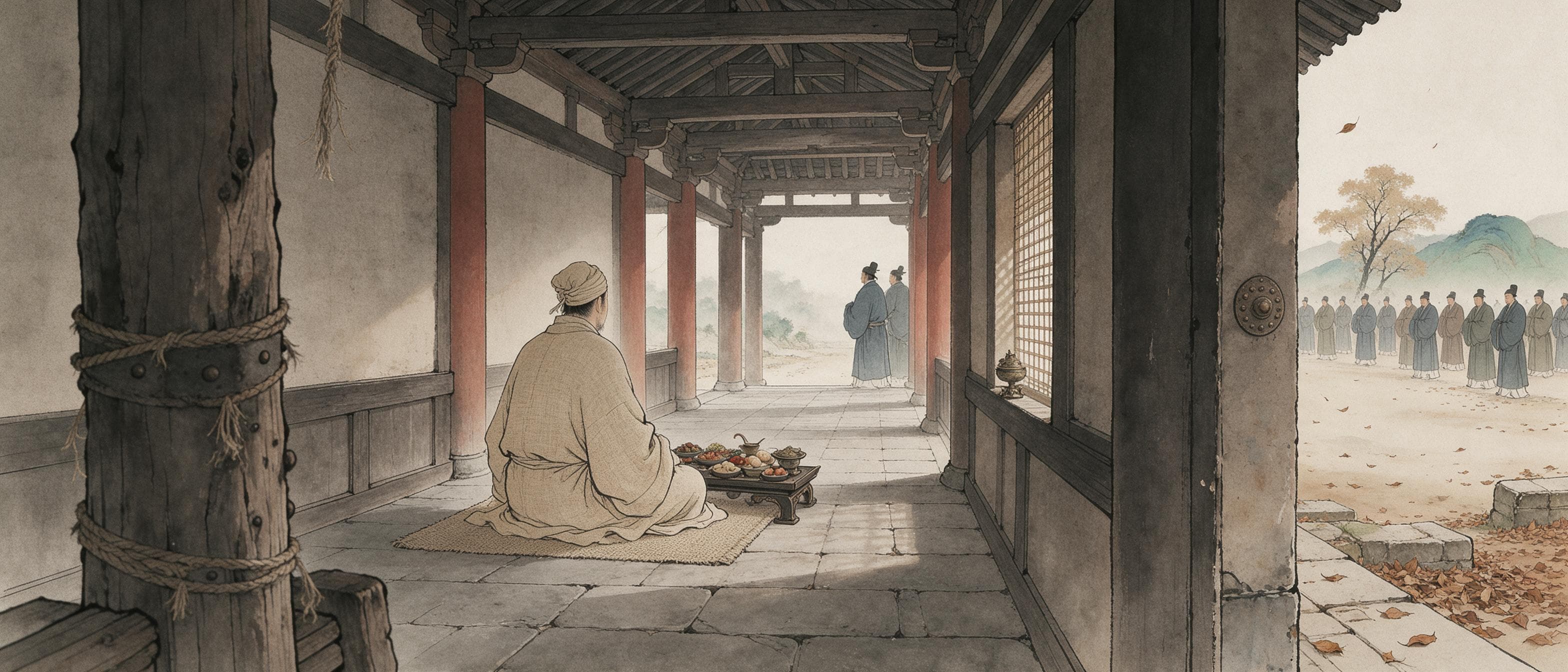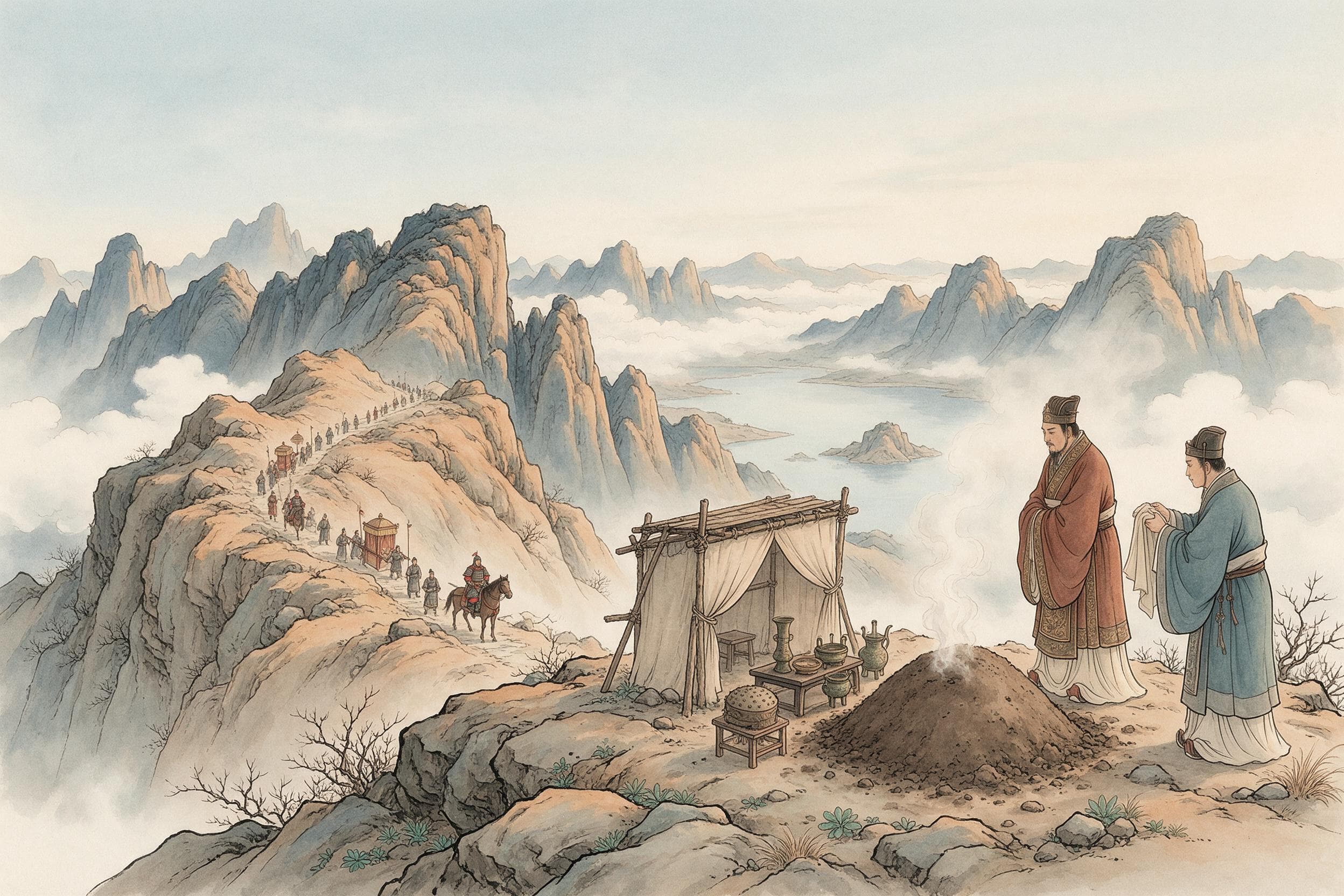
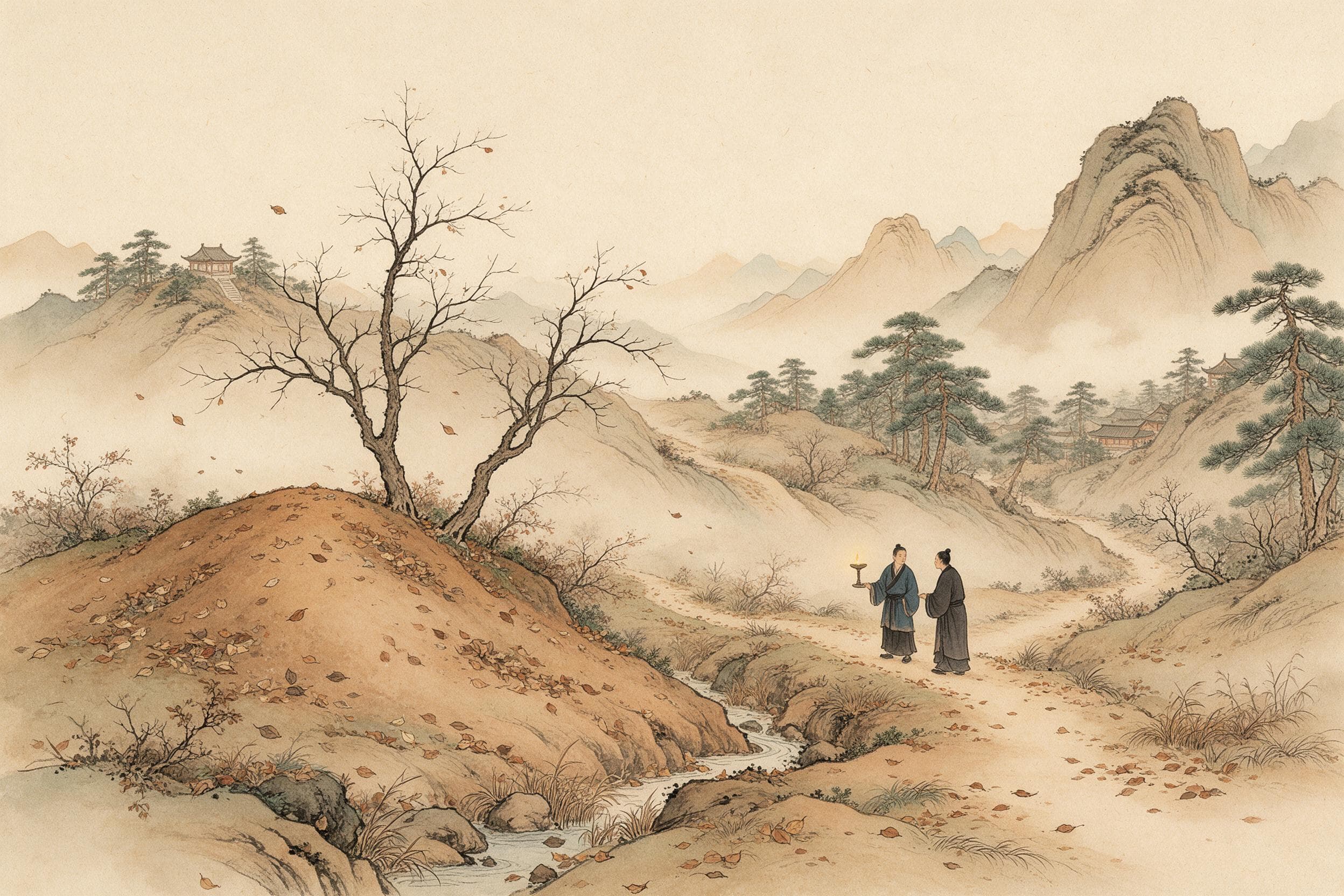
他要自己的墳以後找不著。「故吾營此丘墟不食之地,欲使易代之後不知其處。」——把這塊不長莊稼的荒地做成壽陵,為的是改朝換代之後沒人知道它在哪裡。說這話的是魏文帝曹丕。黃初三年(222)十月甲子,他「表首陽山東為壽陵,作終制曰」,把這篇話寫成詔書。
壽陵因山為體
終制第一條講形制,講得很硬:「壽陵因山為體,無為封樹,無立寑殿,造園邑,通神道。」——陵體就著山勢,不另起墳堆、不種樹,不設寢殿,不造園邑,不修神道。他先舉兩個古例:「昔堯葬穀林,通樹之,禹葬會稽,農不易畝」,所以說「封樹之制,非上古也,吾無取焉」。這是形制主張,不是施工圖:兩頁沒有壽陵的尺寸、四至,也沒有墓內結構的任何一句。
他給這套主張的理由,一半講形制,一半講「藏」:「夫葬也者,藏也,欲人之不得見也。骨無痛痒之知,冢非棲神之宅,禮不墓祭,欲存亡之不黷也,為棺槨足以朽骨,衣衾足以朽肉而已。」——葬就是藏;骨頭沒有痛痒的知覺,墳也不是神住的地方;棺槨夠裝骨頭、衣衾夠包住肉就行。這是他自己的論斷,不是禮書引文;「禮不墓祭」只說了這一句,沒有展開。
無藏金玉,無施珠襦
隨葬的東西也一條條列了:「無施葦炭,無藏金銀銅鐵,一以瓦器,合古塗車、芻靈之義。棺但漆際會三過,飯含無以珠玉,無施珠襦玉匣,諸愚俗所為也。」——不填葦炭,不藏金銀銅鐵,一律用瓦器,合古時塗車、芻靈的意思;棺材只在接縫處漆三遍,飯含不用珠玉,不穿珠襦玉匣。他說這些是「愚俗所為」。兩頁對「葦炭」「塗車芻靈」都沒有注,本篇不替它們補形制。
他父親先做過同樣的安排。《通典》記魏武王「先自製送終衣服四篋,題識其上,春秋冬夏,曰有不諱,隨時以斂,金珥珠玉銅鐵之物,一不得送」——四個箱子,箱上標好春夏秋冬,死了按季節取用,金玉銅鐵一概不送。曹丕的終制還點了兩件春秋舊事:「季孫以璵璠斂,孔子歷級而救之」;「宋公厚葬,君子謂華元、樂莒不臣」。這些典故兩頁都沒有注,只點到為止。兩頁裡曹魏一朝的這類規矩只有曹操的遺令和曹丕的終制兩份,沒有第三個人;所以看不出什麼「風氣」——「曹魏薄葬成風」,這兩頁撐不住。
未有不亡之國,亦無不掘之墓
然後是那句常被引的話:「自古及今,未有不亡之國,亦無不掘之墓也。喪亂以來,漢氏諸陵無不發掘,至乃燒取玉匣金縷,骸骨并盡,是焚如之刑也,豈不重痛哉!禍由乎厚葬封樹。」——國沒有不亡的,墓也沒有不被掘的;喪亂以來漢家諸陵都被發掘,燒取玉匣金縷,連骸骨都沒了;禍根在厚葬、在封樹。要看清,這是論辯句:他在說服群臣接受自己的安排,不是給漢陵做統計;兩頁沒有逐陵清單,也沒有盜掘的年月與數目。
他拿兩個例子作證:「漢文帝之不發,霸陵無求也;光武之掘,原陵封樹也。霸陵之完,功在釋之;原陵之掘,罪在明帝。」——霸陵沒被掘,因為裡面沒有可求之物;原陵被掘,因為封樹。《通典》記漢文帝遺詔也說「霸陵山川因其故,無有所改」,應劭注:「因山為藏,不復起墳。」可見「因山」不是曹丕想出來的,霸陵已是這個辦法。這裡的「明帝」是東漢明帝,光武帝的兒子;後面裴注裡還有一個「明帝」,是魏明帝曹叡——同稱「明帝」,兩個皇帝,不能混。
違詔者,戮尸地下
他也知道一紙詔書管不住身後,所以把話說得很重:「若違今詔,妄有所變改造施,吾為戮尸地下,戮而重戮,死而重死。臣子為蔑死君父,不忠不孝,使死者有知,將不福汝。」後面還定了存檔:「其以此詔藏之宗廟,副在尚書、祕書、三府。」——正本藏宗廟,副本放在尚書、祕書、三府三處。
連后妃也一起安排了:「其皇后及貴人以下,不隨王之國者,有終沒皆葬澗西,前又以表其處矣。」——皇后、貴人以下,沒有隨王去封國的,死後都葬在澗西,地方已經標出來了。他舉舜與延陵為說:「蓋舜葬蒼梧,二妃不從,延陵葬子,遠在嬴、博,魂而有靈,無不之也,一澗之閒,不足為遠。」——魂要是有靈,哪裡都去得,隔一條澗不算遠。這一條是讓后妃也別另起大陵。
後來
黃初七年五月丁巳,曹丕崩於嘉福殿,時年四十;六月戊寅,葬首陽陵。《三國志》只加了一句:「自殯及葬,皆以終制從事。」——從入殮到下葬,都照終制辦。這是史書的一句交代,不是對陵墓的實測;兩頁沒有說首陽陵後來怎樣,也沒有尺寸、封土、墓室的話。《魏氏春秋》另記一件事:明帝要去送葬,曹真、陳群、王朗等「以暑熱固諫,乃止」。
參考來源與延伸閱讀
- 《三国志》卷二·魏书·文帝纪(西晋陈寿;维基文库本,未与点校本复核) — The final ordinance in full, given under the tenth month of huangchu 3 (222): 'the mausoleum takes the mountain for its body; no mound, no trees, no resting hall, no garden town, no spirit road' (壽陵因山爲體,無爲封樹,無立寑殿,造園邑,通神道); 'burial is storage, and the point is that men cannot see it' (夫葬也者,藏也,欲人之不得見也); 'I am building this tomb on waste ground that will not feed anyone, so that after the dynasty changes no one will know where it is' (故吾營此丘墟不食之地,欲使易代之後不知其處); 'no reed charcoal, no gold, silver, copper or iron; nothing but pottery' (無施葦炭,無藏金銀銅鐵,一以瓦器), 'the coffin lacquered three times at the joins only, no pearls or jade in the mouth-filling, no pearl-sewn shroud or jade case' (棺但漆際會三過,飯含無以珠玉,無施珠襦玉匣); the two Spring and Autumn cases (Ji Sun's jade, the Duke of Song's burial); the comparison with Han Wen's Ba ling and Guang Wu's Yuan ling, and 'the digging of Yuan ling was Emperor Ming's crime' (原陵之掘,罪在明帝) — here the Han emperor Ming, not Cao Rui; the argument itself, 'no state that did not perish, no tomb that was not opened … the calamity comes from lavish burial and from mounds and groves' (自古及今,未有不亡之國,亦無不掘之墓也……禍由乎厚葬封樹); the curse on anyone who alters it (若違今詔……將不福汝) and the filing of copies in the ancestral temple, the master of writing's office, the secretariat and the three excellencies; the consorts to be buried west of the stream (皆葬澗西). The chapter also records his death in huangchu 7, aged forty, burial at Shouyang, and the single line 'from the laying out to the burial, everything was done according to the final ordinance' (自殯及葬,皆以終制從事) — a report, not an inspection. The same juan lists his terraces and ponds (Lingyun terrace, Lingzhi pond, Southern Tour terrace, Tianyuan pond, Jiuhua terrace), and Pei Songzhi's note records that under Emperor Ming the Taiji and Zhaoyang halls were begun.
- 《通典》卷七十九·礼三十九·凶礼一(唐杜佑;维基文库本,未与点校本复核) — The Tang compilation's chapter on imperial death and tombs, which carries the Wei material in a different text. Cao Cao's own arrangement: 'he had four cases of final garments made in advance, each labelled, for spring, summer, autumn and winter … of gold, earrings, pearls, jade, copper and iron, not one thing was to be sent with him' (先自製送終衣服四篋……金珥珠玉銅鐵之物,一不得送). The final ordinance in abridged form: 'the mausoleum takes the mountain for its body; no mound, no trees, no resting hall, no garden town; this ordinance is kept in the ancestral temple' (壽陵因山為體,無封樹,無立寢殿,無造園邑。此詔藏之宗廟) — note that this text lacks the Shi Ji's 'no spirit road' clause and reads slightly differently. It also preserves Han Wen's last decree ('the mountains and rivers at Ba ling stay as they are, with nothing changed', 霸陵山川因其故,無有所改) with Ying Shao's note 'taking the mountain for the burial, raising no mound' (因山為藏,不復起墳), which is the precedent for Cao Pi's phrase. Du You's own verdict: 'this ordinance of Wen of Wei may be said to understand the matter' (魏文此制,可謂達於事矣). And in 635 Yu Shinan, opposing lavish burial, copied the ordinance into his memorial and quoted Zhang Shizhi's words about 'if there is something to desire inside, even walling in the southern mountain leaves a crack' — evidence of the text's later use as an argument, not of its execution.