最短の一条は六字——「三年,春,王二月,己巳,日有食之」。『春秋』隠公三年、春、周の二月、己巳の日、太陽が食べられた、と。「日有食之」の四字は、この出来事を記す決まった言い方である。本稿は二層に分ける。日食の日に何をしたか(経と伝を分けて)、閏月をどう置いたか(元年の閏三月、六年の閏月不告朔)。
一、経と伝——一条の記事、一句の評判
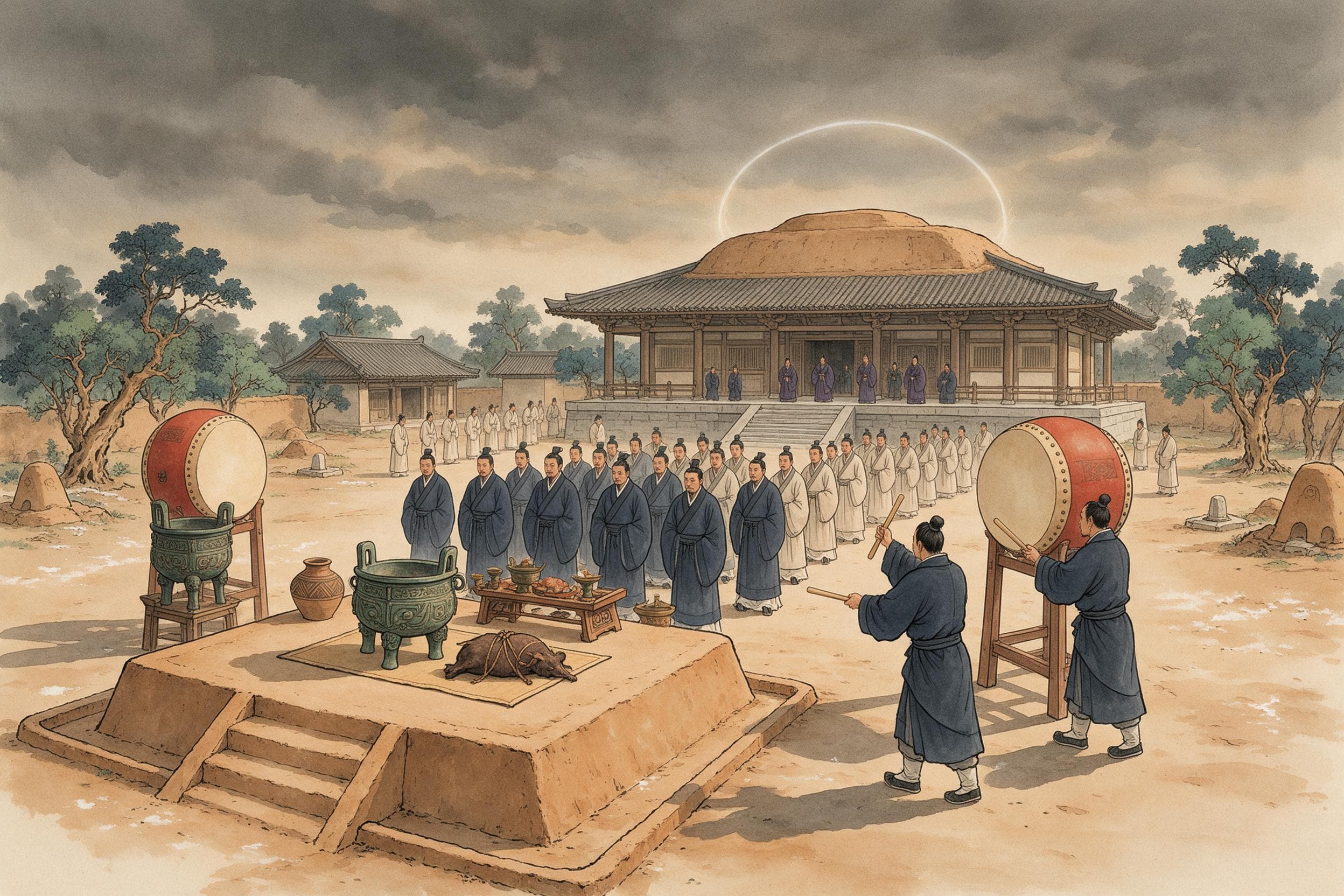
まず経の二条を並べる。隠公三年——「三年,春,王二月,己巳,日有食之」。日付と現象だけである。文公十五年——「六月,辛丑,朔,日有食之,鼓用牲于社」。こちらは「朔」の一字が増え、動作も一つ増える。鼓を打ち、社に牲を用いた、と。経は記録であり、記すところまでで止まる。説明も評判もしない。
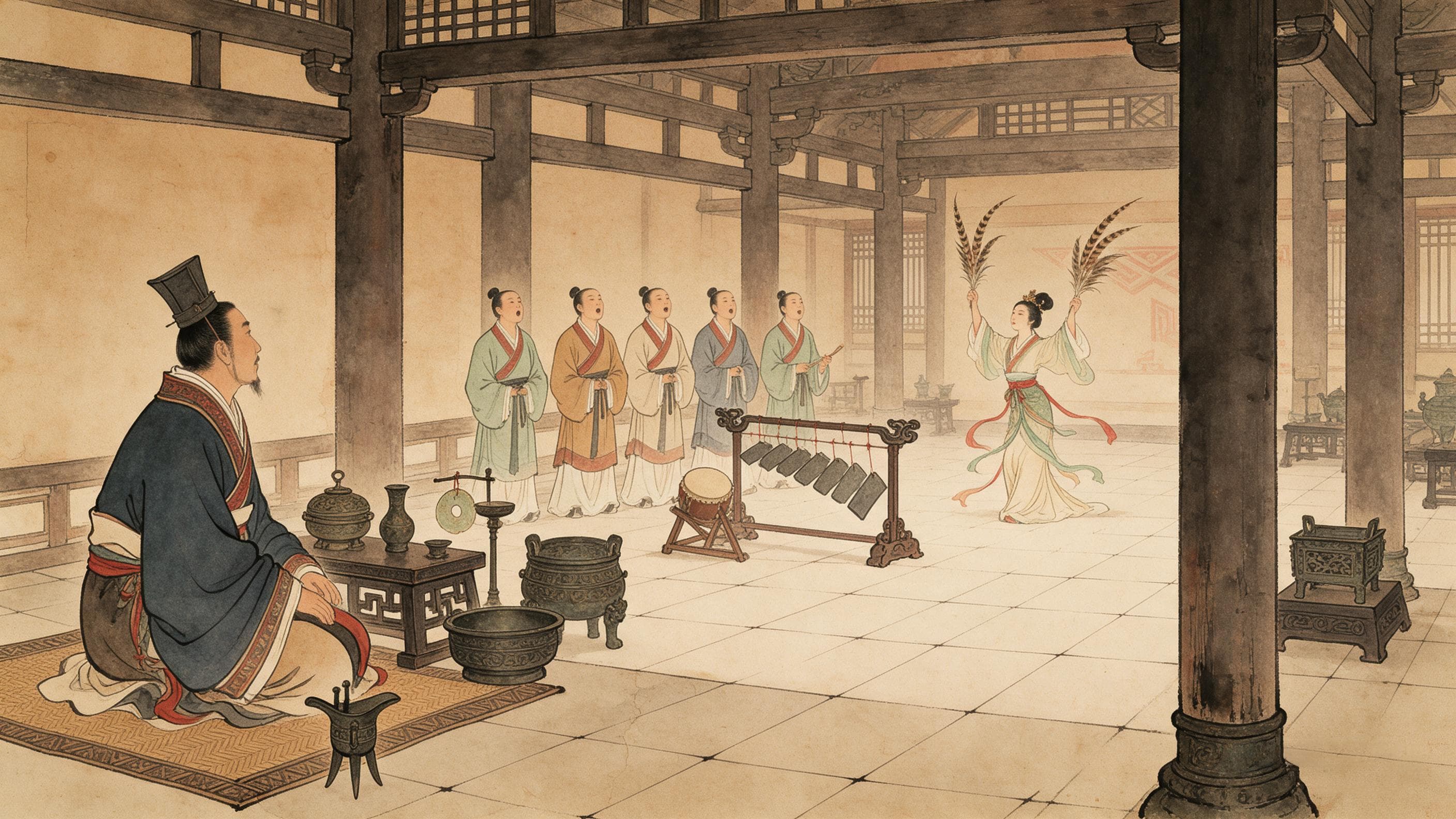
伝は評判し、さらに分担を示す——「六月,辛丑朔,日有食之,鼓用牲于社,非禮也。日有食之,天子不舉,伐鼓于社,諸侯用幣于社,伐鼓于朝,以昭事神,訓民事君,示有等威,古之道也」。伝はまず、魯がそうしたのは「非禮」だと言う。次に、こうするのが筋だと示す。天子は楽を挙げず、社で鼓を打つ。諸侯は社に幣を用い、朝で鼓を打つ。目的は「昭事神、訓民事君、示有等威」であり、これは「古之道」だという。だから分けておかねばならない。魯が実際にしたのは「鼓用牲于社」、伝が言う「古之道」は別の分担である。魯のやり方がなぜ非礼なのかは、伝は言わず、この頁にもない。
二、閏三月——「非禮」の記録
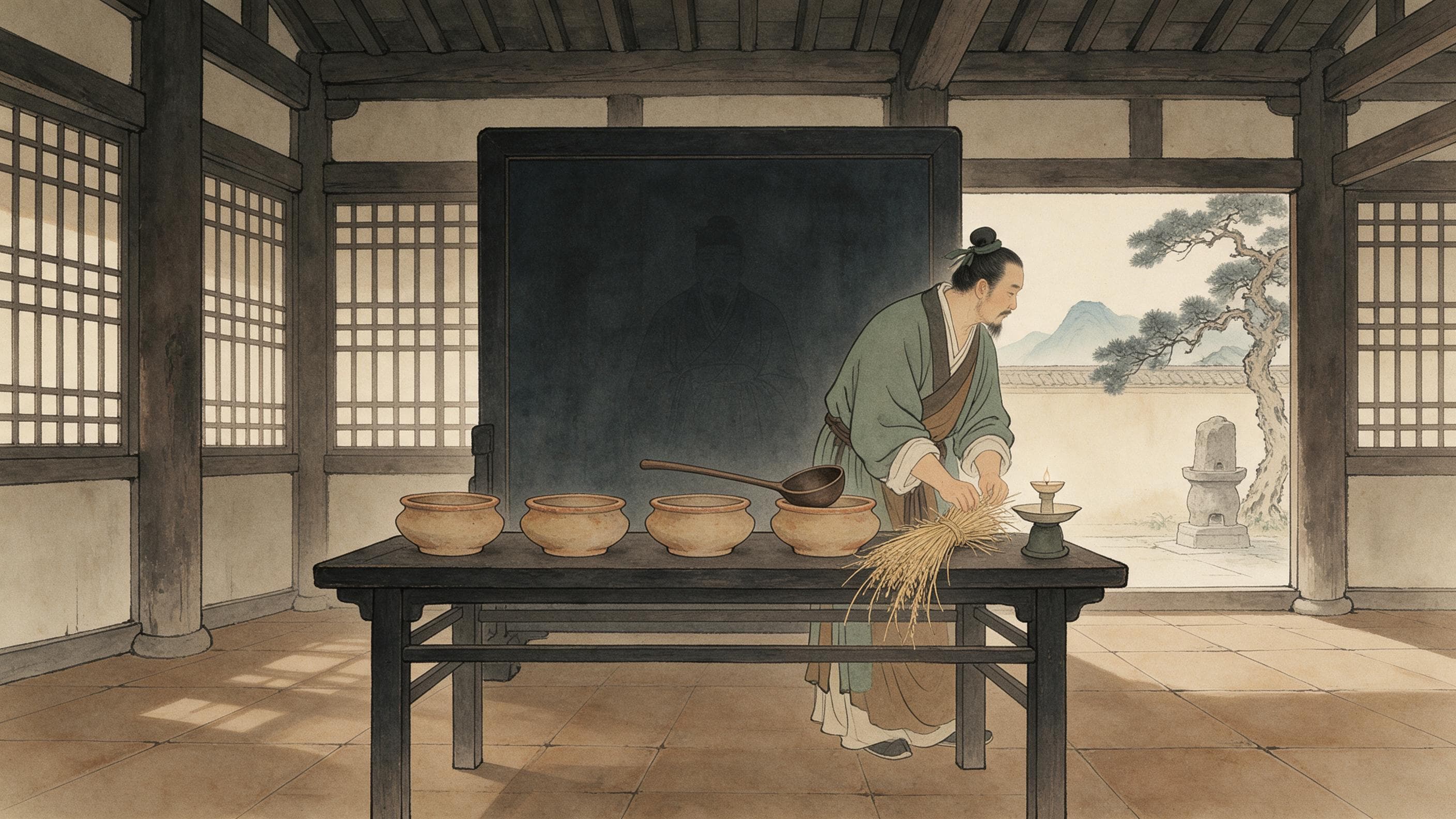
閏月の層は、文公元年がまず判断を一句与える——「於是閏三月,非禮也」。この年に閏三月を置いた、それは非礼である、と。なぜ不合理かは、伝が三句の口訣で示す——「先王之正時也,履端於始,舉正於中,歸餘於終。履端於始,序則不愆。舉正於中,民則不惑。歸餘於終,事則不悖」。先王が時を正すには、端を始めに履み、正を中に挙げ、余を終に帰す。端を始めに履めば序は乱れず、正を中に挙げれば民は惑わず、余を終に帰せば事は悖らない、と。三句を写す。伝は具体的な推算を与えず、本稿もそれを組み立てない。
文公六年にも一条ある——「閏月不告朔,非禮也。閏以正時,時以作事,事以厚生,生民之道,於是乎在矣。不告閏朔,棄時政也,何以為民?」。閏月に告朔しなければ非礼である。閏は時を正すため、時は事を為すため、事は生を厚くするため、民を生かす道はここにある。閏朔を告げなければ「時政を棄つる」ことになり、どうして民の長たりえようか、と。「告朔」が具体的にどう告げられたかは、この頁は詳しく言わない。
三、漢志——百余年、暦正しからず
『漢書·律曆志』はこの事の後に一句を接ぐ——「自文公閏月不告朔,至此百有餘年,莫能正曆數」。文公が閏月に告朔しなかった時から、この時に至る百余年、暦数を正しくできた者はいない、と。同じ頁はまた一句を引く——「天子有日官,諸侯有日御,日官居卿以厎日,禮也」。さらに「不書日,官失之也」——日を書かないのは、官がその職を失ったのである、と。いずれも漢書の言葉であり、本稿は漢人の追述であると示し、春秋人の自述としては扱わない。さらに経と伝の一対でこの事を説く——「經曰:『冬十月朔,日有食之。』傳曰:『不書日,官失之也。』」。日を記さないこと自体が一つの記録であり、説明を伴っている。
二頁が与えないものも列挙する。日食が何の刻に起こり、食分がどれほどで、どこで見えたか——この頁はどれも与えない。閏月が何年ごとに置かれ、いつの月に置かれ、どう推算されたか——この頁が与えるのは「閏三月」と「閏月」の二箇所だけで、算法は与えない。だから本稿は具体的な年月を推算せず、西暦の日付にも直さない。
四、「日有食之」の四字
経は繰り返し「日有食之」と書き、「日食」とは書かない。太陽が食べられた、何かがそれを食べた、という書き方である。この四字はこの頁の言い方であり、頁はそれを説明しない。本稿も天文学で復原しない(食分を算さず、経路を推さない)。ただこの二条を写す。隠公三年「二月,己巳」、文公十五年「六月,辛丑,朔」。後者には「朔」の一字が多く、この条が朔日に記されたことを示している。
五、二頁の外
分線を二句。漢代の太初改暦の篇は誰が提案し誰が計算し一句で決めたかを扱い、この篇は春秋人が日食にどう応じ、閏月をどう十二か月に挿し込んだかを扱う。卜筮の篇は占問の手続きを扱い、この篇は関わらない。「古代天文学の成果」や「天人感応」といった通論も書かない——三頁が与えるのは幾条かの記事、幾句かの伝文、一句の漢志の帰結である。
残るのは具体的なものだ。経の二つの書き方(「日有食之」「日有食之,鼓用牲于社」)、伝の一句の評判と分担(天子は楽を挙げず社で鼓を打つ、諸侯は社に幣を用い朝で鼓を打つ)、置閏の三句(履端於始、舉正於中、歸餘於終)、二つの「非禮」(閏三月、閏月不告朔)、漢志の帰結一句(百余年、暦数を正しくできず)。これ以上は推さない。西暦に直さず、閏法を並べず、「礼」の善し悪しも評さない。
関連記事:黄腸題湊——木の名の一式と、誰が使えたか · 雉、鼎の耳に登る——祭祖の日に飛んできた一羽の鳥 · 大儺——年の最後の夜、宮中が疫を城門の外へ送り出す
参考資料・関連文献
- 《春秋左氏传·文公》(维基文库本,未与点校本复核) — The entries used here, with the classic and the commentary distinguished. Classic, fifteenth year: 'in the sixth month, on the xinchou day, the first of the month, the sun was eaten; drums were beaten and victims offered at the altar of soil' (六月,辛丑,朔,日有食之,鼓用牲于社). Commentary on the same: 'drums and victims at the altar of soil — this was not according to ritual. When the sun is eaten, the Son of Heaven does not provide music; drums are beaten at the altar of soil; the feudal lords offer silks at the altar and beat drums at the court, to display service to the spirits and to instruct the people in serving their ruler and to show the gradations of rank — this was the way of antiquity' (日有食之,天子不舉,伐鼓于社,諸侯用幣于社,伐鼓于朝……古之道也). First year: 'thereupon they intercalated a third month, which was not according to ritual. In the ancient kings' ordering of the seasons, the beginning was set at the start, the middle was set at the middle, and the surplus was put at the end; with the beginning at the start the order is not erred; with the middle at the middle the people are not confused; with the surplus at the end affairs are not disordered' (履端於始,舉正於中,歸餘於終). Sixth year: 'not announcing the first of the month in an intercalary month was not according to ritual. The intercalation is to correct the seasons, the seasons to make work, work to enrich life; the way of the people lies in this. Not to announce the intercalary first is to cast away the government of the seasons — how then to be the people's ruler?' (閏月不告朔,非禮也……)
- 《春秋左氏传·隐公》(维基文库本,未与点校本复核) — The classic's shortest note of an eclipse, third year: 'in the third year, spring, royal second month, on the jisi day, the sun was eaten' (三年,春,王二月,己巳,日有食之). The page marks classic entries with a template; the line is quoted as the classic. No commentary is given for this entry on the page — nothing is said about what was done.
- 《汉书》卷二十一〈律历志〉(维基文库本,未与点校本复核) — Used only for the later consequence and the officers of the calendar: 'from Duke Wen's failure to announce the first of the month in the intercalary month, down to this time more than a hundred years, no one could put the calendar right' (自文公閏月不告朔,至此百有餘年,莫能正曆數); and the saying that 'the Son of Heaven has his day-officer, the feudal lords their day-attendants; the day-officer ranks with the ministers to settle the days — that is ritual' (天子有日官,諸侯有日御,日官居卿以厎日,禮也), with the note that when the day is not recorded 'the officers lost it' (不書日,官失之也). This is a Han treatise quoting the classic and commentary, and it is marked as a Han statement here.