
EVERYDAY LIFE · SHANG TO QING
Stories
Small questions open a window onto a different world.
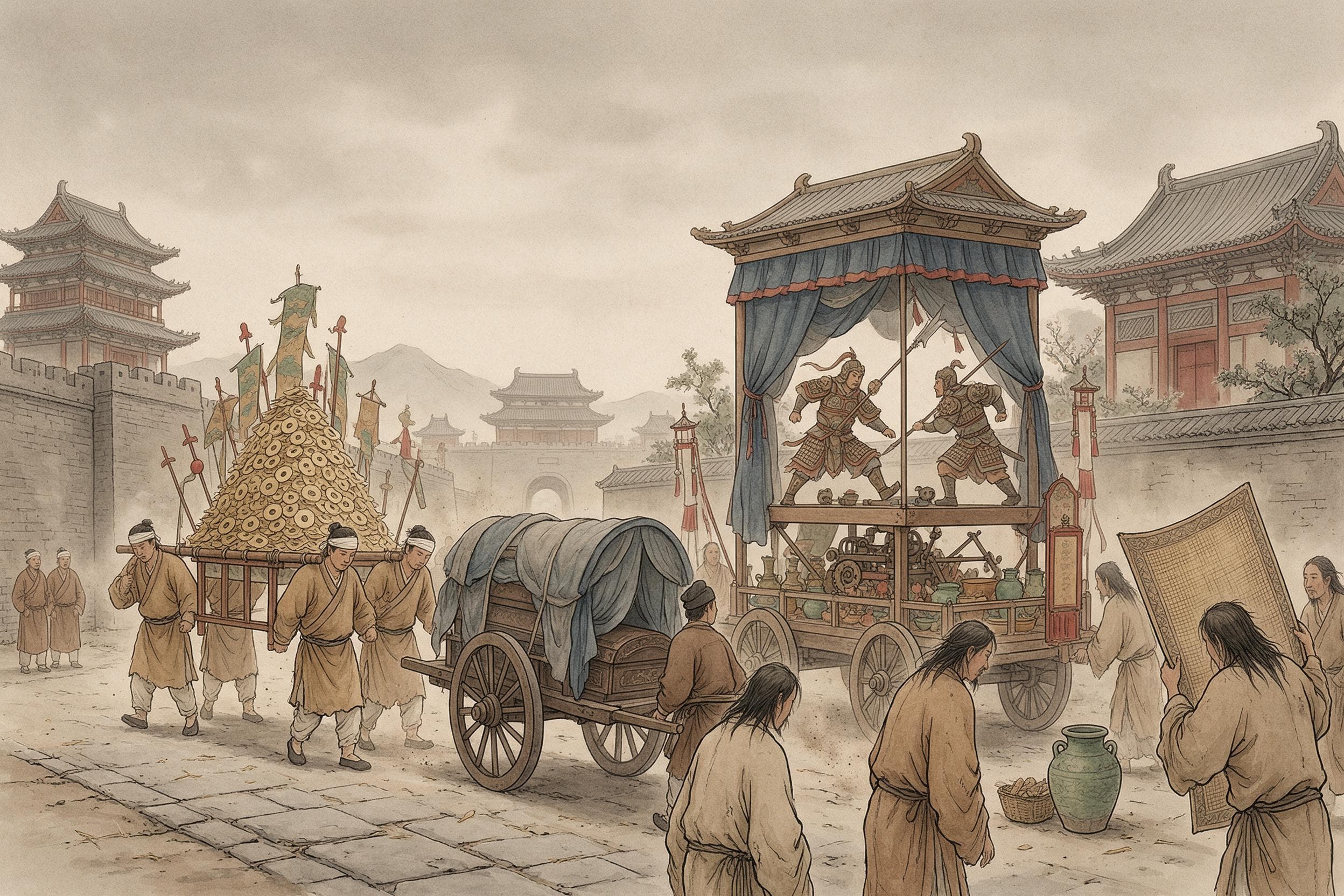
From Buried Coins to Burned Paper: The Making of Money for the Dead
A Tang writer described paper money carried before coffins and burned for spirits. A Tang history blamed it on a chancellor. By the Song it was seasonal stock, on sale days before the festival.
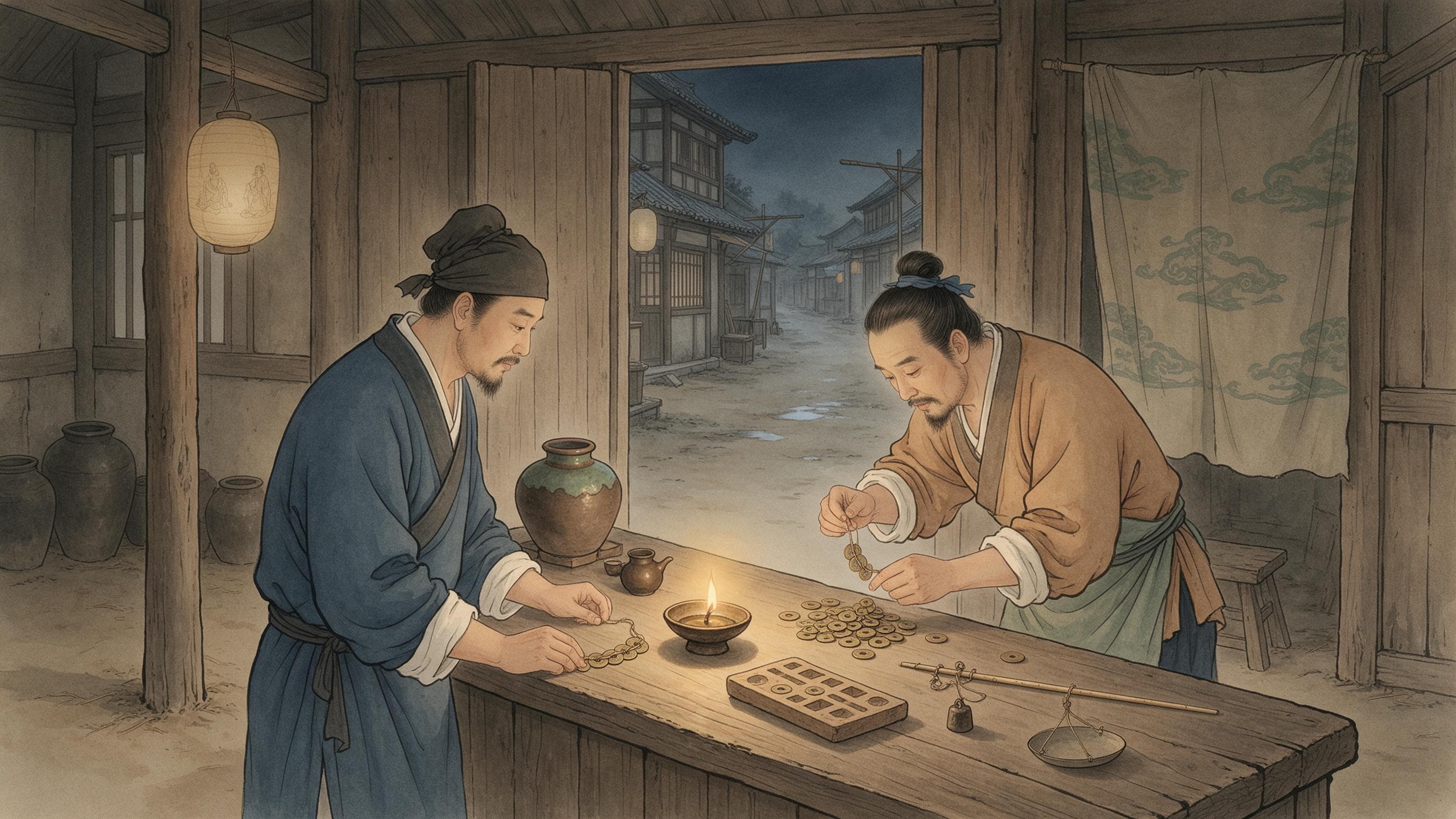
Why a String of a Thousand Coins Was Counted as 770
In Northern Song Kaifeng a string of a thousand coins was reckoned at 770. Six trades used six different rates, and by the Southern Song the street rate had fallen to fifty.
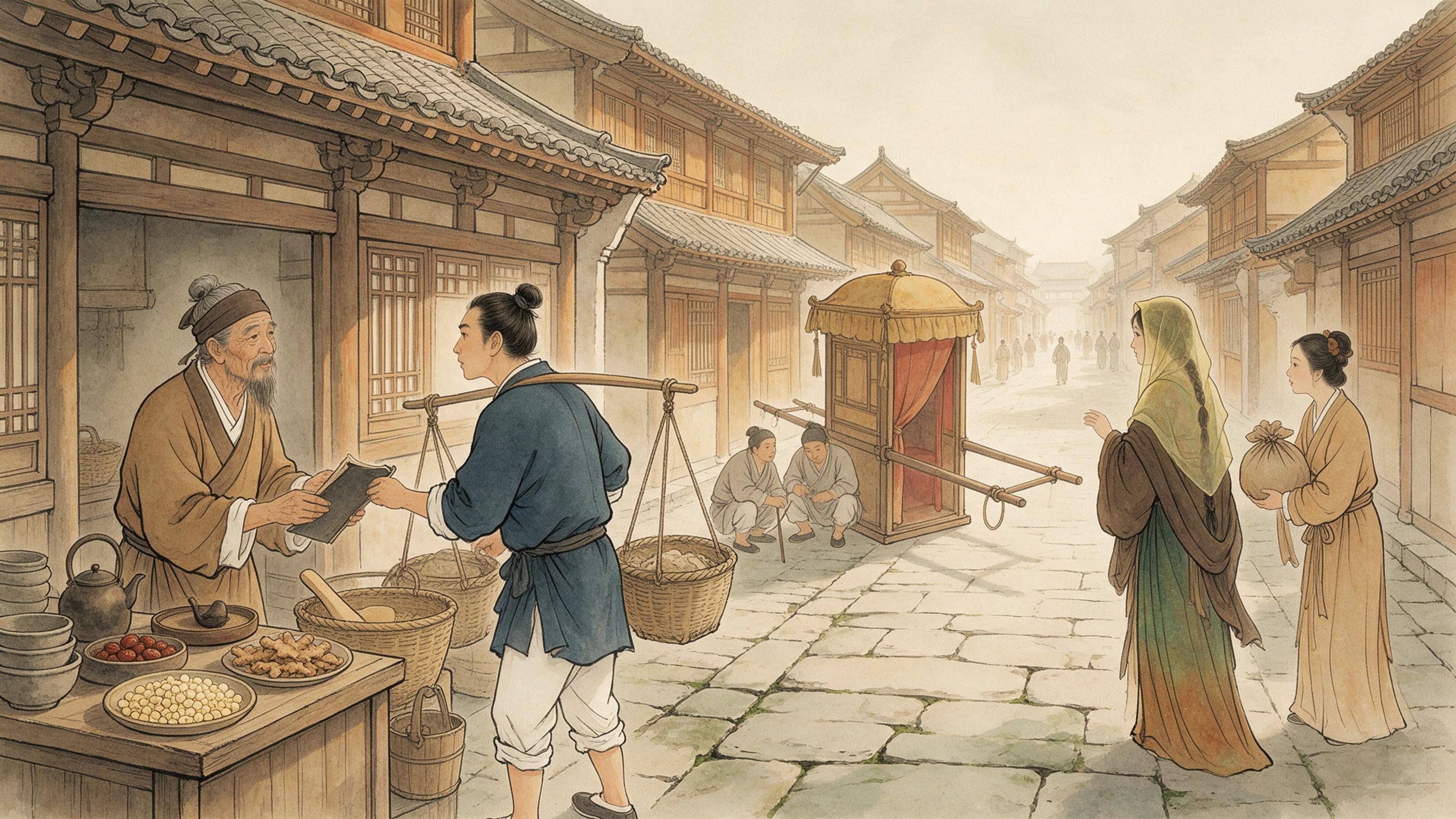
The Guild Elder and the Matchmaker: How Song Cities Hired People
In Song cities you hired through an intermediary: guild elders supplied cooks, clerks and chair-bearers, brokers brought women servants, and a surety stood behind every name.
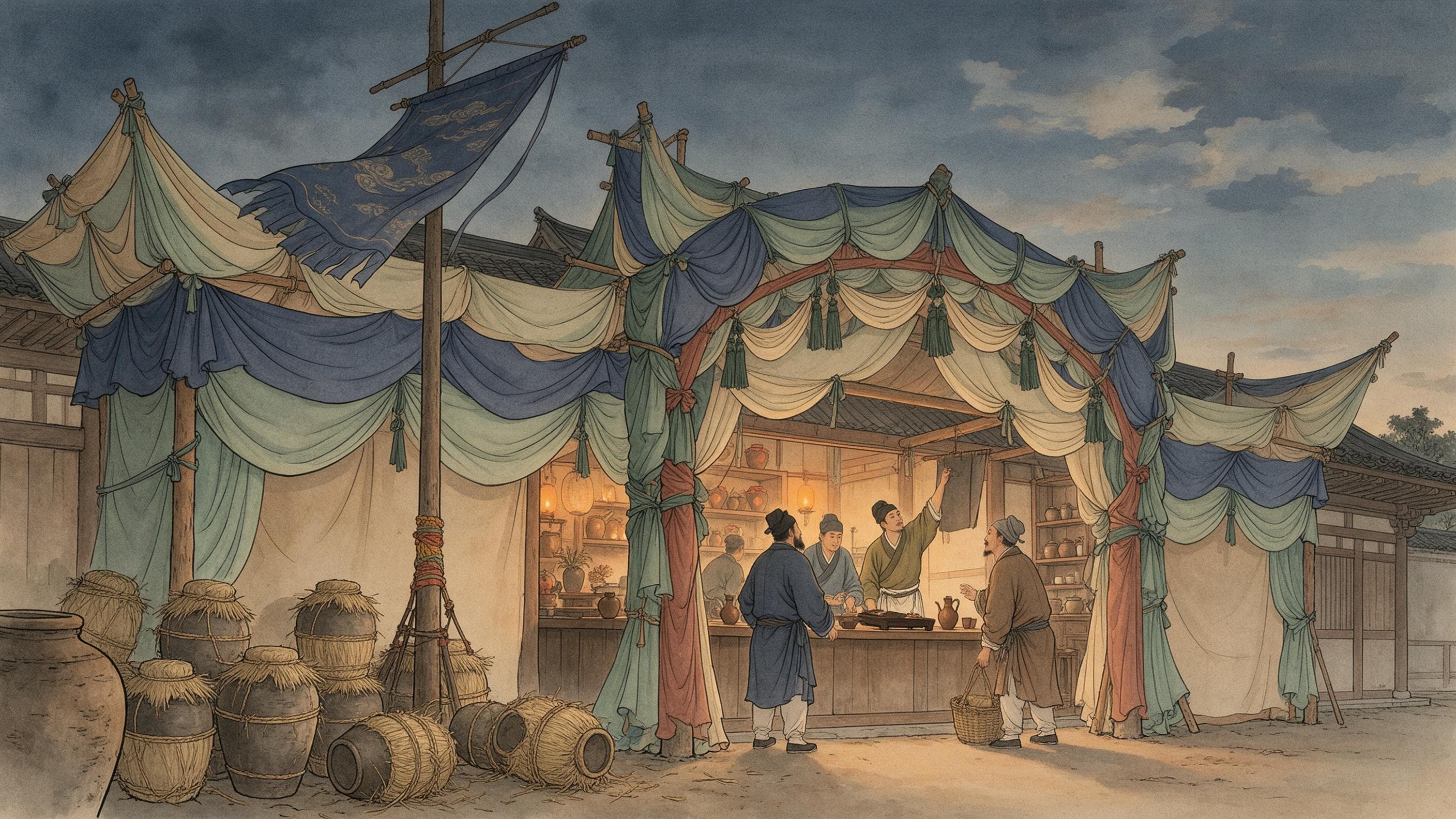
The Night the Wine Ran Out
Song wine shops rebuilt their fronts with coloured silk for mid-autumn and sold new wine. In Kaifeng it was gone by early afternoon and the sign came down; that night the city burned lamps on the river.
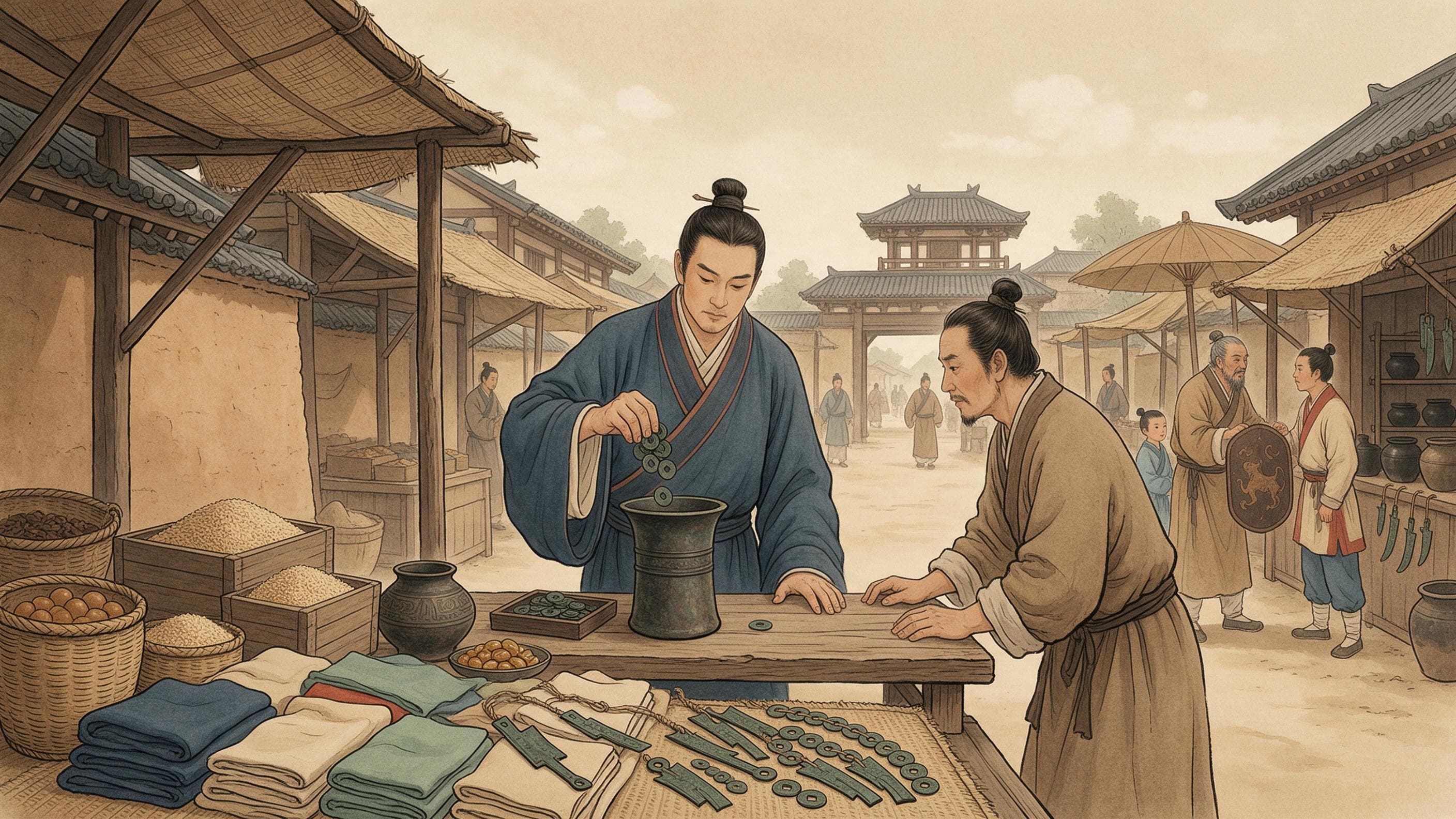
The Cash Box: How a Warring States Market Ran
A late Warring States statute required officials to drop market takings into a cash box in front of the payer; the Rites of Zhou imagined three markets a day, five levies and a state treasury.
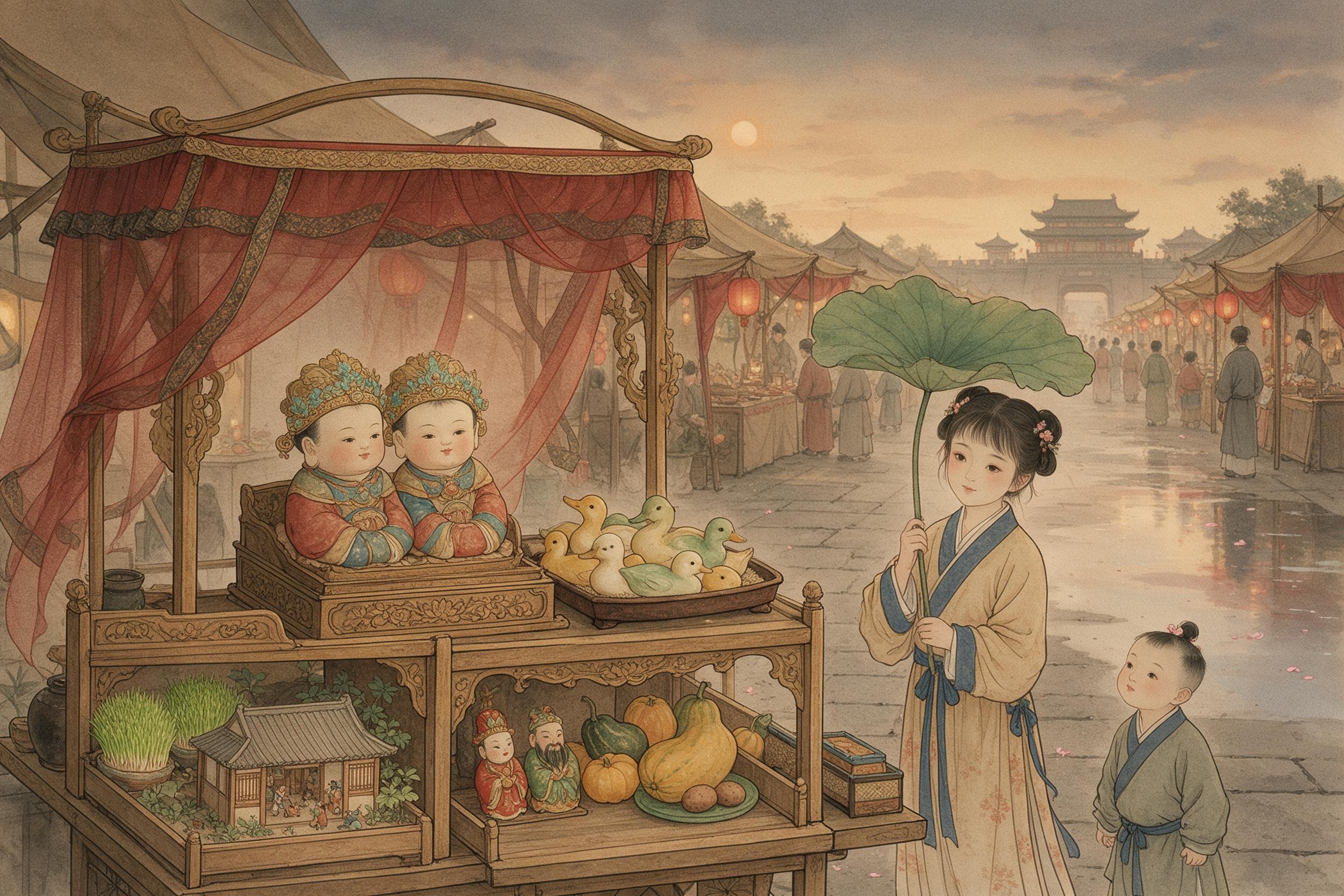
Mud, Silk and Gold: The Qixi Dolls of Song China
Before Qixi, Song market streets sold mohele — small clay dolls in carved stands under red gauze. One pair could cost thousands; by the Southern Song, the palace ordered three hundred a year.
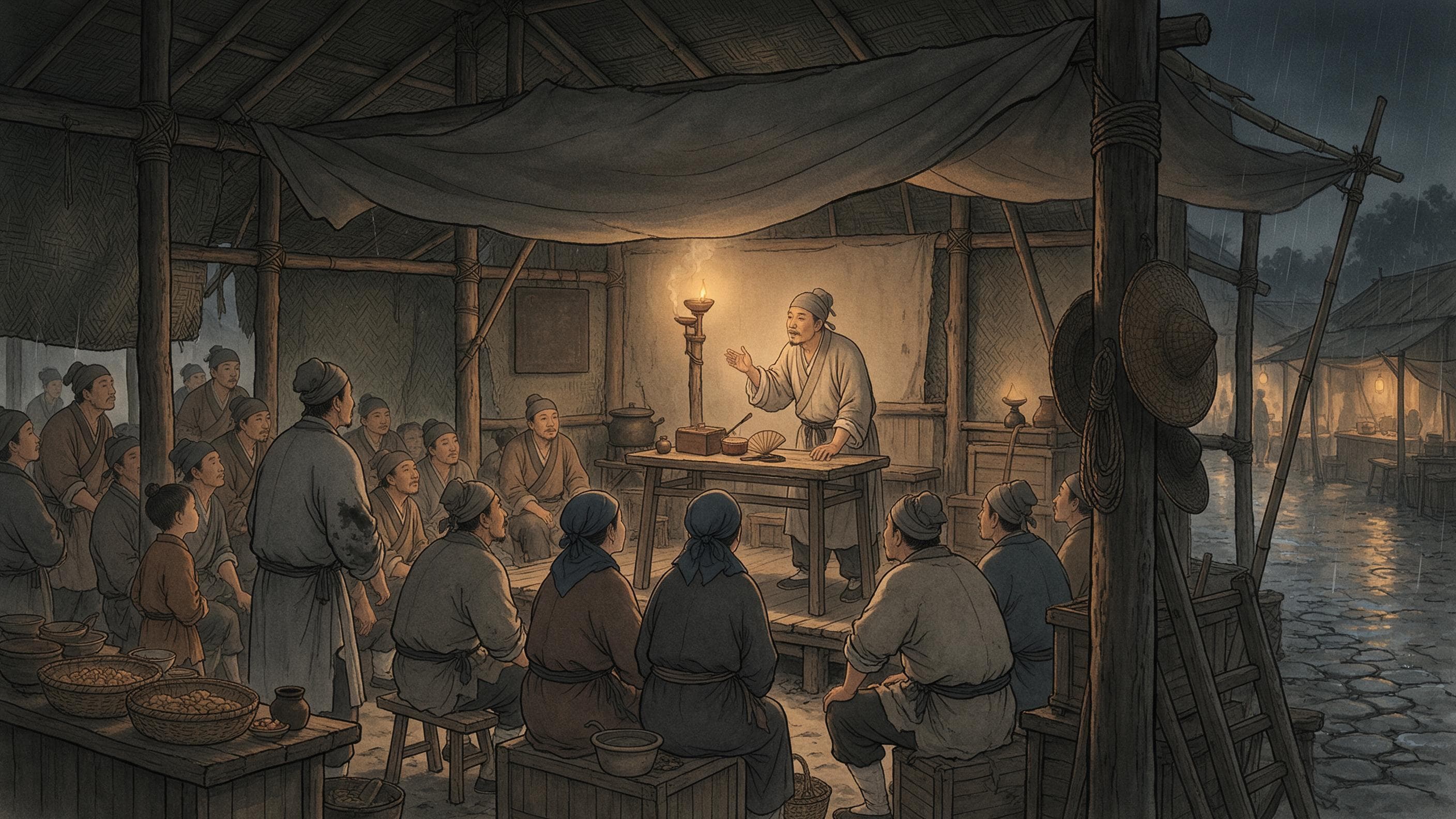
A Day in the Storytellers' Sheds
In Kaifeng's entertainment wards the storytellers split into four houses. Meng Yuanlao lists the men who told the Three Kingdoms and the Five Dynasties, and notes the sheds were full every day, rain or shine.
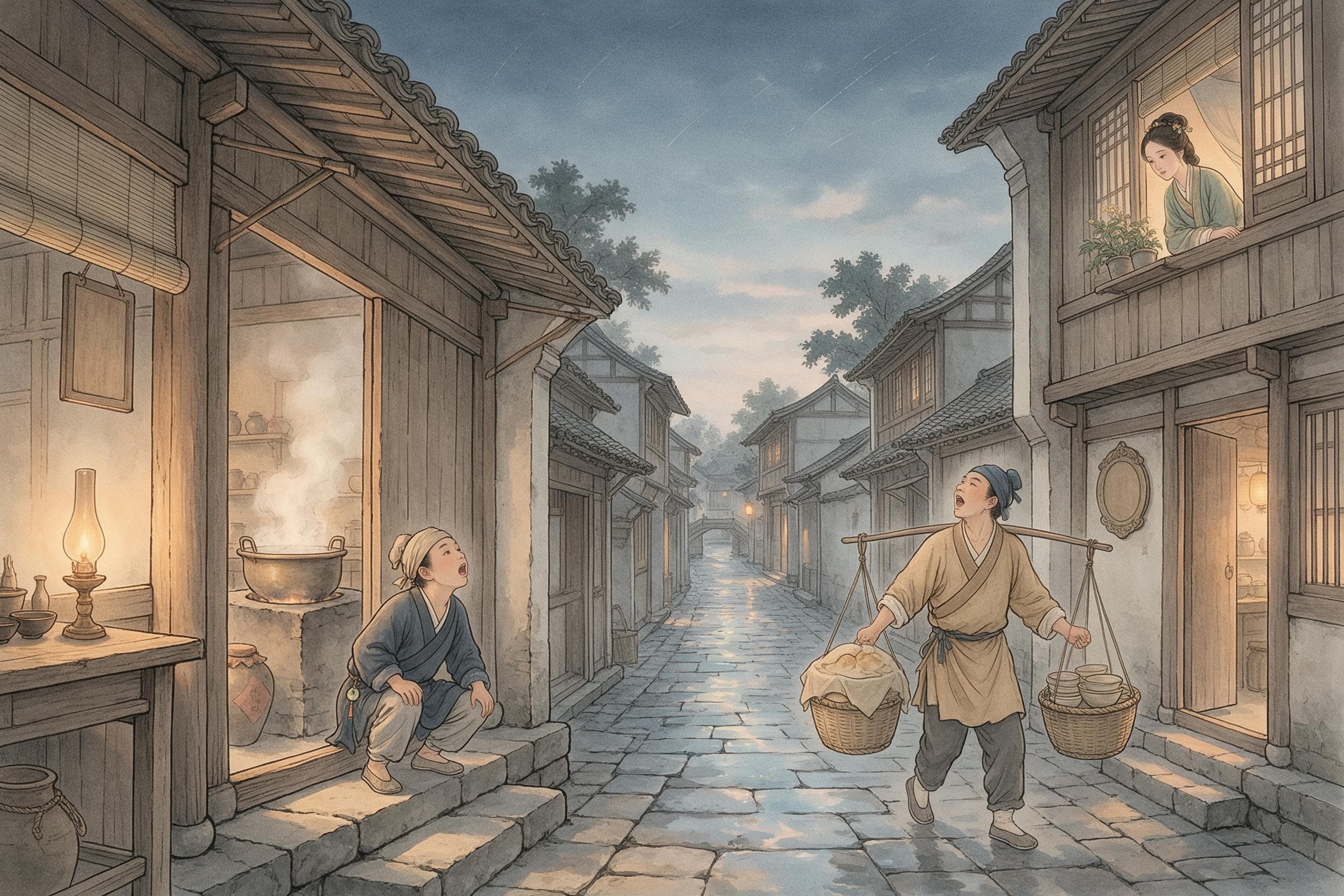
A Hundred Ways of Calling: How Street Cries Became Music in Song China
Before dawn in Kaifeng, food sellers were already 吟叫百端, a hundred ways of calling. Their cries were fitted to palace modes as a genre called 叫声, and Hangzhou kept a roster of men who lived by it.
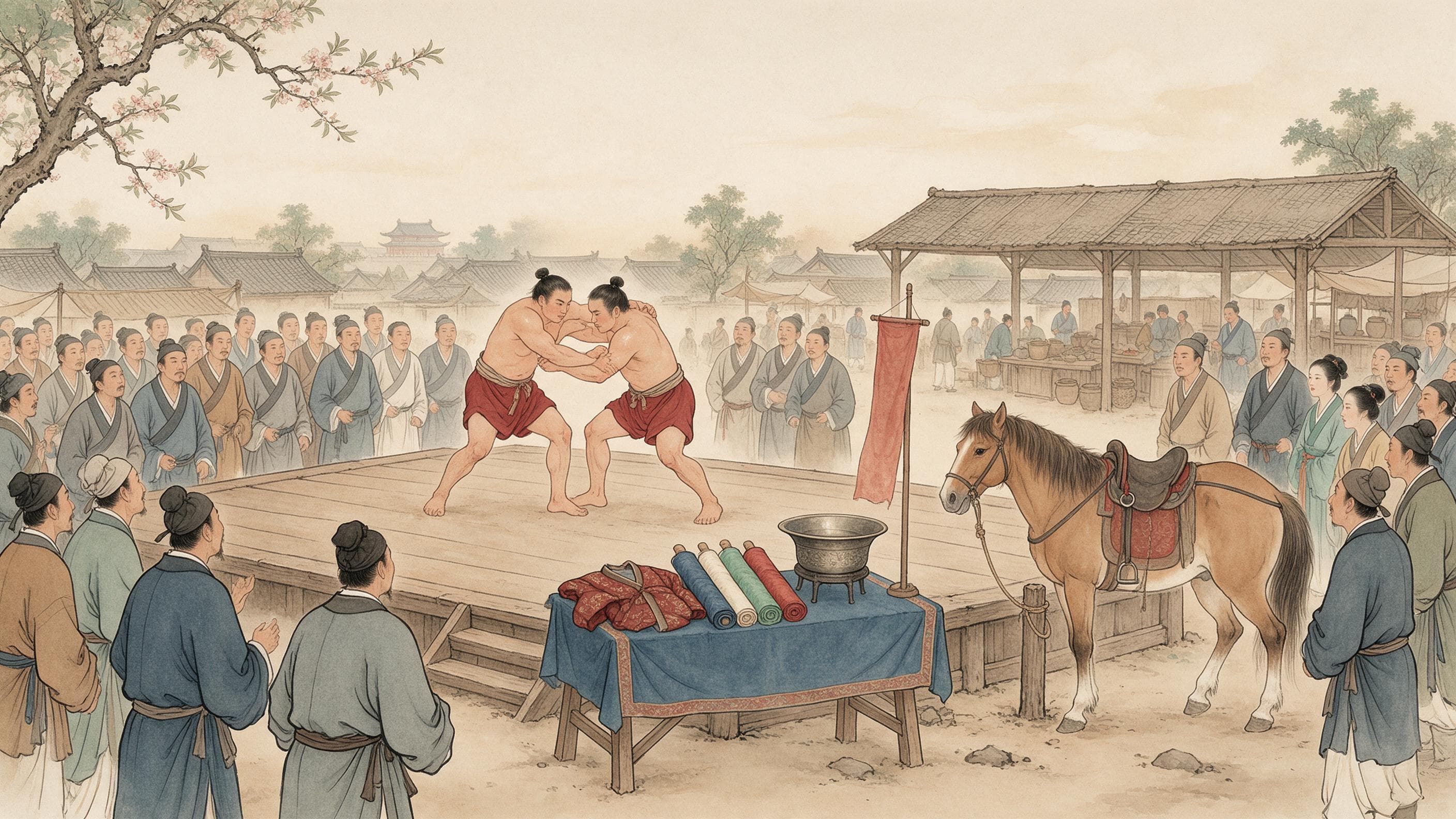
The Wrestler's Purse: Professional Wrestling in Song China
In Song cities wrestling was a paid trade: market fighters drew crowds with women's opening bouts, and the champion at a Lin'an terrace took a banner, a silver basin, silk, a brocade jacket, paper money and a horse.