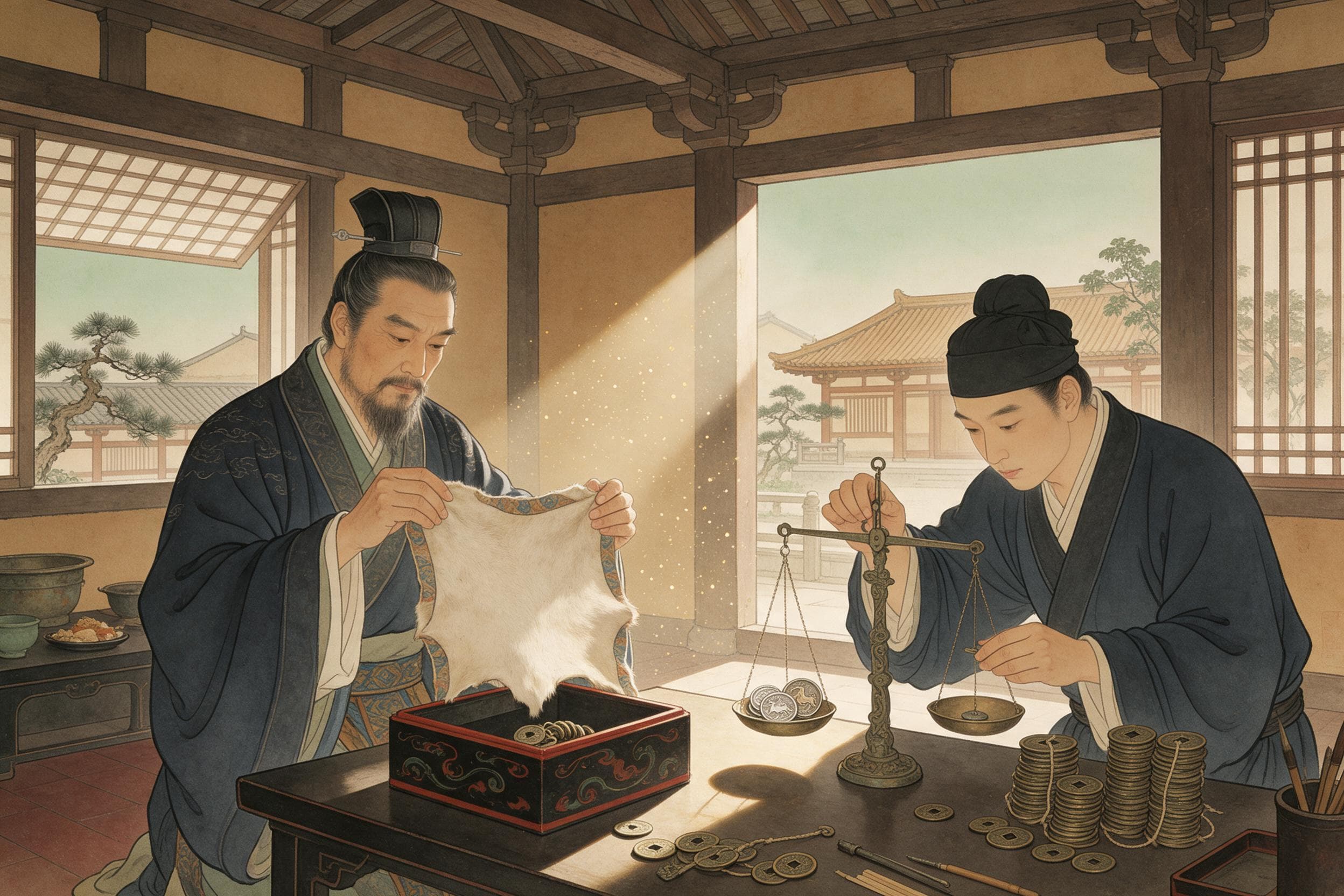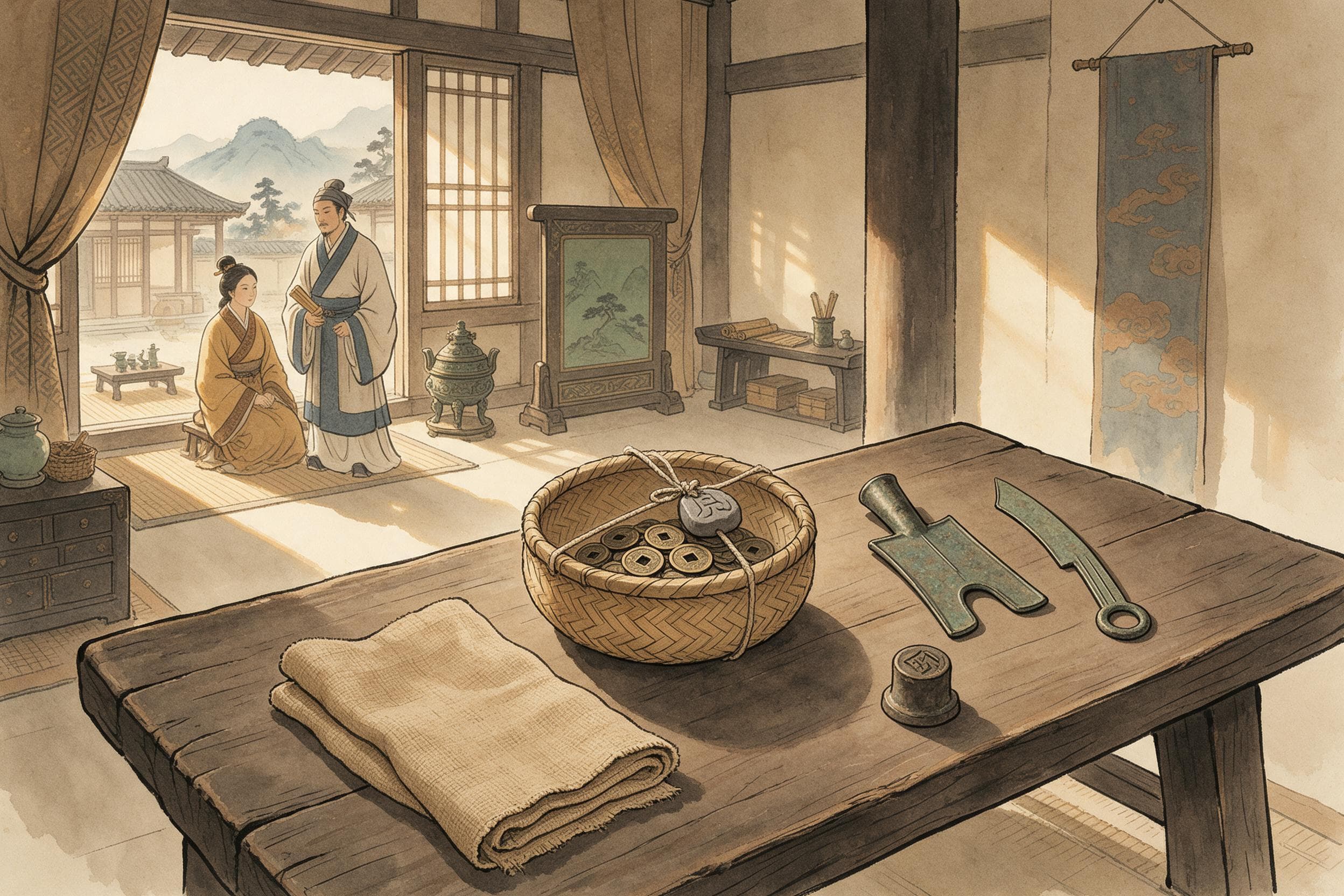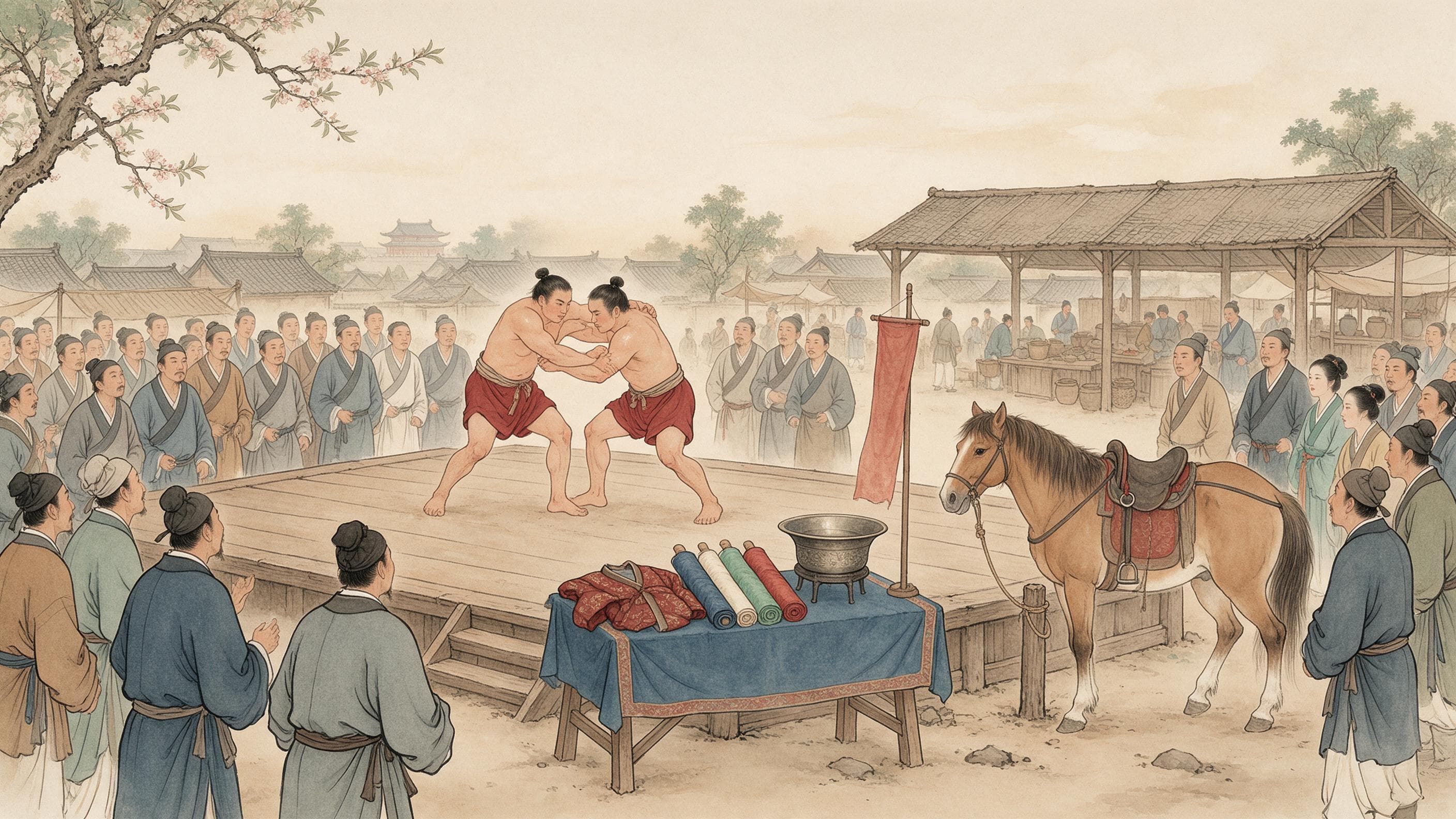
The prize for the best wrestler in Lin'an was not a medal. According to the Meng Liang Lu, the man who won the open contest on the terrace at the South Peak of Huguo Monastery took home a banner and tent, a silver basin, bolts of coloured silk, a brocade jacket, paper money and a horse. The list is specific enough to picture: cloth, metal, cash, an animal. It is also a kind of job description. Wrestling in Song China was not a game played for honour. It was a trade with a purse, a circuit and, at the top, a government appointment.
A market trade, not a sport
Wrestling carried three names — juedi (角抵), xiangpu (相扑) and zhengjiao (争交, "contesting the bout") — and the Meng Liang Lu says plainly that they are the same thing. The performers were luqiren (路岐人), wanderers who gathered in the entertainment quarters, the washi (瓦市), pooling their skills "to make a living from the prize" — and they did it as a company, not as individuals: the text says they "gathered a set of companions" before they could open. The opening was stagecraft. Several pairs of women, the nüzhan (女飐), first "played out sets" (打套子) to draw a crowd, and only then did the strong men come out to wrestle. Whether those women's bouts were exhibition or genuine contest, the text does not say.
Kaifeng's register of entertainers, from the Chongning and Daguan eras (1102–1110), includes a child specialist: Yang Wangjing, billed for "little boy's wrestling" alongside comedy, sword-play and shield work. In the entertainment quarter wrestling was not an isolated turn; it shared the boards with drama and martial display, and the crowds came "whatever the wind, rain, cold or heat", day after day. The Kaifeng register puts it on the same bill as the singer Li Shishi, the storytellers and the puppeteers, under the quarter's two impresarios, Zhang Tingxue and Meng Zishu — not a sideshow, but part of the programme.
The terrace at South Peak
The big money was on the terrace. The same source says the contest at Huguo Monastery's South Peak terrace was open only to men chosen from every province "whose strength was high and who had no equal under heaven". The top prize was the six items listed above. In the Jingding era (1260–1264) a man from Wenzhou, Han Fu, took the top prize and was given an auxiliary military post. A purse that includes a rank is not a trophy; it is recruitment. Nor was the terrace a weekly fixture: the contestants came from the provinces, so the big contest was where the local champions met to be ranked again.
Below the terrace ran another circuit. The passage lists the regulars of the Lin'an ring: Zhou Jikuai, Dong Jikuai, Wang Jikuai, Sai Guansuo, Chi Mao Zhu Chao, Zhou Mangtong, Zheng Boda, the iron-worker Han Tongzhu and Yang Changjiao. The nicknames advertise: jikuai means "fast", and Sai Guansuo claims to outdo Guan Suo, a hero of the storytellers. The women are named too — Nü Zhan Sai Guansuo, Ao Sanniang and Hei Sijie — and the text says these fighters "contested for mastery in the markets of the provinces".
The palace's hundred and twenty
Wrestling was also a military posting. The court kept a unit called the neidengzi (内等子), 120 strong, drawn from the palace and infantry armies for strength and placed under the office that presented officers to the throne. At great court audiences and imperial birthdays, at the ninth cup of the banquet, the left and right armies wrestled — and the text is careful to say that these were "not men of the marketplace". Every three years the unit was tested before the throne and rewarded with silver and silk; officers who left it were sent out to the provinces as garrison commanders. The same skill could be a wager in a market or a rung on a military ladder.
The unit's roll was graded: five pairs each in the upper and middle grades, eight pairs in the lower, five pairs of sword-and-staff men, the rest held in reserve behind the quota. Every three years names were selected to fill the quota, and those enrolled were tested before the throne on the same three-year cycle.
The unit also went on parade. At the suburban sacrifices, the Great Hall rites and the emperor's seasonal departures, men walked ahead of the carriage with caps on, hair loose and fists clenched, swinging left and right as they went: the wrestlers, on display. A former court official who had attended an imperial banquet left a poem about the palace bouts. "Three hundred tiger guards, all fierce; urgent flags hurry, the drums roll in layers. One might think it the place where wind howls and rain sings: angry dragons and striped tigers, horns rising and falling." The three hundred is a round number, not a roster; but the poem shows what the court wanted the sport to look like.
What the sources do not show
The record is rich on institutions and thin on technique. Nobody describes a hold, a throw or a way of scoring; there are no rounds, no weight classes, no referee. Even the women's bouts stay ambiguous: in Kaifeng they open the show, which reads as exhibition; in Lin'an they are listed beside the men as champions, which reads as competition. The source does not settle it.
One thing should be said plainly. This is not Japanese sumo. A resemblance in name and form is not evidence of common descent, and the Song sources offer no such link. The paper money in the prize list is worth a second look: the purse held cloth, a silver vessel, notes and a horse, which is to say the kit a professional needed to keep working. What survives is the purse, the roster and the promotion. Not one bout survives. We know what a champion was paid; we do not know how he won.
Sources & further reading
- 吴自牧《梦粱录》卷二十·角抵 (Wu Zimu, Meng Liang Lu, juan 20, "Jiao Di") — The three names for wrestling, the market performers and their women's opening bouts, the South Peak terrace and its six-item prize, Han Fu of Wenzhou, the palace unit of 120, and the named wrestlers of Lin'an.
- 孟元老《东京梦华录》卷五·京瓦伎艺 (Meng Yuanlao, Dongjing Meng Hua Lu, juan 5, "Entertainments of the Capital") — The register of Kaifeng entertainers from the Chongning and Daguan eras, including the child wrestler Yang Wangjing; daily performances in all weather.