A ruler entertaining one of his ministers has a script. The Yili's chapter 公食大夫禮 sets it out step by step: who is sent to invite the guest, how many times the guest refuses, where seven tripods are set, when the stew is declared ready, how the guest eats, and how he leaves. The Book of Rites has a chapter 燕義 that explains why a ruler and his ministers should feast together at all — but it explains a different banquet, the 燕禮. Both pages are a script and an argument, not a record of one particular dinner, and this article keeps the two rites apart. One page tells you where to stand and what to lift; the other tells you what the standing and lifting are for, and it does so about a different meal.
The Invitation
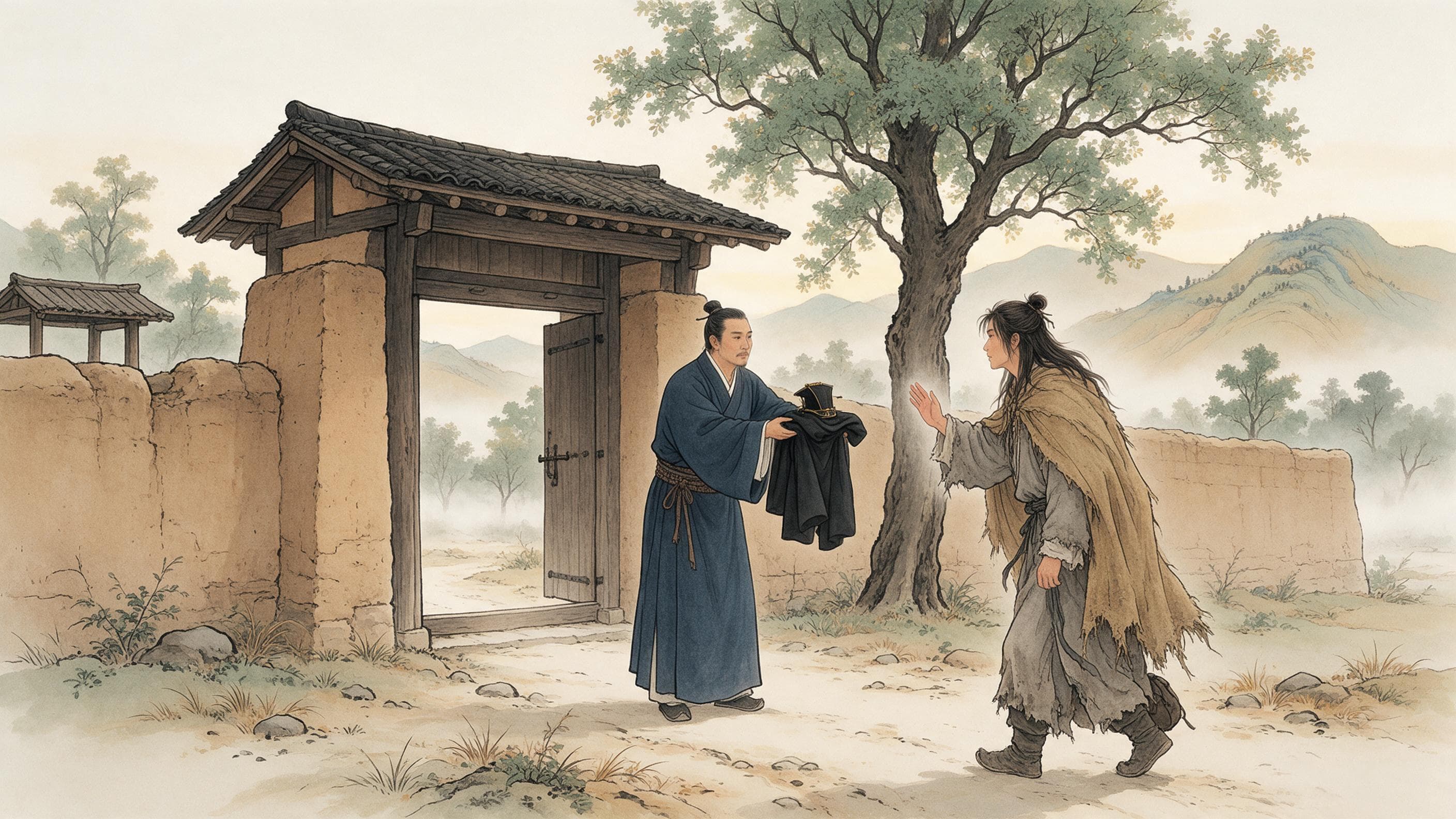
The chapter opens with the invitation: 公食大夫之礼。使大夫戒,各以其爵。上介出请,入告。三辞。宾出,拜辱。大夫不答拜,将命。宾再拜稽首。大夫还,宾不拜送,遂従之。宾朝服即位于大门外,如聘。 The duke sends a grandee, 戒, to announce the invitation, and a man of the guest's own rank is chosen; the guest's deputy comes out to ask why and goes back in to report; then 三辞, three refusals. The guest comes out and 拜辱; the envoy does not bow back, delivers his message, and the guest twice bows his head to the ground. The envoy returns; the guest does not see him off but follows; in court dress he takes his place outside the great gate as for an official visit. The invitation is a small ritual of its own: the envoy is chosen to match the guest's rank, the guest's staff handle the first exchange, and the guest's three refusals come before he accepts anything. The page gives the sequence and no commentary on why three.
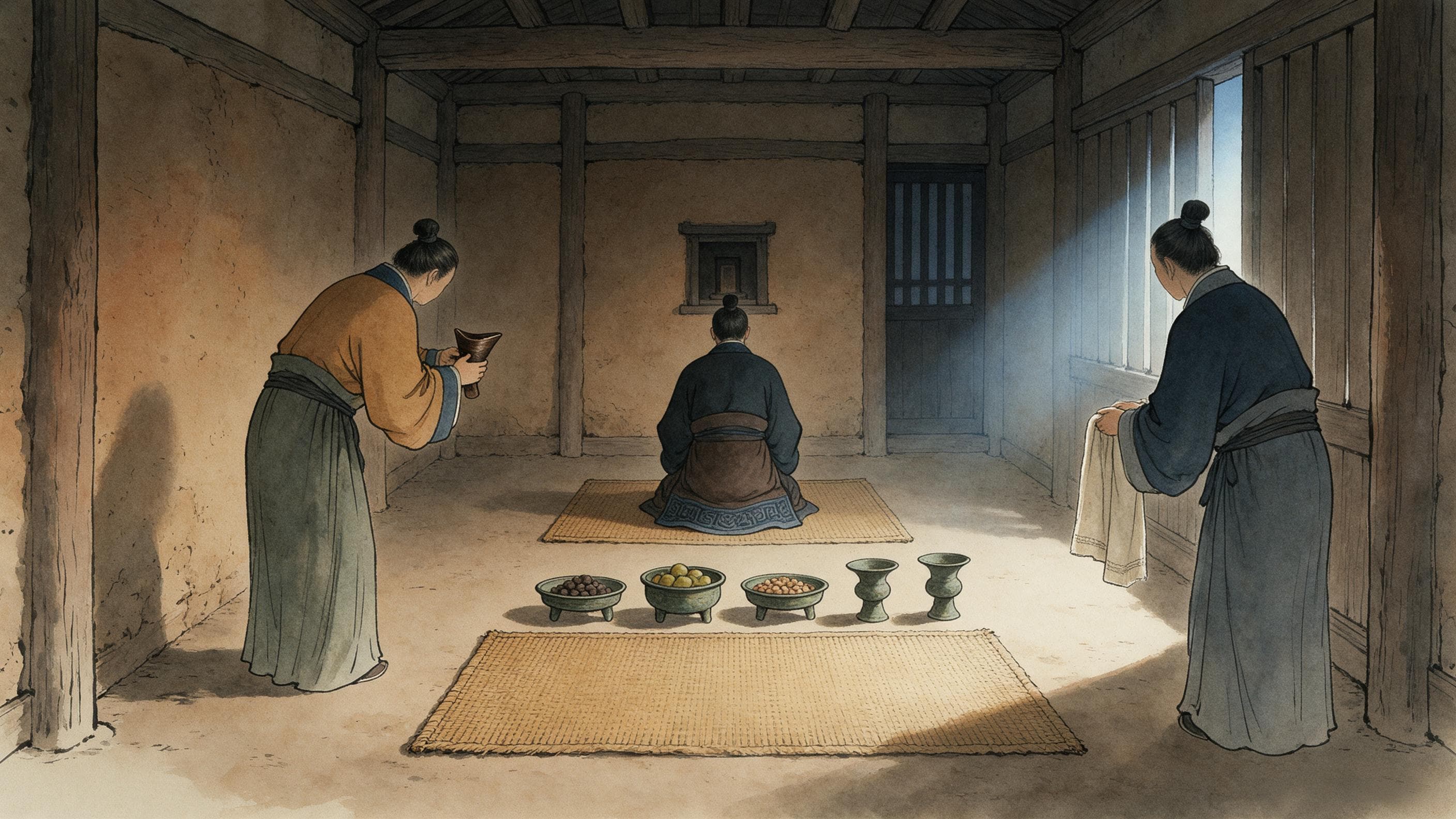
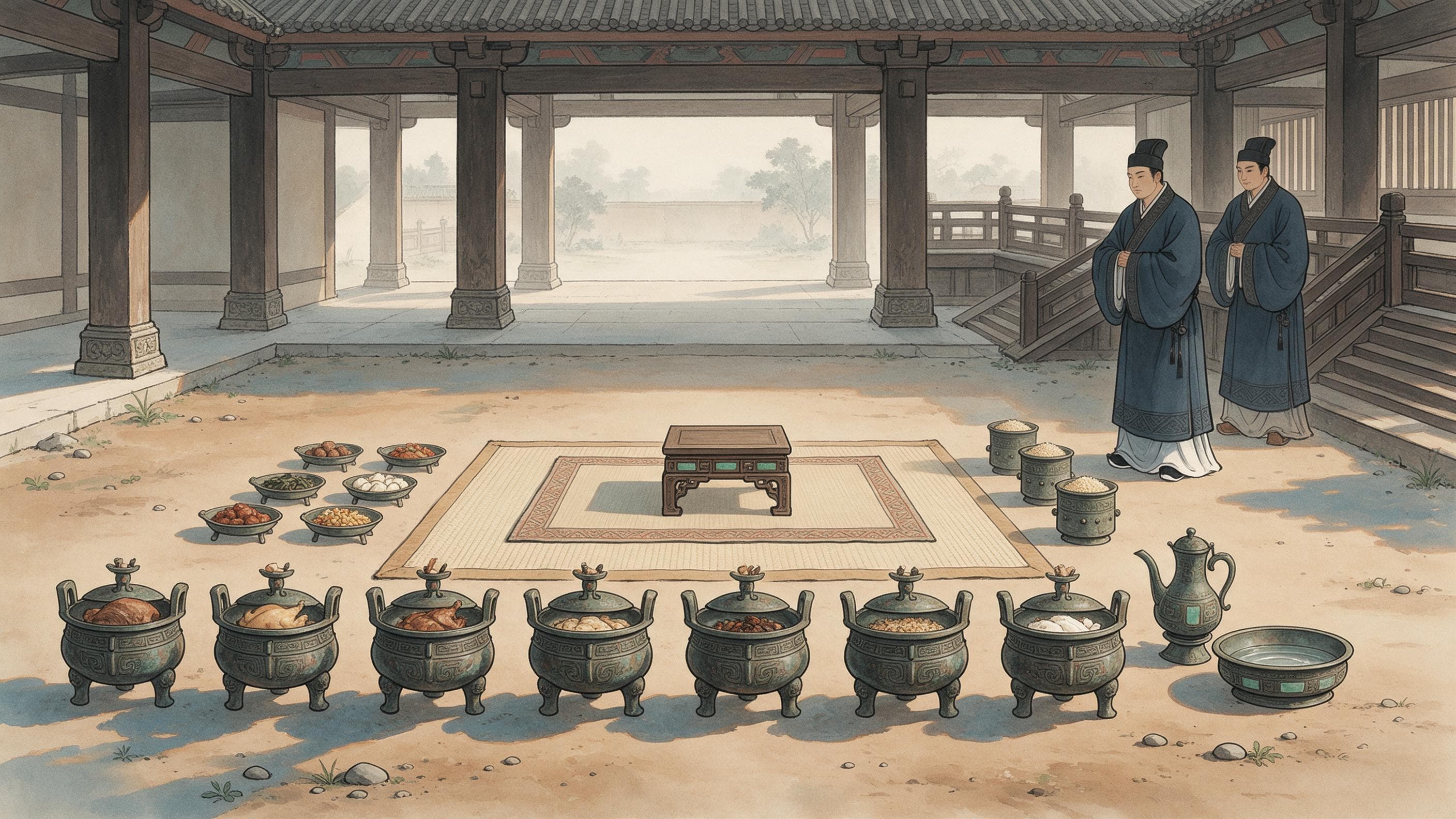
Before the guest arrives, the room is set: 即位,具。羹定,甸人陈鼎七,当门,南面西上,设扃鼏,鼏若束若编。设洗如飨。小臣具槃匜,在东堂下。宰夫设筵,加席、几。无尊。饮酒、浆饮,俟于东房。 The words are few and concrete: the stew is ready, 羹定; the 甸人 set out seven tripods, 鼎七, facing the gate; the tripods have their bars and their lids, 扃鼏; a basin and ewer stand below the east hall; the steward lays a mat with a second mat and a stool; 无尊, no wine vessel is set out, and the drinks wait in the east room. What stood in the tripods, how big the mats were, the page does not say. The arrangement is described by place and by count, and the two are inseparable: seven tripods at the gate, the washing set at the east hall, the mats and stool from the steward, no wine vessel anywhere on the floor. A reader who wanted a picture of the hall would have to build it out of these positions.
The Welcome and the Stairs
The duke receives the guest inside the gate: 公如宾服迎宾于大门内。大夫纳宾。宾入门左,公再拜;宾辟,再拜稽首。公揖入,宾従。及庙门,公揖入。宾入,三揖。至于阶,三让。公升二等,宾升。 At the steps there are 三揖, three bows with the hands, and 三让, three yields; the duke goes up two steps first and the guest follows. Everyone else has a place: 大夫立于东夹南,西面北上。士立于门东,北面西上…介,门西,北面西上. Then the bowing and descending is as exact as the furniture: 公当楣北乡,至壹拜,宾降也,公再拜. The bows at the steps are the heart of the welcome: three bows with the hands before the stair, three yields at the stair, the duke two steps up first. The chapter does not say what the guest is thinking, only where he stands and when he goes down.
The tripods are then moved and opened: 士举鼎,去鼏于外,次于。陈鼎于碑南,南面西上。右人抽扃,坐奠于鼎西南…左人待载。雍人以俎入,陈于鼎南。旅人南面加匕于鼎,退…大夫既匕,匕奠于鼎,逆退,复位。 And the portions are counted: 鱼七,缩俎,寝右。肠、胃七,同俎。伦肤七。 Seven fish, seven sets of gut and stomach, seven pieces of skin. What the numbers amount to as food the page does not say; it gives the count and the arrangement. The tripods are not simply carried in: they are lifted, their lids taken off outside, their bars drawn, and the meat taken out and set on stands while the men who do it keep their positions. The counts that follow — seven fish, seven sets of gut, seven pieces of skin — are the only quantities the page gives for the food.
From the Sauce to the Last Bite
The dishes arrive in order. 宰夫自东房授醯酱,公设之 — the steward brings the vinegar sauce from the east room and the duke himself sets it down; the guest declines and moves it. Then 豆六, six dishes, with their contents named one by one: 韭菹…醓醢、昌本…麋臡…菁菹、鹿臡. Then the meat on stands, 牛、羊、豕,鱼在牛南,腊、肠、胃亚之; then 黍、稷六簋, six grain vessels; then 大羹湆,不和,实于镫, the great stew, unseasoned; then 铏四, four stew vessels; then the drink in a cup set on its stand. Nothing is described: each dish is a name in a place. The order is the meaning: sauce, then the six dishes, then the meat, then the grain, then the great stew, then the four stew vessels, then the drink. Each comes from a named place and is set in a named relation to what came before, and the chapter never explains the sequence.
Eating is scripted too: 宾升席,坐取韭菹,以辩擩于醢,上豆之间祭…三牲之肺不离…捝手,扱上铏以柶…祭饮酒于上豆之间。鱼、腊、酱、湆不祭 — and the fish, the dried meat, the sauce and the stew are not included in the offering. The duke hands over the millet, 宰夫授公饭粱,公设之于湆西; then the relishes, 膷、臐、膮、牛炙、牛胾、醢、牛鮨、羊炙、羊胾、豕炙、豕胾、芥酱、鱼脍; and the guest 三饭以湆酱, takes three mouthfuls with stew and sauce, then drinks. The guest's own eating is a series of small exclusions: what is offered and what is not, which hand, which sauce, how many mouthfuls. The relishes are named one after another and not described; the only number in the passage is three.
The ending is as formal as the opening. 公受宰夫束帛以侑,西乡立 — the duke takes a bundle of silk to press the guest, who declines, then accepts; 介逆出。宾北面揖,执庭实以出 — the deputy leaves first and the guest carries out the courtyard gifts. The duke 降,再拜, bows as the guest goes, and 宾不顾, the guest does not look back. The remains are disposed of by rule: 有司卷三牲之俎,归于宾馆。鱼腊不与 — the stands of the three animals go back to the guest's lodging, the fish and dried meat do not. The next day 宾朝服拜赐于朝, the guest thanks the court in court dress. The gift of silk at the end is what turns a meal into a transaction between courts, and the disposal of the leftovers is what keeps it a rite: the meat goes back to the guest's lodging, the fish does not, and the guest thanks the court the next day.
The same script has higher settings. 上大夫八豆,八簋,六铏,九俎…下大夫则若七,若九 — an upper grandee is given eight dishes, eight grain vessels, six stew vessels and nine stands; a lower grandee gets seven or nine. 若不亲食,使大夫各以其爵、朝服以侑币致之 — if the duke cannot be present, a grandee of the guest's rank carries the silk and the dishes to him; and 大夫相食, one grandee entertaining another, has its own adjustments. The page adds the numbers and stops. The higher setting is not a different rite but the same one with more: more dishes, more grain vessels, more stands. The chapter also provides for the duke's absence and for one grandee entertaining another, both with adjustments rather than new scripts.
The Other Page: Why a Banquet at All
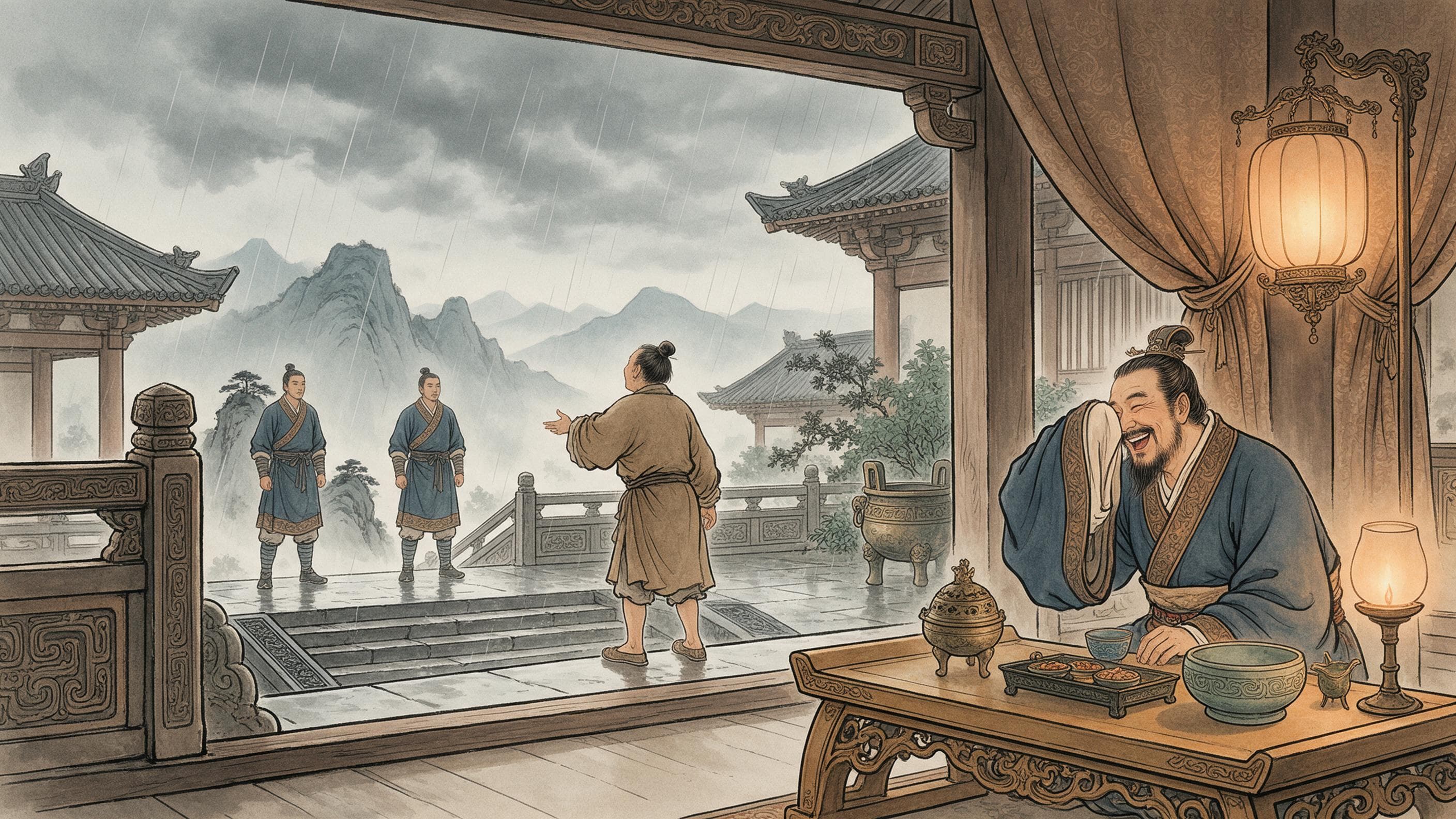
The 燕義 answers the question of purpose, but for a different rite. 諸侯燕禮之義:君立阼階之東南,南鄉爾,卿大夫皆少進,定位也 — the ruler stands southeast of the eastern stair and the ministers come forward a little; 君獨升立席上,西面特立,莫敢適之義也; 設賓主,飲酒之禮也; 使宰夫爲獻主,臣莫敢與君亢禮也; 不以公卿爲賓,而以大夫爲賓,爲疑也,明嫌之義也. The ruler returns every bow, 禮無不答,言上之不虚取於下也, and the chapter ends with the reason: 此君臣上下之大義也。故曰:燕禮者,所以明君臣之義也. Seating and portions follow rank, 俎豆、牲體、薦羞,皆有等差。所以明貴賤也. This is the argument for the 燕禮, the ruler's drinking banquet with his ministers — not for the 公食大夫禮 described on the other page. The two chapters are two rites, and this article does not use one to explain the other. The chapter is not a commentary on the meal described on the other page; it is a separate argument about a separate banquet, and the two should not be fused into one picture of 'the Zhou banquet'.
What This Article Leaves Out
It does not write a history of Zhou food or of ritual: the pages give a script and an argument, and neither records a particular dinner. It does not gloss what the pages leave alone — 拜辱, 三辞, 三揖, 三让, 扱, 捝手, 鼏, 扃 are kept as names — and it does not explain what seven tripods, six dishes or four stew vessels meant. It does not match the food to modern dishes or give a menu. The community drinking rite, the seating at the Hongmen feast, the ceremonies for envoys and first meetings, and the pitch-pot game are other articles; this one stays at one gate, one set of steps and one mat. The figures are kept as written: 鼎七, 豆六, 簋六, 铏四, 鱼七, 肠胃七, 伦肤七, 八豆, 八簋, 六铏, 九俎. What the pages give is a sequence, a set of positions and a few numbers, and this article stays with them.
Related reading:Long and Ever Growing: Ancestors, a War, and One Preface Line · The Case Book: Cang Gong's Register of Patients · At the First Crow: One Day in a Gentleman's Household, According to the Rites
Sources & further reading
- 《儀禮·公食大夫禮》(維基文庫本,頁面白文;此頁用簡體錄文,未與中華書局點校本複核) — The whole script of one meal: 公食大夫之礼。使大夫戒,各以其爵…三辞…宾朝服即位于大门外; 羹定,甸人陈鼎七…无尊; 公如宾服迎宾于大门内…三揖…三让…公升二等,宾升; 士举鼎,去鼏于外…鱼七…肠胃七…伦肤七; 宰夫自东房授醯酱,公设之…豆六…黍、稷六簋…大羹湆,不和…铏四; 宾升席…鱼、腊、酱、湆不祭…三饭以湆酱; 公受宰夫束帛以侑…宾不顾; 有司卷三牲之俎,归于宾馆。鱼腊不与; 明日,宾朝服拜赐于朝; 上大夫八豆,八簋,六铏,九俎…下大夫则若七,若九; 若不亲食…大夫相食.
- 《禮記·燕義》(維基文庫本,頁面白文;未與中華書局點校本複核) — The rationale of the 燕禮, a different banquet from the 公食大夫禮: 诸侯燕礼之义:君立阼阶之东南…君独升立席上,西面特立,莫敢适之义也; 设宾主,饮酒之礼也; 使宰夫为献主,臣莫敢与君亢礼也; 不以公卿为宾,而以大夫为宾,为疑也,明嫌之义也; 礼无不答,言上之不虚取于下也; 此君臣上下之大义也。故曰:燕礼者,所以明君臣之义也; 俎豆、牲体、荐羞,皆有等差。所以明贵贱也. The chapter also opens with the duties of the 庶子官.