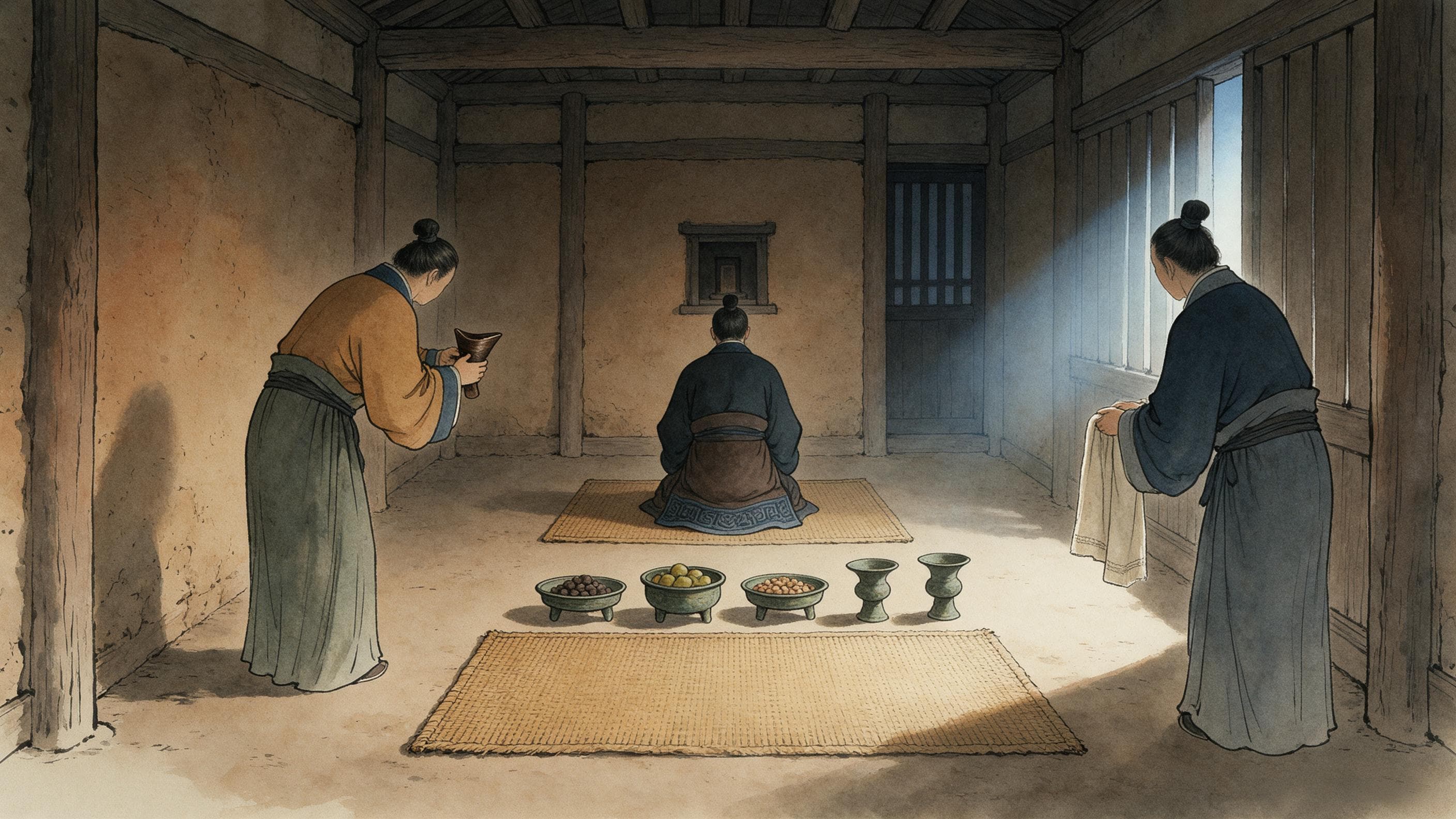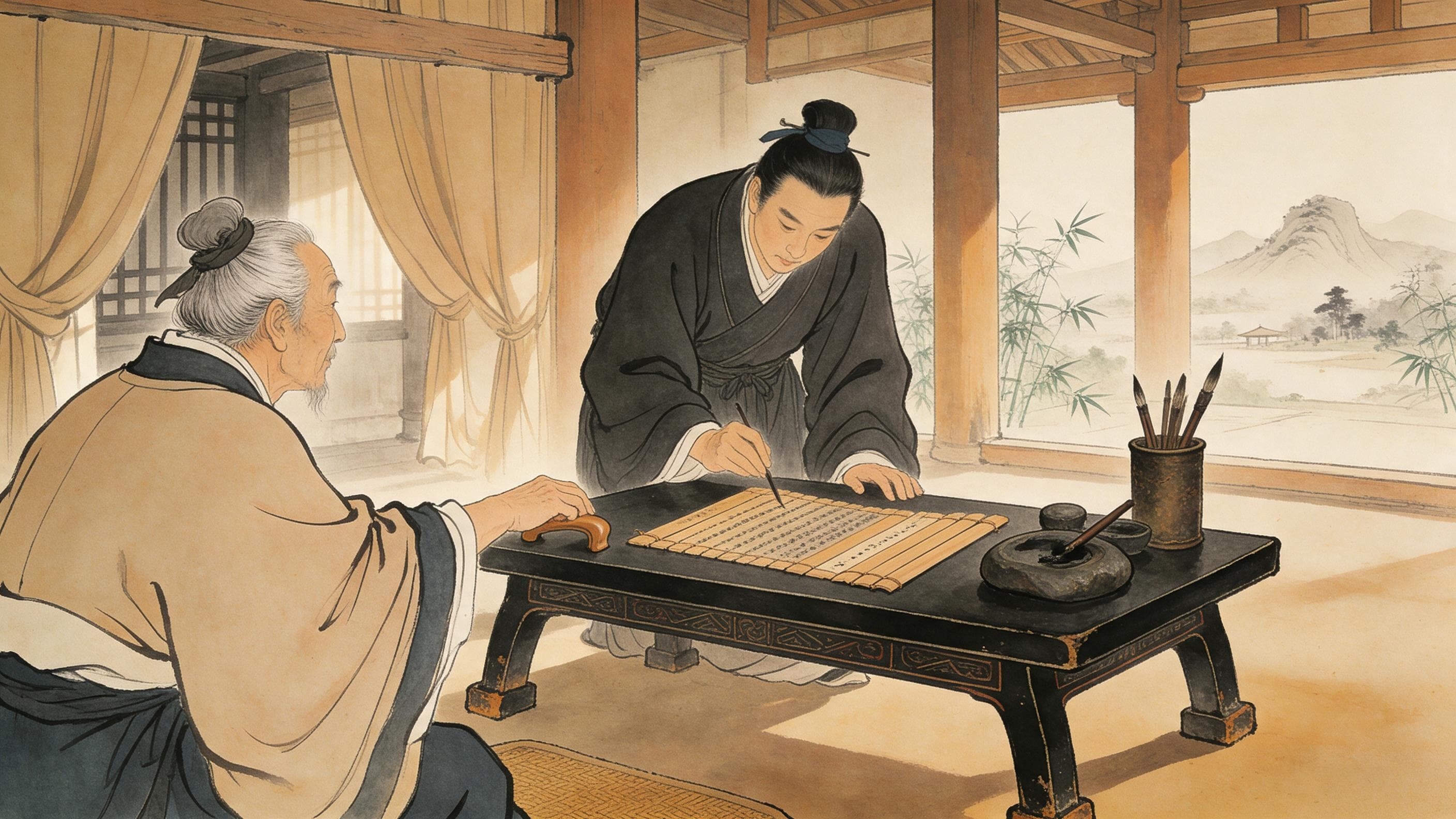
Emperor Wen summoned the Grand Granary Keeper of Qi and questioned him closely: 方伎所長,及所能治病者?有其書無有?皆安受學?受學幾何歲?嘗有所驗,何縣里人也?何病?醫藥已,其病之狀皆何如?具悉而對 — what is your skill, do you have books, from whom did you learn, for how many years, which county and hamlet were your patients from, what illness did they have, and how were they after the medicine? Answer in full. He had already asked for two things first: 所為治病死生驗者幾何人也,主名為誰 — how many people had he treated with a verified outcome, and what were their names. That string of questions is the outline of the cases that follow.
The man answering: 太倉公者,齊太倉長,臨菑人也,姓淳于氏,名意. He had loved medicine from youth, and in the eighth year of Empress Lü he took a teacher, 元里公乘陽慶, then over seventy and without a son. The old man told him: 盡去而方書,非是也 — throw away all your old books, they are wrong — and then 悉以禁方予之, handing over the pulse books of the Yellow Emperor and Bian Que. He received seven titles: 脈書上下經、五色診、奇咳術、揆度陰陽外變、藥論、石神、接陰陽禁書. He read for about a year, tested it the next year, 有驗,然尚未精也, and after three years of service was reckoned precise. At the time of the answer 年三十九歲也. The first half of this chapter belongs to Bian Que and another article; only the Cang Gong half is used here.
One: five parts to a case
The first case can serve as the template: 齊侍御史成自言病頭痛,臣意診其脈,告曰:「君之病惡,不可言也。」即出,獨告成弟昌曰:「此病疽也,內發於腸胃之閒,後五日當擁腫,後八日嘔膿死。」成之病得之飲酒且內。成即如期死。所以知成之病者,臣意切其脈,得肝氣。肝氣濁而靜,此內關之病也。脈法曰「脈長而弦,不得代四時者,其病主在於肝」…… In one paragraph: who the patient was (Cheng, attendant censor of Qi), how he was examined (by pulse), how many days until death (five to swelling, eight to death from pus), why he fell ill (wine and women), and how the doctor knew (a closing 所以知 that cites the pulse canon). The verdict is given first to the patient's younger brother, not to the patient.
There are cures in the same form, with the date of death turned into a date of recovery: 齊郎中令循病……臣意飲以火齊湯,一飲得前[后]溲,再飲大溲,三飲而疾愈。病得之內 — one dose, then two, then three, and the illness was gone. The cause line is the most human part, and nearly every case has one: 得之飲酒且內 (wine and women), 得之墮馬僵石上 (a fall from a horse onto stone), 得之數飲酒以見大風氣 (drinking often and meeting a great wind), 得之飽食而疾走 (running on a full stomach), 得之汗出伏地 (sweating and lying on the ground). These are things a man did, not an abstract pathology; the page records the line and explains nothing.
Two: what the register was, and how far it went
Asked why the same illness could be diagnosed differently and end differently, he answered first with the pulse canon — 病名多相類,不可知,故古聖人為之脈法,以起度量,立規矩,縣權衡,案繩墨 — and only then with the book: 今臣意所診者,皆有診籍。所以別之者,臣意所受師方適成,師死,以故表籍所診,期決死生,觀所失所得者合脈法,以故至今知之. Everyone he had diagnosed had a record; he kept it because his teacher's prescriptions were barely complete when the teacher died, so he wrote down those he had seen, to judge life and death and to check his own hits and misses against the pulse canon — and that is how he still knew them.
But the register is not a complete archive, and he says so: 他所診期決死生及所治已病眾多,久頗忘之,不能盡識,不敢以對 — many others he had diagnosed and treated, long forgotten, not all still recognised, and he dared not answer. Asked why some forecasts missed their date, he said: 此皆飲食喜怒不節,或不當飲藥,或不當鍼灸,以故不中期死也 — food and temper out of measure, or medicine wrongly taken, or needling and moxa wrongly applied. And his own verdict on himself: 心不精脈,所期死生視可治,時時失之,臣意不能全也 — my mind is not precise in the pulse; in what I forecast I sometimes fail; I cannot be complete.
Three: the cases that missed their dates
A few entries in the register fail to match, and are written down as they are. 陽虛侯相趙章病……法曰「五日死」,而後十日乃死。病得之酒 — the rule said five days; he died on the tenth. His explanation: 所以過期者,其人嗜粥,故中藏實,中藏實故過期, with the teacher's saying 安穀者過期,不安穀者不及期. Another: 齊中郎破石病,臣意診其脈,告曰:「肺傷,不治,當後十日丁亥溲血死。」即後十一日,溲血而死。破石之病,得之墮馬僵石上 — one day late, and this time the cause of the delay is millet: 其人嗜黍,黍主肺,故過期. Two entries are stronger still: 安陽武都里成開方……三歲四支不能自用,使人瘖,瘖即死。今聞其四支不能用,瘖而未死也 — three years, and the man was alive, mute and unable to use his limbs. And a colleague's forecast that failed while Cang Gong's cure worked: 時醫秦信在旁……曰:「淳于司馬病,法當後九日死。」即後九日不死……臣即為一火齊米汁,使服之,七八日病已.
Four: the book-list on the other side
The Hanshu's treatise on letters files medical books under 方技, collated by 侍醫李柱國, the attending physician. The subtotals: 右醫經七家,二百一十六卷; 右經方十一家,二百七十四卷; 右房中八家,百八十六卷; and the division total 凡方技三十六家,八百六十八卷. Each section carries a definition — the medical classics 原人血脈經絡骨髓陰陽表裏,以起百病之本,死生之分; the formulas 本草石之寒溫,量疾病之淺深……以通閉解結. After the formulas comes a proverb: 有病不治,常得中醫 — for an illness left untreated, one still gets a middling physician. The summary sets medicine in a line of statecraft: 方技者,皆生生之具,王官之一守也。太古有岐伯、俞拊,中世有扁鵲、秦和,蓋論病以及國,原診以知政。漢興有倉公。今其技術晻味,故論其書,以序方技為四種 — and in that sentence 漢興有倉公 joins the man to the books.
The two subtotals need checking against their entries. The medical classics list seven titles: eighteen, thirty-nine, nine, twelve, thirty-eight, thirty-six and twenty-five scrolls, which add to 177, not the 216 given. The formulas list eleven: thirty, forty, forty, twenty-six, twenty-three, thirty-one, seventeen, thirty, nineteen, thirty-two and seven, which add to 295, not the 274 given. Both subtotals are quoted as the page has them, and the mismatch with the entries is noted; the numbers are not corrected and the difference is not explained. The counts of schools — seven and eleven — do match the number of entries.
Five: what the two pages give, and do not
- The same chapter, two different lives: volume 105 of the Shiji opens with Bian Que and turns to Cang Gong; another article takes Bian Que, this one only the Cang Gong half.
- The cases are Cang Gong's own retrospect, not an archive. He says plainly 久頗忘之,不能盡識,不敢以對 and 時時失之,臣意不能全也; the register is incomplete and sometimes wrong, and both sentences are in the article.
- A 診籍 is not a modern case file: the template is patient — examination — date of death or recovery — cause — how it was known. There is no temperature, no blood pressure, no test, no day-by-day course, and no modern medical vocabulary or diagnostic standard is applied here.
- The template is copied as written: the patient's office or hamlet, the illness named, what the pulse showed, the medicines named (火齊湯, 火齊米汁, 藥酒 and others), the days until death or recovery. The pulse-canon lines are quoted and not explained, and no cure is rated.
- Numbers as written: twenty-five cases, seven books, five batches of students, seven schools and 216 scrolls of medical classics, eleven schools and 274 of formulas, eight and 186 of sexual arts, thirty-six and 868 for the whole division — no conversion, no modern equivalents, and no table of cases invented.
- Lines kept apart: the articles on epidemics, on Bian Que's four diagnoses, and on the compiling of an acupuncture manual are other pieces; this one is the register itself. No claim that this is the earliest case book, no medical theory, and no verdict on how advanced Han medicine was.
What the two pages leave is two things: a register — twenty-five people, five parts each, a name, an illness, a number of days, a cause, and a closing 'how I knew', with a few admissions of forgetting and of error — and a state catalogue's account, with its scrolls for classics, formulas and sexual arts, ending 漢興有倉公. One is a physician's notebook, the other a librarian's ledger; between them lies the question of how much of either actually recorded anything.
Related reading:At the First Crow: One Day in a Gentleman's Household, According to the Rites · The Yin Honoured the Spirits: Three Dynasties Judged by a Later Hand · Xiao: A Battle Where Nobody Listened to the Old Men, and an Oath Written After
Sources & further reading
- 《史记》卷一百五〈扁鹊仓公列传〉(仓公段;维基文库本,白文,页头未标 textquality,未与中华书局点校本复核) — Only the Cang Gong half of the chapter is used; the Bian Que half belongs to another article. The man: 太倉公者,齊太倉長,臨菑人也,姓淳于氏,名意……高后八年,更受師同郡元里公乘陽慶。慶年七十餘,無子,使意盡去其故方,更悉以禁方予之. The books he received: 脈書上下經、五色診、奇咳術、揆度陰陽外變、藥論、石神、接陰陽禁書 (seven titles), after 受讀解驗之,可一年所……要事之三年所, and 今慶已死十年所,臣意年盡三年,年三十九歲也. The questions: 詔召問所為治病死生驗者幾何人也,主名為誰; 詔問故太倉長臣意:「方伎所長,及所能治病者?有其書無有?皆安受學?受學幾何歲?嘗有所驗,何縣里人也?何病?醫藥已,其病之狀皆何如?具悉而對。」The first case, quoted in full in the article: 齊侍御史成自言病頭痛……後五日當擁腫,後八日嘔膿死。成之病得之飲酒且內。成即如期死。所以知成之病者,臣意切其脈,得肝氣……脈法曰「脈長而弦,不得代四時者,其病主在於肝」. The register: 今臣意所診者,皆有診籍。所以別之者,臣意所受師方適成,師死,以故表籍所診,期決死生,觀所失所得者合脈法,以故至今知之. Incompleteness: 他所診期決死生及所治已病眾多,久頗忘之,不能盡識,不敢以對; and 心不精脈,所期死生視可治,時時失之,臣意不能全也. Missed forecasts: 法曰「五日死」,而後十日乃死……其人嗜粥,故中藏實,中藏實故過期。師言曰「安穀者過期,不安穀者不及期」; 當後十日丁亥溲血死。即後十一日,溲血而死……其人嗜黍,黍主肺,故過期; 三歲四支不能自用,使人瘖,瘖即死。今聞其四支不能用,瘖而未死也; 醫秦信……曰「淳于司馬病,法當後九日死」。即後九日不死. The students: 臨菑人宋邑……濟北王遣太醫高期、王禹學……菑川王時遣太倉馬長馮信……高永侯家丞杜信……臨菑召裏唐安 — five batches.
- 《汉书》卷三十〈艺文志·方技略〉(维基文库本,白文,页头未标 textquality,未与中华书局点校本复核) — The book-list. The editor: 侍醫李柱國校方技. The medical classics: 右醫經七家,二百一十六卷 (the seven entries are 黃帝內經十八卷,外經三十九卷;扁鵲內經九卷,外經十二卷;白氏內經三十八卷,外經三十六卷,旁篇二十五卷 — which add to 177, not 216); 醫經者,原人血脈經絡骨髓陰陽表裏,以起百病之本,死生之分. The formulas: 右經方十一家,二百七十四卷 (the eleven entries add to 295, not 274); 經方者,本草石之寒溫,量疾病之淺深……以通閉解結. Then 右房中八家,百八十六卷, and the proverb: 故諺曰:「有病不治,常得中醫。」The division's total: 凡方技三十六家,八百六十八卷。方技者,皆生生之具,王官之一守也。太古有岐伯、俞拊,中世有扁鵲、秦和,蓋論病以及國,原診以知政。漢興有倉公。今其技術晻味,故論其書,以序方技為四種。The page prints 晻味 where the received text usually has 晻昧; the article keeps the page's 味 and notes nothing further.