One book gives the jesters a category; the other gives one jester a whole volume. The Shiji's juan 126, 滑稽列傳, collects several men in one chapter and ends with a verdict from the historian. The Hanshu's juan 65 is the life of Dongfang Shuo alone. In both, three things have to be kept apart: what is said as a joke, what the joke is asking for, and what the ruler does. This article reads the famous episodes with those three layers marked. The two forms do different work: a category can compare men, a single life can show a career.
A Category of Several Men
The Shiji chapter announces itself twice. It opens with Confucius on the six arts and then a sentence from the historian: 天道恢恢,豈不大哉!談言微中,亦可以解紛 — the way of heaven is vast; a word slightly to the point can also untie a knot. That sentence is the chapter's excuse for existing. The chapter itself is three lives by Sima Qian — Chunyu Kun, You Meng, You Zhan — followed by his verdict, and then by a supplement which the page labels: 褚先生曰…復作故事滑稽之語六章…以附益上方太史公之三章. Six more chapters, added by a later hand, including the stories of Guo Sheren and Dongfang Shuo. The page marks the seam, and this article keeps it: three chapters by the historian, six by a supplement. The seam between historian and supplement is visible on the page, which is unusual and useful: it tells you which stories belong to which book.
The historian's verdict names the three men and what each got done: 淳于髡仰天大笑,齊威王橫行。優孟搖頭而歌,負薪者以封。優旃臨檻疾呼,陛楯得以半更。豈不亦偉哉! — Chunyu Kun looked up and laughed, and Duke Wei of Qi rode where he wished; You Meng shook his head and sang, and the man carrying firewood was enfeoffed; You Zhan shouted from the railing, and the guards got half a shift. This is praise, and it is written by the historian at the end; it is not the words of the jesters and not a report of what they said.
Chunyu Kun: A Riddle and a Drinking Speech
His first remonstrance is a riddle. 齊威王之時喜隱,好為淫樂長夜之飲,沈湎不治…左右莫敢諫。淳于髡說之以隱曰:「國中有大鳥,止王之庭,三年不蜚又不鳴,不知此鳥何也?」王曰:「此鳥不飛則已,一飛沖天;不鳴則已,一鳴驚人。」 The joke is a question about a bird; the answer is the king's own; and the result is action: 於是乃朝諸縣令長七十二人,賞一人,誅一人,奮兵而出。諸侯振驚,皆還齊侵地。威行三十六年. The riddle works because the king answers it himself; no one has to tell him what he is.
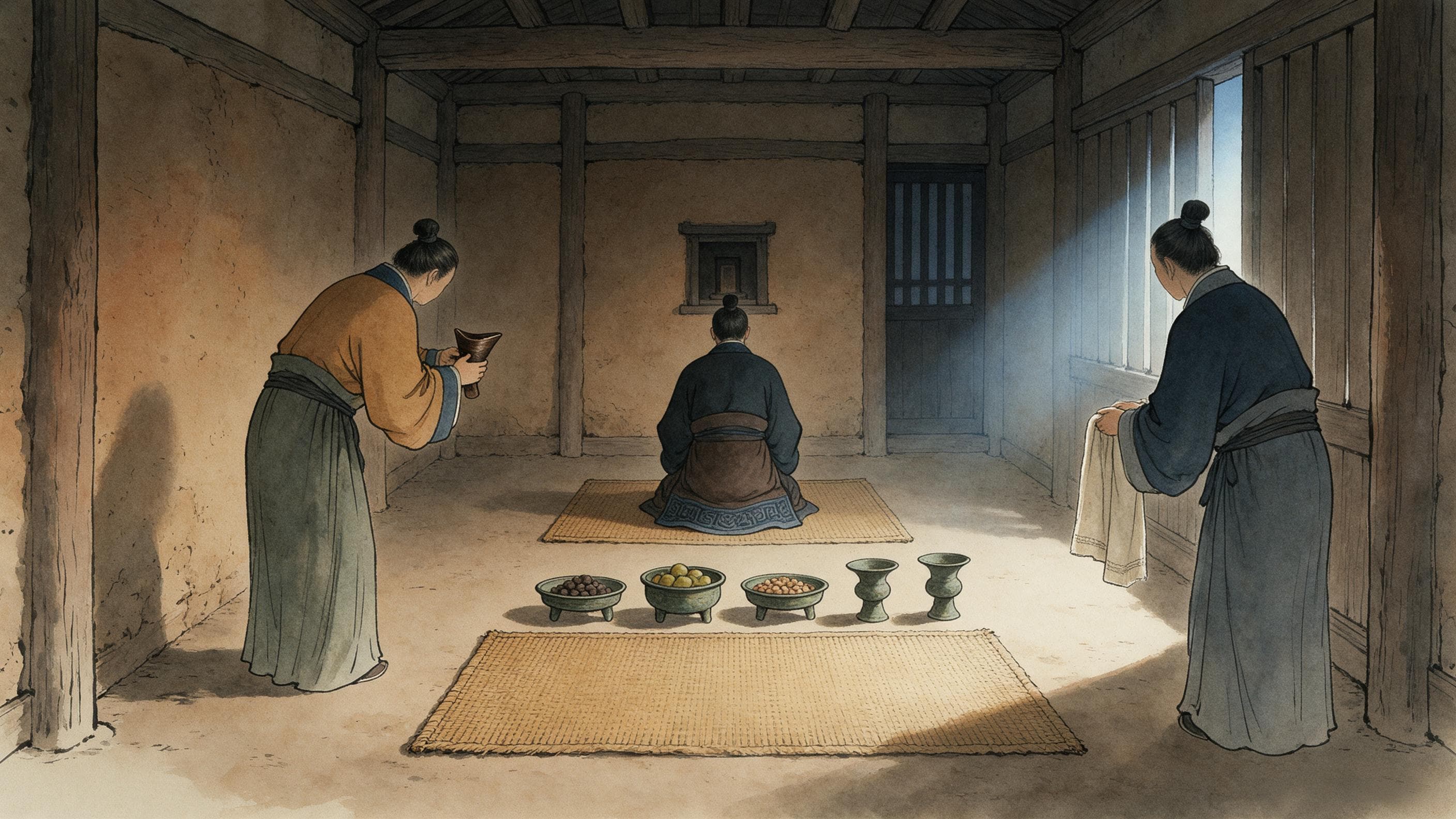
The drinking speech is longer and better known. 威王大說,置酒後宮,召髡賜之酒。問曰:「先生能飲幾何而醉?」對曰:「臣飲一斗亦醉,一石亦醉。」 The king asks how one man can be drunk on one measure and on ten; the answer is a tour of occasions: at the king's own cup, with the law officer beside him and the censor behind, 髡恐懼俯伏而飲,不過一斗徑醉矣; with a family guest, 飲不過二斗徑醉矣; with old friends, 飲可五六斗徑醉矣; at a village gathering with men and women mixed, games and forfeits, 飲可八斗而醉二參; and at the end of the evening, when the candles go out and the host keeps him while seeing the others off, 髡心最歡,能飲一石. Then the turn: 故曰酒極則亂,樂極則悲;萬事盡然,言不可極,極之而衰。 The page itself calls this 以諷諫焉, a remonstrance by innuendo, and the king's response is short: 齊王曰:「善。」乃罷長夜之飲. The speech is a joke about capacity and a lesson about limits at once, and the page leaves both in place.
You Meng and You Zhan
You Meng's first scene is a horse's funeral. 楚莊王…有所愛馬,衣以文繡…馬病肥死,使群臣喪之,欲以棺槨大夫禮葬之…王下令曰:「有敢以馬諫者,罪至死。」 優孟聞之,入殿門。仰天大哭…曰:「馬者王之所愛也…而以大夫禮葬之,薄,請以人君禮葬之。」 He then describes a royal funeral in detail — carved jade for the coffin, army engineers for the grave, the neighbouring states at the front and behind, a fief of ten thousand households to keep the sacrifice — and lands the point: 諸侯聞之,皆知大王賤人而貴馬也. The king sees it, and the burial becomes a cooking: 請為大王六畜葬之…葬之於人腹腸, and 王乃使以馬屬太官. Everything the jester says is the opposite of what he means, and the page says the king understood. The funeral speech is a description of a royal burial used as a reproach; the joke is the whole argument.
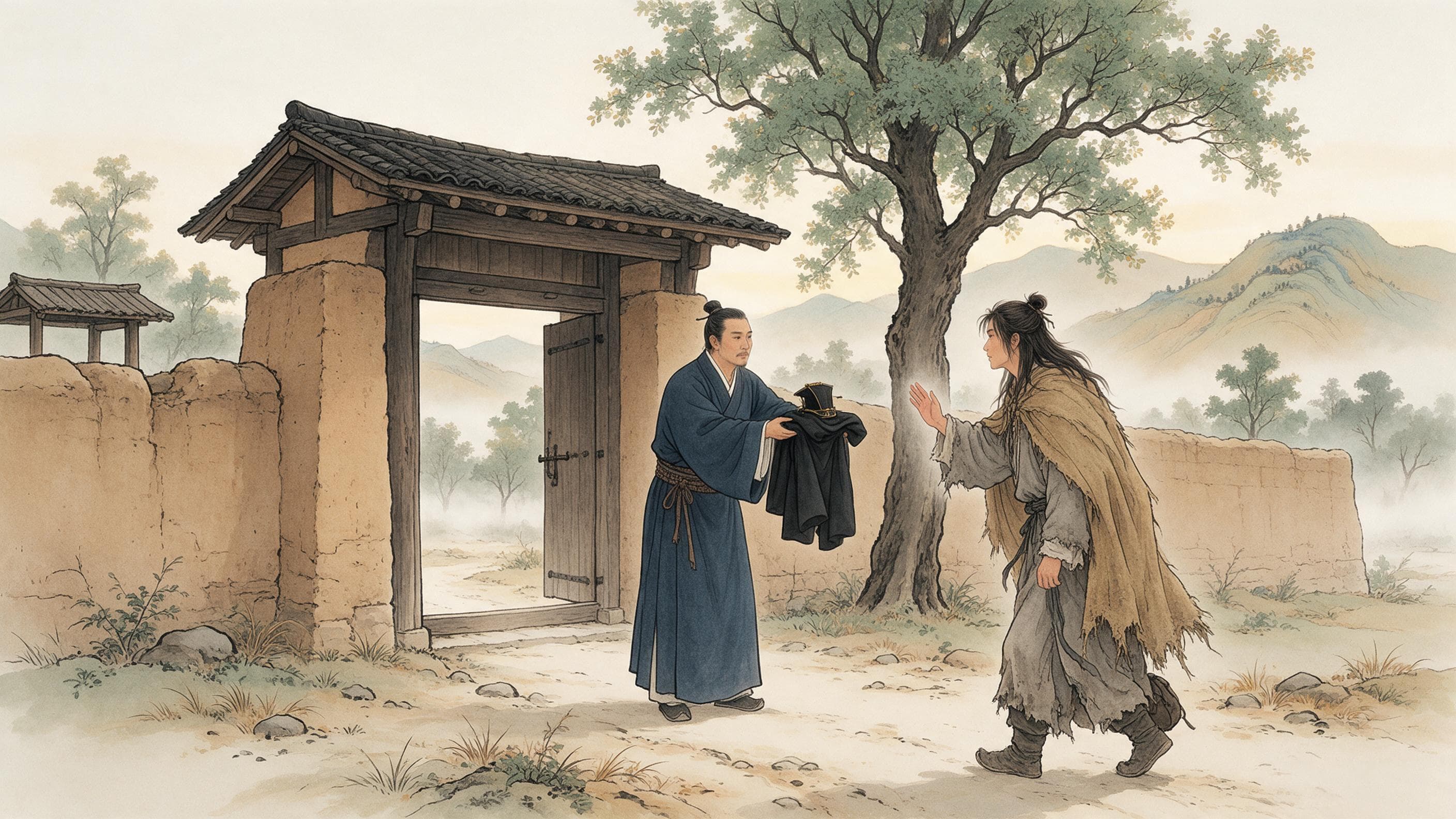
His second scene is a performance. Sunshu Ao's son is carrying firewood; 優孟…即為孫叔敖衣冠,抵掌談語。歲餘,像孫叔敖,楚王及左右不能別也. The king, at a banquet, takes him for the dead minister returned and wants to make him chancellor; You Meng asks for three days to consult his wife, comes back, and reports her words: 婦言慎無為,楚相不足為也…必如孫叔敖,不如自殺. He sings the argument out — the honest official dies poor, the corrupt one rich and ruined — and the king thanks him, calls the son, and 封之寢丘四百戶. Here the joke is a costume and a wife's supposed advice; the request is for the dead minister's family; the result is a fief. The costume does the work of a memorial, and the invented wife does the work of a final appeal.
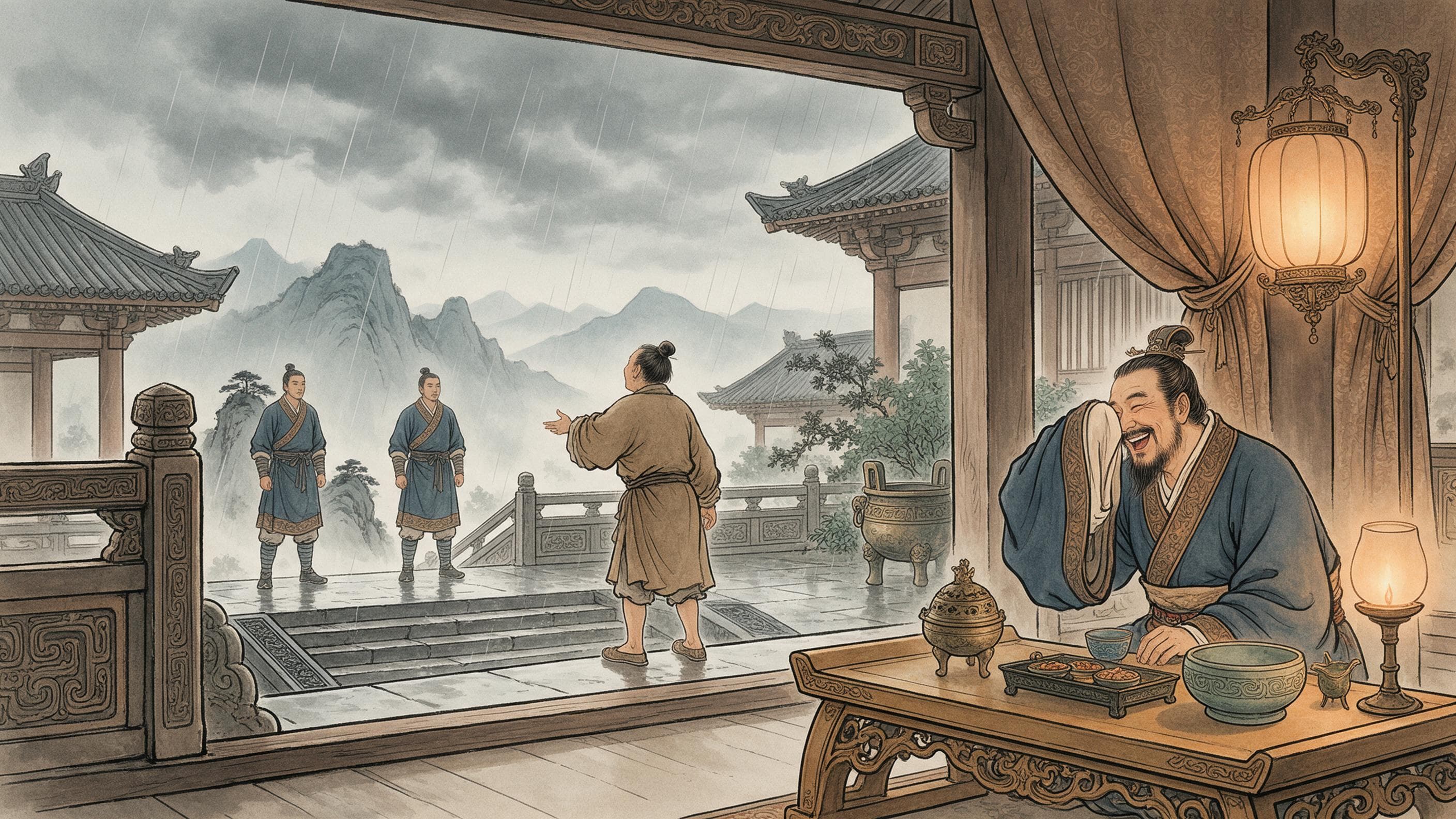
You Zhan is a dwarf jester at the Qin court, and his two scenes are short. In the rain, the guards at the steps are soaked and cold: 優旃…謂之曰:「汝欲休乎?」…曰:「我即呼汝,汝疾應曰諾。」…優旃臨檻大呼曰:「陛楯郎!」郎曰:「諾。」優旃曰:「汝雖長,何益,幸雨立。我雖短也,幸休居。」於是始皇使陛楯者得半相代. The second is the lacquered wall. 二世立,又欲漆其城。優旃曰:「善。主上雖無言,臣固將請之…漆城蕩蕩,寇來不能上。即欲就之,易為漆耳,顧難為蔭室。」於是二世笑之,以其故止. The praise is the joke; the objection is inside it; the ruler laughs and stops. Neither scene lasts more than a few lines, and in both the ruler's reaction is the last word.
The Hanshu: One Man, One Volume
The Hanshu gives Dongfang Shuo his own juan, and the form changes what can be said. The biography opens with name, place and a self-recommendation: 東方朔字曼倩,平原厭次人也…朔初來,上書曰:「臣朔少失父母…年二十二,長九尺三寸,目若懸珠,齒若編貝,勇若孟賁…可以為天子大臣矣。」 The same man appears in the Shiji's supplement as a handful of anecdotes; here he is given a life, with his memorials, his promotions, his jokes and his failures in one line. A biography can hold failures and promotions in one sequence, and this one does.
The jokes are still jokes. He frightens the dwarfs with a story that the emperor means to kill them all, and then explains himself: 朱儒長三尺餘,奉一囊粟,錢二百四十。臣朔長九尺餘,亦奉一囊粟,錢二百四十。朱儒飽欲死,臣朔飢欲死. He wins at the covered-object game, guessing 守宮 or 蜥蜴 from a hexagram, and out-talks the court jester Guo Sheren in riddles. On a hot holiday he cuts his own share of meat and carries it home, and when asked to explain himself turns the scolding into a list of his own virtues until 上笑曰:「使先生自責,乃反自譽!」 These are the jokes, and the page presents them as jokes. The jokes are recorded without being explained, and the page does not say which of them were meant seriously.
The remonstrance is a different thing. When the emperor wants to turn a large tract into a hunting park, Dongfang Shuo objects in a long memorial: 今規以為苑,絕陂池水澤之利,而取民膏腴之地…是其不可一也; the destruction of tombs and houses is 不可二也; the walls and ditches and the risk of the chase are 不可三也. He ends 願陳泰階六符,以觀天變. The result is divided: 上乃拜朔為太中大夫給事中,賜黃金百斤。然遂起上林苑 — he is rewarded and the park is built anyway. The biographer also notes what the court thought of him: 朔之進對澹辭,皆此類也, and 與枚皋、郭舍人俱在左右,詼啁而已, and that his long memorial on agriculture and war 終不見用. The jokes and the advice are in the same life, and the page separates their outcomes. The reward and the failure are recorded side by side, and the biographer does not reconcile them.
What This Article Leaves Out
It does not write a history of humour or a theory of remonstrance: the pages give episodes and, at the end of the Shiji chapter, one historian's praise. It does not add years or dialogue that the pages do not have, and it does not turn a joke into a policy argument or a policy argument into a joke. The two books are different forms — a category of several men, a life of one — and the article keeps them apart rather than pooling them as evidence about 'the Han jester'. The Music Bureau's establishment, Shusun Tong's court rites, the wandering swordsmen and the Renda chapter are other articles; this one stays with a few scenes and the words spoken in them. What the pages give is scenes, speeches and one verdict; this article stays with those.
Related reading:The Duke Entertains: One Meal Under the Rites · Worthy Women: A Few Women, A Few Sentences · Long and Ever Growing: Ancestors, a War, and One Preface Line
Sources & further reading
- 《史記》卷一百二十六·滑稽列傳(西漢司馬遷撰,褚少孫補;維基文庫本,頁面白文,未與中華書局點校本複核) — The category: the chapter opens with Confucius on the six arts and 太史公曰 談言微中,亦可以解紛; the three lives by Sima Qian are 淳于髡, 優孟, 優旃; the 太史公曰 closes 淳于髡仰天大笑,齊威王橫行…豈不亦偉哉; then 褚先生曰…復作故事滑稽之語六章…以附益上方太史公之三章, with the stories of 郭舍人 and 東方朔 in the supplement. The episodes quoted: the big bird riddle; 一斗亦醉,一石亦醉 with 酒極則亂,樂極則悲; 優孟 and the horse's funeral; 優孟 in 孫叔敖's clothes; 優旃 and the guards in the rain; 優旃 and the lacquered wall.
- 《漢書》卷六十五·東方朔傳(東漢班固撰;維基文庫本,頁面白文,未與中華書局點校本複核) — A single long biography of one man, unlike the Shiji's category: 東方朔字曼倩,平原厭次人也…上書自薦; 紿騶朱儒; 射覆 and 郭舍人's riddles; 伏日割肉 and self-praise; the long remonstrance against the 上林苑 with 是其不可一也…二也…三也, ending 上乃拜朔為太中大夫給事中,賜黃金百斤。然遂起上林苑; and the biographer's remarks 朔之進對澹辭,皆此類也 and 與枚皋、郭舍人俱在左右,詼啁而已.