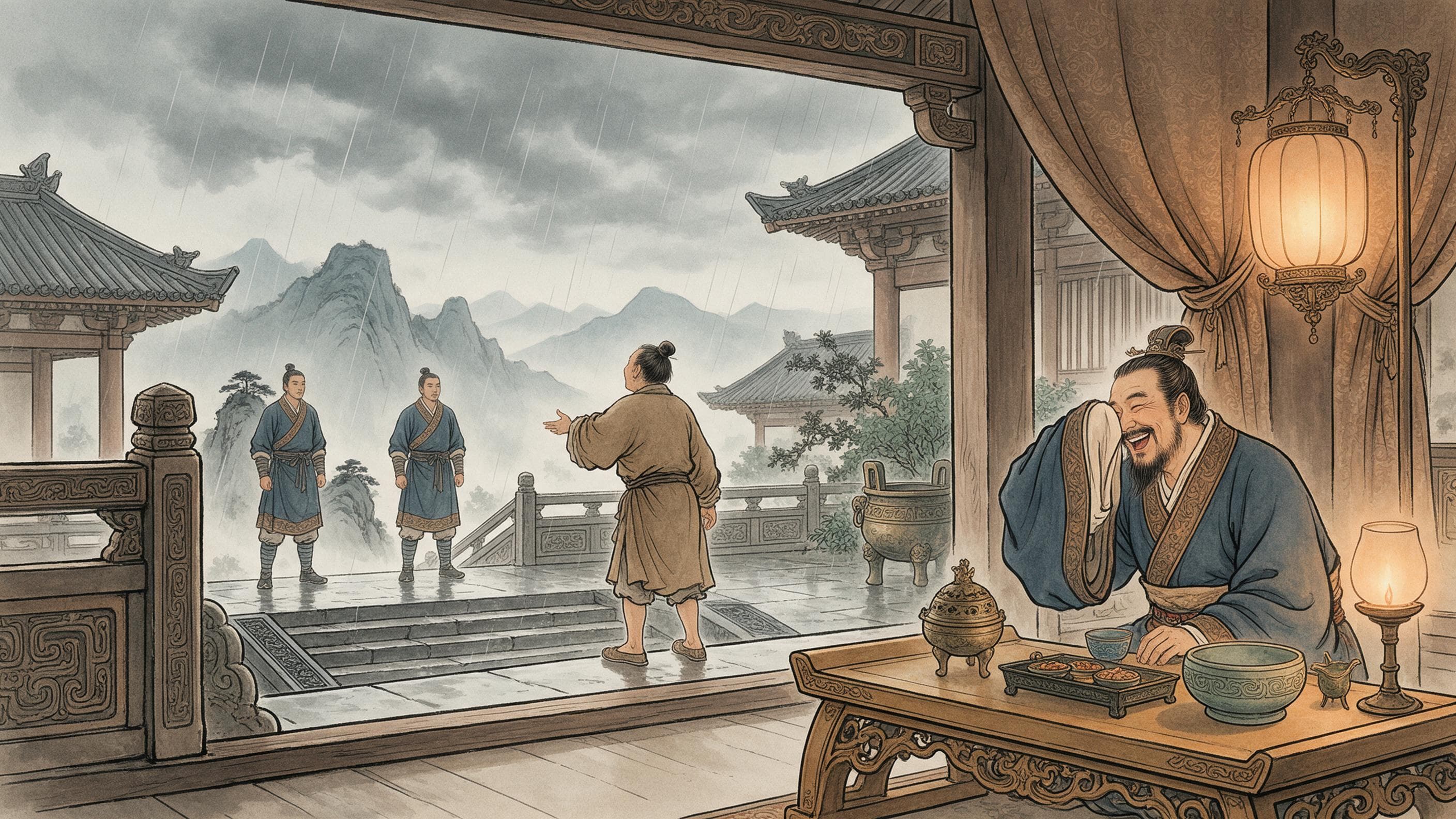
Before daylight a cock crows, and the Book of Rites starts a day there. 子事父母,雞初鳴,咸盥、漱、櫛、縰、笄、總、拂髦、冠、緌、纓、端、韠、紳、搢笏 — a son serving his parents: at the first crowing, all wash, rinse, comb, bind, pin, tie, brush the fringe, put on the cap with its cords and tassels, the jacket, the knee-cover, the sash, and tuck in the tablet. This is a book of rules, not the diary of one household; both pages used here are from the same book, the Liji, and neither says what any particular family actually did. The order is fixed and the book never explains why one item comes before another; it simply runs the morning as a list that begins at the crowing.
At the First Crow: Getting Up
The list runs from washing and combing to 縰, 笄, 總, the 冠 with its 緌 and 纓, the 端, the 韠, the 紳, and the 笏 at the end. What these were like, and how they were fastened, the page does not say, and this article does not fill it in. The chain is short, and the page does not separate what belongs to the hair from what belongs to the body.
Then the things carried: 左右佩用,左佩紛帨、刀、礪、小觿、金燧,右佩玦、捍、管、遰、大觿、木燧 — on the left a 紛帨, a knife, a 礪, a small 觿, a 金燧; on the right a 玦, a 捍, a 管, a 遰, a large 觿, a 木燧. The page gives the names and no explanations, so this article leaves them as names and says so. The left and right lists differ after the first few items, and the page gives no reason.
The wife's list follows, and the book writes it as the same duty: 婦事舅姑,如事父母 — serving her husband's parents as her own. At the first crow she too washes, rinses, combs, binds, pins and ties, puts on the jacket and sash, and carries on the left the same 紛帨, knife, 礪, small 觿 and 金燧, while on the right she has 箴、管、線、纊、施縏袠、大觿、木燧, and ties the 衿纓 and the 綦屨. The parallel is the point: the book sets one routine for son and daughter-in-law alike. Two lists, one duty: the book does not give the daughter-in-law a different morning, only a different set of objects.
Going to the Parents: Asking and Serving
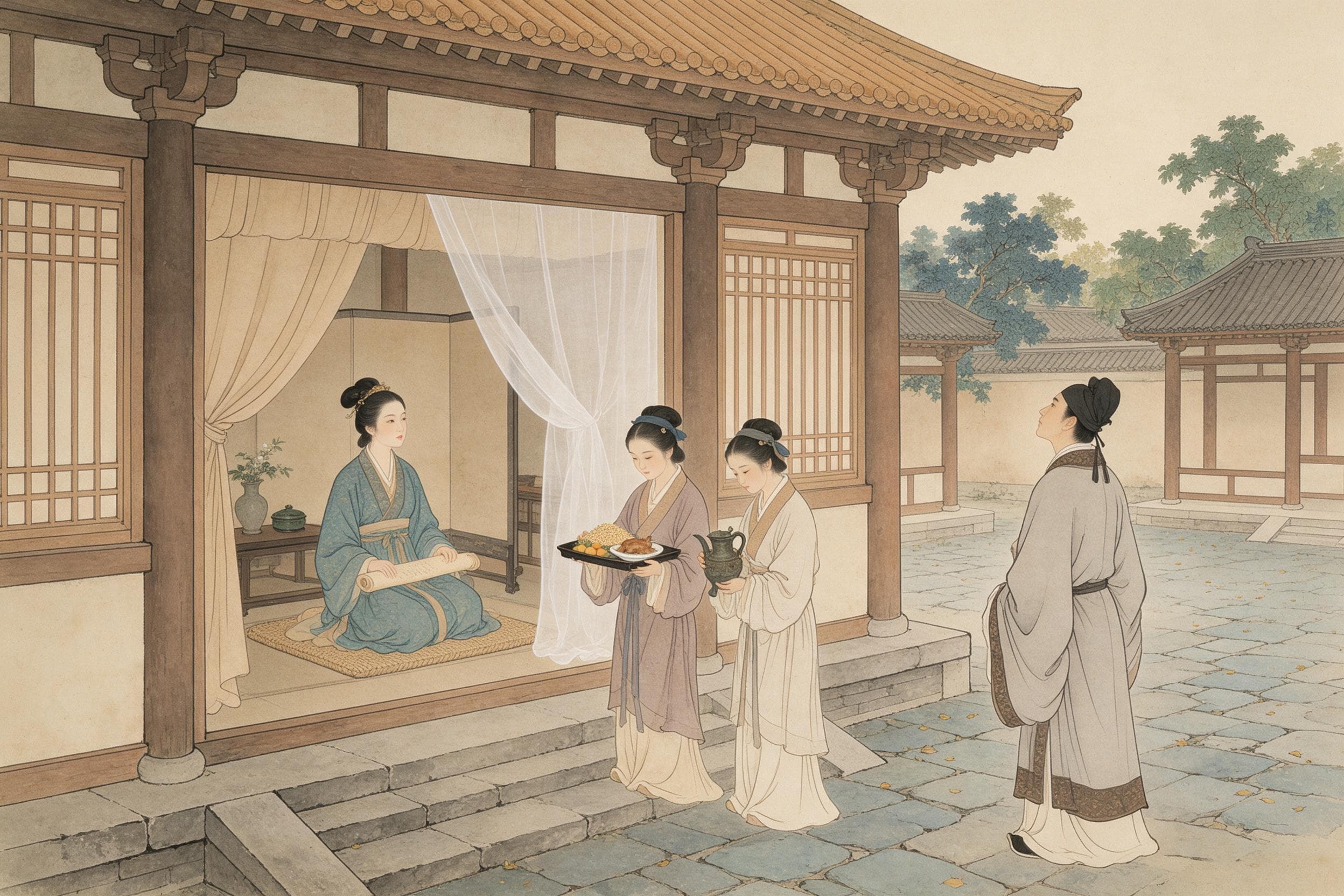
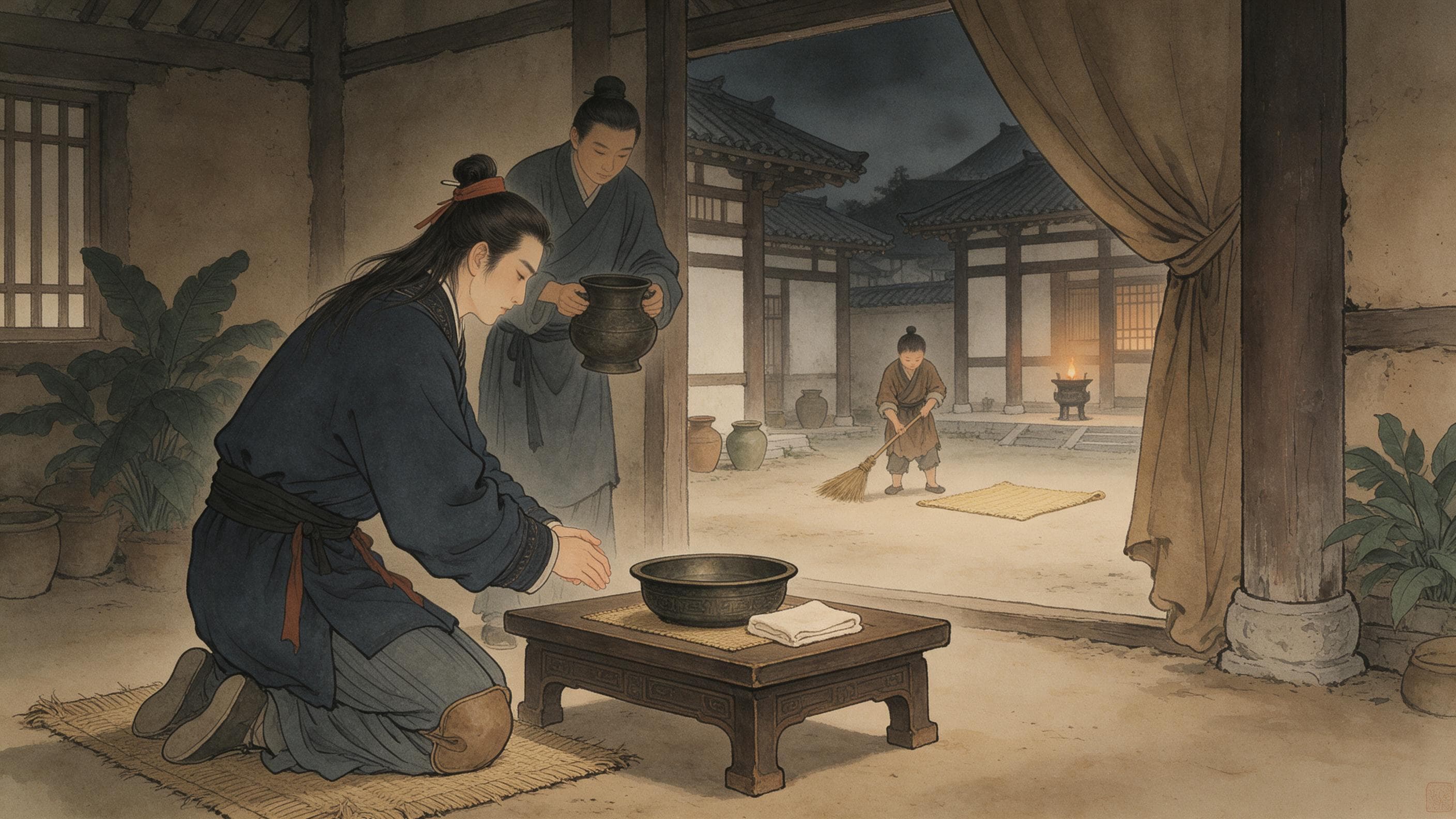
Arrived at their room, the routine becomes manner: 下氣怡聲,問衣燠寒,疾痛苛癢,而敬抑搔之 — lower the voice, soften it, ask whether their clothes are warm or cold, and respectfully press and scratch where it hurts or itches. 出入則或先或後,而敬扶持之 — going in and out, go before or behind and support them with respect. 進盥,少者奉槃,長者奉水,請沃盥。盥卒,授巾 — when washing is brought, the younger holds the basin, the elder the water, asking leave to pour; when it is done, a towel is handed over. The sequence is precise about who holds what: the younger the basin, the elder the water, and the towel after. The order of service is fixed too: ask, then support, then water, then towel, then food.
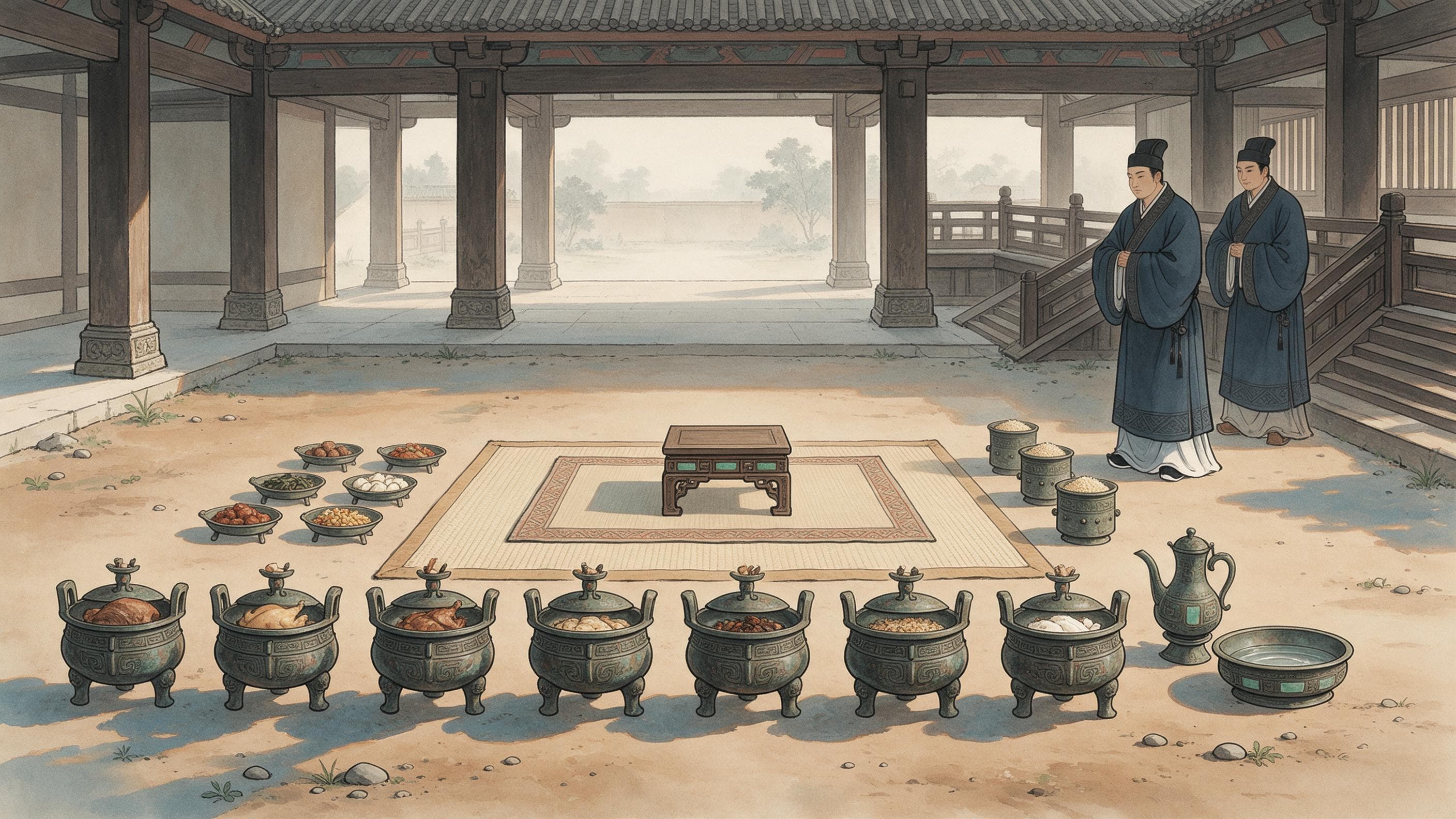
Then food: 問所欲而敬進之,柔色以溫之 — ask what they want and offer it respectfully, with a gentle face. The list of what may be wanted runs 饘、酏、酒、醴、芼、羹、菽、麥、蕡、稻、黍、粱、秫,唯所欲, and it is sweetened with 棗、栗、飴、蜜, smoothed with 堇、荁、枌、榆、免、薧、滫、瀡, enriched with 脂、膏. And one rule closes the scene: 父母、舅姑必嘗之而後退, the parents must taste it before the son or daughter-in-law withdraws. The list of foods is longer than any other list in the passage, and it is a list of possibilities, not a menu: 唯所欲, whatever they wish.
At Daybreak: The Younger Ones and the Sweeping
The children not yet capped or pinned have their own shorter version: 男女未冠笄者,雞初鳴,咸盥、漱、櫛、縰、拂髦、總角、衿䙬,皆佩容臭。昧爽而朝,問「何食飲矣」 — at daybreak they come to ask, 'what have you eaten and drunk?' 若已食,則退;若未食,則佐長者視具 — if the parents have eaten, they withdraw; if not, they help the elders see to the meal. The children's visit is shorter than the son's and has a single purpose, the question about food.
For everyone inside the house the same hour has the same shape: 凡內外,雞初鳴,咸盥漱,衣服,斂枕簟,灑掃室堂及庭,布席,各從其事 — wash, dress, fold the pillows and mats, sweep the rooms, hall and courtyard, lay out the mats, and each to their work. Only the small children are exempt: 孺子蚤寢晏起,唯所欲,食無時. The house is treated as one body here: everyone washes at the same crowing, and the sweeping is part of the same hour as the dressing. Everyone in the house is given the same hour, and the only exception is the smallest children.
One rule in this section is limited and the page limits it: 由命士以上,父子皆異宮 — from the rank of 命士 upward, father and son have separate dwellings. The phrase is a rank condition, not a description of every household, and the page does not extend it downward. The same paragraph gives the day's ends: 昧爽而朝,慈以旨甘。日出而退,各從其事。日入而夕,慈以旨甘 — at daybreak they attend with something sweet, at sunrise they withdraw to their work, at sunset they come again with something sweet. The paragraph gives a morning, a midday and an evening, and the evening is not a separate rite but the same one again. The rank limit is stated in a few characters, and it keeps the rule away from ordinary households.
Evening, and Old Age
The Quli chapter states the pair in four characters each: 凡爲人子之禮,冬溫而夏凊,昏定而晨省,在醜夷不爭 — a son's rule: warm in winter and cool in summer, settle the parents at dusk and greet them at dawn. 晨省 answers the Neize morning, 昏定 answers 日入而夕; the two pages describe the same day from its two ends. The two sentences are not a description of a day but a rule for the two ends of it: warm and cool by season, settled and greeted by hour. One is a rule for the seasons, the other for the hours.
The same chapter arranges old age by steps: 凡五十養於鄉,六十養於國,七十養於學,達於諸侯 — at fifty one is supported by the district, at sixty by the state, at seventy by the school. It adds 五十異粻,六十宿肉,七十貳膳,八十常珍 and 五十杖於家,六十杖於鄉,七十杖於國,八十杖於朝. These are the book's arrangements, not a record of any household. The steps are by decade, and each decade changes who is responsible for the old person.
What This Article Leaves Out
It does not write 'family life in the Zhou' as a general subject: the pages are rules, and they say what should be done, not what was done. The two chapters are from one book, not two independent sources. The names on the belt are left unexplained because the page explains none of them. The separate dwellings are kept to 命士 and above, as the page keeps them. The capping rite's three changes, the mourning rules, the ceremonies for envoys and first meetings, and the district drinking ceremony are separate articles; this one stays inside one house on one day. The characters are kept as printed, including 縰, 觿, 遰 and 偪屨著綦. What the pages give is one routine, one pair of hours and a set of steps in age; this article stays inside that. The rules are complete enough to follow and silent enough to leave almost everything out. A rule can be this detailed and still leave out almost everything a reader wants to know. That is the nature of a rulebook.
Related reading:Xiao: A Battle Where Nobody Listened to the Old Men, and an Oath Written After · Trousers and Cavalry: The Court Debate Over Changing Clothes · Mind, Ministers, People, Turtle and Milfoil: How a Big Decision Was Made
Sources & further reading
- 《禮記·內則》(維基文庫本,頁面白文) — The morning passage: 子事父母,雞初鳴,咸盥、漱、櫛、縰、笄、總、拂髦、冠、緌、纓、端、韠、紳、搢笏。左右佩用…, the wife's parallel list, 以適父母、舅姑之所 with 下氣怡聲 and 問所欲而敬進之 plus the food list, 男女未冠笄者…昧爽而朝,問「何食飲矣」, 凡内外,雞初鳴…灑掃室堂及庭,布席…, 由命士以上,父子皆異宫…日入而夕, and the old-age figures 五十養於鄉,六十養於國,七十養於學 etc.
- 《禮記·曲禮上》(維基文庫本,頁面白文) — The single sentence 凡爲人子之禮,冬温而夏凊,昏定而晨省,在醜夷不争, which pairs the morning with the evening.