The Shaoyi is one long list of how a junior behaves in front of his elders — how to open his mouth at a first meeting, how to sit, how to eat, and when to leave. Then, at the very end, it turns: 衣服在躬,而不知其名爲罔 — to have clothes on your body and not know their names is to be ignorant. One sentence, and the page changes subject. The next chapter, Shenyi, the deep robe, does exactly what that sentence asks: it gives the garment its names, twelve panels answering the twelve months, five methods answering the compass, the square, the plumb line and the balance. This article follows the same order: four groups of conduct, one turn of the page, one garment's regulations.
Meeting a Superior: Which Sentence First
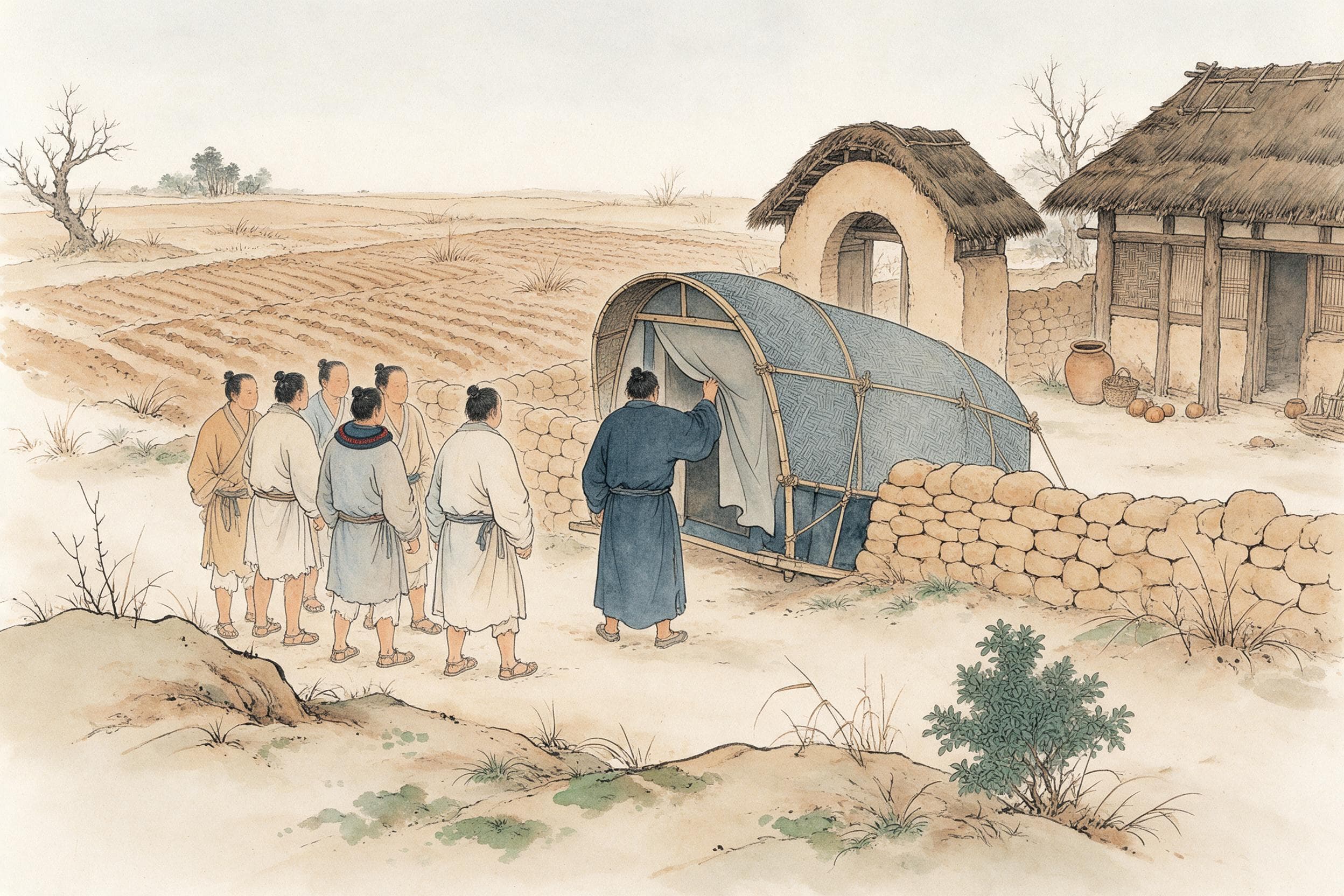
A first meeting has a fixed sentence. One who comes to see a gentleman sends word: 某固願聞名於將命者 — I would beg to hear your name from the one who conveys messages. To an equal: 某固願見, I would beg to see you. For a rare meeting: 聞名, I have heard your name; for a frequent one: 朝夕, morning and evening. For a blind man: 聞名. To a house in mourning: 比, to be ranked with the others. A boy says 聽事, I await orders; at the mourning of a minister, 聽役於司徒, I await service with the minister of works. Gifts have their phrases too: to a ruler, 致馬資於有司, I present the cost of a horse to the officers; to an equal, 贈從者, a gift for your followers; grave clothes to a ruler, 致廢衣於賈人; contributions for a ruler's mourning, 納甸於有司. And there is a line at the door: 排闔説屨於户内者,一人而已矣。有尊長在則否 — only one man takes off his shoes inside the door, and not if an elder is present.
Sitting with an Elder: No Asking Age, Five Signals to Go
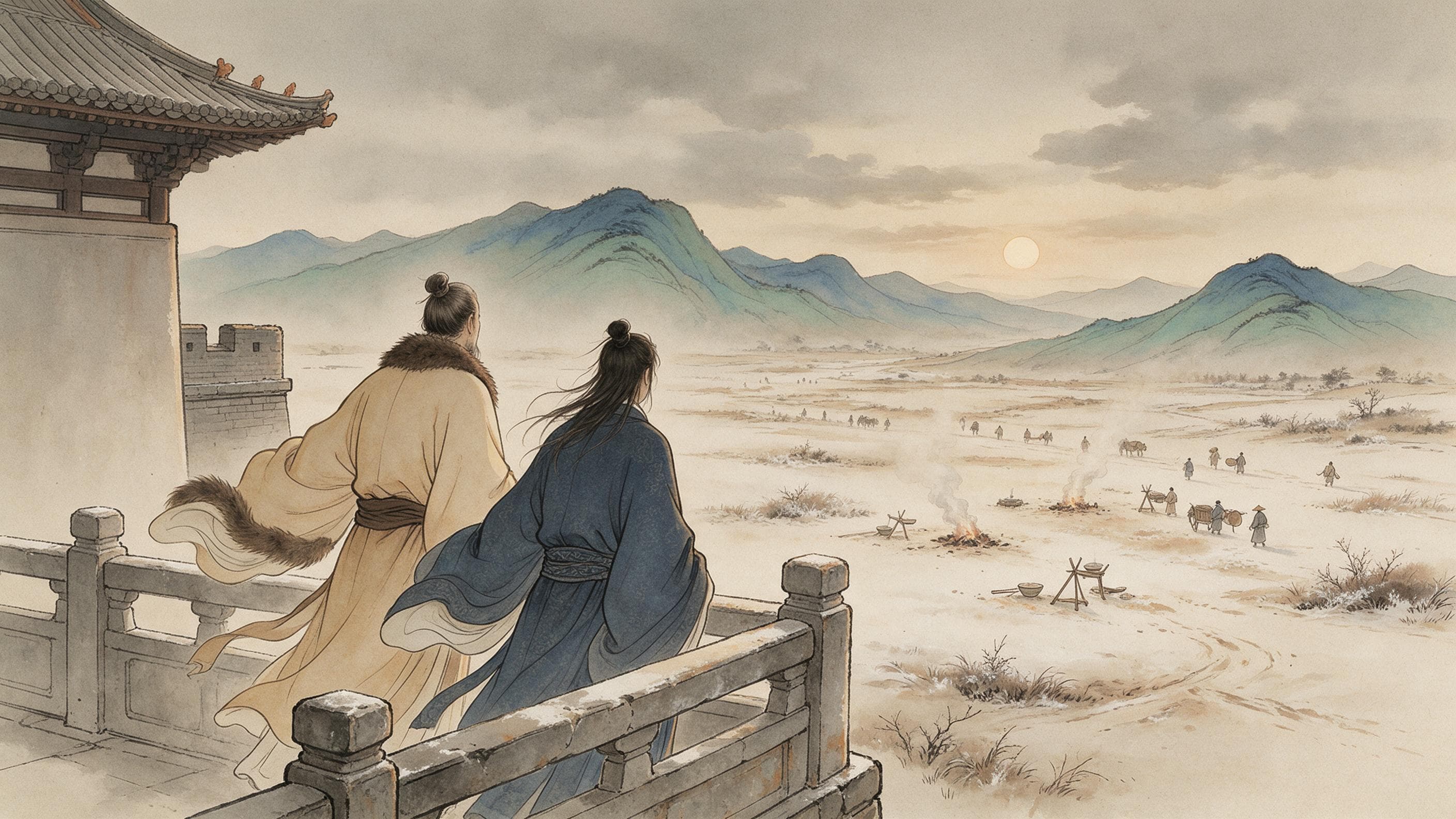
The rules for attending an elder begin with a prohibition: 尊長於己踰等,不敢問其年 — when the elder is far above you in rank or generation, do not ask his age. Sitting in attendance has four prohibitions: 侍坐,弗使不執琴瑟,不畫地,手無容,不翣也 — unless told to, do not take up lute or zither, do not draw on the ground, make no gestures with your hands, do not use a fan. And leaving needs no question, only five signals: 侍坐於君子,君子欠伸,運笏,澤劍首,還屨,問日之蚤莫,雖請退可也 — when the gentleman yawns and stretches, turns his tablet, polishes the pommel of his sword, turns his shoes back, and asks how late it is, you may ask to withdraw.
Two more small, hard rules: 貳車者,諸侯七乘,上大夫五乘,下大夫三乘 — the number of spare carriages runs by rank, seven for a lord, five for a senior minister, three for a junior one. And 觀君子之衣服、服劍、乘馬,弗賈 — looking at a gentleman's clothes, sword and horses, do not put a price on them.
Small Rules: Four Nots, Five Do-nots, Five Beauties
Then the short clauses come. Four nots: 不窺密,不旁狎,不道舊故,不戲色 — do not peer into private matters, do not be over-familiar sideways, do not bring up old affairs, do not make a joke of your face. Five do-nots: 毋拔來,毋報往,毋瀆神,毋循枉,毋測未至 — do not drag people to you, do not go visiting in return, do not insult the spirits, do not follow a crooked road, do not guess at what has not come. Serving a ruler has an order: 事君者量而後入,不入而後量 — measure before you enter, do not enter and then measure. A minister's four pairs: 有諫而無訕,有亡而無疾,頌而無讇,諫而無驕 — reprove but do not slander, withdraw but do not resent, praise but do not flatter, remonstrate but do not be proud.
The best passage to read aloud is five pairs of doubled words: 言語之美,穆穆皇皇;朝廷之美,濟濟翔翔;祭祀之美,齊齊皇皇;車馬之美,匪匪翼翼;鸞和之美,肅肅雍雍 — the beauty of speech, grave and grand; of court, ordered and sweeping; of sacrifice, reverent and bright; of carriage and horses, well-matched and winged; of the bells, hushed and harmonious. Asking after a son's age has three ready answers. A ruler's son: if grown, 能從社稷之事矣, he can follow the affairs of the altars; if young, 能御 or 未能御, he can drive, or cannot yet. A minister's son: 能從樂人之事矣, or 能正於樂人, he can be corrected among the musicians. An officer's son: 能耕矣, he can plough; or 能負薪, he can carry firewood, or cannot yet.
At the Table: Six Rules for the Mouth
Eating in attendance on a gentleman has six rules: 先飯而後已,毋放飯,毋流歠,小飯而亟之,數噍,毋爲口容 — begin before he does and stop after him; do not bolt the rice, do not gulp the soup; small mouthfuls, taken quickly; chew often; and do not make a performance of your mouth. Meat has names for its cutting: 牛與羊魚之腥,聶而切之爲膾;麋鹿爲菹,野豕爲軒,皆聶而不切;麕爲辟雞,兔爲宛脾,皆聶而切之 — beef, mutton and fish, sliced fine and thin, are 膾; deer and venison, sliced but not cut through, are 菹 and 軒; a roe deer is 辟雞 and a hare 宛脾; and scallion or garlic chives are cut in and softened with vinegar. Holding the candle has three prohibitions: 執燭,不讓、不辭、不歌 — no yielding place, no declining, no singing.
The Turn of the Page: A Garment with Names
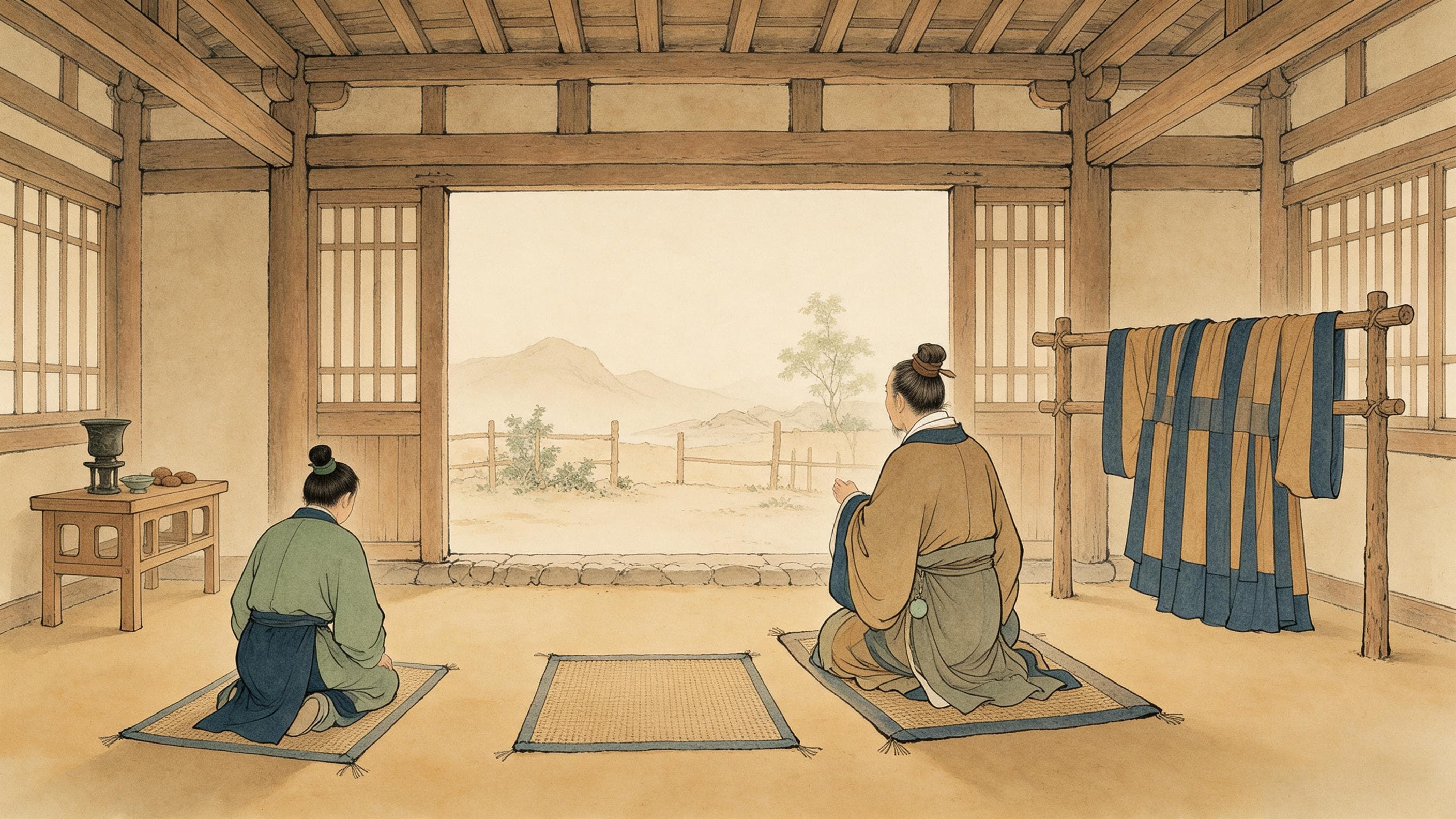
After all the conduct, the last sentence is not about conduct: 衣服在躬,而不知其名爲罔 — a garment on your body whose name you do not know is ignorance. So the page turns to the Shenyi. It begins by asserting a rule: 古者深衣,蓋有制度,以應規、矩、繩、權、衡 — the deep robe of old had its regulations, answering the compass, the square, the plumb line, the weight and the balance. Then the fit: 短毋見膚,長毋被土 — short enough not to show the skin, long enough not to trail the earth; 續衽,鉤邊,要縫半下; 袼之高下,可以運肘 — the armhole set so the elbow can move; 袂之長短,反詘之及肘 — the sleeve measured so that folded back it reaches the elbow; 帶,下毋厭髀,上毋厭脅,當無骨者 — the belt below the hip-bone, above the ribs, at the place without bone.
The names are in the section on 制: 十有二幅,以應十有二月;袂圜,以應規;曲袷如矩,以應方;負繩及踝,以應直;下齊如權衡,以應平 — twelve panels to answer the twelve months; the sleeve round for the compass; the curved collar square-cut for the square; the back seam down to the ankle for the plumb line; the level hem for the balance. Then the meanings: 規者,行舉手以爲容 — the compass, so that walking and lifting the hands make a bearing; 負繩、抱方者,以直其政、方其義也; 下齊如權衡者,以安志而平心也; and 五法已施,故聖人服之 — the five methods all applied, therefore the sage wore it. The garment's uses are listed: 可以爲文,可以爲武,可以擯相,可以治軍旅,完且弗費,善衣之次也 — for civil, for military, for the protocol of meetings, for the army; complete and not costly; next best among garments.
Last come the three edges, graded by who is still alive at home: 具父母、大父母,衣純以繢;具父母,衣純以青;如孤子,衣純以素 — both parents and grandparents living, the edging is coloured; parents only, green; an orphan, plain white. And one measurement is given: 純袂、緣、純邊,廣各寸半 — the sleeve edging, the hem edging and the border are each a cun and a half wide.
Limits: neither page gives an age, the three answers about a son giving capability and not years; the names — 幅, 衽, 袼, 袂, 袷, 純 — are named and not explained; the measurements stay as written, 寸半 and 半下, unconverted. The one line each on archery, pitch-pot and the three cups is left alone. This site has written about the capping rite, about Han tailoring, about the first meeting of officers, and about the morning visit in the Neize; this piece is a junior's manners, and one robe cut in twelve panels.
Related reading:Three Caps: The Capping Rite and the Making of an Adult · The Rite of First Meeting: What a Knight Carried in His Hands · At the First Crow: One Day in a Gentleman's Household, According to the Rites
Sources & further reading
- 《禮記·少儀》(維基文庫本,白文無注,頁面標 textquality 75%,未與中華書局點校本複核) — A long run of rules for a junior's conduct, and it ends on clothing. What the article uses: the opening formulas for a first meeting (某固願聞名於將命者; 某固願見; 聞名; 朝夕; 比; 聽事; 聽役於司徒); the phrases for sending gifts (致馬資於有司; 贈從者; 致廢衣於賈人; 納甸於有司) and the rule that 賵馬入廟門 while 賻馬與其幣、大白、兵車,不入廟門; 排闔説屨於户内者,一人而已矣; 尊長於己踰等,不敢問其年; the four nots of sitting in attendance, 侍坐,弗使不執琴瑟,不畫地,手無容,不翣也; the five signals for leaving, 君子欠伸,運笏,澤劍首,還屨,問日之蚤莫,雖請退可也; 貳車者,諸侯七乘,上大夫五乘,下大夫三乘; 觀君子之衣服、服劍、乘馬,弗賈; 不窺密,不旁狎,不道舊故,不戲色; 毋拔來,毋報往,毋瀆神,毋循枉,毋測未至; 事君者量而後入,不入而後量 and the four clauses of a minister's conduct; the five 之美 (言語穆穆皇皇; 朝廷濟濟翔翔; 祭祀齊齊皇皇; 車馬匪匪翼翼; 鸞和肅肅雍雍); the three answers about a son's age (國君之子能從社稷之事; 大夫之子能從樂人之事; 士之子能耕); 侍食 rules (先飯而後已,毋放飯,毋流歠,小飯而亟之); four ways of cutting meat (膾、菹、軒、辟雞、宛脾); 執燭,不讓、不辭、不歌; and the closing sentence 衣服在躬,而不知其名爲罔. The page also contains a few inline collation marks (氾一作「汜」) and bracketed characters (取祭(肺)) which are not quoted.
- 《禮記·深衣》(維基文庫本,白文無注,頁面標 textquality 75%,未與中華書局點校本複核) — Short, and entirely about one garment. 古者深衣,蓋有制度,以應規、矩、繩、權、衡; 短毋見膚,長毋被土; 續衽,鉤邊,要縫半下; 袼之高下,可以運肘; 袂之長短,反詘之及肘; 帶,下毋厭髀,上毋厭脅,當無骨者; 制:十有二幅,以應十有二月,with 袂圜 for 規, 曲袷如矩 for 方, 負繩及踝 for 直, 下齊如權衡 for 平; then the meanings (規者,行舉手以爲容; 負繩、抱方者,以直其政、方其義也; 下齊如權衡者,以安志而平心也; 五法已施,故聖人服之; 規、矩取其無私,繩取其直,權衡取其平); the garment's uses (可以爲文,可以爲武,可以擯相,可以治軍旅,完且弗費,善衣之次也); the three grades of edging (具父母、大父母,衣純以繢; 具父母,衣純以青; 如孤子,衣純以素); and 純袂、緣、純邊,廣各寸半. No dimensions in absolute units and no ages.