A messenger has come. The first instruction is not the question. 奔喪之禮:始聞親喪,以哭答使者,盡哀;問故,又哭盡哀 — hearing of a parent's death, one answers the messenger with weeping, weeps out the grief, asks the cause, and weeps again. Four actions in that order; the question comes third.
First the Weeping, Then the Question
問喪 describes the moment from inside the room: 親始死,雞斯徒跣,扱上衽,交手哭 — when a parent has just died, the hair is bound with a band, the feet are bare, the hem tucked into the sash, the hands crossed, and one weeps. The page glosses none: 雞斯 is generally taken as hair bound up, 徒跣 as bare feet, 扱上衽 as the hem in the girdle. Then the body's bill: 惻怛之心,痛疾之意,傷腎、乾肝、焦肺,水漿不入口三日 — pity of the heart and ache of grief injure the kidneys, dry the liver, scorch the lungs; for three days neither water nor gruel enters the mouth.
Not two witnesses. 奔喪 and 問喪 are neighbouring chapters of the 禮記, the Book of Rites. 奔喪 is a list of rules — 奔喪之禮, the rites of running to a funeral — and gives no reason anywhere in it. 問喪 opens with a scene and becomes question and answer: 或問曰, someone asks; 曰, it is answered. One says what is done, the other why.
A Hundred Li a Day, None of It by Night
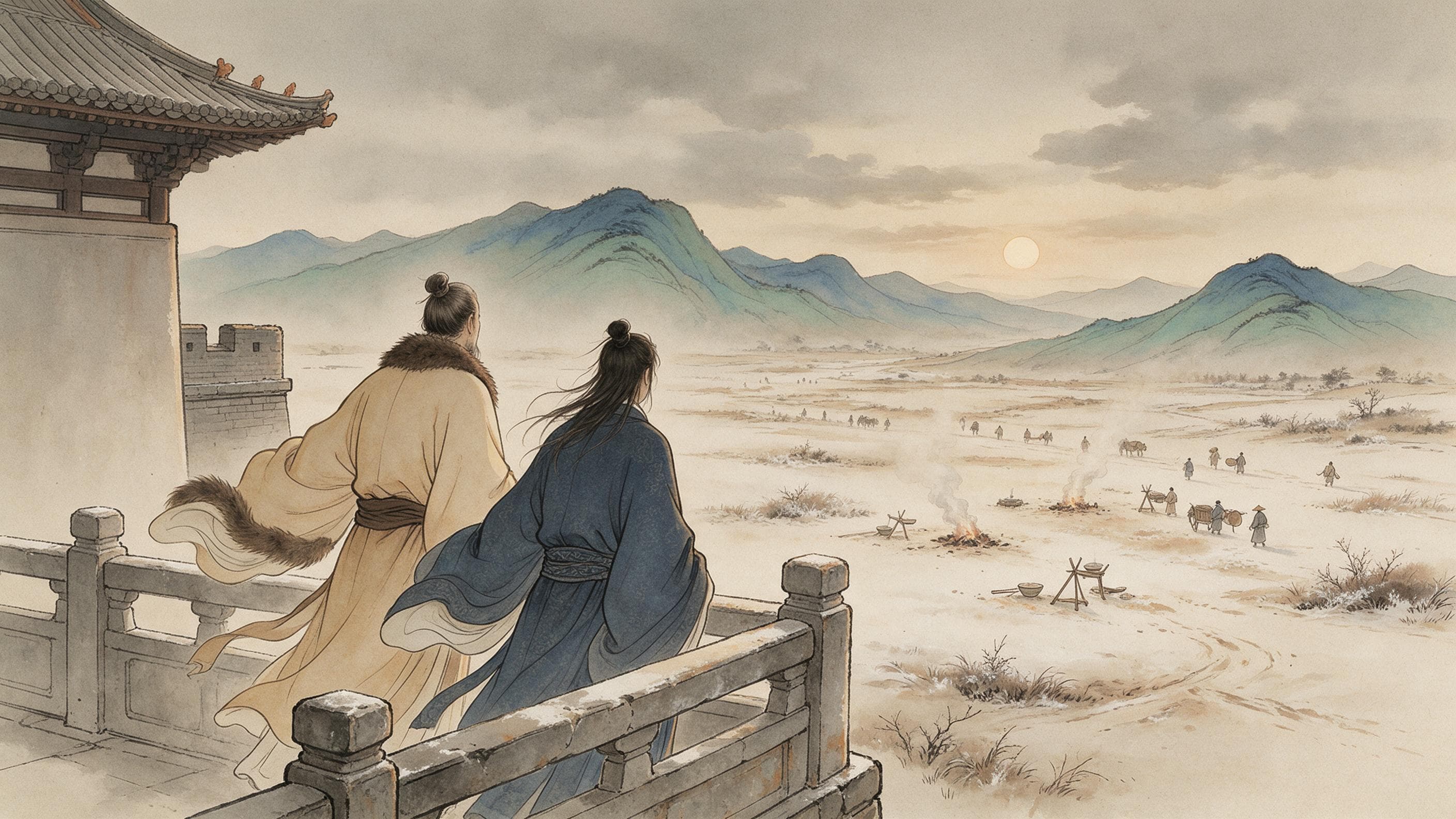
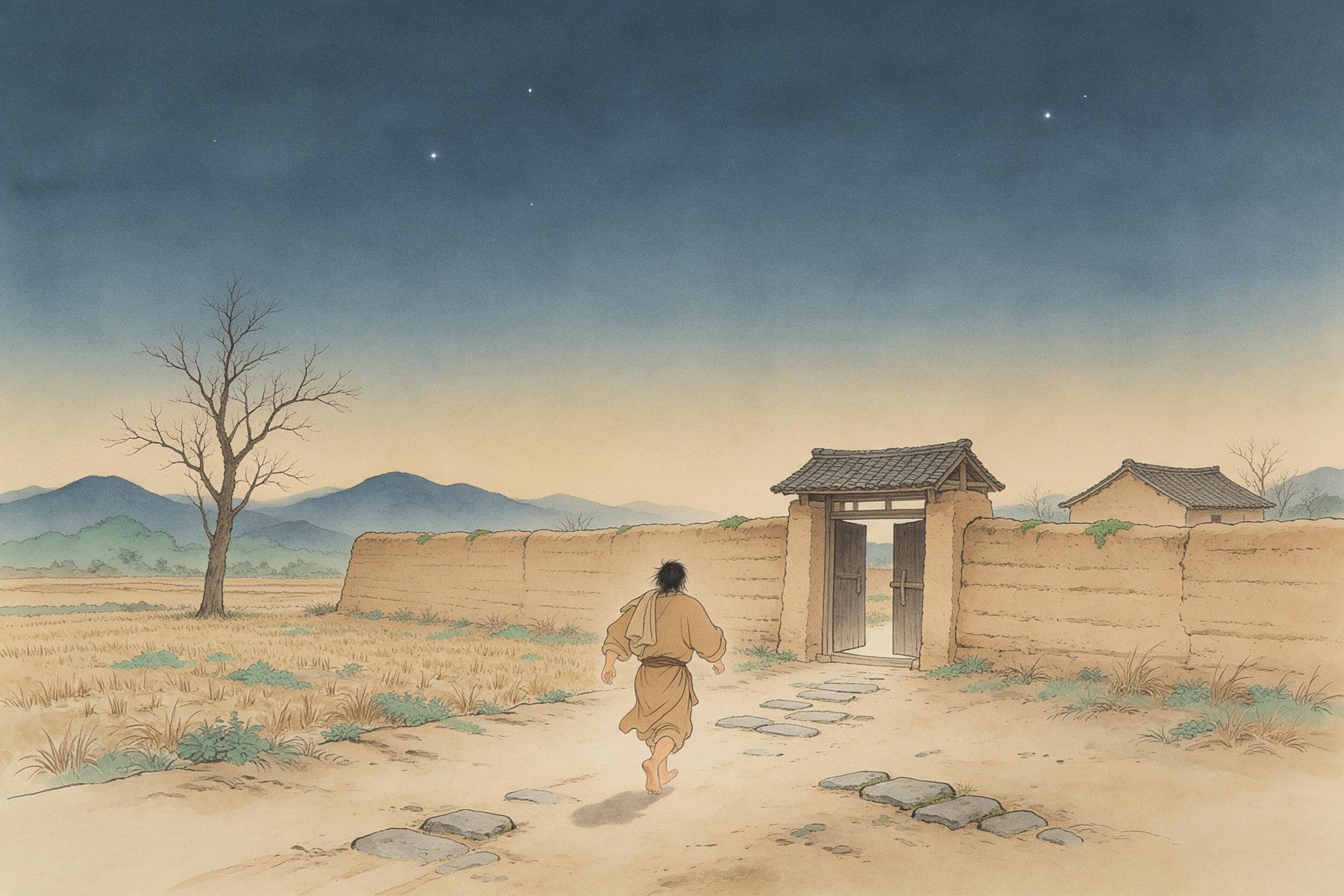
Then the road: 遂行,日行百里,不以夜行 — one sets out, makes a hundred li a day, and does not travel by night. Nine characters with the comma, and they set the pace. The exception: 唯父母之喪,見星而行,見星而舍 — only for a parent does one set out while the stars are still out and stop when they come out again. Neither page says where he started, how long it took, how the hundred li was reckoned, or who the messenger was: only 使者, a messenger, unnamed.
If the road cannot be taken at all: 若未得行,則成服而後行 — if one cannot set out, one puts on the mourning dress and then goes. The dress does not wait for the journey; whatever holds him back, he is in mourning before he moves.
Seeing One's Own Border, One Weeps
The route is marked by where one may weep. 過國至竟,哭,盡哀而止 — passing through another state, one weeps at its border and stops when the grief is spent. 哭辟市朝 — the weeping keeps off the marketplace and the court; 竟 is generally read as 境. The last landmark matters: 望其國竟哭 — seeing the border of one's own state, one weeps.
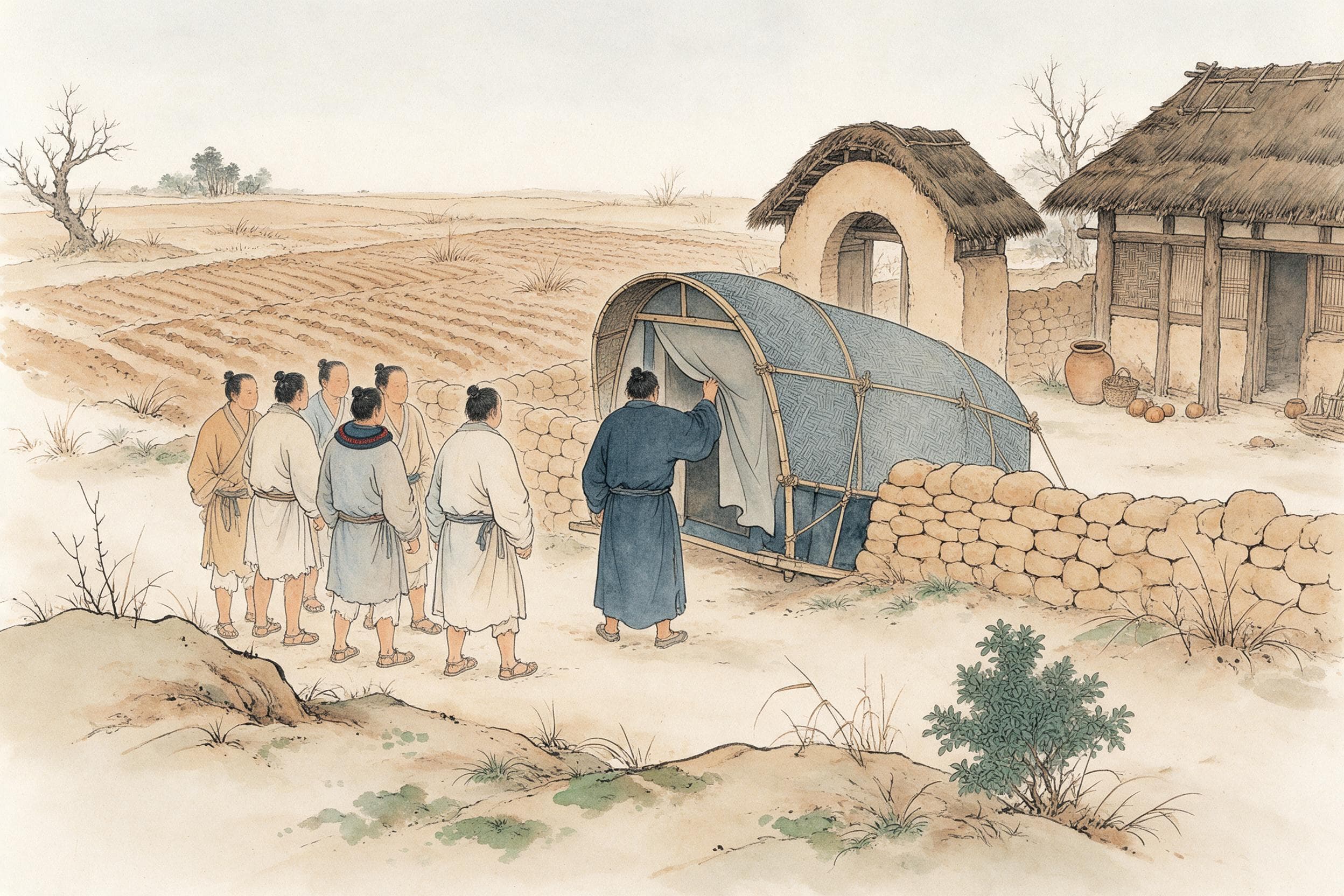
The border depends on the grade: 齊衰望鄉而哭,大功望門而哭,小功至門而哭,緦麻即位而哭 — zisui at sight of the village, dagong at sight of the gate, xiaogong at the gate, sima on taking one's place. Where one weeps depends on who is dead: 哭父之黨於廟,母、妻之黨於寢,師於廟門外,朋友於寢門外,所識於野張帷 — the father's kin at the temple, the mother's and wife's in the chamber, a teacher outside the temple gate, a friend outside the chamber gate, an acquaintance under a tent.
Enter by the Left, Mount by the Western Stair
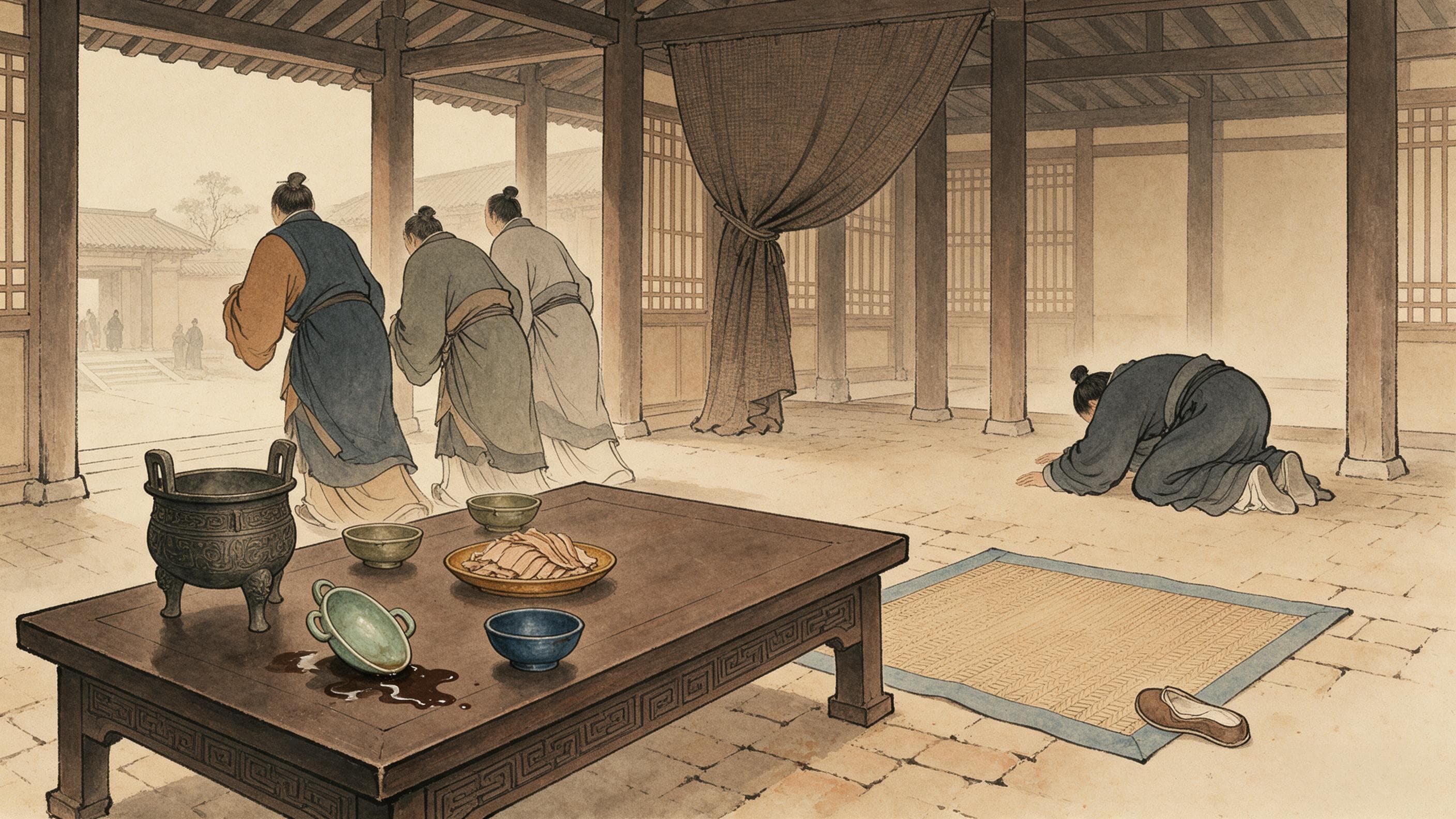
Home is a sequence of positions. 至於家,入門左,升自西階,殯東 — one enters by the left, goes up by the western stair, stands east of the coffin. 西面坐,哭盡哀,括髮袒 — sits facing west, weeps out the grief, binds the hair, bares the arm. 降,堂東即位,西鄉哭,成踊 — comes down, takes the place east of the hall, wails facing west, leaps the set number. 襲絰于序東,絞帶,反位,拜賓成踊 — puts on the hemp band east of the 序, ties the sash, returns to position, greets the guests, leaps. The page names 括髮, 袒, 成踊, 襲絰 and 絞帶 and explains none: binding the hair, baring the left arm, leaping a counted number of times, the hemp band, the sash — all generally understood, none stated. Then: 衆主人、兄弟皆出門,出門哭止,闔門,相者告就次 — the chief mourners and the brothers go out, the weeping stops, the gate closes, and the assistant announces 就次, generally retirement to the mourning hut.
The weepings are counted: 於又哭,括髮袒,成踊。於三哭,猶括髮袒,成踊 — at the second weeping and again at the third, hair bound, arm bared, leaping. 三日成服,拜賓、送賓皆如初 — on the third day the full dress; greeting and seeing off as at the start. Who greets: 奔喪者非主人,則主人爲之拜賓送賓 — if the one who ran is not the chief mourner, the chief mourner does it for him. The guest's rank decides: 凡奔喪,有大夫至,袒,拜之,成踊而後襲;於士,襲而後拜之 — a great officer: bare the arm, bow, leap, then set the garment right; an officer: set it right, then bow.
- 奔父 — a father: the sequence above, with no variant given.
- 奔母 — a mother: 奔母之喪,西面哭,盡哀,括髮袒, and at the second weeping 不括髮; 爲母所以異於父者,壹括髮,其餘免以終事 — the hair bound once, the cloth band to the end.
- 婦人奔喪 — a woman: 升自東階,殯東,西面坐,哭盡哀。東髽,即位,與主人拾踊 — up by the eastern stair, hemp in the hair, generally, leaping by turns with the chief mourner.
- 奔喪者不及殯 — too late for the coffin: 先之墓,北面坐,哭盡哀 — first to the grave, then on to 於五哭,相者告事畢.
- 聞喪不得奔喪 — hears and cannot go: 哭盡哀;問故,又哭盡哀。乃爲位,括髮袒,成踊 — the four actions where he stands, then 爲位, a position set up.
- 若除喪而後歸 — home after the mourning is over: 則之墓,哭成踊 … 遂除。於家不哭 — the mourning is taken off at the grave; at the house one does not weep.
Three Days Without a Fire
Six situations, six sequences, never merged. The third day brings the full dress; and for the first three days 不舉火,故鄰里爲之糜粥以飲食之 — no fire is lit, and the neighbours make gruel for one to eat and drink. 問喪 gives the body's account: 夫悲哀在中,故形變於外也。痛疾在心,故口不甘味,身不安美也 — grief inside, form changed outside; pain in the heart, so the mouth finds no taste and the body no ease. It explains the gestures: 悲哀志懣氣盛,故袒而踊之,所以動體、安心、下氣也 — grief pent up and breath full, so the arm is bared and the leap done, to move the body, settle the heart, let the breath down. A woman does not bare the arm, so 發胸、擊心、爵踊,殷殷田田,如壞牆然 — chest opened, heart struck, leaping, like a wall coming down.
Then the questions. Why is the coffin closed only on the third day? 若將復生然 — the son flings himself down and weeps as if the dead might live again, and how could one take him to the coffin; so 以俟其生也, to wait for him to live. And if three days pass and he does not live, 孝子之心,亦益衰矣, the son's heart has weakened; 家室之計,衣服之具,亦可以成矣, plans and garments can be made ready; 親戚之遠者,亦可以至矣, relatives far away can arrive: 是故聖人爲之斷決,以三日爲之禮制也, so the sage fixed three days. Why does a capped man not bare his arm? 冠至尊也,不居肉袒之體也 — the cap is the most honoured and does not sit on a bared body; 免, generally a cloth band, replaces it. 秃者不免,傴者不袒,跛者不踊,非不悲也,身有錮疾,不可以備禮也 — the bald, the hunchbacked and the lame are excused, not for want of grief but because a body with a fixed ailment cannot perform the rites; hence 喪禮唯哀爲主矣, only grief is master. Why the staff? 故爲父苴杖,苴杖,竹也;爲母削杖,削杖,桐也 — bamboo for a father, peeled wood for a mother; 身病體羸,以杖扶病也, the staff supports the sick; but 父在不敢杖矣, a man whose father lives dares not use it, and 堂上不杖,辟尊者之處也, on the hall it is not. It ends: 非從天降也,非從地出也,人情而已矣 — not fallen from heaven, not come out of the earth; human feeling, and that is all. Neither page gives the distance, days, messenger's name, or number of leaps; the body at home, the burial, the grades, the argument over the term are other chapters. This one follows only the man who was not there.
Related reading:The Call from the Roof: A Death, Step by Step · Lowering the Coffin: The Day of the Burial · From the First Day of Spring to the Great Mourning: A Year of the Han State
Sources & further reading
- 《礼记·奔丧》(维基文库本,白文无注,页面标 textquality 75%,未与中华书局点校本复核) — Not a narrative but a set of rules laid out along a route, and this article keeps them in that order. It opens: 奔喪之禮:始聞親喪,以哭答使者,盡哀;問故,又哭盡哀 — weeping answers the messenger before the question is asked. Then the road — 日行百里,不以夜行 — with the one exception 唯父母之喪,見星而行,見星而舍. Weeping at a border, weeping kept out of the marketplace and the court, weeping at the sight of one's own border. Home as a sequence of positions: left door, western stair, east of the coffin, sit facing west, bind the hair, bare the arm, descend, leap the set number, put on the hemp band, greet the guests, close the gate while the assistant announces 就次; the third day brings the full dress. The variants are kept apart rather than merged: father, mother, a woman, too late for the coffin, hearing and unable to go, coming home after the mourning is over. Page marks textquality at 75 percent, plain text with no commentary.
- 《礼记·问丧》(维基文库本,白文无注,页面标 textquality 75%,未与中华书局点校本复核) — The explanation, in question and answer form — 或問曰 … 曰 — and a different kind of text from the rules. It opens with the scene at the moment of death: hair bound with a band, barefoot, hem tucked into the sash, hands crossed, weeping; kidneys, liver and lungs named as the seats of grief; three days without water or gruel; 不舉火,故鄰里爲之糜粥以飲食之. It explains the gestures: grief pent up, so the arm is bared and the set leap performed, 所以動體、安心、下氣也; and how a woman weeps, 發胸、擊心、爵踊,殷殷田田,如壞牆然. Three of its questions are kept here: why the coffin waits three days, why a capped man does not bare his arm, why the staff. The page ends 非從天降也,非從地出也,人情而已矣. It carries two variant marks (鬼饗一作享; 而後斂一作后歛); they are noted here and never quoted across.