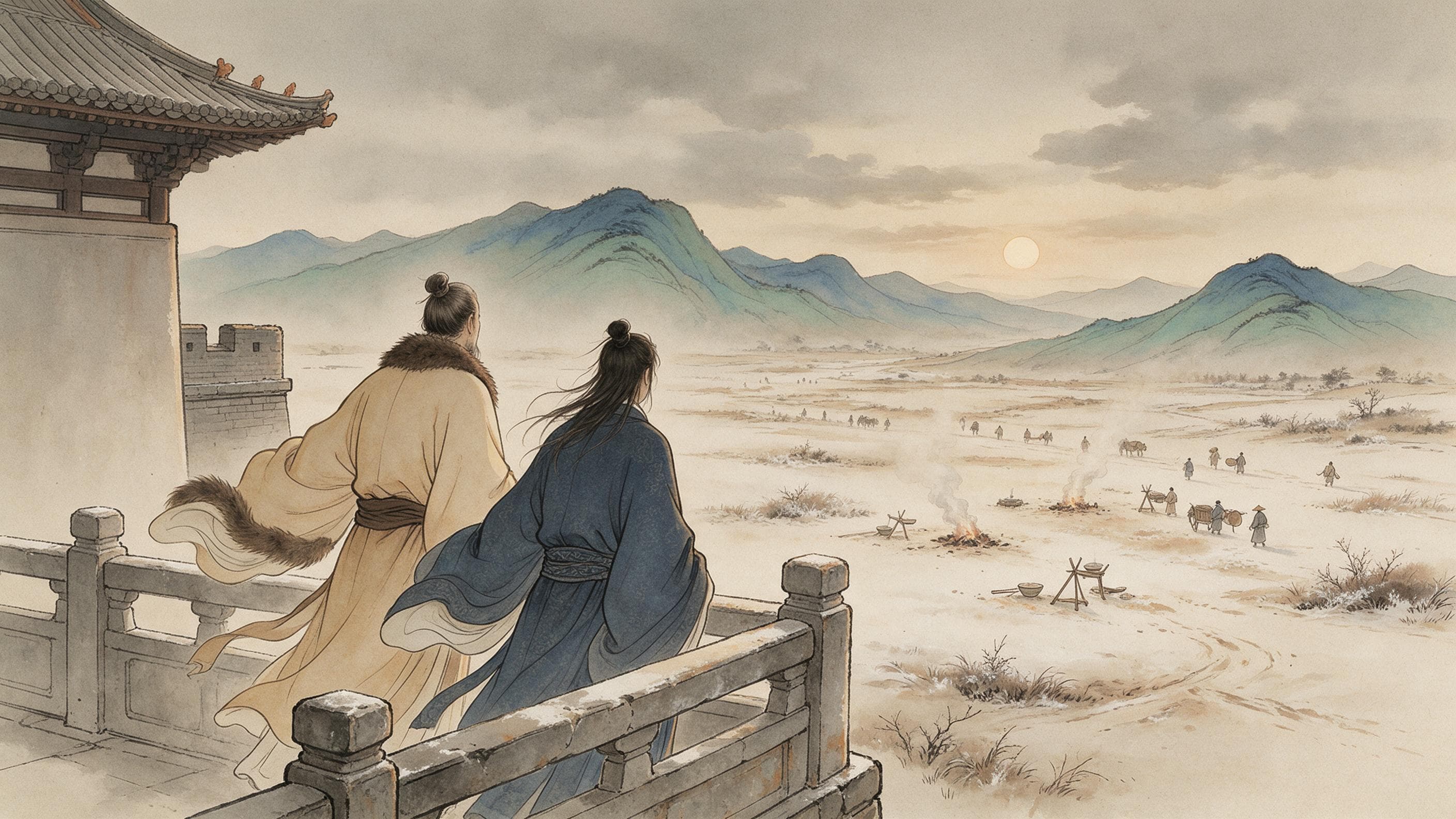
Xiang Yu was dead, and the bounty went out: a thousand in gold for Ji Bu, and, for anyone who sheltered him, guilt reaching the three clans. The Han shu drops one character — 罪三族 for 罪及三族. 購求 and 舍匿, generally offering a reward for a man's capture and sheltering a fugitive, are the whole machinery: a price on the man, a crime for the house that takes him in. The notice names two things only — money, and the kin a man's guilt reaches. The page gives the sentence, and no statute.
The Bounty: A Thousand in Gold
Ji Bu was a man of Chu, 爲氣任俠,有名於楚 — spirited, a knight-errant of sorts, with a name in Chu; the Han shu has 為任俠有名. He led troops for Xiang Yu and 數窘漢王, several times brought the Han king to extremity: six characters, and they are where the debt begins. Two books give him a short entry; after this he is moved by other men.
First Hiding: The Zhou Family
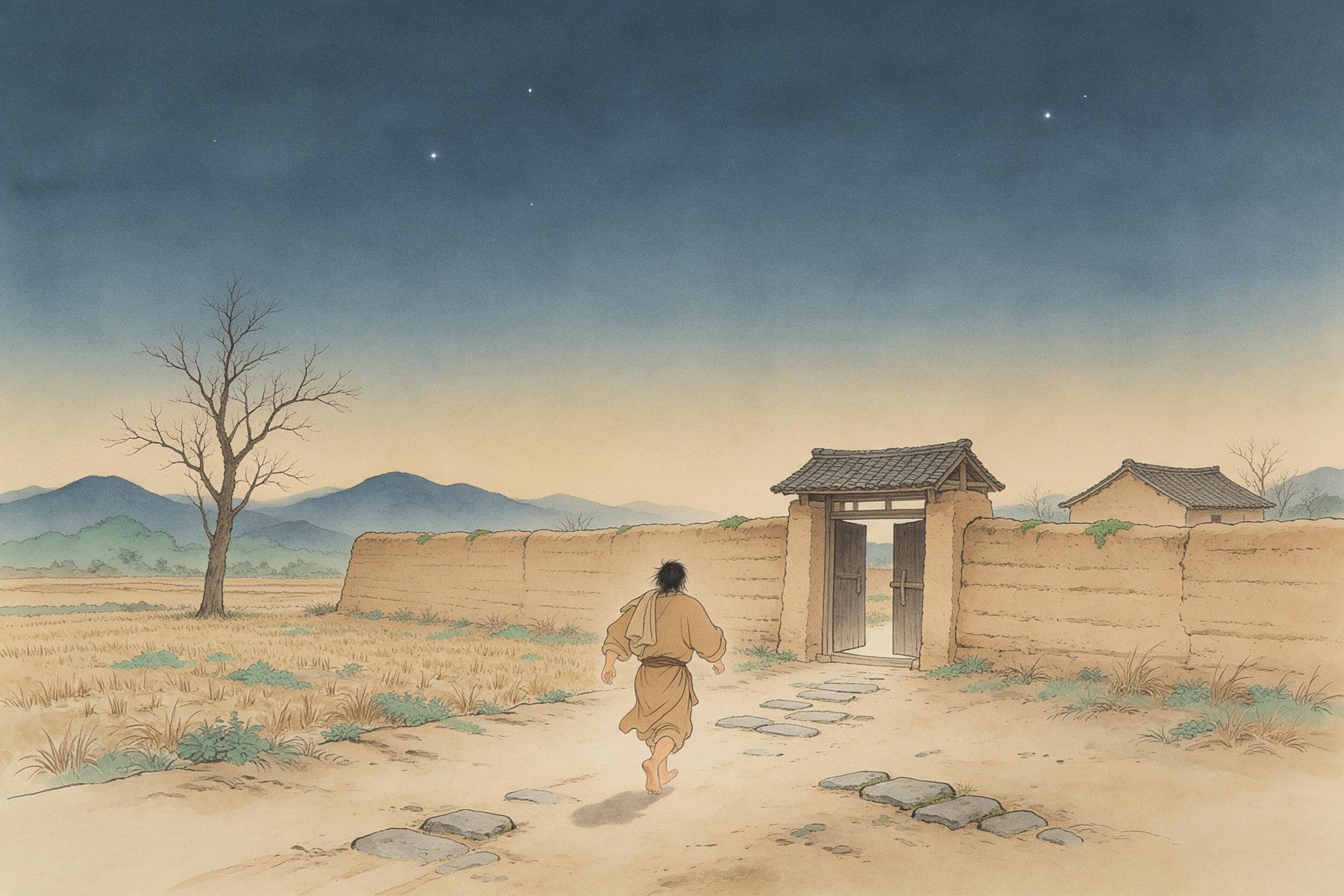
He hid first with the Zhou family of Puyang. Zhou put it plainly: 漢購將軍急,跡且至臣家 — the hunt is urgent and the trace will reach my house. Then he laid out the choice: 將軍能聽臣,臣敢獻計;即不能,願先自剄 — if you can listen, I dare offer a plan; if not, I will cut my own throat first. It is not exactly a threat; it puts the decision where it belongs and stakes his own life on it. 季布許之. The Han shu has 求 for 購, 進計 for 獻計, 否 for 不能.
Second Hiding: Shaved, Collared, Sold
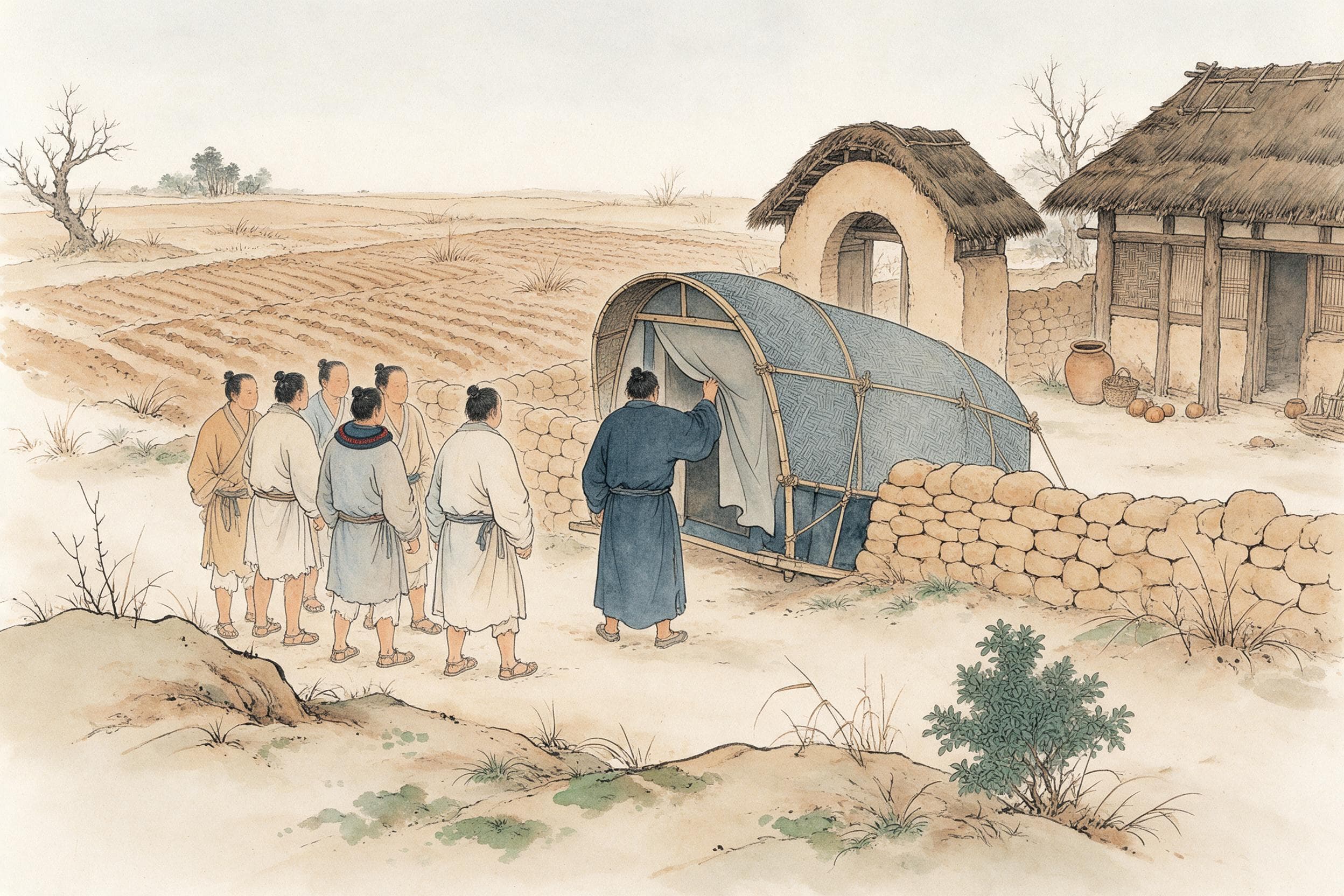
Then it was done: 乃髡鉗季布,衣褐衣,置廣柳車中,并與其家僮數十人,之魯朱家所賣之. 髡鉗 is generally read as shaving the head and putting an iron ring on the neck; 褐衣 coarse cloth; 廣柳車 a cart with a wide canopy; 家僮 household servants. The names are penal (generally), and the disguise is built out of penal marks. The page gives the names only, no form, no procedure, and none is supplied here.
Zhu Jia 心知是季布,乃買而置之田 — he knew in his heart, bought him, and set him in the fields; the Han shu has 心知其季布也,買置田舍. Then the sentence the Han shu deletes: 誡其子曰:田事聽此奴,必與同食 — he instructed his son that for the field work they were to listen to this slave, and that they must eat with him. Zhu Jia never said who the man was; one household sentence gave him a place at the family table. From the moment he agrees to Zhou's plan until the pardon, Ji Bu says nothing in the record: the man being saved is the one who does not speak.
To Luoyang: Nothing Said Out Loud
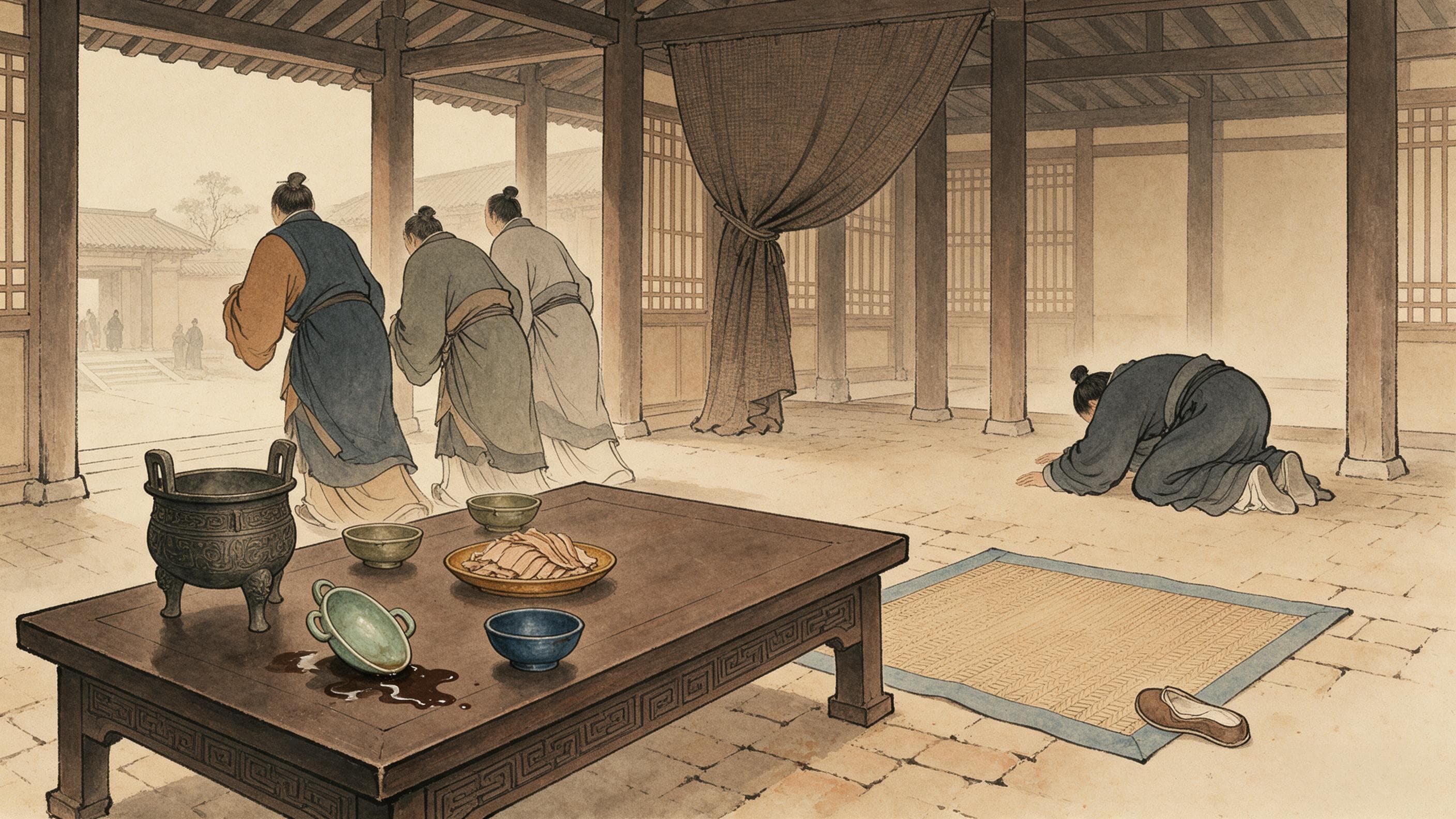
Zhu Jia 乃乘軺車之洛陽,見汝陰侯滕公 — rode a light carriage to Luoyang to see Teng Gong, Marquis of Ruyin; the Han shu has only 乃之雒陽. The Shiji adds 滕公留朱家飲數日, Teng Gong kept him drinking for several days; the Han shu has only 說曰. Zhu Jia rides, Teng Gong keeps him, and only then does the question come.
He began with the case: 季布何大罪,而上求之急也? Teng Gong answered that Ji Bu had several times pressed the emperor and the emperor hated him. The Shiji adds one more exchange: 君視季布何如人也? — what sort of man do you take Ji Bu for? — 賢者也. Three characters, and they are Teng Gong's attitude — a private estimate given before any argument. The Han shu cuts both exchanges and goes straight to the argument.
The argument has three layers. First: 臣各爲其主用,季布爲項籍用,職耳 — each man serves his own lord; Ji Bu served Xiang Yu, and that was his office. 職耳 is not a claim of innocence but of jurisdiction: he did what a servant of Xiang Yu was for. 項氏臣可盡誅邪? Second: 獨以己之私怨求一人,何示天下之不廣也. Third: such a man 不北走胡即南走越耳, and 忌壯士以資敵國 is what once led Wu Zixu to flog the tomb of King Ping of Chu. Then the request: 君何不從容爲上言邪? — speak to the emperor at your ease; 從容, do not hurry.
Teng Gong 心知朱家大俠,意季布匿其所 — he knew in his heart that Zhu Jia was a 大俠, and guessed Ji Bu was hidden with him. The page's word is 大俠; it is quoted here and no other label is added. Zhou knows, Zhu Jia knows, Teng Gong 心知 and 意: three men who never say the name aloud, and on that the identity survives. He said 諾, waited for an opening (待閒; the Han shu has 侍間), and 果言如朱家指. The emperor pardoned Ji Bu. 諸公皆多季布能摧剛爲柔 — men thought him able to turn hardness into softness — 朱家亦以此名聞當世; Ji Bu was received, apologized, and made a 郎中, a court gentleman (generally).
Afterwards, and What the Han Shu Cut
Three later moments. Under the Empress Lü, Fan Kuai offered a hundred thousand men to ride across the Xiongnu; Ji Bu said in court 樊噲可斬也, because 髙帝將兵四十餘萬衆,困於平城 — the Han shu has 三十餘萬 and adds 噲時亦在其中; the Shiji continues 面欺 and 面諛 — deceiving the court to its face, and flattering it — where the Han shu has 面謾. Under Emperor Wen he was summoned for the post of imperial secretary and dropped after someone said 使酒難近, drink making him hard to be near; he answered 陛下以一人之譽而召臣,一人之毀而去臣.
Third, the proverb: the Shiji has 得黃金百(斤),不如得季布一諾, the Han shu 得黃金百,不如得季布諾; the (斤) on the Shiji page is an editorial supplement, not the text. This pair of chapters runs the opposite way from the Guan Fu article: here the Shiji is fuller, and what the Han shu drops is exactly the instruction to the son, the carriage and the days of drinking, and 賢者也. Other variants, kept side by side: 趙同/趙談 (generally, the Shiji avoids 談 out of taboo), 袁絲/爰絲 (generally the same man). In form, the Shiji's juan 100 is a joint biography of Ji Bu and Luan Bu; the Han shu's juan 37 adds Tian Shu.
Both chapters end with a verdict on the same question. The Shiji's 太史公曰 says he suffered punishment and lived on as another man's slave, 何其下也, and then: 彼必自負其材,故受辱而不羞,欲有所用其未足也. The Han shu's 贊曰 asks it more directly: 及至困厄奴僇,苟活而不變,何也? Two historians asking why he endured — verdicts, not facts. Articles here have covered knights-errant, slavery as an institution, and the early Han founders; this one follows only the line from bounty to two hidings to one argument to pardon.
Related reading:The Wandering Knights: Zhu Jia, Ju Meng and Guo Jie · Royal Fields and Private Dependants: Slaves and Two Edicts in Han China · Dog-Killing, Cloth-Selling, Flute at Funerals: What the Han Founders Did Before
Sources & further reading
- 《史記》卷一百·季布欒布列傳第四十(西漢司馬遷撰;維基文庫本,繁體白文,頁頭未標 textquality,未與中華書局點校本複核) — The fuller of the two texts, and its extra detail is the heart of the episode. Ji Bu was a man of Chu, 爲氣任俠,有名於楚, who served Xiang Yu and 數窘漢王. When Xiang Yu fell, Gaozu 購求布千金 and made sheltering him 罪及三族. He hid with 濮陽周氏, who said the hunt would reach his house and that Ji Bu must either listen or watch him cut his own throat; then 髡鉗季布,衣褐衣,置廣柳車中, mixed with several tens of household servants, and was sold to the Zhu family of Lu. 朱家心知是季布,乃買而置之田, and — the sentence the Han shu drops — 誡其子曰:田事聽此奴,必與同食. Zhu Jia then 乘軺車之洛陽, 滕公留朱家飲數日, asked 季布何大罪 and 君視季布何如人也 (answer 賢者也), and argued: 臣各爲其主用,季布爲項籍用,職耳; 項氏臣可盡誅邪; 獨以己之私怨求一人,何示天下之不廣也; 此不北走胡即南走越耳; 忌壯士以資敵國; 君何不從容爲上言邪. 滕公心知朱家大俠,意季布匿其所, 待閒, 果言如朱家指, and 上乃赦季布. The page's own verdict: 諸公皆多季布能摧剛爲柔,朱家亦以此名聞當世 — and in 太史公曰, 然至被刑戮,爲人奴而不死,何其下也, 彼必自負其材,故受辱而不羞,欲有所用其未足也. Later sections supply the Fan Kuai numbers (四十餘萬衆), 面欺/面諛, 一人之譽/一人之毀, the proverb 得黃金百(斤),不如得季布一諾 (the (斤) is an editorial mark on the page), and the variants 趙同 and 袁絲.
- 《漢書》卷三十七·季布欒布田叔傳第七(東漢班固撰;維基文庫本,繁體白文,頁頭未標 textquality,未與中華書局點校本複核) — The same episode cut shorter — the opposite direction from the Guan Fu article, where the Han shu was the fuller text. Ban Gu drops three things the Shiji has: 誡其子曰:田事聽此奴,必與同食 (he has only 買置田舍); 乘軺車 and 滕公留朱家飲數日 (he has 乃之雒陽 and 說曰); and the exchange 君視季布何如人也/賢者也. Kept: 罪三族 (no 及), 漢求將軍急, 臣敢進計, 即否, 乃髡鉗布,衣褐, 朱家心知其季布也,買置田舍, 臣各為其主用,職耳, 而以私怨求一人,何示不廣也, 滕公…乃許諾。侍間,果言如朱家指, 上乃赦布. The proverb is 得黃金百,不如得季布諾 (no 一). Later: Fan Kuai's numbers 三十餘萬 with 噲時亦在其中, 面謾 for 面欺; the taboo variant 趙談 for 趙同; 爰絲 for 袁絲. The chapter's 贊曰 asks the same question as the Shiji's 太史公曰 in other words: 及至困厄奴僇,苟活而不變,何也?