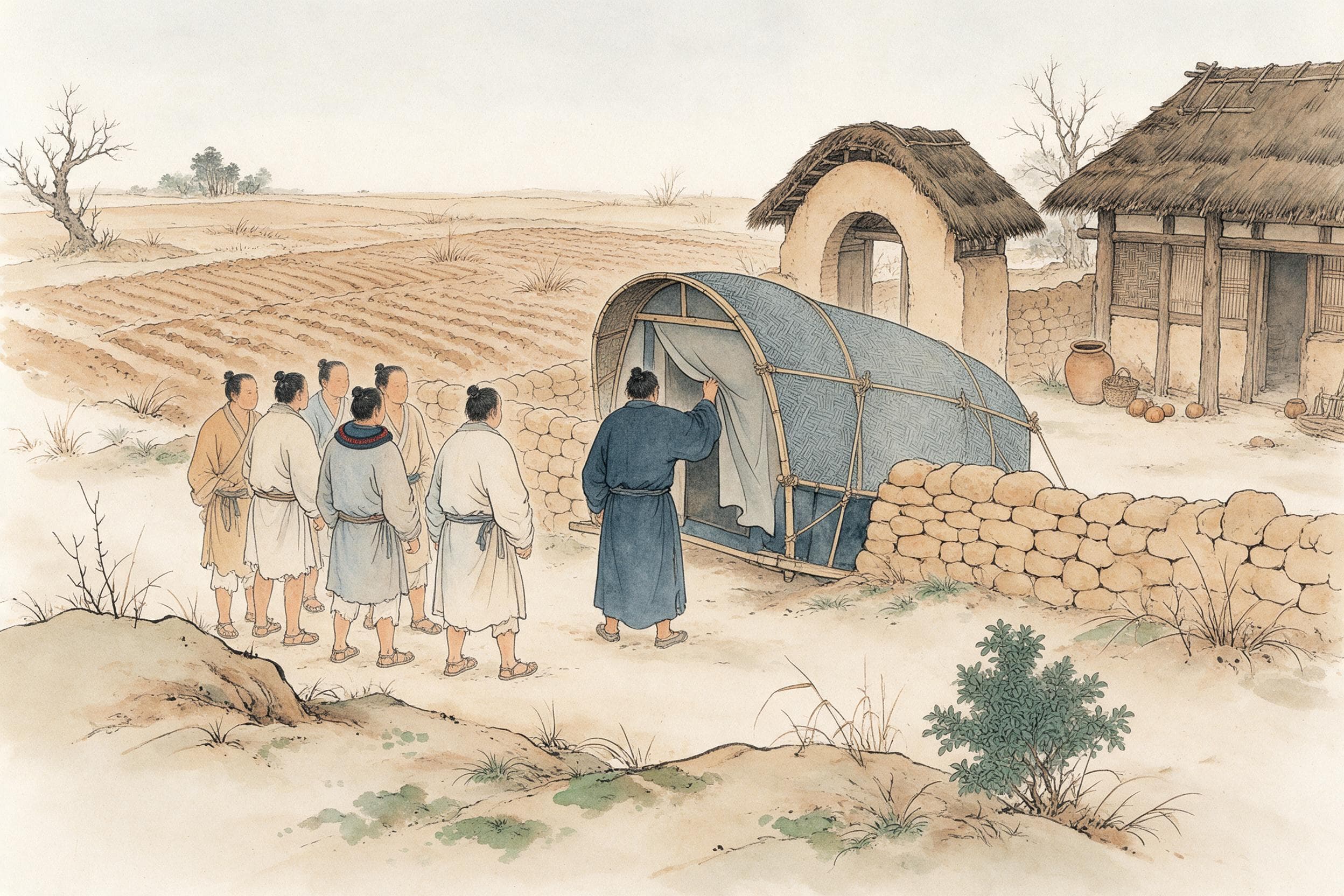
A ritual book does not describe a school; it grades them and counts the years. The grading takes fifteen characters: 家有塾,黨有庠,術有序,國有學 — a school of a kind in the lane, a second in the district, a third in the division, a fourth in the capital. Then it counts: 比年入學,中年考校, pupils enter every year and are examined every other year, at fixed intervals — one year, three, five, seven, nine. No age is given anywhere on the page. This article stays with the scale, and then with the one scene the other chapter adds: the heir to the throne, seated in school by age. Neither the ladder nor the intervals are illustrated anywhere; they are simply listed.
Four Rungs, Sixteen Characters
The four names are given and not explained. 塾, 庠, 序, 學 are four kinds of place where teaching happens, and the page offers no gloss on any of them; it never says how many pupils a 塾 holds or where a 庠 stands. The 術 in 術有序 is kept as the page has it: the received reading takes it as 遂, but there is no note on the page, so it stays 術 here. The 家 in 家有塾 is conventionally not 'every household' but the lane, or the side of the ward gate; that too is a reader's gloss. What the page gives is four rungs and a ladder. A modern reader wants to know what a 塾 was, how large a 庠 was, and who paid for either; the page leaves all of it out, and this article will not guess.
Five Examinations
The ladder is the point. 一年,視離經辨志 — after one year, whether he can part the text and set his aim. 三年,視敬業樂群 — after three, whether he is earnest in the work and glad with his fellows. 五年,視博習親師 — after five, whether he studies widely and draws near the teacher. 七年,視論學取友,謂之小成 — after seven, whether he can discuss learning and choose friends: the lesser completion. 九年,知類通達,強立而不反,謂之大成 — after nine, whether he knows kinds and penetrates, stands firm and does not turn back: the greater completion. Only then is he 足以化民易俗 — enough to transform the people and change customs. Then a quotation, unexplained: 記曰:蛾子時術之. The years count time spent in the school, not time lived — no age is attached to any of the five.
Seven Things on the First Day
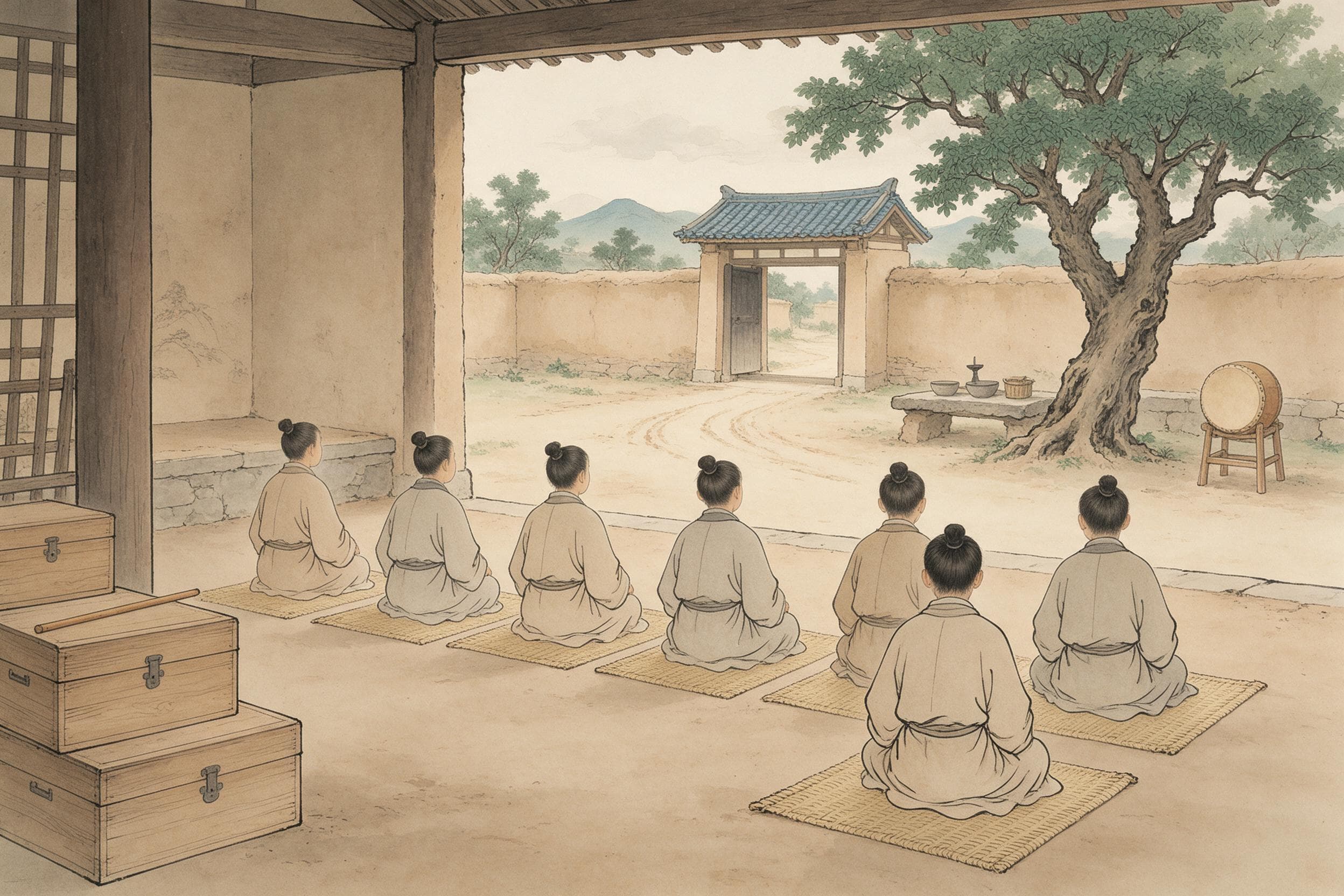
The first day has its own list. 大學始教,皮弁祭菜 — the leather cap and the vegetable offering, to show reverence for the way. 宵雅肄三 — three pieces of the Minor Odes practised. 入學鼓篋 — the drum and the book-box at the entrance. 夏、楚二物 — two rods, to collect the awe; conventionally rods for correction, and the page gives only the names. 未卜禘不視學 — no inspection of the school before the border sacrifice has been divined. 時觀而弗語 — he watches at times and does not speak. 幼者聽而弗問,學不躐等 — the young listen and do not ask, learning does not skip steps. Then the page counts for us: 此七者,教之大倫也. Every item is an object or a gesture, and the page explains none of them: the cap, the vegetables, the three odes, the drum, the box, the rods, the silence.
The same chapter gives the causes by which teaching rises and falls. Four rise: 禁於未發之謂豫, prevention before it has started; 當其可之謂時, doing it when it can be done; 不陵節而施之謂孫, not overstepping the order; 相觀而善之謂摩, rubbing against each other's good. Six fall, and the best known is 獨學而無友,則孤陋而寡聞 — to study alone without friends is to be narrow and little-heard. Learners have four faults: 或失則多,或失則寡,或失則易,或失則止. And the teacher's method is three negatives: 道而弗牽,強而弗抑,開而弗達 — lead without dragging, strengthen without pressing, open without spelling out. Four, six, four, three: the chapter’s habit is to count, and the counting is the argument.
The Other Page: Seasons and Four Supports
The second page turns the same subject sideways. 凡學世子及學士,必時 — teaching the heir and the scholars must keep to the seasons. 春夏學干戈,秋冬學羽籥,皆於東序 — shield and halberd in spring and summer, feather and flute in autumn and winter, all in the Eastern Hall. Then the year is filled: 春誦夏弦,大師詔之 — chanting in spring, lute in summer, the music master directing; 瞽宗秋學禮,執禮者詔之 — rites in autumn in the Blind Ancestral Hall; 冬讀書,典書者詔之 — books in winter, the keeper of books directing. And the summary: 禮在瞽宗,書在上庠. 瞽宗 and 上庠 are names of halls, and the page does not explain them. Set beside the first page, this is the same subject turned sideways: one book counts the years a pupil stays, the other counts the seasons a year contains.
Beyond the seasons there are offerings and a selection. 凡學,春官釋奠…先師,秋冬亦如之 — in spring the officer of rites makes the offering to the former teachers, and so in autumn and winter. 凡始立學者,必釋奠…先聖先師,及行事,必以幣 — a new school offers to the former sages and teachers, with silk. A newly founded school also keeps its first ceremony small: 不舞不授器, no dancing and no handing out of instruments. And the school selects: 凡語于郊者,必取賢斂才焉:或以德進,或以事舉,或以言揚 — some advance by virtue, some are raised for service, some are praised for speech. A school, on this showing, is founded with an offering and stocked by selection.
For the heir there are four positions and one principle. 立大傅、少傅以養之 — grand tutor and junior tutor to nourish him: 大傅在前,少傅在後,入則有保,出則有師 — the grand tutor in front, the junior behind, a guardian within, a teacher without. Their work is split in two sentences: 師也者,教之以事而喻諸德者也;保也者,慎其身以輔翼之而歸諸道者也. The number is not to be filled: 設四輔及三公,不必備,唯其人 — set the four supports and the three excellencies; they need not be complete, only the right men. And the ground of it is compact: 樂,所以脩内也;禮,所以脩外也 — music cultivates the inner, rites the outer. Four positions around one boy, and a principle that explains why none of the four is a mere servant.
Taking a Seat by Age
Then the best scene on either page. 行一物而三善皆得者,唯世子而已,其齒於學之謂也 — one act and three good things come of it, and it belongs to the heir alone: taking his place in school by age. The setting is plain. The heir is in school with everyone else, and when the seats are ordered, his is ordered by age and not by rank: 故世子齒於學,國人觀之 — the people of the state watch it happen. The scene is not a ceremony but seating, which is why it can carry three lessons: everyone can see a boy sit down in the right order or the wrong one.
Three times they ask him, in the same words: 將君我而與我齒讓,何也 — you will be our ruler, and yet you yield your place to us by age; why? Three answers. 有父在,則禮然 — because his father is alive, the rites are so; and 衆知父子之道矣, the crowd learns the way of father and son. 有君在,則禮然 — because his ruler is alive, the rites are so; and 衆著於君臣之義也, the crowd sees the duty of ruler and subject. 長長也 — because the elder is to be honoured; and 衆知長幼之節矣, the crowd knows the order of elder and younger. One seat, three lessons, from a single act of sitting down. The repetition is the argument: the crowd is shown rather than told, and each answer points to a different pair — father and son, ruler and subject, elder and younger.
What the pages cannot say is as clear as what they can. Neither gives an age of entry: 比年 and 中年 count years of study, not years of life. Neither gives numbers per school, fees, the duties of the named officers, or a single real school. The ritual books describe what should be, not what was; and 大學 in these pages means the stage of higher learning, not the Han imperial academy. This site has written about Ming community schools, about Han primers, about the first imperial academy, and about how a classic passed from master to master; this piece is a ladder of years, and one boy taking his seat by age. What a reader most wants — the age of entry, the size of a class, the list of books — is exactly what a ritual book does not supply.
Related reading:Fifty Disciples: The Han Academy That Was an Appointment Pipeline · The Classic Masters: How a Text Was Handed Down · At the First Crow: One Day in a Gentleman's Household, According to the Rites
Sources & further reading
- 《禮記·學記》(維基文庫本,白文無注,頁面標 textquality 75%,未與中華書局點校本複核) — The chapter that grades schools and counts years. Four rungs in sixteen characters: 古之教者,家有塾,黨有庠,術有序,國有學. Then the count: 比年入學,中年考校, and the five examinations — 一年,視離經辨志; 三年,視敬業樂群; 五年,視博習親師; 七年,視論學取友,謂之小成; 九年,知類通達,強立而不反,謂之大成; then 足以化民易俗, and 記曰:蛾子時術之. The seven things at the start of the Great Learning: 皮弁祭菜; 宵雅肄三; 入學鼓篋; 夏、楚二物; 未卜禘不視學; 時觀而弗語; 幼者聽而弗問,學不躐等 — closing 此七者,教之大倫也. Then the four causes of rising (禁於未發之謂豫,當其可之謂時,不陵節而施之謂孫,相觀而善之謂摩), the six of falling (one of them 獨學而無友,則孤陋而寡聞), the four faults (或失則多,或失則寡,或失則易,或失則止), and the three 'not' of teaching: 道而弗牽,強而弗抑,開而弗達. Also 師也者,所以學爲君也; 君之所不臣於其臣者二 (尸 and 師); 大學之禮,雖詔於天子,無北面; 良冶之子,必學爲裘; 良弓之子,必學爲箕; 始駕馬者反之,車在馬前; 先河而後海,此之謂務本. No ages anywhere on the page.
- 《禮記·文王世子》(維基文庫本,白文無注,頁面標 textquality 75%,未與中華書局點校本複核;本文只用論學段) — Only the teaching section, from 凡學世子及學士,必時 to 世子之謂也. The chapter's opening on the heir visiting his father three times a day, its closing duplicate of the same routine (世子之記曰), and the section on the king inspecting the school with the seats of the 三老 and 五更 are not used here, since other articles on this site cover them. What is used: the seasons (春夏學干戈,秋冬學羽籥,皆於東序; 春誦夏弦; 瞽宗秋學禮; 冬讀書; 禮在瞽宗,書在上庠); the offerings (春官釋奠于其先師; 始立學者,必釋奠于先聖先師,及行事,必以幣; 不舞不授器); the selection 取賢斂才 (或以德進,或以事舉,或以言揚); 樂,所以脩内也;禮,所以脩外也; the four supports (大傅在前,少傅在後,入則有保,出則有師; 設四輔及三公,不必備,唯其人); 知爲人子,然後可以爲人父; and the closing scene 行一物而三善皆得者,唯世子而已,其齒於學之謂也, with the three questions 將君我而與我齒讓,何也 and the three answers 有父在,則禮然 / 有君在,則禮然 / 長長也.